
Free visual inspection and a written scope of work before any mitigation begins - photos, moisture readings, and drying logs go in your claim file
The scope we write is the scope we bill. Anything new gets shown to you, in writing, before we touch it.
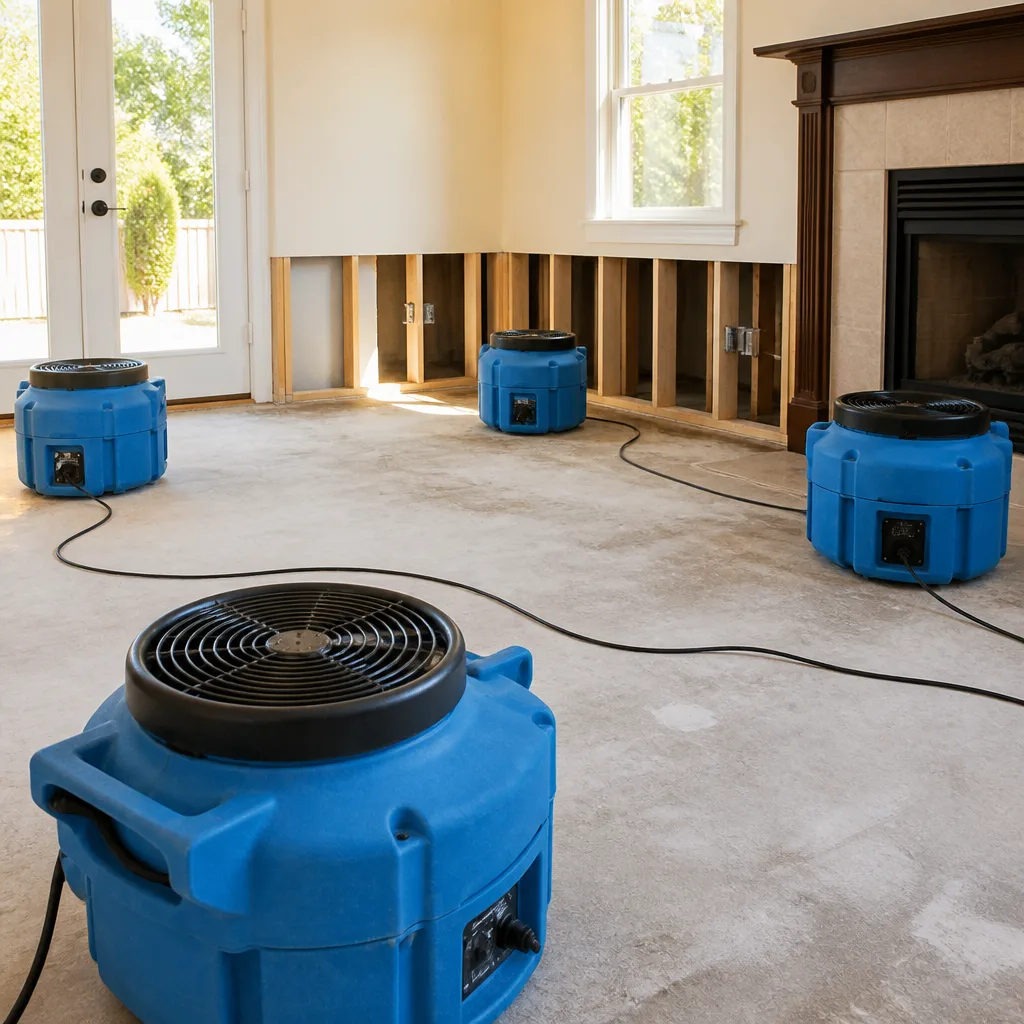
 Before
 After
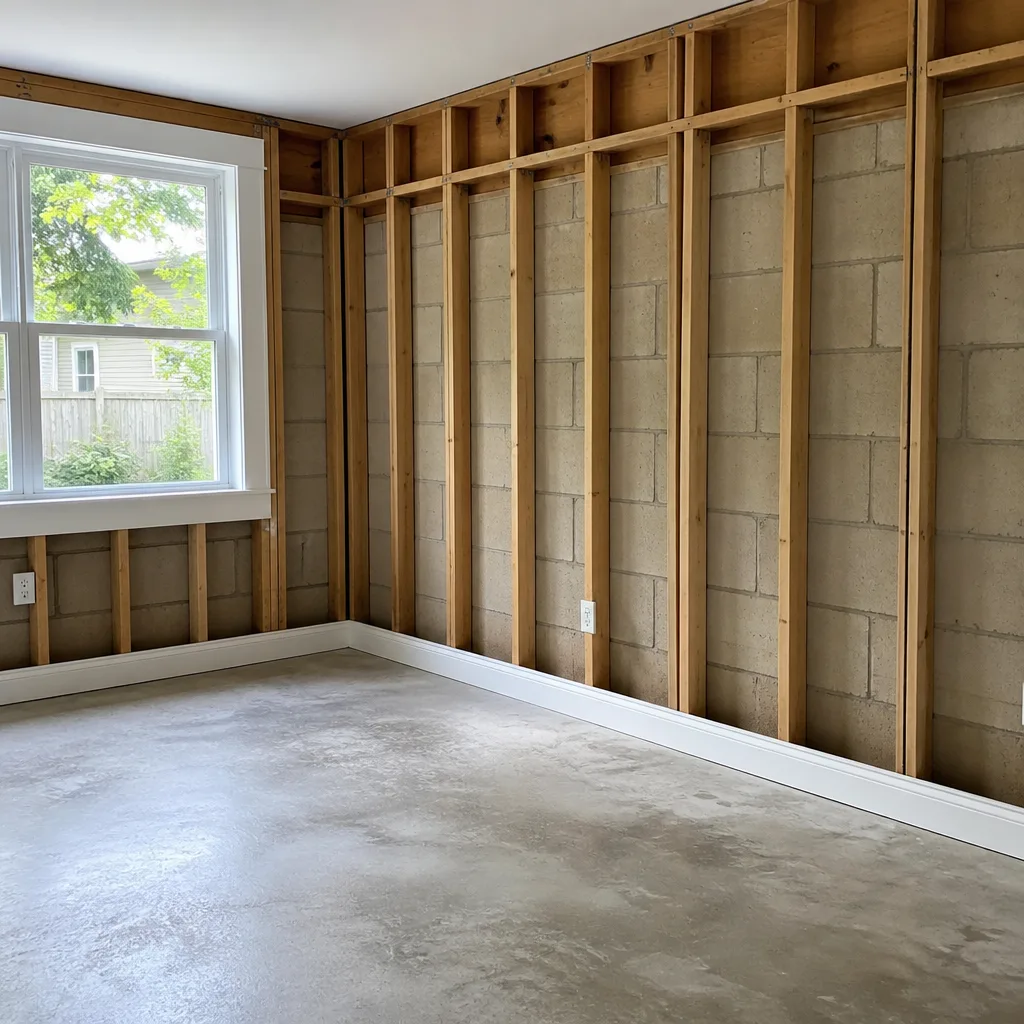
After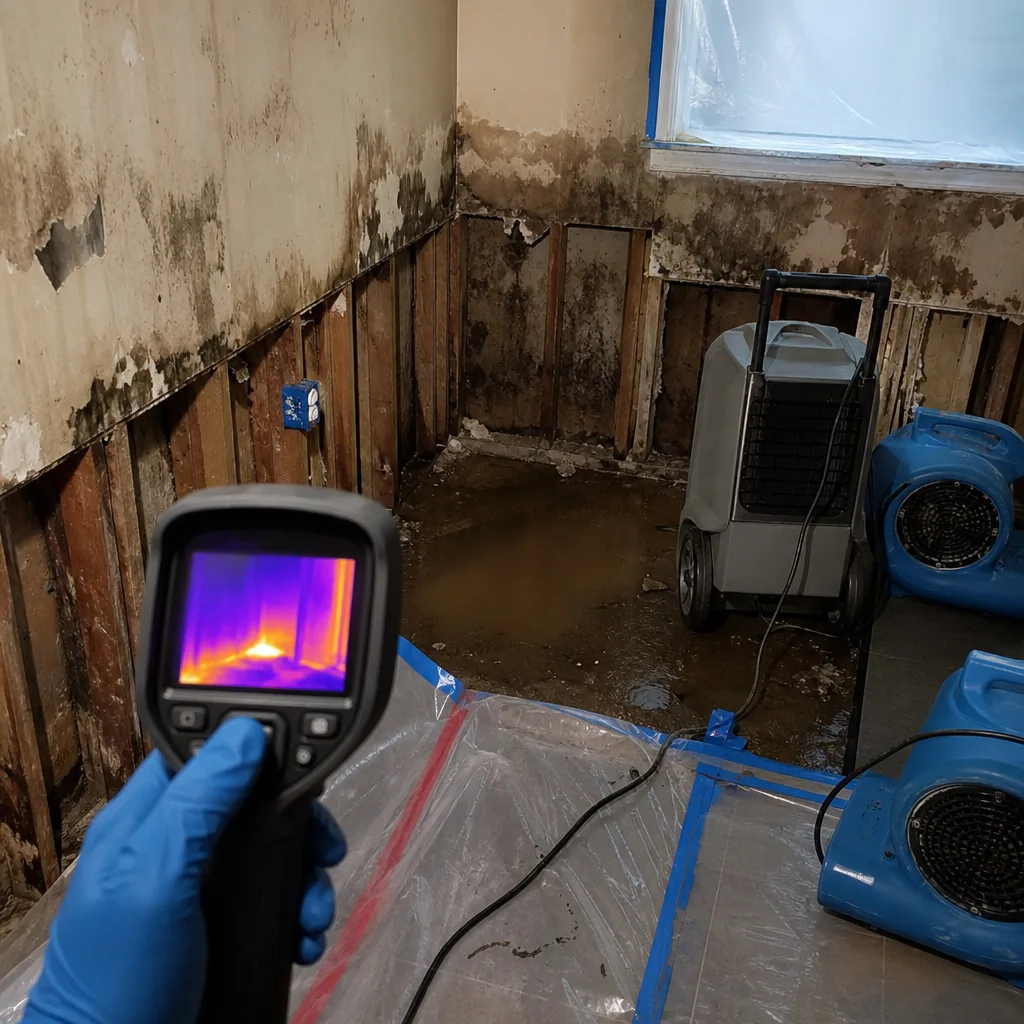 Before
 After
After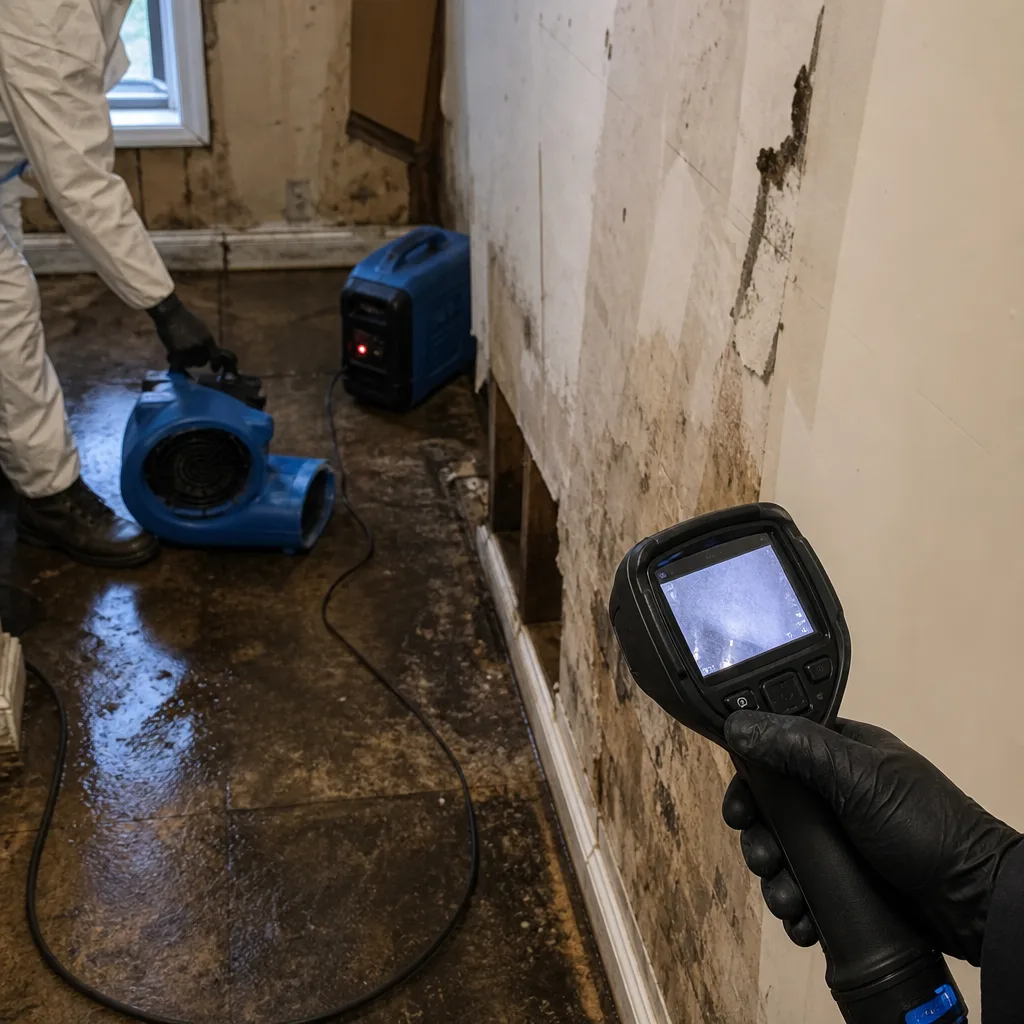 Before
 After
After24/7 Emergency Mold Remediation in Financial District
Mold remediation in the Financial District typically costs $1,800-$6,500 depending on how far moisture has traveled behind walls and how many floors are involved. Most jobs start within 24 hours of your call. If you’ve got visible growth or a musty smell you can’t place, call (607) 703-3408 right now. Wade answers his own phone, and he’ll tell you straight whether this is something you can monitor or something that needs a crew today.
Here’s the thing about mold in Financial District buildings: it doesn’t wait. Given the neighborhood’s chronically damp below-grade conditions and the number of converted pre-war towers with original drainage systems, mold gets established in 24 to 48 hours once drywall or insulation stays wet. A visual inspection is free. The sooner we document moisture levels, the smaller the containment zone stays, which means less demolition and a lower final bill.
Understanding Mold Remediation Severity in Financial District Properties
Mold severity breaks into three practical tiers. Tier one is surface growth on non-porous materials, typically from a one-time leak or condensation event. Tier two is colonization inside wall cavities, under flooring, or behind baseboards, usually from a slow supply-line drip or recurring condensation inside a chase. Tier three is what we see most often in Financial District high-rises: moisture that has wicked through multiple floor assemblies, often from a pipe failure in one unit that traveled down through original commercial drainage chases never designed for residential plumbing loads.
The building stock here makes tier three more common than anywhere else in Manhattan. Most of the Financial District’s residential buildings are pre-WWII masonry and steel-frame commercial towers converted to condos after the late 1990s. Those conversions frequently grafted residential plumbing onto drainage systems sized for office lavatories, not continuous household water use. When a supply line fails inside a wall on the 30th floor, water can travel down 20 or more floors before anyone notices. By the time we’re called, mold is usually into the wall cavities on multiple levels, which means full containment, negative air pressure, HEPA air scrubbing, and post-remediation clearance testing.
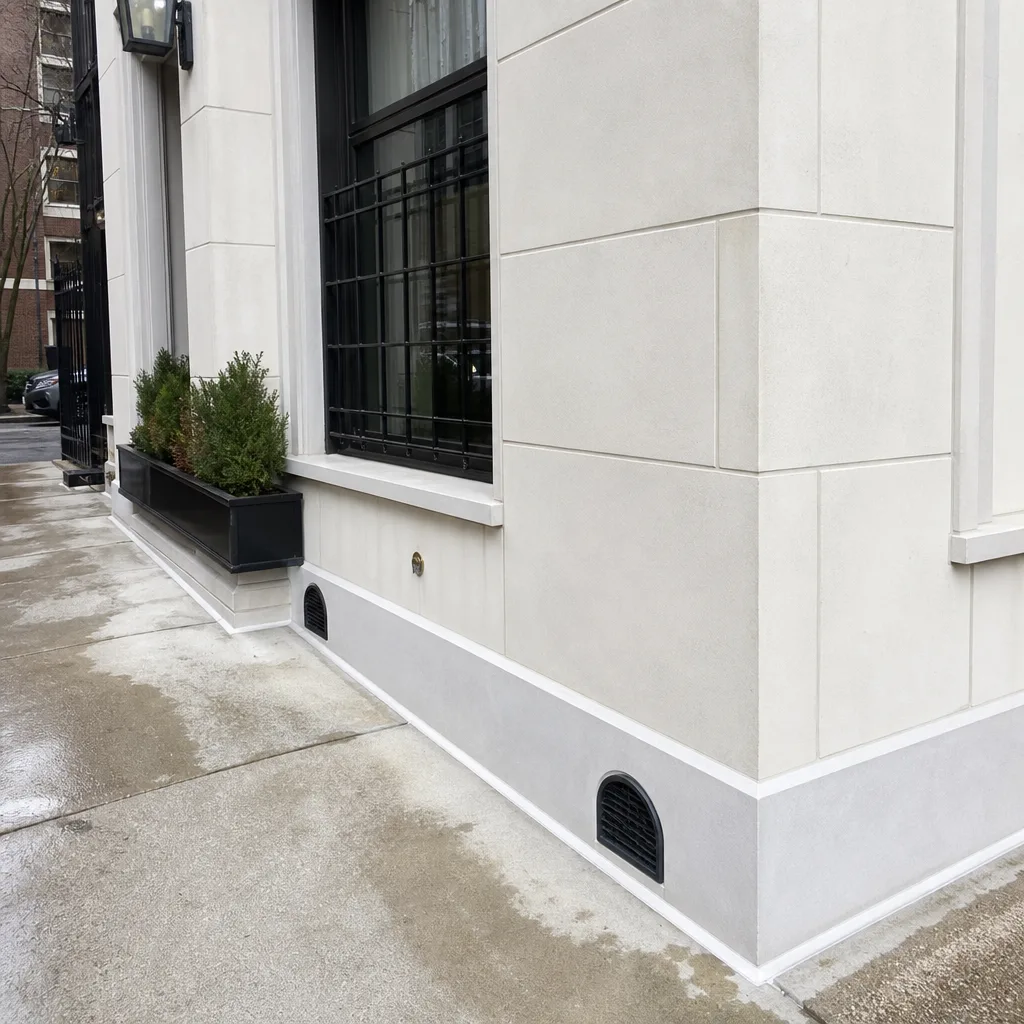
The other Financial District factor is FEMA Flood Zone A. Much of the neighborhood sits in the highest coastal risk designation, and the position at Manhattan’s lowest-elevation tip means storm surge during nor’easters hits here first and hardest. Below-grade moisture is a near-constant baseline between weather events, not a one-off incident. That changes how we approach remediation: before we treat visible growth, we test behind masonry walls because post-Sandy groundwater intrusion left cavities that never fully dried.
Why Financial District Property Owners Choose Wade’s Restoration
- 45-minute response commitment: Wade heads out as soon as you hang up. For mold calls in Financial District, he’s typically on site within the hour, moisture meter in hand.
- 24/7 live answer, always a real person: No answering service, no voicemail at 2 a.m. You get Wade or a member of his crew, every time.
- IICRC-certified crews: The people Wade sends hold current WRT and AMRT credentials. That means they know proper containment protocols and antimicrobial treatment standards.
- Free visual inspection: Wade will look at your situation, take moisture readings, and tell you if you need remediation or if a dehumidifier and some patience will do it. No charge for that.
- Direct insurance billing: We document everything from the first hour and deal with your adjuster directly. You’re not the one relaying information between two sides.
- One team from start to finish: The same crew that does the containment and drying handles the repairs. Nobody hands your job off to a subcontractor you’ve never met.
Our Mold Remediation Process
Inspection & Assessment
We start with thermal imaging and moisture meters to find where water is hiding, even if you can’t see it. In Financial District buildings, that means checking behind masonry walls, inside chases, and below slab level. You get a written scope before any work starts.
Containment & Stabilization
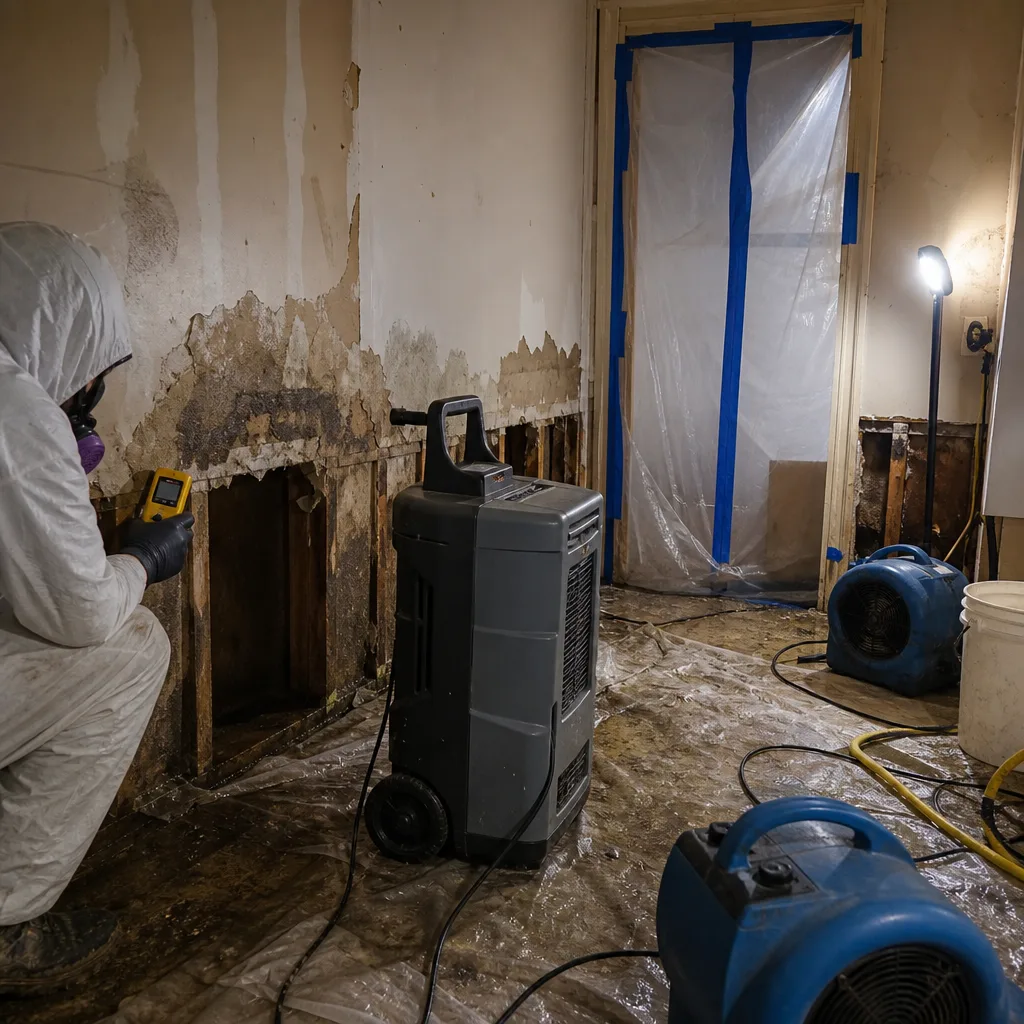
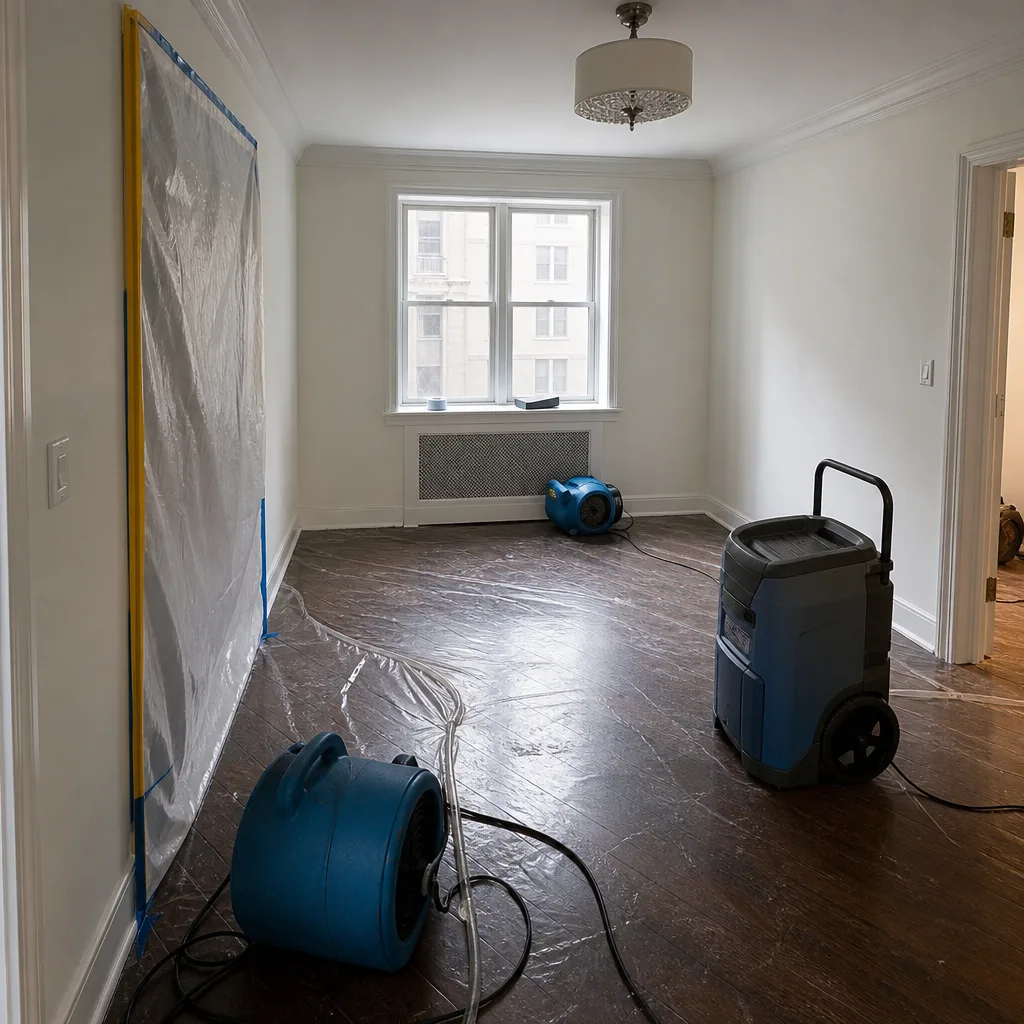
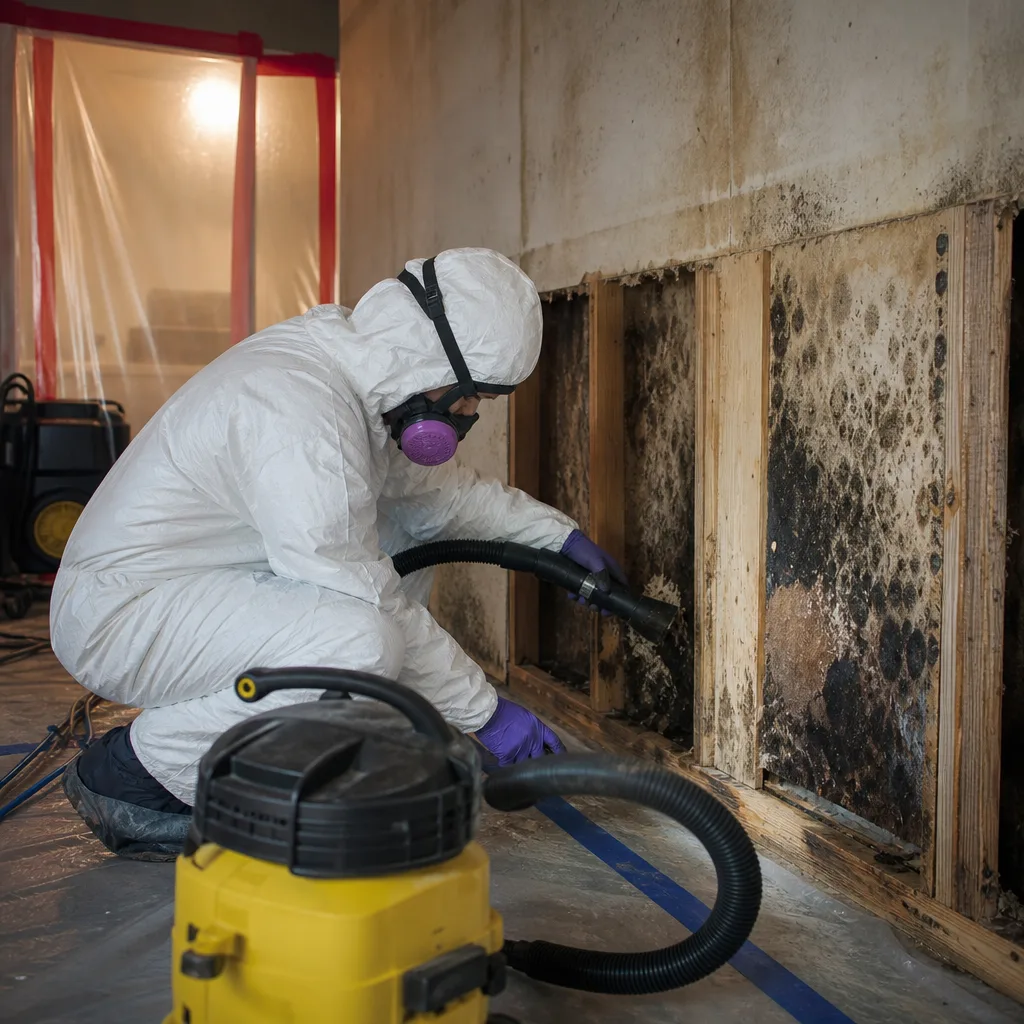
Before we touch anything, we seal the affected area with polyethylene sheeting and set up negative air pressure so spores don’t spread to adjacent units or floors. In high-rise jobs, this happens floor by floor.
Drying & Dehumidification
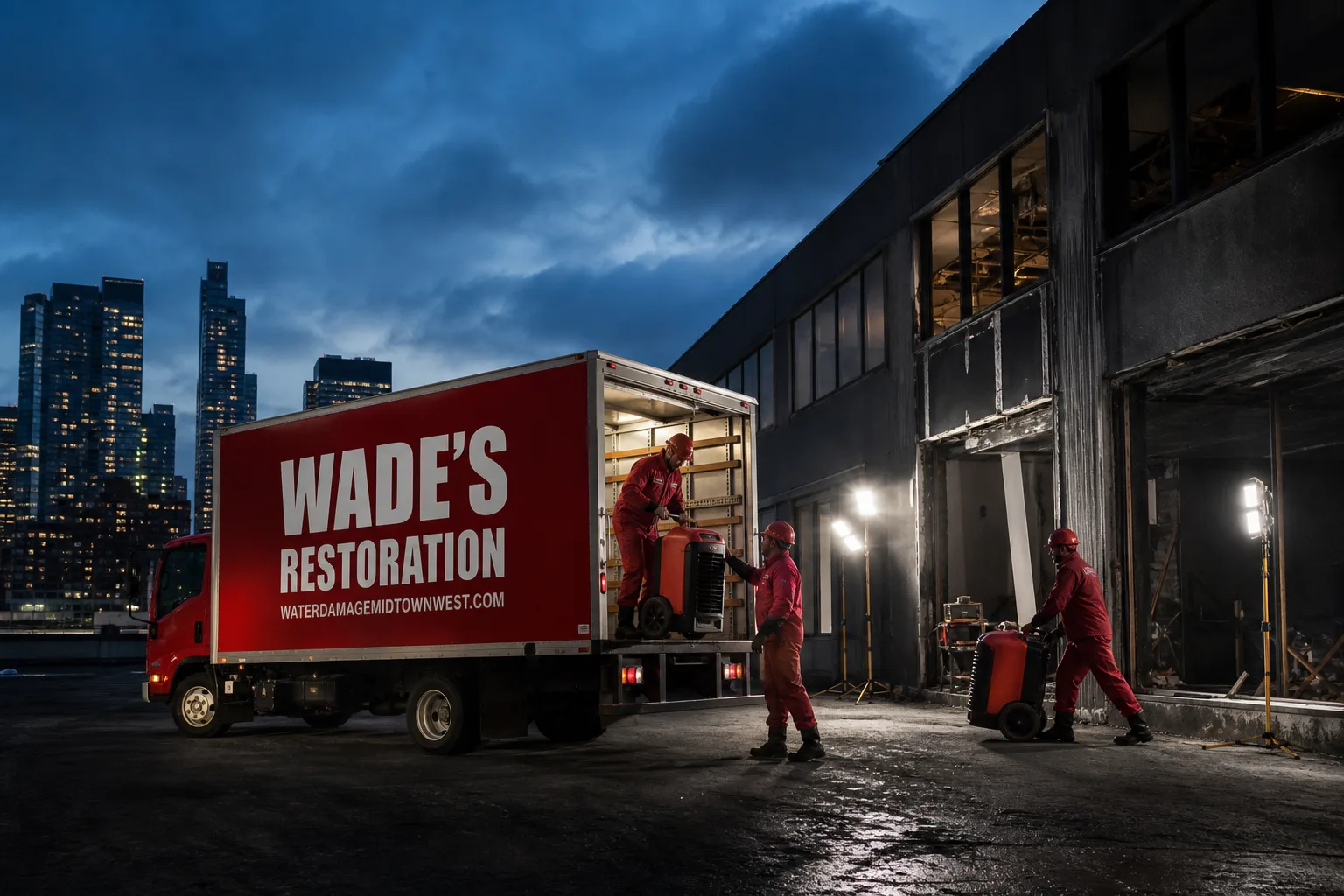
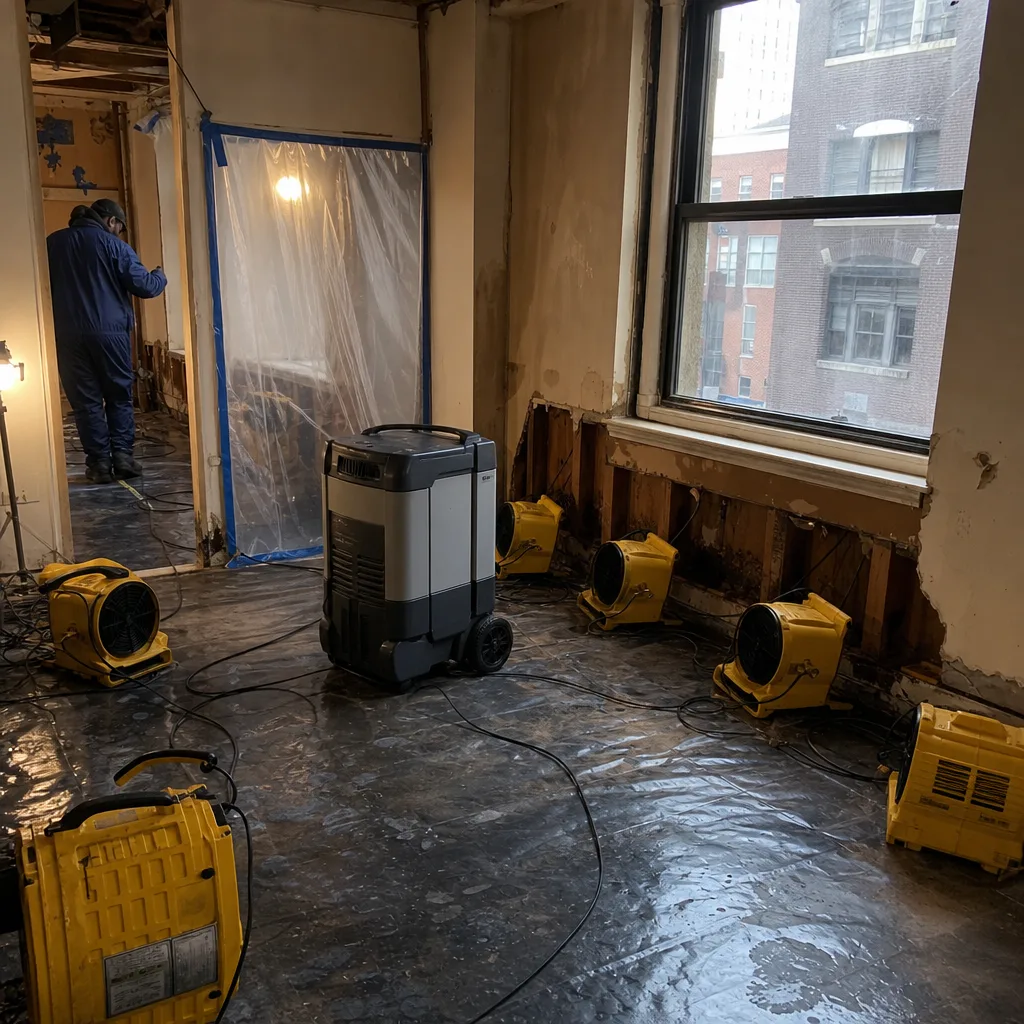
We run Phoenix and Dri-Eaz dehumidifiers, air movers, and injection drying systems until moisture readings stabilize. Wade takes readings every single day and hands you the full log when the job’s done, no exception.
Cleaning & Sanitization
HEPA air scrubbers run continuously while we remove affected materials and treat surfaces with antimicrobial agents. We clean what can be saved and cut out what can’t, which is usually less than you’d think.
Moisture & Humidity Control
For Financial District buildings with chronic below-grade dampness, we address the source: sub-slab vapor barriers, drainage corrections, or dehumidification systems sized for the space. Otherwise mold comes back in weeks, not years.
Repairs & Restoration
We rebuild what was removed: drywall, insulation, trim, flooring. The 90-Day Done Right Promise covers everything, in writing. If it’s not done right, Wade makes it right.
Need Emergency Mold Remediation in Financial District Now?
Crews minutes away, answering live 24 hours a day. The sooner we start, the less it costs.
Working With Your Insurance Company
Mold coverage depends on the source of the water. If it came from a sudden pipe break, storm surge, or another covered peril, your policy likely covers remediation. If it’s from long-term seepage or deferred maintenance, it might not. Either way, we document everything from the first hour: photos room by room, moisture readings with timestamps, and a line-item scope of work written in the format insurers expect. Wade talks to your adjuster directly, so you don’t have to explain what a containment chamber is or why the drying logs matter. For co-op and condo owners in Financial District, we also coordinate with building management and their carriers when a loss crosses unit boundaries, which it often does in converted towers.
What We Provide Your Insurer
- Thorough documentation of the loss
- Photos of all damage, room by room
- Moisture readings and drying logs
- A detailed, line-item scope of work
- Direct coordination with your carrier
Built for Financial District’s Loss Calendar
Financial District mold problems follow a predictable rhythm. January and February bring deep freezes that crack supply lines in old converted towers, especially along exterior walls and in unheated stairwells. That water travels down through walls and chases, and by the time residents notice staining on lower floors, mold has been growing inside cavities for days or weeks. Spring brings the thaw and rising groundwater: below-grade spaces in Financial District that sat dry over winter start showing moisture again, and any area that flooded during a past storm and wasn’t properly dried becomes a mold source. Summer thunderstorms hit hard in this neighborhood because the streets are so low and the drainage system was built for a smaller city; flash flooding pushes water into sub-basements and elevator pits fast. Fall nor’easters and the tail end of hurricane season are when coastal surge gets into sub-basement electrical vaults and mechanical rooms, and that’s when we see elevator machinery rooms and switchgear spaces go under. Every one of those events leaves behind moisture that becomes mold within days if not addressed. The pattern is so consistent that building managers and long-time residents can practically set their clocks by it, and many of them now call us for preventive moisture assessments before the worst months hit.
Mold Remediation Across Financial District’s Neighborhoods
Response routes matter when you’re hauling drying equipment through Manhattan traffic. From the Financial District, our crews reach Wall Street and Broad Street corridors within minutes, which matters when a pipe breaks during trading hours and water is running through a residential conversion above. Around the South Street Seaport and along the East River waterfront, below-grade mold risk is highest. Those buildings sit closest to the harbor, and post-Sandy groundwater levels there remain stubbornly high. On lower Broadway and along Exchange Place, we see more converted office towers where original commercial drainage systems create chronic slow leaks inside walls. Near Battery Park and the West Side waterfront, salt air and coastal exposure add surface corrosion to mechanical systems, but the mold story is the same: moisture gets into masonry cavities and stays there. At the northern edge of the district around Fulton Street, the buildings are slightly higher elevation, but the housing stock is the same pre-war mix, and the drainage systems share the same conversion problems. We know these blocks well because we’re running up and down them constantly, and that local knowledge means we arrive already knowing the building type, the likely failure point, and where moisture hides.
Specialized Mold Remediation Services We Offer in Financial District
Mold Inspection & Testing
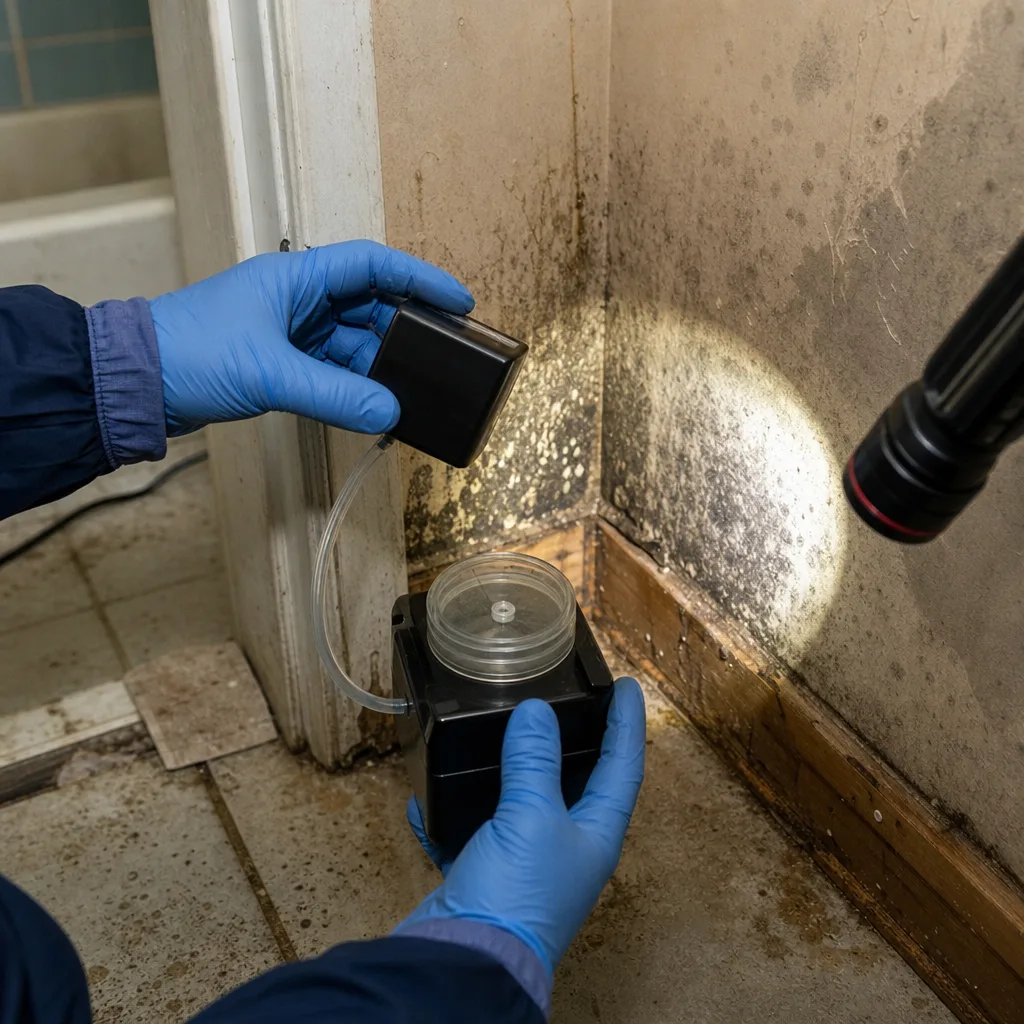
In Financial District buildings, inspection starts behind masonry walls, not in front of them. We use thermal imaging to find temperature differentials that indicate hidden moisture, then take air and surface samples where readings are elevated. You get lab results and a written assessment that says exactly what’s present and whether remediation is needed.
Mold Removal
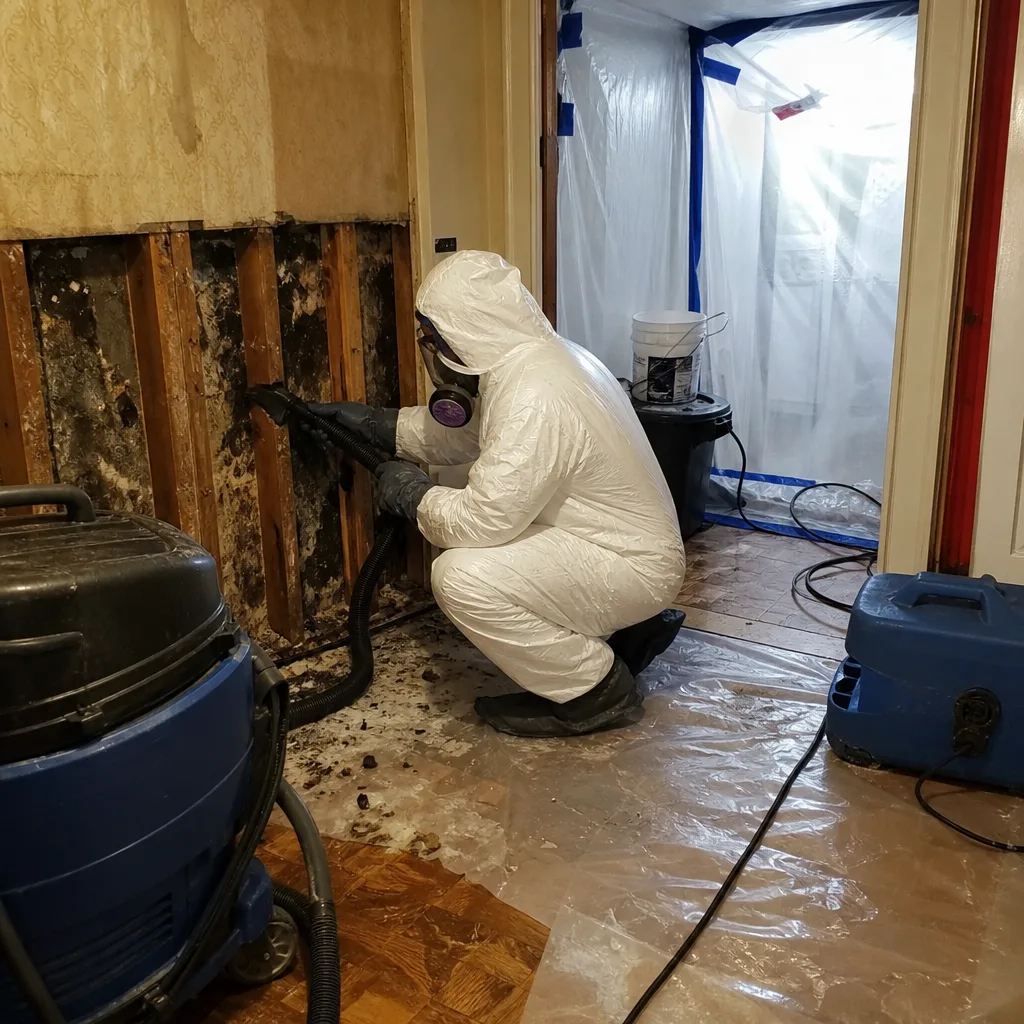
Removal means cutting out affected drywall, insulation, and flooring while the area is under negative pressure, then bagging and disposing of contaminated materials properly. In high-rise conversions, we work floor by floor so spores never migrate through shared corridors or elevator shafts to other units.
Black Mold Remediation
Stachybotrys, the black mold everyone worries about, needs constant moisture and cellulose to thrive. Financial District’s chronically damp below-grade spaces and wet drywall from slow supply-line leaks create exactly those conditions. Full containment and HEPA air scrubbing are essential for black mold work, and Wade’s crew does both on every job, not just the visible ones.
Air Quality Restoration
After physical removal, the air in affected spaces still carries spores and mycotoxins. We run HEPA air scrubbers for 24 to 72 hours, then perform post-remediation air sampling and clearance testing. You get documentation that indoor spore counts have returned to normal background levels for Financial District’s building stock.
Moisture & Humidity Control
This is the step that separates a one-and-done mold job from a recurring problem. Financial District buildings with high groundwater, converted drainage systems, and coastal humidity need ongoing moisture management: sub-slab vapor barriers, dehumidification units sized for actual square footage, and drainage corrections. We design these systems based on readings taken over time, not guesses.
What happens when you call
- 1
A real person answersNo phone trees - you reach a local pro.
- 2
You get an upfront price rangeHonest numbers before anyone is dispatched.
- 3
A background-checked tech heads outLicensed & insured, dispatched right away.
- 4
You approve before work beginsNothing starts until you say go.
Mold Remediation Costs in Financial District, NY
Expect to pay $1,800-$4,200 for a typical single-unit mold remediation in the Financial District, assuming one or two affected rooms and standard containment. A multi-floor high-rise cascade with water traveling through original drainage chases runs $4,500-$12,000, more if there is masonry drilling for cavity drying or elevator-related access constraints. Mold inspection and testing alone ranges from $350-$850, but Wade applies that toward remediation if you hire him after the report. Insurance scenarios change these numbers significantly: covered losses tied to sudden pipe breaks or storm surge often leave the homeowner paying only a deductible, while chronic seepage or deferred maintenance costs come out of pocket. The free visual inspection is how you find out which category you’re in. Wade will tell you honestly if you need full remediation or if a cleaning and dehumidifier will solve it.
We Also Serve Cities Near Financial District
Wade’s Restoration handles mold remediation throughout the Financial District and the surrounding area. We serve Financial District and nearby neighborhoods including Midtown West, Lower Manhattan, Astoria, and Midtown Manhattan. If your building is anywhere in the lower Manhattan catchment, we can be there fast.
Serving Financial District, NY - Our Local Coverage Area
We’re based in the Financial District area and know this community well. Use the map below to see our service coverage - if you’re nearby, we can almost certainly help.
Financial District Mold Remediation Questions, Answered
Why does mold remediation in the Financial District start with testing behind masonry walls instead of just removing visible growth?
Because the neighborhood’s post-Sandy groundwater table keeps below-grade masonry perpetually damp, hidden moisture inside wall cavities is the rule here, not the exception. Visible mold on a wall surface is often just the tip of a larger colony feeding on moisture trapped behind brick or concrete.
If my FiDi apartment flooded from a broken pipe, how soon does mold start, and what category of water matters?
Mold starts colonizing wet drywall and insulation within 24 to 48 hours. Category 1 water, which is clean supply-line water, gives you that full 48-hour window if you act fast. Category 2 water, like what runs through an original 1920s drainage chase, carries contaminants and shortens the safe window significantly. Call (607) 703-3408 the moment you see water.
Can your crew actually dry multiple floors of a FiDi high-rise if the elevators are out after a flood?
Yes. We’ve done it. In a converted 1920s office tower on Pine Street, a pipe failure sent Category 2 water cascading down 20-plus floors. The elevator machinery room was in the sub-basement and disabled, so our crew hand-carried dehumidifiers, air movers, and drying equipment up 30 flights of fire stairs. We set containment on each affected floor, ran moisture mapping with Dri-Eaz sensors, and treated the original commercial drainage chases.
Why is below-grade mold in Financial District buildings harder to kill than in an ordinary basement?
Because the groundwater table here is chronically high, and many sub-basements sit below it. Masonry and concrete wick moisture continuously, so even after we dry a space and kill surface mold, the walls keep pulling water from the surrounding soil. Without a sub-slab vapor barrier and ongoing moisture management, regrowth is almost certain.
Our co-op board says the building’s commercial drainage system is original from the 1920s conversion - does that make mold more likely?
Significantly more likely. Those systems were sized for office lavatories, not continuous residential water use. Supply lines and drain stacks inside walls and chases fail more often, and because they’re buried in masonry, the water travels for days before anyone sees it. That hidden travel time is exactly when mold establishes itself.
How fast can someone actually get to my Financial District building?
Within the hour, most days. Wade answers his own phone and heads out as soon as you call. For mold calls where you can see growth or smell it, being on site quickly means the containment zone stays small and the repair scope stays manageable.
Will insurance cover mold remediation in my FiDi apartment?
If the mold traces to a sudden pipe break, storm surge, or another covered peril, your policy likely covers it. If it comes from long-term seepage or deferred maintenance, it might not. We document everything and talk to your adjuster directly, so you get a clear answer based on your specific policy language.
Can I stay in my Financial District apartment during mold remediation?
For small, contained jobs, usually yes. For multi-floor jobs with full containment and negative air pressure, you’ll probably want to be elsewhere for 24 to 72 hours. We’ll tell you upfront based on the scope, before any work starts.
Written by Wade Ferris, Owner at Wade’s Restoration, answering calls 24/7 for mold remediation in Financial District and surrounding neighborhoods.