
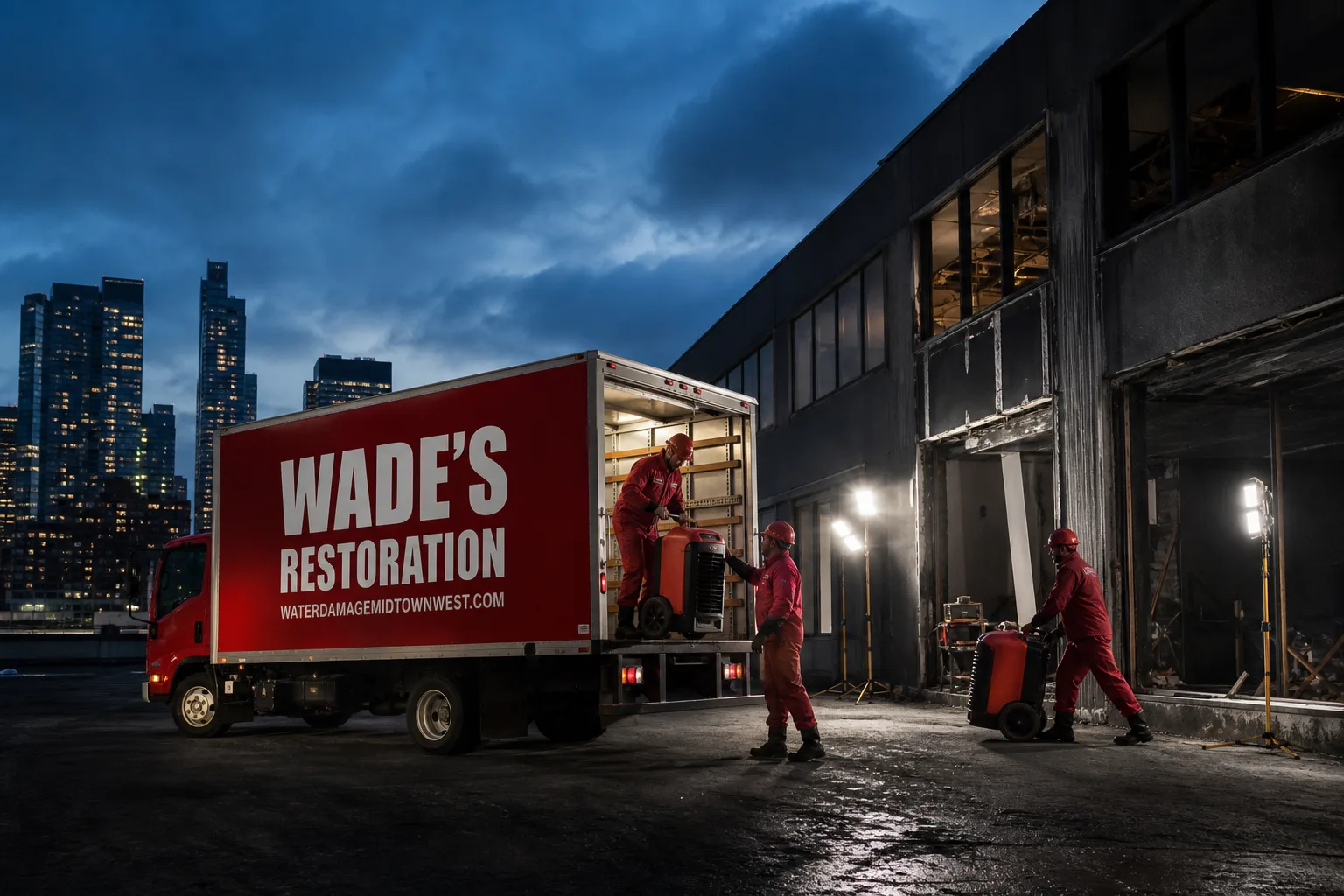
Free visual inspection and a written scope of work before any mitigation begins - photos, moisture readings, and drying logs go in your claim file
The scope we write is the scope we bill. Anything new gets shown to you, in writing, before we touch it.
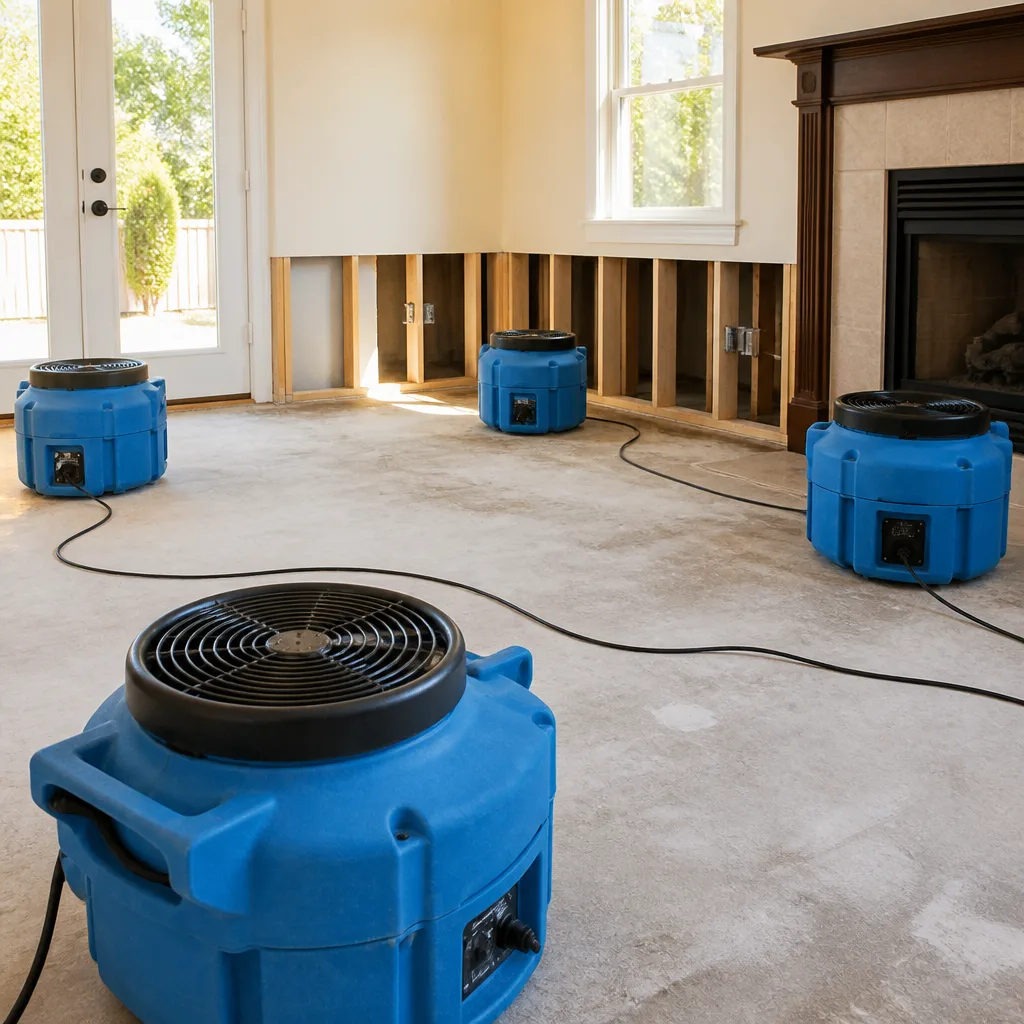
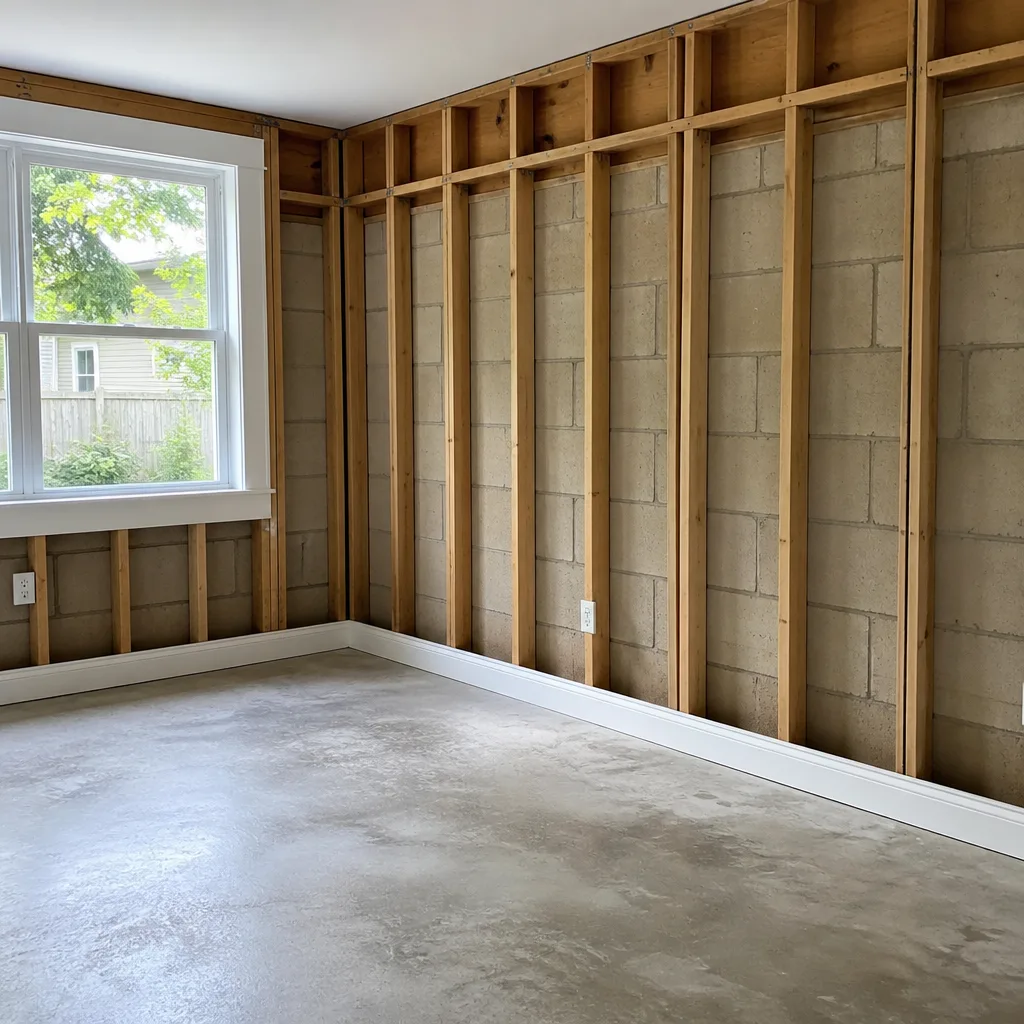
 Before
 After
After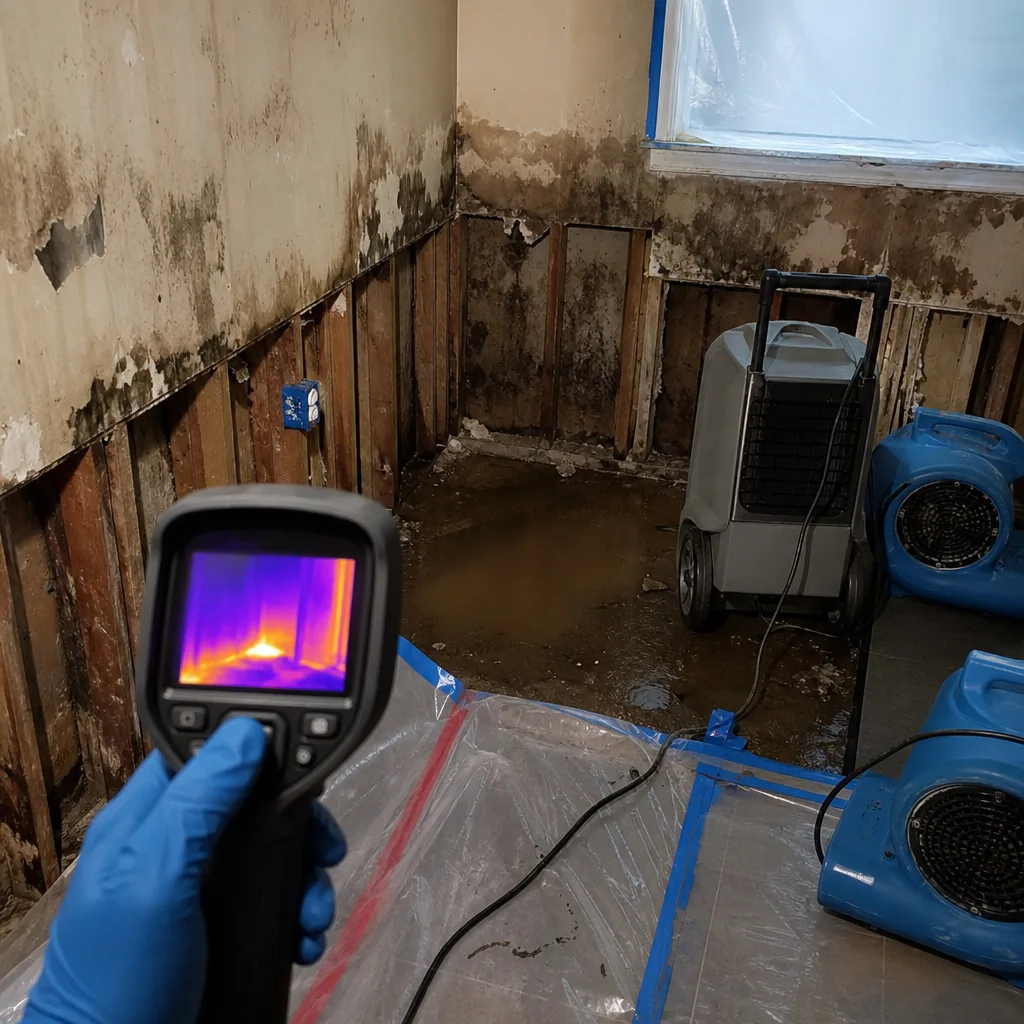 Before
 After
After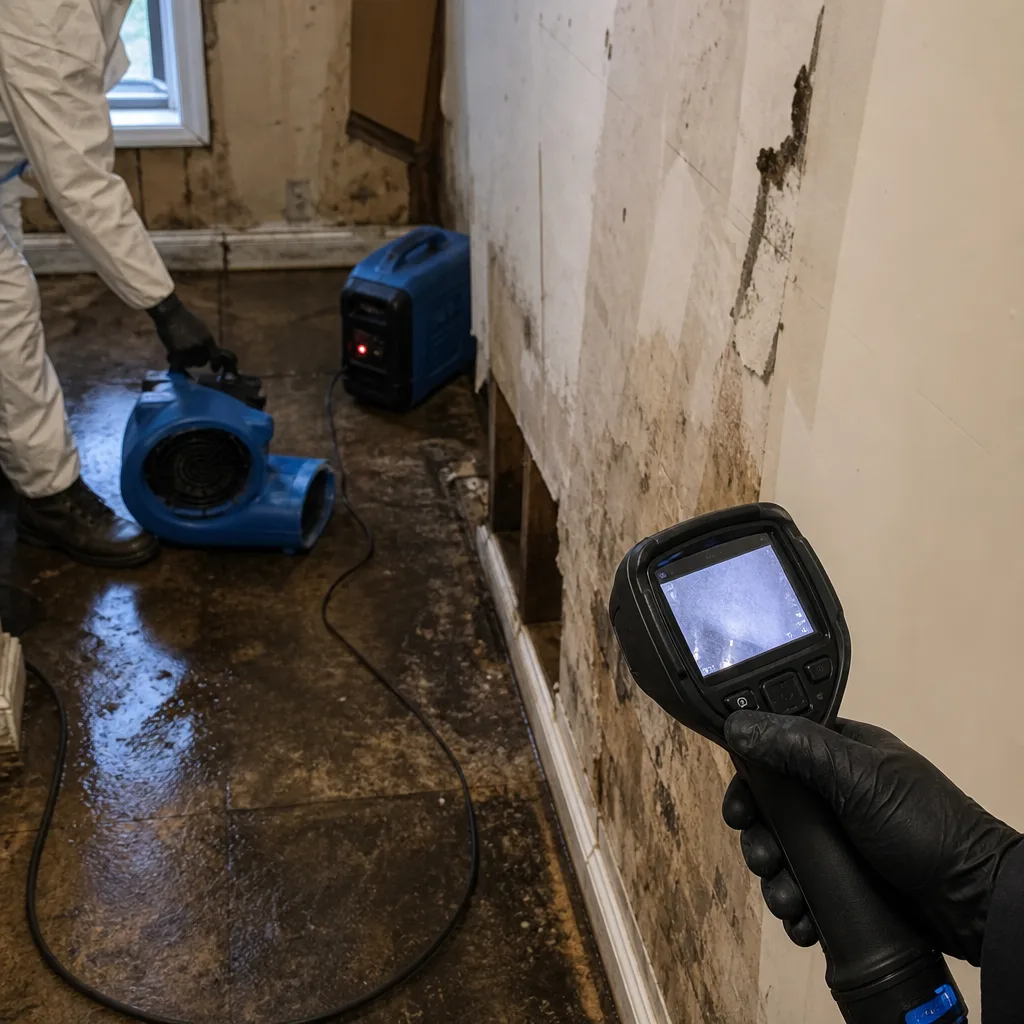 Before
 After
AfterTrusted Sewage Cleanup for Midtown West Homeowners
When sewage backs up into a Midtown West apartment or brownstone, you don’t have hours to research options. A toilet overflow or black water backup in a pre-war building off Ninth Avenue spreads fast, soaking into hardwood, wicking up drywall, and leaving behind bacteria that doesn’t just smell bad, it makes people sick. Sewage cleanup in Midtown West typically costs $2,800-$6,500-see our Sewage Cleanup pricing for details-and can often start the same day you call. Wade Ferris has been answering his own phone for sewage emergencies since 2007, and he’ll be the one walking through your door, moisture meter in hand. Call (607) 703-3408 and you’ll get Wade, not a call center.
What Our Sewage Cleanup Service Includes
Sewage cleanup isn’t one job, it’s a dozen different jobs depending on where the waste came from and how far it traveled. Here’s what Wade’s Restoration actually does, broken down by the specific problem you’re facing in Midtown West, whether you need our Sewage Cleanup in Hoboken or right here.
Sewage Backup Cleanup
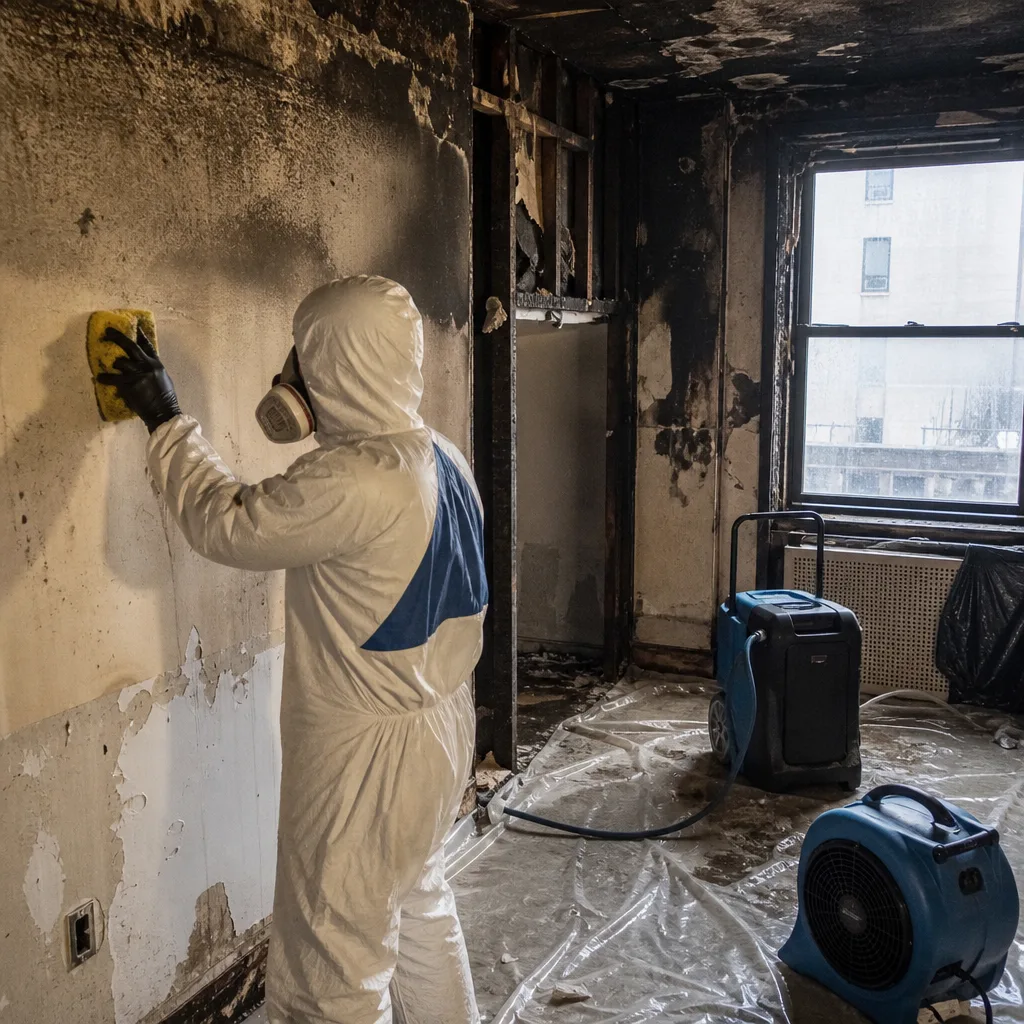
A sewage backup happens when the main line from your building can’t drain and waste pushes backward through floor drains, tubs, or toilets. In Midtown West, older buildings share lateral lines, which means a blockage three floors down can surface in your kitchen. Wade’s crew extracts the standing water with truck-mounted extractors, removes contaminated flooring and drywall, and then we sanitize every affected surface. We don’t mask the smell; we remove the source.
Toilet Overflow Cleanup
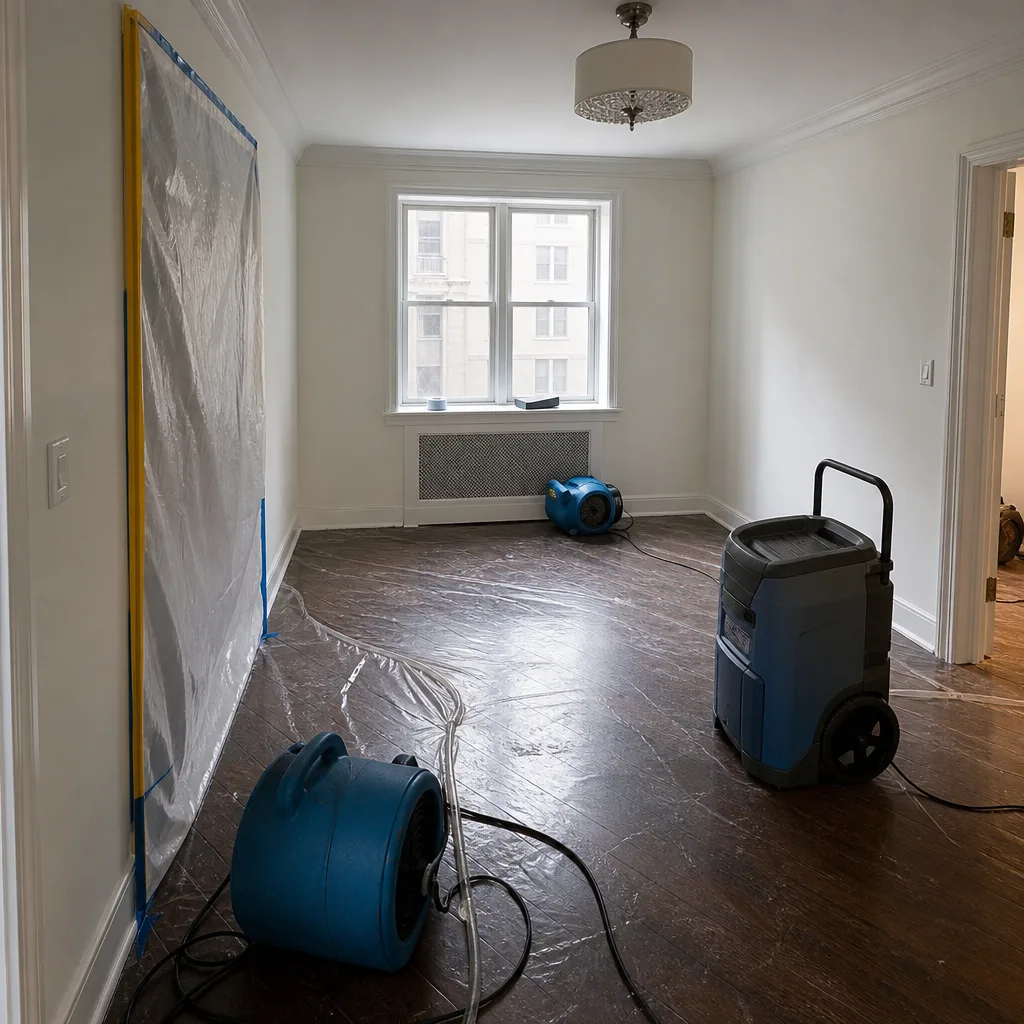
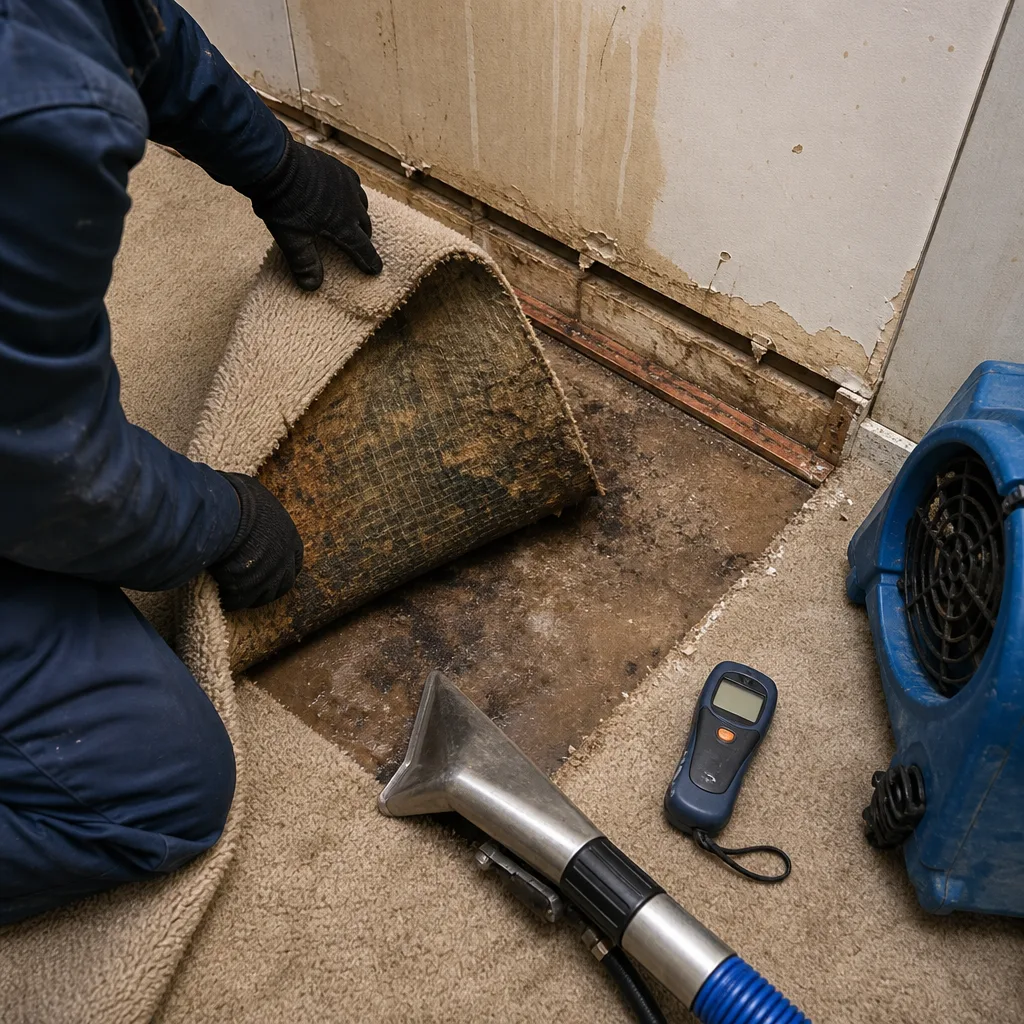
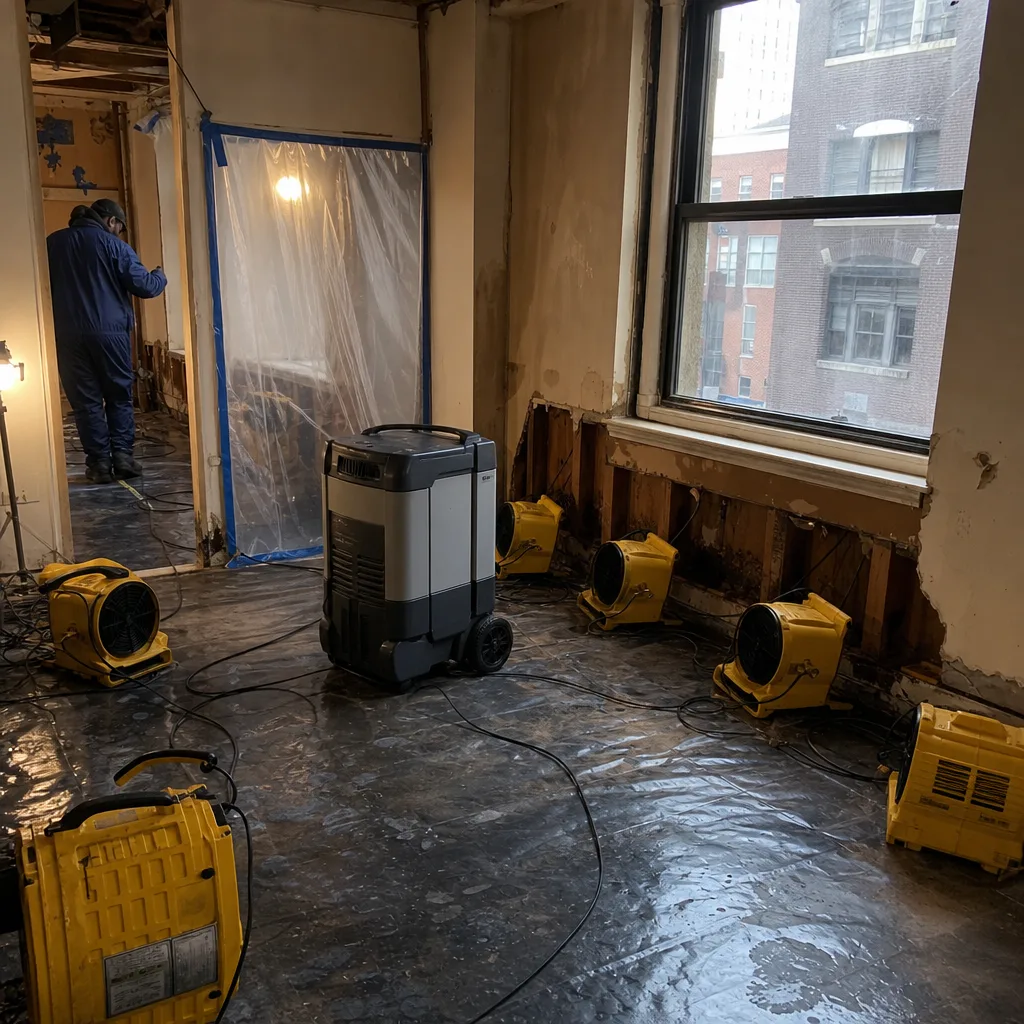
Toilet overflows are the most common sewage problem we handle in Midtown West apartments, and they’re usually either a clogged trap or a failing wax ring between the toilet and floor. Clean water from the tank is one thing, but once bowl water spreads onto the floor, you’re dealing with Category 2 or Category 3 water that carries bacteria from human waste. Wade’s team removes the toilet, pulls the floor covering if the water got underneath, and runs professional-grade air movers and dehumidifiers from Dri-Eaz until the subfloor reads dry on a moisture log you get to keep.
Septic Failure Cleanup
Septic failures are rarer in Midtown West proper than in the outer boroughs, but plenty of older properties in the area still rely on aging systems or shared waste lines that behave like a failing septic field when roots or grease collapse the pipe. When a septic system backs up, the water that enters the home is untreated waste, and that’s a full PPE, full extraction, full sanitization job. Wade’s Restoration treats septic failure cleanup as a biohazard response from the first truck roll, because that’s what it is.
Black Water Extraction
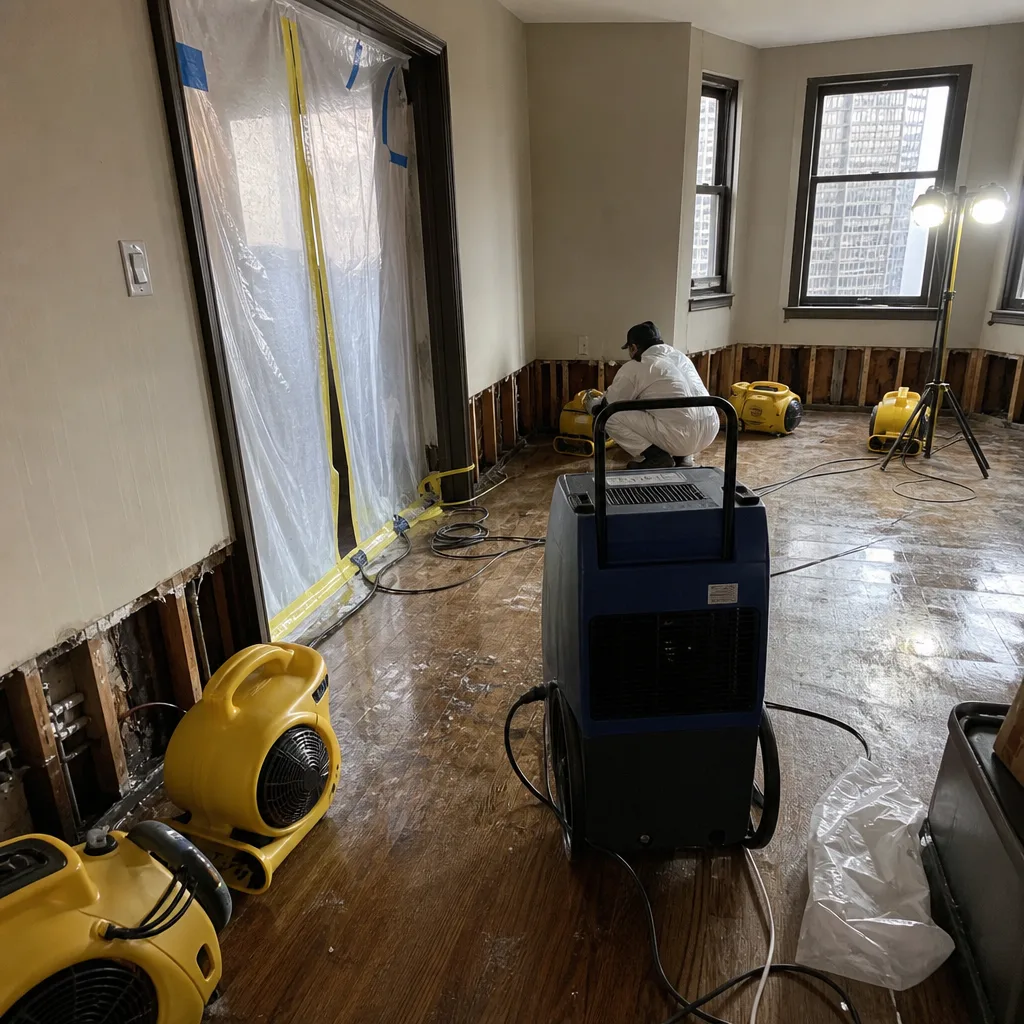
Black water is the industry term for water containing raw sewage, and it can’t be shop-vacced and called good. Black water extraction means removing every gallon of contaminated water, cutting out saturated porous materials like carpet pad and drywall, and disposing of them as regulated waste. In Midtown West, where buildings share walls and floors, black water from one unit can seep into the neighbor’s ceiling cavity, so we inspect beyond the visible damage line. We also use infrared cameras to find moisture hiding inside wall cavities before we dry anything down.
Sanitization & Disinfection
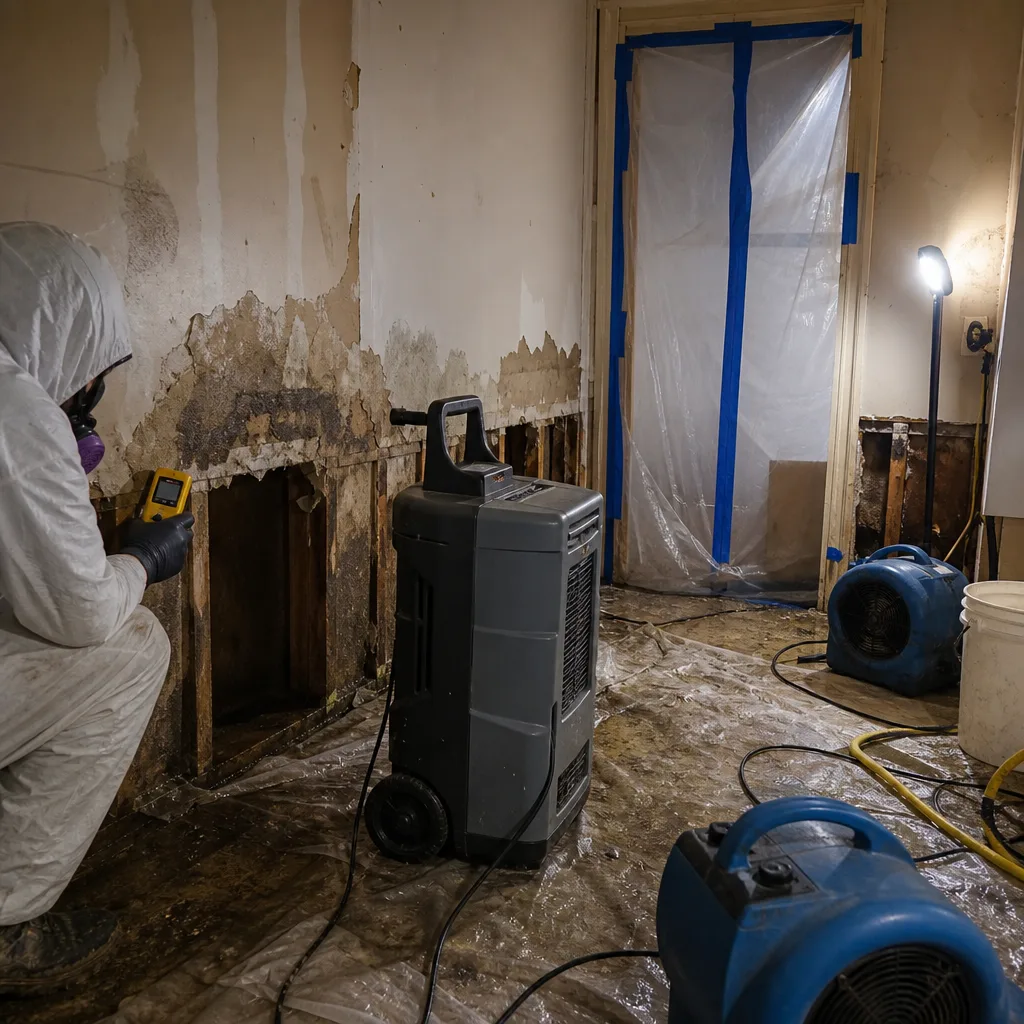
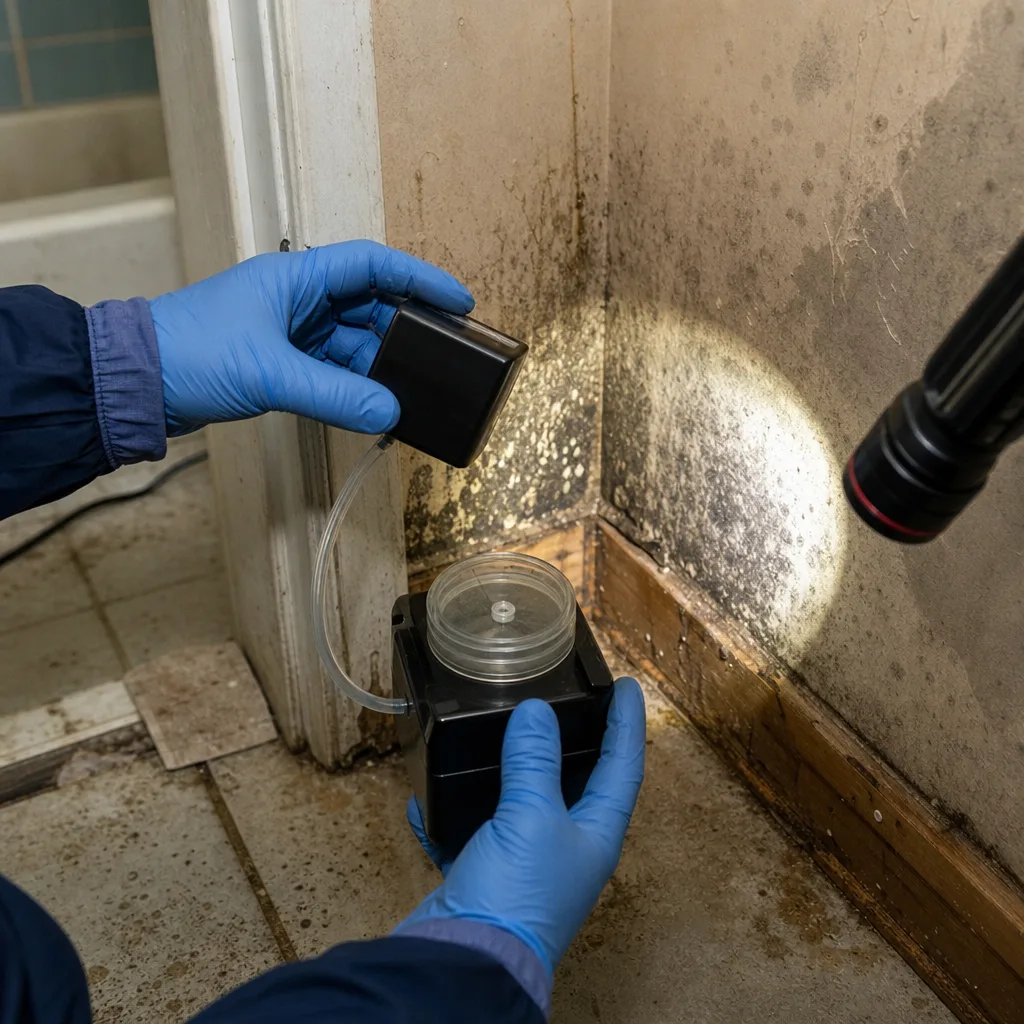
Extraction and drying don’t make a sewage site safe; the surfaces that came into contact with waste need to be disinfected with EPA-registered antimicrobials applied at proper dwell times. Wade’s crew wipes, sprays, and treats every exposed surface, including studs that got wet before new drywall goes up. We document every step with photos, so if you’re filing an insurance claim, you have a record of what was cleaned, when, and with what product.
Crawl Space Sewage Removal
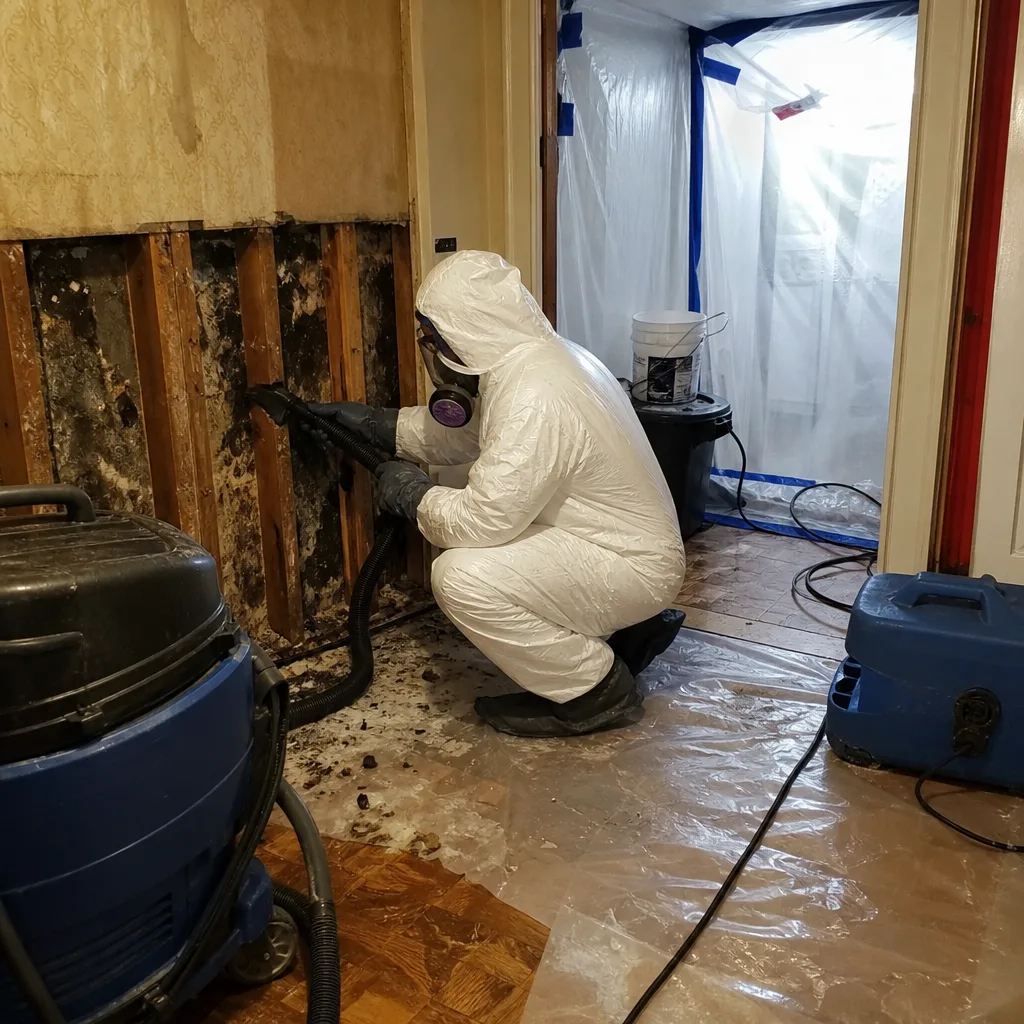
When a waste line leaks under a Midtown West building, the crawl space or basement becomes a reservoir for raw sewage that can off-gas methane and ammonia into the living space above. Crawl space sewage removal means suited-up technicians going into confined, contaminated spaces to extract waste, remove sodden insulation, and treat the soil and framing. This is not a job for a handyman with a wet vac, and we’re IICRC-certified for exactly this kind of confined-space biohazard work.
What happens when you call
- 1
A real person answersNo phone trees - you reach a local pro.
- 2
You get an upfront price rangeHonest numbers before anyone is dispatched.
- 3
A background-checked tech heads outLicensed & insured, dispatched right away.
- 4
You approve before work beginsNothing starts until you say go.
Brands We Service for Sewage Cleanup
Most sewage cleanup work isn’t about the brand of a specific appliance; it’s about the condition of the pipes, drains, and pumps that move waste out of the building. That said, we do see recurring issues with specific makes of sewage ejector pumps and sump systems in Midtown West basements, and we know the failure patterns. Phoenix and XPOWER both make sewage-rated extraction units and air movers that we use on site, and we’ve also serviced hundreds of buildings with Phoenix-based drying setups that were installed after a previous flood. Knowing how the equipment performs under load helps us diagnose whether your problem is the pump, the float switch, or a collapsed discharge line.
Wade’s Restoration runs Dri-Eaz dehumidifiers and Phoenix air movers on every sewage job because fast, controlled drying is what prevents secondary mold problems. If you’ve got a building with any brand of sewage ejection system, sump pump, or floor drain assembly, and it’s backing up into occupied space, we can help. The brand of the pump is the manufacturer’s problem; the mess it made is ours.
Signs You Need Sewage Cleanup Right Now
Some sewage problems announce themselves loudly. Others start as a faint smell or a slow drain and get worse by the hour. Here’s what to watch for in Midtown West homes and what each sign means.
- Multiple drains backing up at once. If your tub gurgles when the toilet flushes or the kitchen sink bubbles when the washing machine drains, the problem isn’t in the fixture, it’s in the main line. In Midtown West buildings with shared laterals, a main-line backup can push waste into the lowest drain in the stack. Call before the tub starts filling from below.
- A sewage odor that comes and goes. Intermittent sewer smell usually means a dry trap, a cracked vent stack, or a slow leak behind a wall that only smells when the waste line is warm. If you smell it, there’s already organic material decomposing somewhere in your space, and that means biological contamination is present even if you can’t see it. Ignoring the smell doesn’t make it less of a health risk.
- Water staining around baseboards or lower walls. If a waste line leaks inside a wall cavity in a Midtown West brownstone, the first visible sign is often a wicking stain at the baseboard line or soft drywall near the floor. Waste water wicks upward through gypsum and plaster, spreading bacteria as it goes. The stain might look small; the contaminated area behind it rarely is.
- Toilets that won’t flush or drain slowly. A single slow toilet can be a simple clog, but if plunging doesn’t fix it and the water level rises and falls on its own, you may have a partial main-line blockage that’s about to become a full backup. The moment the water stops going down, stop using every fixture in the building. Every flush you attempt after that pushes more waste upstream.
- Sewage surfacing in the yard or basement floor drain. When the main line is obstructed, waste water takes the path of least resistance, which is often the floor drain in the basement or the cleanout in the yard. In Midtown West, where basement units and cellar spaces are common, a floor drain backup means the waste line is full and looking for somewhere to go. That’s a black water event, and it needs extraction, not just bleach.
If any of these signs are happening in your building, call (607) 703-3408. Wade answers his own phone, and he’ll tell you straight whether you need a crew tonight or a plumber first.
Our Sewage Cleanup Process - Step by Step
You deserve to know exactly what’s going to happen before anyone walks into your home in a Tyvek suit. Here’s how Wade’s Restoration handles sewage cleanup from the first call to the final walkthrough.
- 1
Immediate assessment and safety check. Wade or one of his senior crew members arrives, walks the affected area with you, and identifies the source of the sewage and the category of water. Black water from a main-line backup gets full PPE and containment. Gray water from a washing machine overflow might not. We tell you what category you have and why, and we take photos of everything before we move anything.
- 2
Containment and source control. Before extraction starts, we seal off the affected area with containment barriers to stop airborne bacteria from spreading into clean rooms through your HVAC system. If the sewage is still coming in, we stop it at the source, either by isolating the fixture or, with your permission, shutting down the affected line until the plumber can make the permanent repair.
- 3
Extraction and contaminated-material removal. Standing sewage gets extracted with truck-mounted or portable extraction units, then we remove every porous material the water touched, including carpet, pad, drywall, insulation, and baseboards. In Midtown West buildings, where walls are shared, we cut at flood lines and photograph the open cavities so you can see exactly what we saw. Nothing gets hidden behind a fresh coat of paint.
- 4
Drying and daily moisture logging. Professional-grade Dri-Eaz dehumidifiers and Phoenix air movers go in, and Wade takes moisture readings every single day until the affected structure is dry to standard. You receive the full moisture log at the end of the job, documenting daily readings from every affected room. Almost nobody in this trade hands over their logs. Wade does, because you should know your home is actually dry, not just told it is.
- 5
Sanitization, deodorization, and reconstruction. Once the structure is dry, we treat every exposed surface with EPA-registered antimicrobials, run air scrubbers to pull particulates from the air, and then rebuild what we removed, including drywall, flooring, and trim. The last step is a walkthrough with you, the full photo file, the drying log, and the 90-Day Done Right Promise in writing. If something isn’t right within 90 days, you call one number and Wade comes back.
How Much Does Sewage Cleanup Cost in Midtown West?
A typical toilet overflow cleanup in Midtown West, with extraction and drying only, runs $1,800-$3,200. A main-line sewage backup that floods a basement or ground-floor apartment and requires drywall removal, full sanitization, and reconstruction usually lands between $4,500 and $9,000, depending on the square footage affected and whether the waste soaked into subflooring or wall cavities. Crawl space sewage removal is its own animal, often running $3,500-$7,500 when you factor in confined-space entry, waste disposal, and soil treatment.
What drives the price is the category of water, the amount of material that has to be cut out and replaced, and how far the moisture traveled before we contained it. If you catch a backup early and the water stays on top of tile, you’re looking at extraction, drying, and sanitization. If the water sat overnight and wicked into drywall and subfloor, you’re looking at a reconstruction job. The way to avoid overpaying is to get a written scope before work starts, which is exactly what Wade’s Restoration gives you, even for Sewage Cleanup in Union City. No phone quote that changes when the crew walks in, no vague line items, no surprise upcharges. We also give free second opinions on any written estimate from another company, so if someone else quoted you, bring us the paperwork and Wade will tell you whether it’s fair, overbuilt, or missing something. Estimates are free. Call (607) 703-3408 and Wade will come out, walk the space with you, and put the scope in writing.
Sewage Cleanup Near Midtown West - Our Service Area
Wade’s Restoration serves the neighborhoods around Midtown West, including Sewage Cleanup in the Financial District and Sewage Cleanup in Lower Manhattan, plus Jersey City, Astoria, Long Island City, Glendale, the Upper West Side, Hoboken, Weehawken, and West New York. If your building is in Midtown West itself, Wade is usually at your door within the hour, depending on bridge and tunnel traffic. If you’re across the river, expect a slightly longer drive, but the same person answering the phone is the one who shows up. For more about who we are and how we work, start home.
Serving Midtown West, NY - Our Local Coverage Area
We’re based in the Midtown West area and know this community well, and we also offer our Sewage Cleanup in Jersey City. Use the map below to see our service coverage - if you’re nearby, we can almost certainly help.
Frequently Asked Questions - Sewage Cleanup in Midtown West
Sewage cleanup is the process of removing water contaminated with human waste, extracting it from a home, removing materials it has soaked into, drying the structure, and sanitizing every affected surface to kill the bacteria and pathogens left behind. It’s more than just mopping up; it typically involves cutting out contaminated drywall, running professional drying equipment, and treating the area with EPA-registered antimicrobials.
Most Midtown West sewage cleanups take 2 to 5 days from extraction to dry, depending on how far the water traveled and what materials it soaked into. A simple toilet overflow on tile can be extracted and set up for drying the same day, while a main-line backup that flooded a finished basement and soaked drywall and subfloor may require 5 days of equipment runtime before rebuilding starts.
You’ll generally pay $1,800-$3,200 for a contained overflow and $4,500-$9,000 once drywall and flooring need to come out and go back in. The final number depends on the category of water, the affected square footage, and the amount of reconstruction needed. Call (607) 703-3408 for a written estimate, and remember we offer free second opinions on anyone else’s written quote.
Yes, and this is where Wade’s Restoration earns its keep. Wade talks to your adjuster directly, sends the photo documentation and daily moisture logs, and makes sure the adjuster sees the actual scope of damage. You’re never stuck as the middleman relaying information between two parties. If your Midtown West policy covers sewage backup, we’ll document the job to help that claim get paid.
Wade answers his own phone 24 hours a day, seven days a week, and he can have extraction running inside the hour for Midtown West addresses. Sewage doesn’t wait for business hours, and neither does he. If you call at 2 a.m. with a flooded basement, the person you’re talking to is the person who will show up, not an answering service.
It’s a written promise, stamped on every restoration contract, that says if the work isn’t done right within 90 days, Wade comes back and makes it right. It’s not a slogan or a sales line; it’s the owner’s name and reputation behind every sewage job. If a smell comes back or a surface that should be dry isn’t, one call brings Wade back.
Clear a path to the affected area, move small items and valuables out of the room if you can do so safely, and keep children and pets away from the contamination. Don’t try to clean black water yourself. The most important preparation is a phone call to (607) 703-3408 so Wade can get eyes on the problem and tell you exactly what the next 24 hours need to look like.
Schedule Your Sewage Cleanup Service in Midtown West Today
If you’ve got sewage backing up in Midtown West, call (607) 703-3408 right now. Wade answers his own phone, he’ll walk you through what to do in the next ten minutes, and he can have extraction running inside the hour. You’ll get a written scope before any work starts, photos of everything we do, and a 90-day promise in writing. For more about our full range of work, see Sewage Cleanup in Midtown West. One call, and Wade’s on the road.
Written by Wade Ferris, Owner at Wade’s Restoration, serving Midtown West since 2007.