
Free visual inspection and a written scope of work before any mitigation begins - photos, moisture readings, and drying logs go in your claim file
The scope we write is the scope we bill. Anything new gets shown to you, in writing, before we touch it.
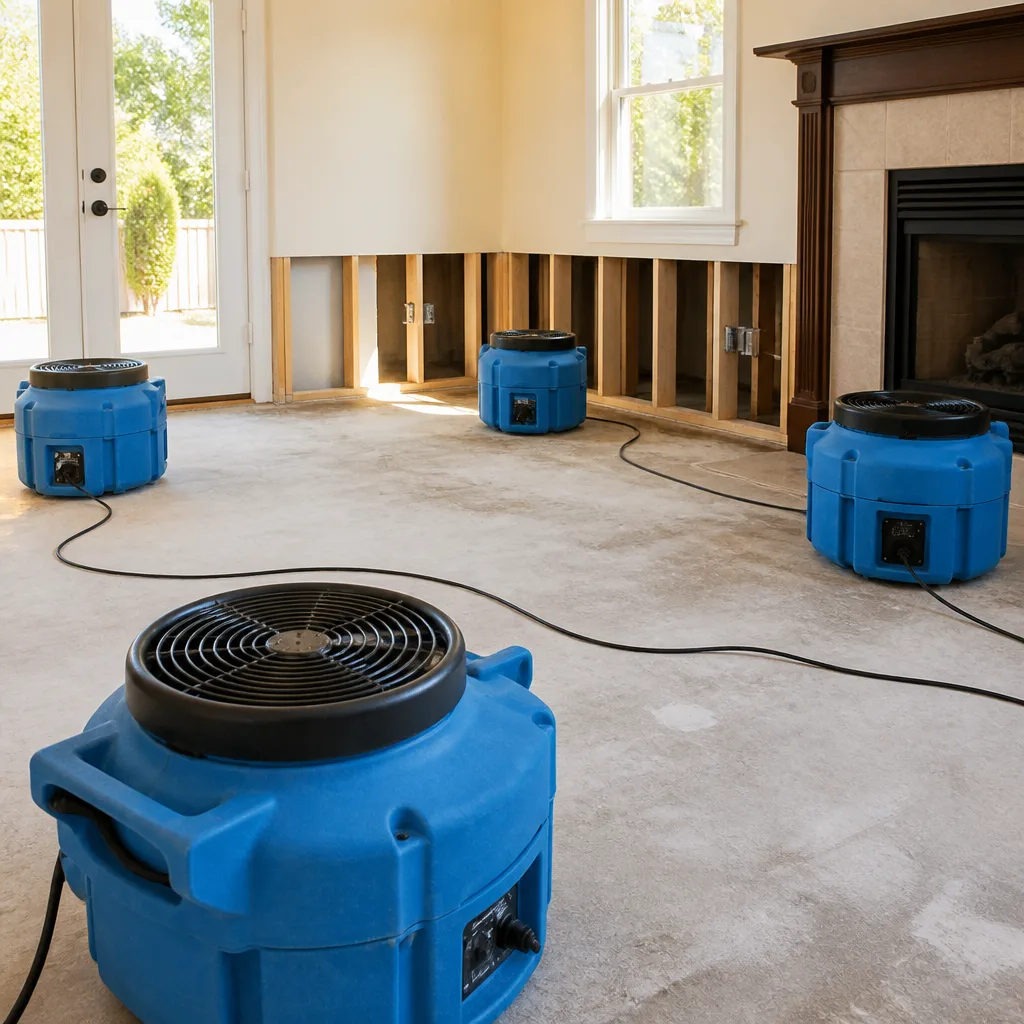
 Before
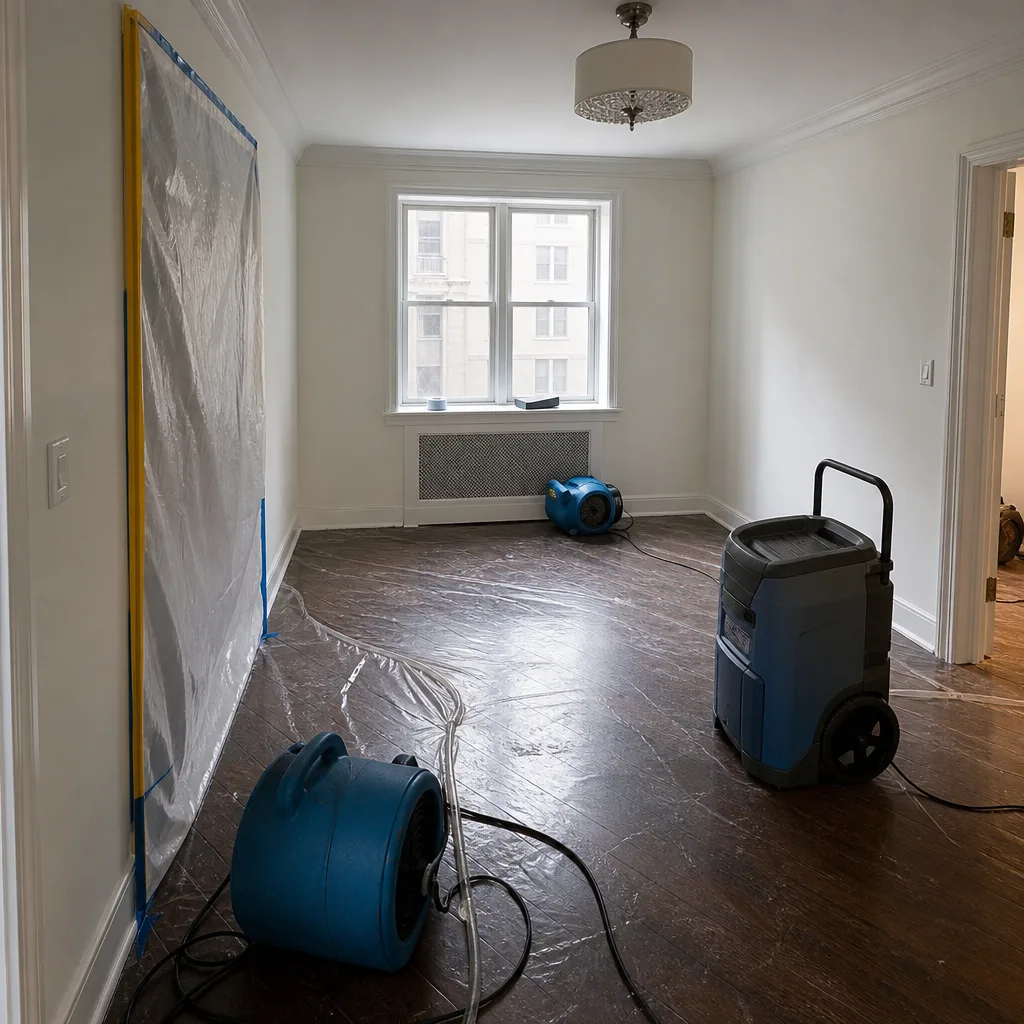 After
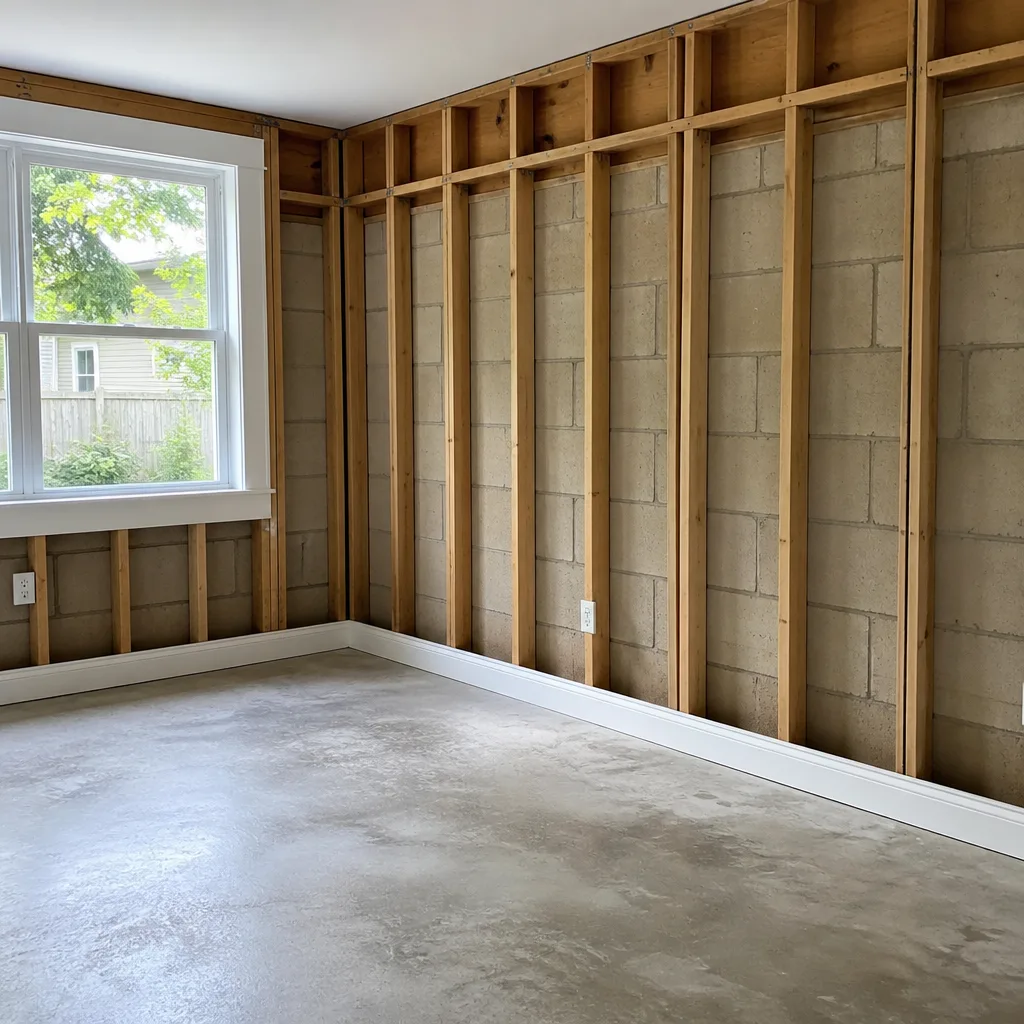
After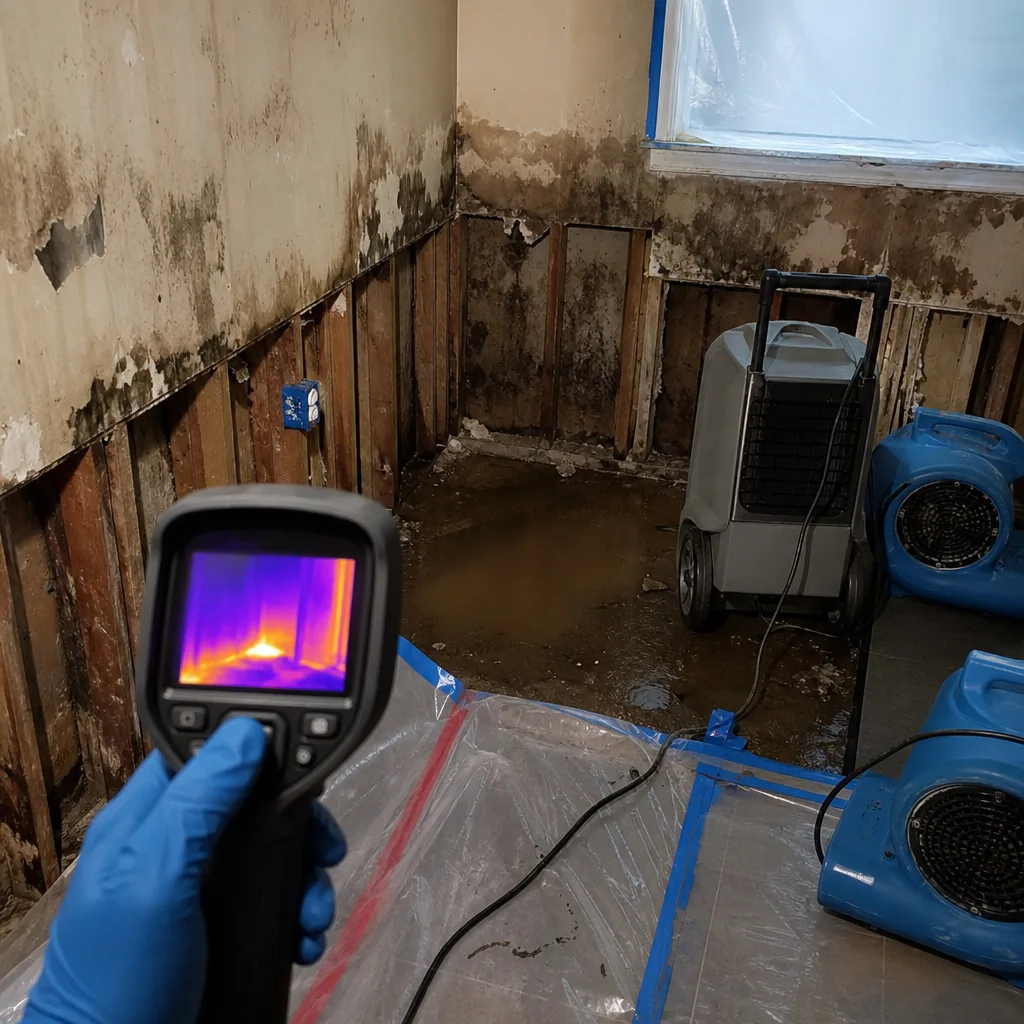 Before
 After
After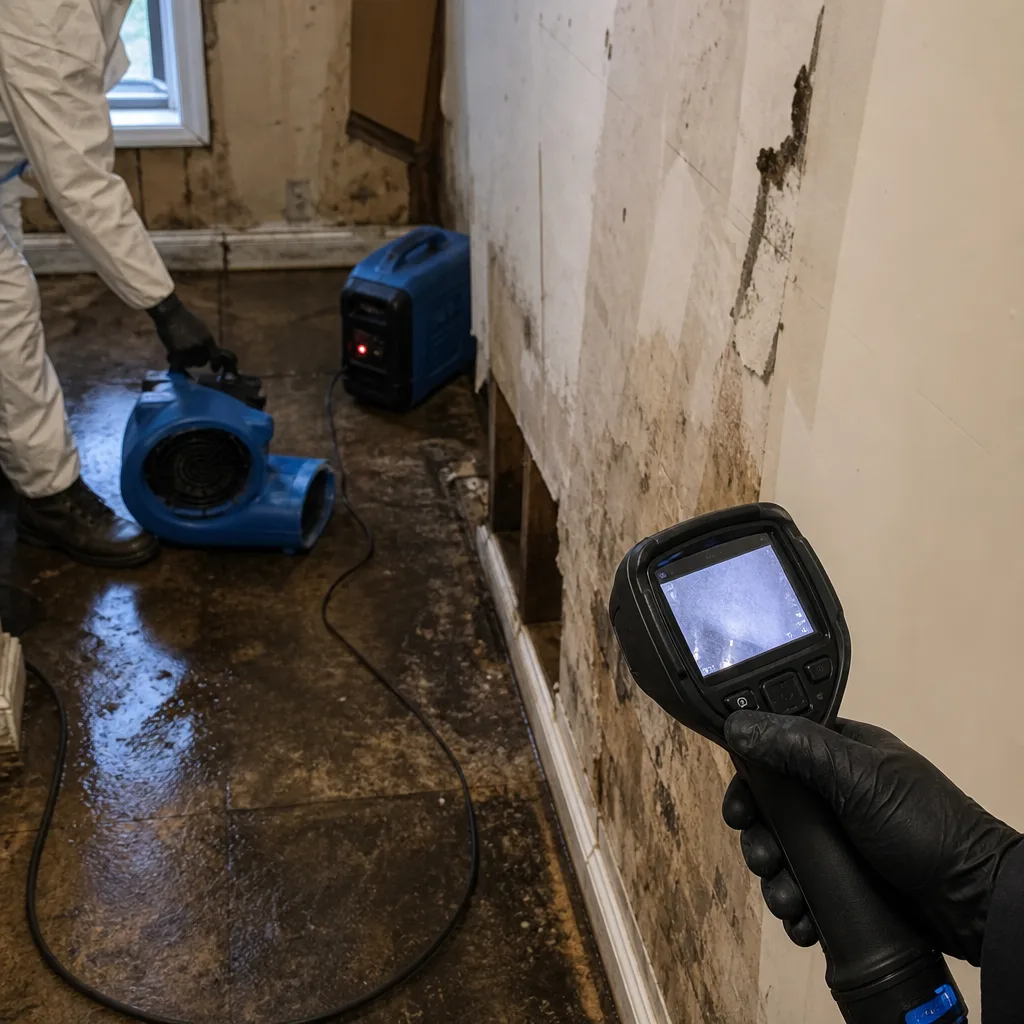 Before
 After
After24/7 Emergency Storm & Disaster Restoration in Financial District
Storm damage in the Financial District moves fast, and the building stock here makes it worse. A nor’easter pushes harbor surge into sub-basement vaults and elevator pits before most residents even realize the street outside is underwater. Wind-driven rain finds its way through aging masonry and around forty-year-old entry doors. Then the water starts moving down through the building, floor by floor.
We answer the phone at (607) 703-3408 any hour, day or night. A real person picks up. Not a call center, not a recording. Wade Ferris answers his own phone, and if there’s a crew needed in FiDi, they’re on the road while you’re still explaining what happened. The first hour after a storm breach is when most of the damage gets locked in. Water that sits in gypsum and subflooring for a day costs ten times more to dry than water caught in the first sixty minutes. Call now.
Understanding Storm & Disaster Restoration Severity in Financial District Properties
Storm water entering a FiDi building usually arrives as what we call Category 3 water, the most contaminated classification. That’s harbor surge mixed with sewage, street runoff, and whatever a hundred-year-old drainage system just pushed back up. Category 3 water carries pathogens and requires full containment, antimicrobial treatment, and often drywall removal rather than simple drying. When wind-driven rain blows through a failed window or door seal into an upper floor and works its way down, we can sometimes deal with Category 1 or 2 water there, but in the Financial District, the sub-basement event is almost always Category 3.
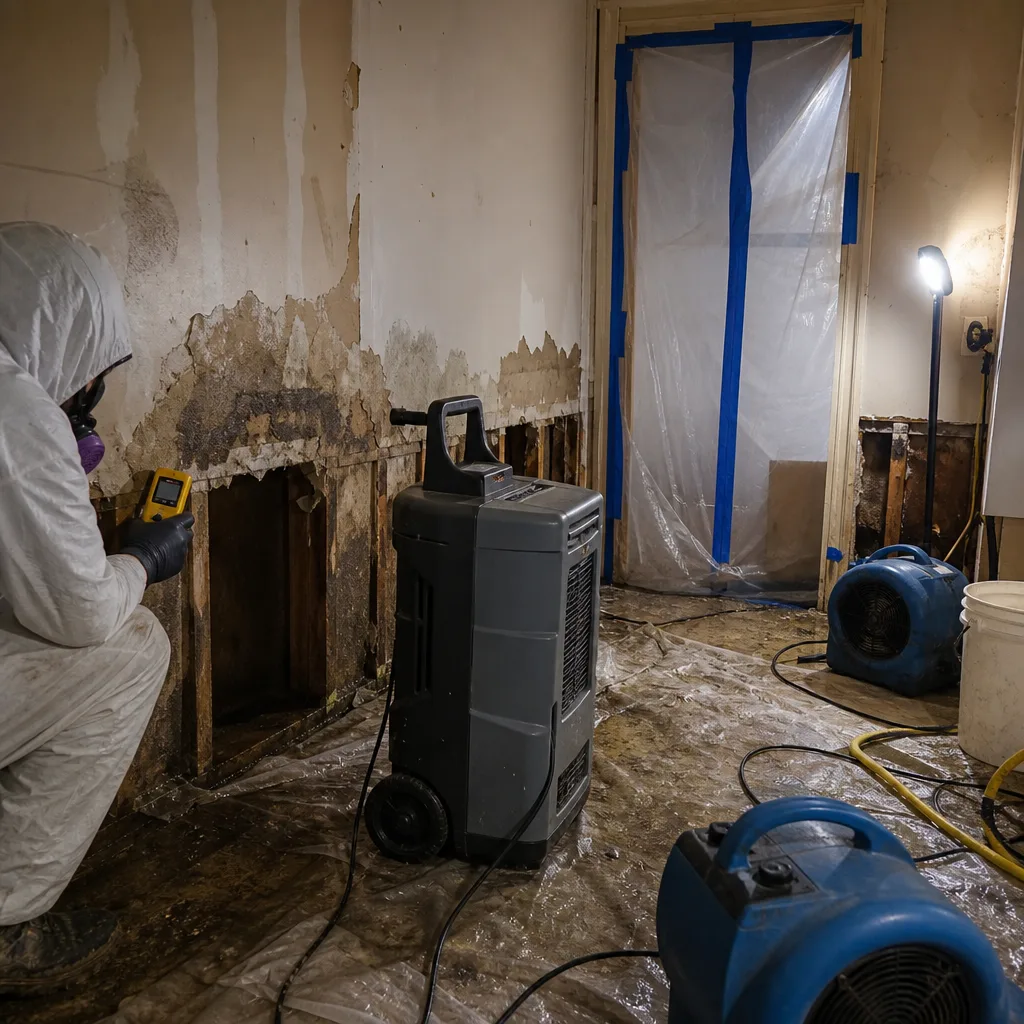
Moisture mapping matters more here than anywhere else in the city. These pre-war towers have structural steel encased in masonry, and water travels through concealed cavities nobody sees. We run thermal imaging and hygrometer readings behind baseboards, inside elevator shafts, and through chase walls. A floor that looks dry at the surface can be hiding saturated gypsum that will fail and mold within 72 hours. Structural drying in a converted office tower means computing a very different drying environment than a single-family house. The building’s internal climate, elevator pressure differentials, and 20-story stack effect all change how vapor moves. We account for all of it.
Why Financial District Property Owners Choose Wade’s Restoration
- 45-minute response commitment for FiDi calls. Wade heads out from the New York City office and can have extraction running inside the hour on most Financial District jobs.
- 24/7 live answer, always a person. No automated triage. You call, a human picks up, and Wade himself is often the one who answers.
- IICRC-certified crews. Wade’s team holds WRT and ASD certifications, with AMRT for mold containment and structural drying. The people in your building know the science.
- Free visual inspection. Before any work starts, Wade walks the loss with you and tells you straight what needs doing. No charge for that.
- Direct insurance billing and adjuster communication. Wade talks to the adjuster directly, so you’re never the one relaying technical details between two parties.
- One team from extraction to reconstruction. The same crew that pulls the water out is the crew that rebuilds your floor. Nobody hands your building off to a subcontractor you’ve never met.
Our Storm & Disaster Restoration Process
Inspection & Assessment
We walk every affected floor, sub-basement included. Thermal imaging and moisture meters map the full extent of water migration through concealed wall cavities and chase spaces. You get a written scope before any equipment gets plugged in.
Extraction & Stabilization
Pumps come first for standing water in sub-basement vaults, elevator pits, and garage levels. Then we stem what’s still coming in. Emergency board-up on breached doors and windows happens the same visit.
Drying & Dehumidification
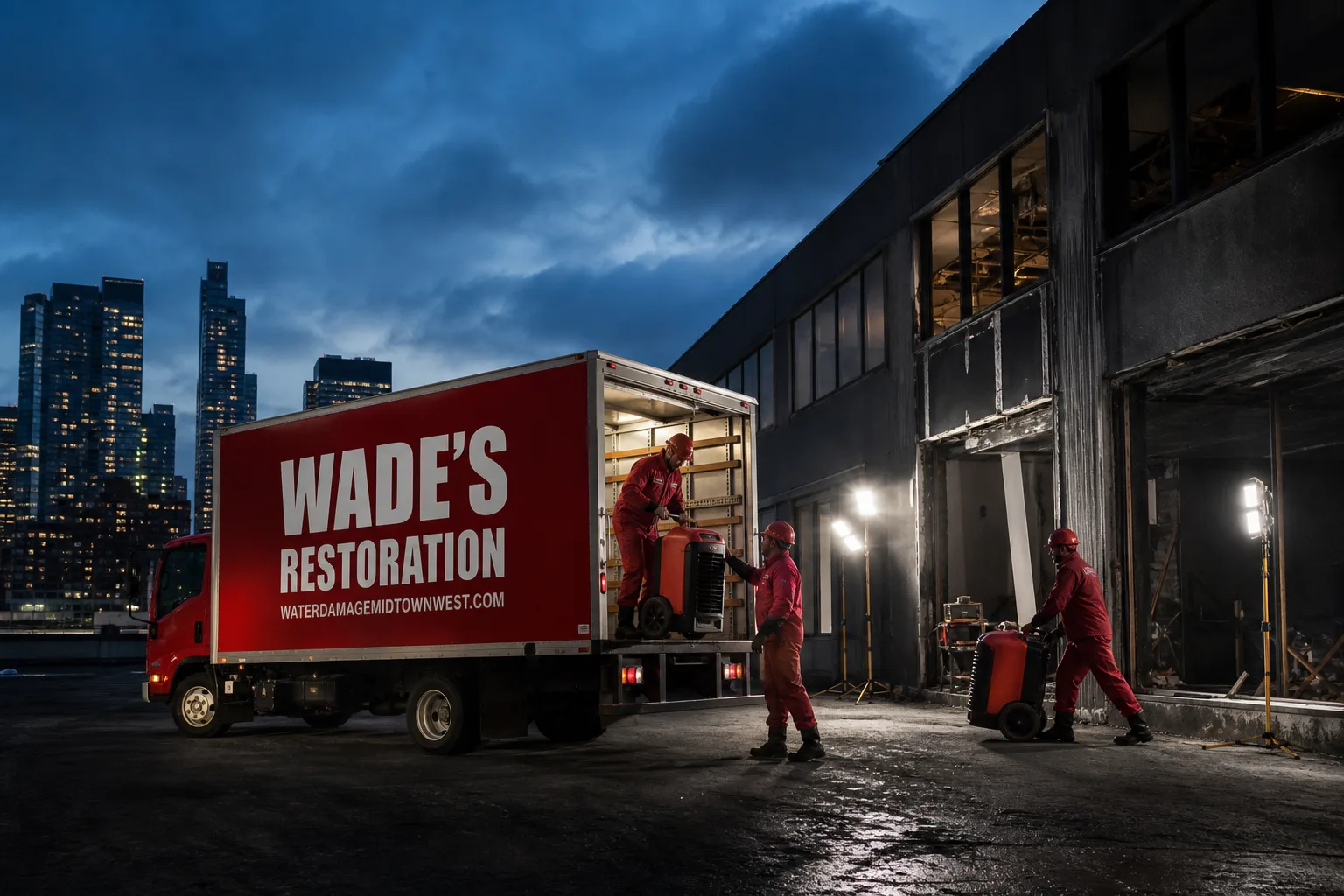
Dri-Eaz dehumidifiers and XPOWER air movers get positioned floor by floor, with drying chambers built for larger affected areas. In FiDi towers, we hand-carry equipment when elevators are down. That’s just part of the job here.
Cleaning & Sanitization
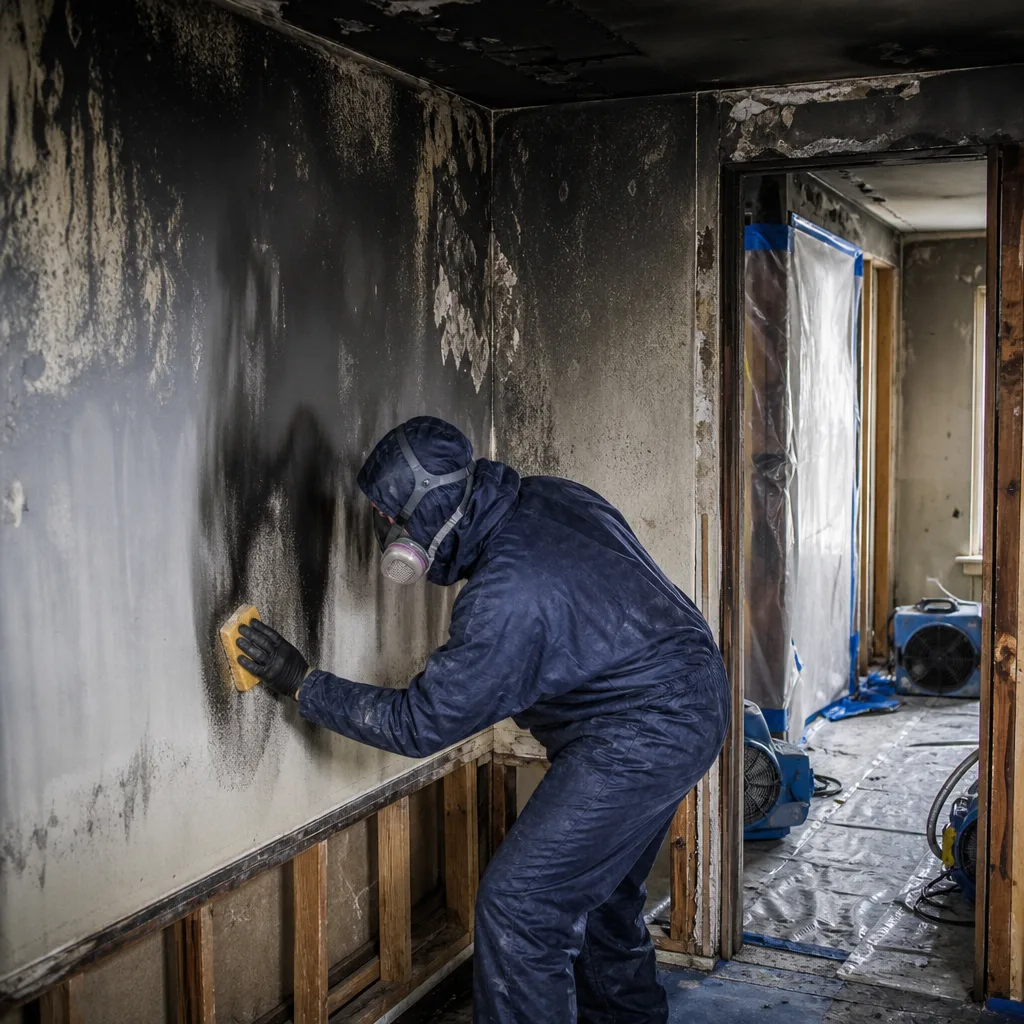
Category 3 water means antimicrobial treatment on every affected surface, not just the visibly dirty ones. HEPA air scrubbers run during demo and treatment to keep what’s disturbed from spreading to unaffected floors.
Storm-Specific Containment
Negative air pressure isolates affected floors so mold spores and contaminated dust don’t travel through elevator shafts or stairwells. This matters triple in a converted tower where hundreds of units share one vertical core.
Repairs & Restoration
We rebuild what the water took: drywall, flooring, electrical, and structural framing. Same crew, same owner accountable for the whole job. The 90-Day Done Right Promise covers every bit of it, in writing.
Need Emergency Storm & Disaster Restoration in Financial District Now?
Crews minutes away, answering live 24 hours a day. The sooner we start, the less it costs.
Working With Your Insurance Company
Storm and flood claims in the Financial District are never simple. You’ve got building insurance, unit owner insurance, sometimes a condo association policy, and flood coverage that may or may not exist depending on whether the loss came from storm surge, wind-driven rain, or a backup. Wade has been dealing with adjusters since 2007 and handles the back-and-forth himself. He documents what the loss looked like in the first hour, because that’s what wins claims.
What We Provide Your Insurer
- Thorough documentation of the loss
- Photos of all damage, room by room
- Moisture readings and daily drying logs
- A detailed, line-item scope of work
- Direct coordination with your carrier
Built for Financial District’s Loss Calendar
Late summer and early fall are when the Financial District takes its biggest hits. Hurricane season peaks in September, and a named storm tracking up the coast pushes surge straight into Lower Manhattan’s lowest-lying tip. Sandy in 2012 taught everyone here what that means. Nor’easters from November through March bring wind-driven rain and occasional coastal flooding, especially during a full moon tide.
Winter brings a different set of problems. January deep freezes burst supply lines in older converted office buildings where original piping runs through unheated exterior chases. A pipe that lets go on the 18th floor at 2 a.m. will be dripping through 17 floors by morning. Spring thaw and heavy rain expose the chronically high groundwater table under the Financial District. Sub-basement walls that seep all season long become real intrusions when a three-inch rain falls in six hours and the bulkheads can’t keep up.
Storm & Disaster Restoration Across Financial District’s Neighborhoods
The Financial District isn’t one uniform grid. Stone Street’s old low-rise masonry buildings flood at street level and in their cellar-level restaurants. Along Water Street and South Street, converted office towers sit directly in the FEMA Flood Zone A designation, and sub-basement vaults there take surge before the storm even fully arrives. The residential conversions around Exchange Place and Broad Street carry the plumbing-load problem, commercial drains originally sized for sink use now carrying daily showers, laundry, and dishwashers across 40 floors. Over on the Battery Park side near the harbor, salt-laden wind accelerates corrosion on exterior door hardware and window seals. A door that hasn’t latched flush in months will fail completely in a named storm.
Specialized Storm & Disaster Restoration Services We Offer in Financial District
Storm Damage Cleanup
After wind and rain breach a FiDi building, we’re inside removing wet drywall, saturated insulation, and debris before the mold clock starts. Storm cleanup in a converted tower means full containment per floor, because demolition dust from the 9th floor shouldn’t end up in units on the 7th or 11th.
Flood Damage Restoration
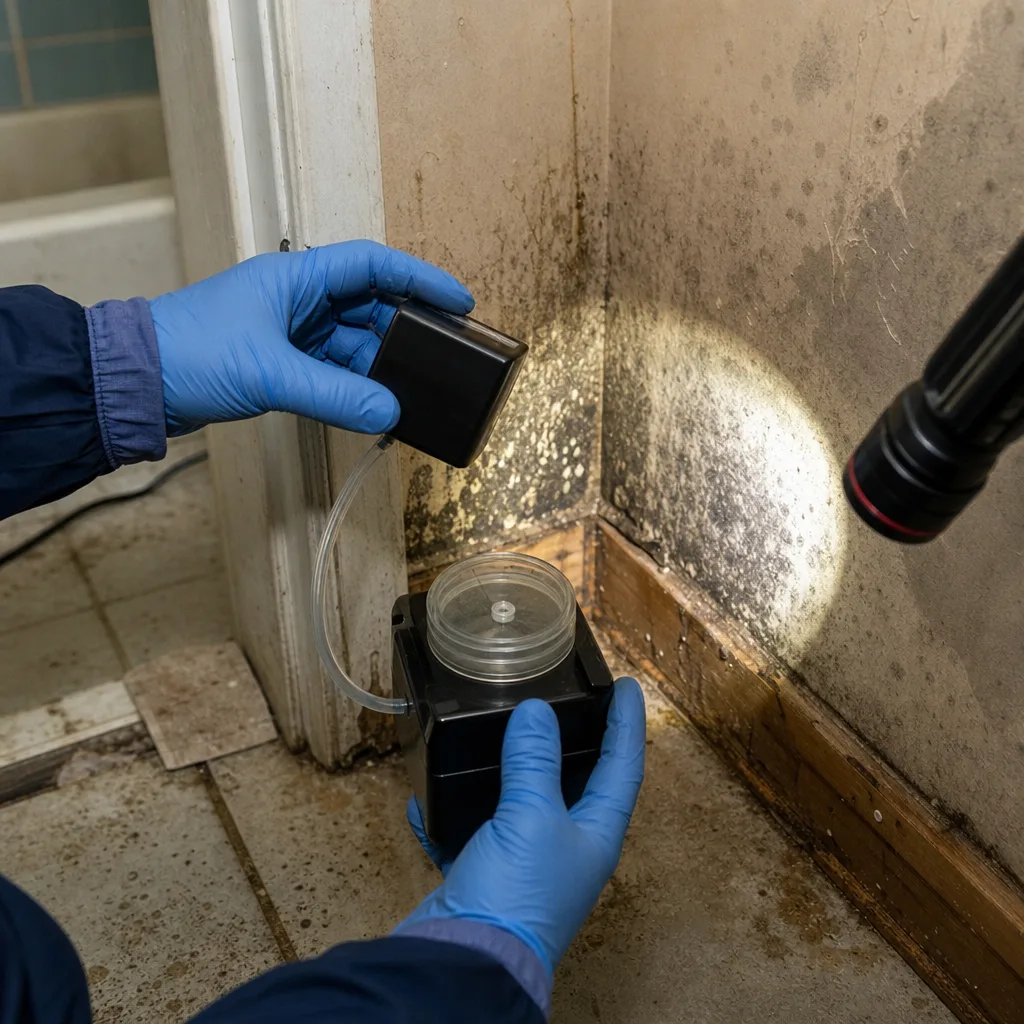
Coastal flood restoration in the Financial District almost always means sub-basement work. Elevator pits, mechanical rooms, electrical vaults. We extract, dry, and restore these spaces while the building’s vertical transport is down. Our Storm & Disaster Restoration crew has done the hand-carry equipment relay up 30-plus flights more times than we can count.
Emergency Board-Up
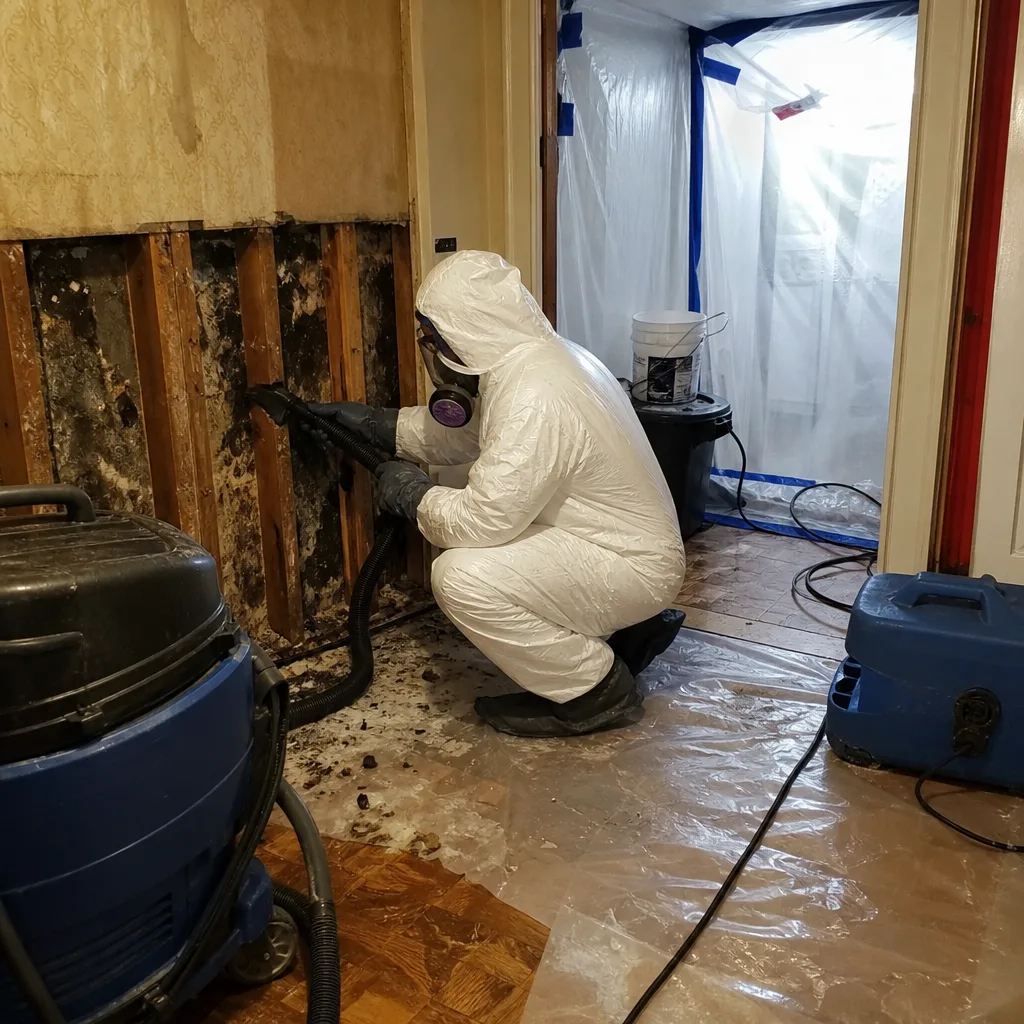
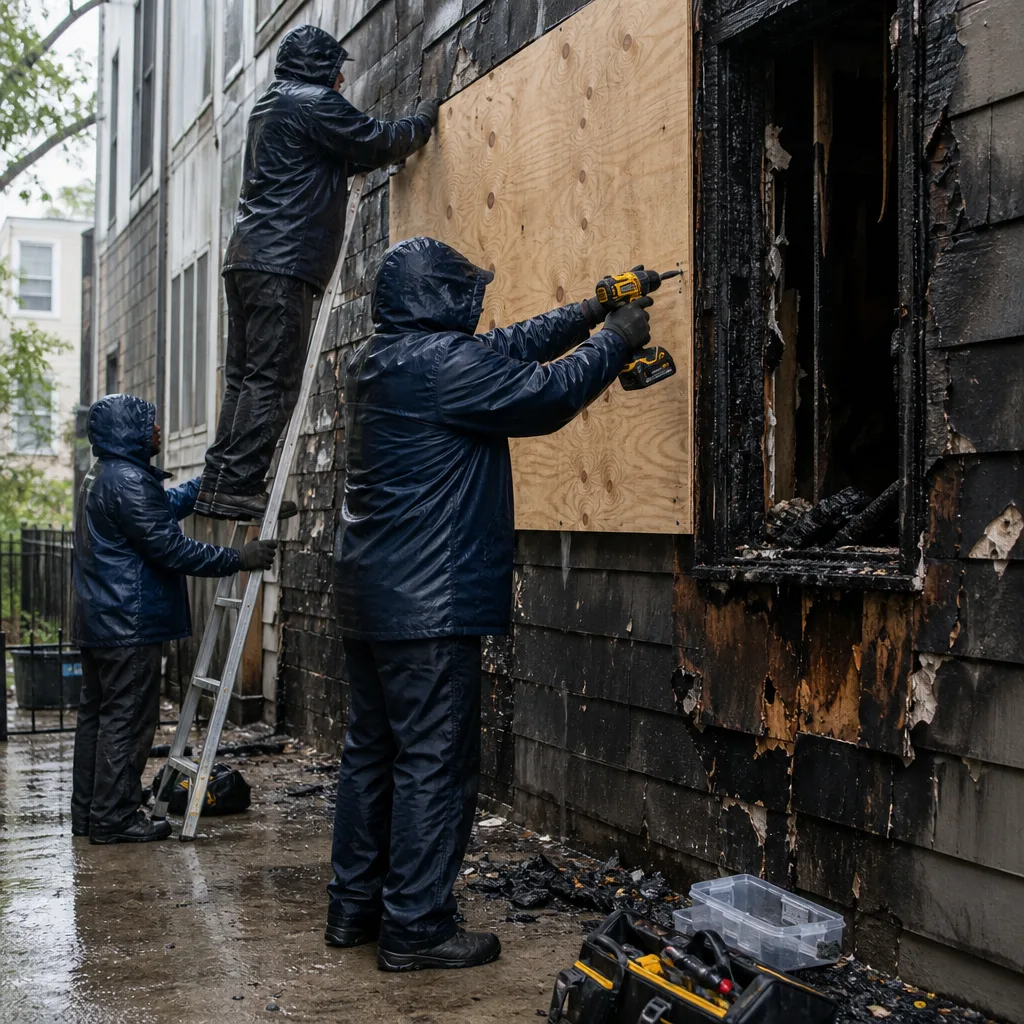
A wind-rated door that fails at 2 a.m. during a nor’easter needs a board-up before the next rain band comes through. We respond to the Financial District with plywood, fasteners, and the sense to secure openings without further damaging the landmark masonry around them.
Roof Tarping
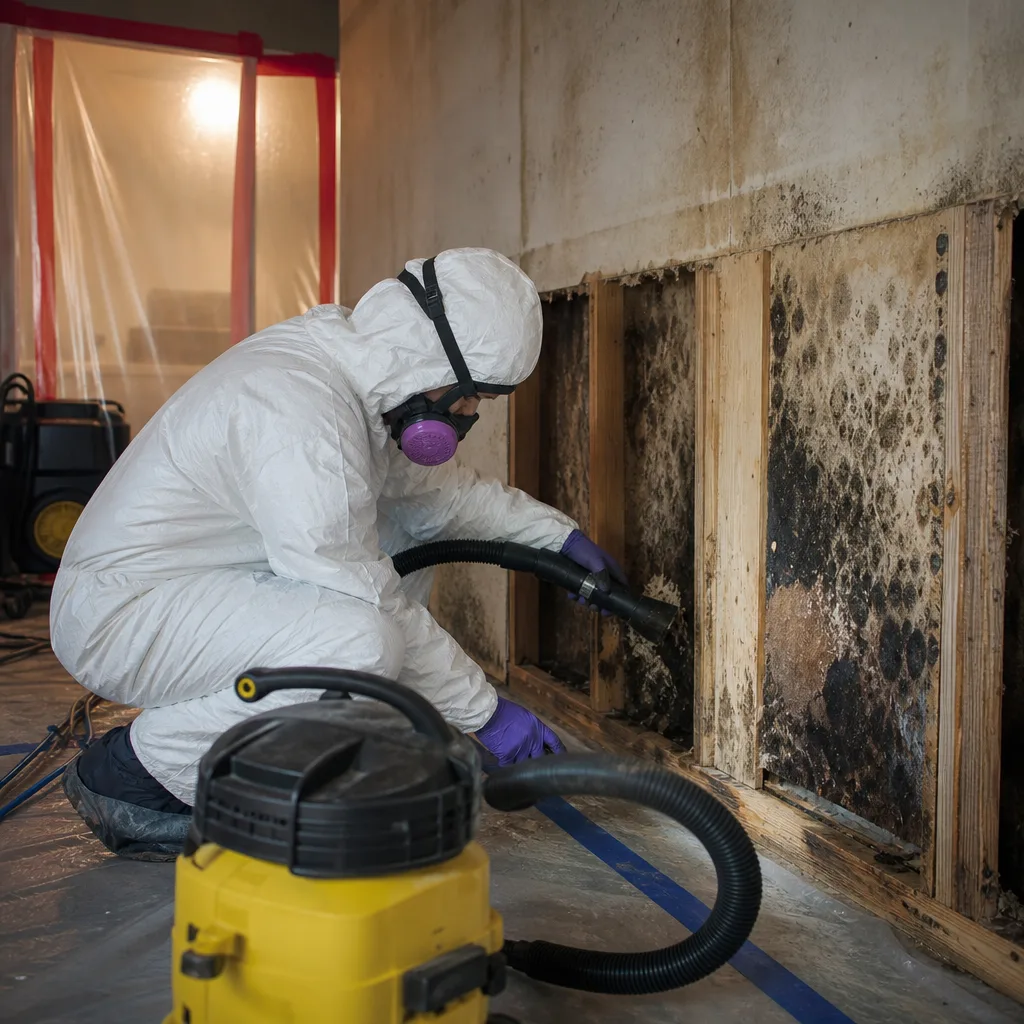
Wind lifts membrane roofs and exposes the decking underneath. We tarp immediately, knowing that water entering the top of a 30-story building will be in the lobby by morning if the breach isn’t sealed.
Debris Removal
Storm debris on FiDi streets and inside mechanical rooms blocks access and creates secondary hazards. We clear it as part of the restoration scope, not as an afterthought.
What happens when you call
- 1
A real person answersNo phone trees - you reach a local pro.
- 2
You get an upfront price rangeHonest numbers before anyone is dispatched.
- 3
A background-checked tech heads outLicensed & insured, dispatched right away.
- 4
You approve before work beginsNothing starts until you say go.
Storm & Disaster Restoration Costs in Financial District, NY
In the Financial District, Storm Damage Cleanup from a typical wind-driven rain breach into a residential unit runs $2,500 to $6,500, depending on how many floors the water traveled through. Emergency board-up on a failed entry door is $350 to $900, including materials and same-visit response. Sub-basement flood extraction and structural drying in a tower building typically falls between $8,000 and $35,000, the range driven by how many floors of drying equipment are needed and whether elevator access is available. Full flood restoration including reconstruction in a multi-floor cascade can run $50,000 to $150,000 or more, most of which is insurance-covered when wind or surge was the proximate cause.
The price differences come down to building access, category of water, and how many vertical feet the water traveled. A Category 1 pipe break on one floor is at the low end. A Category 3 surge event through a sub-basement and up through three floors of a converted tower is at the high end. The free visual inspection we do gives you a firm written scope before work starts, so you know exactly what this costs and why.
We Also Serve Cities Near Financial District
Our crews regularly work across Lower Manhattan and the surrounding area. We serve Storm & Disaster Restoration in Financial District plus Midtown West, Lower Manhattan, Astoria, and Midtown Manhattan. If your building sits in one of those areas and took storm damage, call the same number. Same crew, same response.
Financial District Storm & Disaster Restoration Questions, Answered
Why does Flood Damage Restoration in the Financial District often require hand-carrying equipment up 30-plus flights of stairs?
Because in most converted FiDi towers, the elevator machinery rooms and primary electrical switchgear sit in sub-basement levels. When surge or sewer backup floods those spaces, the building loses both power and vertical transport at once. Elevators are down for days or weeks. Our crew hand-carries Dri-Eaz dehumidifiers and XPOWER air movers up fire stairs, flight by flight, to reach affected floors. We plan for this on every Financial District flood job, because it’s the norm here, not the exception. Call (607) 703-3408 and we’ll walk you through what your building will require.
How do local permit and code requirements affect wind-rated door reinforcement before a named storm?
Buildings in the Financial District’s landmarked districts, including much of the Stone Street and Wall Street areas, need Landmarks Preservation Commission review for any permanent exterior door replacement or significant modification. Emergency board-up after a failure is exempt as temporary protective work. For pre-storm reinforcement that doesn’t alter appearance, like replacing worn threshold seals, adding strike plate reinforcement, or adjusting existing door closers, a permit isn’t typically required. But full door replacement on a landmark building often is. We can tell you what applies to your specific entrance before you spend money. Call for a straight answer.
What category of water typically affects a converted 1920s office tower after a nor’easter in FiDi?
Category 3, which is the most contaminated classification. Nor’easter surge in the Financial District pushes harbor water, street runoff, and backflowed sewage into sub-basements and lower levels. That water is not something you dry and save. Affected drywall, insulation, and porous materials get removed and replaced. Hard surfaces get antimicrobial treatment. We contain affected floors with negative air so what’s disturbed doesn’t migrate through the building’s elevator shafts and stairwells. This is standard procedure for our Financial District storm work.
How quickly does mold risk escalate in a Financial District high-rise after water intrusion from a roof or window breach?
Mold colonization can begin in 48 to 72 hours on wet gypsum, carpet pad, and organic debris. In a FiDi tower, the risk accelerates because the building’s stack effect pulls moisture upward through the core before it’s contained. A window breach on the 22nd floor can introduce enough water to affect floors below within hours. We start drying and containment the same day we get the call. That speed is the difference between a restoration and a remediation. Call (607) 703-3408 the moment you see water where it shouldn’t be.
What challenges do garage-level or sub-basement flooding present for restoration crews in this neighborhood?
Sub-basement flooding in the Financial District means working in confined, unventilated spaces below grade, often with standing Category 3 water, disabled lighting, and no elevator access. Electrical panels, elevator machinery, and building controls are down there. Our crew works in these spaces with portable lighting, gas-detection meters, and full PPE, because what’s in that water is worse than the water itself. If the sub-basement flooded, no unit in that building should wait for the elevator to come back before starting drying. We start the hand-carry immediately.
Do I really need full remediation or just a cleanup after storm water came through my window?
If the water came from rain or storm surge penetrating your window or wall, you need at minimum moisture verification behind the drywall and around the window framing. Rain water that sat in a wall cavity for over 48 hours is a mold risk, and the visible surface won’t tell you what’s behind it. We run thermal imaging and moisture meters first. Then we tell you honestly whether this is a drying job or a removal job. The free visual inspection gives you a straight answer and a written scope.
Will my insurance cover storm and flood damage in the Financial District?
It depends on your policy and what caused the water. Wind-driven rain through a failed door or window is typically covered by a standard property policy. Flooding from storm surge or overflowed harbor water usually requires a separate flood policy, often through the NFIP. Condo and co-op owners in FiDi may have coverage split between their individual policy, the building’s master policy, and the association’s flood coverage. Wade deals with adjusters directly to work through exactly which policy responds to your loss. Call and we’ll help you sort it.
How fast can someone actually get to my Financial District building?
Our Financial District response time is typically 45 minutes or less. Wade’s crews are dispatched from the New York City office and know the FiDi street grid, the loading zones, and the building access procedures. If your building has a concierge or freight elevator protocol, we work through it fast. The first call is the step that matters. Call (607) 703-3408 and Wade will have someone on the road immediately.
Serving Financial District, NY - Our Local Coverage Area
We’re based in the Financial District area and know this community well. Use the map below to see our service coverage - if you’re nearby, we can almost certainly help.
One Building, One Storm, Thirty-Four Flights
In the Financial District, a single pipe failure in a converted 1920s office tower can breach 20 or more consecutive residential floors before it is contained. Pre-WWII commercial drainage systems were never engineered for continuous household water use. Original waste lines, sized for occasional sink and restroom use on an office floor plan, now carry daily showers, dishwashers, and washing machines from 40-plus residential units stacked vertically. When one of those lines backs up or fails at 2 a.m., Category 3 water cascades down through chases, around pipe penetrations, and into ceiling cavities. Shutoff valves are often buried behind decades of renovation layers, so locating and stopping the water can take an hour while floors continue flooding. This is the signature FiDi loss pattern, and it requires a restoration company that knows precisely how these buildings were designed, because the drawings, if they exist at all, don’t match what’s actually behind the walls.
After a nor’easter pushed storm surge into a converted 1930s tower on Wall Street, our crew hand-carried Dri-Eaz dehumidifiers and XPOWER air movers up 34 flights of fire stairs because the sub-basement elevator machinery room was flooded. We ran moisture mapping across every unit from the 12th floor down, contained the affected floors with negative air, and completed structural drying within five days to bring the building back to pre-loss condition.
The Financial District sits at the southern tip of Manhattan, hemmed by the Hudson River, East River, and New York Harbor on three sides. That makes it the most storm-surge-exposed neighborhood in New York City. A high-rise here isn’t just a building. It’s a vertical stack of hundreds of living spaces sharing one drainage system, one electrical core, and one set of elevators. When storm water gets into the bottom of that stack, the entire building feels it. Storm & Disaster Restoration in FiDi is never a simple pump-and-dry job. It’s layered, landmark-sensitive, and physically demanding work in the most challenging building stock in the city. That’s the work we do.
We also serve the surrounding neighborhoods of Midtown West, Lower Manhattan, Astoria, and Midtown Manhattan. Same crew, same response, same owner standing behind the work.
Call (607) 703-3408 now. A real person answers, free visual inspection, written scope before any work starts. Wade Ferris has been answering his own phone since 2007. In the Financial District, with your building’s sub-basement flooding and the clock running on a mold bloom, that’s who you want on the other end of the line.
Written by Wade Ferris, Owner at Wade’s Restoration, serving Financial District and the surrounding New York City area since 2007.