
Free visual inspection and a written scope of work before any mitigation begins - photos, moisture readings, and drying logs go in your claim file
The scope we write is the scope we bill. Anything new gets shown to you, in writing, before we touch it.
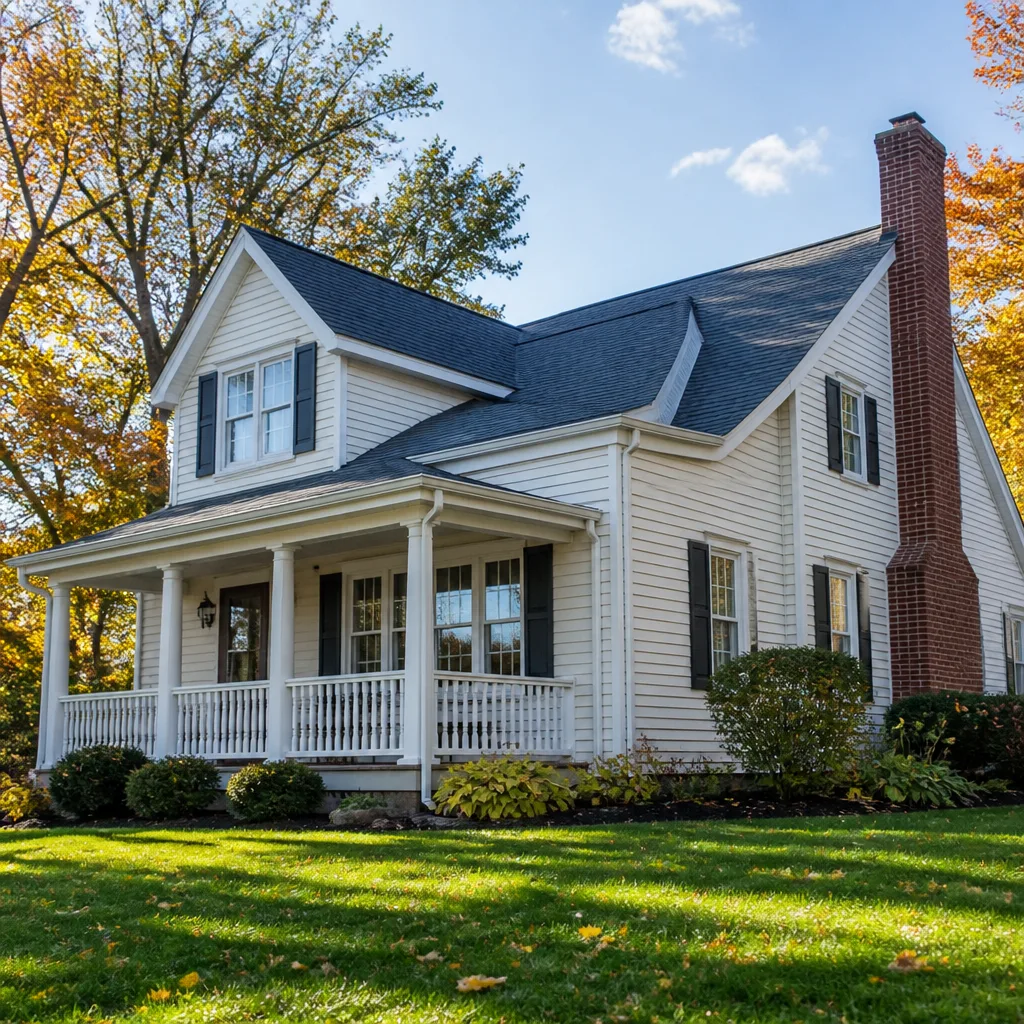
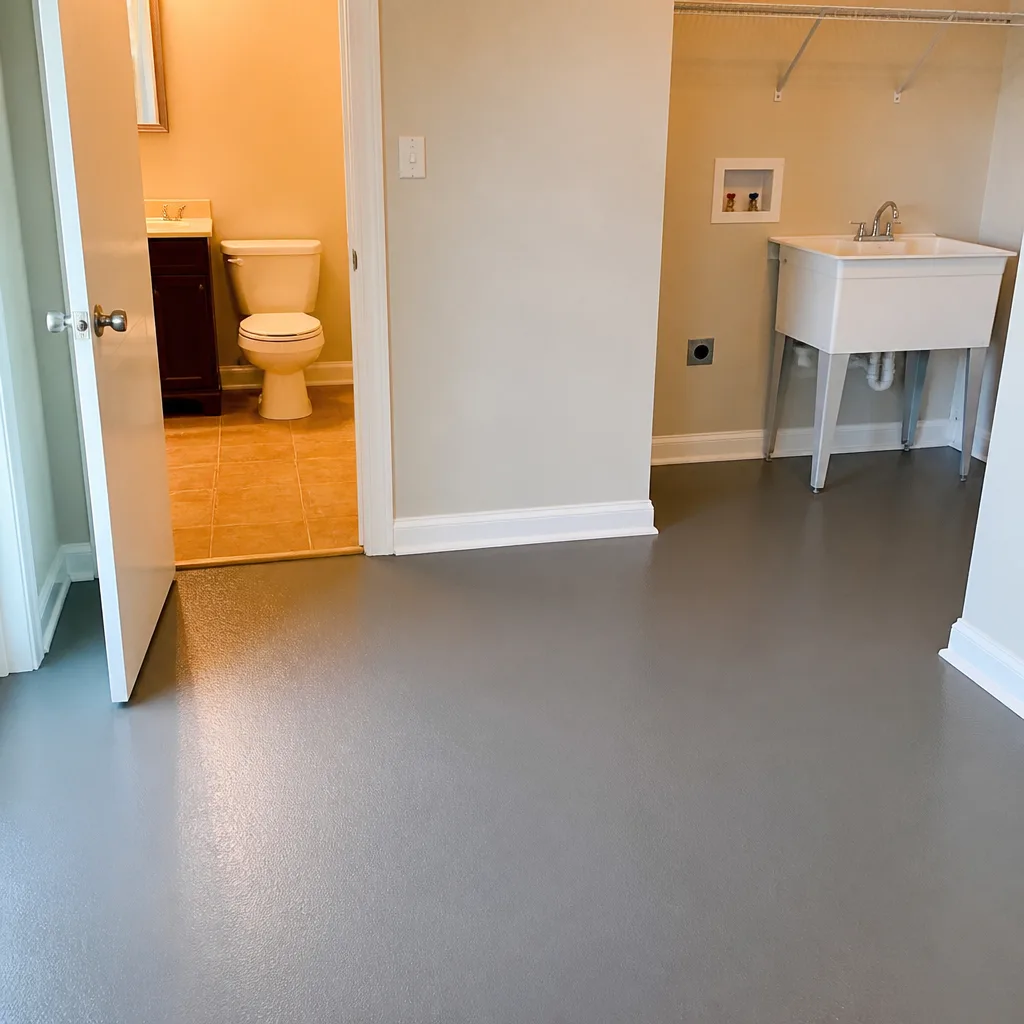
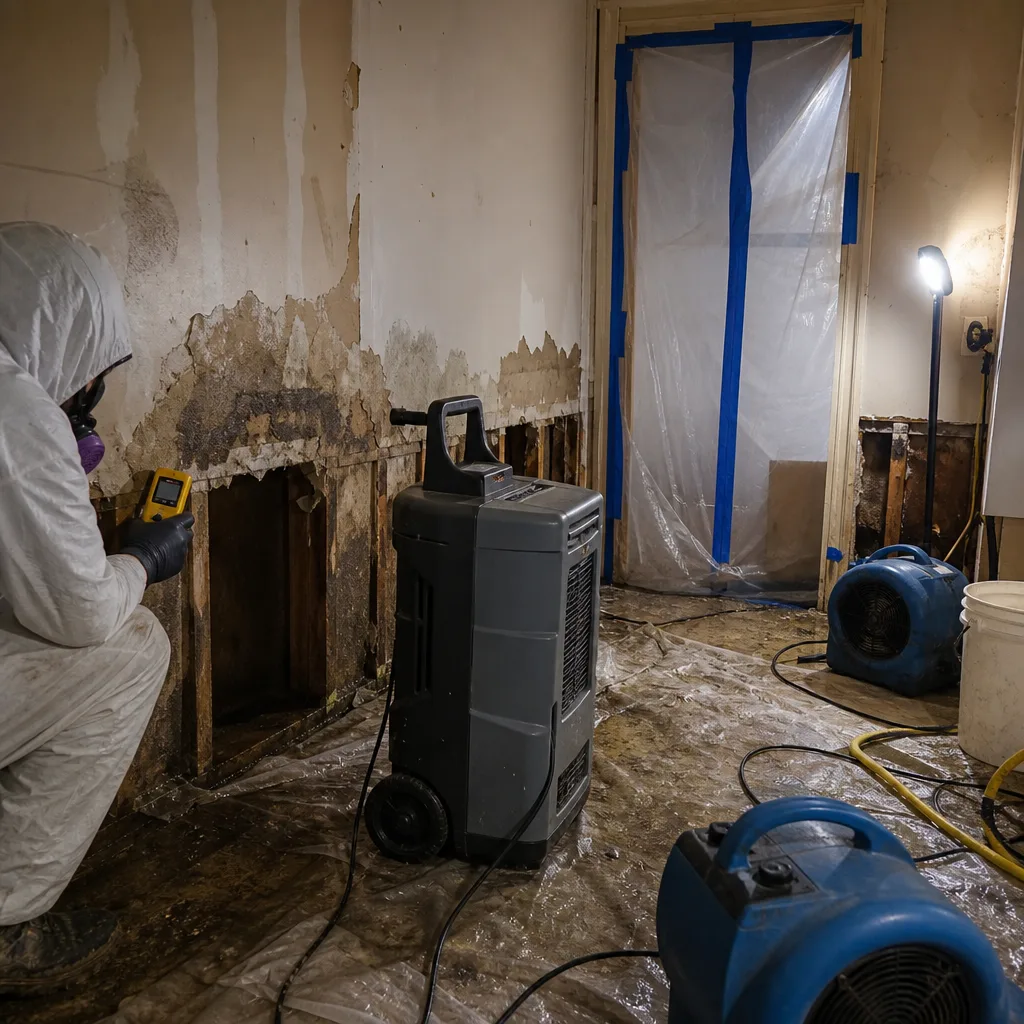 Before
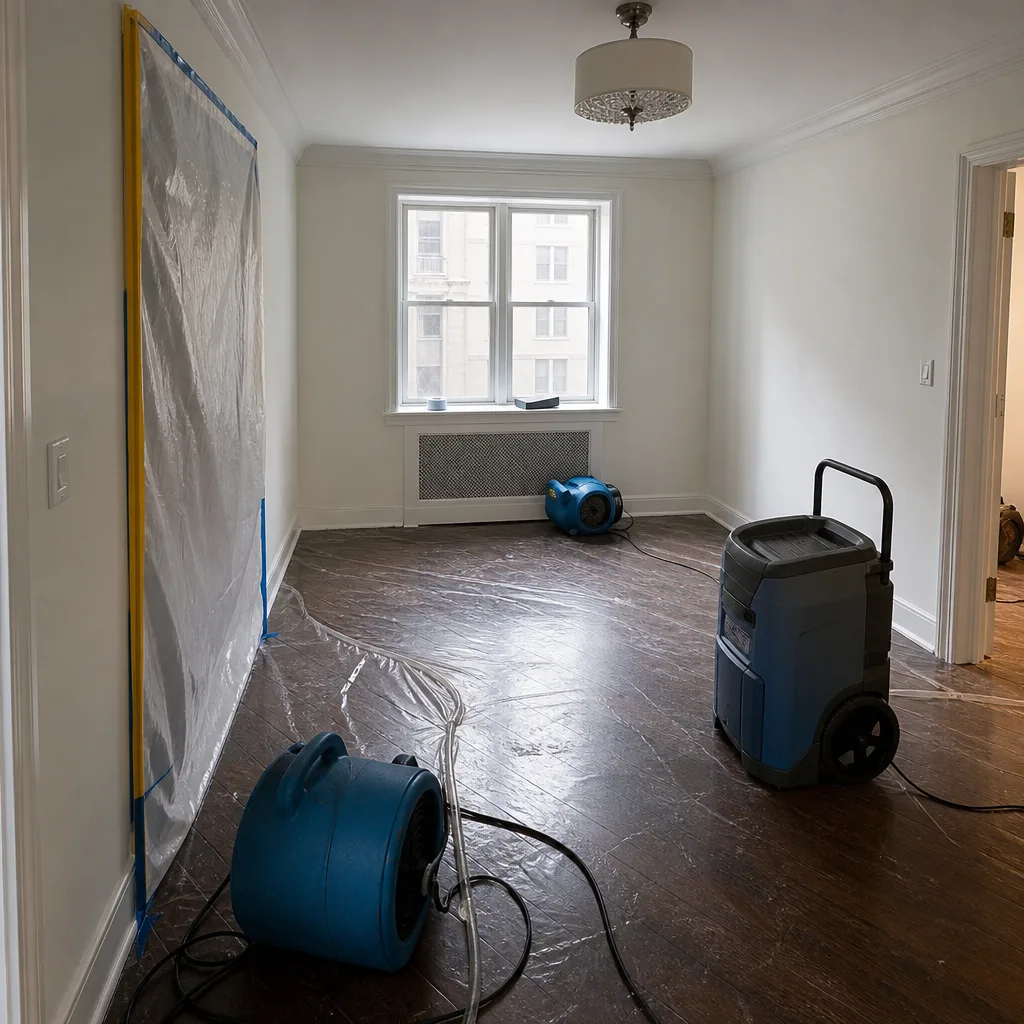 After
After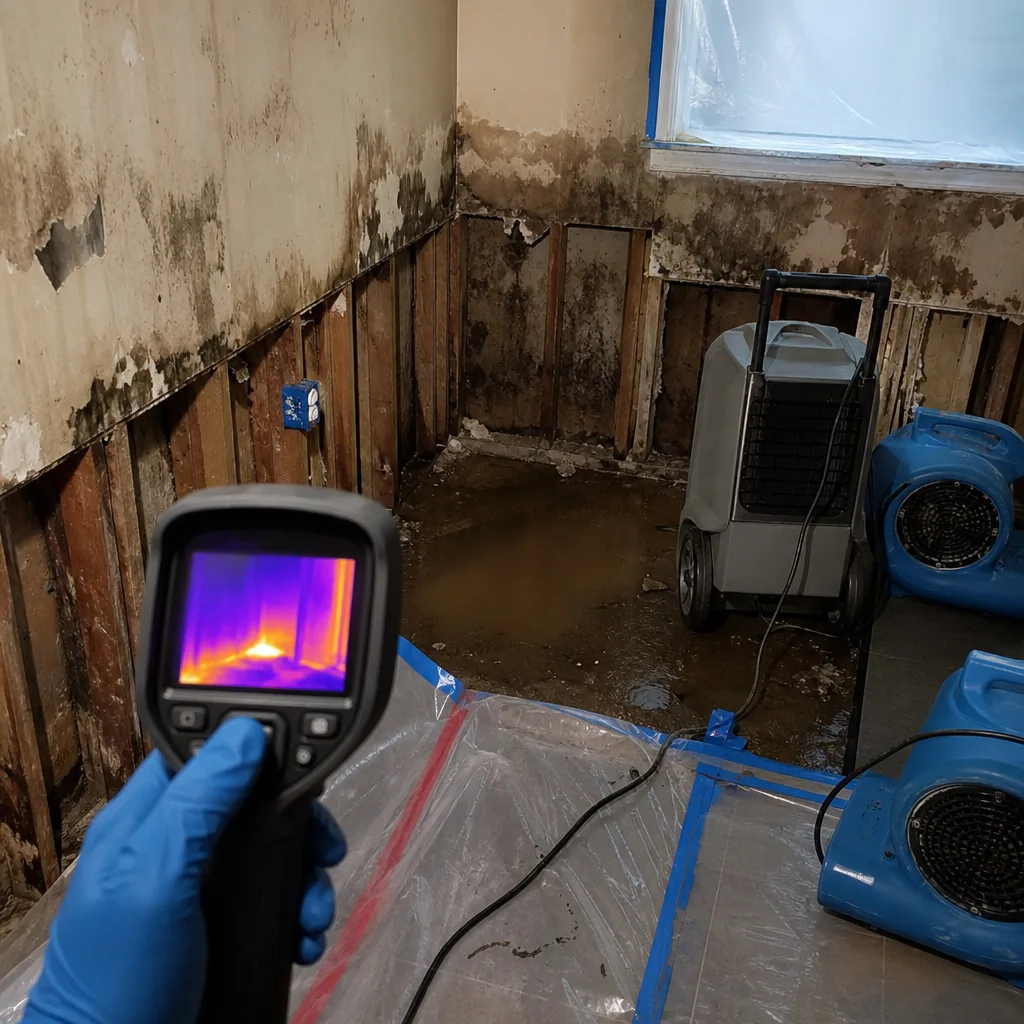 Before
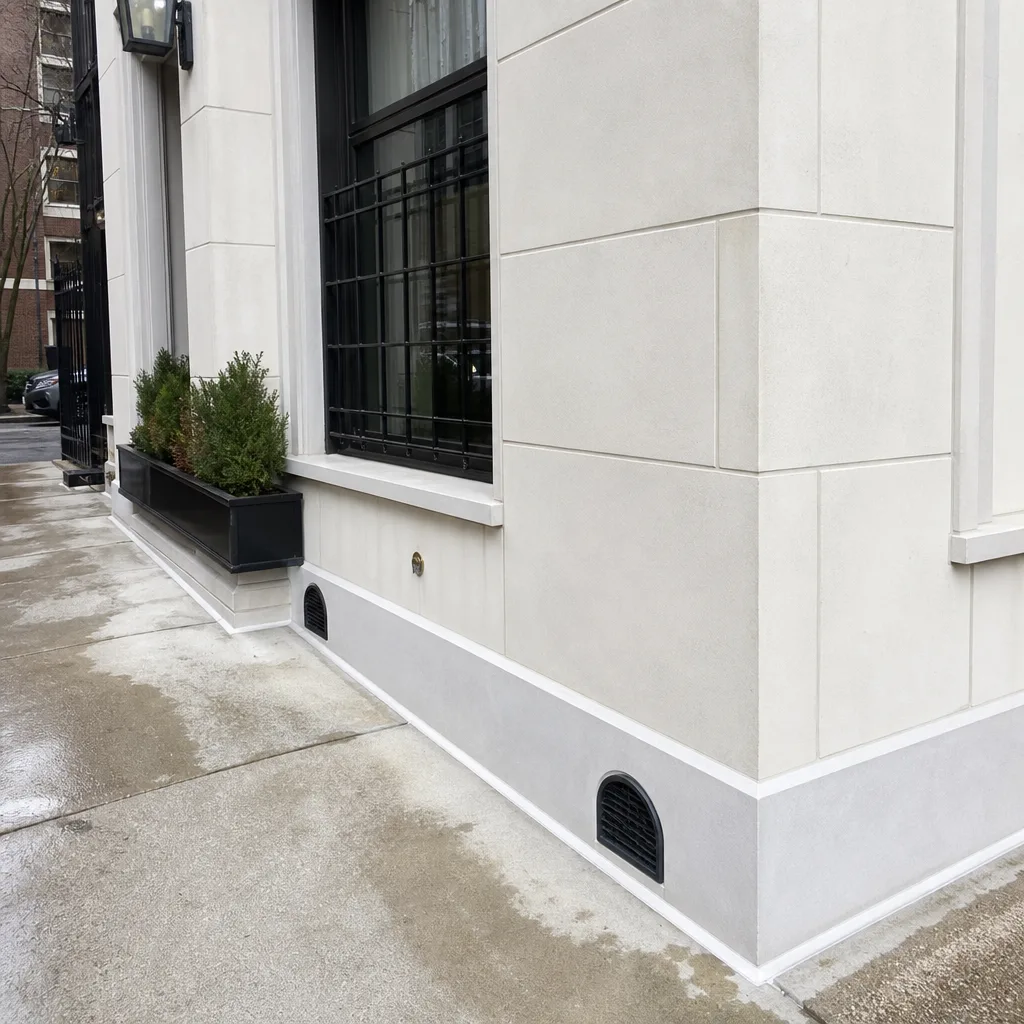 After
After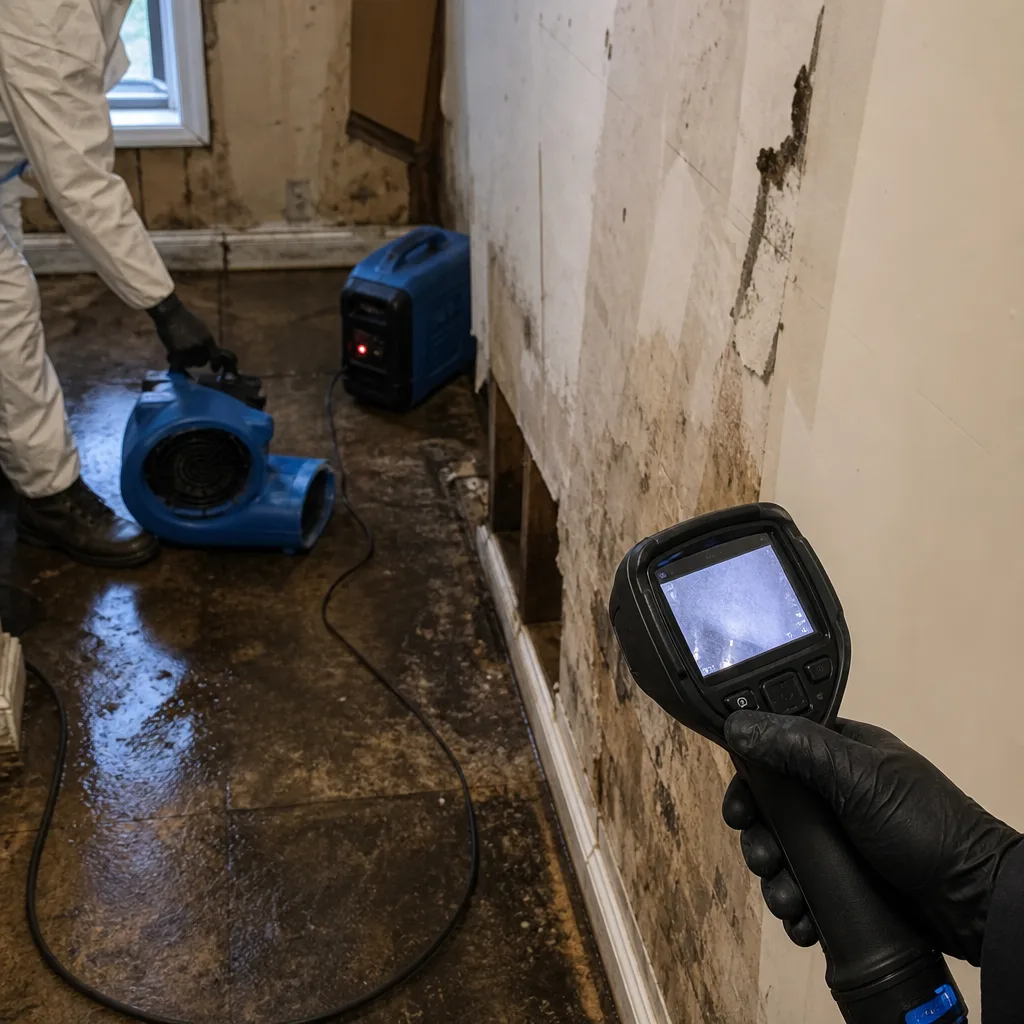 Before
 After
After24/7 Emergency Storm & Disaster Restoration in Midtown Manhattan
Storm damage inside a Midtown Manhattan tower is a different animal than anywhere else. A burst riser on the 30th floor doesn’t stay on the 30th floor. It travels. Through elevator shafts, mechanical chases, and plaster ceilings. Down 15, 20, sometimes 30 floors before building management even shuts the valve. That’s why we answer live at (607) 703-3408, any hour, and why our crews know Midtown Manhattan building protocols before they walk through the service entrance. When a nor’easter rips a roof membrane seam or a wind-blown tree limb takes out a window wall on Fifth or Park Avenue, the first hour determines how far the damage spreads. We get there fast. We bring extractors, thermal imaging, and a plan for the freight elevator schedule you’re already dreading. Free visual inspection. No trip charge inside our own county. Call now, and someone who knows high-rise restoration picks up.
Understanding Storm & Disaster Restoration Severity in Midtown Manhattan Properties
Storm and disaster restoration in Midtown Manhattan splits into three severity tiers, and the building type dictates which one you’re dealing with. First is the aesthetic tier: water staining on plaster, warped hardwood in a co-op unit, damaged window gaskets after wind-driven rain. Nuisance territory, but the kind of thing co-op boards flag on resale. Second is the structural moisture tier: Category 2 water (contaminated, from a failed drain line or roof leak carrying decades of rooftop debris) saturating plaster-over-metal-lath ceilings in pre-war towers. That lath holds water. Standard drywall techniques don’t apply. We map moisture with hygrometers and thermal imaging because the wet footprint in a 1920s steel-frame building spreads laterally through lime plaster long before it shows on a surface. Third is the full disaster tier: Category 3 flood water from a burst riser, sewage-adjacent contamination, or fire suppression system discharge. That requires containment, air scrubbing, and aggressive structural drying. In a high-rise, it also means managing what we send into the shared HVAC return air. Midtown’s cast-iron drain risers from the 1920s and 1930s are original. They fail. When they do, the water column is vertical and the affected area is measured in floors, not rooms.
Why Midtown Manhattan Property Owners Choose Wade’s Restoration
- 45-minute response commitment: In Midtown’s grid, we can get a crew to most buildings within 45 minutes. For a high-rise water loss that is the difference between drying plaster and replacing it.
- 24/7 live answer, by a real person: Not a call center. Not an answering service. Wade Ferris answers his own phone. You get the owner, not a queue.
- IICRC-certified crews on WRT and FSRT: Our water restoration and fire/smoke restoration technicians carry the certifications that Midtown co-op boards and commercial property managers actually ask to see.
- Free visual inspection: We look first, tell you what we found, then hand you a written scope before any work starts. No charge for that.
- Direct insurance billing: We document everything from hour one and deal with the adjuster directly. You are not the middleman between two parties who don’t know your building.
- One team from extraction to reconstruction: The same crew that extracts floodwater from a 22nd-floor law office stays through structural drying, finish matching, and the final co-op board walkthrough.
Our Storm & Disaster Restoration Process
Inspection & Assessment
We walk the loss. In Midtown that means working around building management’s access rules from minute one. We map the moisture footprint, identify the water category, photograph every affected surface, and document what was wet before we touch anything. This becomes the basis of your insurance claim.
Extraction & Stabilization
Standing water comes out fast. Truck-mounted and portable extractors pull water from flooded office suites, co-op apartments, and hotel floors. We set containment if the water is Category 2 or 3 and shut down the contamination pathway to adjacent units through shared corridors and HVAC chases.
Drying & Dehumidification
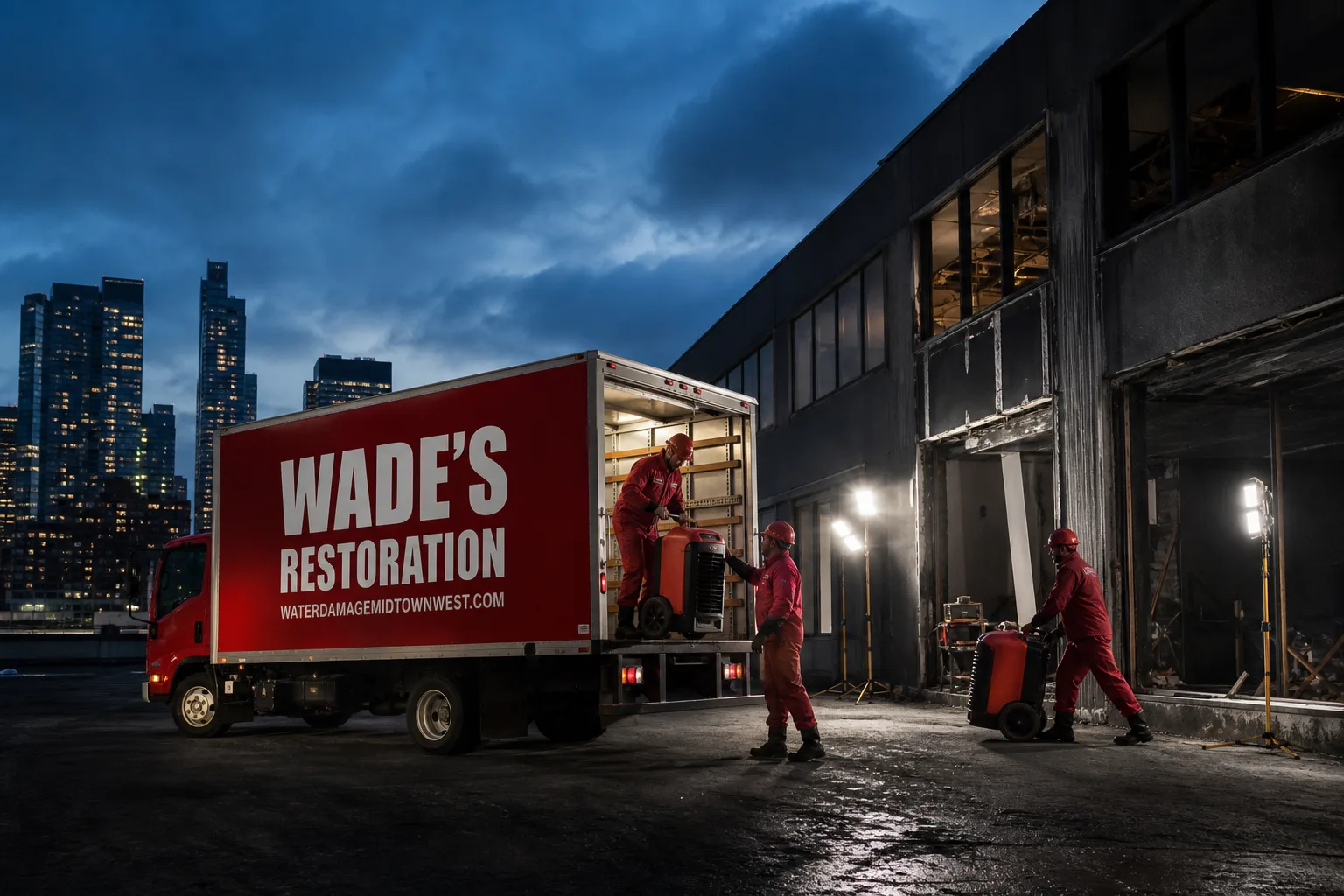
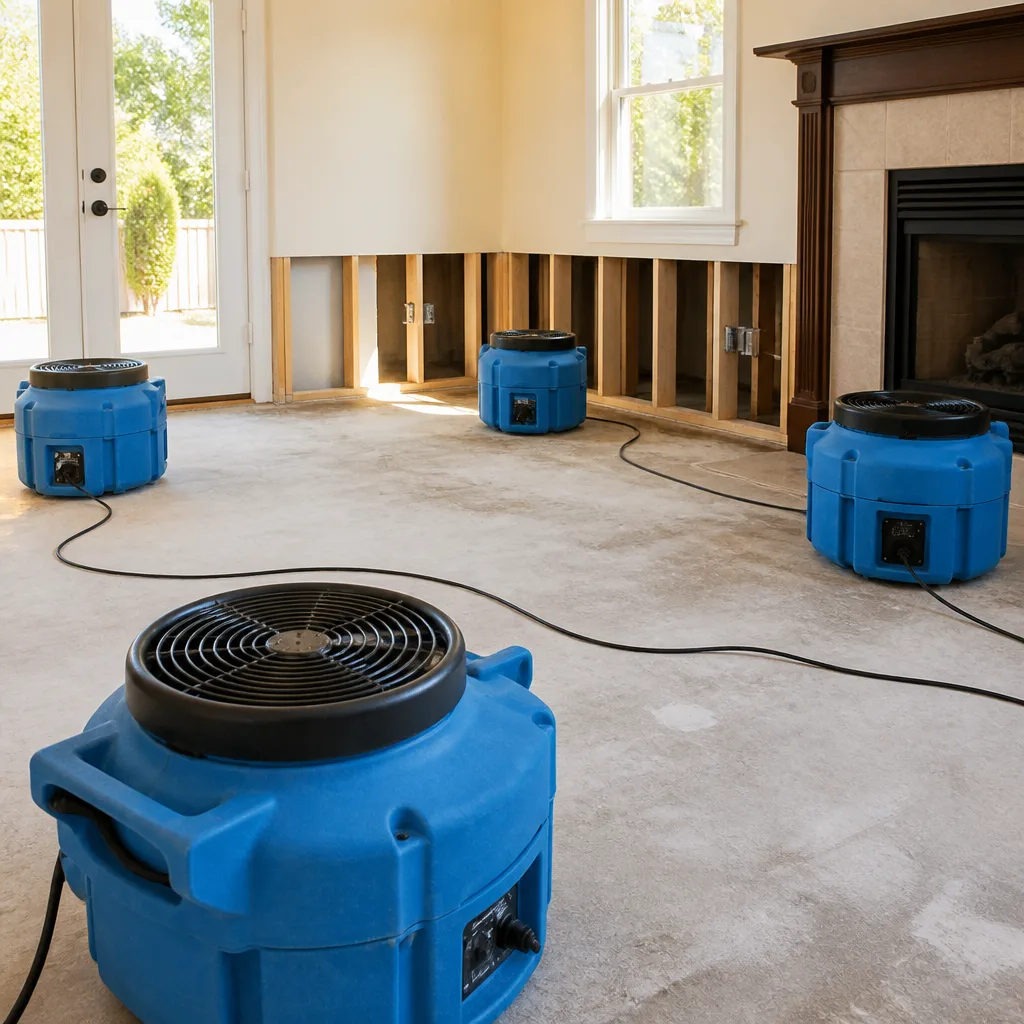
Plaster-over-metal-lath ceilings dry differently than drywall. We place Dri-Eaz air movers and Phoenix dehumidifiers based on moisture mapping, not guesswork. In Midtown towers, we also coordinate equipment placement around the freight elevator schedule and building-required load limits. Daily moisture readings, logged and handed to you at the end.
Cleaning & Sanitization
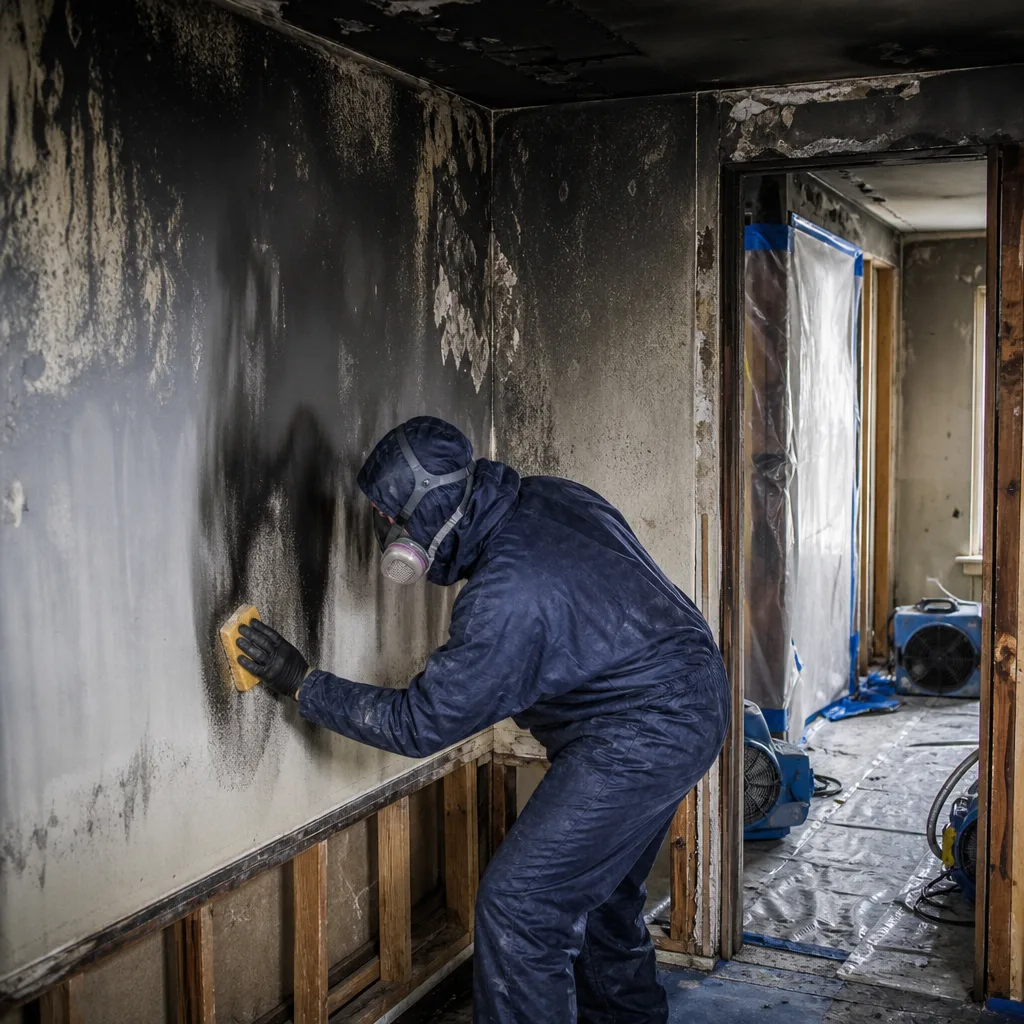
After storm water or sprinkler discharge, we clean affected surfaces and treat for microbial growth. HEPA air scrubbers run continuously during the active drying phase to capture airborne particulates that would otherwise settle into upholstery, drapery, and millwork.
Storm-Specific Stabilization
For wind and water damage we address the exterior first: emergency board-up at shattered windows, roof tarping over damaged roof membrane seams, and temporary patching of curtain-wall gaskets until permanent repairs can be scoped. This stops the loss from growing while the building figures out its insurance path.
Repairs & Restoration
We rebuild to match what was there. If your pre-war co-op has original 1920s millwork, we match the profile. If the baseboard is custom, we mill to match. The finish work goes through whatever co-op board or building management approval process applies. Then we stand behind it with the 90-Day Done Right Promise, in writing.
Need Emergency Storm & Disaster Restoration in Midtown Manhattan Now?
Crews minutes away, answering live 24 hours a day. The sooner we start, the less it costs.
Working With Your Insurance Company
Insurance claims on a Midtown Manhattan high-rise loss are complicated. Multiple tenants, a co-op board, the building’s master policy, and your individual unit owner’s policy all pull at the same loss. Wade’s Storm & Disaster Restoration team handles adjuster communication directly, from the first moisture reading to the final line item. We photograph everything before and during mitigation, log daily moisture measurements, and write industry-standard estimates that your carrier recognizes. That documentation means you are not stuck explaining to an adjuster why a plaster ceiling in a 1929 building costs more to dry than a drywall ceiling in a suburban split-level. You have a copy of every reading. So do they. If the adjuster pushes back on a line item, Wade is on the phone with them, not you.
What We Provide Your Insurer
- Thorough documentation of the loss
- Photos of all damage, room by room
- Moisture readings and drying logs
- A detailed, line-item scope of work
- Direct coordination with your carrier
Built for Midtown Manhattan’s Loss Calendar
Midtown’s storm and disaster calendar is predictable if you know the buildings. January and February bring deep-freeze nights that stress original cast-iron supply lines in pre-war towers. A frozen supply line on a setback roof above the 20th floor will thaw and flood every floor below it. Spring is roof drain season. Flat commercial rooftops across Midtown collect winter debris and failed membrane seams, and the first heavy April rain finds every weak point. Clogged internal roof drains turn a 40-story office tower into a waterfall inside the elevator core. Summer thunderstorms hit fast and drop an inch of rain in an hour, overwhelming aging roof drains and sending water through curtain-wall gaskets on the windward side. Fall brings nor’easters that drive rain horizontally into window walls and rooftop mechanical penthouses. Every one of these failures follows a pattern we know because every one of these buildings has a super, a property manager, or a board president who has called us before.
Storm & Disaster Restoration Across Midtown Manhattan’s Neighborhoods
Midtown Manhattan is not one neighborhood. It is a patchwork of building types, and each one fails in its own way. Around Grand Central and the 42nd Street corridor, pre-war office towers with original risers and steam heat dominate. We respond to riser breaks and sprinkler discharge there most often, always coordinating with building management on freight elevator windows. In the Fifth Avenue luxury co-op stretch from 59th down to 34th, the losses are more likely to be wind-driven rain through aging window-wall gaskets, and the finish concerns are severe: original millwork, custom plaster moldings, and the strictest co-op board standards in the city. Over in Midtown West near the theater district, older loft buildings and converted commercial floors mix with modern glass towers. The older roofs leak. The newer curtain walls leak at the gasket seams. Neither is a quick fix. Around the Garment District and Hudson Yards, we see construction-adjacent water intrusion where new tower excavation changes groundwater pressure around older foundations. In every case, the address changes the response plan. We know the buildings because we work in them regularly.
Specialized Storm & Disaster Restoration Services We Offer in Midtown Manhattan
Storm Damage Cleanup
Wind-blown debris, broken glass, and water intrusion after a nor’easter or summer squall. We remove storm debris, extract standing water, set drying equipment, and coordinate with building management on the cleanup schedule. In Midtown Manhattan high-rises, cleanup usually means working overnight through a freight elevator window so tenants are not stepping over hoses during business hours.
Flood Damage Restoration
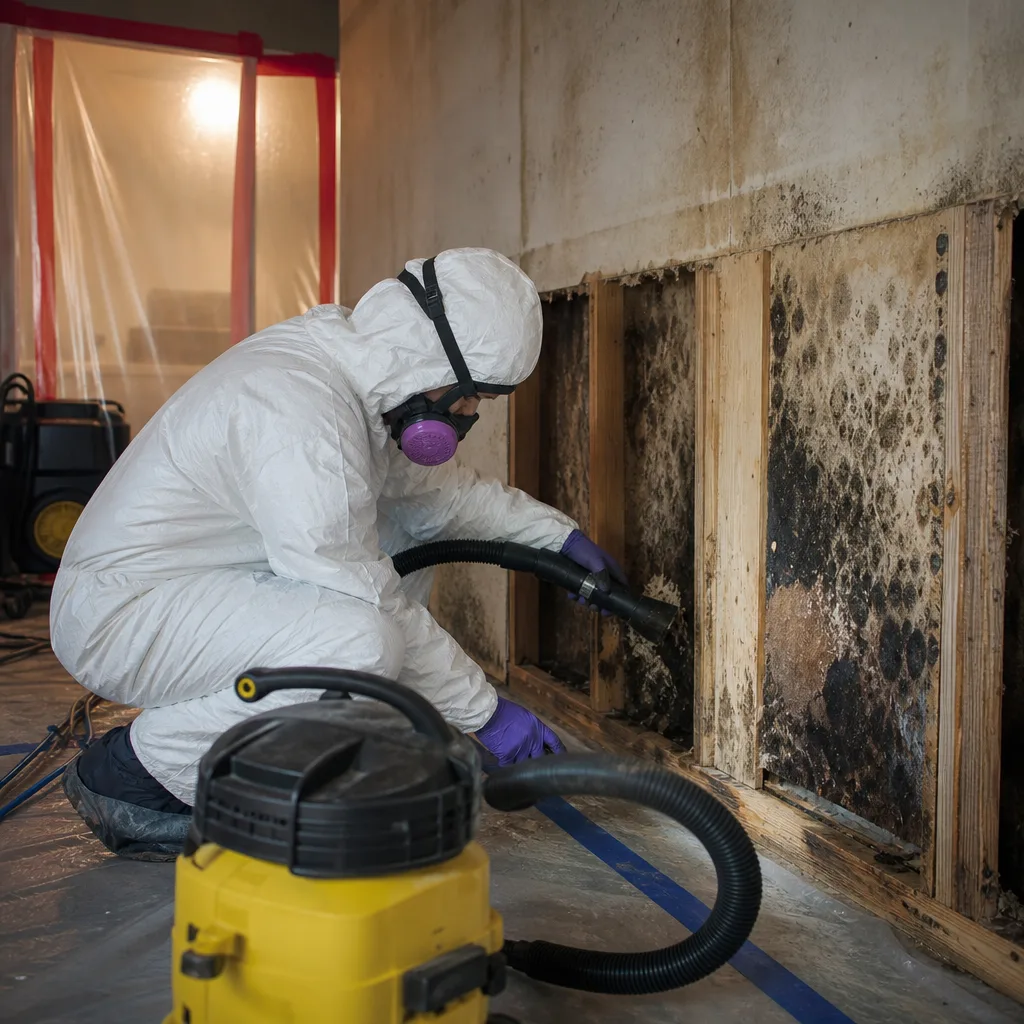
Burst risers, failed roof drains, and storm-driven window-wall leaks are the three floods we see most in Midtown Manhattan. The response is the same every time: extract fast, contain the contamination, dry the structure, document everything. The difference is that in a tower, the structural drying plan has to account for what is below you, beside you, and above you. We treat the entire affected stack, not just the unit where the water showed up first.
Emergency Board-Up
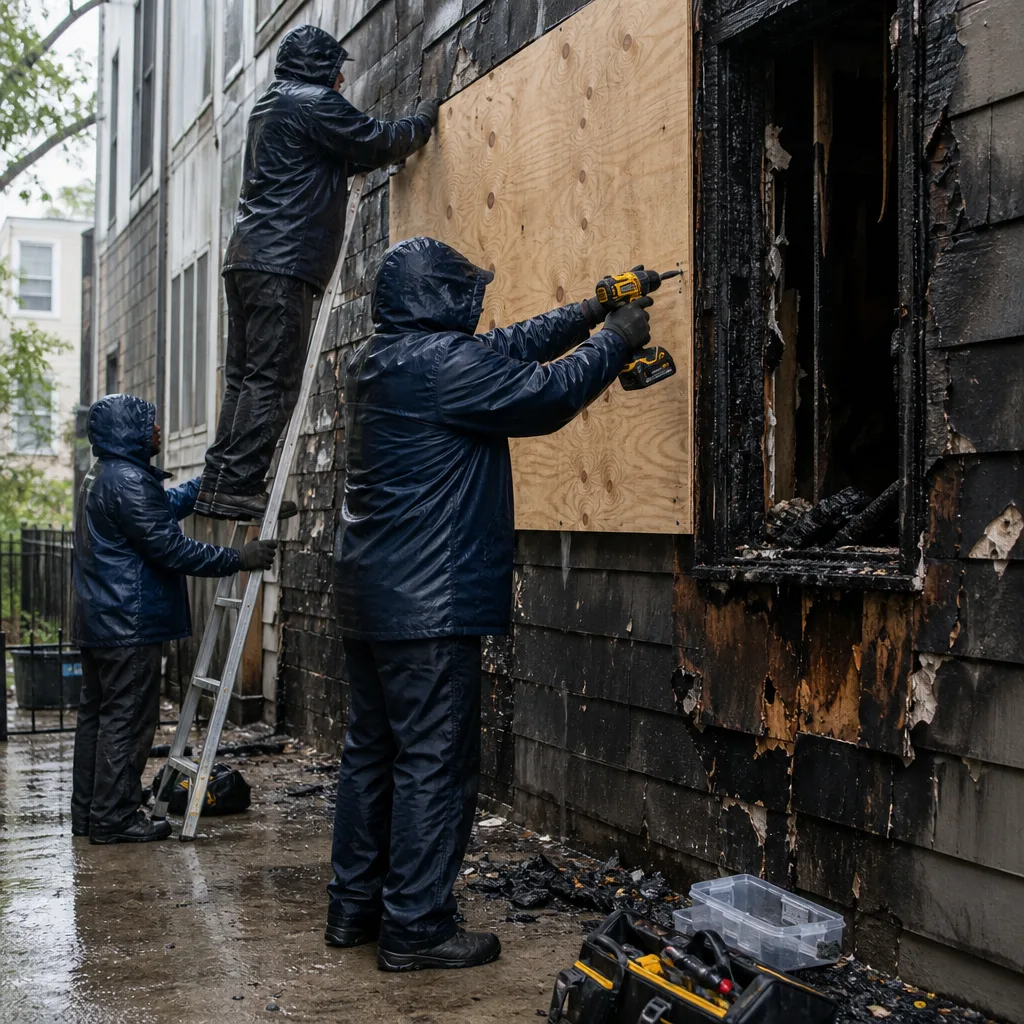
When a window wall fails on the 22nd floor or a rooftop mechanical door gets torn off in a storm, the building needs a secured envelope immediately. We board up shattered glass, tarp torn roof membrane seams, and seal exposed openings until permanent repairs can be scheduled. Boarding up a window on a Madison Avenue tower is not a plywood-and-nails job. The board-up has to hold against wind load at height and satisfy whatever aesthetic standards the building’s management requires, even in an emergency.
What happens when you call
- 1
A real person answersNo phone trees - you reach a local pro.
- 2
You get an upfront price rangeHonest numbers before anyone is dispatched.
- 3
A background-checked tech heads outLicensed & insured, dispatched right away.
- 4
You approve before work beginsNothing starts until you say go.
Storm & Disaster Restoration Costs in Midtown Manhattan, NY
Storm and disaster restoration costs in Midtown Manhattan run higher than anywhere in the outer boroughs. Why: labor is union-tier, equipment staging comes with freight elevator fees and overnight shift labor, and finish materials in pre-war buildings are custom. A typical flood extraction and drying job in a single co-op unit damaged by a neighboring riser failure runs $6,000 to $18,000. A multi-floor water loss through 15 or more stacked floors, with containment on each floor, routinely lands between $40,000 and $150,000 before reconstruction. Emergency board-up on a high-rise window runs $800 to $3,500 depending on glass size and floor height. Roof tarping over a failed roof drain or membrane seam is $1,200 to $5,000. Debris removal after a storm runs $900 to $4,000 for a single residential or commercial unit. What moves the price: water category, number of floors affected, whether containment is required, freight elevator access windows, and the finish-matching standards of the building. Most of these losses are insurance-covered. We hand you a written scope before any work starts, so you know what the number is before you sign. Call (607) 703-3408 for a free visual inspection and a firm scope.
We Also Serve Cities Near Midtown Manhattan
Same storm. Same response. We serve property owners throughout Midtown Manhattan and the surrounding neighborhoods, including Midtown West, the Financial District, Lower Manhattan, and Astoria. High-rise, brownstone, co-op, or commercial: the storm and disaster response follows the same protocol, and the owner is on the phone.
Serving Midtown Manhattan, NY - Our Local Coverage Area
We’re based in the Midtown Manhattan area and know this community well. Use the map below to see our service coverage - if you’re nearby, we can almost certainly help.
Midtown Manhattan Storm & Disaster Restoration Questions, Answered
How does work-hour scheduling with Midtown building management affect a flood restoration timeline?
It can delay mitigation by 18 hours or more if the building only allows freight elevator access between midnight and 6 a.m. In Midtown’s pre-war towers, that is the rule more often than the exception. We build our entire drying plan around that window: stage equipment the night before, load through the freight elevator during the allowed hours, and run extraction and containment overnight while the building is empty. If a loss happens at 3 p.m., we cannot always get equipment to the 25th floor until midnight. That means the building gets containment-based interim measures in the meantime, and we document the delay for the insurance carrier. Missing the window means wet plaster and wood finishes sit unpulled for a full business day, which pushes materials into mold-growth territory that could have been avoided. We schedule around the super, not against them.
What should Midtown co-op owners expect when a neighboring unit’s water loss damages their walls?
Expect a multi-party claim. Your neighbor’s insurer, the building’s master policy, and your own unit owner’s policy all have a stake. The first thing you need is documentation: photos of your affected walls, moisture readings on the shared wall cavity, and a written assessment of what is wet. We provide all three. The next thing is containment on the neighbor’s side so contaminated air or moisture does not keep migrating through the shared wall. Then comes the drying plan for your unit, which in a pre-war building often means opening the wall from your side to dry the cavity between plaster and the original steel frame. Finally, the finish matching: if your co-op has original baseboards or crown molding, the board will require matched profiles, not big-box replacements. We handle all of it and bill the appropriate carrier directly.
How do you address water intrusion through curtain-wall window gaskets in Midtown high-rises?
Wind-driven rain through aging curtain-wall gaskets is one of the most common storm losses we see in Midtown Manhattan towers. The fix has two phases. First, we stop the active intrusion: temporary gasket patching, interior moisture extraction, and containment around the affected window bay. Second, we assess whether the gasket failure is isolated or systemic. In many pre-1990s towers, the gaskets have reached the end of their service life and every windward-facing window wall is a potential leak. We dry the interior, document the failure for the insurance claim, and provide a written scope for the gasket replacement or sealant remediation that falls to the building, not the individual unit owner. Meanwhile, your apartment gets dried and restored, and you get the documentation you need to pursue the building for the exterior fix.
Can you mitigate water damage in occupied Midtown office suites without full business interruption?
Most of the time, yes. We contain the affected area, set negative air pressure so dust and aerosolized moisture from the wet zone don’t travel through the open office, and run low-profile equipment during business hours. Extraction and demolition-heavy work gets scheduled overnight through the freight elevator window. The key is aggressive drying and rapid structural stabilization in the first 24 hours, so the office can keep operating on the other side of the containment wall. We have dried flooded 22nd-floor law offices while depositions were happening 30 feet away. It takes a detailed site plan, a cooperative building super, and a crew used to working quiet. We bring all three.
What makes roof drain failures in Midtown commercial towers different from typical roof leaks?
A clogged internal roof drain on a Midtown tower does not leak through one ceiling. It backs up and sends water down the interior drain stack, through elevator shafts, mechanical chases, and ceiling cavities, potentially affecting 20 or more floors. The water travels vertically and horizontally through construction gaps in the original structure before it shows up anywhere visible. That means the moisture footprint is almost always larger than the visible stain. We map the entire affected stack with thermal imaging and hygrometers, set containment on every floor that took water, and dry the full column, not just the floor where the ceiling stained. Roof drain failures are a building-wide loss, and they need a building-wide response.
How fast can you actually get to a Midtown Manhattan address?
Our response commitment is 45 minutes to most Midtown Manhattan addresses, day or night. That assumes we are already in Manhattan or just over a bridge. The phone is answered live by a real person, and the person answering is the one sending the crew. For an active water loss inside a high-rise, the faster we get there, the fewer floors are affected. Call (607) 703-3408 and someone is on the road.
Does insurance cover storm and flood damage in Midtown Manhattan?
Most storm-related water and wind damage is covered under commercial property policies, co-op master policies, and individual unit owner policies. Flood damage from rising water is a separate flood insurance policy, but water from a failed roof drain, burst riser, or wind-driven rain through a window wall is typically covered under property insurance. We document the cause of the loss precisely, because that cause determination drives which policy responds. We deal with the adjusters directly, from the first walkthrough to the final negotiated scope.
What should I do in the first 30 minutes after discovering storm or water damage in my Midtown Manhattan unit?
Call us at (607) 703-3408. Then shut off power to the affected area if it is safe to reach the panel. Move what you can lift without risk. Do not open walls or pull wet plaster yourself; the debris is often contaminated, and you will complicate the insurance documentation. If water is still flowing, call your building super and get the riser or valve shut. Take photos of the visible damage. Then wait for the crew. The first 30 minutes are about stopping the flow and starting the documentation. We handle the rest.
Written by Wade Ferris, Owner at Wade’s Restoration, serving Midtown Manhattan and the surrounding New York City area. Wade answers his own phone.