
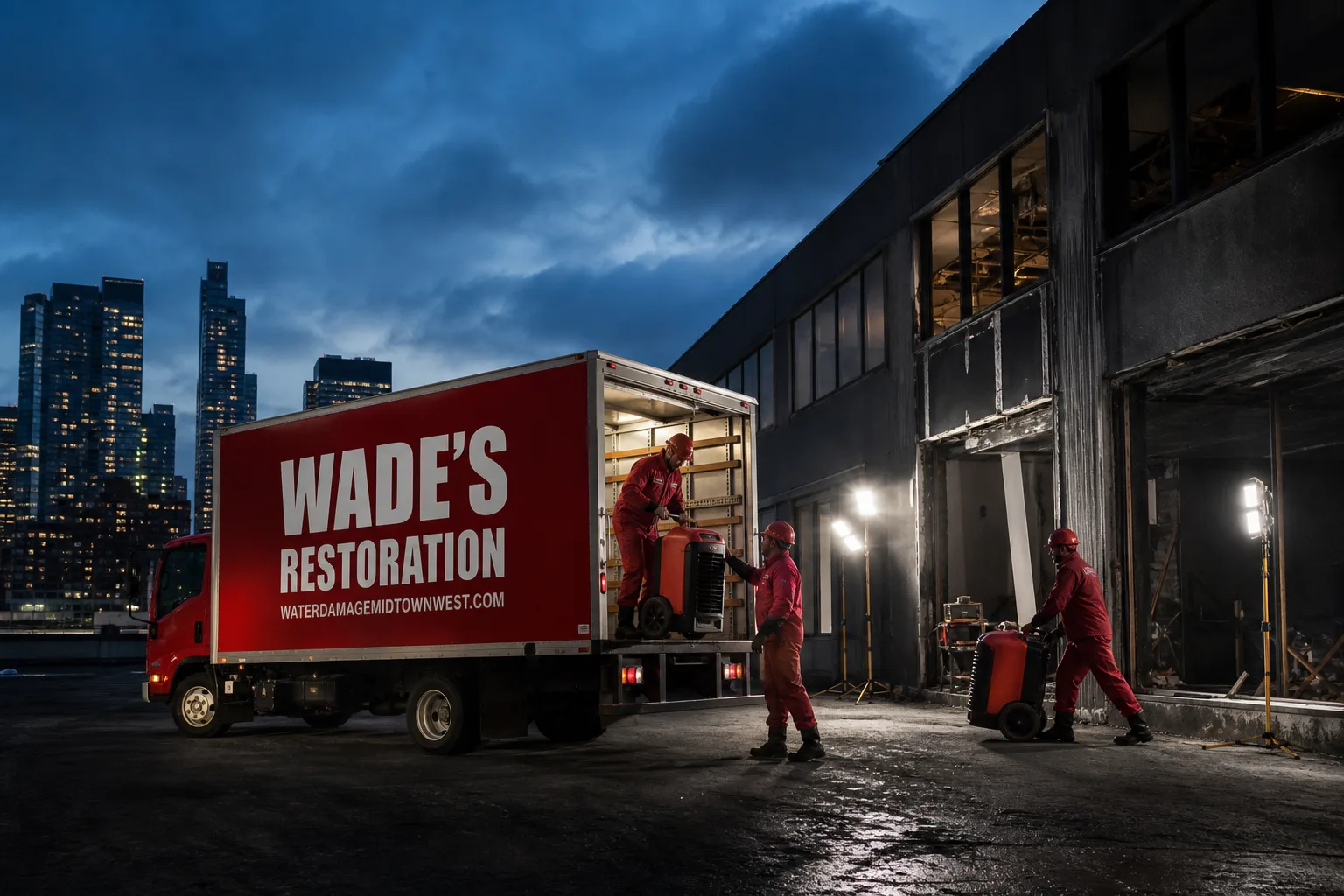
Free visual inspection and a written scope of work before any mitigation begins - photos, moisture readings, and drying logs go in your claim file
The scope we write is the scope we bill. Anything new gets shown to you, in writing, before we touch it.
 Before
 After
After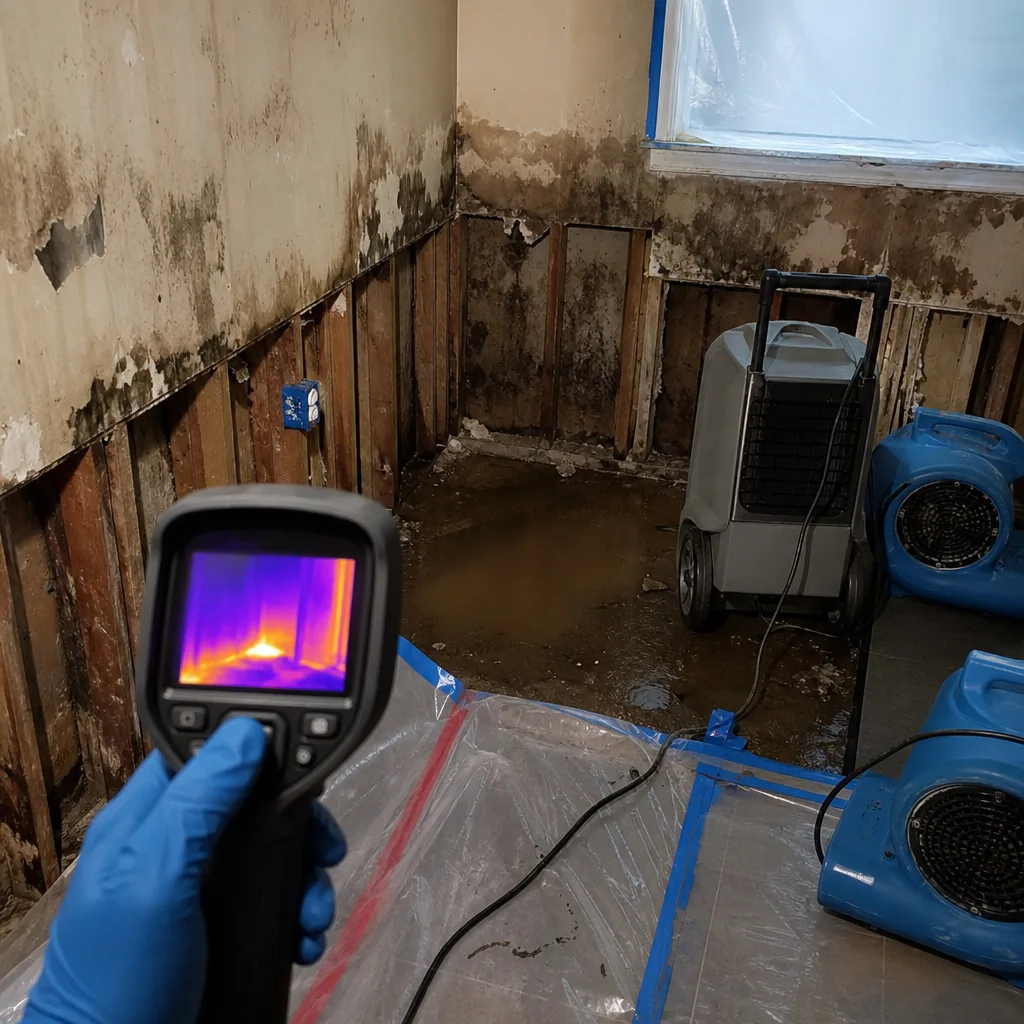 Before
 After
After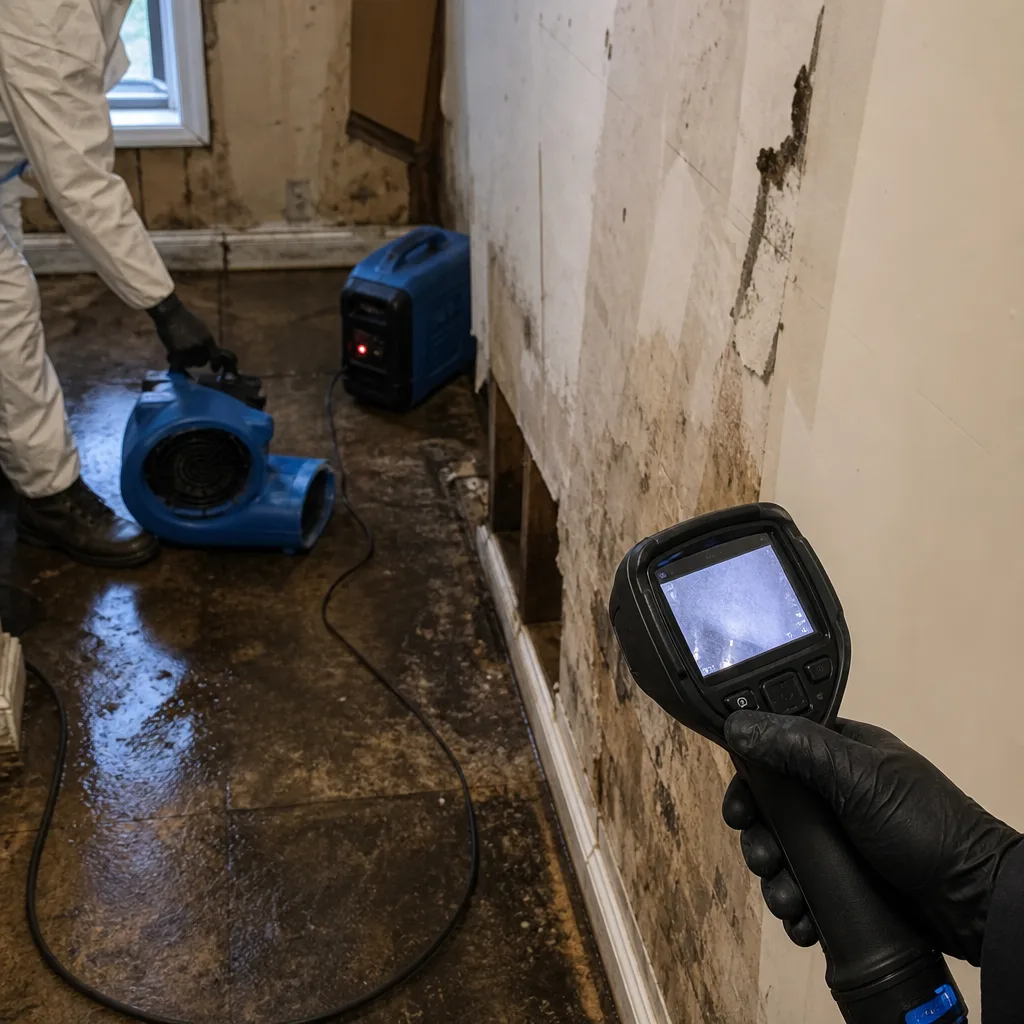 Before
 After
After24/7 Emergency Sewage Cleanup in Lower Manhattan
A sewage backup in Lower Manhattan usually means contaminated water pushing up through a floor drain or toilet in a high-rise sub-basement, a pre-war building’s original plumbing stack, or a Battery Park City condo line that hasn’t been scoped in decades. You need someone on-site fast because Category 3 water carries pathogens that become airborne within hours in confined mechanical rooms. Call Wade’s Restoration at (607) 703-3408 and you’ll reach the owner, Wade Ferris, who answers his own phone and can have a crew inside Lower Manhattan within 45 minutes of your call. The first hour matters because sewage saturating concrete, drywall, and insulation starts wicking upward immediately, and every hour it sits means more demolition, more odor treatment, and a bigger claim. Wade will walk the scope with you in person before any work starts, so you know exactly what’s coming and what it costs.
Understanding Sewage Cleanup Severity in Lower Manhattan Properties
Sewage is always Category 3 water. That classification means it contains pathogenic agents: bacteria, viruses, parasites, and the gases they off-gas. But how it behaves depends entirely on what it saturates. In a Tribeca cast-iron loft conversion, sewage from a backed-up building line often floods a sub-basement mechanical room with concrete block walls and original brick. Those porous materials absorb contaminated water quickly and hold it. In a pre-war Financial District co-op, the backup may run through shared plumbing chases and voids between units, spreading where you can’t see it. In a newer Battery Park City tower, the failure tends to be a floor-drain backup into a below-grade parking or mechanical level, where the building’s sump and ejector pumps sit. What unites them all in this part of New York is the salt. Substantial portions of Battery Park City are built on Hudson River landfill, and after Hurricane Sandy, lower levels absorbed saltwater that left hygroscopic crystals in the masonry. Those crystals pull moisture from the air and keep wetting the material even after you think it’s dry. That means drying targets, containment design, and clearance testing in Lower Manhattan must be adjusted for a building stock that is still carrying Sandy in its bones. A standard freshwater sewage protocol applied here stalls. Wade’s crews know that.
Why Lower Manhattan Property Owners Choose Wade’s Restoration
- 45-minute response commitment. Wade Ferris lives his whole professional life by this. Someone will meet you at your building inside the hour, and it may well be Wade himself.
- 24/7 live answer, never an automated system. When your sewer line backs up at 2 a.m., you get a human. Wade answers his own phone on weekends and after midnight.
- IICRC-certified crews. The people Wade sends hold WRT and ASD certifications at minimum. Sewage cleanup falls under these standards and his team follows them, daily moisture logs included.
- Free visual inspection. Before any work is authorized, you get a walkthrough and a plain-English explanation of the scope. No charge for it, and no obligation.
- Direct insurance billing. Wade’s team photographs everything, writes the estimate in industry standard format, and talks to your adjuster directly. You aren’t the messenger.
- One team from extraction to reconstruction. From black water extraction to dried-in framing and new drywall, the same crew sees the job through. You don’t bounce between three companies.
Our Sewage Cleanup Process
Inspection & Assessment
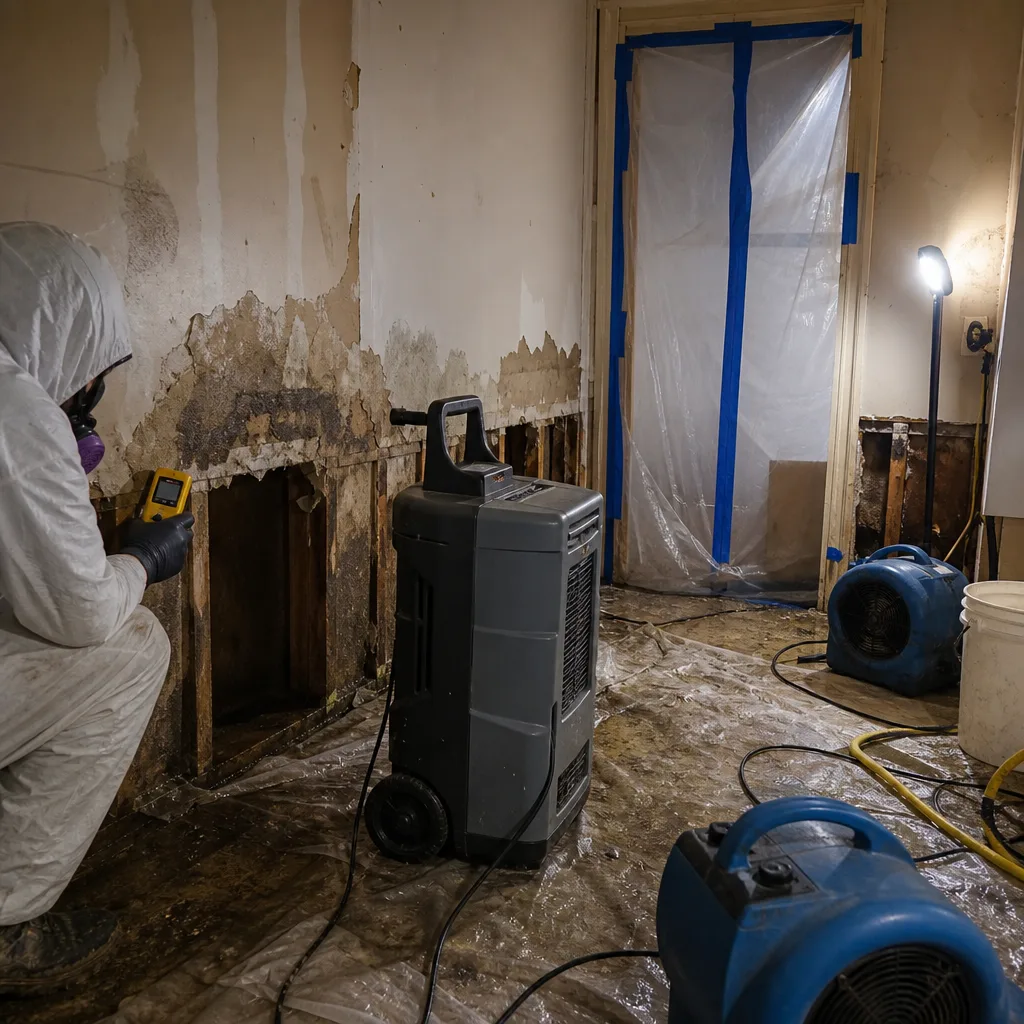
Wade or a lead tech walks the affected space, identifies the source, and maps the spread. Thermal imaging and moisture meters show what’s wet behind walls and under floors. You get a written scope before any work starts.
Extraction & Stabilization
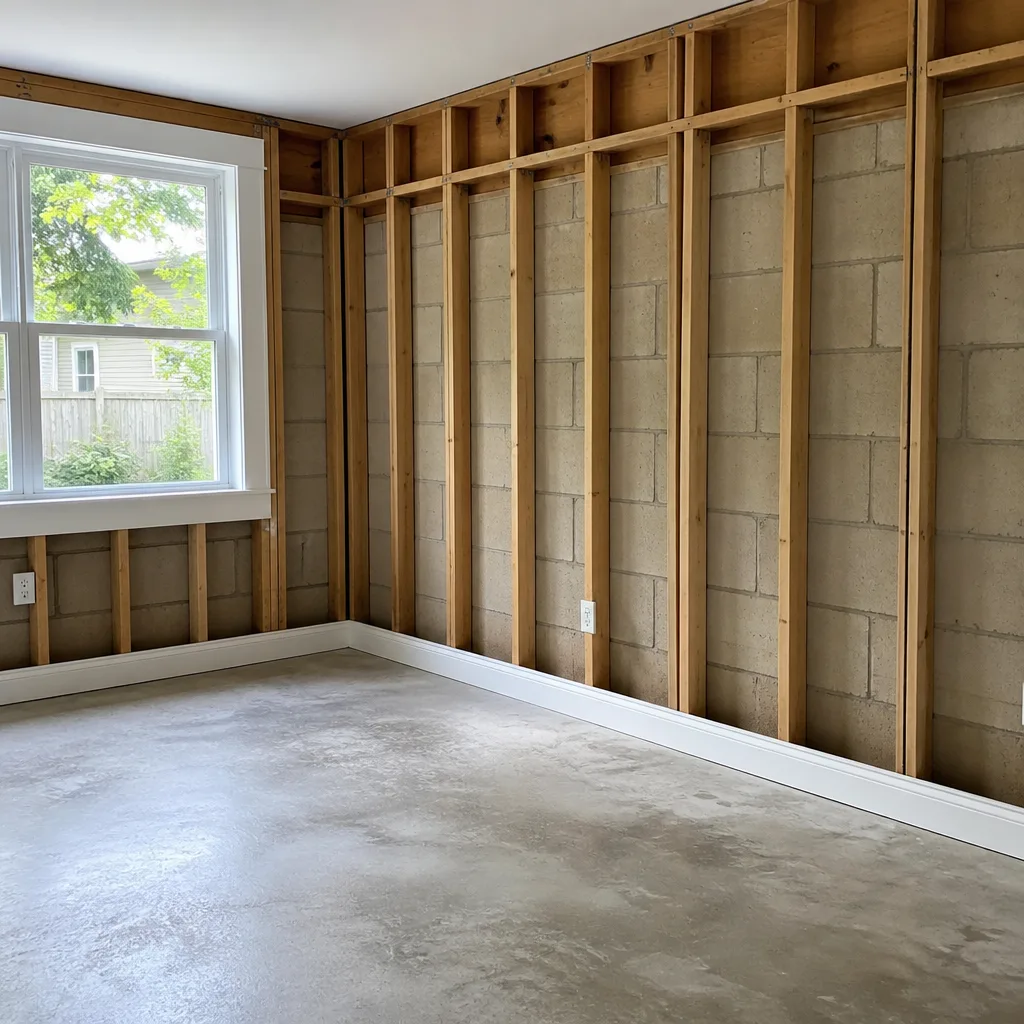
Black water comes out first. Portable extractors pull standing sewage, then the affected materials are cut and contained. In Lower Manhattan sub-basements, this often means dealing with salt-damaged concrete block from Sandy-era flooding, so the extraction plan accounts for that.
Drying & Dehumidification
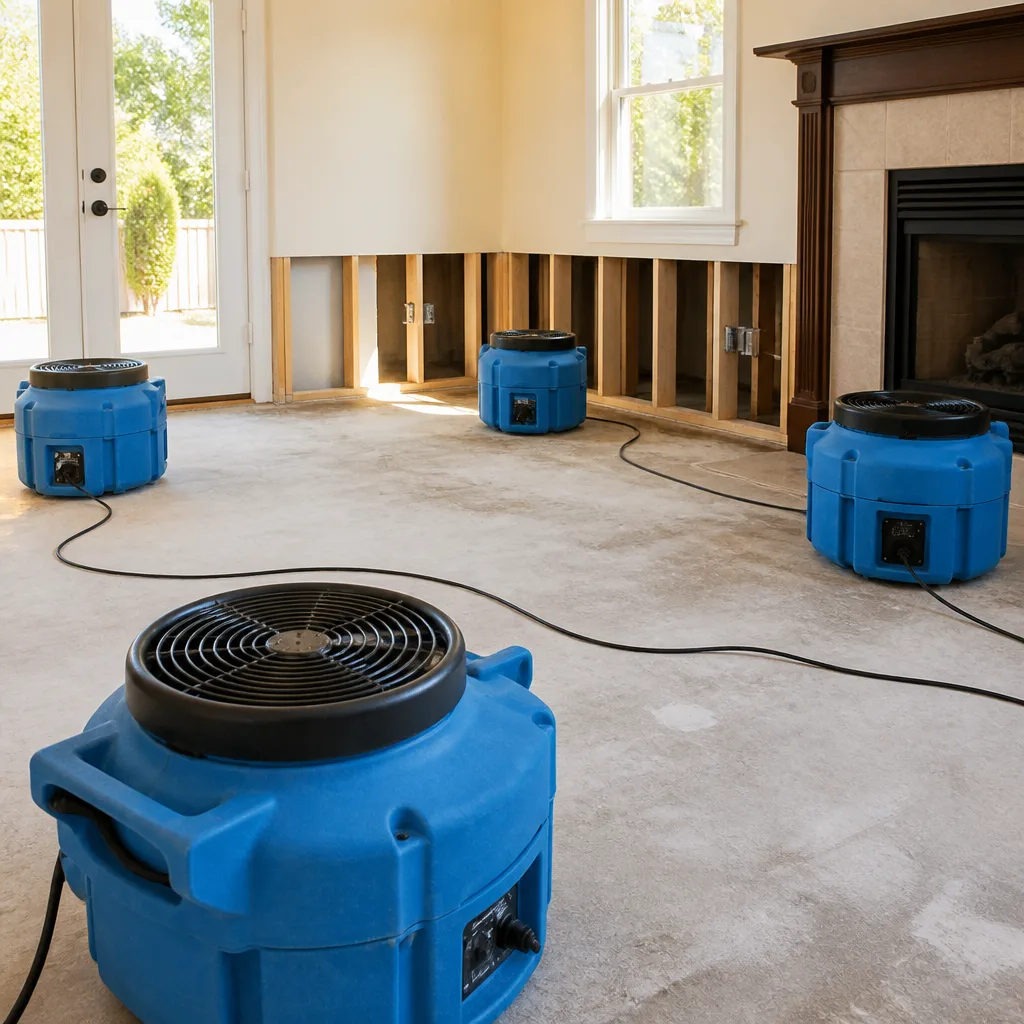
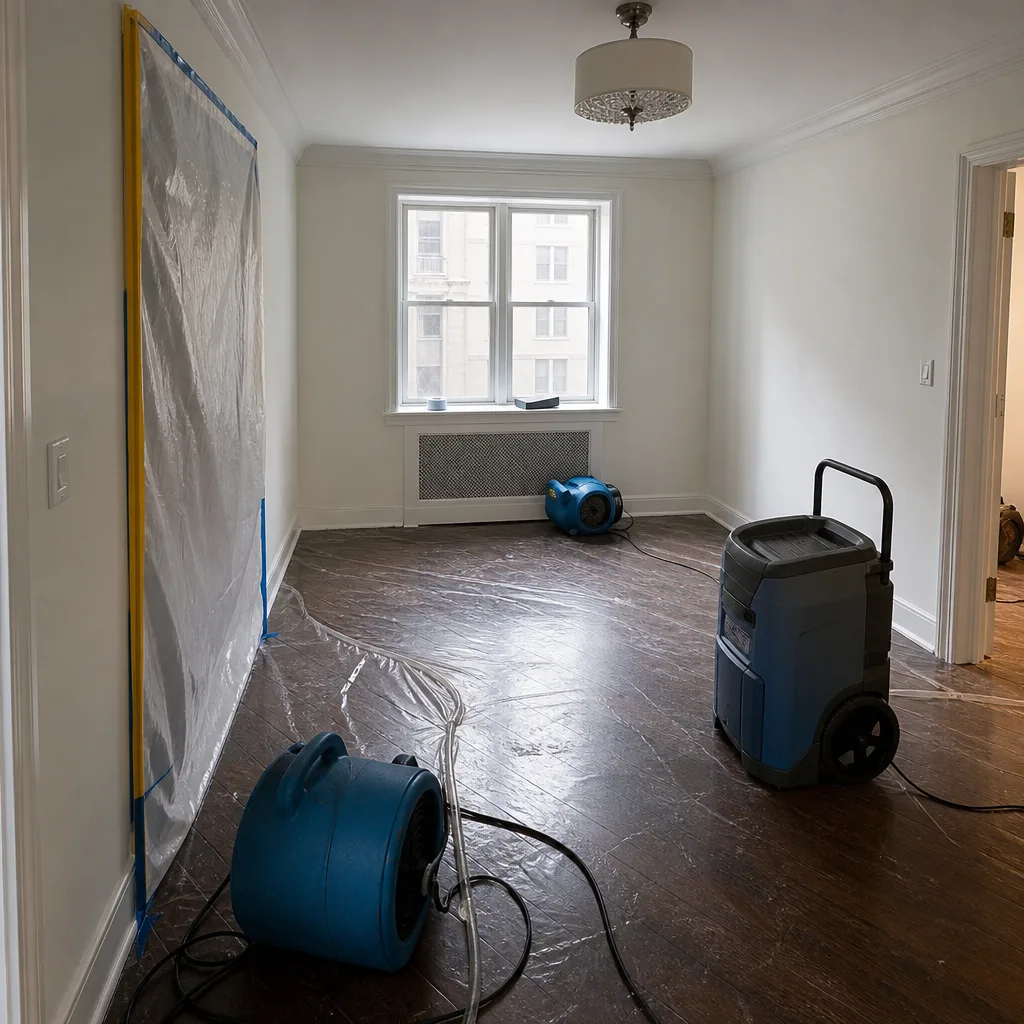
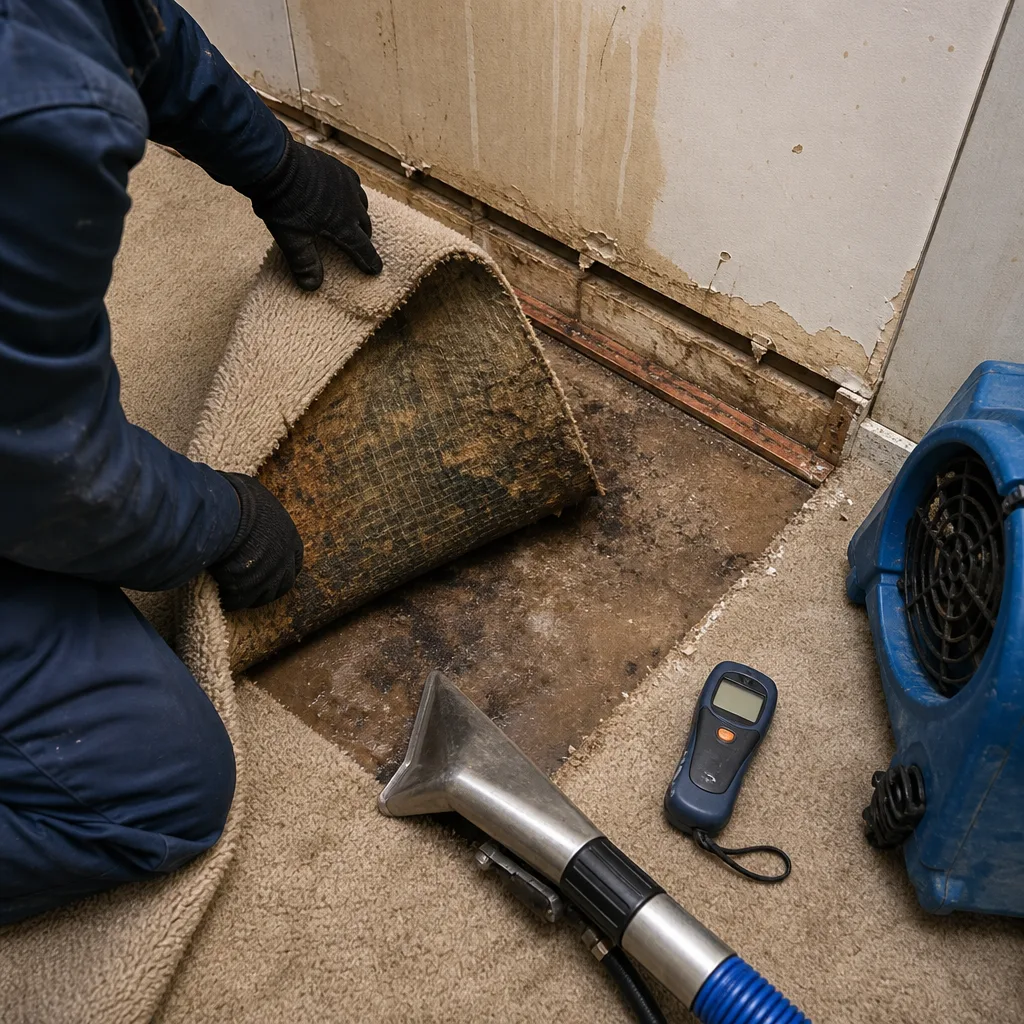
Air movers and dehumidifiers go in, but so do daily moisture readings. Wade logs readings every single day and hands the homeowner or board the full log at job’s end. That documentation is also what your insurance adjuster wants to see.
Cleaning & Sanitization
This is Category 3 work, so surfaces get treated with EPA-registered antimicrobials. HEPA filtration traps airborne particulates, and negative air pressure keeps sewage aerosols from migrating through elevator shafts and stairwells into residential units above.
Salt-Specific Treatment
In Lower Manhattan, drying alone isn’t enough. Where Sandy’s saltwater has left hygroscopic crystals in masonry and concrete, we use specialized drying systems like Injectidry panels to pull moisture from behind spalled brick and block, then retest until readings hold below fifteen percent.
Repairs & Restoration
Once the space is dry and sanitized, reconstruction begins: new drywall, flooring, trim, paint. If the sewage backup damaged mechanical systems in a FEMA AE or VE zone, Wade coordinates with your building’s engineer to meet post-Sandy elevation and flood-proofing code before sign-off.
Need Emergency Sewage Cleanup in Lower Manhattan Now?
Crews minutes away, answering live 24 hours a day. The sooner we start, the less it costs.
Working With Your Insurance Company
Sewage backup is almost always an insurance conversation, and in Lower Manhattan it’s complicated by the flood-zone overlay. A backup caused by a failed building line is typically a covered loss under most homeowners and co-op policies. A backup caused by storm surge in a FEMA AE or VE zone may fall under flood insurance, which is a separate policy. Wade’s Restoration has been through enough of these claims to know the difference, and we document everything from the first hour so the cause is clear. We photograph the source, the spread, and the materials affected, then provide your carrier with drying logs, equipment usage, and a line-item scope of work in the format adjusters expect. You never have to relay information between two sides. Wade talks to your adjuster directly.
What We Provide Your Insurer
- Thorough documentation of the loss
- Photos of all damage, room by room
- Moisture readings and drying logs
- A detailed, line-item scope of work
- Direct coordination with your carrier
Built for Lower Manhattan’s Loss Calendar
Lower Manhattan’s sewage problems follow a seasonal rhythm that anyone who owns property here learns quickly. Deep freezes in January and February burst supply lines in unheated sub-basements and will occasionally crack older cast-iron waste lines, sending sewage into mechanical rooms. Spring thaw brings ground saturation and seepage into below-grade block walls already weakened by decades of salt exposure, which finds its way to floor drains and sump pits. Summer thunderstorms deliver flash flooding that overwhelms combined storm and sanitary sewers across lower Manhattan, and in the Financial District and along the South Street corridor the surge can push river water backward through drain lines. Nor’easters in the fall carry the same saltwater risk that Sandy made famous. Then there’s the history. Many pre-war buildings south of Chambers Street still have original terra-cotta or cast-iron waste piping that has outlived its service life by forty years. When those fail, it’s not a slow drip. It’s a full Category 3 release into the lowest level of the building. Wade’s Restoration plans for all of it.
Sewage Cleanup Across Lower Manhattan’s Neighborhoods
The building type dictates how sewage spreads, and Lower Manhattan packs several distinct building types into one square mile. In Tribeca, the 19th-century cast-iron and masonry loft buildings were converted to residential use decades ago, but their original sub-basements still hold mechanicals and still connect to the same ancient street lines. Sewage backups in Tribeca tend to flood the lowest mechanical or storage level first, and because the walls are load-bearing masonry, demolition has to be surgical. In the Financial District, pre-war office towers converted to condo use share vertical plumbing chases that run the full height of the building. A backup on floor three can travel down a chase and surface in a lobby or basement. Battery Park City is different: the buildings are newer, but they sit on landfill at sea level, and their below-grade levels are the first place water comes in from the river side. In the Southbridge Towers complex and along Fulton and Water Streets, crews routinely deal with street-level sewer capacity that hasn’t kept pace with residential density. Wade’s crews know the response routes: how to get equipment through the narrow streets around Stone Street, where to stage trucks without blocking access during hours when Broadway and Wall Street are gridlocked, and which buildings require freight-elevator reservations just to bring in an air mover.
Specialized Sewage Cleanup Services We Offer in Lower Manhattan
Black Water Extraction
This is the first job: get Category 3 water out before it migrates. In Lower Manhattan sub-basements, that often means working around elevator machinery, boilers, and electrical switchgear that post-Sandy code now requires be elevated or flood-proofed. Wade’s team extracts standing sewage, then sets up containment to stop aerosols from reaching elevator shafts and residential floors above.
Sanitization & Disinfection
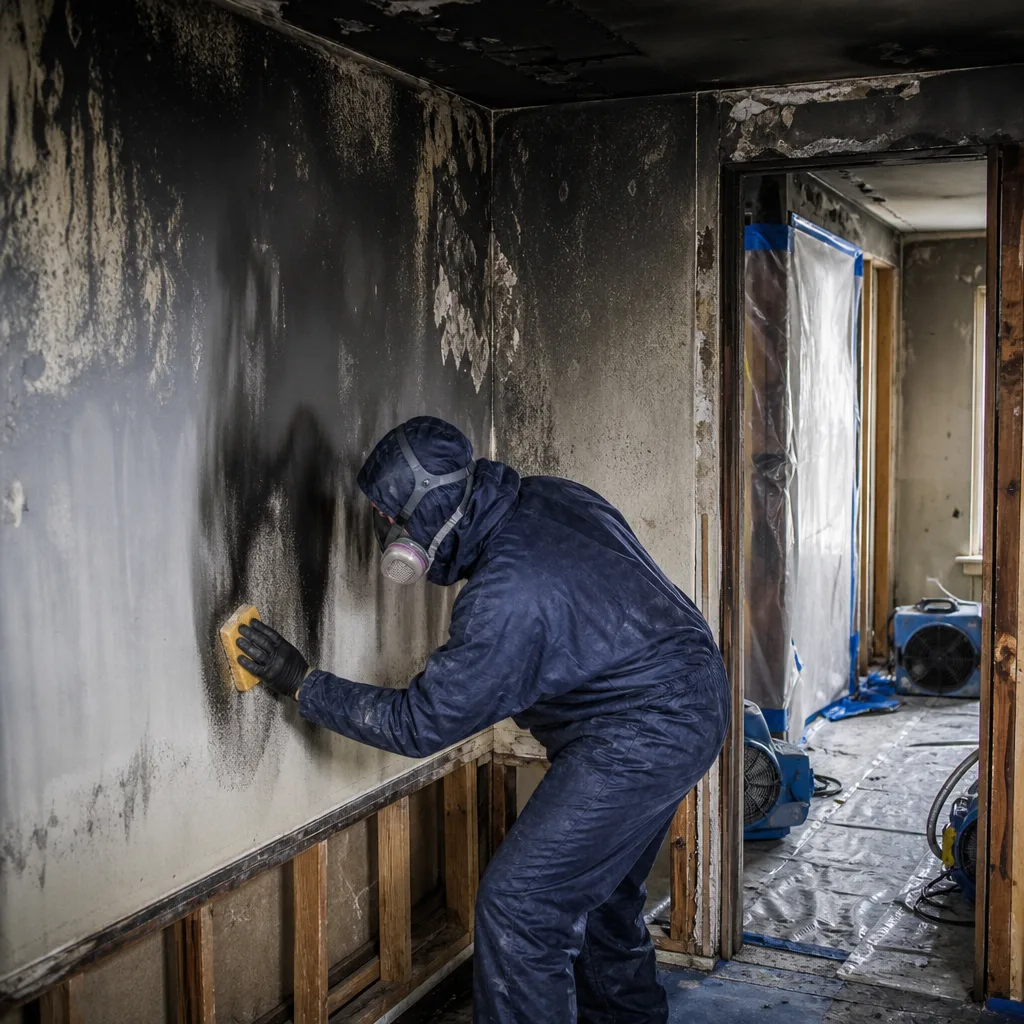
Extraction is only the start. Sewage leaves pathogens on every surface it touched, and in confined mechanical rooms those pathogens go airborne fast. We use EPA-registered antimicrobials and HEPA air scrubbing, and we hold negative air pressure in the affected zone. In a high-rise, cross-contamination through shared corridors and elevator shafts is the thing that turns a contained backup into a building-wide health event.
Sewage Backup Cleanup
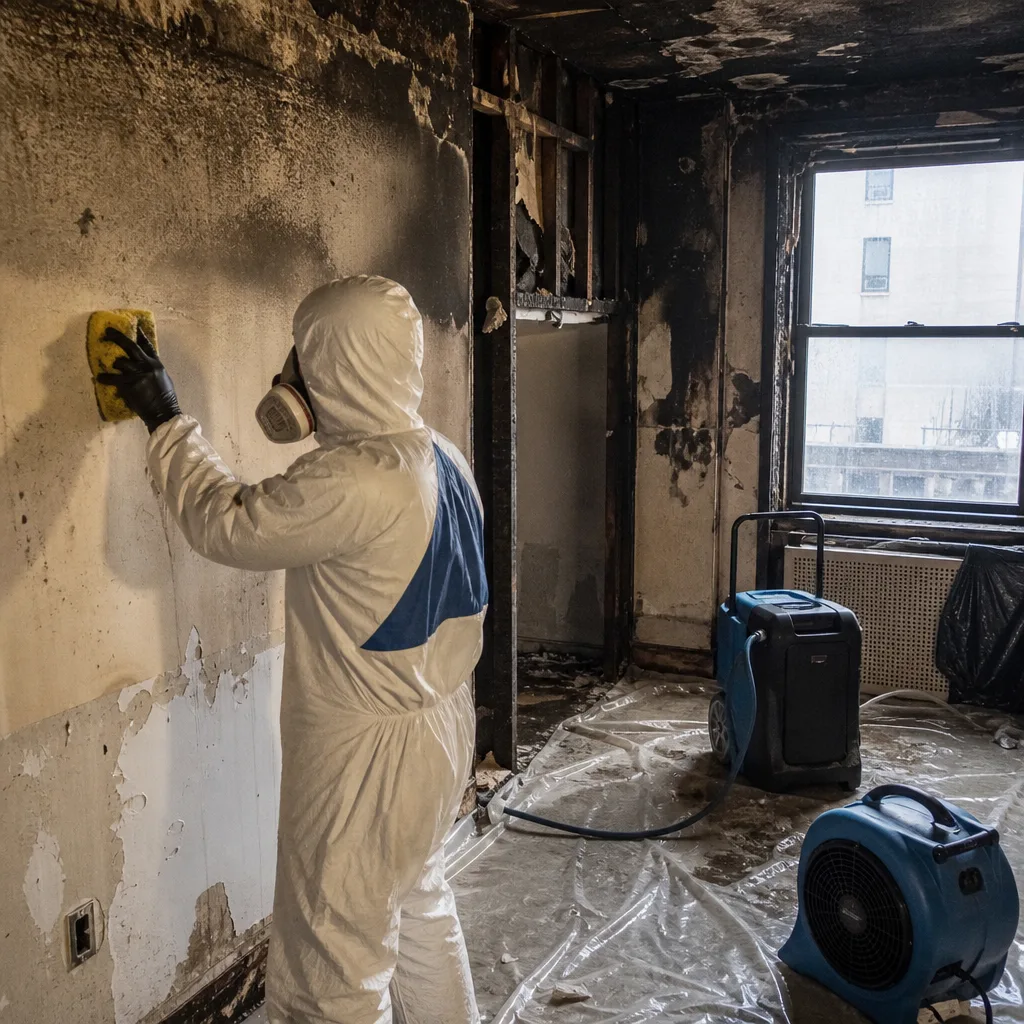
A line backing up into a Financial District co-op unit is not the same as one flooding a basement mechanical room in Tribeca. The building’s plumbing system dictates the scope. We identify the source, whether it’s a municipal sewer surcharge, a failed cast-iron stack, or a blocked building line, then build the cleanup plan around how far the contamination traveled. You get a written scope before we start, and Wade walks it with you.
What happens when you call
- 1
A real person answersNo phone trees - you reach a local pro.
- 2
You get an upfront price rangeHonest numbers before anyone is dispatched.
- 3
A background-checked tech heads outLicensed & insured, dispatched right away.
- 4
You approve before work beginsNothing starts until you say go.
Sewage Cleanup Costs in Lower Manhattan, NY
A contained toilet overflow cleanup in a Lower Manhattan condo bathroom typically runs $1,200 to $2,800 when the water hasn’t left the room. A sewage backup that floods a sub-basement mechanical room and saturates drywall, insulation, and concrete block runs $6,000 to $18,000 depending on how far the contamination traveled and whether the building’s waste line needs repair. Full black water extraction with containment, demolition, drying, sanitization, and reconstruction in a Tribeca loft conversion can reach $30,000 to $65,000 when the failure involves multiple levels. What moves the price: the square footage affected, whether masonry behind walls is wet, whether salt-damaged material from Sandy-era flooding is involved, and whether building code requires mechanical system elevation before reconstruction. Insurance typically covers sewage backup from a failed line. Storm-surge flooding in a FEMA AE or VE zone may fall under a separate flood policy. The free visual inspection is the path to a firm number. Wade walks the space, writes the scope, and hands you a number in writing before any work starts.
We Also Serve Cities Near Lower Manhattan
Wade’s Restoration works throughout New York City, and our crews regularly respond to sewage backups in Midtown West, the Financial District, Astoria, and Midtown Manhattan. If your building sits near the Manhattan shoreline but outside the service area on this page, call (607) 703-3408 and ask. Wade will tell you straight whether he can get a crew to you.
Lower Manhattan Sewage Cleanup Questions, Answered
How does saltwater from Hurricane Sandy affect sewage cleanup in a Lower Manhattan sub-basement?
Saltwater left hygroscopic salt crystals in the concrete block and brick of many Lower Manhattan sub-basements, and those crystals continue to pull moisture from the air years after Sandy. When sewage saturates the same masonry, the contamination mixes with salt-driven moisture wicking, so standard drying times don’t apply. We run extended drying with systems like Injectidry panels and hold clearance testing until moisture readings stay below fifteen percent across multiple days.
Do I need to worry about sewage backup in a high-rise Battery Park City condo even if my unit is above the flood line?
Yes. Your unit may sit above the FEMA flood line, but the building’s waste and vent lines run through the sub-basement before they exit to the street. When saltwater, age, or surcharge pressure damages those lines, the backup travels upward and surfaces in units above. Battery Park City buildings also sit on landfill with below-grade mechanical levels, so basement backups affect the whole building’s drainage regardless of your floor.
What is the difference between sewage cleanup and storm-surge cleanup in Tribeca?
Sewage cleanup is Category 3 contamination from a building or municipal line failure. Storm-surge cleanup is also Category 3, but the contamination source is saltwater that flooded in from the outside and mixed with whatever was on the street. In Tribeca, properties that flooded during Sandy may have both, and a remediation plan has to address the salt crystals left behind in addition to the pathogens. Wade’s team treats both under the same IICRC protocol, but the drying and clearance testing differ because salt wicks moisture long after the source is gone.
Can you handle a sewage backup in a building that already had Sandy flood damage?
Yes. In fact that’s the work we do most often in this part of Manhattan. Our crew was called to a pre-war Financial District co-op after a sewer backup in the sub-basement where Sandy’s saltwater had already weakened the concrete block. We ran moisture mapping with our Dri-Eaz meters, set up containment around the mechanical room, and used Injectidry to pull moisture from behind the spalled brick, then documented drying logs showing the salt-laden readings finally dropping below 15 percent after four days of dehumidification.
Will insurance cover sewage cleanup differently in a FEMA AE zone in Lower Manhattan?
It can. A sewage backup caused by a failed building or municipal line is generally covered under a standard homeowners or co-op policy regardless of flood zone. But if the backup is triggered by storm surge that enters from the outside, the loss may fall under a separate flood insurance policy, which carries its own limits and deductibles. Wade’s Restoration documents source, spread, and materials from the first hour so the cause is clear, and we coordinate with your adjuster directly.
How fast can someone actually get to my building in Lower Manhattan?
Inside 45 minutes. Wade answers the phone live, 24 hours a day, and he has crews staged to respond across New York City. In Lower Manhattan, we deal with elevator reservations and narrow street access, which is exactly why we send someone who knows the buildings. Call (607) 703-3408 and you’ll reach a person, not a queue.
Can we stay in our unit during sewage cleanup?
Usually no, if the backup is in your unit or in a shared area immediately adjacent. Sewage is Category 3 contamination, and when it’s disturbed during extraction and demolition, pathogens go airborne. If containment and negative air pressure are set up correctly and the affected zone is isolated, some areas of the building may be habitable. Wade will tell you honestly at the inspection whether you need to relocate temporarily.
What should I do in the first 30 minutes after a sewage backup in Lower Manhattan?
Don’t run water, don’t flush, and don’t walk through the affected area unless you have to. Turn off the water supply to the affected fixture if you can do so without entering standing waste. Call Wade’s Restoration at (607) 703-3408 and describe the source. Then stay out of the space. The faster extraction starts, the less demolition you’ll face, and the less likely odor and contamination will have spread.
Serving Lower Manhattan, NY - Our Local Coverage Area
We’re based in the Lower Manhattan area and know this community well. Use the map below to see our service coverage - if you’re nearby, we can almost certainly help.
Ready When You Are
A sewage backup in Lower Manhattan isn’t something you wait on. The water spreads, the odor sets into materials, and in buildings with shared chases and elevator shafts, the contamination migrates further every hour. Wade Ferris will answer the phone himself and tell you what he can do, when he can be there, and what it will cost before you commit. Free visual inspection, no trip charge inside our own service area, and a 90-Day Done Right Promise in writing on every restoration job. Call (607) 703-3408 now. If it’s not done right, Wade makes it right.
Written by Wade Ferris, Owner at Wade’s Restoration, serving Lower Manhattan since 2007.