
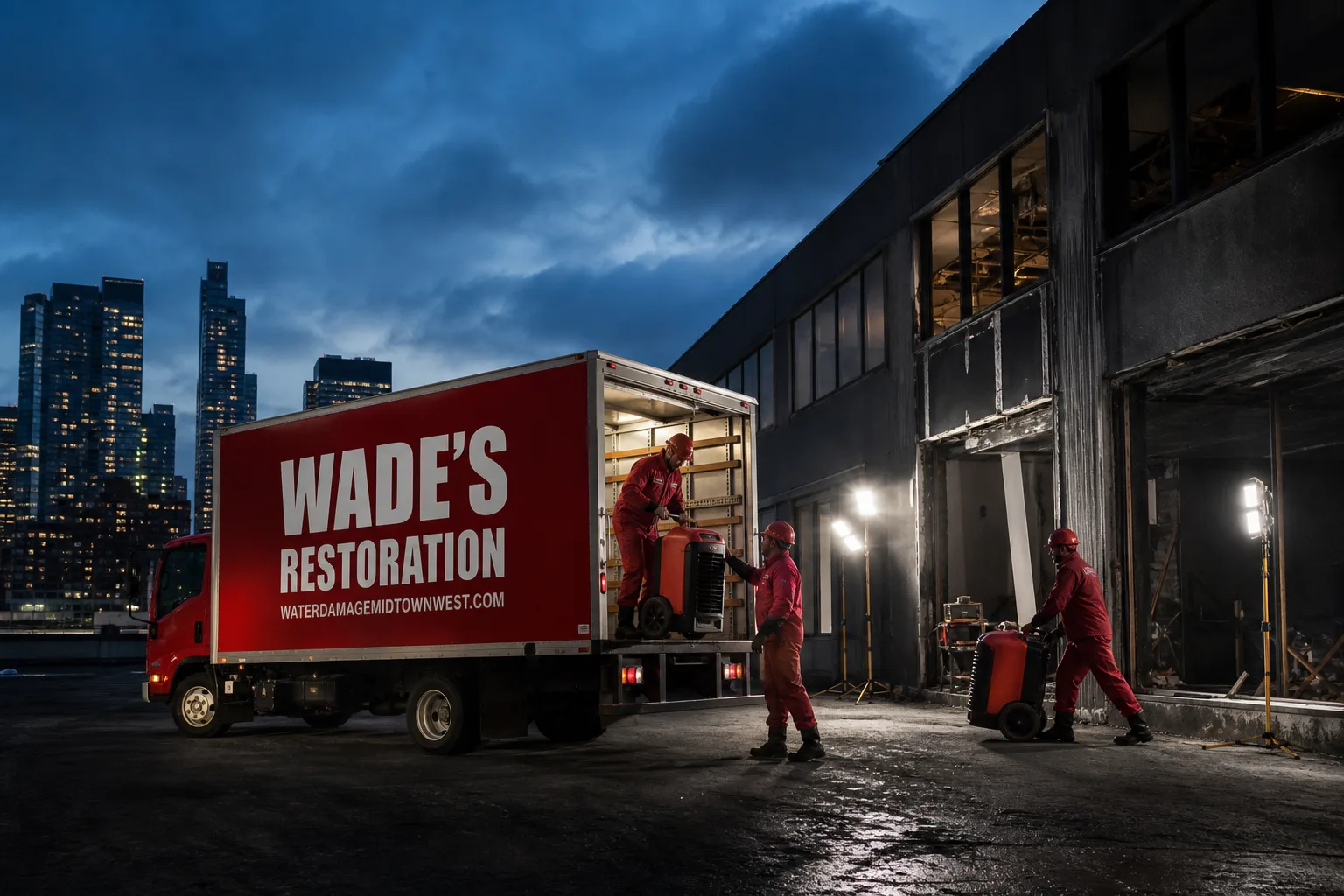
Free visual inspection and a written scope of work before any mitigation begins - photos, moisture readings, and drying logs go in your claim file
The scope we write is the scope we bill. Anything new gets shown to you, in writing, before we touch it.
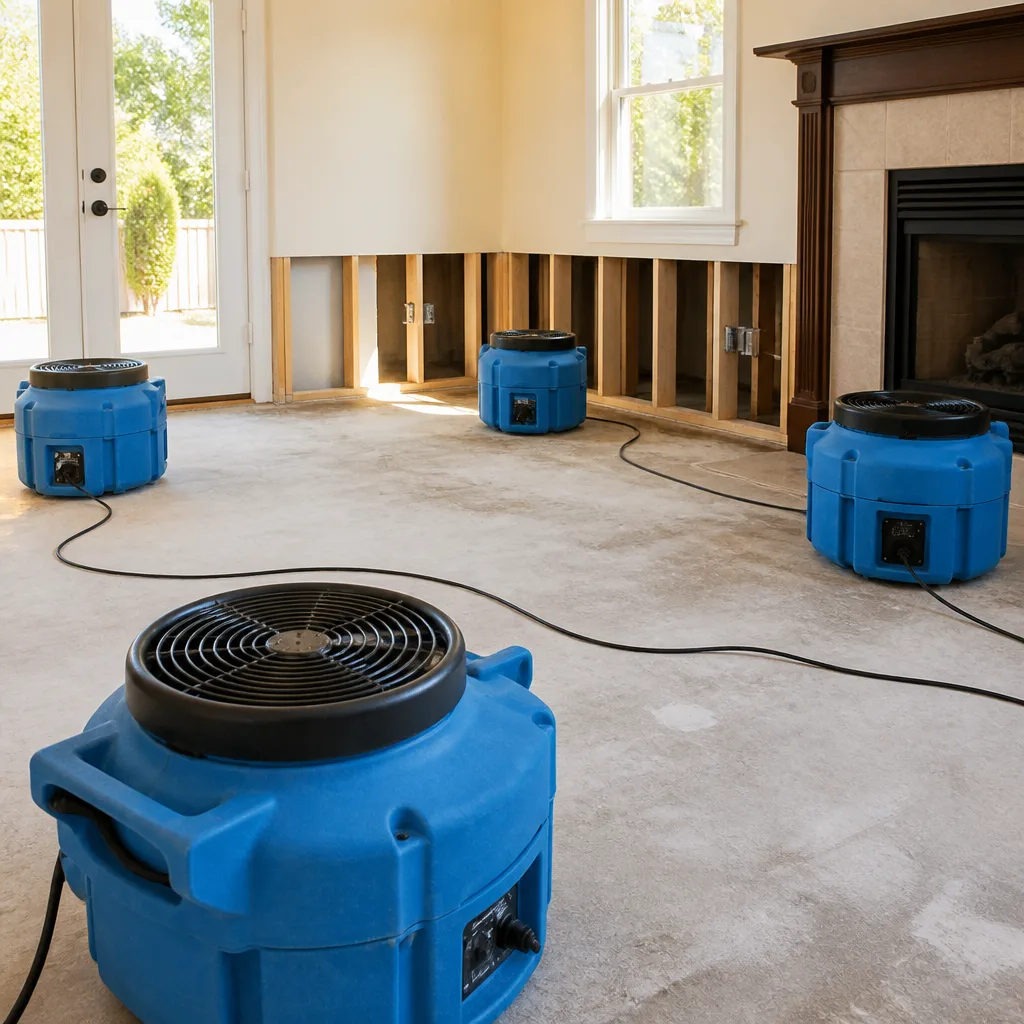
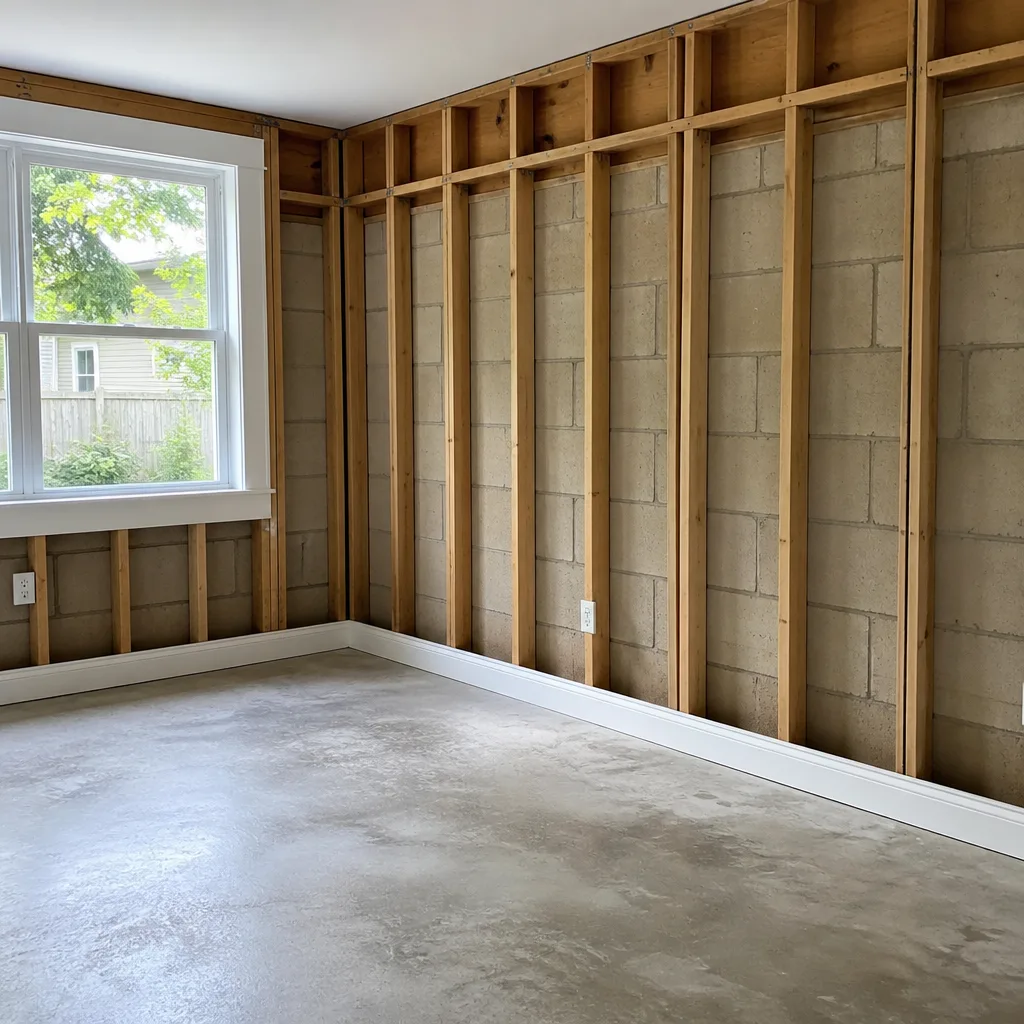
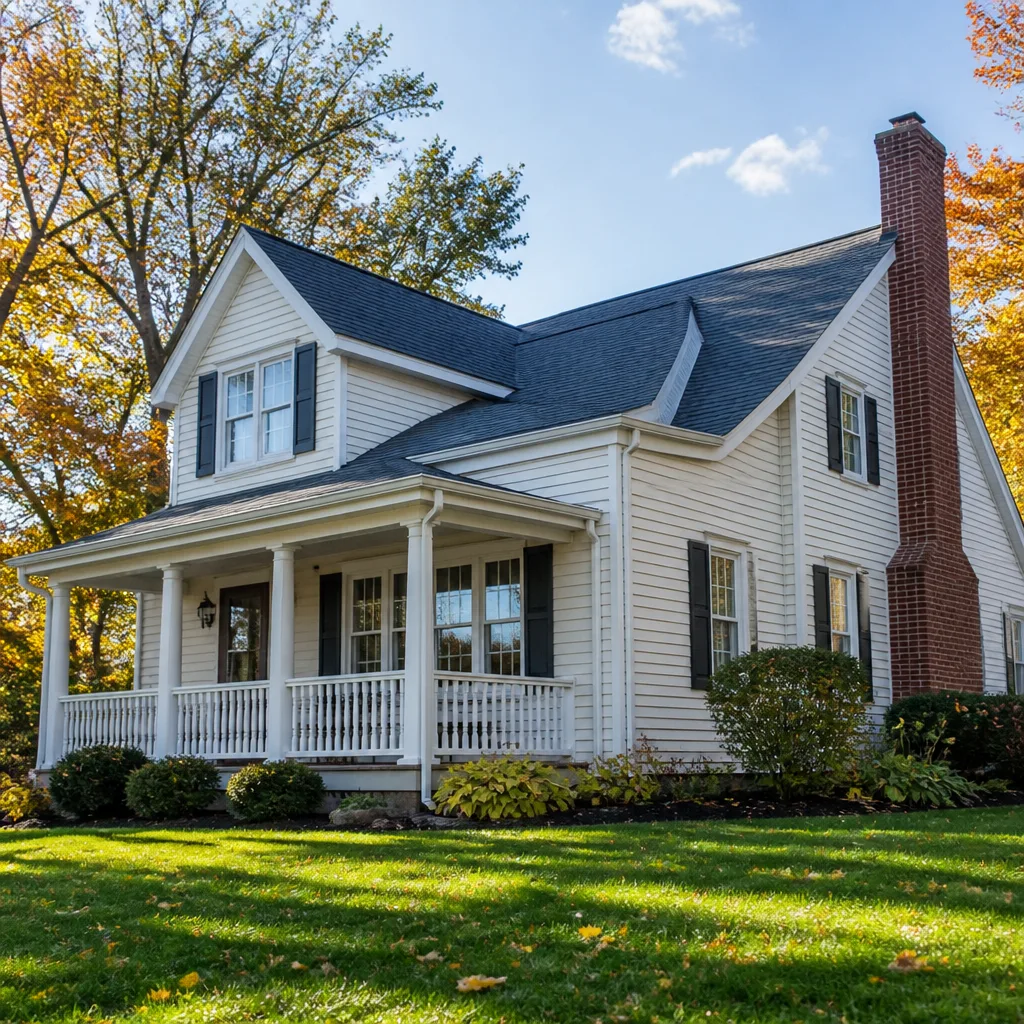
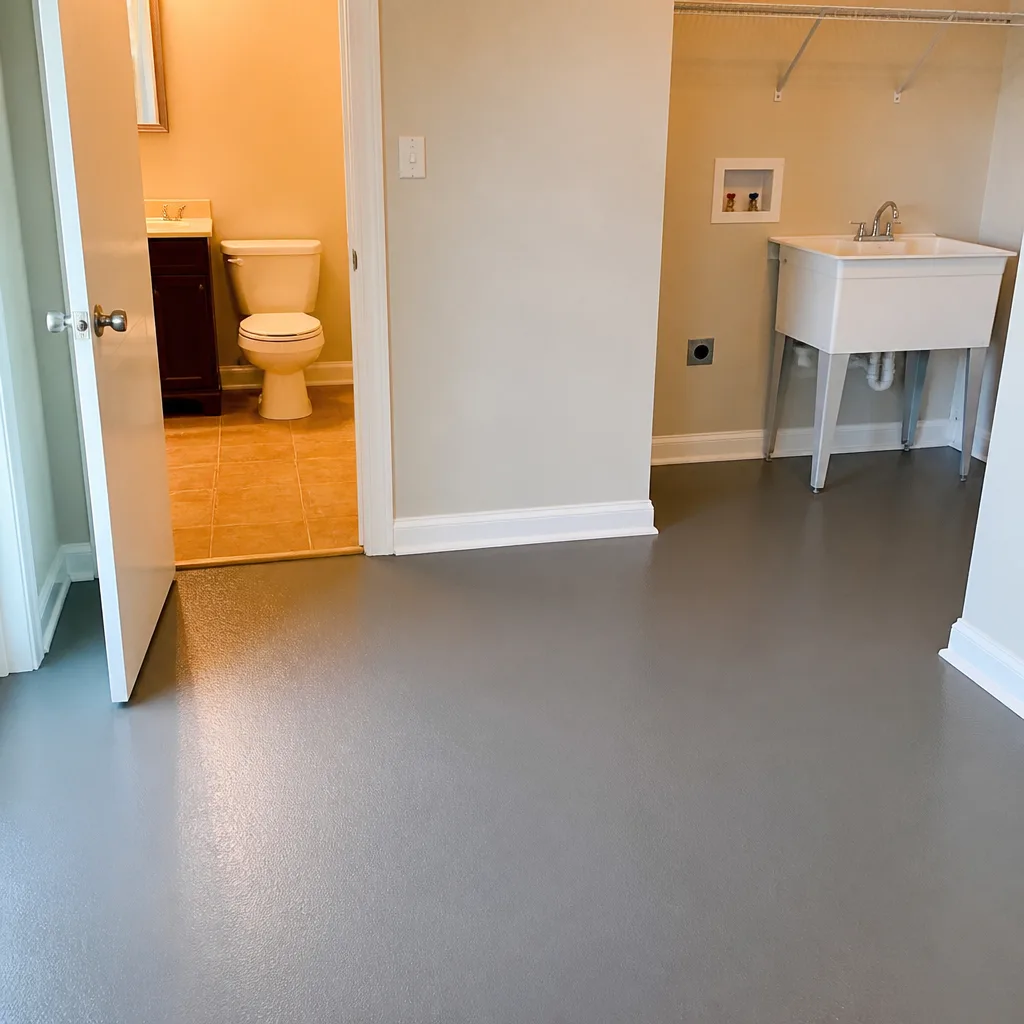
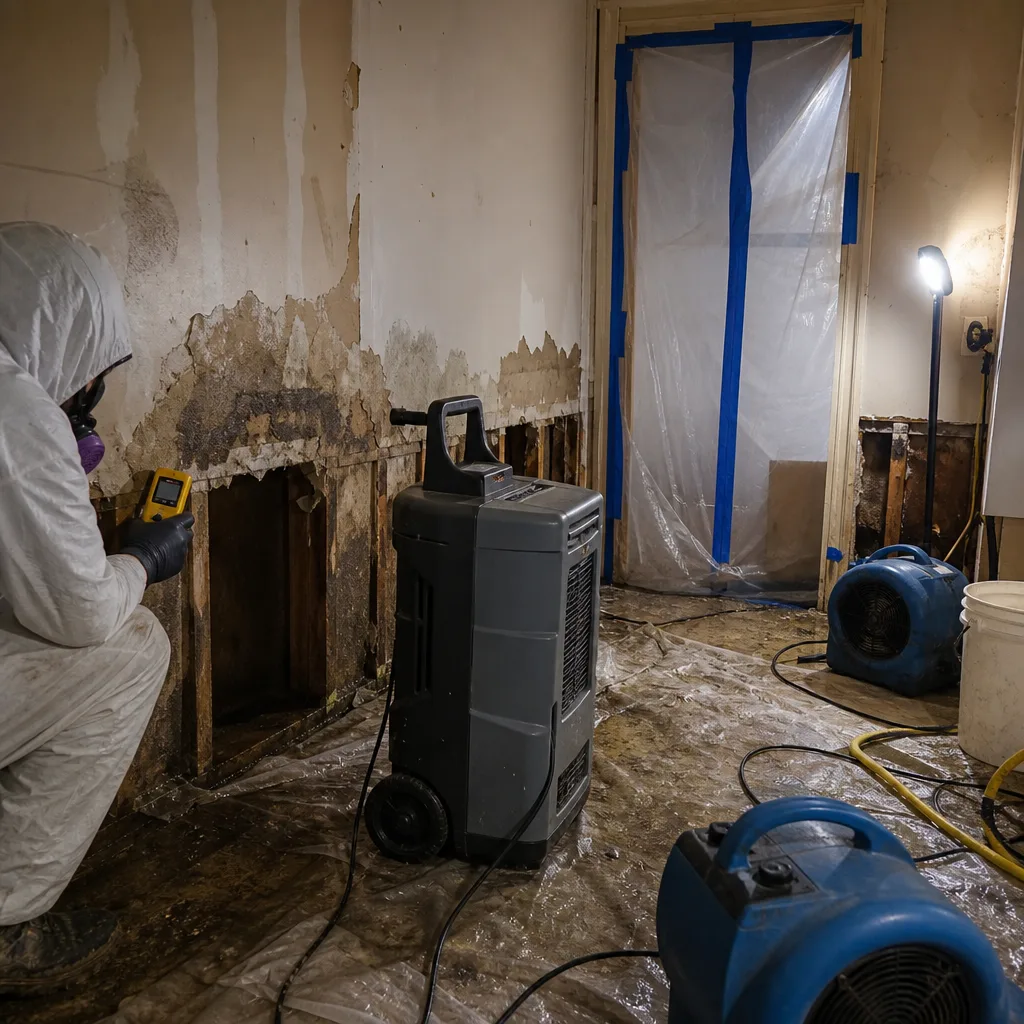 Before
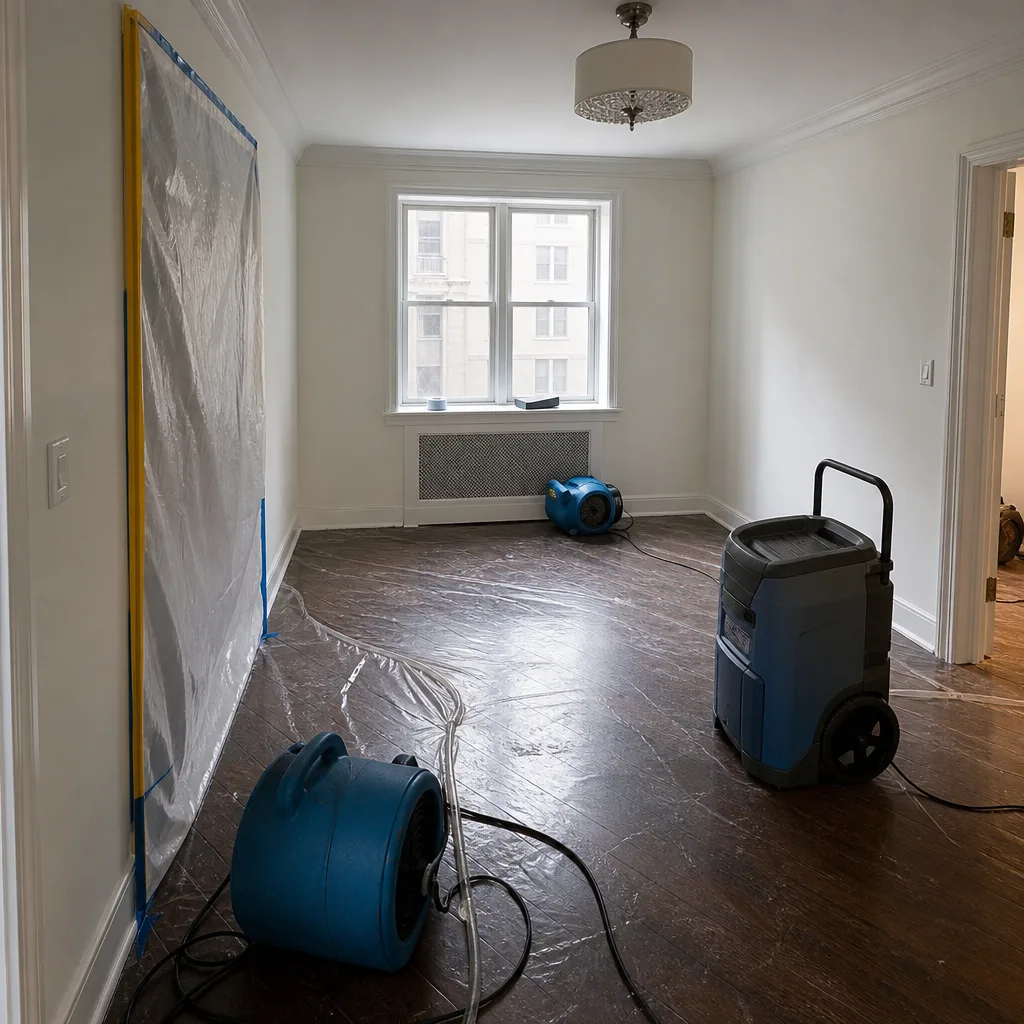 After
After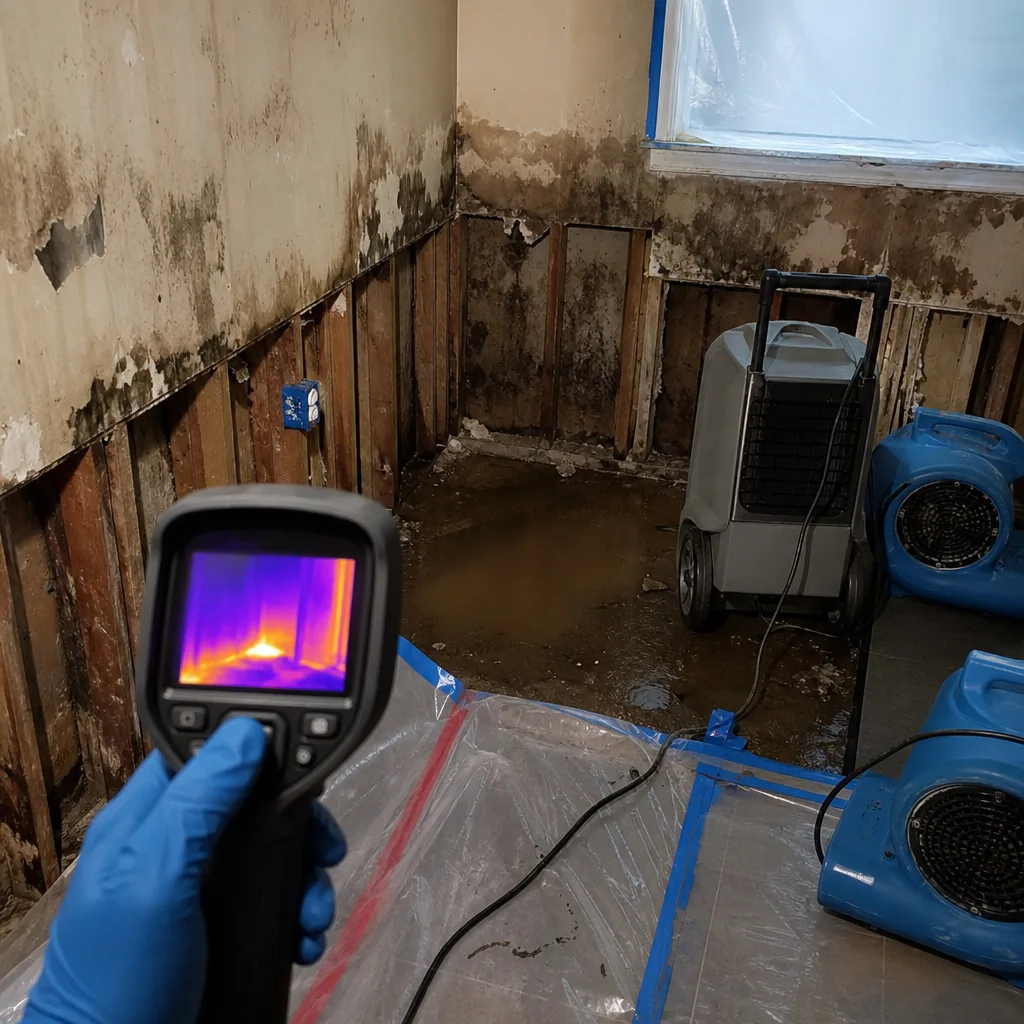 Before
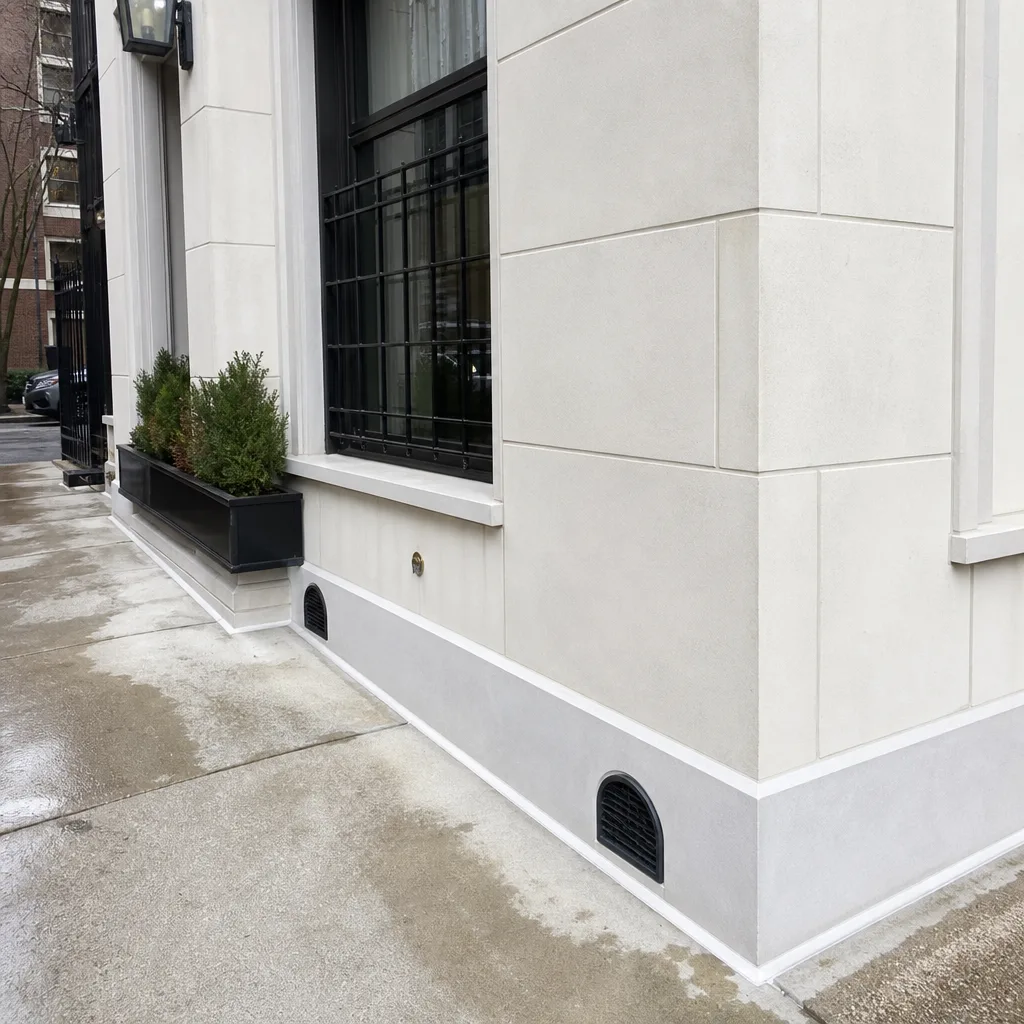 After
After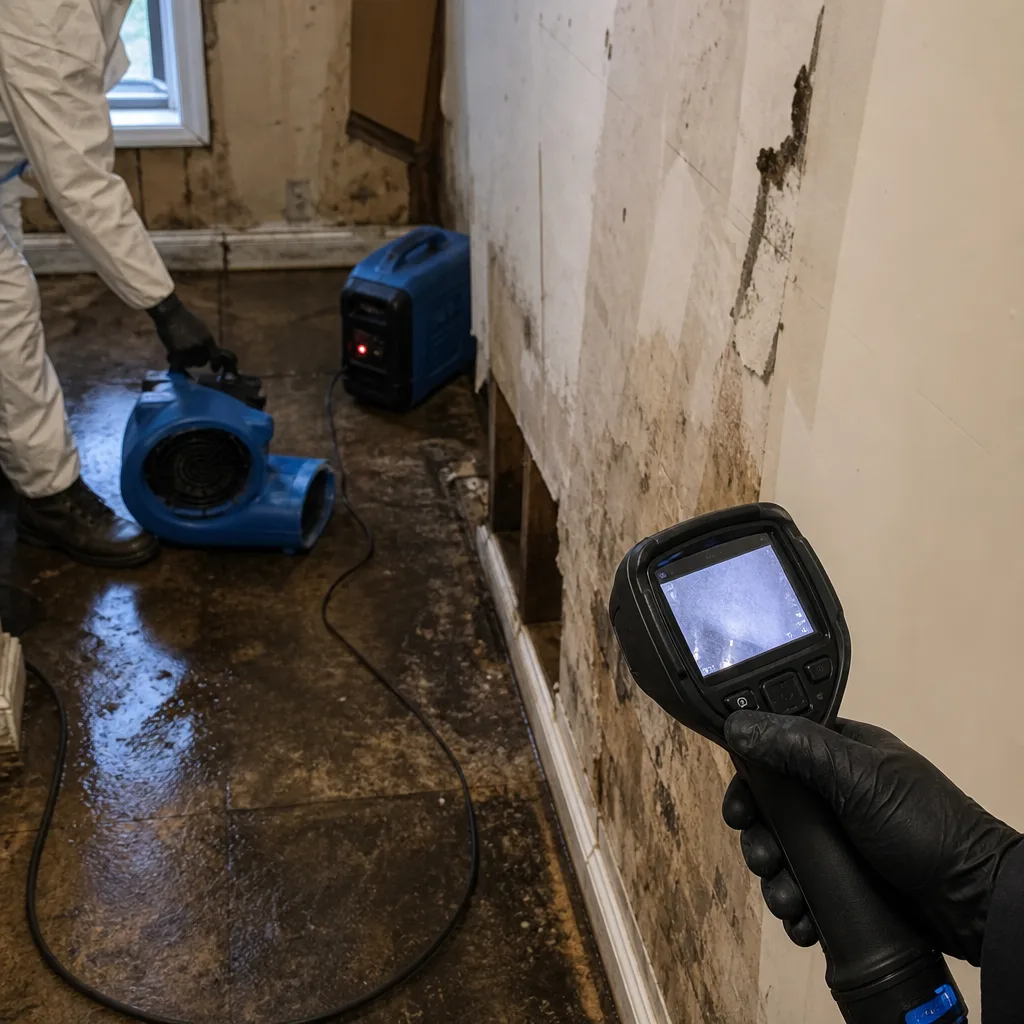 Before
 After
After24/7 Emergency Commercial Restoration in Lower Manhattan
If your Lower Manhattan building just took on storm surge, sewage, or a burst supply line, here’s the straight answer: we answer live at (607) 703-3408 and can have a crew on site inside the hour, because we stage locally for the Financial District, Battery Park City, Tribeca, and the surrounding blocks. Saltwater from harbor surge is Category 3 black water, which means every hour it sits, it’s corroding steel framing, switchgear, and elevator machinery faster than freshwater ever would. The first sixty minutes decide whether a restoration is a cleanup or a full mechanical teardown.
Wade Ferris built this company in 2007 on one idea: when a commercial property goes down, the owner should talk to the same person at midnight that answered the phone at noon. Wade answers his own phone. He heads out himself. And he hands you daily moisture readings, because nobody should have to guess whether a Lower Manhattan sub-basement is actually drying or just looking dry. We offer a free visual inspection and a written scope before any work starts, so you know the number before a fan gets plugged in.
Understanding Commercial Restoration Severity in Lower Manhattan Properties
Not all water is the same, and in Lower Manhattan the difference matters more than almost anywhere else. Category 1 water is clean, from a broken supply line or a radiator valve. Category 2 carries contaminants, from a dishwasher backup or sump failure. Category 3 is sewage, harbor surge, or anything that touched the Hudson or New York Bay. Since Battery Park City and the Financial District sit on landfill and reclaimed riverbed, storm surge isn’t just water, it’s salt-laden black water that carries sodium chloride into concrete block, brick, and mechanical rooms. That salt doesn’t evaporate. It stays hygroscopic, pulling moisture out of the air and wicking it through wall assemblies for years, which is why you see efflorescence and spalling on walls that were supposedly dried a decade ago.
Lower Manhattan’s building stock compounds this. The 19th-century cast-iron and masonry lofts in Tribeca have thick, porous walls that hold saltwater in their cores. The pre-war office towers converted to residential in the Financial District often have original switchgear and elevator machinery in basements and sub-basements, exactly where surge pools first. Post-Sandy code now requires elevating or flood-proofing those systems on major renovation, so a restoration job here frequently becomes a code-compliance project too, moving electrical panels out of the flood zone, replacing corroded conduit, and re-scoping the mechanical room to current FEMA AE and VE requirements. A restoration crew that treats a Lower Manhattan surge loss like a freshwater pipe burst will leave a building that passes a visual check and fails the long game.
Why Lower Manhattan Property Owners Choose Wade’s Restoration
- 45-minute response commitment: Wade stages crews inside the Lower Manhattan service area, not from a depot in New Jersey. When surge hits or a supply line lets go, the clock starts when you hang up.
- A real person answers, 24/7: Not a call center, not an answering service. Wade Ferris carries the phone himself. You’ll get the owner, a straight answer, and a crew moving. That’s how it’s been since 2007.
- IICRC-certified crews with the right credentials: Our techs hold WRT, FSRT, and AMRT certifications, so the moisture mapping, structural drying, and mold containment you get meets the industry’s written standards, not a franchise’s training video.
- Free visual inspection: We walk the loss first, tell you what we’re seeing, and put the scope in writing. No charge for that. It’s the only honest way to price a saltwater job in a high-rise sub-basement.
- Direct insurance billing: Lower Manhattan commercial claims run through FEMA flood maps, co-op boards, and sometimes multiple carriers. We document everything from hour one and bill directly. You shouldn’t be the middleman between your adjuster and a restoration company.
- One team from extraction to reconstruction: The same crew that extracts the water is the one hanging drywall and re-energizing panels at the end. No handoffs, no re-explaining the building to a stranger.
Our Commercial Restoration Process
1. Inspection and Assessment
We arrive with thermal imaging and moisture meters, then map the full extent of the loss. In a Lower Manhattan high-rise, that means tracing water migration through floor assemblies, shared chases, and elevator shafts, not just the visible puddle. You get a written scope with dollars attached before we begin.
2. Extraction and Stabilization
Submersible and truck-mounted extractors pull standing water fast. For saltwater, we begin corrosion-control measures immediately, because sodium chloride starts attacking conduit, switchgear, and steel studs within hours. We also isolate utilities to prevent a shock or fire hazard.
3. Drying and Dehumidification
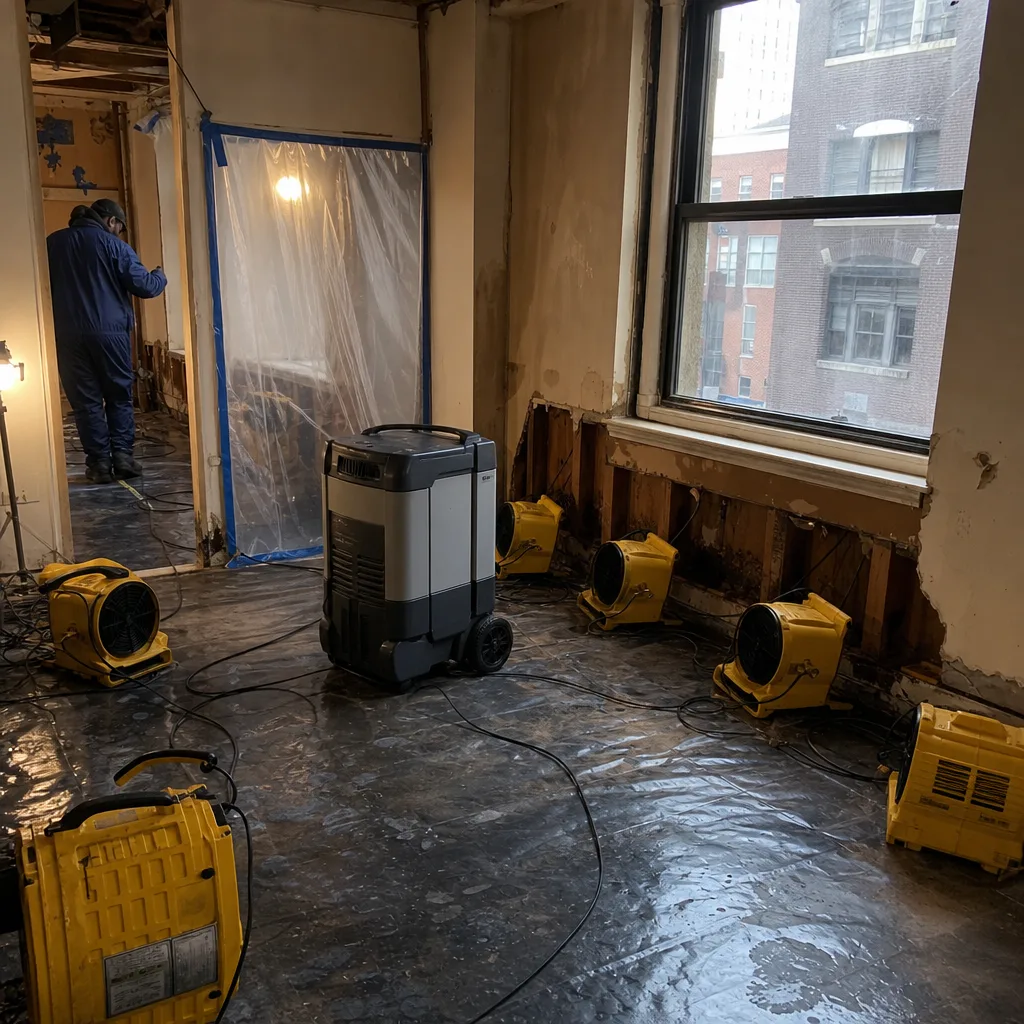
Commercial-grade Dri-Eaz and Phoenix air movers paired with low-grain refrigerant dehumidifiers create the pressure differential that forces moisture out of concrete and masonry, not just the air. We take moisture readings every single day and hand you the full log at the end. Almost nobody does that.
4. Cleaning and Sanitization
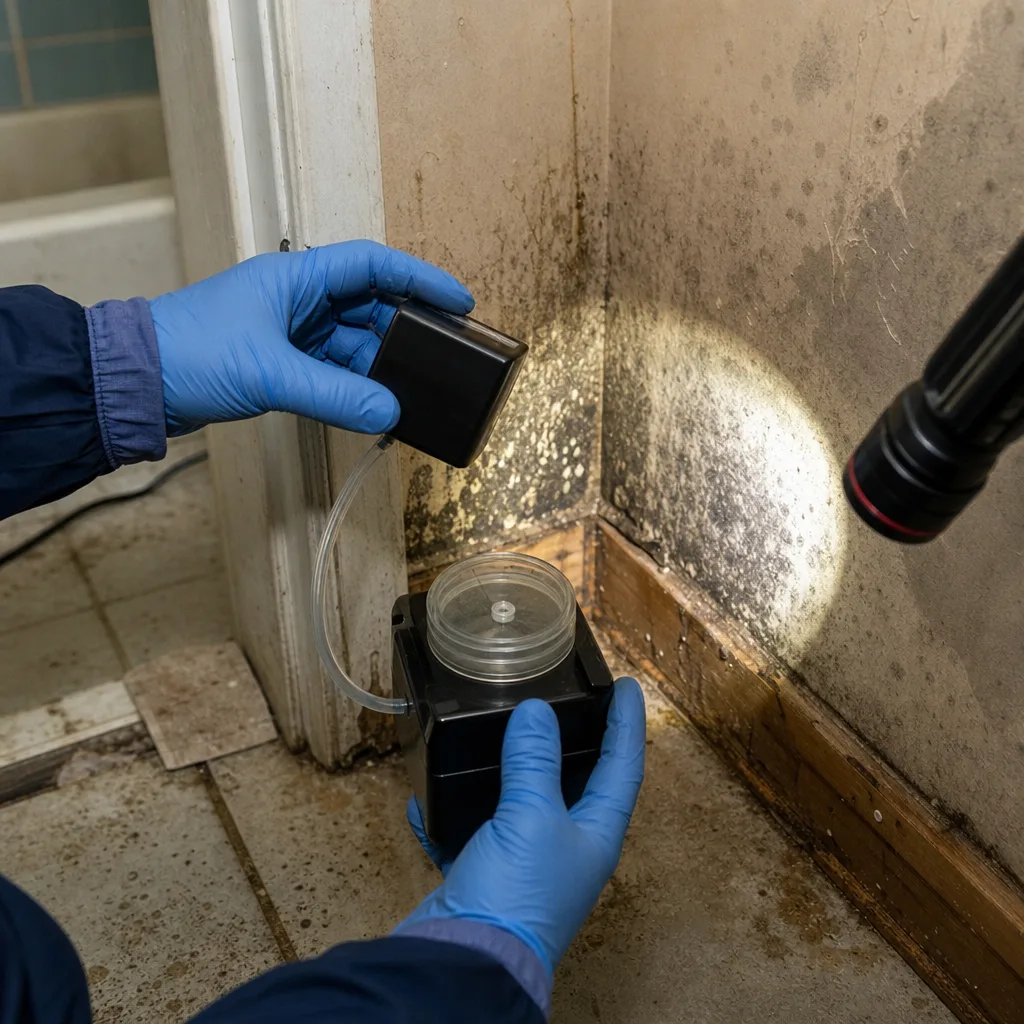
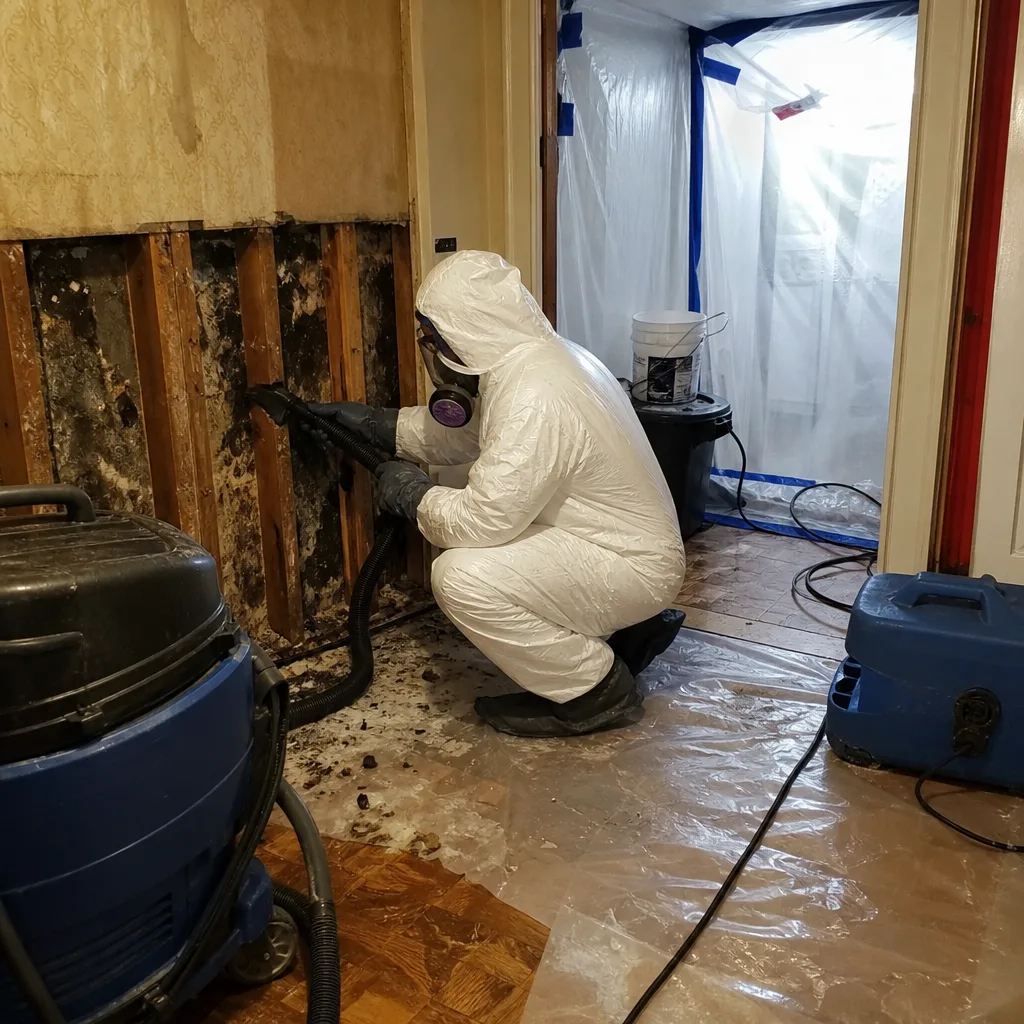
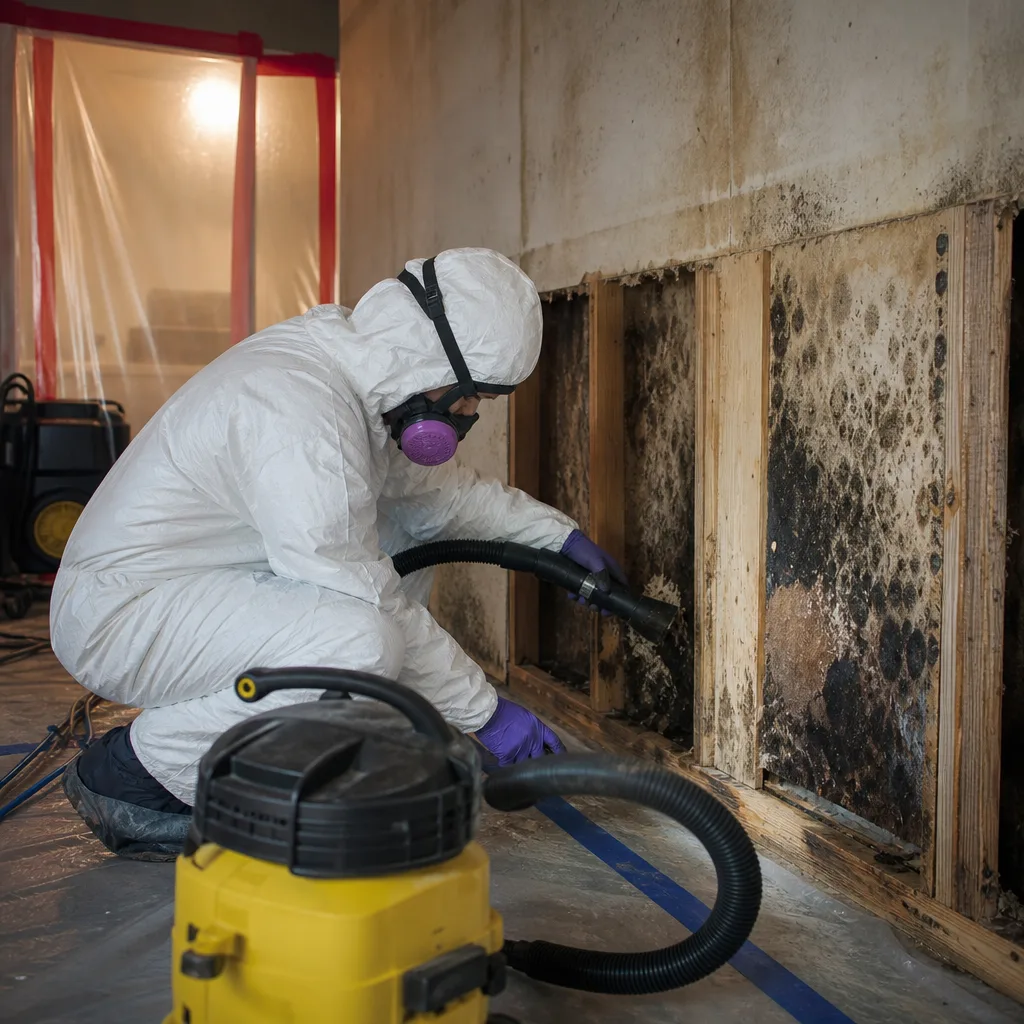
Category 3 saltwater demands more than extraction. We apply EPA-registered antimicrobials to all affected surfaces, HEPA-vacuum porous materials, and run air scrubbers to capture salt dust and spore that went airborne during the surge.
5. Salt-Specific Remediation
This step is why Lower Manhattan jobs fail when done wrong. We treat concrete block, brick, and plaster with salt-neutralizing agents and monitor affected wall sections for weeks, because hygroscopic crystals left behind will keep wicking moisture and spalling surfaces long after the building passes a visual inspection.
6. Repairs and Restoration
From rebuilding elevator machine rooms to remounting switchgear above the BFE, we finish the job. Where substantial damage triggers post-Sandy code requirements, we bring the mechanical systems into compliance, coordinating with your engineer and the DOB as needed.
Need Emergency Commercial Restoration in Lower Manhattan Now?
Crews minutes away, answering live 24 hours a day. The sooner we start, the less it costs.
Working With Your Insurance Company
Lower Manhattan flood claims are different from anywhere else. After Sandy, FEMA redrew the maps, and Battery Park City and the Financial District now sit in high-risk AE and VE zones, which changes how carriers handle storm surge versus a broken pipe. Wade deals with your adjuster directly. He sends the photos, the moisture logs, and the line-item scope under our company name, and he answers the adjuster’s questions so you’re not stuck relaying messages between two sides. The 90-Day Done Right Promise applies to every water, fire, and mold restoration job, and it’s stamped in writing on the contract. If something isn’t done right, Wade comes back and makes it right.
What We Provide Your Insurer
- Thorough documentation of the loss
- Photos of all damage, room by room
- Moisture readings and drying logs
- A detailed, line-item scope of work
- Direct coordination with your carrier
Built for Lower Manhattan’s Loss Calendar
Lower Manhattan’s commercial losses follow a predictable rhythm, and it’s not the same rhythm as inland New York. January and February deep freezes burst supply lines in pre-war Financial District buildings where original galvanized pipe has been hanging in unheated shafts for eighty years. March and April bring thaw cycles, and Battery Park City’s landfill substrate lets groundwater rise into sub-grade parking and mechanical rooms. June through August thunderstorm cells drop flash flooding on streets that sat at sea level long before the Dutch filled them in. But the real season here is nor’easter season, from September through April, when a northeast wind stacks Atlantic water against the tip of the island and pushes surge over the bulkheads. That’s when Battery Park City and South Street Seaport get the calls no other borough gets: saltwater in the elevator pit, brown water around the switchgear, and a building full of tenants wondering when they can get back to work.
Commercial Restoration Across Lower Manhattan’s Neighborhoods
Response routes matter. Crews moving through Lower Manhattan need to know that Broadway splits Tribeca from the Financial District, that West Street carries the Battery Park City high-rises, and that the narrow streets around Stone Street turn into wind tunnels during a nor’easter. We know them. The luxury ground-floor retail in Battery Park City, where the buildings sit directly on Hudson River landfill, takes surge through the loading docks and sub-grade mechanicals first. The pre-war office conversions on Broadway and Wall Street, with their elevator machinery in sub-basements, take water from below and smoke and soot from above when a fire starts in a riser. The cast-iron buildings in Tribeca, with their massive timber beams and brick party walls, hold moisture in the masonry and demand the longest drying times of any stock in the city. And the new glass-curtain-wall towers along Greenwich Street and West Thames Street look modern, but they have hidden interstitial cavities and shared chases that let Category 3 water migrate far beyond the visible flood line. Each of those buildings needs a different playbook, and we’ve run all of them.
Specialized Commercial Restoration Services We Offer in Lower Manhattan
Large-Loss Response
When a nor’easter pushes harbor surge into a Battery Park City tower or a water main breaks under a Financial District office building, you need more than a truck and a wet vac. We deploy commercial-grade Phoenix and Dri-Eaz equipment in volume, with generators, temporary power, and a crew sized to the loss. For a large-loss commercial job in Lower Manhattan, a typical response can run from $25,000 to over $150,000 depending on the square footage, the depth of surge, and whether elevator machinery or switchgear was involved.
Business Interruption Minimization
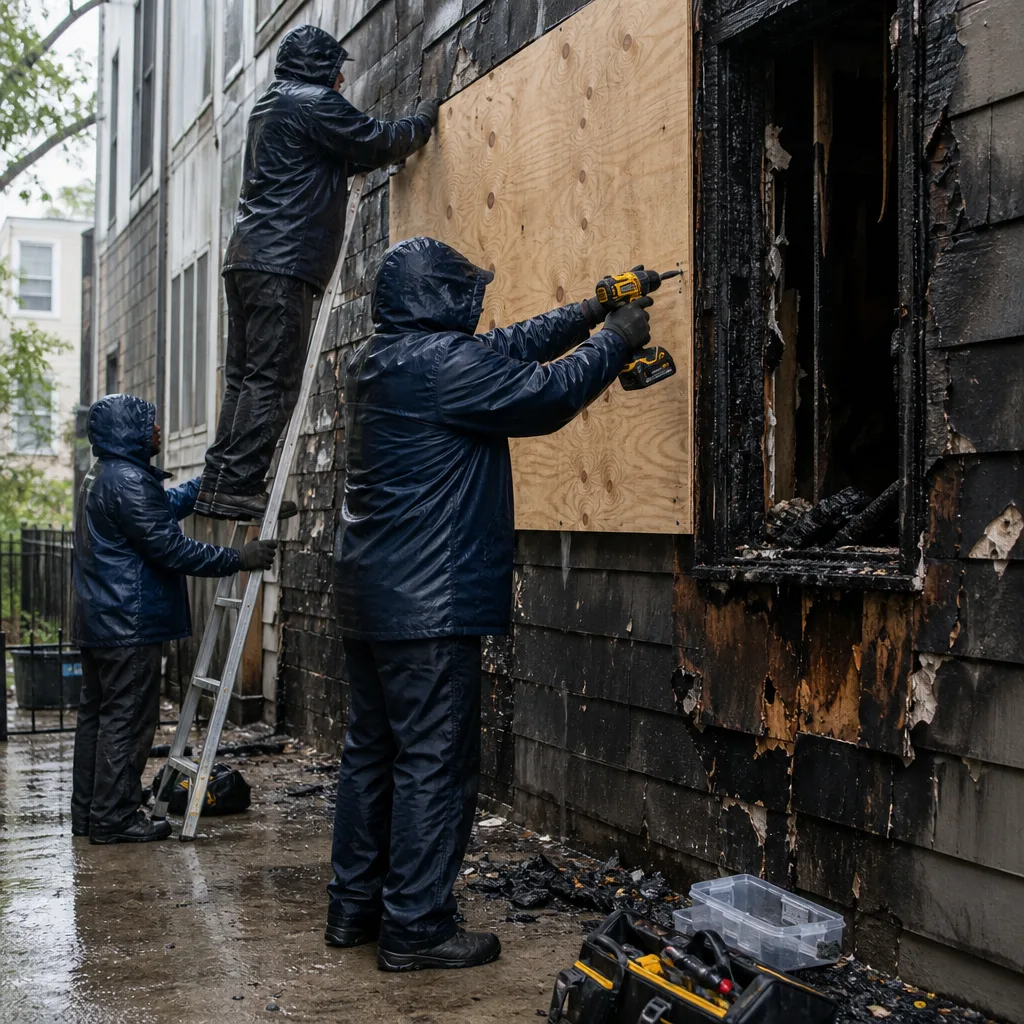
Wade’s Restoration treats your revenue the same way we treat your drywall. For a Financial District office after surge flooding, that means rapid water extraction, temporary climate control, and phased work that lets tenants reoccupy floors while lower levels are still drying. We run air scrubbers and negative air machines so a remediation project doesn’t become a tenant-notice disaster. Every day a commercial space is dark costs you more than the restoration does. So we move on day one.
Multi-Unit and HOA Restoration
Condo boards and property managers in Lower Manhattan answer to a hundred owners who all want to know the same thing: when does my unit reopen? We’ve done enough work in Battery Park City and the Financial District to know that communication is half the job. Wade will stand in front of the board and explain the moisture log, the scope, and the timeline in plain English. We coordinate with building engineers, the DOB inspector when needed, and the carrier representing the association. And we document everything, because a co-op claim can be audited years after the work is done.
Office and Retail Restoration
Ground-floor retail on Broadway or Water Street takes water through the front door and the service entrance at the same time. Office floors above take smoke from a compactor fire or water from a burst coil line. We handle both: extraction, drying, content pack-out, electronics stabilization, and rebuild, with a single point of contact from the first call to the final occupancy certificate.
Industrial Facility Cleanup
Lower Manhattan still has industrial spaces tucked into the edges of the Financial District and along the Hudson, and they come with their own headaches: loading docks that sit below the flood line, chemical storage, and heavy equipment that cannot simply be rolled outside to dry. We bring XPOWER air movers and low-grain dehumidifiers sized for high-bay spaces, plus the contamination protocols that Category 3 saltwater demands.
Our full Commercial Restoration team handles every one of these under the same roof, so a building that needs surge extraction, salt remediation, and code-triggered electrical relocation doesn’t get handed between three different companies.
What happens when you call
- 1
A real person answersNo phone trees - you reach a local pro.
- 2
You get an upfront price rangeHonest numbers before anyone is dispatched.
- 3
A background-checked tech heads outLicensed & insured, dispatched right away.
- 4
You approve before work beginsNothing starts until you say go.
Commercial Restoration Costs in Lower Manhattan, NY
Straight numbers for Lower Manhattan. A contained Category 1 water loss, like a broken supply line in a Financial District office, typically runs $3,000 to $9,000 for extraction, drying, and minor rebuild. A saltwater surge through a Battery Park City sub-basement, with Category 3 water, elevator pit extraction, and mechanical room remediation, typically starts around $30,000 and goes up from there. A full large-loss commercial response, with structural drying, salt remediation, and code-required system relocation, can range from $80,000 to $250,000 in this market. What moves the number: how much saltwater got into masonry, whether switchgear and elevator machinery got wet, and whether the damage crosses New York City’s post-Sandy threshold that triggers elevation or flood-proofing requirements. Insurance covers surge damage in most AE and VE zones, but the scope has to be documented properly, which is why we photograph everything from hour one and bill your carrier directly. For an exact number, call (607) 703-3408. The visual inspection is free. The second opinion on any written estimate is free too.
We Also Serve Cities Near Lower Manhattan
Our crews work the surrounding blocks every week. We handle Commercial Restoration in Lower Manhattan plus jobs in Midtown West, the Financial District, Astoria, and Midtown Manhattan. If your building is anywhere in that ring, we’re already close.
Lower Manhattan Commercial Restoration Questions, Answered
What makes saltwater damage in Battery Park City different from a typical pipe burst?
Saltwater is Category 3 black water, contaminated with sewage, marine debris, and sodium chloride. Saltwater corrodes steel framing, conduit, and switchgear far faster than freshwater, and it leaves hygroscopic salt crystals in concrete and brick that keep wicking moisture and spalling wall surfaces for years after the visible water is gone. Remediation requires salt-specific antimicrobial treatment, salt-neutralizing approaches, and weeks of moisture monitoring, not just standard drying.
Does commercial restoration in Lower Manhattan trigger specific code requirements after a flood?
Yes. Under post-Sandy New York City code, when repairs to a building in a FEMA AE or VE zone reach the substantial damage threshold, basement and sub-basement electrical panels, elevator machinery, and mechanical equipment must be elevated above the base flood elevation or flood-proofed. We coordinate with building engineers and DOB so the restoration doesn’t just dry the building, it brings systems into compliance.
How do you minimize business interruption for a Financial District office after surge flooding?
We extract water within hours, set temporary climate control, and phase the work so upper floors can reoccupy while lower levels dry. We run air scrubbers and negative air machines to keep remediation contained, and Wade deals with the adjuster directly so decisions don’t stall. The goal is to open the building in days, not weeks.
Can old Tribeca loft buildings be restored after saltwater intrusion without gutting the historic fabric?
In most cases yes, if the response is fast and the drying is aggressive. Cast-iron and brick soak up saltwater, but we use the right equipment and salt-specific treatment to dry the masonry in place before demolition becomes necessary. We’ve watched too many landlords get told a full gut is required when a proper structural drying plan would have saved the plaster and timber.
What should a property manager do immediately after storm surge enters a Lower Manhattan commercial building?
First, kill power to affected areas if you can do so safely, and call us at (607) 703-3408. Don’t walk through standing saltwater with powered equipment running. Don’t leave elevator pits full of water. And don’t let a general contractor start ripping out drywall before a moisture map is done, because saltwater migrates beyond the visible line and the insurance claim needs that documentation from hour one.
How fast can you actually get to a Lower Manhattan commercial property?
We commit to a 45-minute response across Lower Manhattan because we stage crews locally, not from an outer borough. After a nor’easter or a water main break, the phone lines get busy, but Wade answers his own phone, and he can have extraction running inside the hour. That first hour is the difference between a cleanup and a mechanical replacement.
How long does saltwater drying and remediation take in a Lower Manhattan high-rise?
For a contained mechanical room flood, structural drying typically takes 5 to 10 days. For a sub-basement with saltwater-soaked concrete block and multiple wall sections, you’re looking at 2 to 4 weeks of drying plus ongoing moisture monitoring, because the salt keeps pulling moisture back. We hand you the full moisture log at the end so you can see the numbers yourself.
Will my insurance cover saltwater surge restoration in Lower Manhattan?
Most commercial policies in FEMA AE and VE zones cover storm surge, but the claim has to be documented properly from the first day. We photograph everything, send the adjuster daily moisture readings and a line-item scope, and bill your carrier directly. Wade talks to your adjuster so you don’t have to. If you already have an estimate, we’ll give you a free second opinion to make sure the scope actually matches the saltwater damage.
Serving Lower Manhattan, NY - Our Local Coverage Area
We’re based in the Lower Manhattan area and know this community well. Use the map below to see our service coverage - if you’re nearby, we can almost certainly help.
Get Saltwater Restoration Right in Lower Manhattan
If your building is standing in three feet of Hudson River water or your sub-basement switchgear just took a surge, call (607) 703-3408 right now. Wade answers. He’ll be there himself, with a crew and a moisture meter, and he’ll give you a straight answer about what it costs before any work begins. The inspection is free. The second opinion is free. And if it’s not done right, the 90-Day Done Right Promise says he makes it right, in writing. That’s the whole deal.
Written by Wade Ferris, Owner at Wade’s Restoration, serving Lower Manhattan since 2007.