
Free visual inspection and a written scope of work before any mitigation begins - photos, moisture readings, and drying logs go in your claim file
The scope we write is the scope we bill. Anything new gets shown to you, in writing, before we touch it.
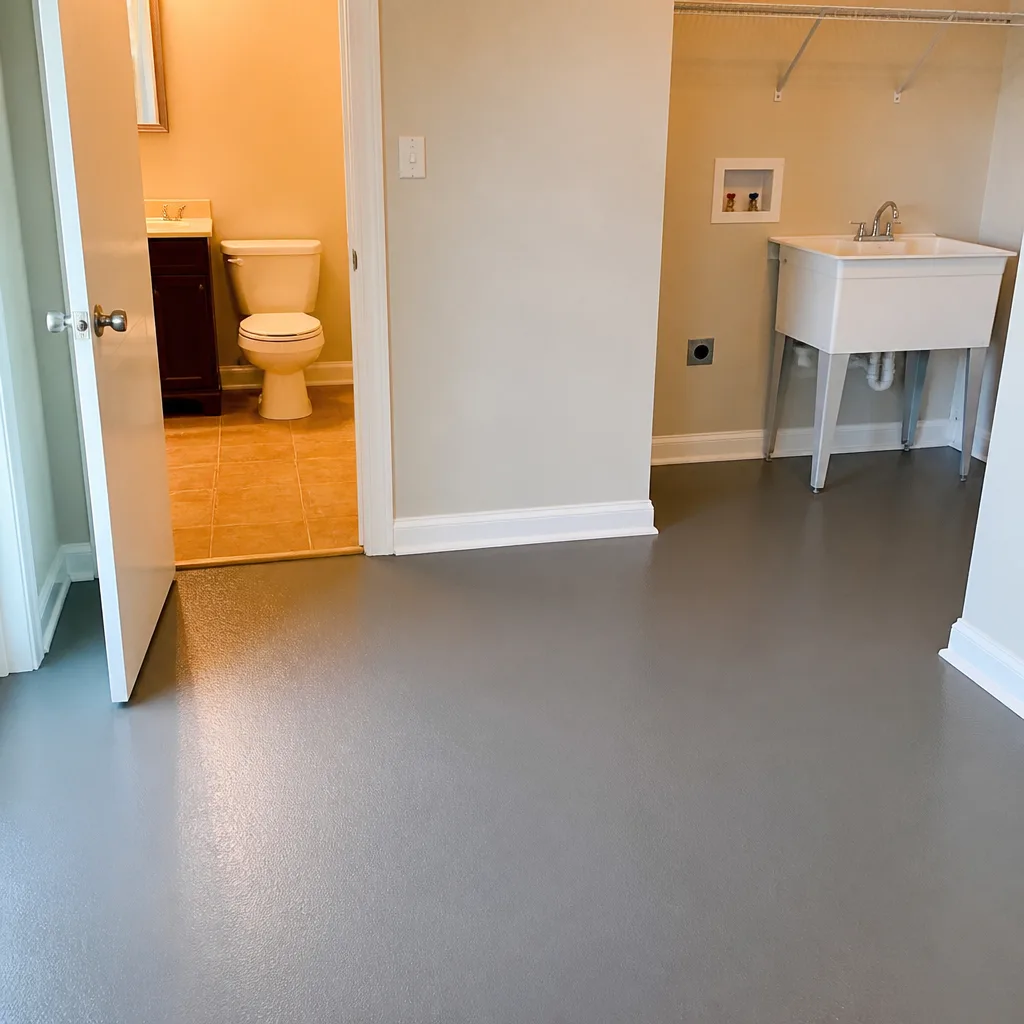
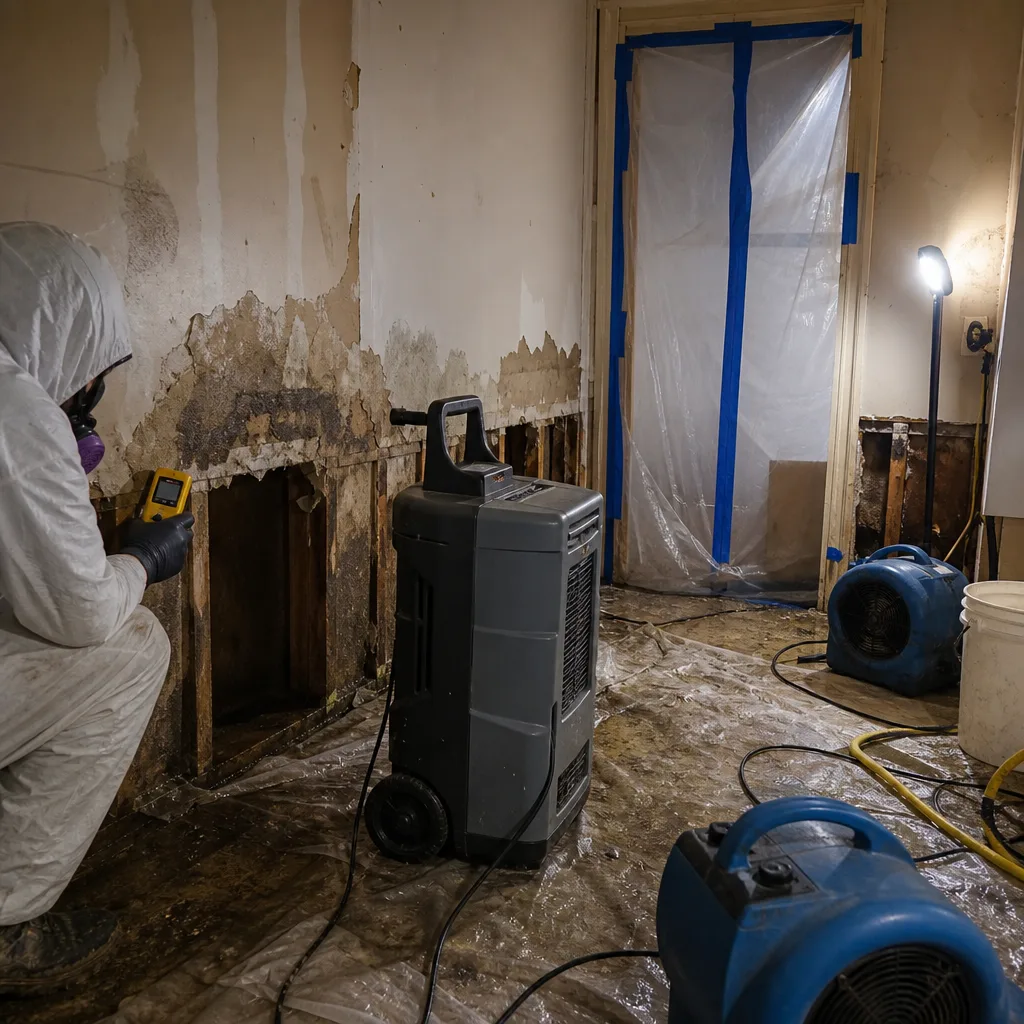 Before
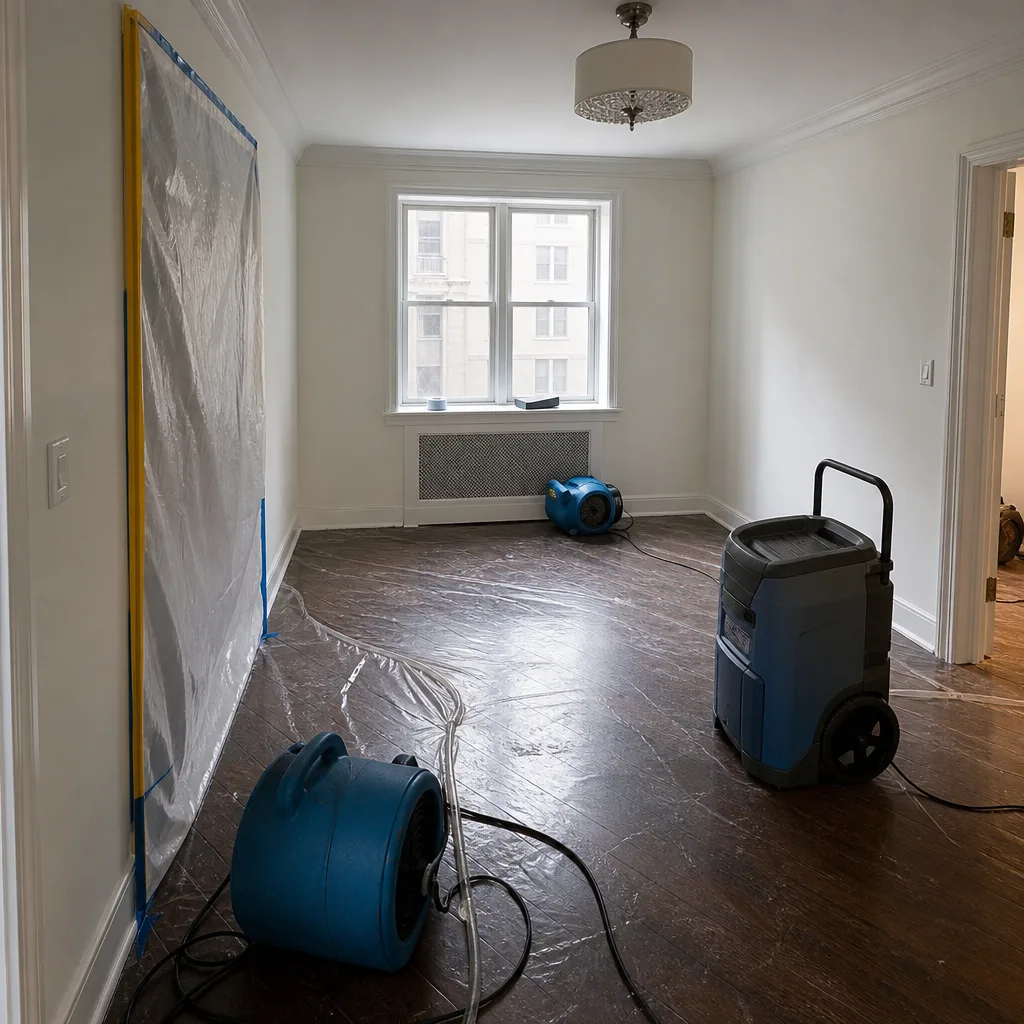 After
After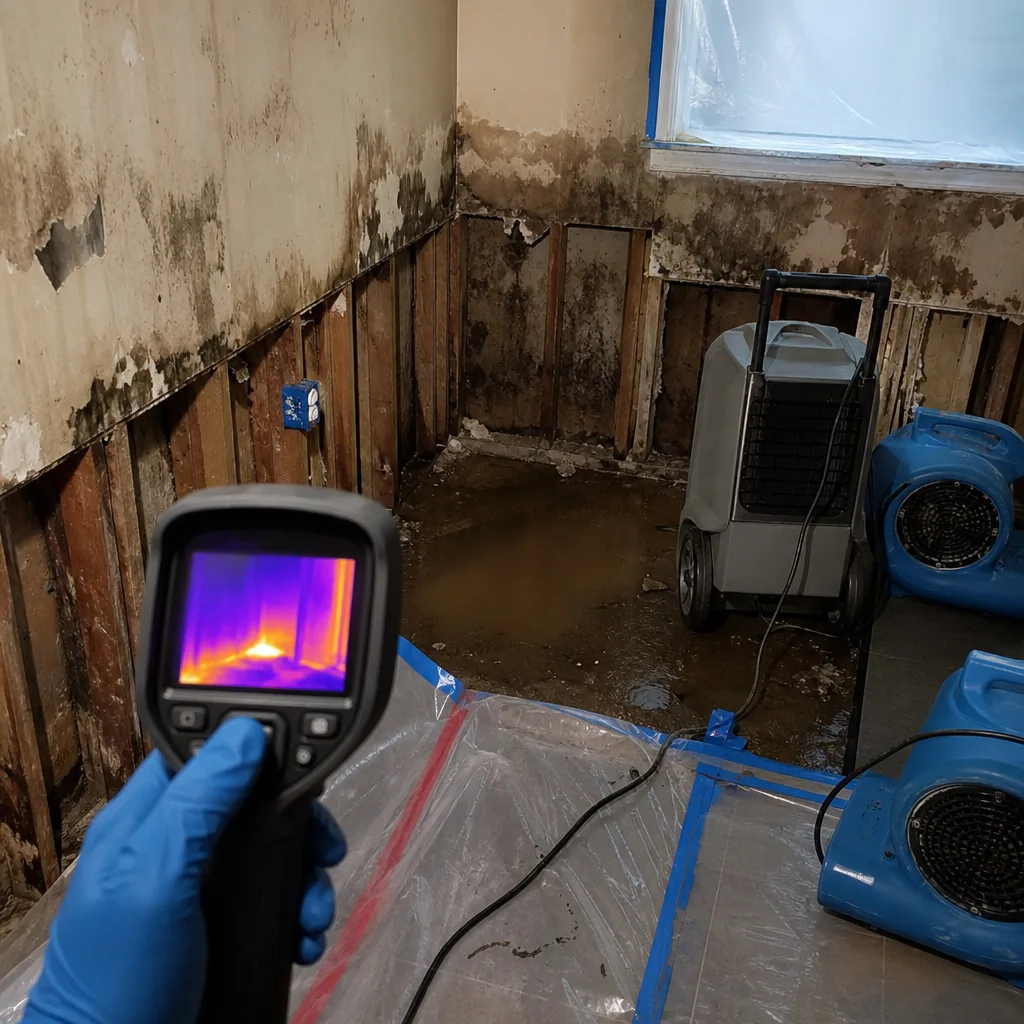 Before
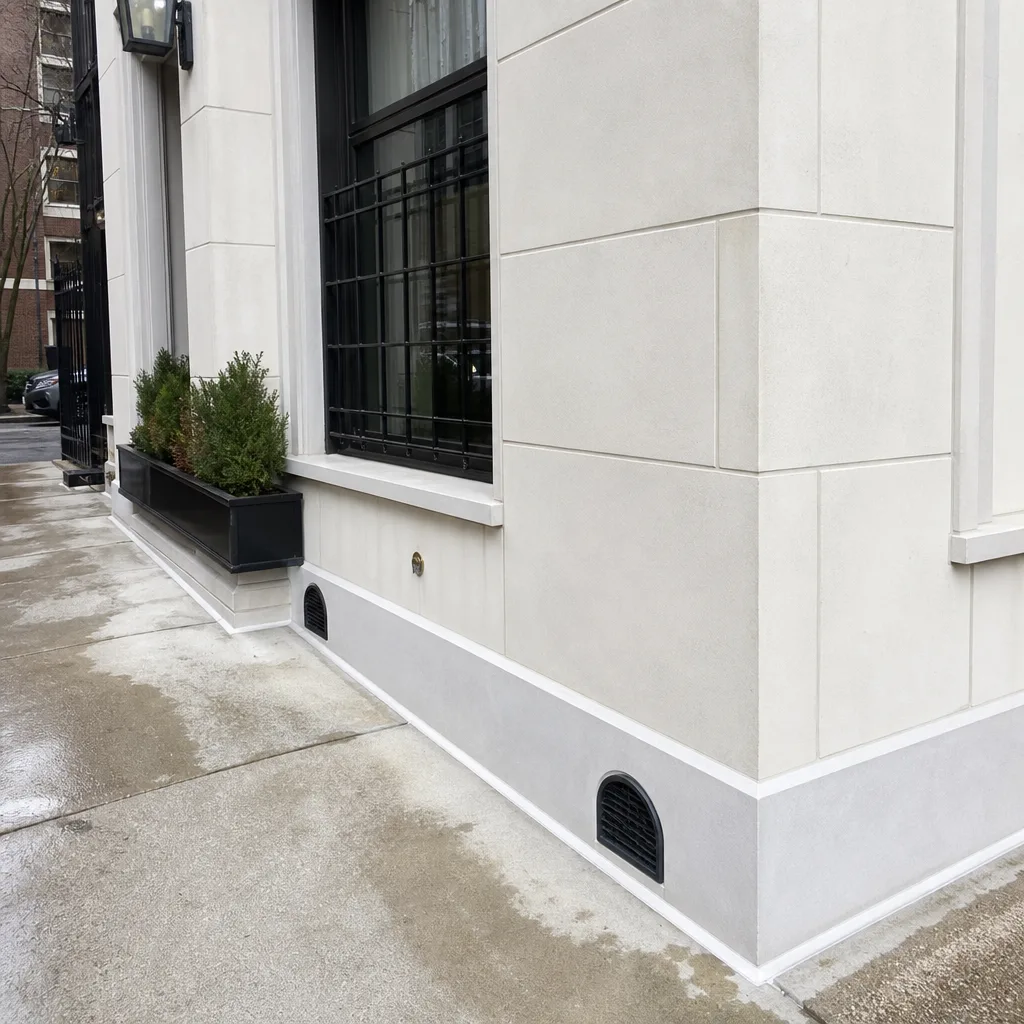 After
After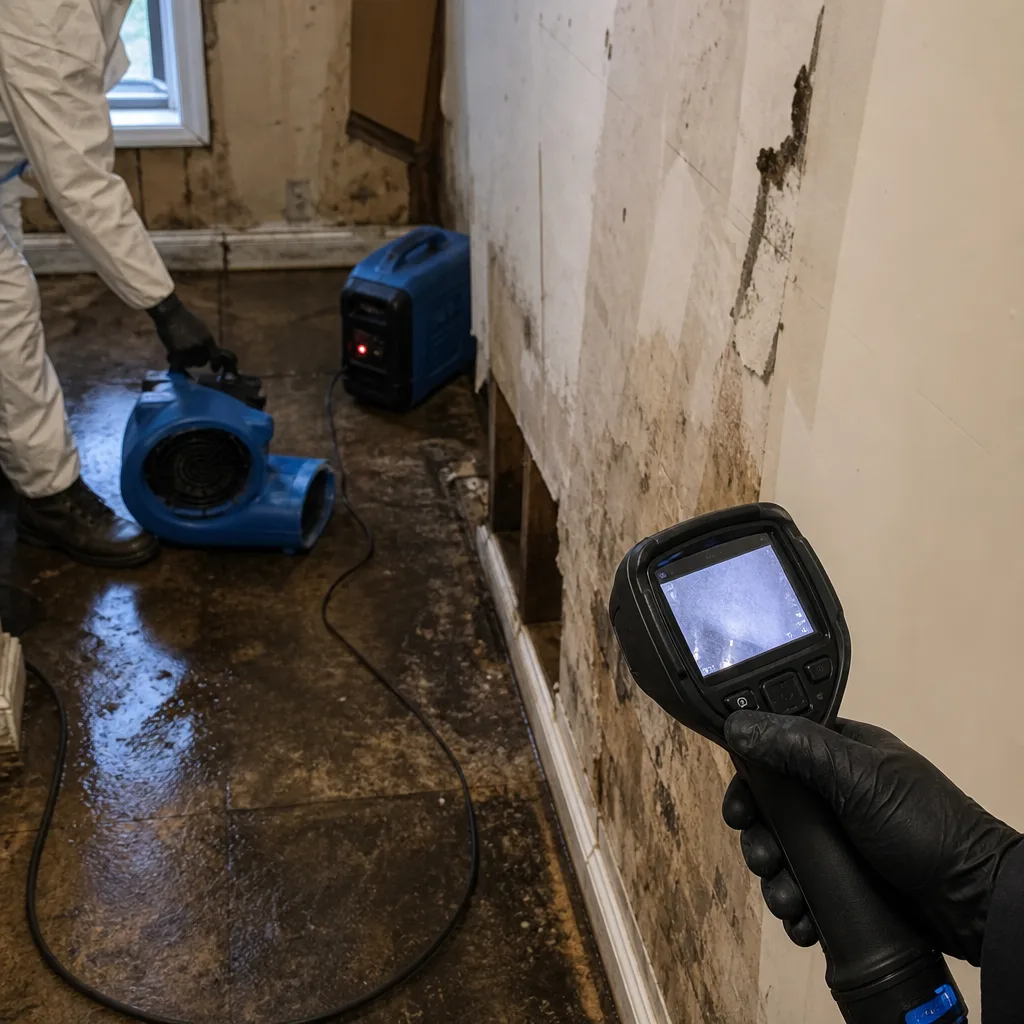 Before
 After
After24/7 Emergency Sewage Cleanup in Midtown West
A sewage backup in a Midtown West pre-war apartment is not a mess you can mop up and forget. Category 3 water carries bacteria, viruses, and whatever else came up through the waste line, and it moves fast through wall cavities, under floors, and into the plaster you can’t see. Call (607) 703-3408 and Wade Ferris answers. Not a call center. Not a queue. Wade himself picks up the phone, and his crew can be on site inside the hour with extraction equipment running.
We know how these buildings behave. A toilet overflow on West 48th Street doesn’t pool in one unit. It travels down chases, through horsehair plaster, past asbestos-wrapped steam risers, and into the apartments below. The first hour decides whether you dry it out or replace half a wall. In Midtown West, that math leans hard toward replacement if you wait. So don’t wait. Call now.
Understanding Sewage Cleanup Severity in Midtown West Properties
Sewage cleanup is restoration work for Category 3 water, the highest contamination level. This is water that has come from a toilet, a storm drain, a sewer main, or a failed ejector pump. It contains pathogens, and anyone handling it needs the right protection, the right training, and the right containment setup before a single fan goes in.
Midtown West’s building stock makes this work harder than a suburban slab foundation ever would. Hell’s Kitchen walk-ups from the 1910s and 1920s were built with cast iron waste lines and original horsehair plaster walls. That plaster is dense, absorbent, and notorious for holding moisture deep behind a dry surface. A standard pin meter might read 8% on the wall face while the cavity behind it is still soaked. We use penetrating meters and thermal imaging to find what the surface hides.
Then there’s the vertical stack problem. In a 25-story pre-war tower on 9th Avenue, a sewage backup on floor 8 can travel down inside the wall cavity and pool on floor 6, bypassing apartments entirely. Homeowners two floors below wonder why the hallway smells. This is the Midtown West reality: sewage doesn’t stay where it starts, and the building’s structure carries it further than anyone expects.
Why Midtown West Property Owners Choose Wade’s Restoration
- 45-minute response commitment: Wade has lived here long enough to know every service entrance, freight elevator protocol, and co-op super on the West Side. He heads out immediately and gets extraction running fast.
- 24/7 live answer, always a real person: You call, Wade answers. No automated tree, no “press 2 for emergencies.” The owner picks up the phone, including at 2 a.m. when sewage is backing into a 6th-floor co-op.
- IICRC-certified crews (WRT and ASD certified): The people Wade sends are trained to the industry standard. They’ve handled Category 3 water in pre-war plaster, high-rise chases, and basement mechanical rooms all over Midtown West.
- Free visual inspection: Wade will walk the unit, open the affected wall cavity if needed, and tell you honestly what he sees. No charge for that. You get a straight conversation before any scope is written.
- Direct insurance billing: Wade’s team documents everything from the first hour, files the claim with your carrier, and handles the adjuster call. You don’t play messenger between two sides.
- One team from extraction to reconstruction: The same crew that extracts the black water replaces the plaster, rebuilds the lath, and closes the wall. One scope, one team, one owner accountable for the whole job.
Our Sewage Cleanup Process
Inspection & Assessment
We map the damage, find the extent of water migration, and check for asbestos wrap on any pipes inside the affected chase. In pre-war Midtown West buildings, this step happens before any demolition starts. We identify the Category 3 boundary and set a containment plan.
Extraction & Stabilization
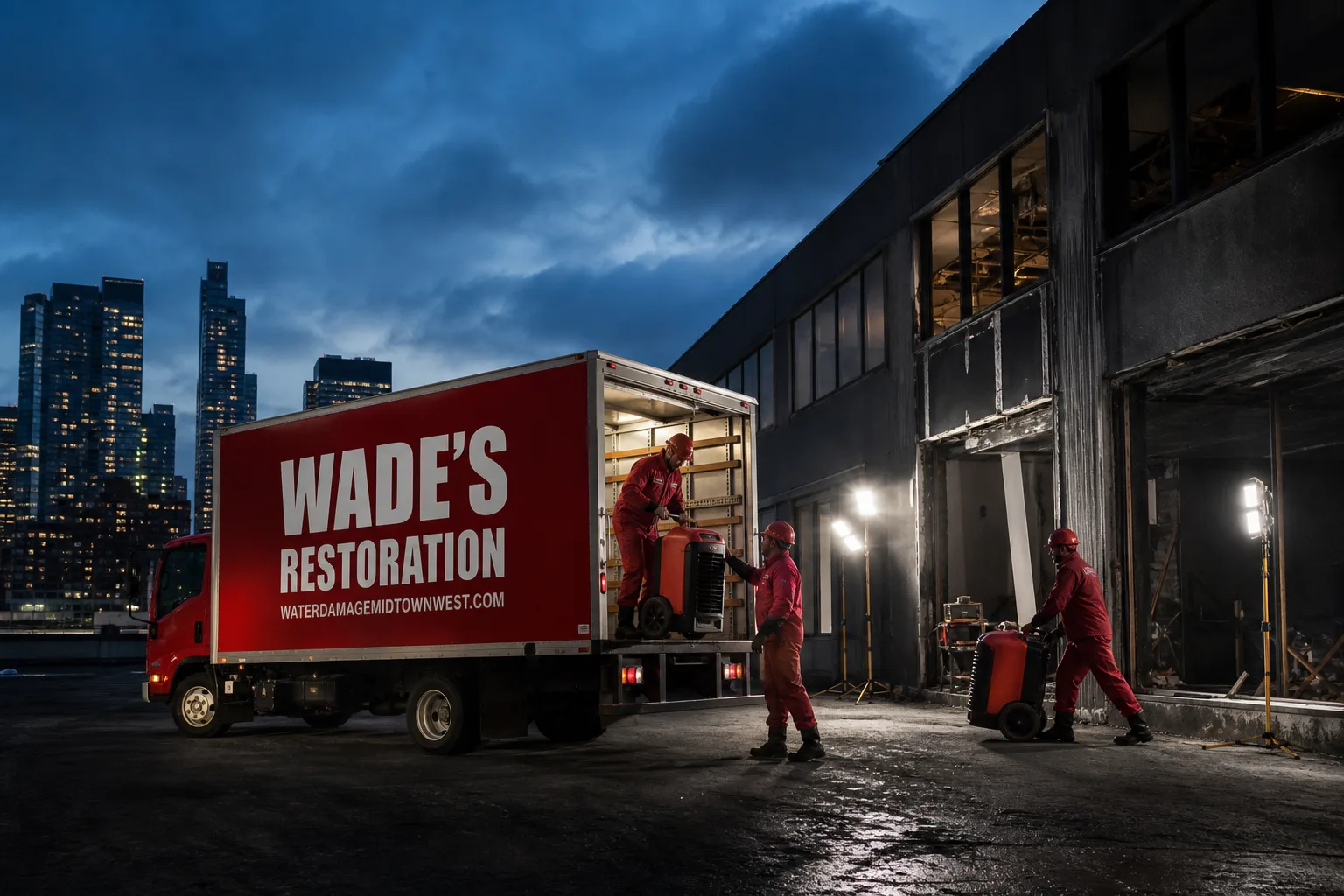
We extract the black water using truck-mounted and portable XPOWER and B-Air extraction units. For sewage in wall cavities, we open the affected area to get water out of the plaster and lath. This is where speed matters: standing sewage water keeps wicking upward through the horsehair, expanding the contaminated zone.
Drying & Dehumidification
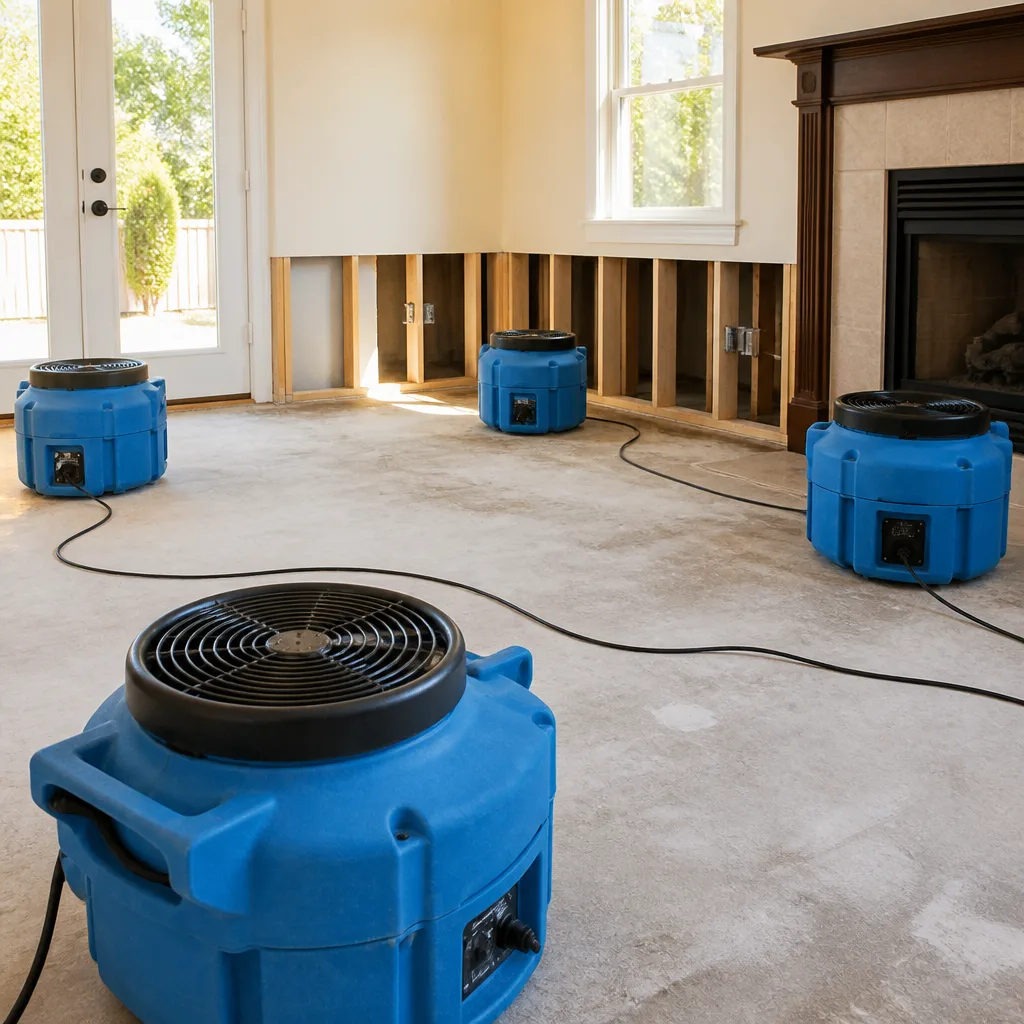
We place Dri-Eaz dehumidifiers and high-velocity air movers inside the affected space. In pre-war buildings, drying takes longer because horsehair plaster releases moisture slowly. We take daily penetrating-meter readings and log them. You get the full moisture log at the end of the job.
Cleaning & Sanitization
We apply EPA-registered antimicrobials to all affected surfaces and scrub the area down to the studs where needed. Anything porous that absorbed Category 3 water gets removed. Hard surfaces get treated and verified.
Odor & Environmental Treatment
Sewage odor in a Midtown West high-rise travels through ventilation shafts and chaseways. We set up HEPA air scrubbers, treat the source cavity, and address the air path so the smell doesn’t migrate into neighboring units.
Repairs & Restoration
We rebuild what was removed: new plaster or drywall as appropriate, baseboards, paint, and flooring. Wade’s 90-Day Done Right Promise applies here in writing. If it’s not done right, he makes it right.
Need Emergency Sewage Cleanup in Midtown West Now?
Crews minutes away, answering live 24 hours a day. The sooner we start, the less it costs.
Working With Your Insurance Company
Sewage backup claims in Midtown West are a different animal than a burst supply line. Carriers scrutinize them hard. They want proof the damage is from a covered event, proof the work was necessary, and proof the scope wasn’t inflated. Wade has handled enough of these claims to know what adjusters accept and what they push back on.
He documents from hour one. Photos, moisture readings, thermal scans, and a line-by-line scope. When the adjuster calls, Wade talks to them directly, in their language, with the documentation they need. You never sit on hold, and you never guess at what your policy covers. This direct adjuster coordination matters most in co-op and condo claims, where the building’s master policy and your unit policy often overlap.
What We Provide Your Insurer
- Thorough documentation of the loss
- Photos of all damage, room by room
- Moisture readings and drying logs
- A detailed, line-item scope of work
- Direct coordination with your carrier
Built for Midtown West’s Loss Calendar
Midtown West has a sewage loss calendar, and it doesn’t look like the rest of the city’s. January brings frozen cast-iron waste lines in the older tenement walks along 9th and 10th Avenues, where pipes run through exterior wall cavities with zero insulation. When that water thaws, it breaks wherever the ice found the weakest joint.
Spring storm season is the Hudson River’s time to push back. Nor’easters drop inches of rain in hours, and the neighborhood’s aging combined sewer system backs up into basement mechanical rooms, crawl spaces, and ground-floor commercial kitchens. We see ejector pump failures in the below-grade spaces near the river, where hydrostatic pressure starts pushing groundwater in before the sewage even backs up.
Summer brings thunderstorm flash flooding that overwhelms the sewer mains and sends black water up through floor drains in the Hudson Yards sub-levels and the older buildings east of 10th Avenue. Fall is transition season, when failing steam traps in pre-war buildings push water into wall cavities that also carry waste lines. Sewage and steam share a house in these buildings, and when one goes wrong, the other often follows.
Sewage Cleanup Across Midtown West’s Neighborhoods
The Hell’s Kitchen corridor between 8th and 10th Avenues is our most frequent call zone. These five- and six-story tenement walk-ups have original cast iron waste lines, horsehair plaster walls, and no service elevators. Crews carry extraction equipment up six flights of stairs when the freight lift is out, which happens more than anyone likes. The 1920s co-ops along West 48th Street near 9th Avenue share chases between units, so a single toilet overflow becomes a multi-floor event fast.
Clinton, the neighborhood’s northwestern section toward 57th Street, has a different problem. The pre-war towers there were built with stacked kitchens and baths along shared utility risers. When a sewage backup hits one floor, it follows the riser down four or five stories inside those original chases. We’ve extracted from units three floors below the source on more than one job near 11th Avenue.
Over in Hudson Yards, the towers are brand new but the problems still exist. High-pressure ejector pump failures, overworked sewer connections, and the area’s near-constant construction vibration stress the new plumbing in ways the old pipes never felt. A crew working a sewage job in a Hudson Yards tower deals with building management protocols, freight elevator scheduling, and insurance adjusters who want every moisture reading in writing. Fine with us. We provide that anyway.
The commercial blocks along 34th Street west of Penn Station house older mid-century buildings where retail sewage backups flood basement storage and mechanical rooms. These jobs almost always involve failed floor drains, grease-clogged waste lines, and saturated slab concrete that holds water longer than anyone expected. We use Phoenix and Injectidry equipment on these, including the drying mats that pull water out of concrete.
Specialized Sewage Cleanup Services We Offer in Midtown West
Sewage Backup Cleanup
When a main waste line backs up into a Hell’s Kitchen ground-floor unit, the water comes up through tubs, floor drains, and toilets all at once. We contain the area, extract the black water, remove the contaminated materials, and dry the space. In pre-war buildings we always check for asbestos before opening walls near the waste risers.
Toilet Overflow Cleanup
Toilet overflows in Midtown West high-rises are almost never contained to one unit. A clogged toilet on the 14th floor of a pre-war tower sends water down through the chase void, where it pools around the cast-iron stack and runs into the apartment below. We treat the source, track the migration path with penetrating meters, and open every affected wall cavity before it starts to mold.
Septic Failure Cleanup
Midtown West is a sewer district, but a handful of legacy building systems and below-grade ejector setups function like septic holding tanks. When an ejector pit overflows or a motor burns out, raw sewage backs up into the mechanical room, the basement crawl space, or the ground-floor laundry. We pump it out, sanitize the space, and coordinate the repair with building management.
Black Water Extraction
Extraction of Category 3 water in the buildings around 10th Avenue means removing contaminated water from spaces that were never designed for access. We open walls where needed, pull out insulation that absorbed sewage, and get the standing water out of voids between floors. Our XPOWER truck-mounted units move hundreds of gallons per hour when the job calls for it.
Sanitization & Disinfection
After extraction, every affected surface gets treated. We apply EPA-registered antimicrobials to studs, subfloors, and any structure we don’t remove. HEPA air scrubbers run throughout the drying cycle to control airborne contaminants. We test before we close walls. You get verification, not just a promise.
Crawl Space Sewage Removal
In the older Midtown West buildings with crawl spaces under the ground-floor level, sewage backups and hydrostatic pressure from the Hudson River mix into a mess that has to be physically removed, not just dried. We suit up, crawl in, extract the contaminated material, treat the soil with lime and antimicrobials, and install vapor barriers where the space makes sense for one. This is the dirtiest work in the trade, and we do it often enough to know exactly how unpleasant it is.
What happens when you call
- 1
A real person answersNo phone trees - you reach a local pro.
- 2
You get an upfront price rangeHonest numbers before anyone is dispatched.
- 3
A background-checked tech heads outLicensed & insured, dispatched right away.
- 4
You approve before work beginsNothing starts until you say go.
Sewage Cleanup Costs in Midtown West, NY
A straightforward toilet overflow cleanup in a Midtown West apartment, with extraction and sanitization, typically runs $1,800 to $3,200. When sewage has migrated into wall cavities and horsehair plaster needs removal, expect $4,000 to $7,500, depending on how many linear feet of wall we’re opening and drying. Full black water extraction across multiple floors of a pre-war building, with asbestos assessment, containment, drying, and reconstruction, commonly lands between $12,000 and $28,000. The spread comes from square footage, access difficulty, and whether the building’s vertical chases were involved.
The factors that move the price in Midtown West more than anywhere else: asbestos testing and abatement if the waste chase contains wrapped pipes, multi-floor travel through chases and voids, freight elevator scheduling, and pre-war plaster remediation. Each of these is real work. None of it is padding.
Insurance covers many sewage backup claims, but coverage depends on the policy’s backup endorsement. Older co-op unit policies may cap backup coverage at $5,000 or $10,000. We document everything and submit directly to the carrier so you know where you stand before repair work begins. Call Wade for a free inspection and a written scope. If you already have an estimate from another company, bring it. Wade will give you a free second opinion on it.
We Also Serve Cities Near Midtown West
Wade’s crew covers Midtown West and the surrounding neighborhoods. If you’re in the Financial District, Lower Manhattan, Astoria, or Midtown Manhattan, we’ll head your way too. The same equipment, the same owner answering the phone, and the same written 90-Day Done Right Promise. Call (607) 703-3408 and ask for Wade.
Serving Midtown West, NY - Our Local Coverage Area
We’re based in the Midtown West area and know this community well. Use the map below to see our service coverage - if you’re nearby, we can almost certainly help.
Midtown West Sewage Cleanup Questions, Answered
How do you dry horsehair plaster after a sewage backup in a Midtown West pre-war apartment?
You don’t dry horsehair plaster; you remove it when it’s saturated with Category 3 water. The plaster holds sewage water deep in its core, and surface drying won’t get the cavity below 12% moisture content. We open the wall, cut out the contaminated plaster, dry the lath and framing behind it, and rebuild with fresh material. In some cases where the plaster is only lightly affected, we can attempt extended drying with penetrating-meter verification, but most sewage jobs in pre-war buildings end with plaster removal.
Does NYC require asbestos testing before you can start sewage cleanup in our pre-war building?
Yes, if we’re opening walls or chases in a building constructed before 1987. NYC regulations require asbestos assessment before any demolition or renovation work that could disturb suspect materials. Pipe wrap, plaster, flooring mastic, and ceiling tiles from the 1920s and 1930s commonly contain asbestos. We coordinate with a certified testing firm, get the clearance we need, and only then begin opening walls. This adds a day or two to the timeline, but skipping it is illegal and dangerous. Call (607) 703-3408 and we’ll walk you through the process.
What happens if a toilet overflows on the 20th floor and sewage runs down multiple floors?
The water follows the pipe chase downward until it finds a floor plate that holds it, or until it settles in the lowest accessible cavity. In Midtown West high-rises, we commonly find contaminated water pooled in several units across ten or more floors, with the worst damage nowhere near the original source. We track the migration path with penetrating meters, open the affected walls on each floor, and treat every contaminated cavity. This becomes a multi-unit claim involving the building’s master policy, and Wade’s team documents everything so each unit owner can pursue their own coverage.
Can you sanitize and disinfect our pre-war bathroom without removing the original tile?
Yes, often. Glazed tile is non-porous and can be cleaned and disinfected with EPA-registered antimicrobials. The risk is the grout and the sub-surface. Old grout absorbs sewage water and can hold bacteria beneath the tile bed. We test the area, extract what we can, and apply sanitizer. If the substrate beneath the tile is saturated with Category 3 water, the tile has to come up. We’ll tell you honestly which situation you’re in before any work begins.
Our building has a clogged roof drain that sent sewage-smelling water down the parapet wall. Is that a sewage cleanup or a roof leak job?
Could be either, and it depends on whether the water picked up contamination from waste lines or pooling sewage along the way. Roof drains sometimes connect to combined sewer lines, so a clog can back up with sewage. The water travels down the parapet wall and into the building envelope, picking up years of soot, dust, and sometimes animal waste from rooftop surfaces. We investigate the source first, test the water category, and then determine whether it’s a Category 2 cleanup or full Category 3 sewage remediation. Call (607) 703-3408 for a free inspection before this spreads any further.
How fast can someone actually get to Midtown West for a sewage backup?
Usually inside 45 minutes from the time you hang up. Wade answers the phone himself, day or night, and he’s on the road immediately. Midtown West is one of our primary service areas, and the crew is staged on the West Side. We know the service entrances, the freight elevators, and the supers who run these buildings, which means we don’t burn 20 minutes trying to figure out how to get inside. Call (607) 703-3408 now if there’s water on the floor.
Do I really need full sewage remediation, or can I just clean the visible mess?
If the water is Category 3, meaning it came from a toilet, sewer line, or floor drain backflow, you need real remediation. Mopping it up and spraying bleach leaves sewage water inside the wall cavity, under the floor, and in the plaster. In Midtown West’s pre-war buildings, that hidden moisture turns to mold inside the horsehair plaster and migrates through the chase to other units. A surface clean is a false economy, and it creates a worse problem later. We’ll inspect for free and tell you if a surface clean is actually sufficient or if the wall has to come open. Most of the time, it has to come open.
What should I do in the first 30 minutes after sewage backs up in my Midtown West apartment?
Stop using all water fixtures. Flush nothing. Run no washing machine. Turn off the water supply to the affected fixture if you know where the shutoff is. Get people and pets out of the standing water. Don’t turn on your HVAC, because it will circulate sewage-tainted air through the ducts. And call (607) 703-3408 right away. Wade will tell you on the phone what to do in your specific building type while the crew is on the way. Do not attempt to extract sewage yourself. The contamination risk is real, and you need proper PPE before touching anything.
Our crew recently took a call from a 6th-floor pre-war co-op on West 48th Street near 9th Avenue. A toilet overflow in the unit above had pushed Category 3 water down through the chases and into wall cavities still lined with original horsehair plaster. We set containment, removed the saturated plaster and baseboards, and ran our Dri-Eaz dehumidifiers and air movers for nine days. We took repeated penetrating-meter readings before the plaster keys finally dropped below 12% and we could rebuild. That’s what sewage cleanup in Midtown West looks like when it’s done right. If you’re seeing water where it shouldn’t be, call Wade now. One call, and extraction can be running inside the hour.
Written by Wade Ferris, Owner at Wade’s Restoration, serving Midtown West for over 29 years.