
Free visual inspection and a written scope of work before any mitigation begins - photos, moisture readings, and drying logs go in your claim file
The scope we write is the scope we bill. Anything new gets shown to you, in writing, before we touch it.
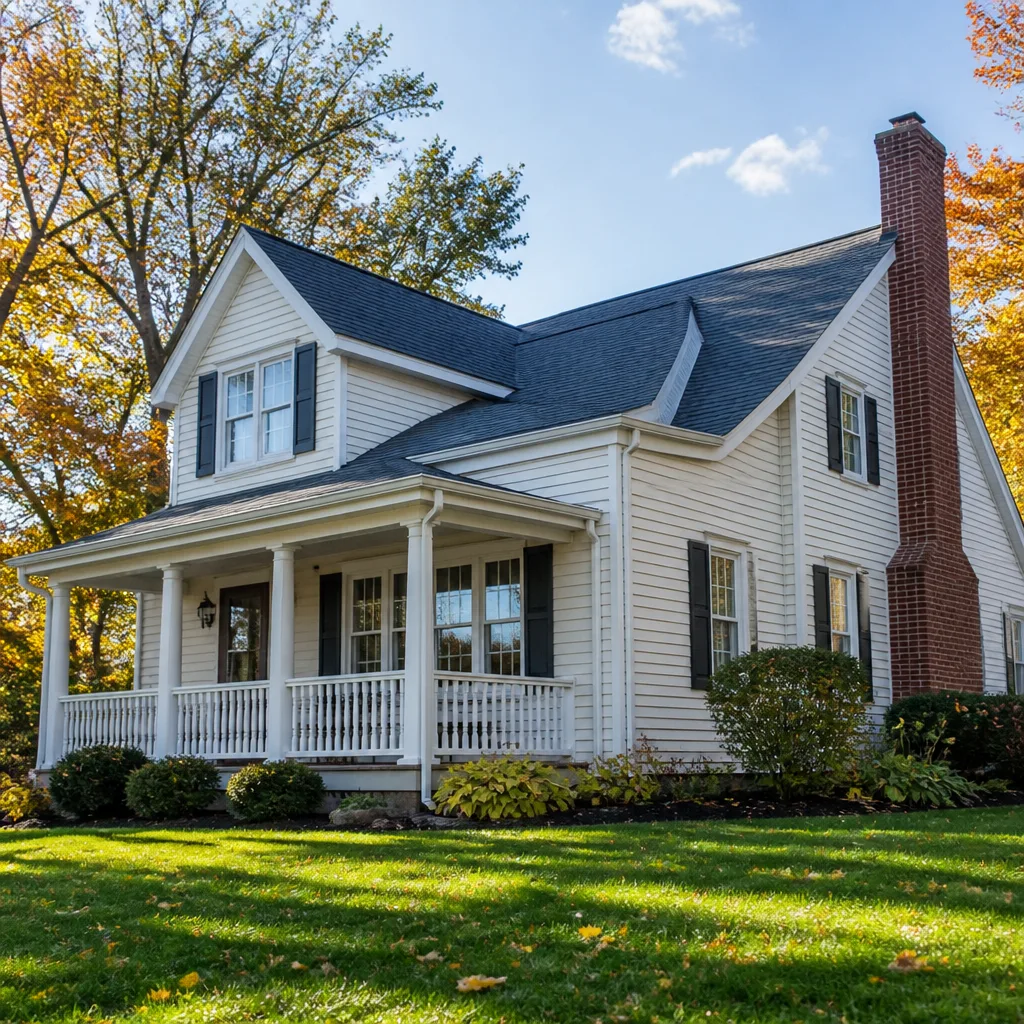
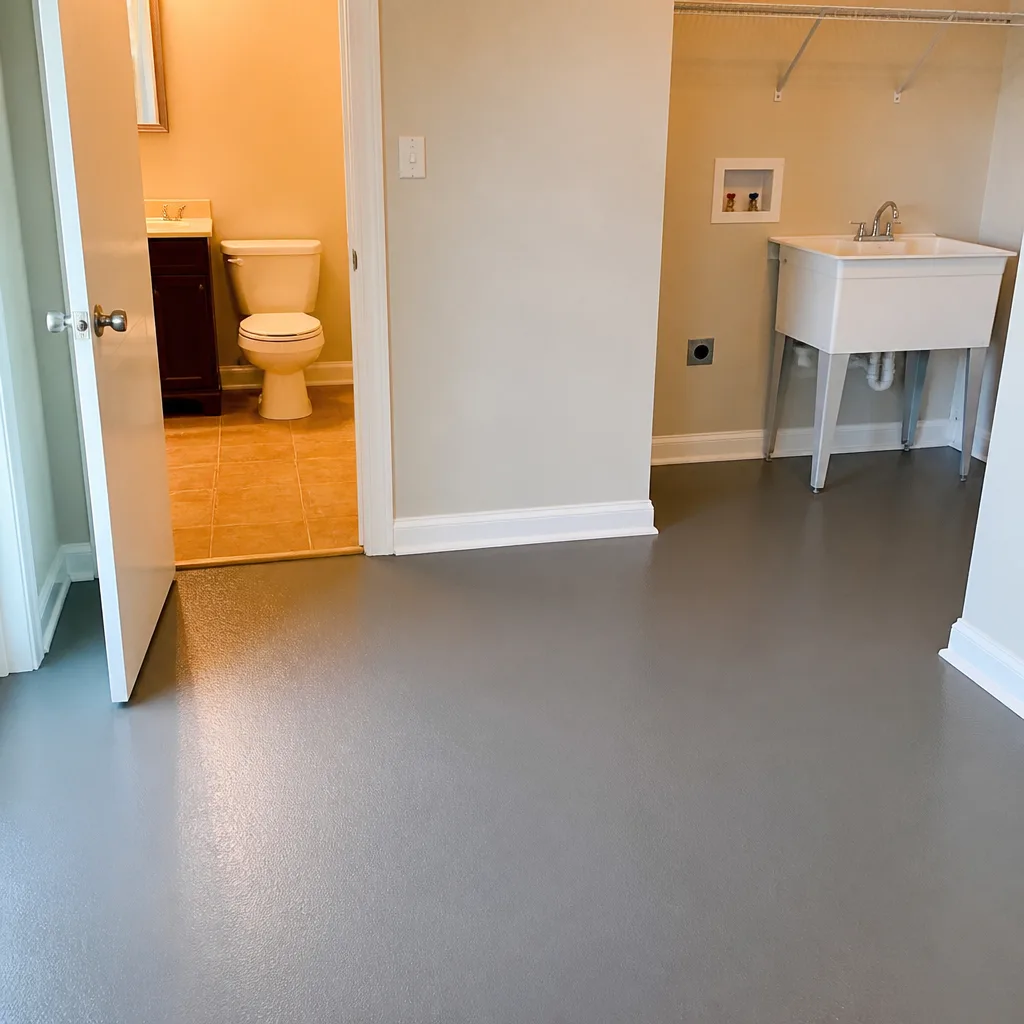
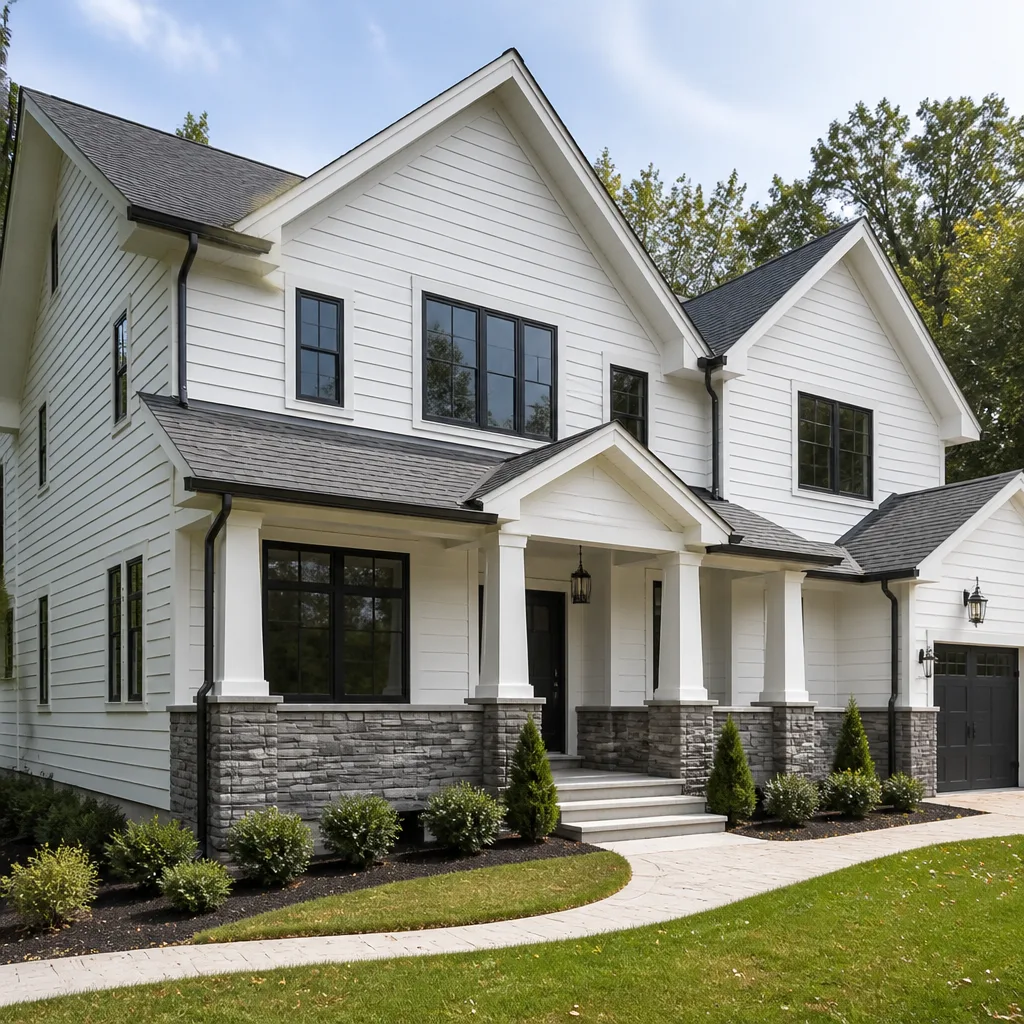
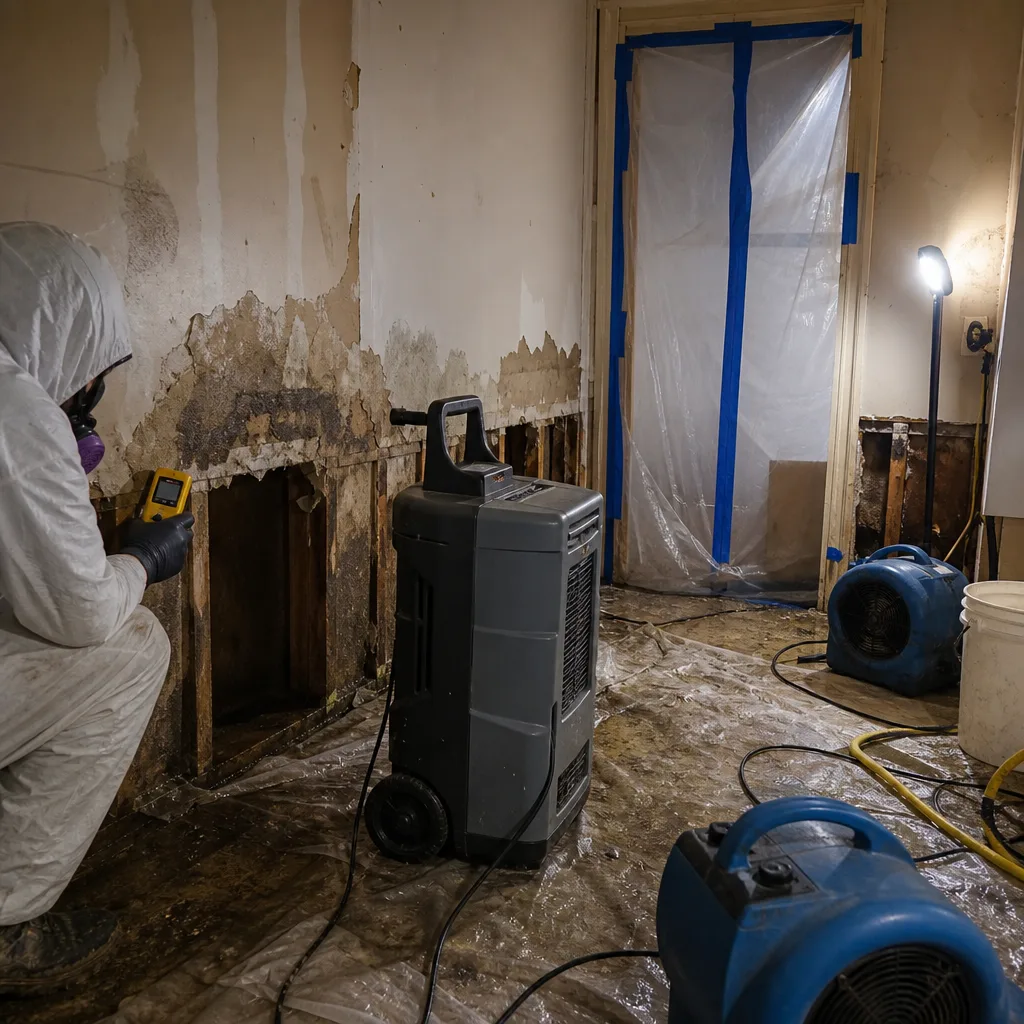 Before
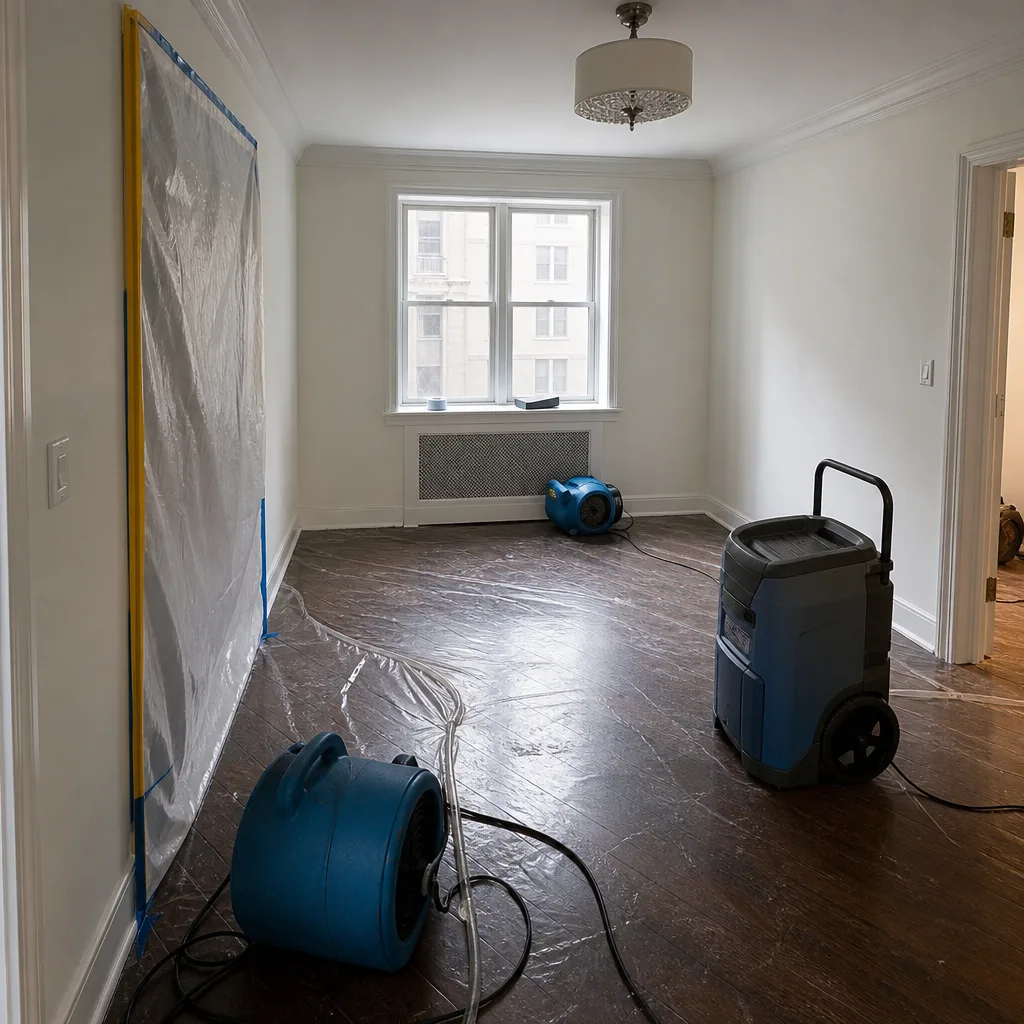 After
After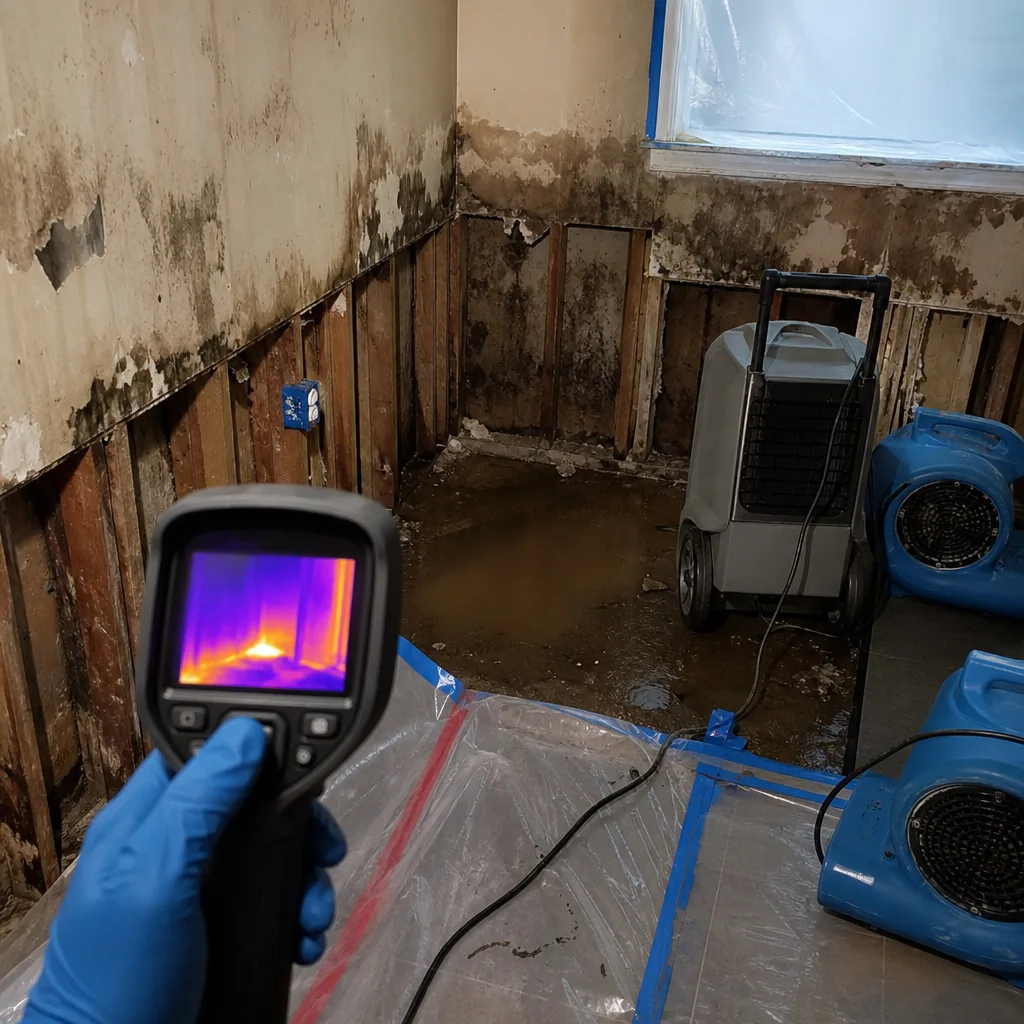 Before
 After
After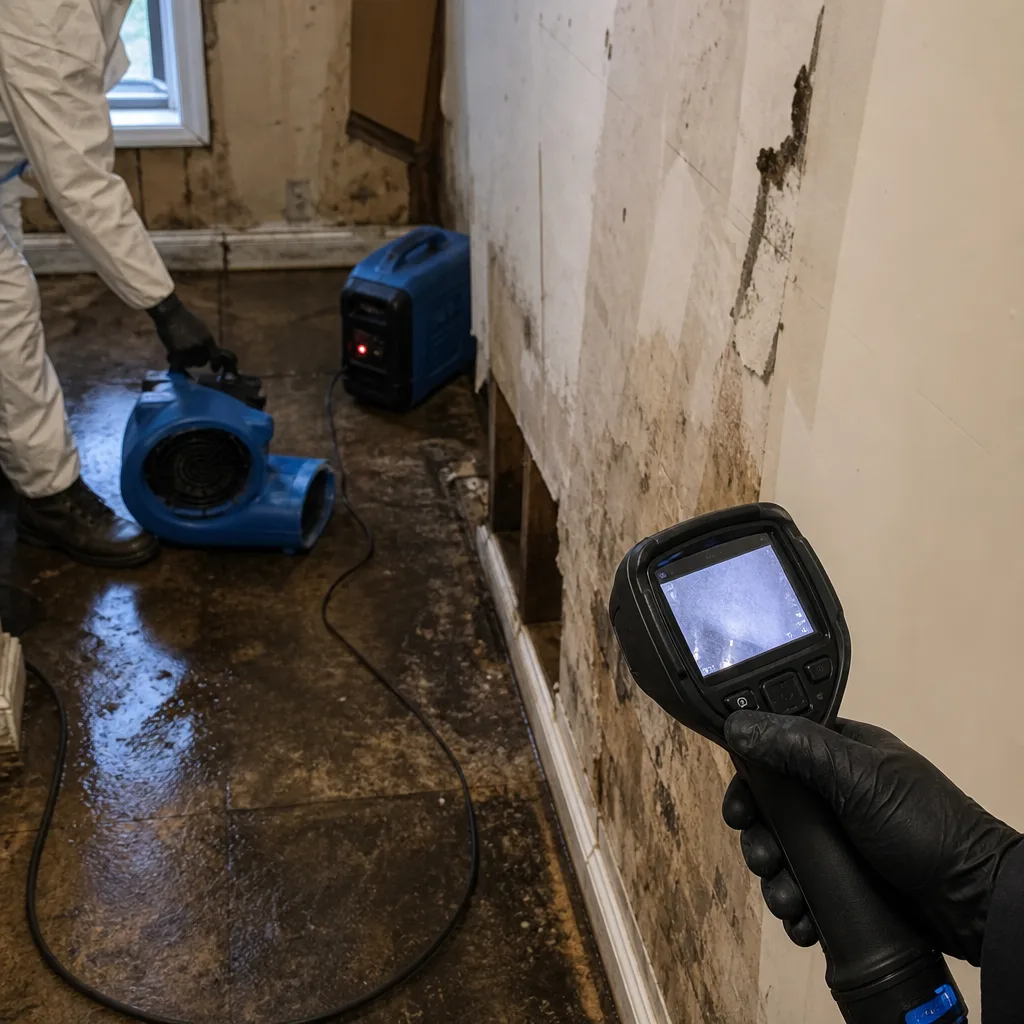 Before
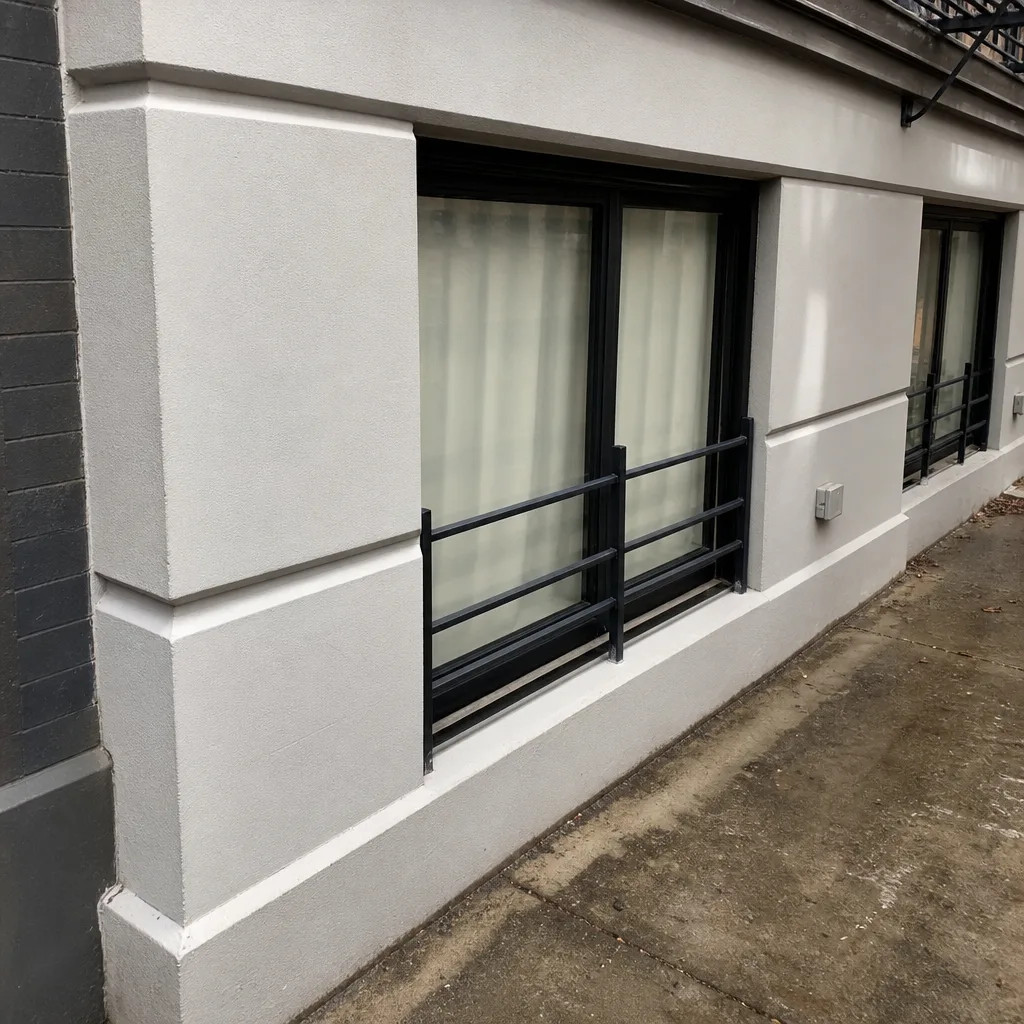 After
After24/7 Emergency Reconstruction & Cleanup in West New York
When a pipe lets go on the fourth floor of a pre-war brick building in West New York, the water doesn’t stay on the fourth floor. It moves down through floor-ceiling assemblies, behind shared party walls, and into the units below before anyone on the street even notices a wet ceiling. We answer the phone live 24 hours a day, seven days a week, and Wade’s crew reaches West New York addresses fast because we’re already working this area constantly. Call (607) 703-3408 and you’ll talk to a real person who can have extraction equipment running inside the hour. The first 60 minutes after a roof membrane fails or a cast-iron waste line splits is when you stop a two-unit inconvenience from becoming a five-unit reconstruction project. Free visual inspection, photos documented from the moment we walk in, and a written scope before any work starts.
Understanding Reconstruction & Cleanup Severity in West New York Properties
West New York’s housing stock is almost entirely 4-to-6-story brick apartment buildings from the 1920s through the 1950s, with flat or barely-pitched roofs, original cast-iron waste lines, and aging galvanized supply piping. That means building systems fail in ways suburban homes don’t. A Category 1 water loss, clean water from a supply line, turns into Category 2 or 3 within 24 to 48 hours as it picks up contaminants from old building materials. Category 3, the worst, means water carrying sewage, bacteria, or standing water that’s been sitting long enough to breed pathogens. Inside West New York’s older buildings, we routinely find moisture wicking through shared brick party walls, which act like sponges: water enters one unit and colonizes the wall cavity, then mold takes hold between the brick and the plaster before any tenant reports a stain. Smoke from a kitchen fire in one unit travels through common chases and floor bays into apartments two or three doors down. That’s why our Reconstruction & Cleanup work starts with moisture mapping, not guesses. We run thermal imaging to see what’s wet behind finishes, use hygrometers to track relative humidity inside wall cavities, and set containment so we don’t pull contaminated air through the building while we work. Severity in West New York isn’t measured by the size of the puddle. It’s measured by how many units share a floor assembly.
Why West New York Property Owners Choose Wade’s Restoration
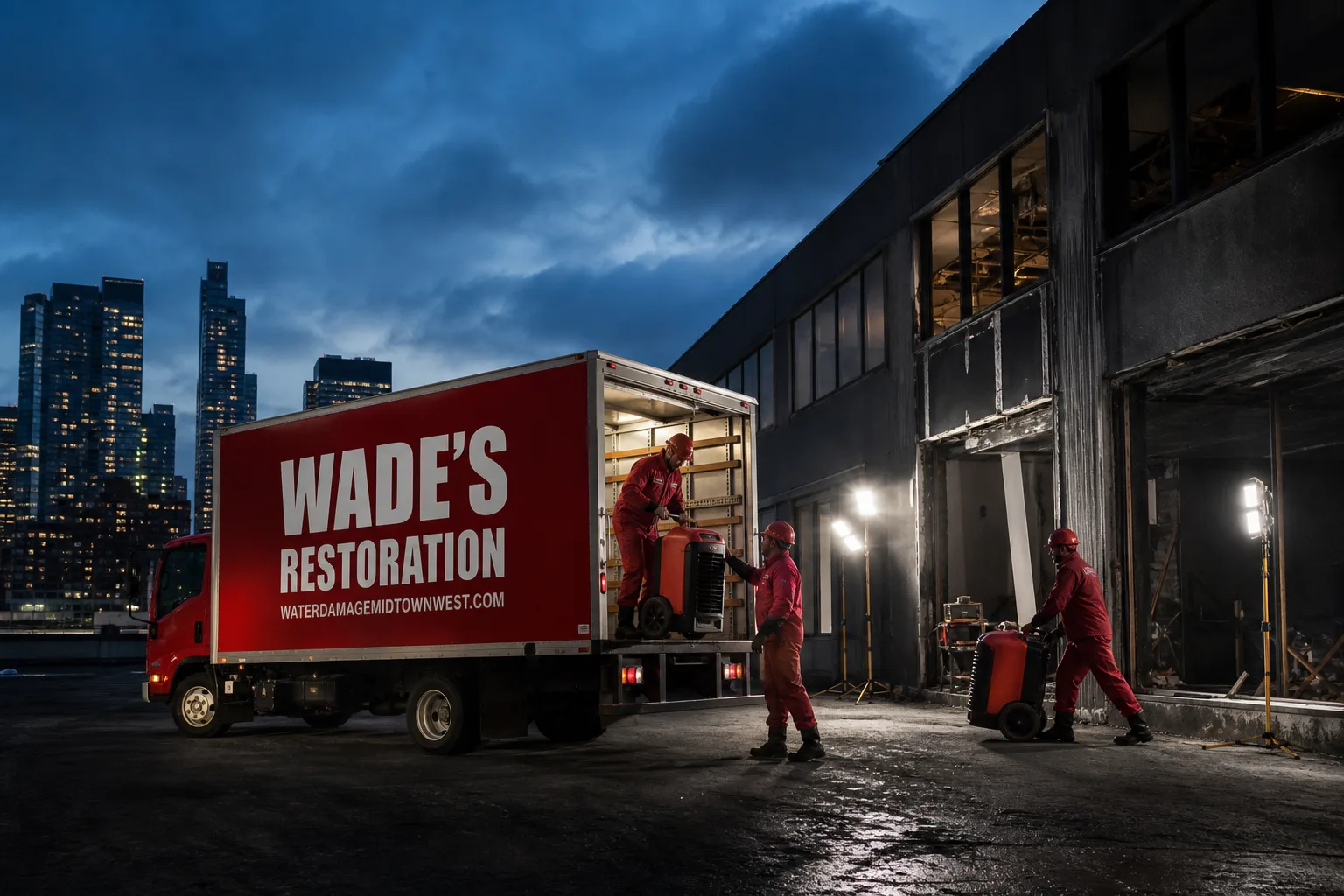
- 45-minute response commitment for West New York addresses. Wade heads out himself when the call is urgent, not a crew you’ve never met. He’s on the road while you’re still on the phone.
- A live person answers every call. No voicemail, no answering service, no “press 2 for emergencies.” At 3 a.m. on a Saturday, you get Wade or someone on his crew, not a call center.
- IICRC-certified crews doing the work. Our people hold WRT, FSRT, and AMRT certifications. That’s Water Damage Restoration Technician, Fire & Smoke Restoration Technician, and Applied Microbial Remediation Technician. Not initials on a website. Credentials that mean we know how to contain, dry, and clean properly.
- Free visual inspection of the damage. We don’t charge to come out and look. We tell you what’s wrong, what it’ll take to fix it, and what it’ll cost, in writing, before anything gets torn out.
- Direct insurance billing and adjuster coordination. Wade deals with the adjuster himself. You’re not the one relaying messages between your carrier and the crew. He sends photos, moisture logs, and line-item scopes directly.
- One team from extraction to reconstruction. The same people who pull the water out are the ones who hang new drywall, refinish floors, and do the final paint. No hand-off to a sub you’ve never met.
Our Reconstruction & Cleanup Process
Inspection & Assessment
We walk the full affected area, not just the wet spot. In West New York apartment buildings, that means checking adjoining units, shared wall cavities, and the units below. Thermal imaging and moisture meters tell us what’s wet behind the plaster. You get a written scope of work with line items, not a handshake estimate.
Extraction & Stabilization
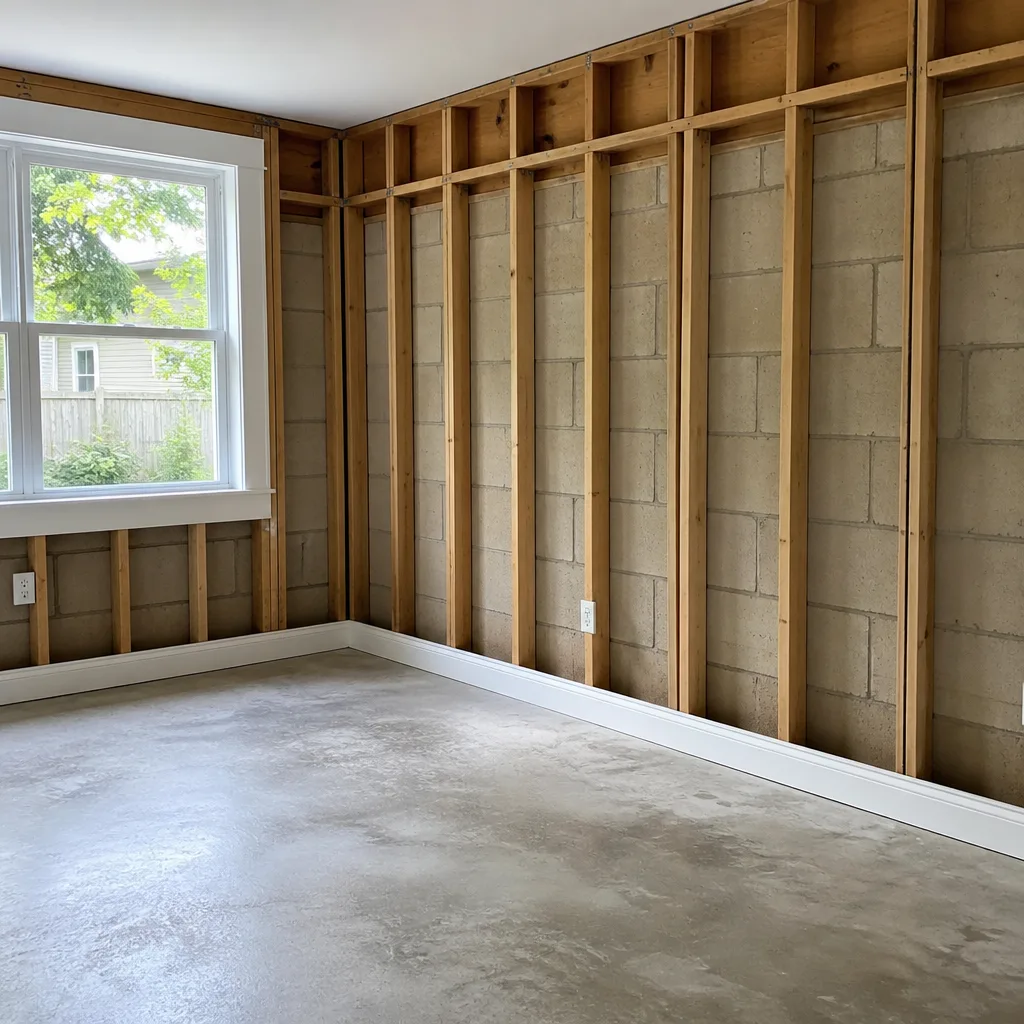
Standing water comes out first, using truck-mounted and portable extraction equipment. We stabilize the structure by removing saturated materials that can’t be saved, which in older buildings often means plaster, lath, and original flooring that’s been soaking for days or weeks.
Drying & Dehumidification
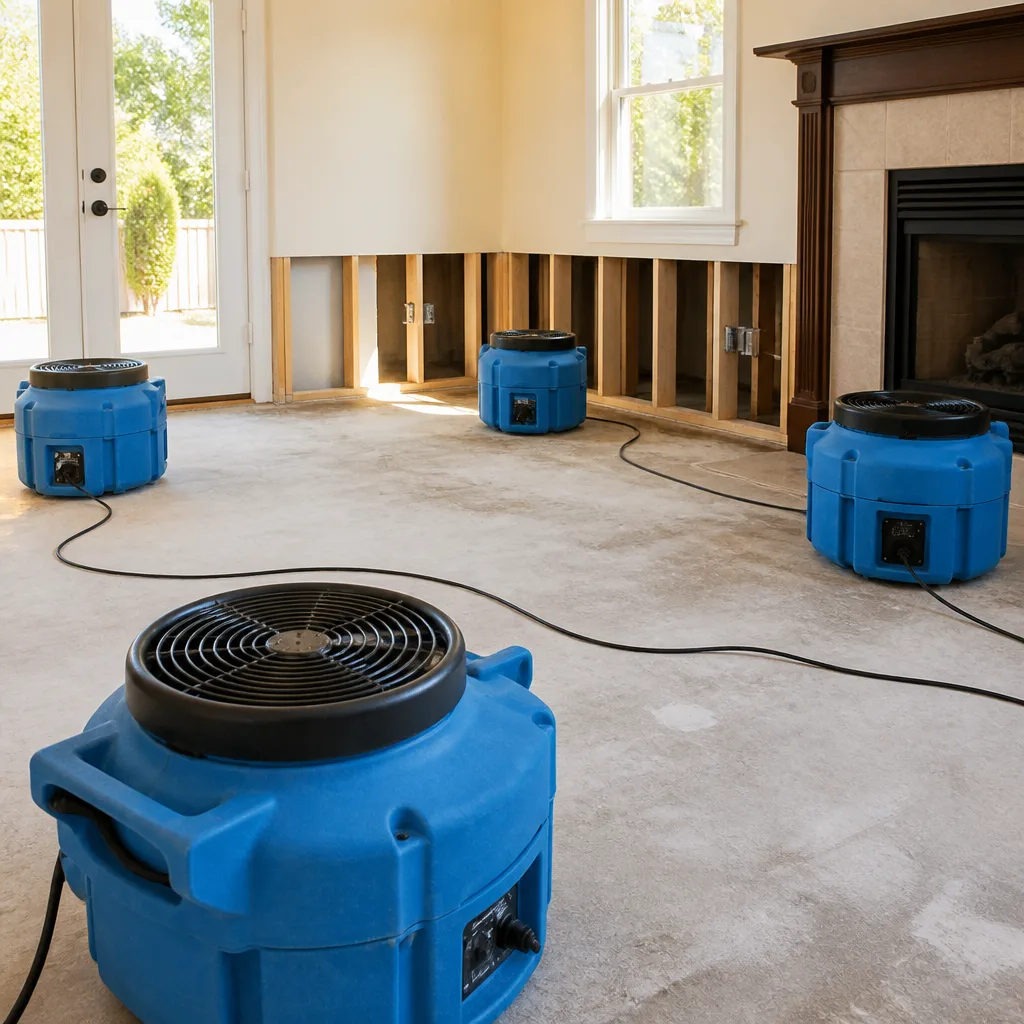
Air movers and commercial dehumidifiers go in, including Dri-Eaz and Phoenix units. In West New York’s humid riverfront climate, drying takes longer than it does inland because ambient moisture works against us. We take daily moisture readings and hand you the complete drying log at the end of the job.
Cleaning & Sanitization
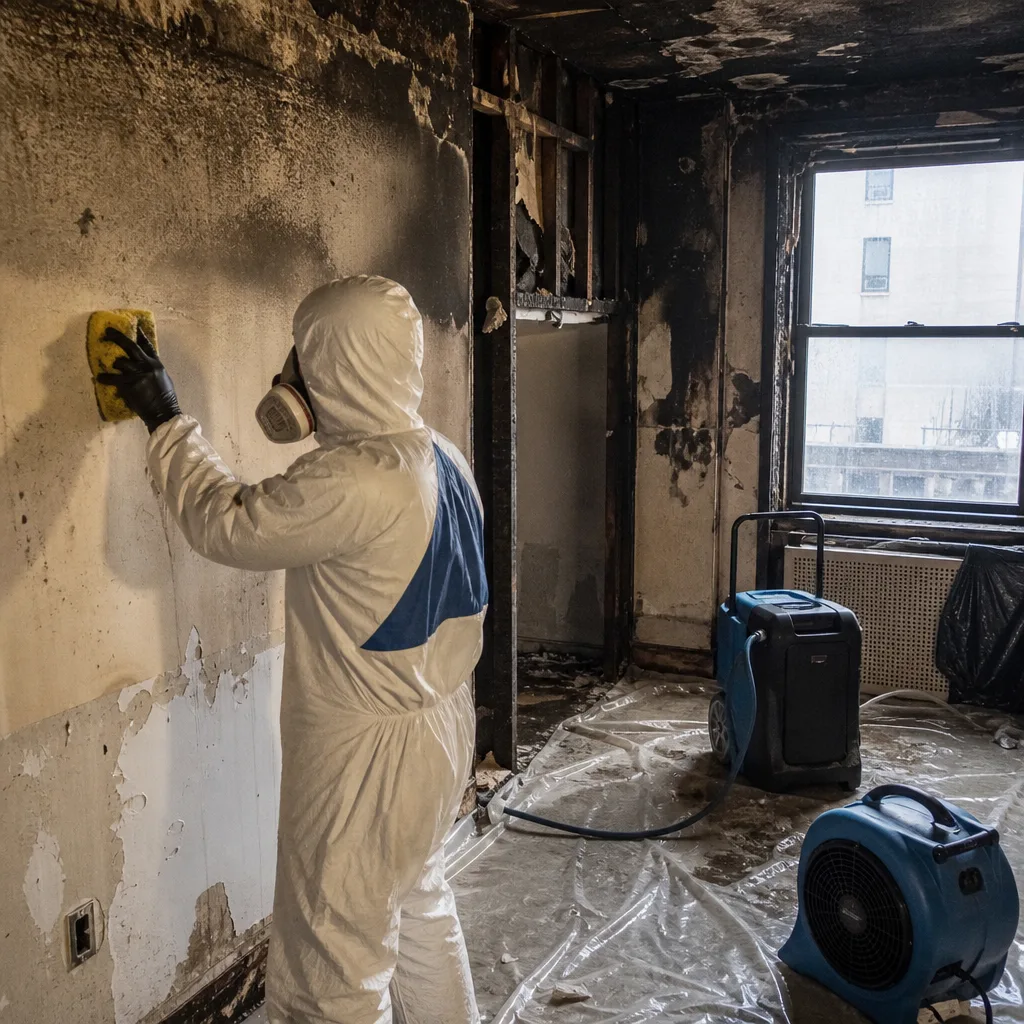
HEPA air scrubbers run during cleanup to filter airborne particles, and we apply antimicrobial treatment to affected cavities and surfaces. For Category 3 water, that means full containment, proper disposal of contaminated materials, and sanitizing everything before reconstruction begins.
Contents Restoration & Pack-Out
We inventory, photograph, and pack out affected contents. In West New York’s smaller apartments, that’s often a full unit’s worth of belongings because storage space is tight and water travels fast. We clean and restore what can be saved and document what can’t for your insurer.
Repairs & Restoration
Drywall, flooring, trim, paint. We rebuild to original condition or better, coordinating with building owners and property managers when structural elements or common areas are involved. The final walkthrough includes your drying log and photo documentation for the file.
Need Emergency Reconstruction & Cleanup in West New York Now?
Crews minutes away, answering live 24 hours a day. The sooner we start, the less it costs.
Working With Your Insurance Company
Most West New York property owners have never filed a water or fire claim before they find themselves standing in a soaked apartment at midnight. The process moves fast and it’s easy to make a mistake that costs you money. We document everything from the first hour: photos of the loss room by room, moisture readings from day one through final dry-down, and a detailed line-item scope of work that uses the same estimating standards your adjuster uses. Wade talks to the adjuster directly, sends the documentation, and answers the questions that always come up. You don’t have to understand depreciation schedules or line-item codes. That’s our job.
What We Provide Your Insurer
- Thorough documentation of the loss
- Photos of all damage, room by room
- Moisture readings and drying logs
- A detailed, line-item scope of work
- Direct coordination with your carrier
Built for West New York’s Loss Calendar
West New York’s damage calendar follows the seasons with a predictability that keeps our crews busy. January and February bring deep freezes that burst galvanized supply lines in uninsulated wall cavities, and the water doesn’t just pool in one unit: it cascades down through stacked apartments before anyone notices. Spring thaw and heavy rain send water rushing down the Palisades slope into below-grade units and basement spaces, where the high water table and Hudson River humidity mean drying takes longer and mold risk jumps quickly. Summer brings thunderstorm downpours that overwhelm flat roof drains, sending ponding water through aging roof membranes and into top-floor units. Nor’easters in the fall and winter drive driven rain against brick facades, finding every crack in mortar and every failed window flashing. In West New York, the building stock itself is the vulnerability: original piping from the 1930s, roof membranes past their service life, and wall assemblies that were never designed for modern rainfall patterns. We plan our West New York response around this calendar, keeping crews staged for the failures we know are coming.
Reconstruction & Cleanup Across West New York’s Neighborhoods
Boulevard East runs along the Palisades cliff edge from north to south, and the pre-war buildings along it have some of the oldest roof systems in town. We’ve worked flat-roof four-story buildings on 60th Street near Boulevard East where a membrane failure had been silently wicking water for months before a third-floor tenant noticed a stain. Bergenline Avenue, the commercial spine of West New York, runs through the middle of town, and back apartments above storefronts there share common chases with retail spaces, meaning water or fire in a shop travels into apartments without warning. The blocks around James J. Braddock North Hudson County Park have underground garages and below-grade units that fight groundwater every spring. Up in the northern end of town near the Union City border, the buildings get a bit newer but the piping is just as original. We know the routes between these areas: Kennedy Boulevard, Park Avenue, and 60th Street all carry our trucks to calls every week. The response time from a call on 54th Street to a crew on Bergenline is measured in minutes, not hours, because we’re already here working the neighborhood.
Specialized Reconstruction & Cleanup Services We Offer in West New York
Full-Service Reconstruction
We rebuild what water, fire, or rot destroys. In West New York’s older brick buildings, that means matching plaster walls, repairing original hardwood floors, replacing window trim with profiles that match the building’s original millwork, and rebuilding walls to meet current code. We don’t just patch. We restore the unit so it looks like it did before the loss, not like a cheap flip job.
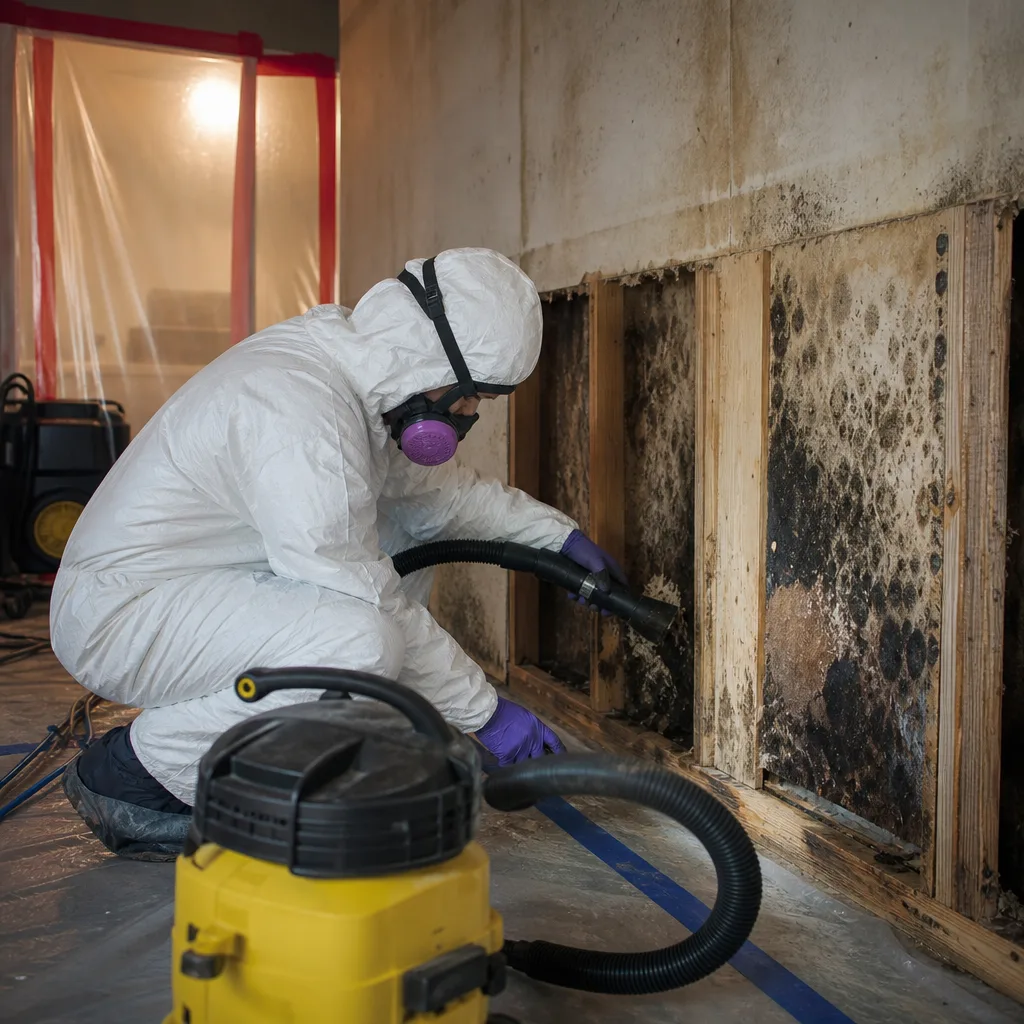
Drywall & Flooring Repair
Water and fire damage in West New York apartments usually means replacing drywall on walls and ceilings, sometimes across multiple units. We match textures, prime properly, and handle the flooring underneath. Original oak strip flooring from the 1930s can often be saved if the drying started fast enough; when it can’t, we source compatible replacements.
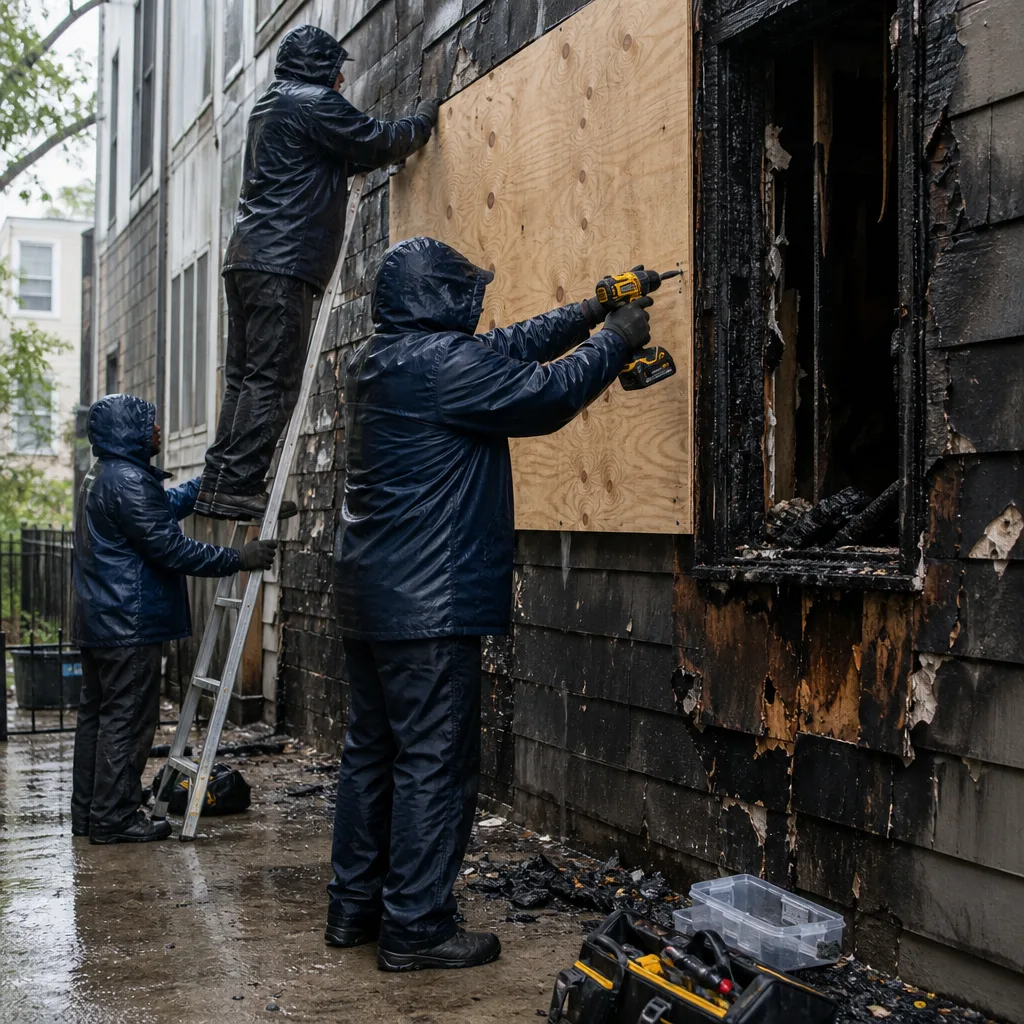
Contents Restoration & Pack-Out
West New York apartments run small, and every closet is full. When water or fire hits, belongings pile up fast. We inventory and pack out contents, clean what can be saved using ultrasonic and immersion cleaning for hard goods, and document what can’t with photos and itemized lists for your insurance claim. Storage is arranged until the unit is rebuilt and ready for move-back.
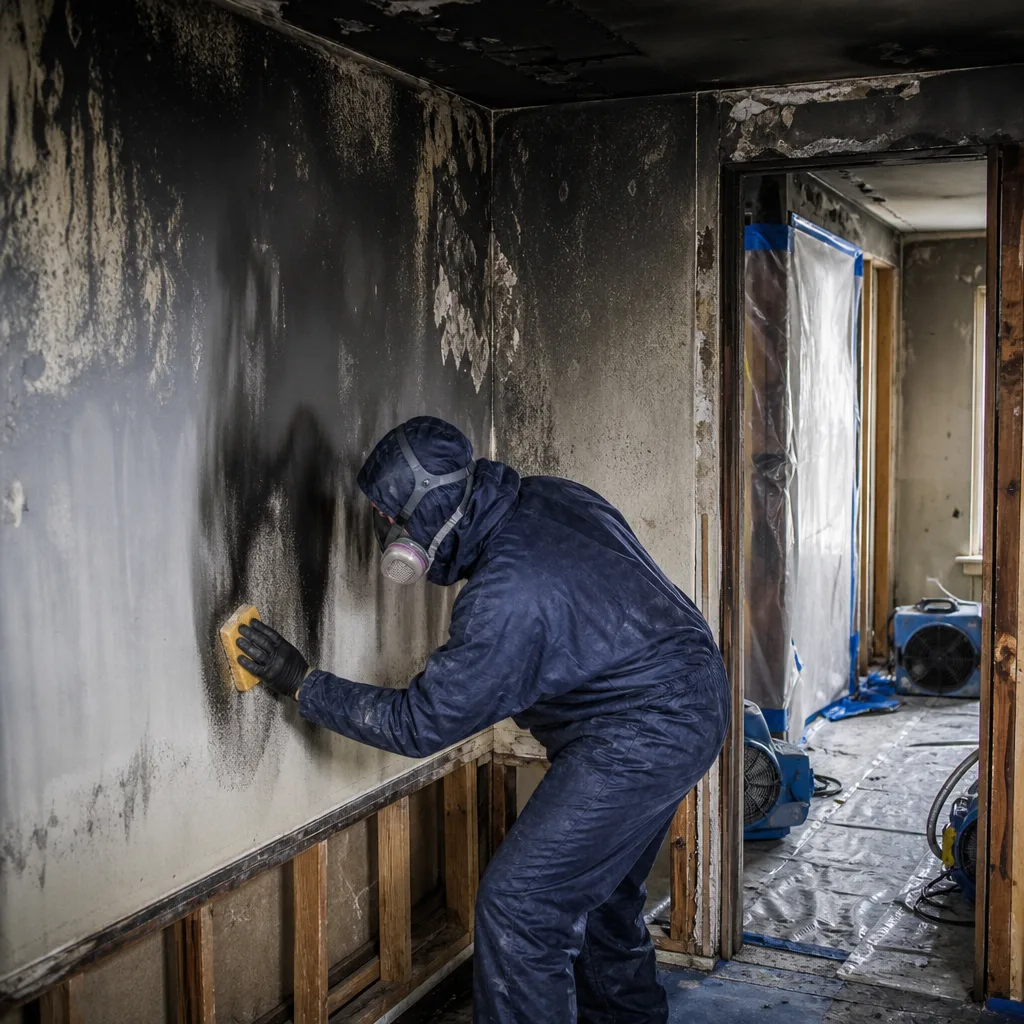
Carpet & Upholstery Cleaning
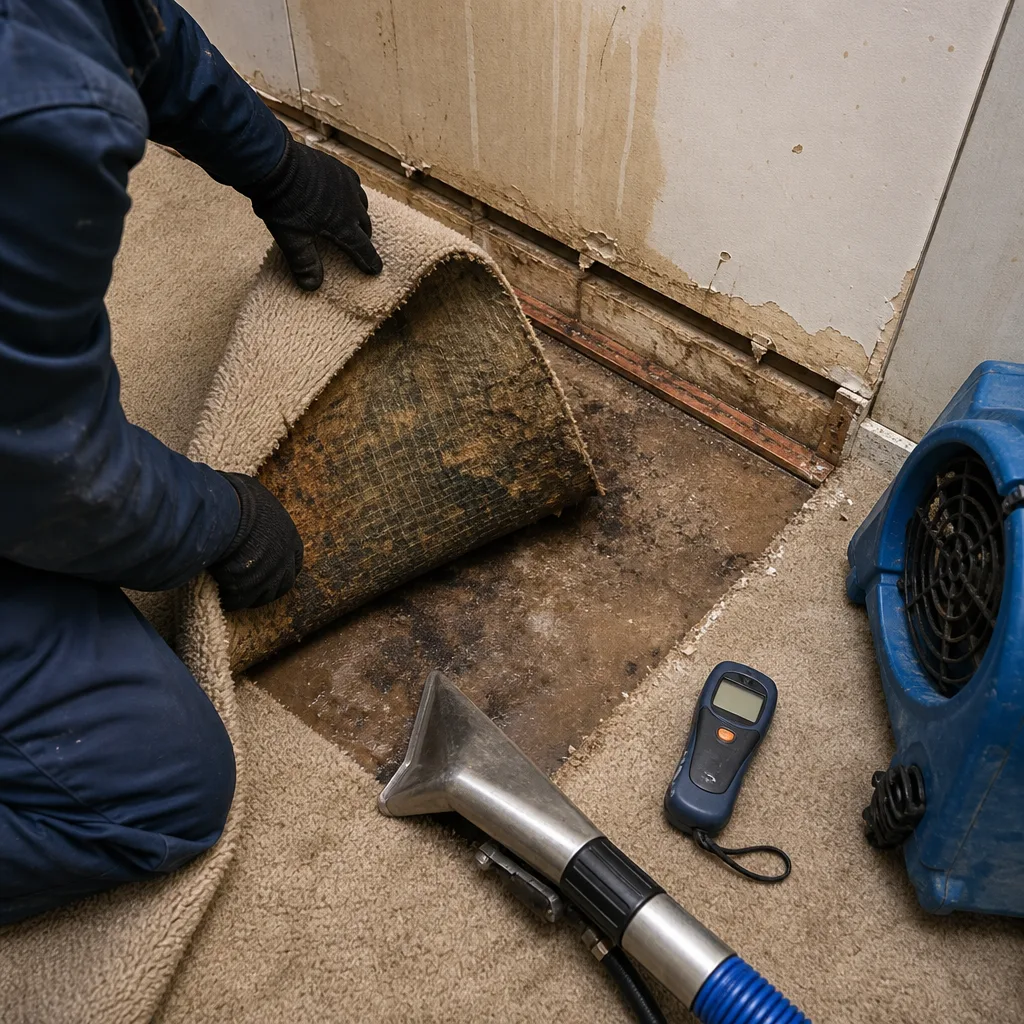
After a loss, carpets and upholstered furniture carry water, soot, or smoke odor long after the surfaces look clean. We deep-clean using professional-grade extraction equipment, and when carpet is too far gone, we remove and replace it. In older West New York buildings, that often means working around original thresholds and radiators.
Post-Construction Cleanup
After we finish a reconstruction, the unit still has dust, debris, and demolition residue in places you can’t see. We clean everything: floors, walls, light fixtures, inside cabinets, windows. We don’t leave a single piece of construction dust behind, because you shouldn’t have to clean up after us.
What happens when you call
- 1
A real person answersNo phone trees - you reach a local pro.
- 2
You get an upfront price rangeHonest numbers before anyone is dispatched.
- 3
A background-checked tech heads outLicensed & insured, dispatched right away.
- 4
You approve before work beginsNothing starts until you say go.
Reconstruction & Cleanup Costs in West New York, NJ
A straightforward water extraction and drying job in West New York typically runs $1,800 to $4,500 depending on how many units are affected and how long the water has been sitting. Add drywall replacement and painting for one unit and you’re at $4,000 to $9,000. Multi-unit reconstructions, where a single roof or pipe failure floods three to five stacked apartments, commonly land between $15,000 and $45,000. Fire reconstruction runs higher because of smoke remediation, from $12,000 for a contained kitchen fire to $60,000 or more when structural framing is compromised. What moves the price most in West New York is the age of the building: original plaster, old wiring that must be brought up to code during reconstruction, and asbestos abatement when old pipe insulation or floor tile is disturbed. Insurance covers most losses; your out-of-pocket is usually the deductible. We offer a free visual inspection so you have a firm number in writing before anything gets torn out. Call (607) 703-3408 and we’ll come out, look it over, and give you a straight answer.
We Also Serve Cities Near West New York
We work across the Hudson County towns: Jersey City, Hoboken, Weehawken, and Union City. If you’re managing a multi-unit loss in West New York and need us to handle an adjacent property in another town, we’ll coordinate it without missing a beat.
West New York Reconstruction & Cleanup Questions, Answered
How does West New York’s building density change the scope of a water damage reconstruction project?
A single water loss in West New York is rarely a single-unit job. Shared walls, floor-ceiling assemblies, and common chases mean water from a fourth-floor pipe failure wicks through the structure and compromises units below and adjacent. We routinely set up containment and drying across three to five stacked apartments for what started as one tenant’s leak, and we coordinate with landlords, property managers, and multiple insurance carriers simultaneously.
Why do flat-roof leaks in West New York take so long to show up as visible damage?
Ponding water on a flat roof degrades the membrane and deck slowly over months. The water seeps through the insulation and roof deck, then travels along beams and through ceiling cavities before it pools enough to show a stain on a tenant’s ceiling. By the time anyone sees a stain, the damage is already extensive: mold has likely colonized the wall cavities and the structural deck is compromised. Call (607) 703-3408 and we’ll start with thermal imaging to find what’s hidden.
What does Category 3 water mean for a West New York apartment building’s cleanup?
Category 3, or “black water,” means water that contains sewage, bacteria, or has been standing long enough to breed pathogens. In West New York’s older buildings, that’s common when a cast-iron waste line fails mid-building or when storm water picks up contaminants from aging plumbing. Category 3 requires full containment, removal and disposal of contaminated materials, and antimicrobial treatment before reconstruction. This is not a mop-and-bucket situation; it requires IICRC-certified procedures.
How do you handle reconstruction when a single leak damages multiple apartments in the same building?
We treat it as one coordinated project, not separate jobs. That means one containment plan for the building, one drying strategy across all affected units, and one point of contact for the landlord, tenants, and adjusters. Wade coordinates with the insurance carriers directly and provides each party with the documentation they need, so tenants aren’t stuck relaying information. This is where our experience with West New York’s pre-war building stock matters most.
Why is pack-out and contents restoration especially important in West New York’s smaller apartments?
When an apartment is 600 square feet and every closet is packed, water damage means nearly every belonging gets wet or contaminated. We inventory and pack out all contents, clean and restore what can be saved, and document what can’t for the insurer. This protects the tenant’s property and clears the unit so reconstruction can happen quickly. Call (607) 703-3408 for a free inspection and we’ll walk you through the whole pack-out process.
How fast can you actually get to a West New York address?
We commit to 45 minutes for emergency calls within West New York. We’re already working this area daily, so our crews are minutes away, not driving in from somewhere else. Wade answers the phone himself, 24/7, and he’ll tell you exactly when someone will arrive.
Will my insurance cover reconstruction and cleanup in a West New York apartment?
Most property insurance policies cover reconstruction and mitigation from sudden water, fire, or storm damage. Deductibles are typically $500 to $2,500. We work directly with your adjuster, submit the documentation, and handle the negotiation. You’re not left doing paperwork while your apartment sits unrepaired.
What should I do in the first 30 minutes after I notice water or fire damage in my West New York apartment?
Call us at (607) 703-3408 first. Then shut off the water source if you can do so safely. Don’t try to extract water yourself if you’re dealing with sewage or major flooding, but removing small amounts of clean water with towels helps. Don’t use electrical appliances near wet areas. In a multi-unit building, notify the landlord and neighboring tenants. We’ll handle the rest.
Serving West New York, NJ - Our Local Coverage Area
We’re based in the West New York area and know this community well. Use the map below to see our service coverage - if you’re nearby, we can almost certainly help.
The Stack Effect Reality of West New York Damage
Here’s what the big national franchises don’t tell you about West New York: there is no such thing as a one-unit water job in these buildings. The same structural density that made these pre-war buildings solid enough to stand for 90 years is what carries water, smoke, and mold vertically and horizontally through the building. When a flat roof fails on a four-story building on 60th Street, the tenants on four, three, and two all live in the same envelope. A burst supply line in the wall between two apartments wicks moisture into both units and the floor assembly beneath both. A kitchen fire sends smoke through common chases into apartments nobody thought were connected. That’s why our Reconstruction & Cleanup work in West New York always starts with building-level thinking, not unit-level thinking. We map moisture across the full affected stack, set containment that protects the whole building, and write scopes of work that account for every unit in the water path. When you call, you’re not just hiring a crew to dry one apartment. You’re hiring someone who understands how West New York’s buildings actually behave when they fail. Call (607) 703-3408 and Wade will be there himself.
Written by Wade Ferris, Owner at Wade’s Restoration, serving West New York and Hudson County since 2007.