
Free visual inspection and a written scope of work before any mitigation begins - photos, moisture readings, and drying logs go in your claim file
The scope we write is the scope we bill. Anything new gets shown to you, in writing, before we touch it.
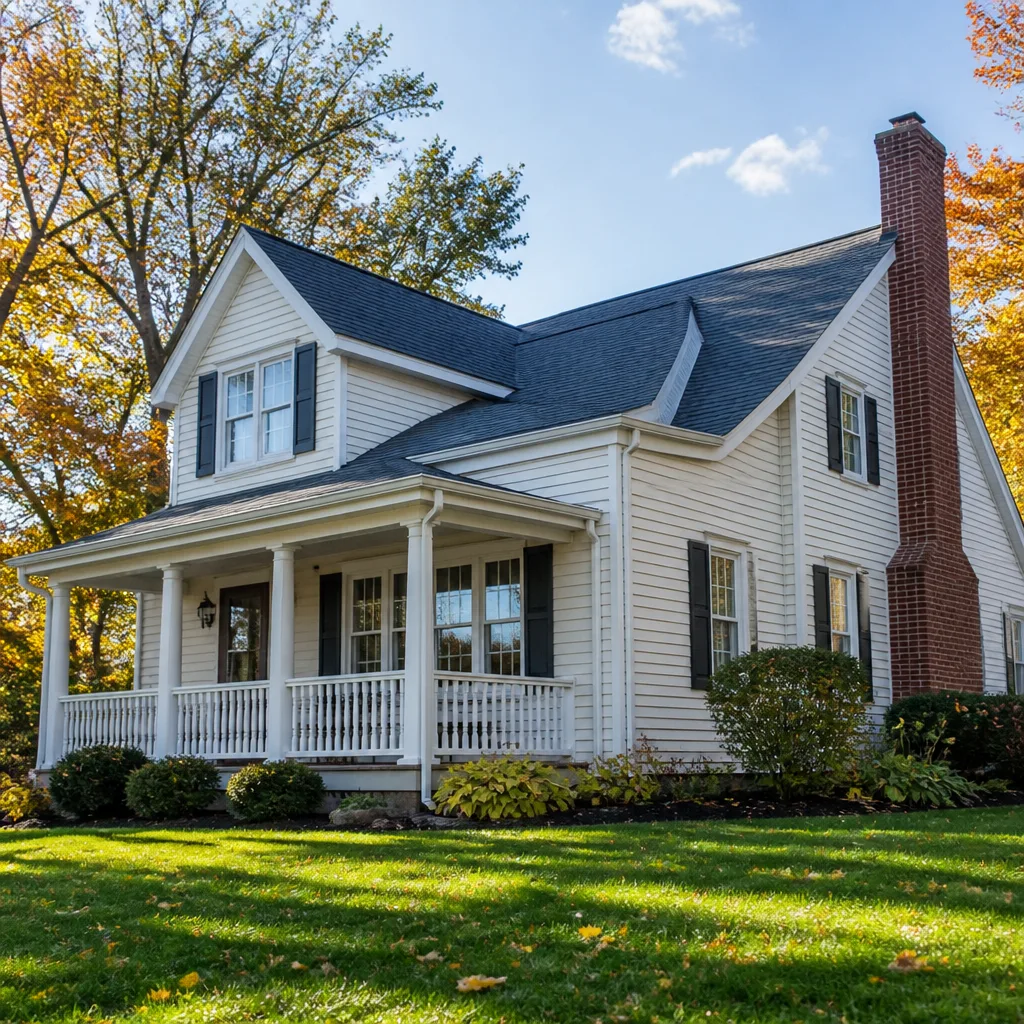
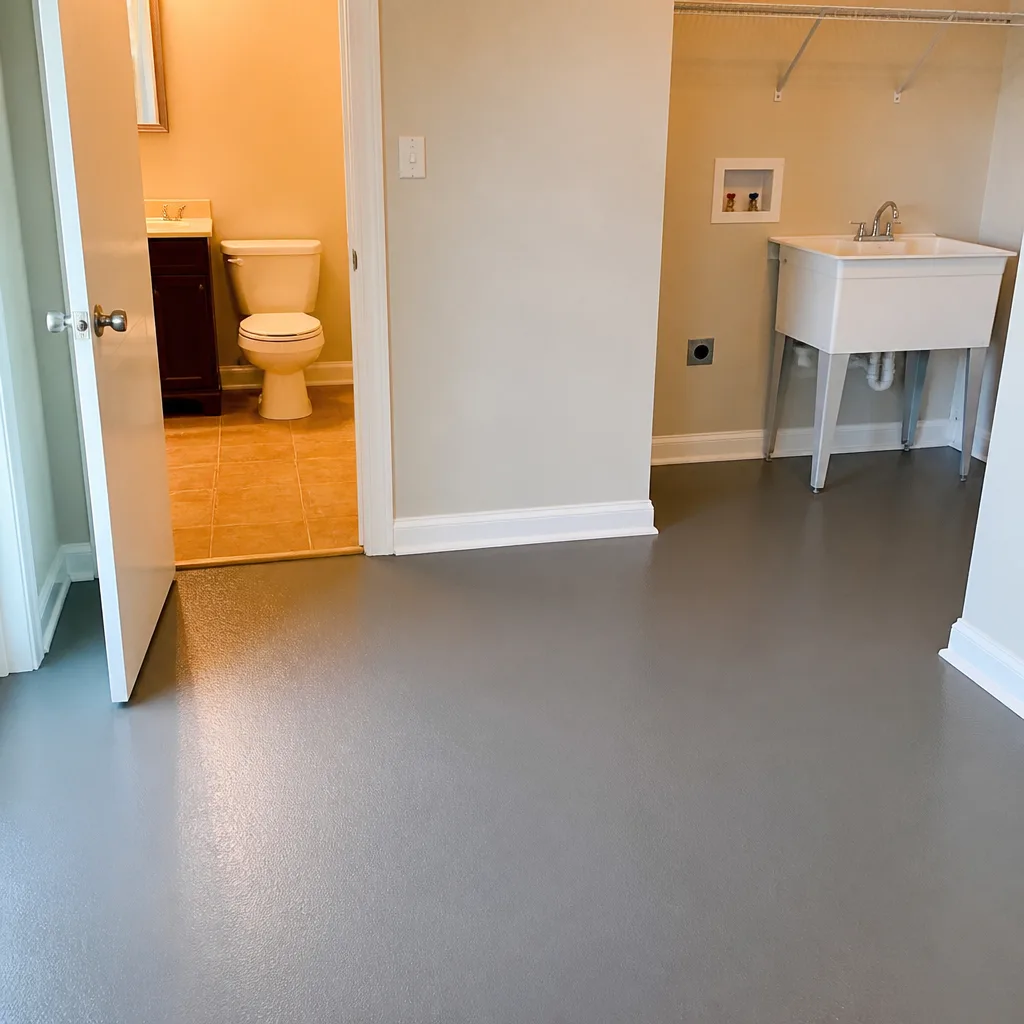
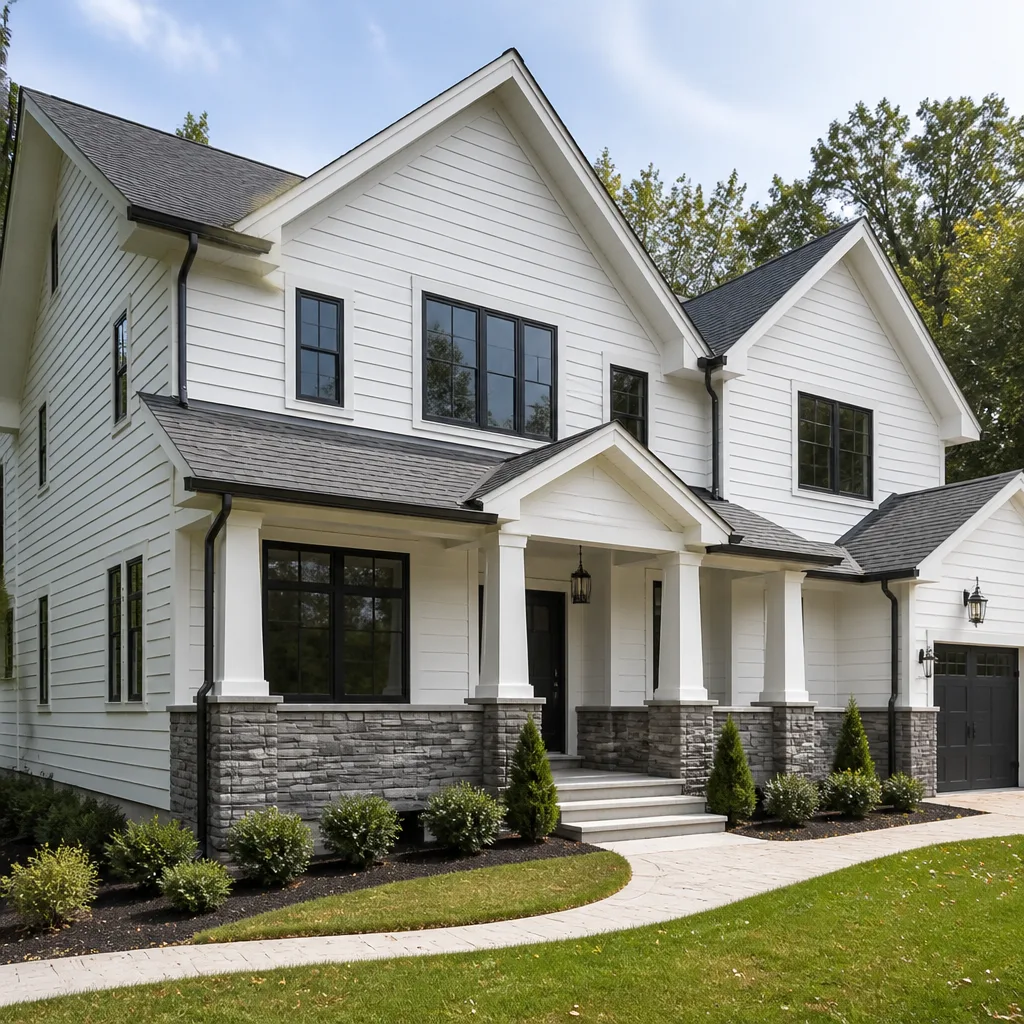
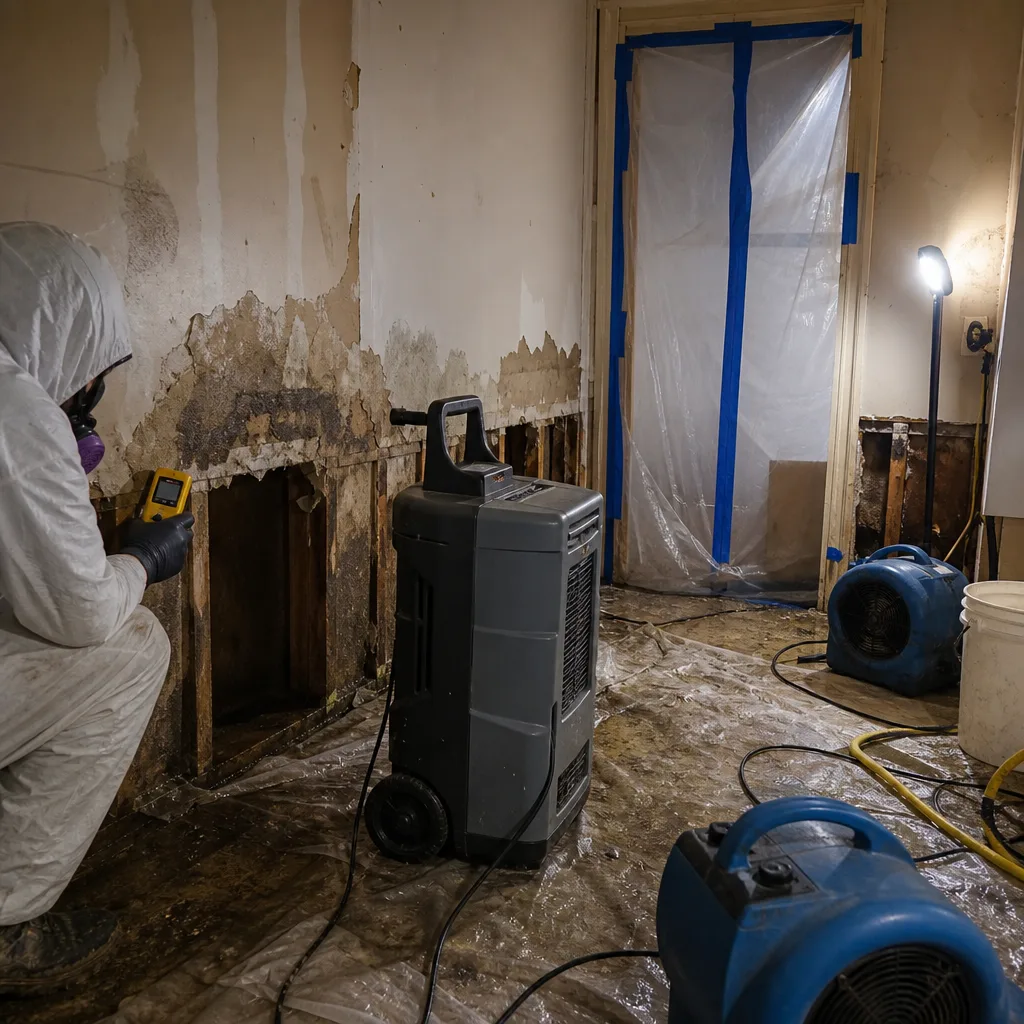 Before
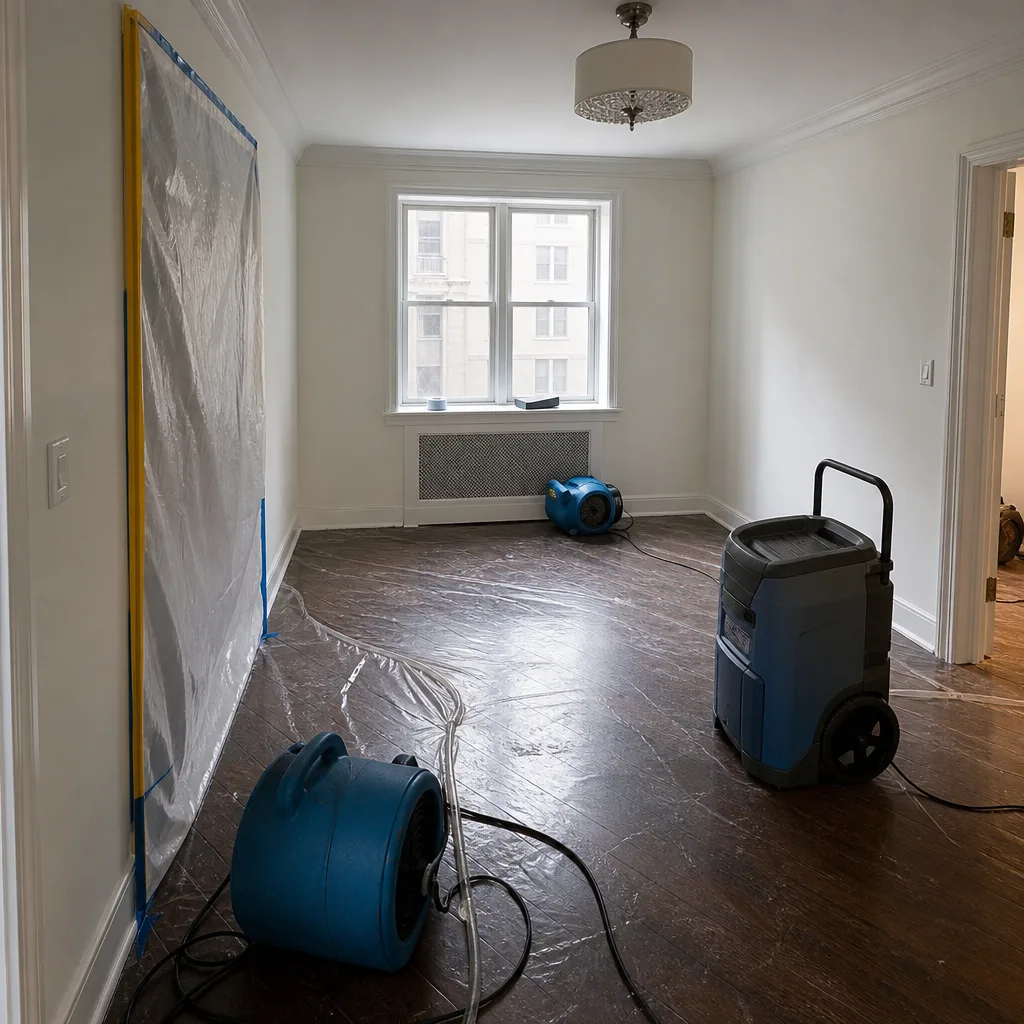 After
After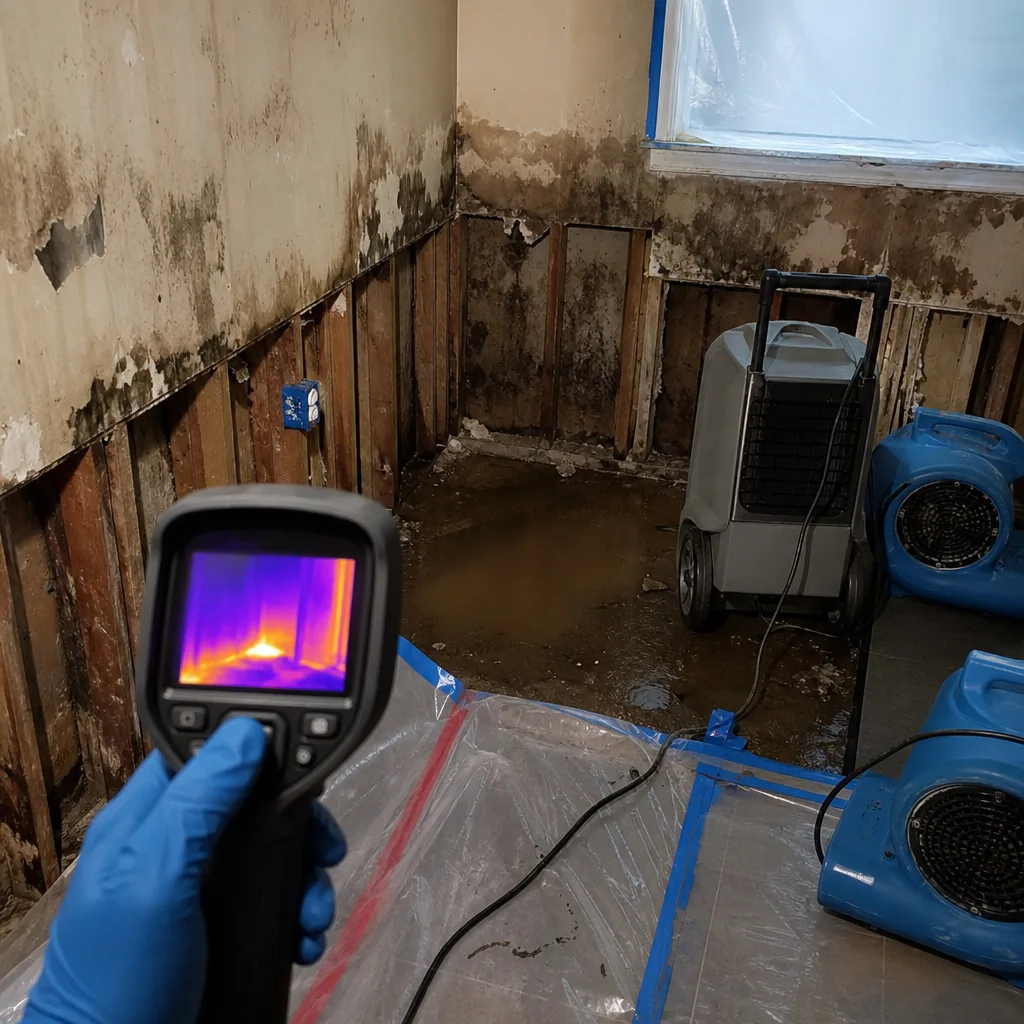 Before
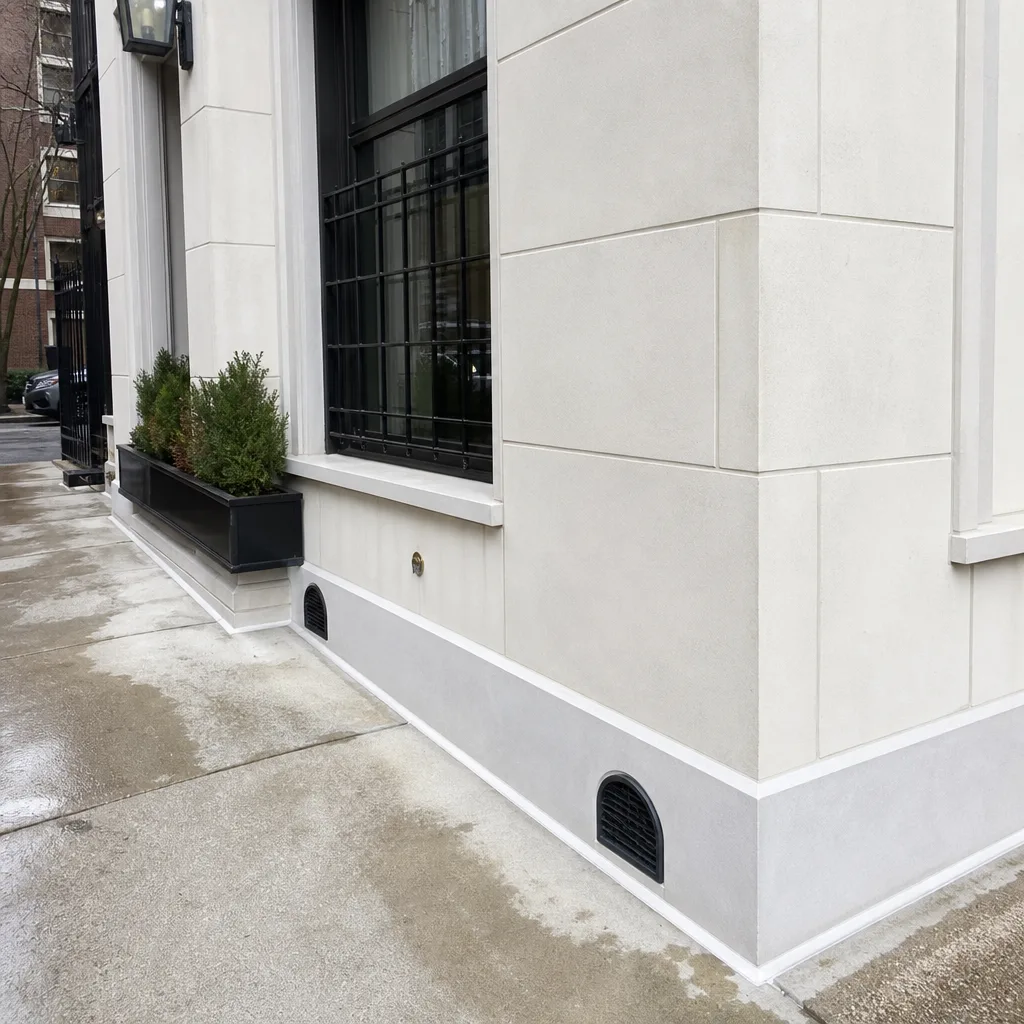 After
After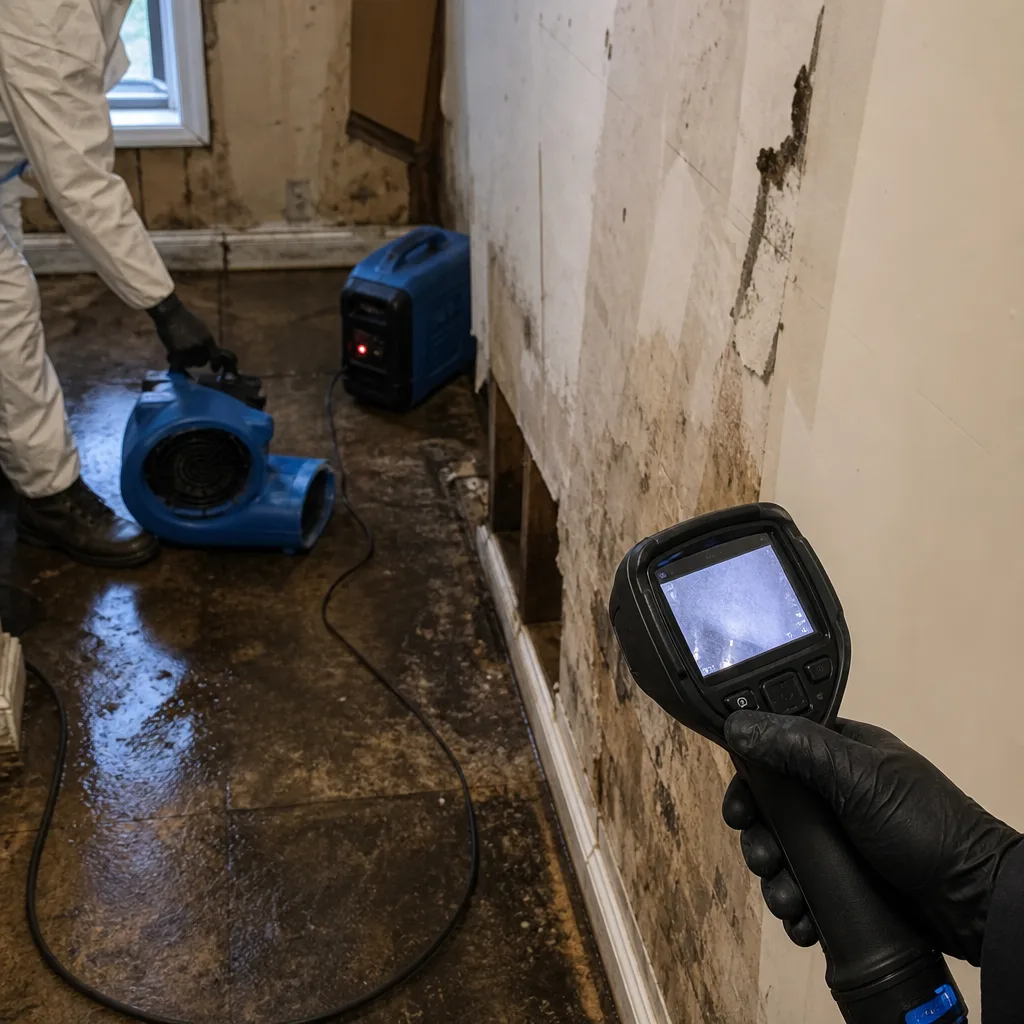 Before
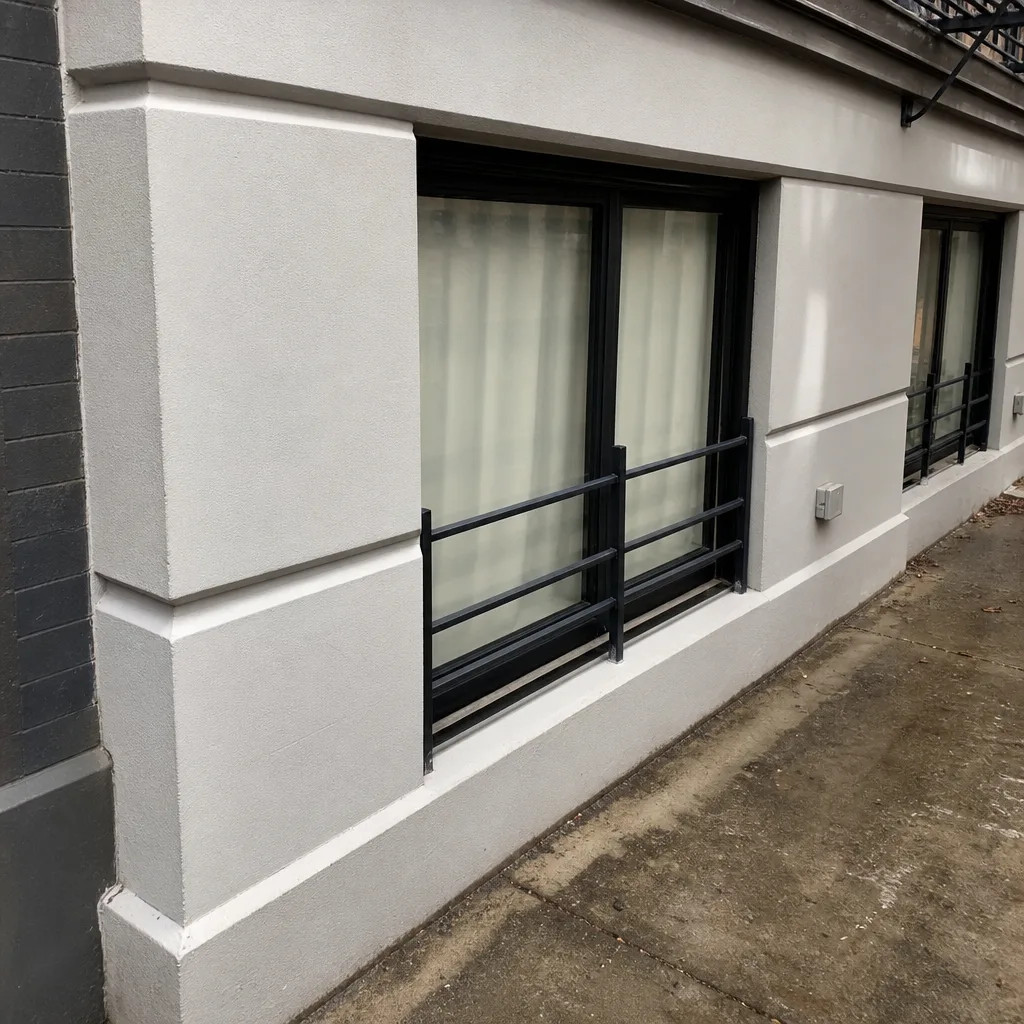 After
After24/7 Emergency Water Damage Restoration in Jersey City
Water damage restoration in Jersey City typically costs $1,800 to $6,500 depending on the category of water, square footage affected, and whether the loss touched solid masonry walls that hold moisture longer than wood-frame construction. Most jobs we handle start with extraction within 45 minutes of the first call. If you have water where it does not belong right now, call (607) 703-3408. Wade Ferris answers his own phone, day or night, and he will tell you straight whether you need a crew tonight or a dehumidifier tomorrow.
We know the first hour matters. Jersey City basements sit on filled marshland or near the water table. A pipe break in a Bergen-Lafayette brownstone starts wicking into brick within minutes. A nor’easter pushing Newark Bay into a Greenville basement brings Category 3 water, and every hour it sits, the contamination load climbs. We are local, we are on call, and we are already familiar with the claim paperwork Jersey City homeowners get stuck with. That last part matters more than most people realize until they are three weeks into a flood claim.
Understanding Water Damage Restoration Severity in Jersey City Properties
Water damage is not one thing. We categorize it before we touch a single tool. Category 1 is clean water from a supply line or a busted washing machine hose. Category 2 is gray water with significant contamination, like a dishwasher overflow or sump pump failure. Category 3 is black water: sewage, tidal surge, Newark Bay backflow, anything with pathogens. In Jersey City, Category 3 is far more common than inland homeowners expect because so much of the city sits in FEMA Special Flood Hazard Areas and takes storm surge from two directions.
Jersey City’s housing stock changes the drying math. Late-19th and early-20th century brick row houses in Downtown, Hamilton Park, and Van Vorst Park absorb water deep into masonry. A wood-frame wall in the suburbs might dry in three to five days with air movers and dehumidifiers. A solid brick party wall in a Jersey City brownstone can hold moisture for two to three weeks unless you use moisture mapping and regular hygrometer readings to confirm what is actually dry, not what looks dry. This is why we do daily moisture logs on every job and hand the full record to the homeowner at the end.
Why Jersey City Property Owners Choose Wade’s Restoration
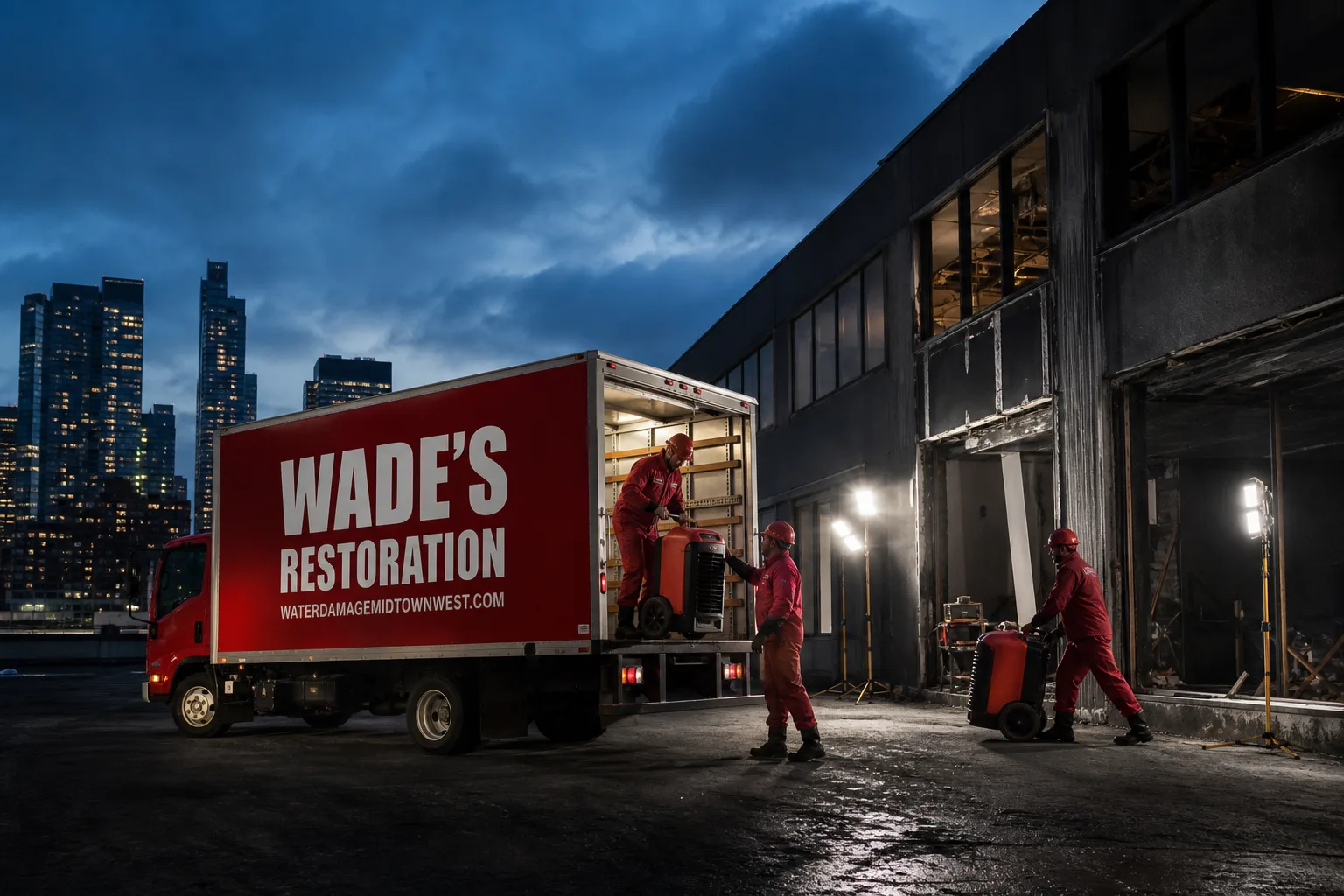
- 45-minute response commitment – Wade heads out himself to get eyes on the loss, and extraction typically starts inside the hour for active water events.
- 24/7 live answer, no call centers – You call (607) 703-3408 and a real person answers. Often that is Wade Ferris himself, who has been doing this since 2007.
- IICRC-certified crews – Our techs hold WRT (Water Restoration Technician) and ASD (Applied Structural Drying) certifications, and apply AMRT protocols when mold is present.
- Free visual inspection – No charge to look. No trip charge inside our county. No obligation.
- Direct insurance billing – We document from hour one, bill your carrier directly, and talk to your adjuster so you are not the middleman.
- One crew from extraction to reconstruction – We do not hand you off to a third party. The same team that pulls the water out is the team that puts your house back together.
Our Water Damage Restoration Process
Inspection & Assessment
We locate the water source, categorize it, and map moisture across walls, floors, and cavities. In Jersey City row houses, this means checking party walls and basement masonry, not just the room where water is visible. Thermal imaging and hygrometers tell us how far the water has actually traveled.
Extraction & Stabilization
We pull standing water with truck-mounted extraction units and high-volume pumps. If a pipe has burst, we shut off the supply and stabilize the area to stop additional damage. In flood events, this includes removing Category 3 water before it soaks deeper into masonry.
Drying & Dehumidification
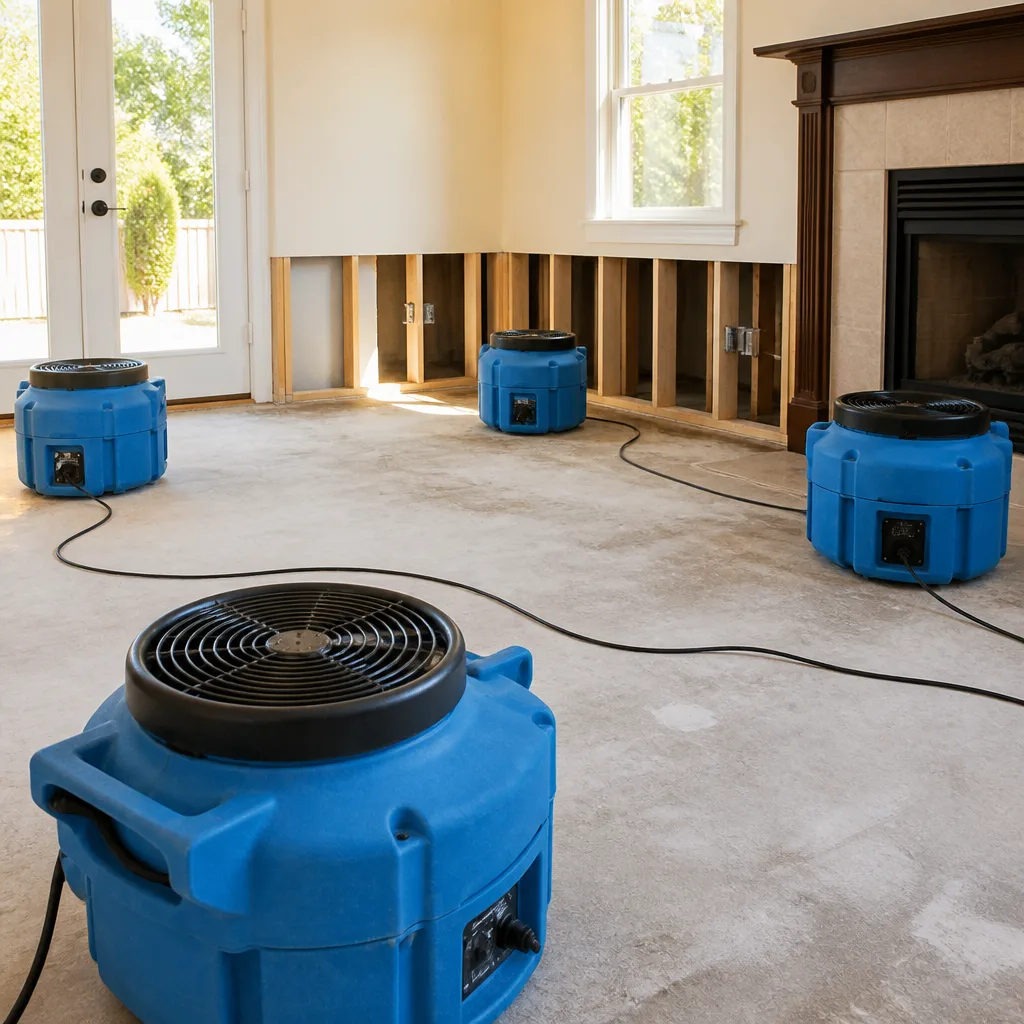
Air movers, dehumidifiers, and injection drying systems (Injectidry for cavities, Dri-Eaz and Phoenix units for open areas) run continuously. We take moisture readings every single day and record them. You get the full log at the end.
Cleaning & Sanitization
For Category 2 and Category 3 losses in Jersey City, this step is non-negotiable. We apply antimicrobial treatments to surfaces that got wet, and run HEPA air scrubbers where contamination is present. Skipping this step on tidal floodwater means hidden mold inside brick walls months later.
Mold Prevention & Containment
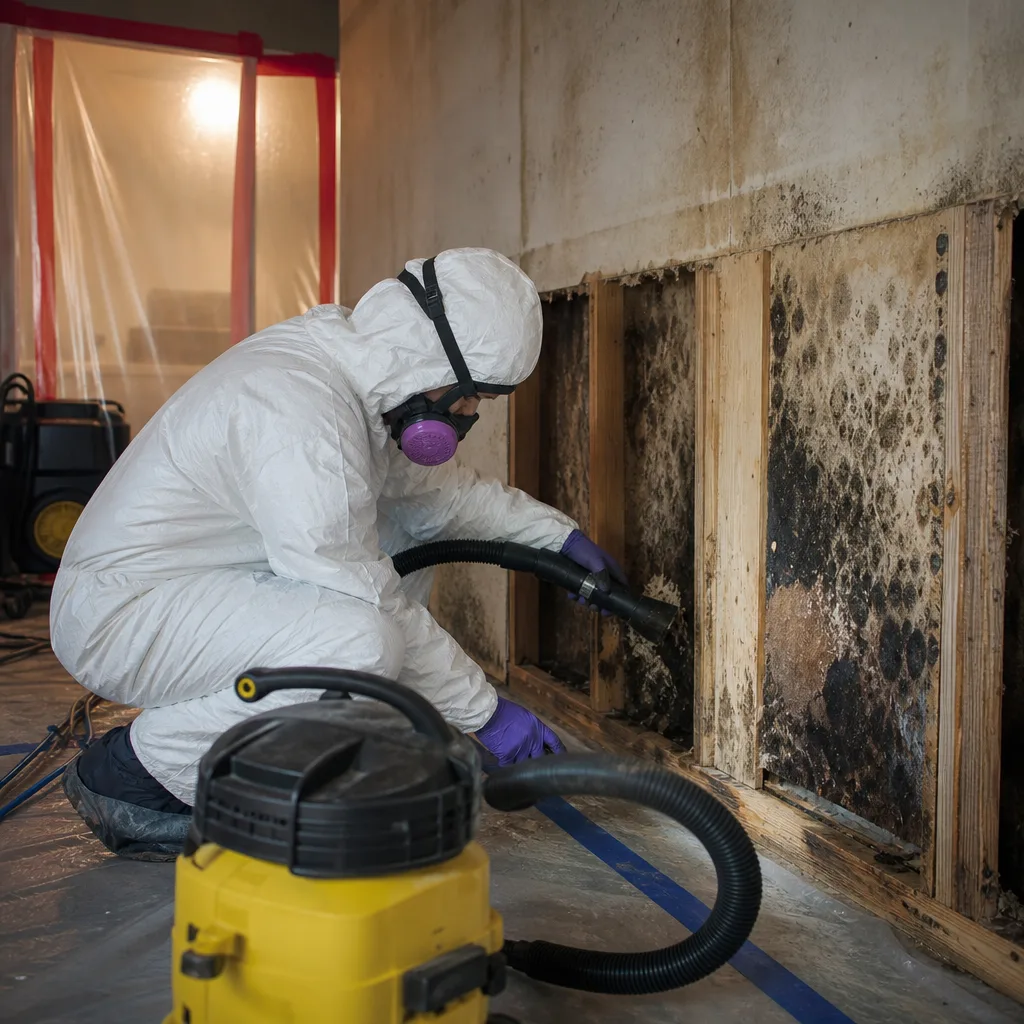
Where moisture has been present beyond 48 hours, we build containment and treat affected materials. We do not paint over a problem. We dry it, treat it, and verify with readings that the loss is resolved before we close the job.
Repairs & Restoration
Replacement of damaged drywall, trim, flooring, and structural repairs where needed. This includes opening walls that were cosmetically repaired years ago but still hold hidden mold, a pattern we see repeatedly in post-Sandy Jersey City homes.
Need Emergency Water Damage Restoration in Jersey City Now?
Crews minutes away, answering live 24 hours a day. The sooner we start, the less it costs.
Working With Your Insurance Company
Insurance is a big word in Jersey City. Flood claims go through NFIP. Water damage from a burst pipe goes through your homeowner’s policy. They are not the same thing, and treating them like they are costs homeowners real money. We document from the first hour with photos, moisture readings, and a line-item scope of work written before demo starts. Wade talks to your adjuster directly. You do not sit on hold between two parties. If your adjuster has questions, we answer them. If your claim needs elevation certificate coordination because your property sits in a FEMA flood zone, we know what that requires and we handle it.
What We Provide Your Insurer
- Thorough documentation of the loss
- Photos of all damage, room by room
- Moisture readings and drying logs
- A detailed, line-item scope of work
- Direct coordination with your carrier
Built for Jersey City’s Loss Calendar
Jersey City’s water damage season never really ends. It changes shape. January and February bring deep-freeze pipe bursts in uninsulated basements and crawl spaces, and the steep drop from the Palisades in The Heights means ice dams and roof leaks send water down interior walls. March through May, the water table rises and basements in Greenville, Bayfront, and anywhere near the old Meadowlands footprint see seepage through foundation joints that are a century old. Summer delivers fast, hard thunderstorms that overwhelm the combined sewer system and back up drains with Category 2 water. And from late August through November, nor’easters track up the coast and push surge simultaneously into the Hudson estuary and Newark Bay, hitting Jersey City from two sides. That is the season when we leave extra pumps staged and crews on rotation, because we know the calls will come.
Water Damage Restoration Across Jersey City’s Neighborhoods
The kind of water damage we see in Greenville is not the kind of water damage we see in The Heights. Greenville, Bayfront, and the southern waterfront sit near sea level on filled marshland. The water table is high. When it storms, basements fill from the bottom up, and the water is Category 3 because it has mixed with Newark Bay backflow. We run flood cleanup and basement water removal there all year, and we have pulled more brackish water out of those basements than most restoration companies within fifty miles of Jersey City will see in a decade.
Downtown, Hamilton Park, and Van Vorst Park are a different story. Brick row houses from the 1880s and 1890s. A broken supply line on the third floor of a brownstone wicks into solid masonry and travels through party walls into the unit next door. The homeowner sees water in a second-floor closet. What we see on the moisture map is water migrating three units over and down into the basement. Bergen-Lafayette mixes both: attached homes built directly against each other, aging plumbing, and dozens of basements that were quickly dried out after Sandy but never properly remediated. We are still opening walls there and finding mold colonies that have been growing since 2012.
The Heights sits up on the Palisades ridge and almost never floods. What it gets instead is freeze-thaw damage, roof leaks, and ice dams that send water down wall cavities and into ceilings. A restoration company that treats The Heights like Greenville is doing you a disservice, and a restoration company that treats Greenville like the suburbs is doing you a bigger one.
Specialized Water Damage Restoration Services We Offer in Jersey City
Emergency Water Extraction
We arrive fast, assess what we are dealing with, and get standing water out. In a Jersey City basement that just took storm surge, this means pump trucks and extraction wands working while the water is still rising if access allows. Speed here determines how much of the structure we can save.
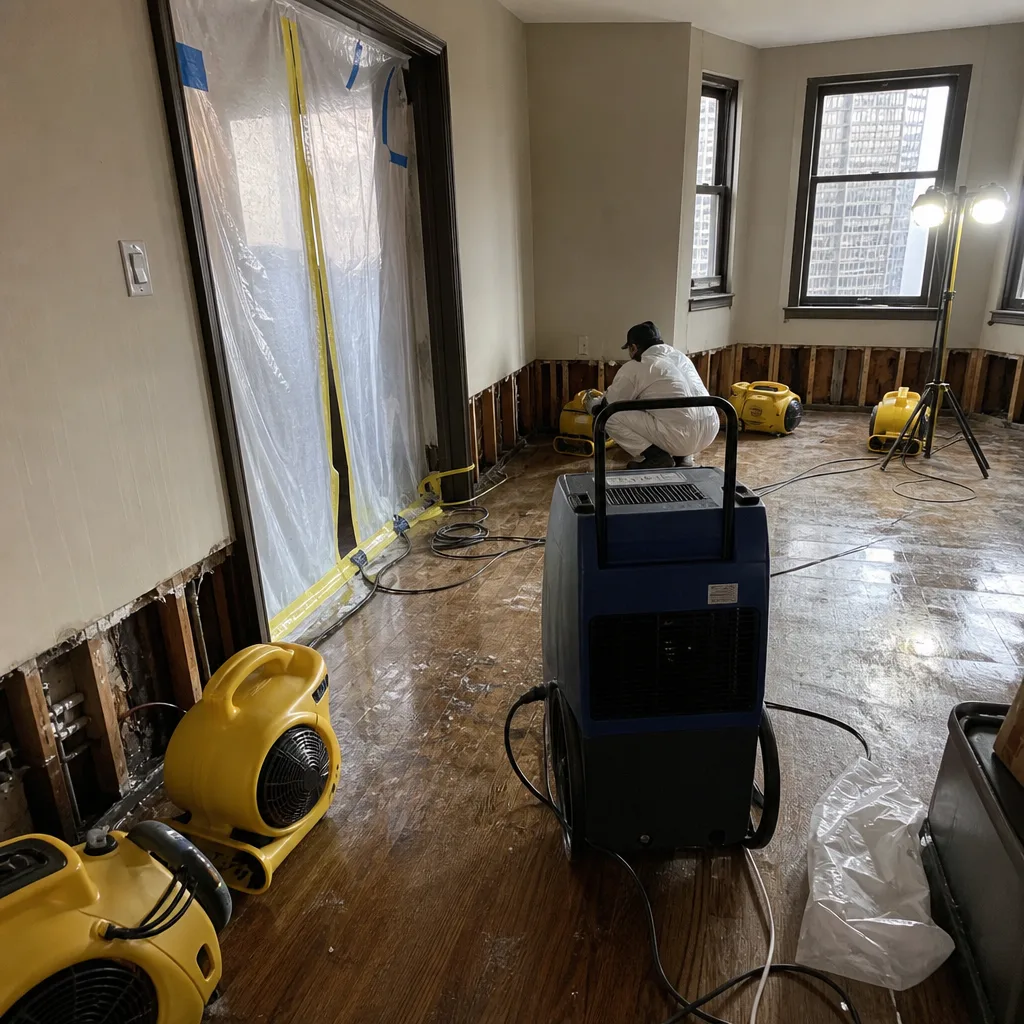
Structural Drying & Dehumidification
Brick row houses demand longer drying cycles than wood-frame homes. We use Dri-Eaz dehumidifiers, Phoenix air movers, and injection drying for wall cavities and under flooring. Daily moisture readings tell us when the structure is actually dry, not just when the surface feels dry.
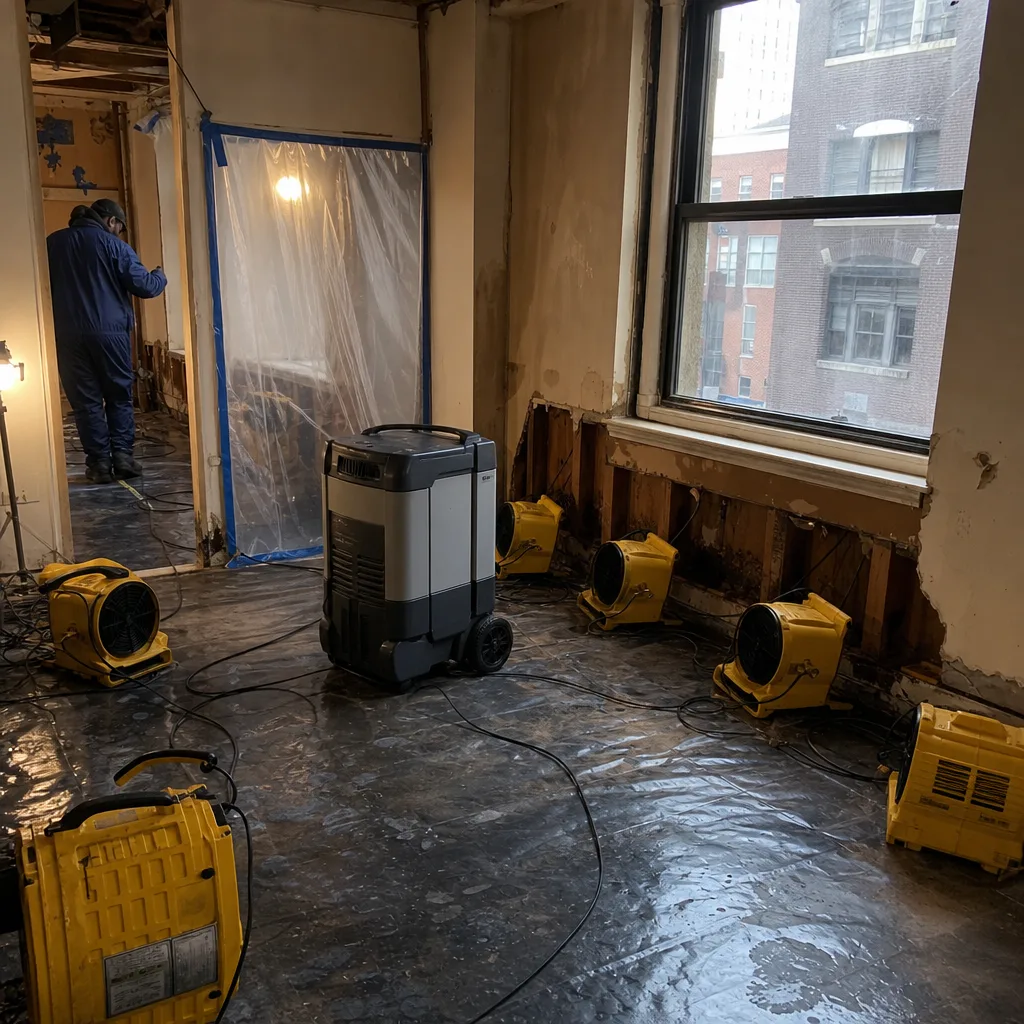
Flood Cleanup
When the water is Category 3, cleanup is not optional. We remove contaminated water, haul out unsalvageable materials, apply antimicrobial treatment, and document everything for your NFIP claim. Properties in FEMA Special Flood Hazard Areas need this documentation to get paid properly under federal flood insurance rules.
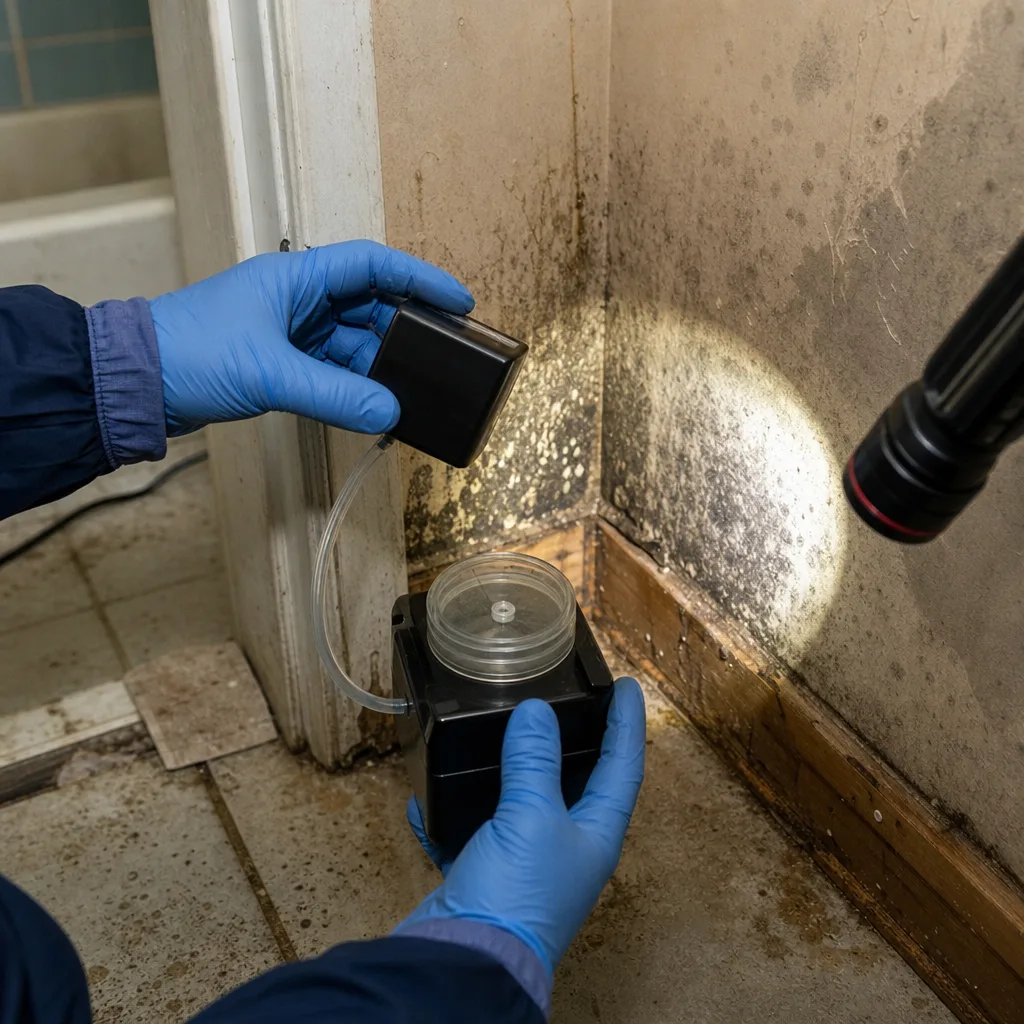
Burst Pipe Restoration
A frozen supply line in a Jersey City basement can dump hundreds of gallons in an hour. We shut off the source, extract, dry, and repair. If the pipe froze, we also check whether the freeze reached other lines before we close the job.
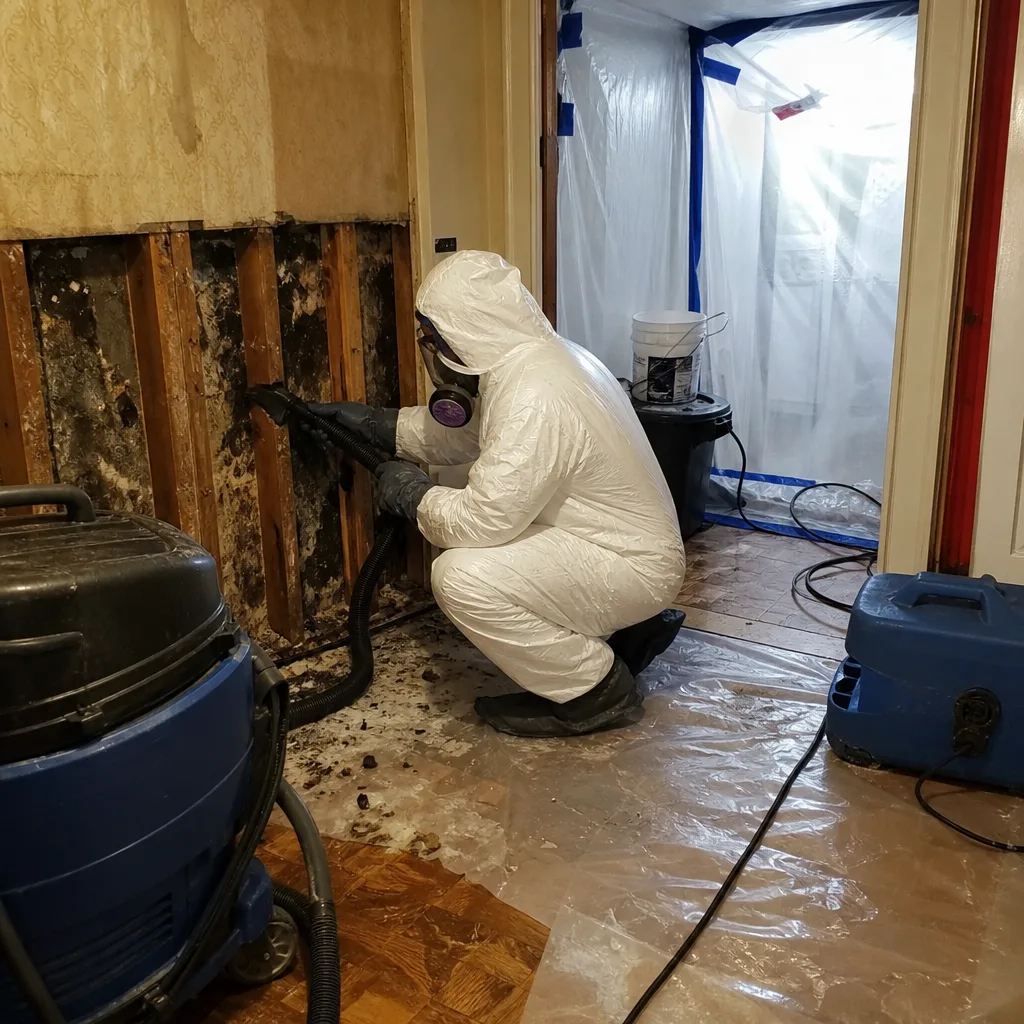
Basement Water Removal
Jersey City basements are different from suburban basements. Many are below the water table. Many have walls that are mortar and brick rather than poured concrete. We know how these structures behave when wet, and we dry accordingly. We do not apply a suburban playbook to a Jersey City foundation.
What happens when you call
- 1
A real person answersNo phone trees - you reach a local pro.
- 2
You get an upfront price rangeHonest numbers before anyone is dispatched.
- 3
A background-checked tech heads outLicensed & insured, dispatched right away.
- 4
You approve before work beginsNothing starts until you say go.
Water Damage Restoration Costs in Jersey City, NJ
A burst pipe in a Jersey City brownstone with Category 1 water in a single room typically runs $1,800 to $3,200 including extraction, drying, and minor repair. A basement flood cleanup with Category 3 water and antimicrobial treatment in a Greenville or Bayfront home usually lands between $3,500 and $6,500 depending on square footage and how long the water sat. Structural drying of a whole floor after water migrated through party walls in a two-family home can reach $5,000 to $8,000 because multiple rooms, multiple wall cavities, and multi-day drying cycles are involved. What moves the price: the water category, how far it traveled through masonry, whether flooring and drywall need removal, and whether mold is already present. If you have flood insurance through NFIP, the claim process is different from a standard homeowner’s claim, and the documentation we provide is designed for that process. Call (607) 703-3408 and Wade will look at the damage free of charge and give you a written scope before any work starts. That way you know the number before anything gets torn out.
We Also Serve Cities Near Jersey City
In addition to Water Damage Restoration in Jersey City, our crews regularly handle water damage in Hoboken, Union City, Weehawken, and Secaucus. Each of those towns has its own water profile, its own housing stock, and its own claim paperwork headaches. We know them all.
Jersey City Water Damage Restoration Questions, Answered
How do categories of water affect what we can dry versus remove after a flood in Jersey City?
Category 1 water from a burst supply line can often be extracted and dried without removing structural material, assuming we arrive promptly. Category 2 water means porous materials like carpet and pad usually get removed, while drywall and framing can sometimes be dried. Category 3 water, which is what tidal surge and sewer backflow bring into Jersey City basements, requires removal of saturated porous materials, antimicrobial treatment of remaining surfaces, and documentation for your NFIP claim. The category drives the entire scope.
Why does my Jersey City row house take longer to dry than a comparable space across the river in the suburbs?
Solid brick and brownstone masonry wick moisture deep into the wall mass. A wood-frame wall with drywall on studs dries in three to five days. A brick party wall from the 1890s can hold water for two to three weeks, because the water travels inward through mortar joints and brick pores, not just across the surface. We use injection drying and daily moisture readings to confirm the wall is actually dry, which is the only honest way to close out a Jersey City drying job.
What does NFIP claim documentation really require for flood damage in a Jersey City Special Flood Hazard Area?
NFIP claims require documented proof of damage to the covered building, which means photos, a line-item scope, moisture readings proving drying was completed, and often elevation certificate coordination if the property’s lowest floor is below the Base Flood Elevation. Missing any of it means an underpaid claim. We provide the full documentation packet your adjuster needs, and we talk to them directly so you are not left interpreting federal flood insurance rules on your own.
How do we handle water that migrates through party walls in a two- or three-family Jersey City home?
We map it first. Thermal imaging and moisture meters tell us which units are affected and how far water has traveled. Then we notify the affected neighbors, document all damage, and coordinate with each owner’s insurance carrier. Party wall losses in Jersey City are multi-owner events, and the drying scope needs to account for both sides of the wall. We have done this enough times that we can usually have both units dry and documented without turning neighbors against each other.
Do we treat a flooding event in The Heights differently from one in Greenville?
Yes. The Heights sits on the Palisades ridge and does not take storm surge. Water intrusion there is usually from roof leaks, ice dams, or frozen pipes, and the drying challenge is vertical rather than below grade. Greenville sits near sea level on filled marshland, and basement flooding there is Category 3 surge water that fills from the bottom up. Different failure mode, different water category, different documentation, different drying plan.
How fast can someone actually get to my Jersey City property?
Inside 45 minutes for active water events, usually faster if you are in Downtown, Bergen-Lafayette, or Greenville. Wade answers his own phone and heads out himself. Extraction starts inside the hour once we are on site, assuming access and safety allow. For flood surge events, call as soon as water starts coming in.
Can I stay in my Jersey City home during water damage restoration?
For Category 1 water in a contained area, yes, usually. For Category 2 or Category 3 water, especially in a basement that took sewage or bay water, we recommend staying out of the affected areas until extraction, cleanup, and antimicrobial treatment are complete. We will tell you straight when it is safe to go back in and when it is not. That is not a judgment call we leave to insurance paperwork.
What should I do in the first 30 minutes after discovering water damage in Jersey City?
Shut off the water source if you can do so safely. Kill power to the affected area if water is near outlets or appliances. Then call (607) 703-3408. Do not use a wet vacuum on Category 3 water. Do not run fans you bought at a hardware store and hope for the best, especially in a brick row house where surface drying hides what is happening inside the wall. Get a professional assessment going before the water soaks deeper into the structure.
Serving Jersey City, NJ - Our Local Coverage Area
We’re based in the Jersey City area and know this community well. Use the map below to see our service coverage - if you’re nearby, we can almost certainly help.
One More Thing About Flood Damage in Jersey City
Jersey City sits with the Hudson River on one side and Newark Bay and the old Hackensack Meadowlands on the other. That is not a pleasant fact to sit with when a nor’easter is tracking up the coast, but it explains the work we do. Unlike inland Hudson County towns, a huge portion of our flood restoration jobs involve NFIP claims, elevation certificates, and tidal water that came up through drains and basement slabs. We were called to a brick row house in Greenville after a nor’easter pushed brackish water from Newark Bay into the basement. Our techs used moisture mapping to trace water wicking 30 inches up the solid masonry walls, documented Category 3 damage for the homeowner’s NFIP claim, and set up Dri-Eaz air movers and dehumidifiers with daily logs until readings returned to the pre-loss condition. That job took 19 days to dry properly, not three. Anyone who tells you a Jersey City brick basement dries in a weekend has not dryed one.
If you have water damage in Jersey City, call (607) 703-3408. Wade will answer, he will come look, and he will tell you the truth about what it costs and how long it takes. That is the whole business model, and it has been since 2007.
Written by Wade Ferris, Owner at Wade’s Restoration. Our Water Damage Restoration team serves Jersey City and surrounding Hudson County communities 24 hours a day.