
Free visual inspection and a written scope of work before any mitigation begins - photos, moisture readings, and drying logs go in your claim file
The scope we write is the scope we bill. Anything new gets shown to you, in writing, before we touch it.
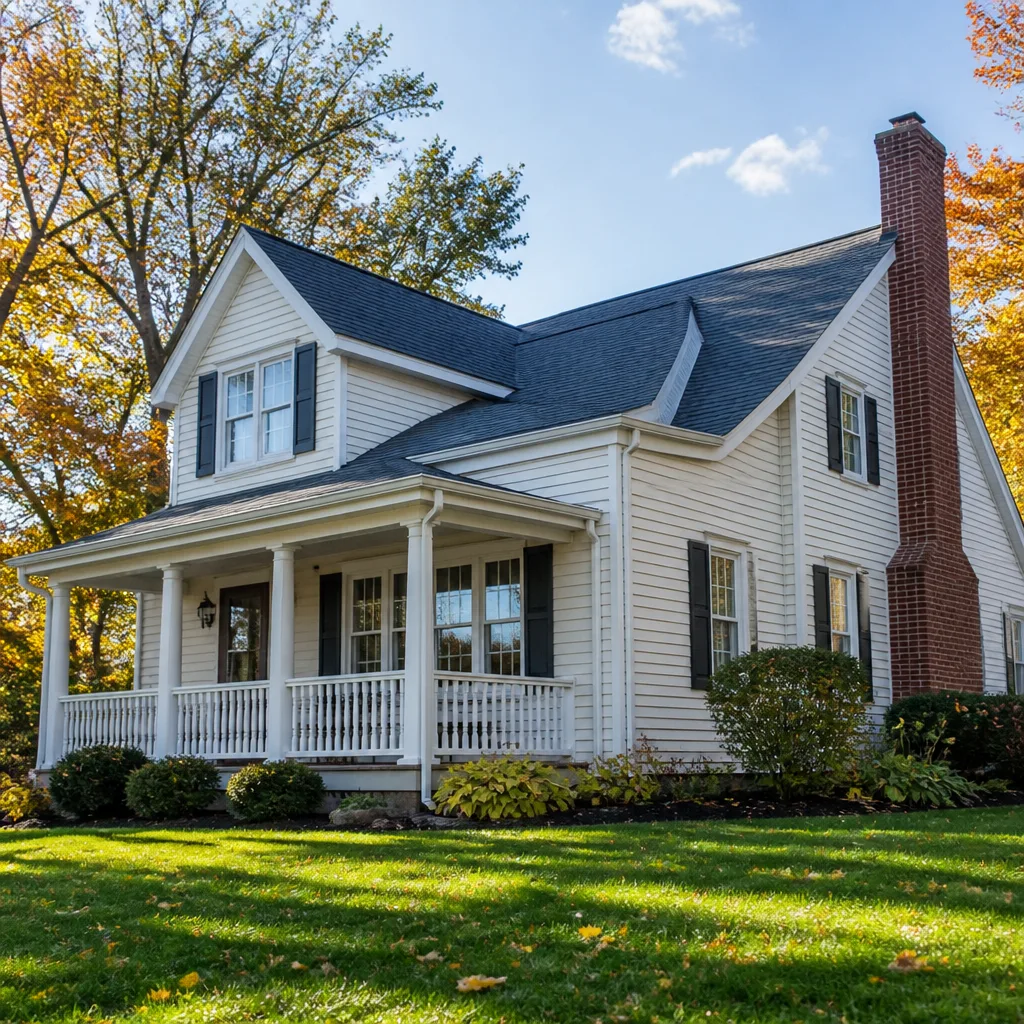
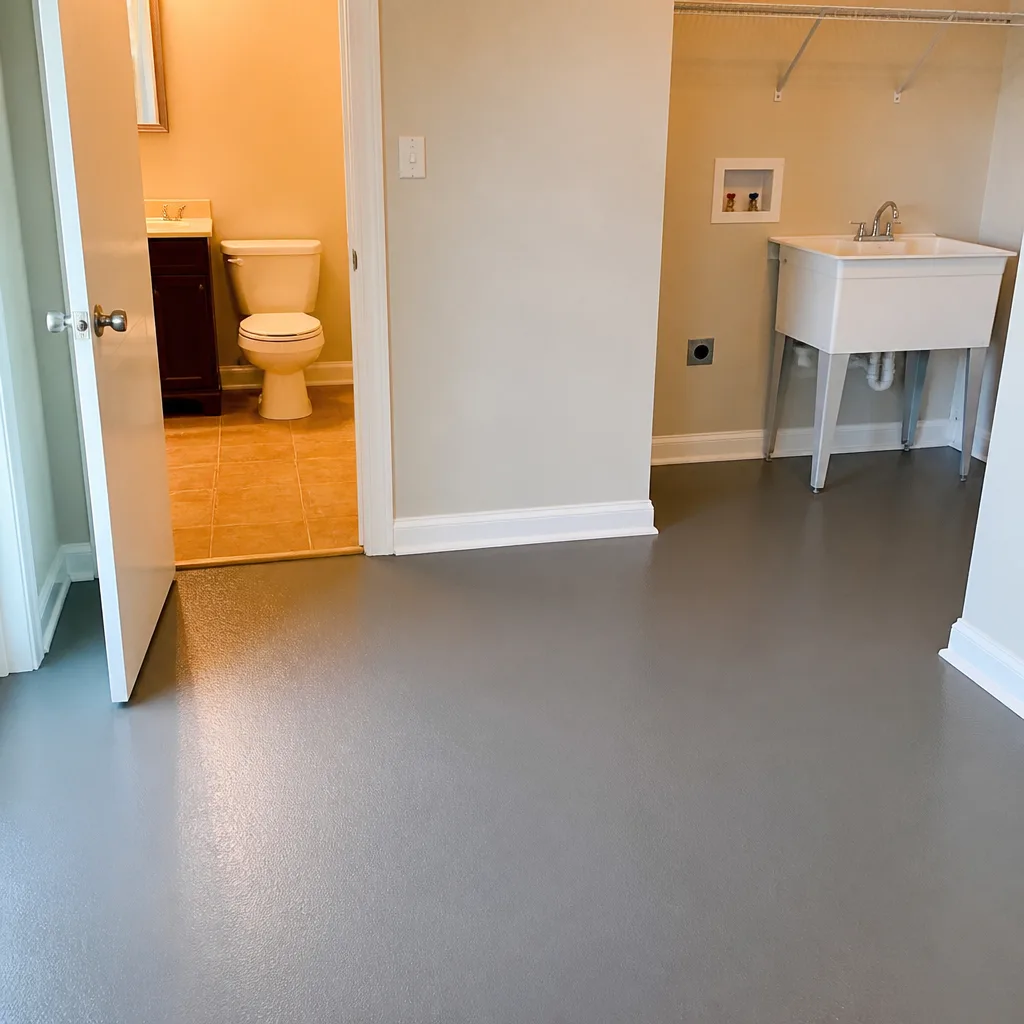
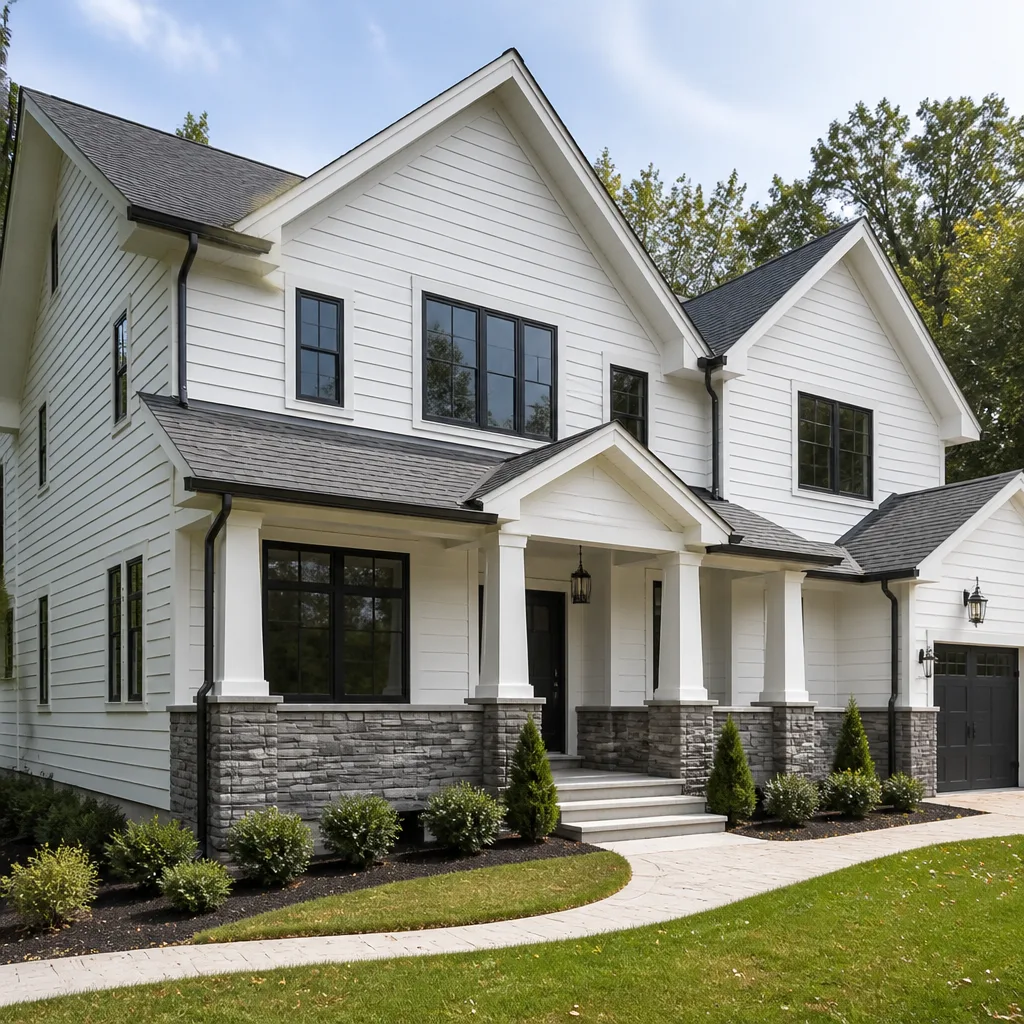
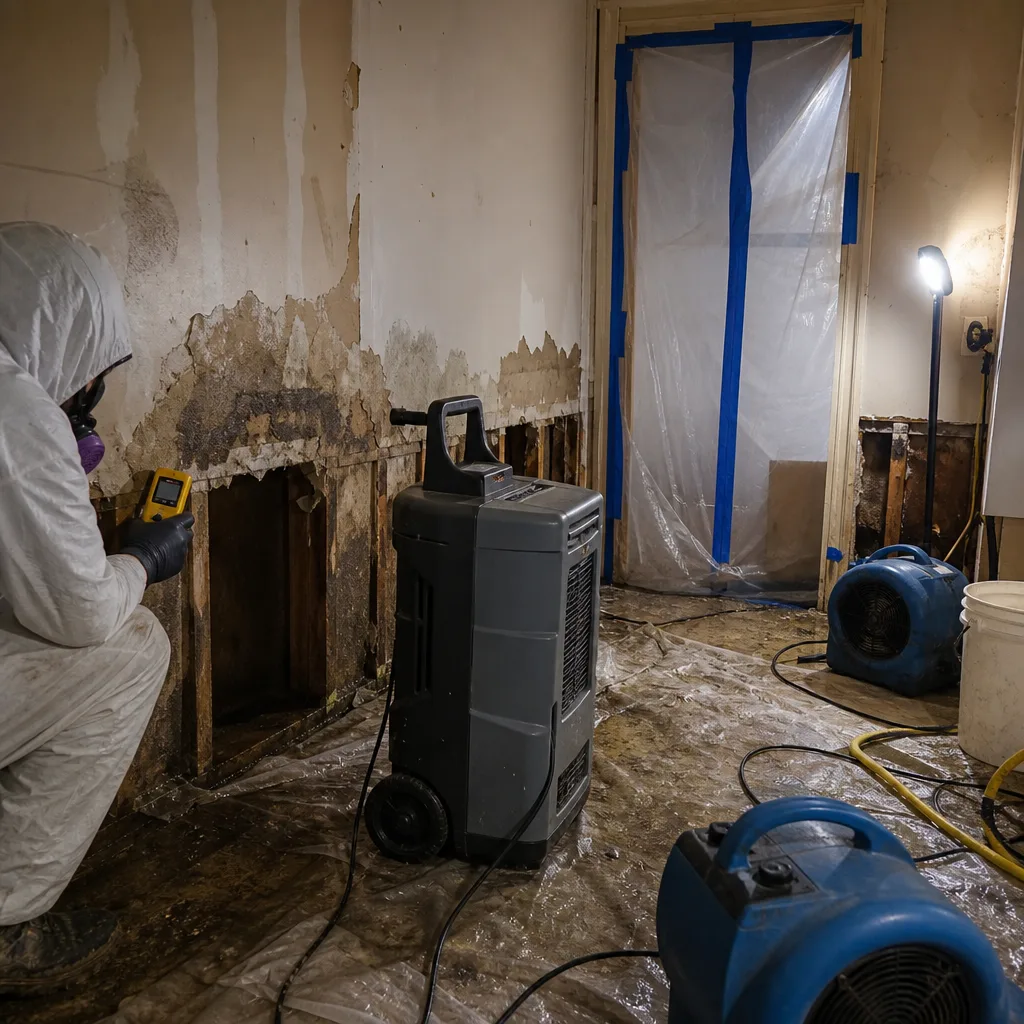 Before
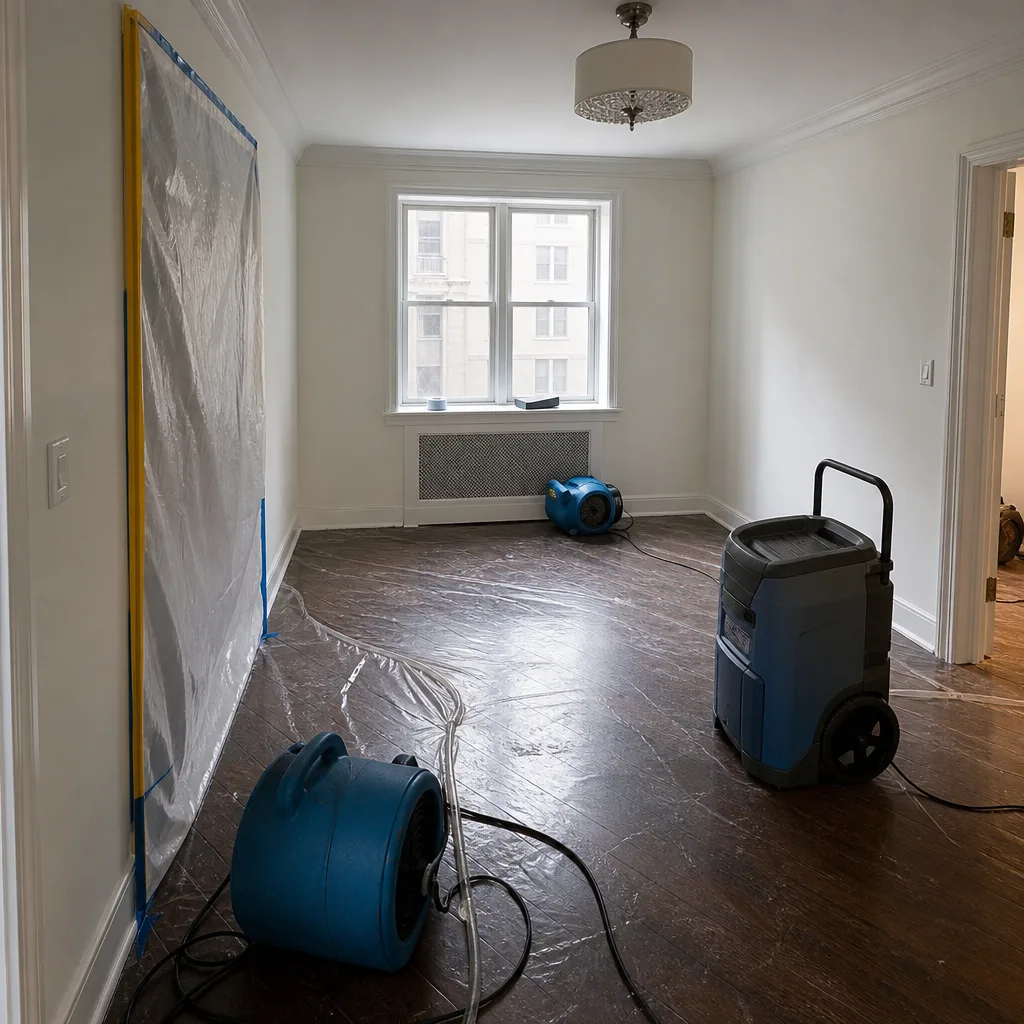 After
After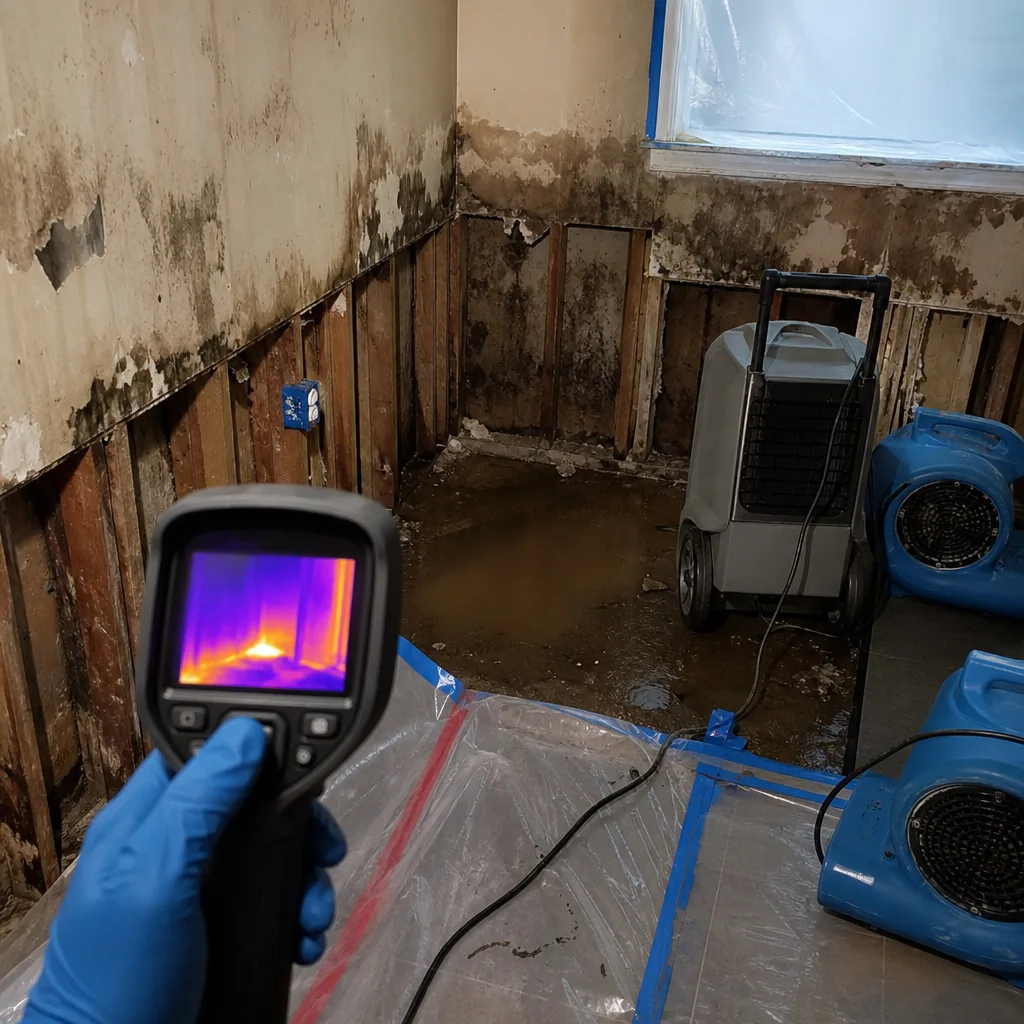 Before
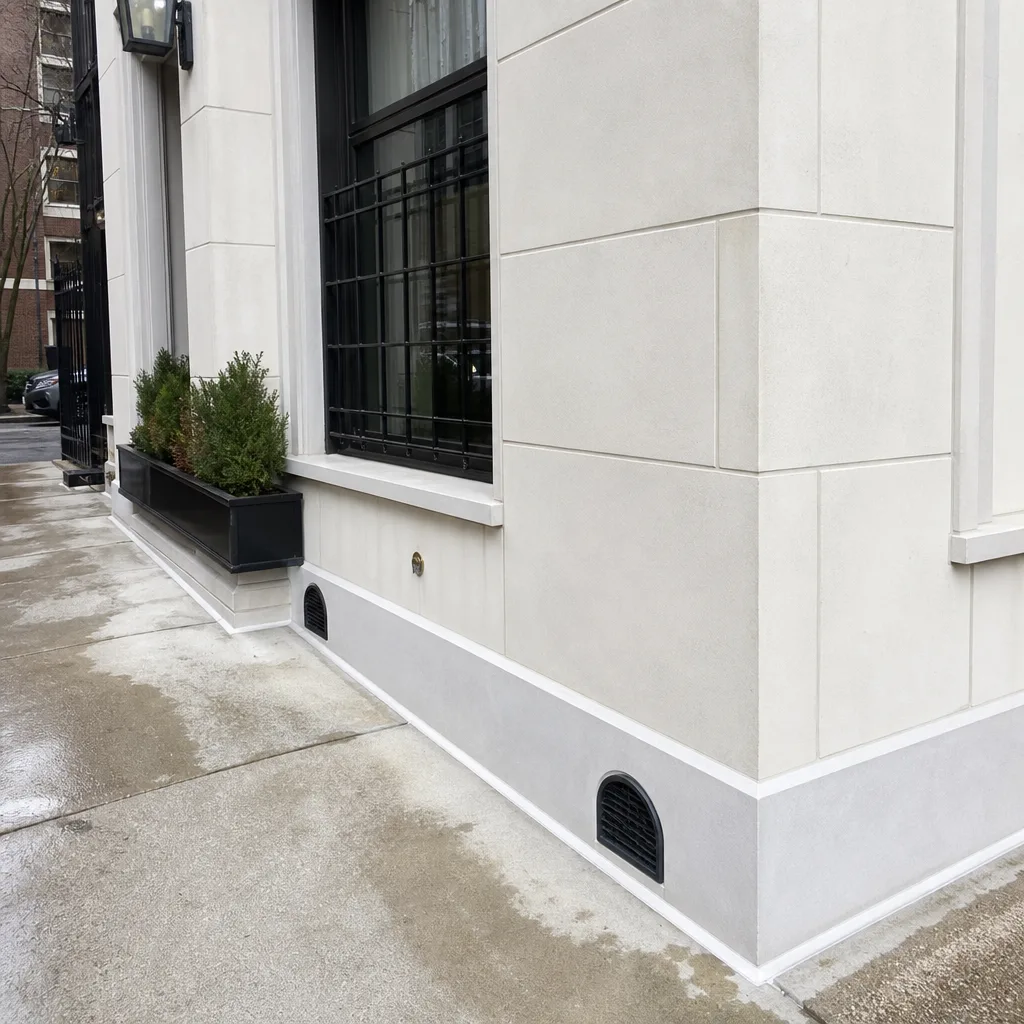 After
After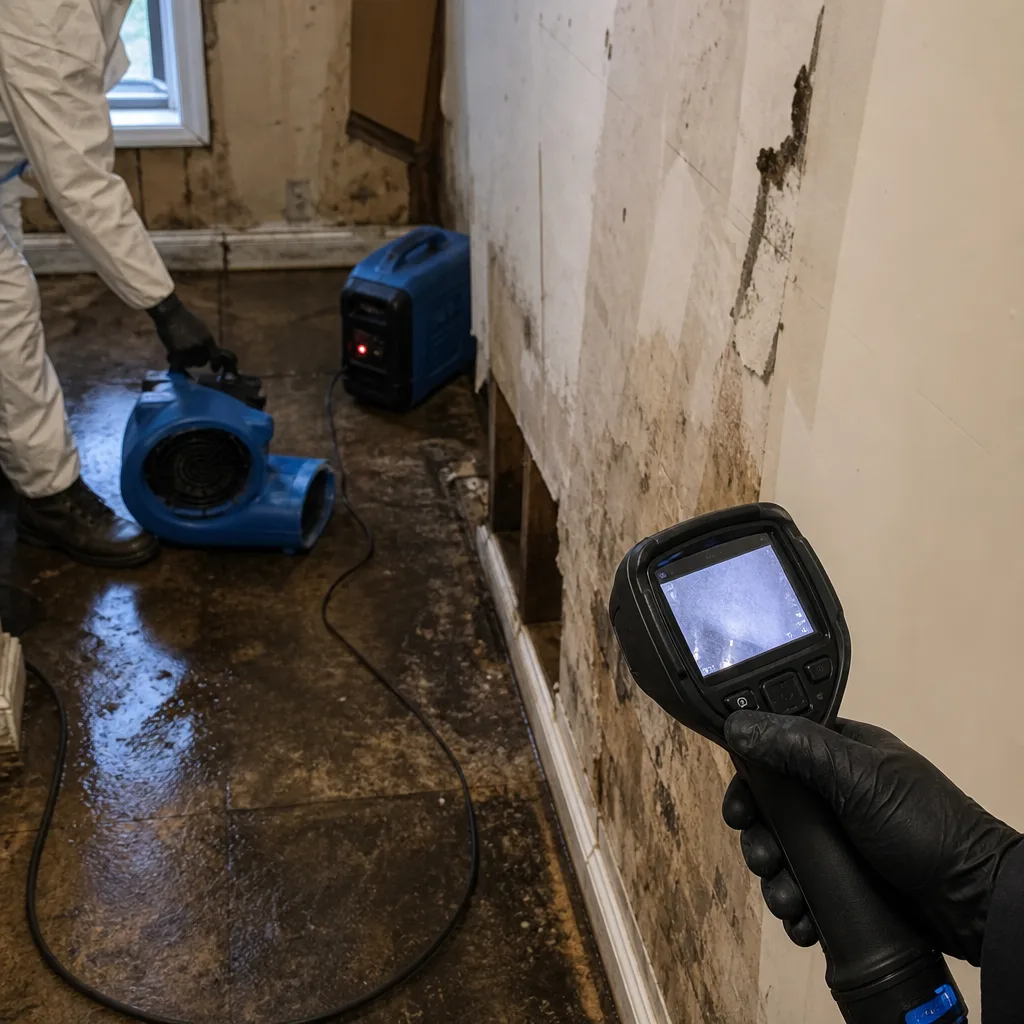 Before
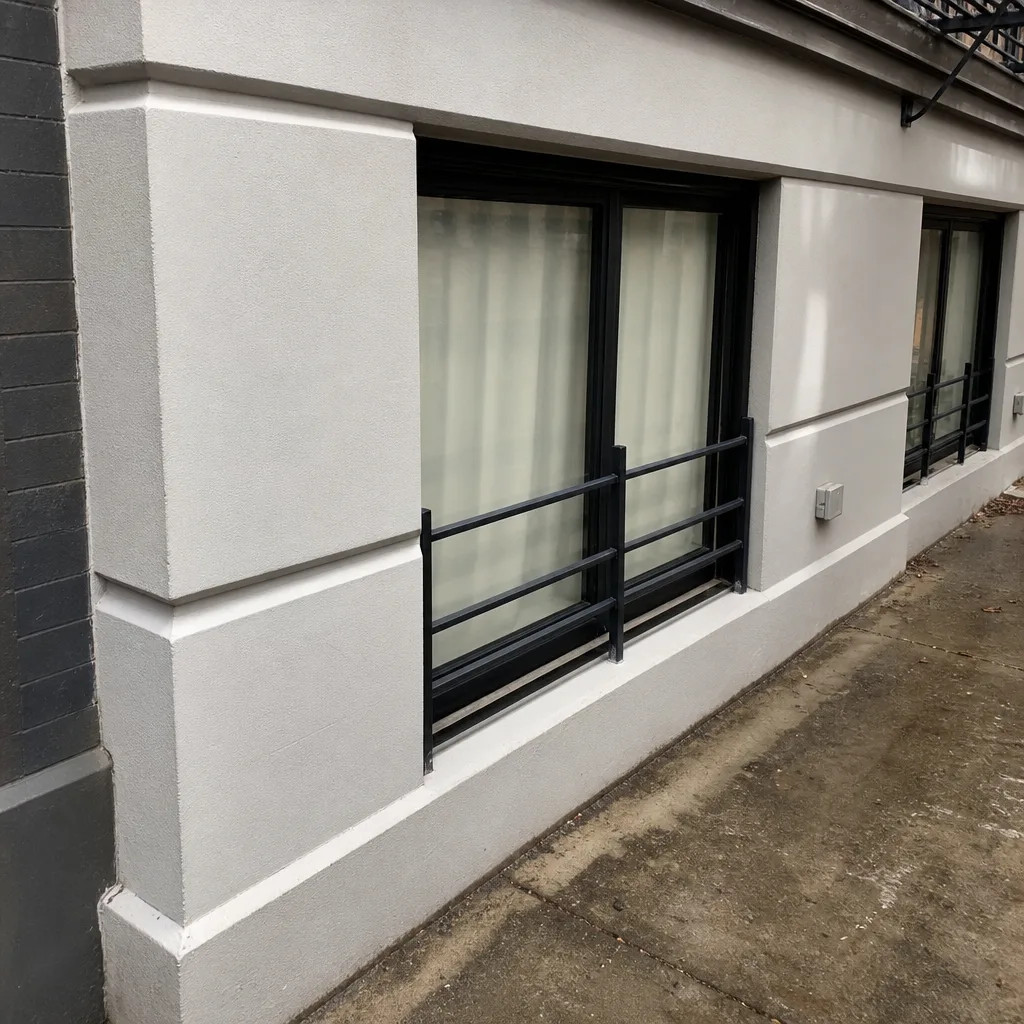 After
After24/7 Emergency Water Damage Restoration in Weehawken
Water damage in Weehawken moves fast, and so do we. Emergency water extraction in Weehawken typically runs $1,200-$4,500 depending on square footage and water category, and a crew can be at your door inside 45 minutes. Call (607) 703-3408 the moment you see standing water, a ceiling stain, or a soft spot in the wall. The first hour decides whether you’re drying out drywall or replacing it. Wade Ferris has answered his own phone at 2 a.m. since 2007, and he’ll answer yours tonight. We handle burst pipes in the bluff’s old brick rowhouses, storm surge in Port Imperial, and everything between. Free visual inspection, direct insurance billing, and a written scope before any work starts.
Understanding Water Damage Restoration Severity in Weehawken Properties
Water damage falls into three categories, and Weehawken sees all of them. Category 1 is clean water from a supply line or broken faucet. Category 2 carries contaminants, think washing machine overflow or sump pump discharge. Category 3 is grossly contaminated: Hudson River surge, sewage, storm runoff from the Palisades slope. The category dictates everything about the restoration approach, what gets torn out, what can be dried in place, and what antimicrobial treatment is required. In Weehawken’s upper bluff rowhouses, a Category 1 supply-line break in a century-old plaster wall is often worse than a Category 2 in a modern Port Imperial high-rise, because the old plaster wicks moisture upward and sideways, and the lathe behind it holds that water against the framing for weeks. We use thermal imaging to map moisture migration inside wall cavities, then confirm every reading with penetration probes. On the waterfront tier, we’re frequently dealing with concrete and steel rather than plaster and wood, which means the drying strategy shifts from air movement to dehumidification and vapor pressure management. Different buildings, different physics, same goal: get it dry and keep it dry.
Why Weehawken Property Owners Choose Wade’s Restoration
- 45-minute response commitment: Wade heads out from our metro dispatch and can have extraction running inside the hour for most Weehawken addresses.
- 24/7 live answer, every time: No voicemail, no answering service. Wade or a member of his crew picks up. At 3 p.m. or 3 a.m.
- IICRC-certified crews: WRT, ASD, and AMRT certifications on every water job, so the drying plan is built on science, not guesswork.
- Free visual inspection: We come out, assess the damage, and tell you straight what needs doing. No charge for that.
- Direct insurance billing: We deal with your adjuster directly and hand you the documentation. You’re never the one relaying information between two sides.
- One team from extraction to reconstruction: The same crew that pulls the water also rebuilds the wall. No hand-offs, no gaps.
Our Water Damage Restoration Process
Inspection & Assessment
We arrive, walk the property, and take moisture readings with hygrometers and thermal imaging. You get a written scope and a straight answer on what needs to happen. No pressure, no upsell.
Extraction & Stabilization
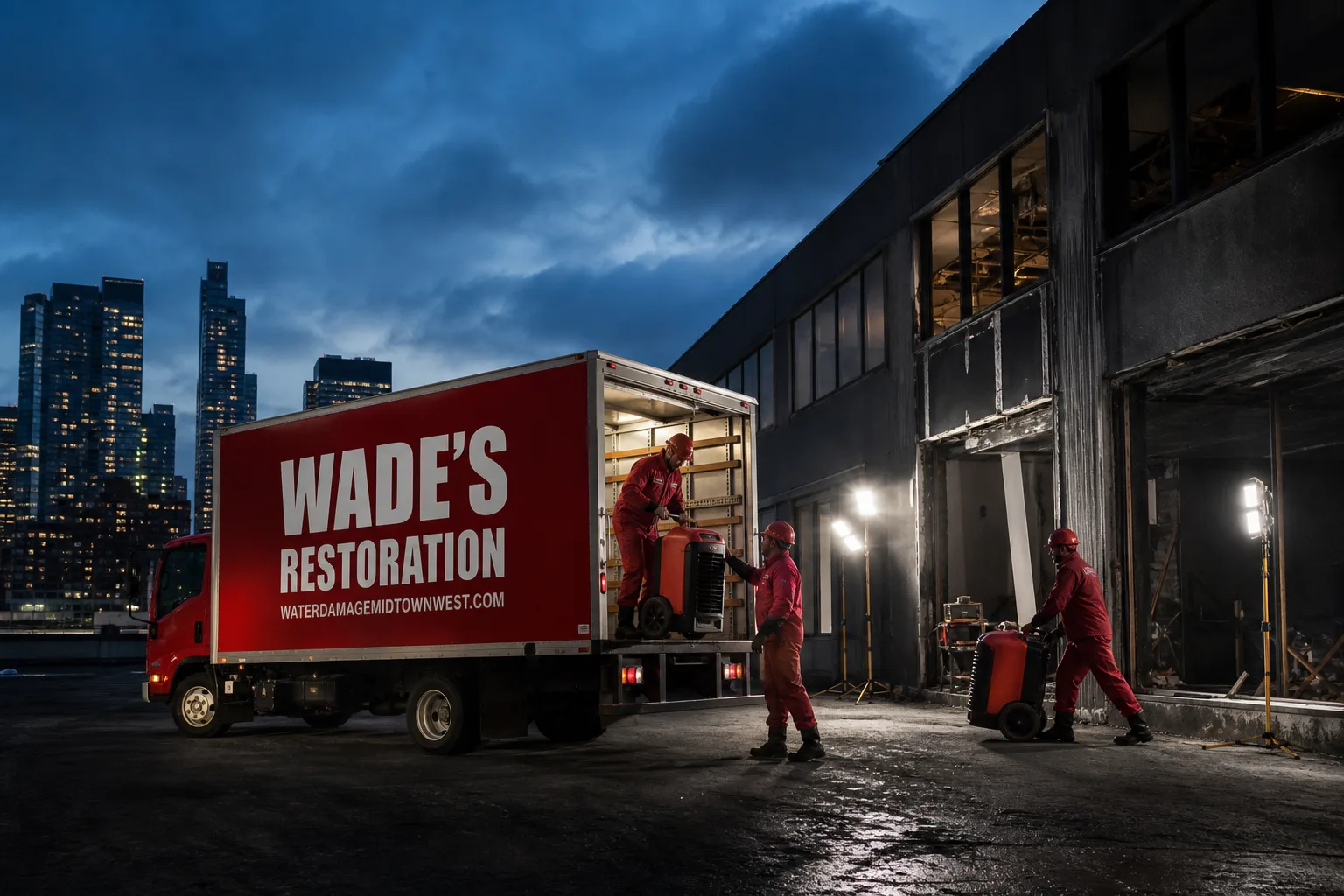
Standing water comes out first, using truck-mounted and portable extraction units from XPOWER and B-Air. We stabilize the area to stop the damage from spreading.
Drying & Dehumidification
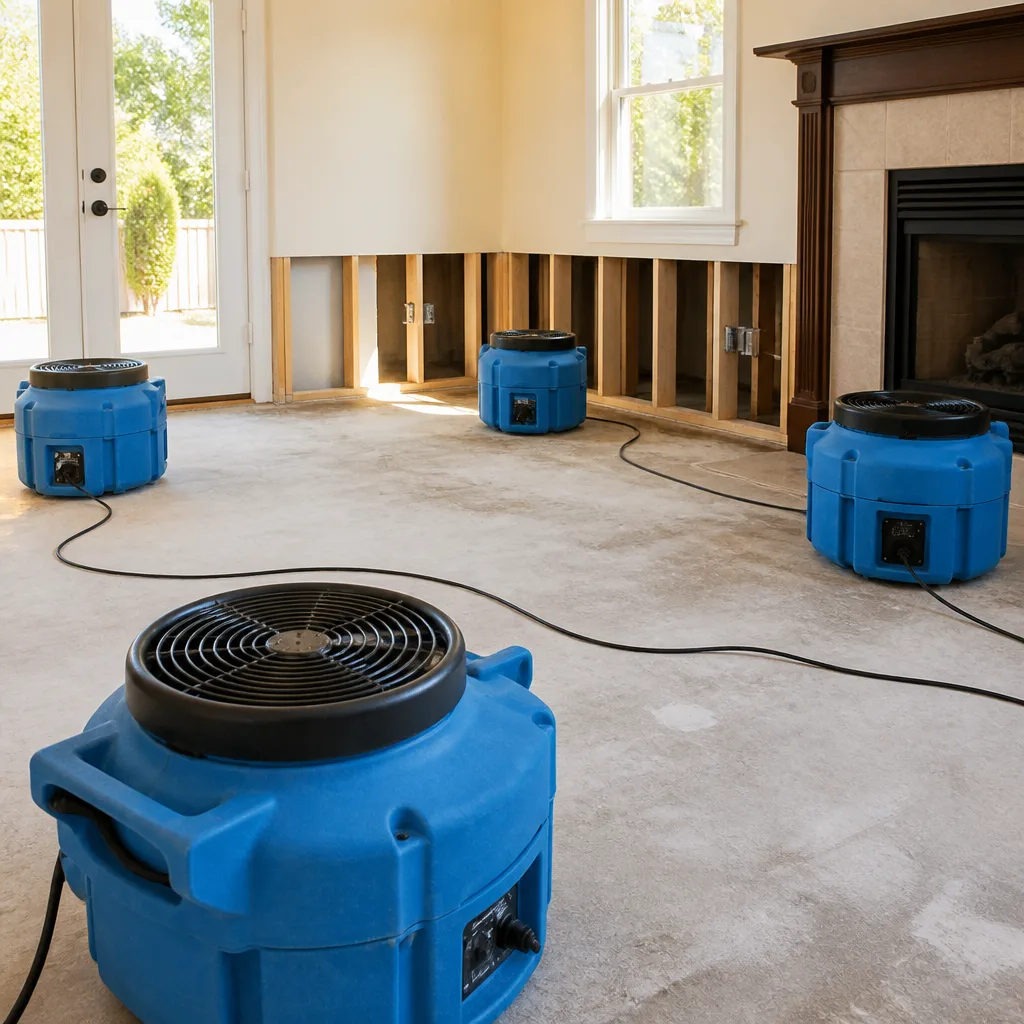
Industrial air movers and Phoenix dehumidifiers go to work. We take daily moisture readings and adjust the drying plan based on what the numbers say, not a calendar.
Cleaning & Sanitization
Affected surfaces get cleaned and treated with antimicrobial agents. For Category 2 and 3 water, we follow IICRC protocols for containment and disposal.
Specialty Treatment for Weehawken’s Older Stock
Plaster walls, old growth lumber, and century-old framing dry differently than modern drywall. We adjust airflow, dwell times, and dehumidifier placement for the building’s age and construction.
Repairs & Restoration
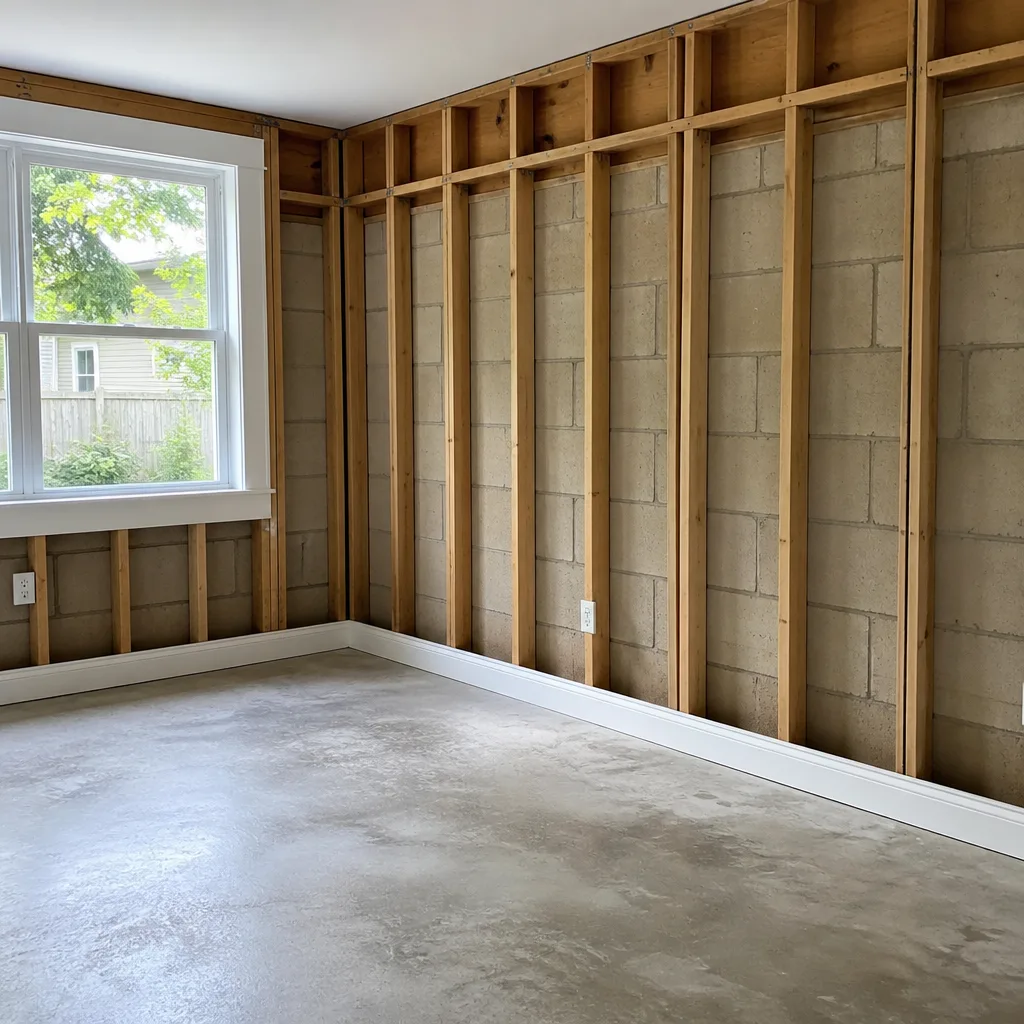
Once moisture readings hit target, we rebuild. Drywall, plaster repair, paint, trim, flooring, whatever’s needed to put your home back. One crew, start to finish.
Need Emergency Water Damage Restoration in Weehawken Now?
Crews minutes away, answering live 24 hours a day. The sooner we start, the less it costs.
Working With Your Insurance Company
Insurance is almost always in the room when water damage happens in Weehawken, whether it’s a burst pipe in a bluff rowhouse or a surge claim at Port Imperial. Wade’s crew documents everything from the first hour. Photos of every affected room, moisture logs updated daily, a line-item scope of work with unit costs. Wade deals with your adjuster directly. You don’t have to interpret what a dehumidifier is or why the plaster needs to come out. We give the adjuster the same documentation we give you, and we walk them through it in their language. It’s the single biggest trust unlock in this trade, and it’s been our standard practice since 2007. If the adjuster has questions, they call us. Not you.
What We Provide Your Insurer
- Thorough documentation of the loss
- Photos of all damage, room by room
- Moisture readings and drying logs
- A detailed, line-item scope of work
- Direct coordination with your carrier
Built for Weehawken’s Loss Calendar
Weehawken doesn’t have one water season. It has four, and they each hit differently. January and February bring deep freezes that burst aging cast-iron and galvanized supply lines in the bluff’s early 20th-century rowhouses. Those pipes were installed when freeze protection meant newspaper wrapped around the joint, and they’ve been quietly corroding for decades. March and April thaw triggers basement seepage in homes along Boulevard East and the streets stair-stepping down toward the river. The Palisades escarpment funnels snowmelt directly into old foundations. July and August bring thunderstorm downpours that overwhelm aging gutters and flat roofs, sending water through ceiling cavities in minutes. And September through November is nor’easter season, when the Hudson’s open fetch pushes surge toward Port Imperial and wind-driven rain lashes the upper bluff. If you live in Weehawken long enough, you’ll see all of them. We plan our staffing and equipment staging around exactly this calendar.
Water Damage Restoration Across Weehawken’s Neighborhoods
Weehawken compresses two entirely different built environments into barely a mile of width, and the restoration approach changes block by block. Up on the Palisades bluff, the streets around Highwood Terrace, Hamilton Avenue, and the Weehawken Township highlands are lined with century-old brick rowhouses and low-rise multi-families. We regularly see failed flat roofs there, the original membrane quietly giving out over decades until a ceiling stain finally shows. Job more often than not means opening a plaster ceiling, extracting Category 2 water from the cavity, and rebuilding with materials that match the original. Down at the river’s edge, Port Imperial and the waterfront tier around Lincoln Harbor are a different world: post-1990 high-rises with below-grade parking, elevator pits, and mechanical rooms that sit at near-sea-level on the open Hudson. Storm surge is the threat there, and the restoration conversation is about concrete slab saturation, moisture in elevator pits, and latent mold in utility corridors. In between, the neighborhoods along Park Avenue and the lower streets blend older frame construction with mid-century masonry. Each block tells you what kind of water problem you’re likely to have, and our Water Damage Restoration team treats each one accordingly.
Specialized Water Damage Restoration Services We Offer in Weehawken
Emergency Water Extraction
Standing water in a Weehawken basement or high-rise unit won’t wait. We run truck-mounted and portable extraction rigs through XPOWER and B-Air equipment, pulling hundreds of gallons per hour. For Port Imperial buildings, extraction often means getting into below-grade mechanical rooms and elevator pits, not just the unit itself. In bluff rowhouses, we’re pulling water out of basements that predate modern drainage, where the original stone or brick foundation holds moisture against the sill plate.
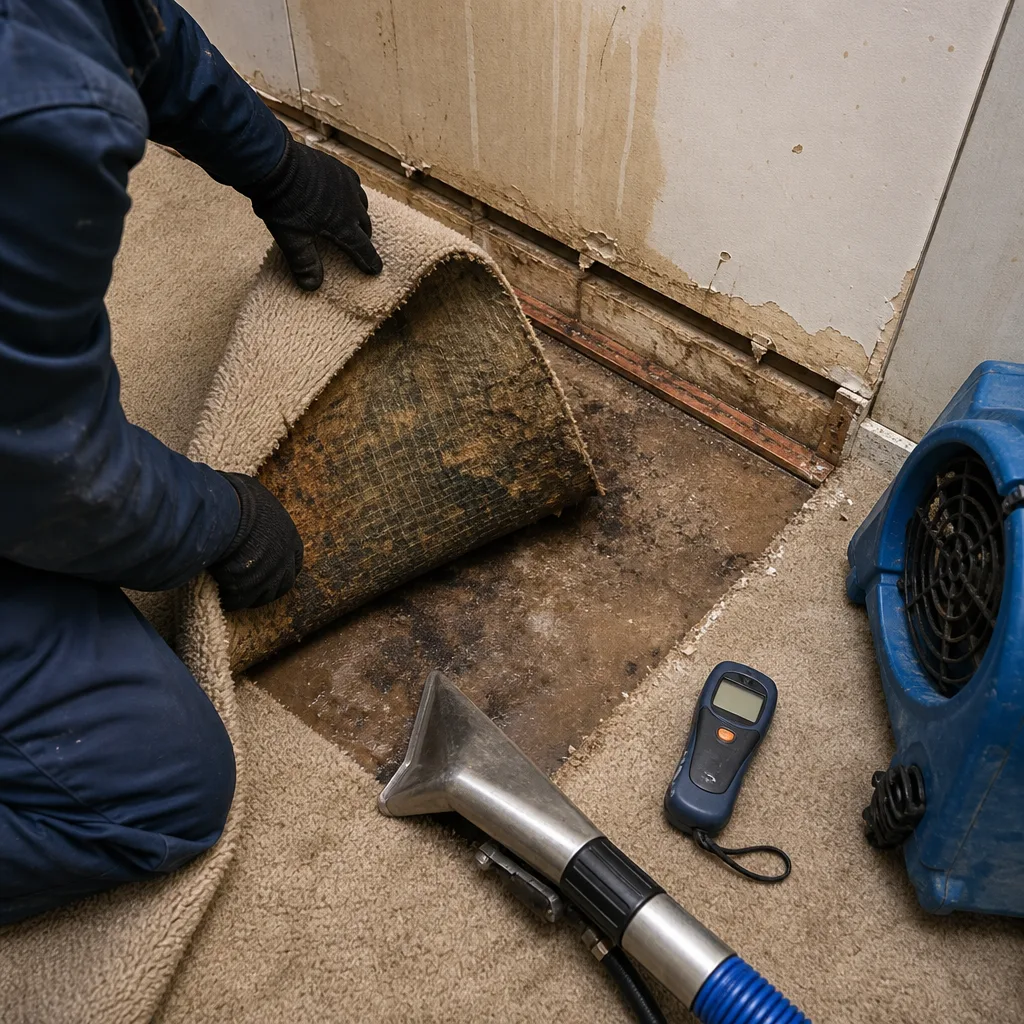
Structural Drying & Dehumidification
This is where daily moisture readings matter most. We set Phoenix dehumidifiers and air movers, then come back every single day to log readings and adjust the plan. Handing you the full moisture log at the end of the job isn’t something most contractors do. We do. It’s the only way to prove the structure is actually dry, not just dry-looking. Critical in old plaster rowhouses, where trapped moisture behind lathe can quietly rot framing for months after the visible stain is gone.
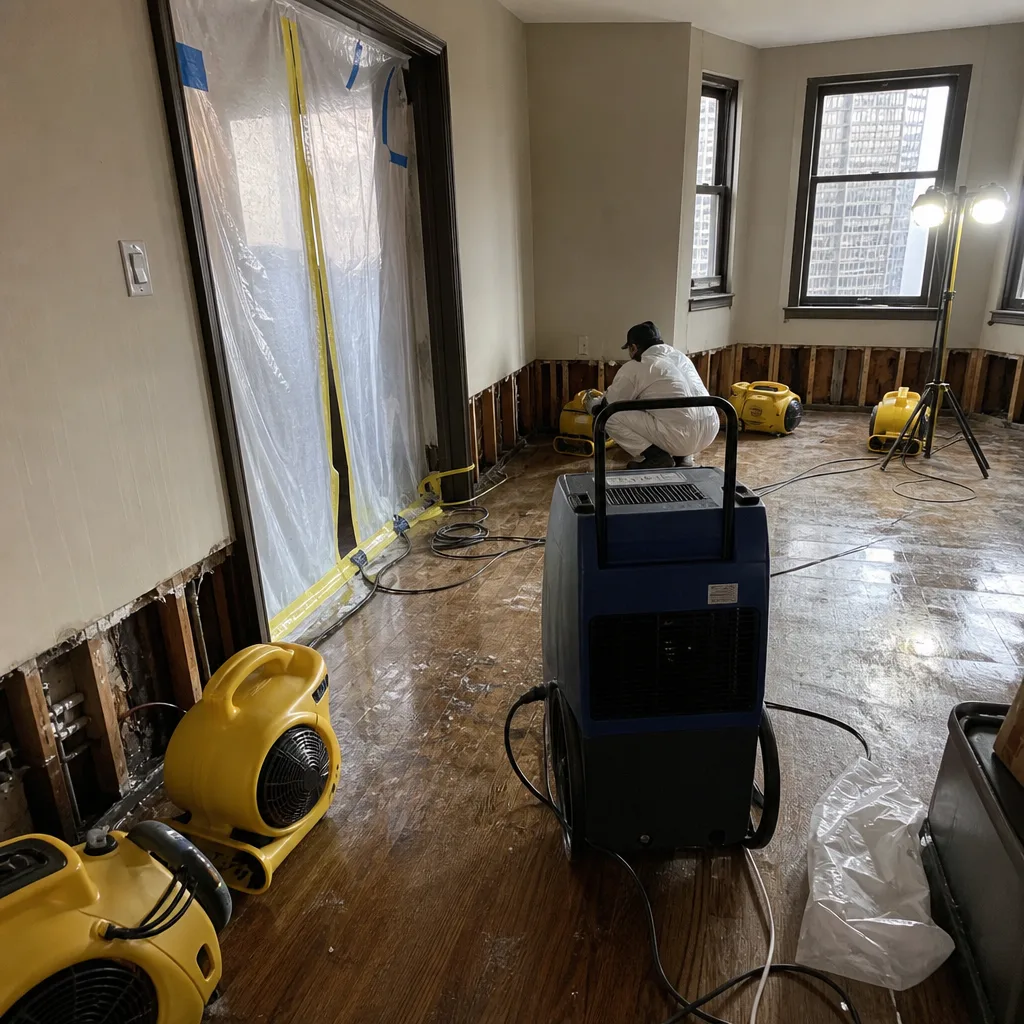
Flood Cleanup
Flood water in Weehawken means Category 3, especially at Port Imperial, where Hudson River surge carries silt, sewage, fuel residue, and whatever else the river picked up. We contain the affected area, extract, remove saturated materials, and apply antimicrobial treatment to IICRC standards. In Sandy’s aftermath, many waterfront buildings had visible damage addressed but trapped moisture never properly extracted. We still find those latent problems today.
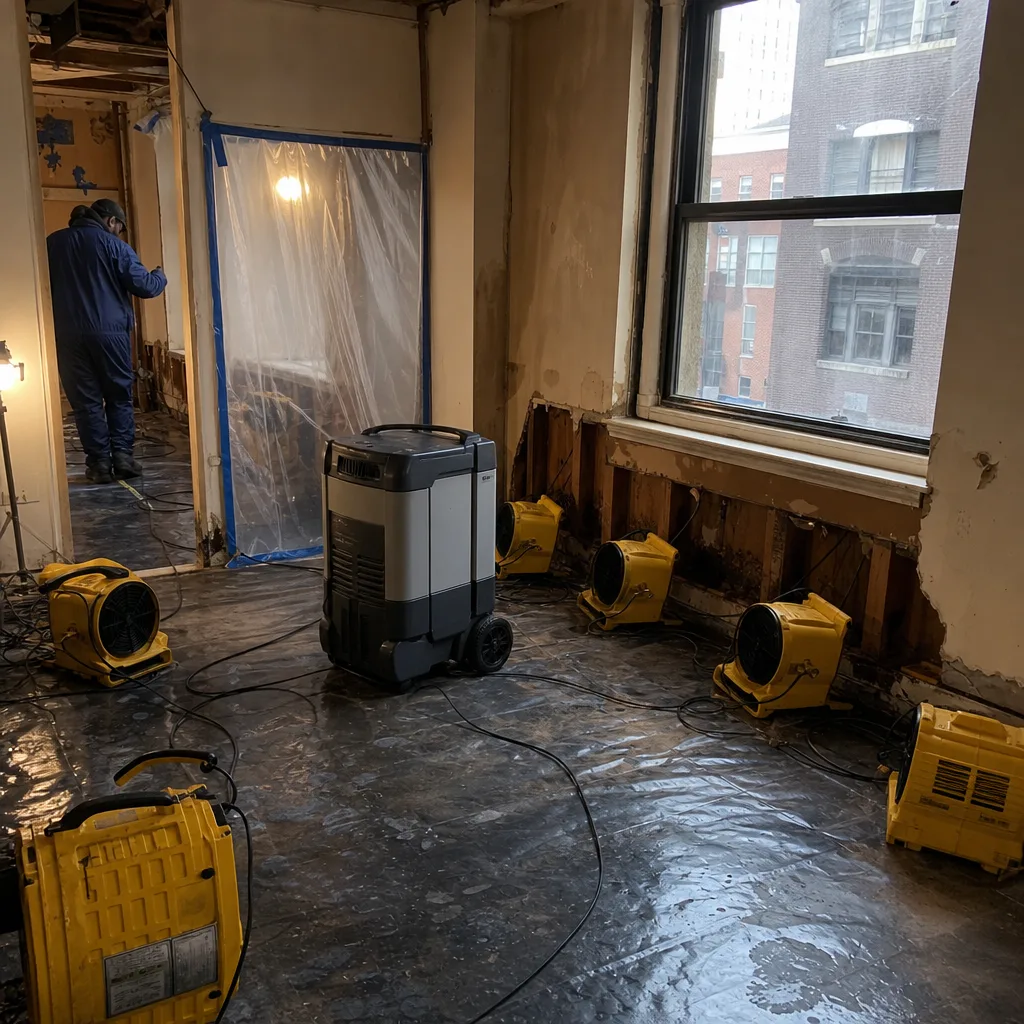
Burst Pipe Restoration
A burst supply line in a bluff rowhouse floods fast and soaks everything below. The cast-iron and galvanized pipes in Weehawken’s older stock fail under thermal stress every January. We shut off the line, extract, dry the structure, and rebuild the affected areas. Where the original pipe is still in place, we’ll tell you straight whether a patch makes sense or a full replacement is the honest call.
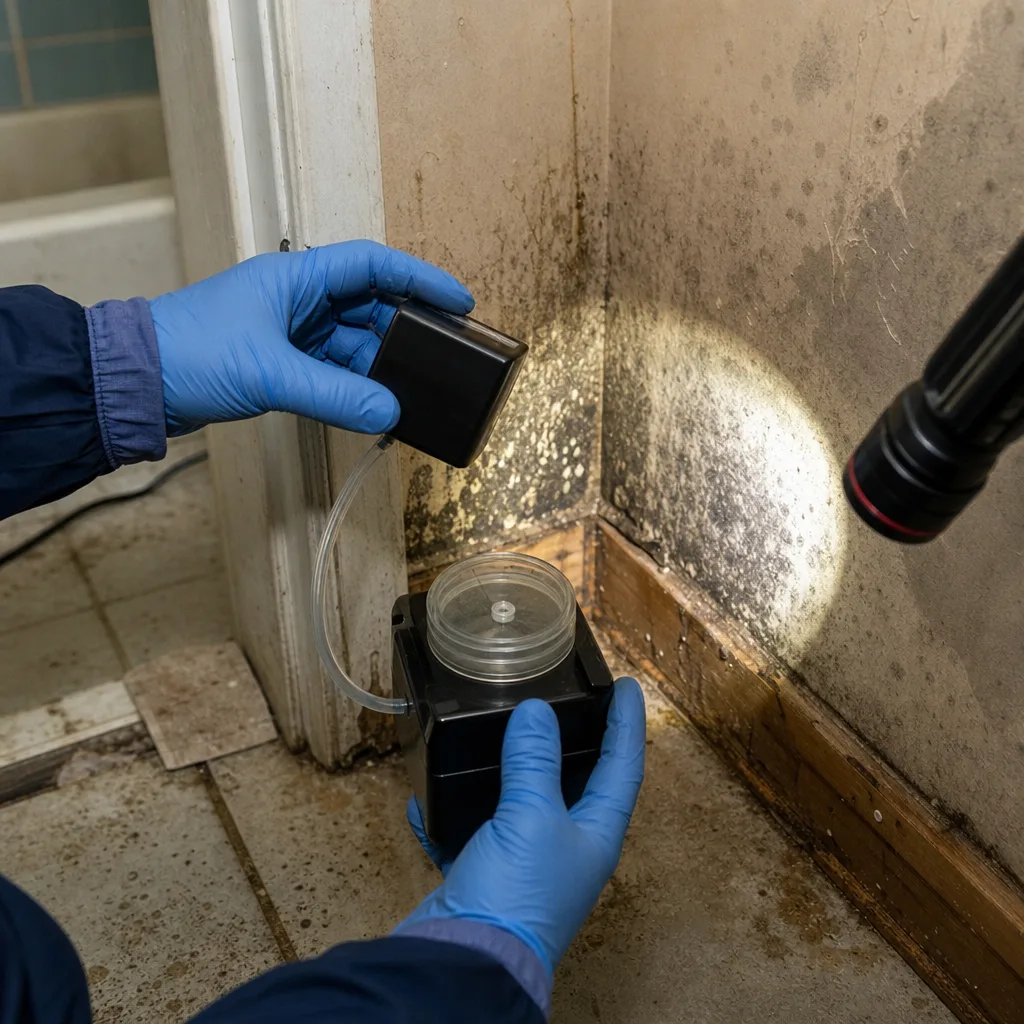
Basement Water Removal
Weehawken basements, particularly in the upper bluff’s older housing stock, tend to lack modern drainage and sump systems. Water from a burst pipe or seepage event collects quickly and stays. We extract, dry, and treat the space, then give you a straight assessment on what preventive steps would actually help, a sump pit, a French drain, regrading, without overselling you on work you don’t need.
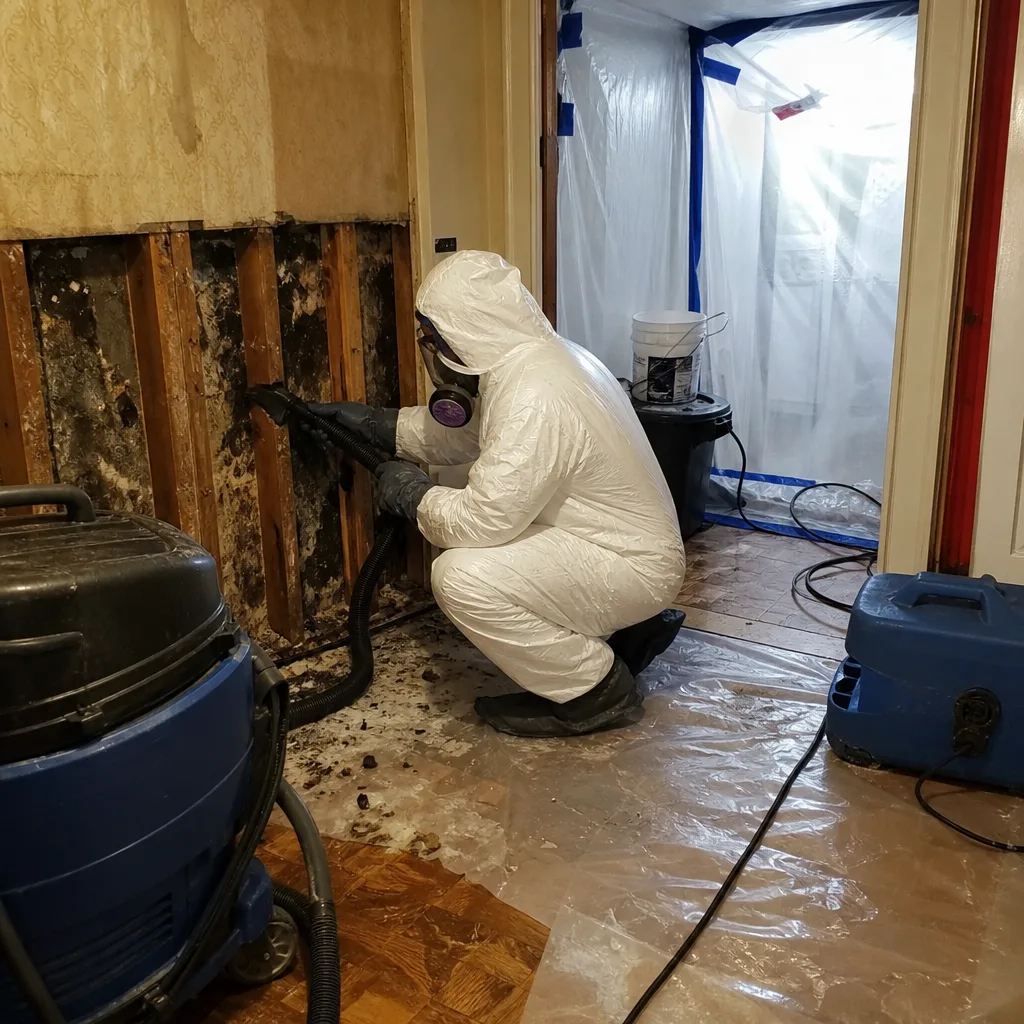
What happens when you call
- 1
A real person answersNo phone trees - you reach a local pro.
- 2
You get an upfront price rangeHonest numbers before anyone is dispatched.
- 3
A background-checked tech heads outLicensed & insured, dispatched right away.
- 4
You approve before work beginsNothing starts until you say go.
Water Damage Restoration Costs in Weehawken, NJ
Straight numbers for Weehawken’s market. A typical emergency water extraction runs $1,200-$4,500 depending on the affected square footage and water category. Structural drying with daily moisture monitoring adds $900-$2,800 for most single-floor incidents. A burst pipe restoration in a bluff rowhouse, including dry-out and rebuild, commonly falls between $3,500 and $12,000. A full basement flood cleanup with Category 3 water, containment, and antimicrobial treatment runs $5,000-$18,000 in Weehawken, with waterfront high-rise work trending toward the higher end due to access and elevator logistics. What moves the price: water category, affected square footage, building age, whether plaster or modern drywall is involved, and how quickly the water was discovered. Insurance covers most sudden and accidental water events, a burst pipe, a supply-line failure, a storm opening in the roof. Gradual damage, like a slow leak that’s been running for months, often isn’t covered, and that’s a conversation we’ll have with you straight before any work starts. The free visual inspection gives you a firm, written scope. No charge for that.
We Also Serve Cities Near Weehawken
Weehawken sits at the center of our Hudson County coverage. We regularly work in Union City on the plateau above, Hoboken to the south along the river, North Bergen to the north, and Secaucus to the west. Same 45-minute response commitment, same live 24/7 answer, same written scope before work starts. If you’re in any of those towns and water’s rising, call (607) 703-3408.
Weehawken Water Damage Restoration Questions, Answered
What makes Water Damage Restoration in Weehawken’s Port Imperial high-rises different from inland Hudson County towns?
Port Imperial sits at near-sea-level on the open Hudson, meaning storm surge and river flooding are the dominant water threats, while inland towns like Union City deal mostly with pipe failures and roof leaks. High-rise restoration also means working around below-grade parking, elevator pits, and concrete slab saturation, and moisture in concrete behaves very differently from moisture in wood framing. Drying a concrete slab takes longer and requires different equipment placement than drying a wood-framed wall, and buildings that saw Sandy-era flooding often have trapped moisture in utility corridors that was never properly extracted. Call (607) 703-3408 and we’ll walk the building with you to assess what you’re actually dealing with.
How do you dry out a plaster-wall rowhouse on the Weehawken bluff without tearing out original finishes?
Plaster walls wick water upward and sideways, so the first step is always moisture mapping to see exactly how far the water traveled inside the wall cavity. We then set up containment, use air movers and dehumidifiers in a controlled configuration, and monitor daily to bring moisture content down to target before any finish work. In many cases the original plaster can be saved, but when the lathe behind it is saturated, that section has to come out and be rebuilt with period-appropriate materials. We’ll tell you which path your walls need before we touch anything. Estimates are free at (607) 703-3408.
Why do some Weehawken waterfront condos still have mold years after Sandy?
Because the visible damage was addressed in 2012 and 2013, but trapped moisture in concrete slabs, elevator pits, and utility corridors was never properly extracted. Water that sits inside concrete or behind finished walls without adequate dehumidification leaves latent mold colonies that re-emerge whenever HVAC systems are disturbed or units are renovated. We still encounter Sandy-era moisture in Port Imperial buildings today, and the fix starts with proper moisture mapping and full extraction, not just surface cleaning. Call (607) 703-3408 for an honest assessment.
How quickly should I call for emergency water extraction in Weehawken after a burst pipe?
Immediately. The first hour determines whether you’re drying drywall or replacing it. A burst pipe in an older bluff rowhouse can soak plaster, framing, and flooring within minutes, and mold colonization starts within 24 to 48 hours if the area isn’t properly dried. Call (607) 703-3408 right away and Wade can have extraction running inside the hour. The sooner we start, the less it costs.
Can you mitigate a roof leak in a Weehawken rowhouse if the roof has failed over decades?
Yes, and it’s a job we do regularly on the upper bluff, where original flat and low-slope roofs quietly fail over years before anyone notices the stain. We can extract the water from the ceiling cavity, dry the structure, and rebuild the affected plaster and framing. The roof itself is a separate trade, but we’ll document the damage thoroughly and coordinate with your roofer so the restoration work isn’t undercut by the next rainstorm. Call (607) 703-3408 for a free visual inspection.
How long does structural drying take in Weehawken’s older homes?
Most single-room drying jobs in Weehawken’s bluff rowhouses take three to five days with daily moisture monitoring. Plaster walls and old-growth framing dry slower than modern drywall and dimensional lumber, and the persistently elevated humidity near the waterfront tier can add a day or two compared to inland Hudson County. We adjust the drying plan daily based on moisture readings, and we hand you the full hydration log when the job is done. Estimates are free at (607) 703-3408.
Will my insurance cover water damage restoration in Weehawken?
Most sudden and accidental water events are covered, a burst pipe, a supply-line failure, or a storm opening in the roof. Gradual damage, like a slow leak that’s been running for months, often isn’t. The honest answer is that it depends on your policy and the source of the water. We document everything from the first hour, provide your insurer with photos, moisture logs, and a line-item scope, and deal with your adjuster directly. Call (607) 703-3408 and we’ll help you sort out the coverage question before any work starts.
What should I do in the first 30 minutes after water damage in Weehawken?
Shut off the water source if you can do it safely. Kill power to the affected area if water is near outlets or electrical panels. Move valuables and furniture out of the water. Then call (607) 703-3408. Don’t use a household vacuum to extract water, don’t run HVAC if the system was affected, and don’t tear out drywall or plaster yourself, you may damage salvageable materials or spread contamination. The first hour is the most important, and Wade’s crew can be there inside 45 minutes.
Serving Weehawken, NJ - Our Local Coverage Area
We’re based in the Weehawken area and know this community well. Use the map below to see our service coverage - if you’re nearby, we can almost certainly help.
The One Local Insight That Changes Everything
Weehawken’s waterfront tier at Port Imperial sits at near-sea-level on the open Hudson, making it uniquely vulnerable to storm-surge flooding that inland Hudson County towns like Union City do not share. Superstorm Sandy’s flooding of below-grade garages and ground-floor units in 2012 proved exactly what happens when the river comes up: concrete slabs saturate, elevator pits fill, and utility corridors become standing water reservoirs. Fixing that kind of damage is not a drywall-and-paint job. It requires core drilling into saturated concrete, proper dehumidification over extended periods, and sometimes partial demolition to reach trapped moisture. A decade later, we still walk into Port Imperial buildings and find Sandy-era moisture that was never properly addressed. If you’re in one of those buildings and you’ve noticed a musty smell when the HVAC kicks on, or mold returning after a renovation, that’s the signature of old trapped water. Our crew was called to a century-old brick rowhouse on Highwood Terrace after a ceiling leak from a failed flat roof soaked original plaster walls. We used moisture mapping to trace water migration, set up containment and air movers, and extracted Category 2 water from the ceiling cavity before dehumidification and antimicrobial treatment returned the space to pre-loss condition. That’s the full scope of what we deal with in Weehawken: old buildings with old building problems, new buildings with complex below-grade challenges, and a river that’s always right there.
Written by Wade Ferris, Owner at Wade’s Restoration, serving Weehawken and surrounding Hudson County communities since 2007.