
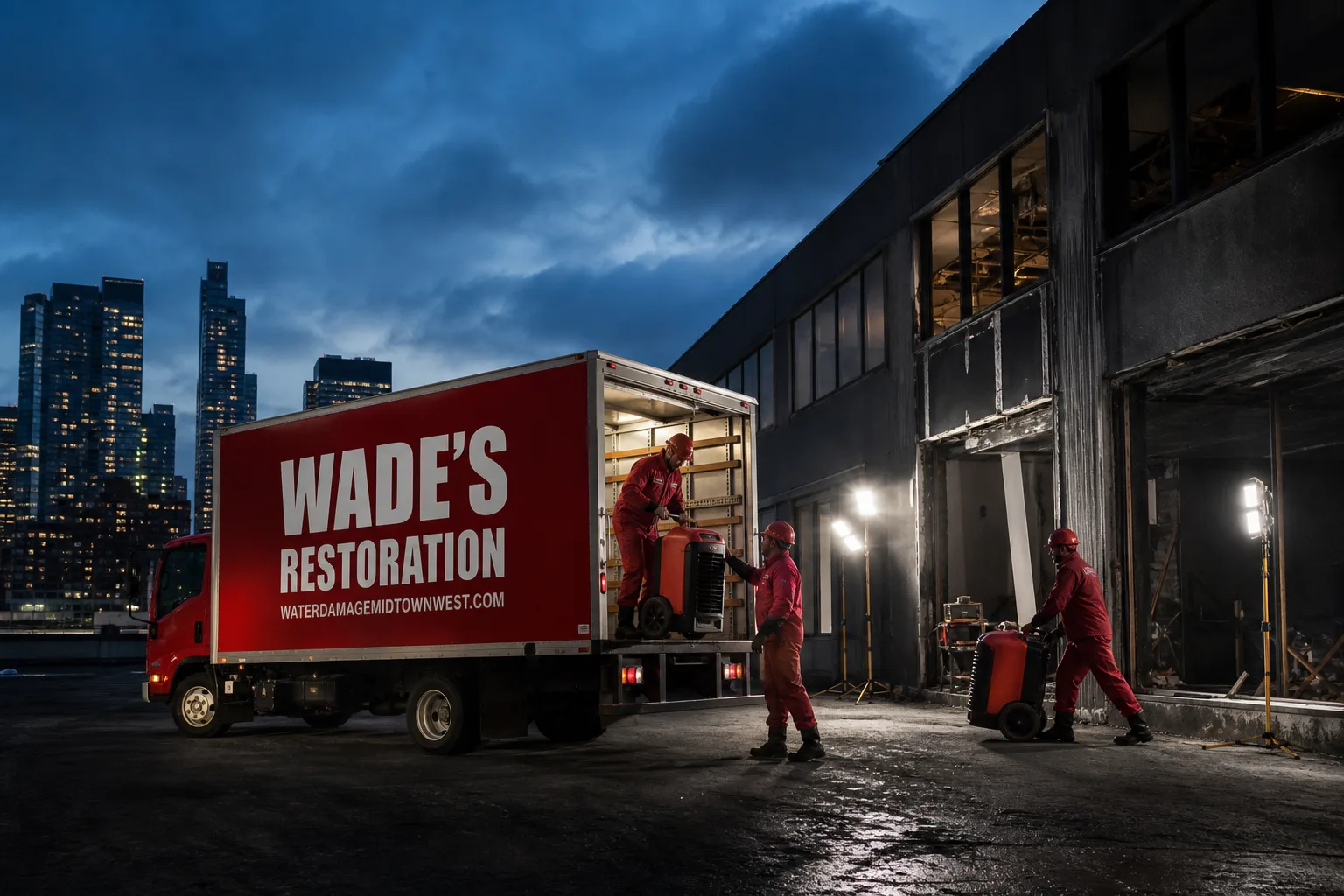
Free visual inspection and a written scope of work before any mitigation begins - photos, moisture readings, and drying logs go in your claim file
The scope we write is the scope we bill. Anything new gets shown to you, in writing, before we touch it.
 Before
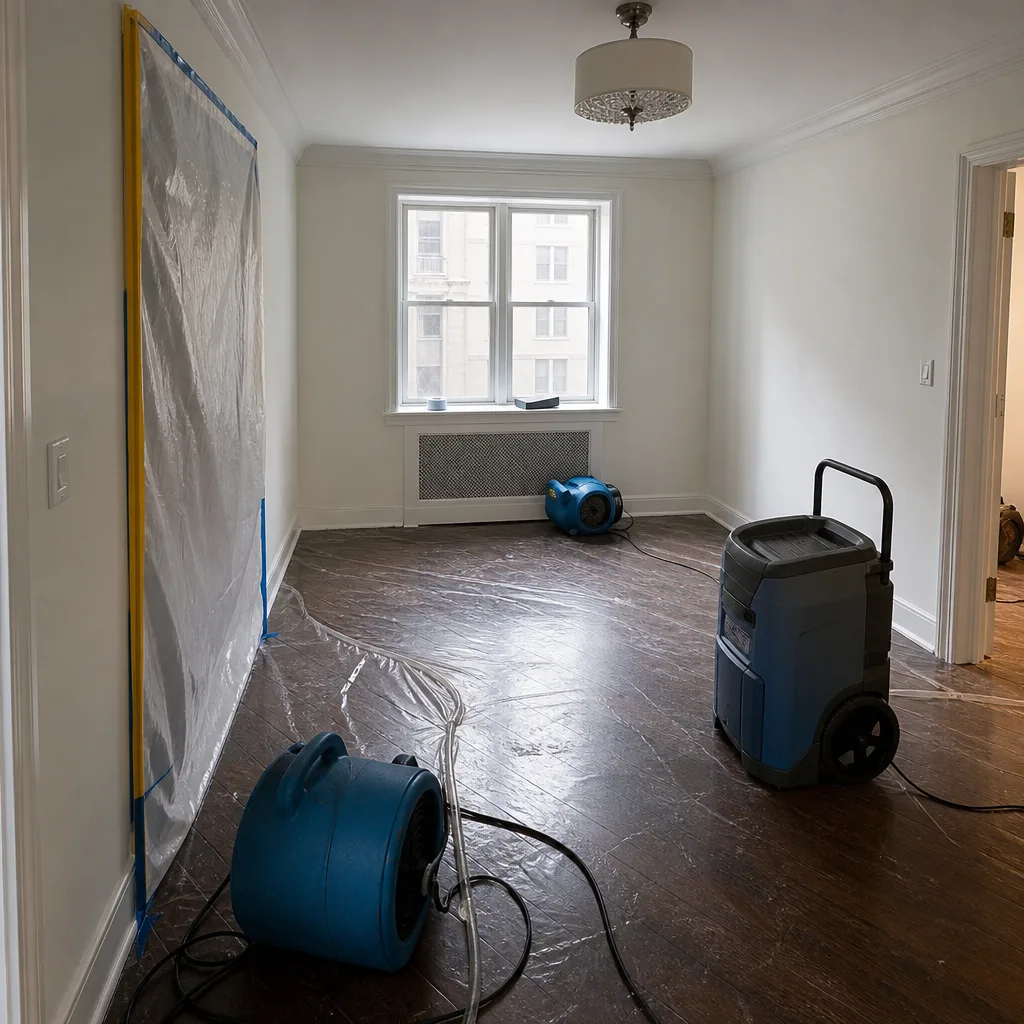 After
After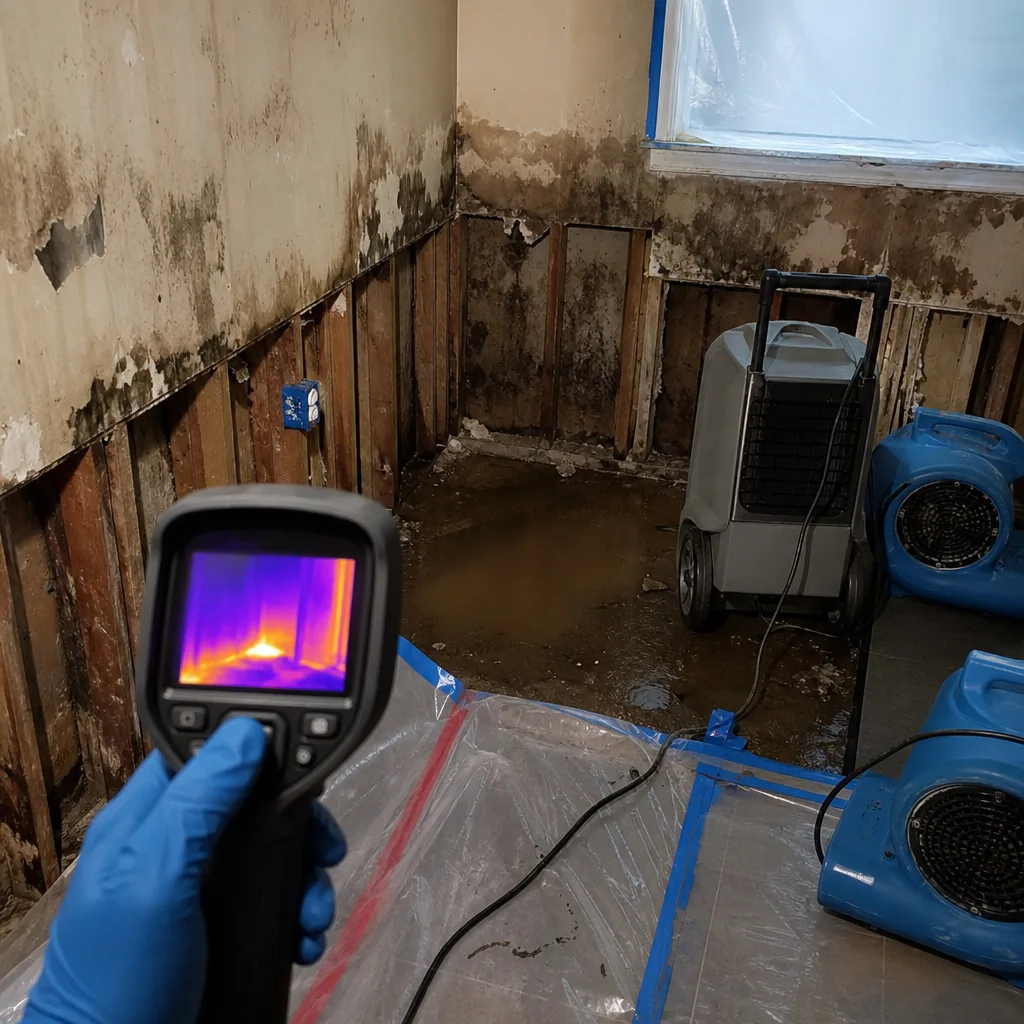 Before
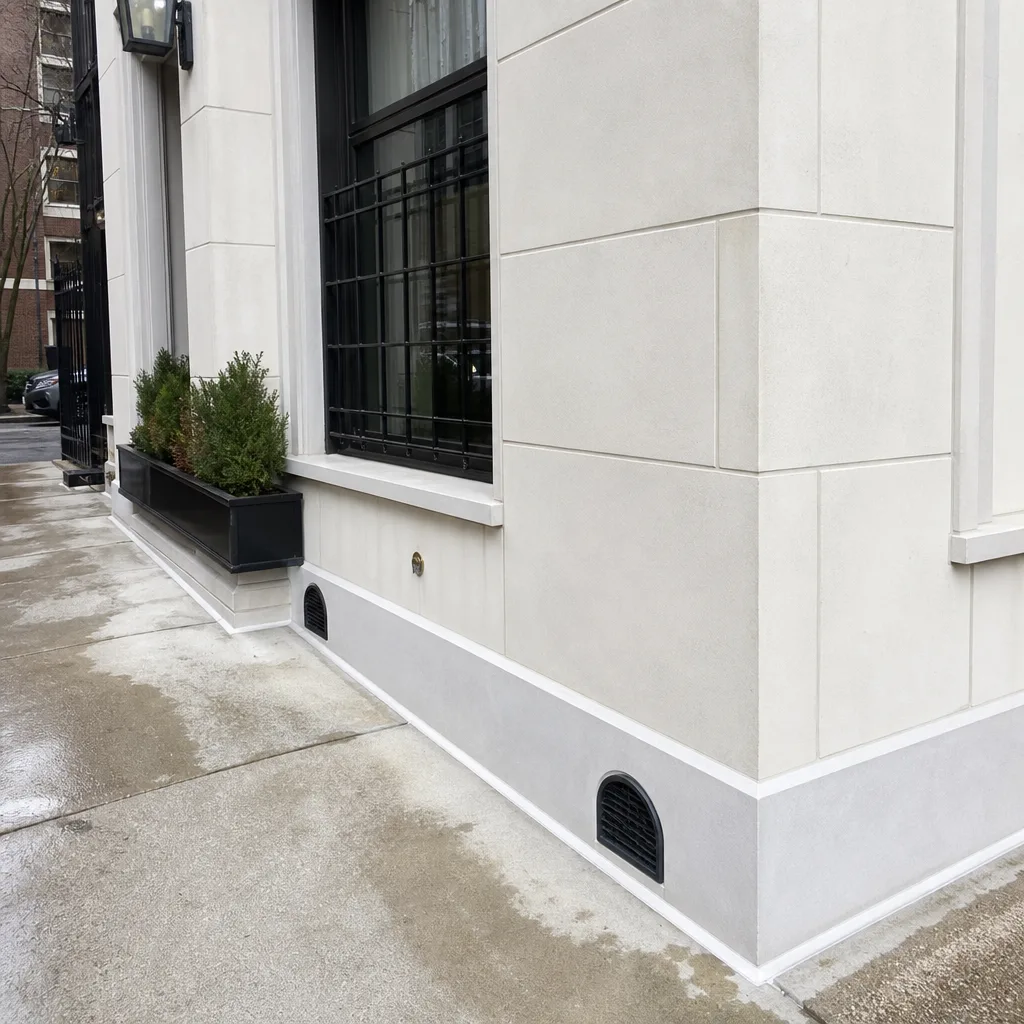 After
After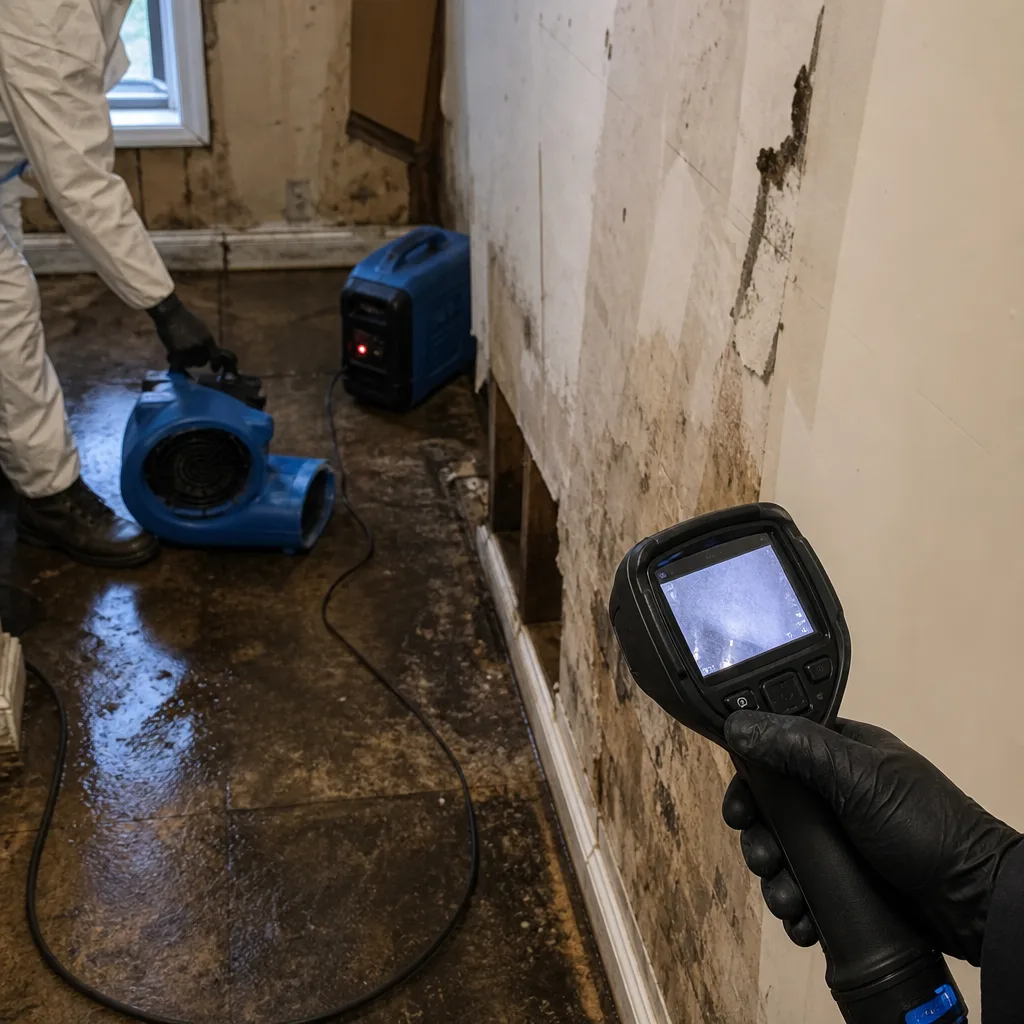 Before
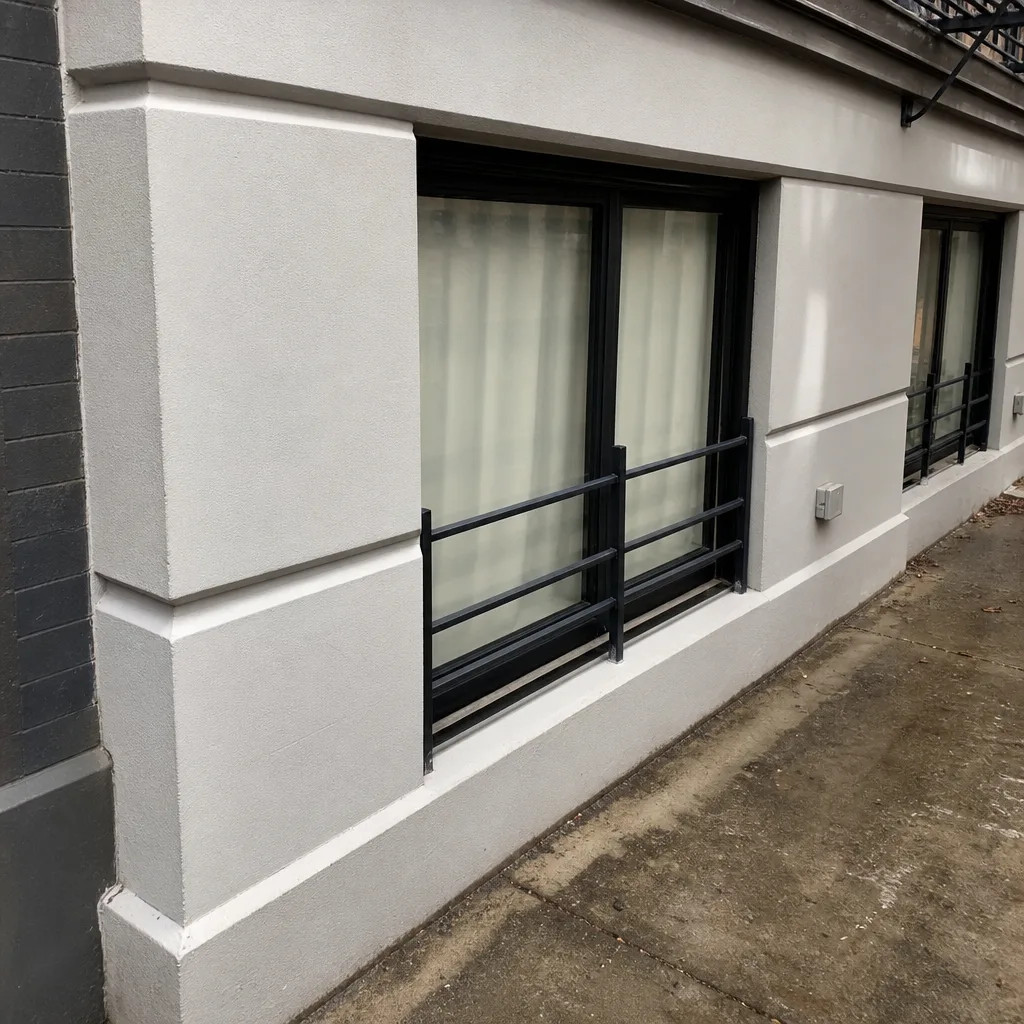 After
After24/7 Emergency Water Damage Restoration in Hoboken
Water damage restoration in Hoboken typically costs $1,800-$6,500 depending on whether you’re dealing with Category 1 clean water from a burst supply line or Category 3 black water from combined-sewer backflow, and most basement floods in this city fall into that second, more expensive category. That’s the honest truth about this town: the geography that makes Hoboken charming also makes it flood. When water is rising through your floor drains at 2 a.m., call (607) 703-3408 and you’ll get a real person, not a queue.
We run crews into Hoboken around the clock. Every hour that water sits in a garden-level apartment or rowhouse basement, it wicks deeper into plaster, joists, and the shared party walls that connect your home to your neighbor’s. The first 60 minutes decide whether you’re drying drywall or replacing it. We’ll walk the space with a moisture meter, tell you straight what you’re looking at, and start extraction before the adjuster even picks up the phone.
Understanding Water Damage Restoration Severity in Hoboken Properties
Water damage gets classified into three categories, and Hoboken sees more Category 3 than almost anywhere else in Hudson County. Category 1 is clean water from a burst supply pipe or overflowing tub. Category 2 carries some contamination, like washing machine discharge. Category 3 is black water: sewage, Hudson River floodwater, storm surge, or combined-sewer backflow. It carries pathogens that require full decontamination, not just drying. For serious contamination, our Sewage Cleanup - Hoboken team handles the complete sanitization process.
Here’s the part generic restoration sites miss: in Hoboken’s older southwest and northwest blocks, basement slabs sit at or below Hudson River mean tide level. A moderate nor’easter pushes groundwater and municipal combined-sewer backflow through floor drains simultaneously, which is why our Storm & Disaster Restoration in Hoboken treats these events as combined threats from day one. That means a basement flood that looks like rainwater is almost always Category 3. If a crew classifies it as Category 1 and just runs fans, they leave sewage pathogens inside your party walls. We treat Hoboken basement floods as black-water events by default unless proven otherwise. That’s not overcaution; it’s 18 years of pulling baseboards off in this city and seeing what’s behind them.
Why Hoboken Property Owners Choose Wade’s Restoration
- 45-minute response commitment: From the moment you call, we aim to have a truck rolling toward Hoboken within 45 minutes. In a city of one-way streets and tight rowhouse blocks, knowing the shortcuts matters.
- 24/7 live answer, every single time: You call, a person picks up. Often it’s Wade Ferris himself. No automated tree, no answering service at 3 a.m., no “leave a message and we’ll get back to you.”
- IICRC-certified crews: The people we send into Hoboken homes hold WRT (Water Restoration Technician) and ASD (Applied Structural Drying) certifications, with AMRT (Applied Microbial Remediation) on mold-related losses. They’ve trained for exactly the sewer-backflow situations this city throws at them.
- Free visual inspection: If you’re not sure how bad it is, or you’ve already got a quote from another company, we’ll walk the space and tell you what we see. No charge for that. Ever.
- Direct insurance billing: We document the loss from the first hour, bill your carrier directly, and handle the adjuster conversation so you don’t have to be the middleman.
- One team from extraction to reconstruction: No handoffs between subcontracted crews. The same people who pull the water out are the ones who rebuild the baseboards, fix the drywall, and lay the floor. That’s how the Water Damage Restoration work stays accountable from start to finish.
Our Water Damage Restoration Process
1. Inspection & Assessment
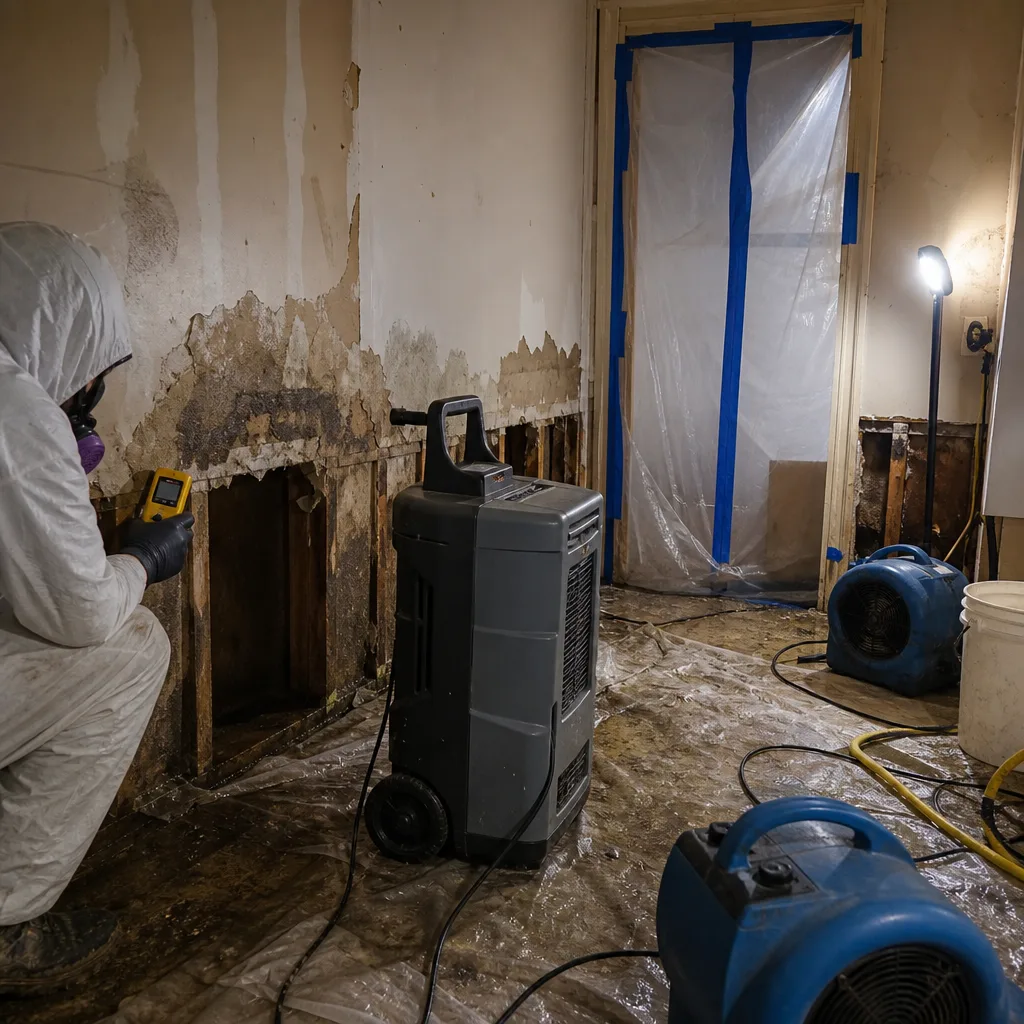
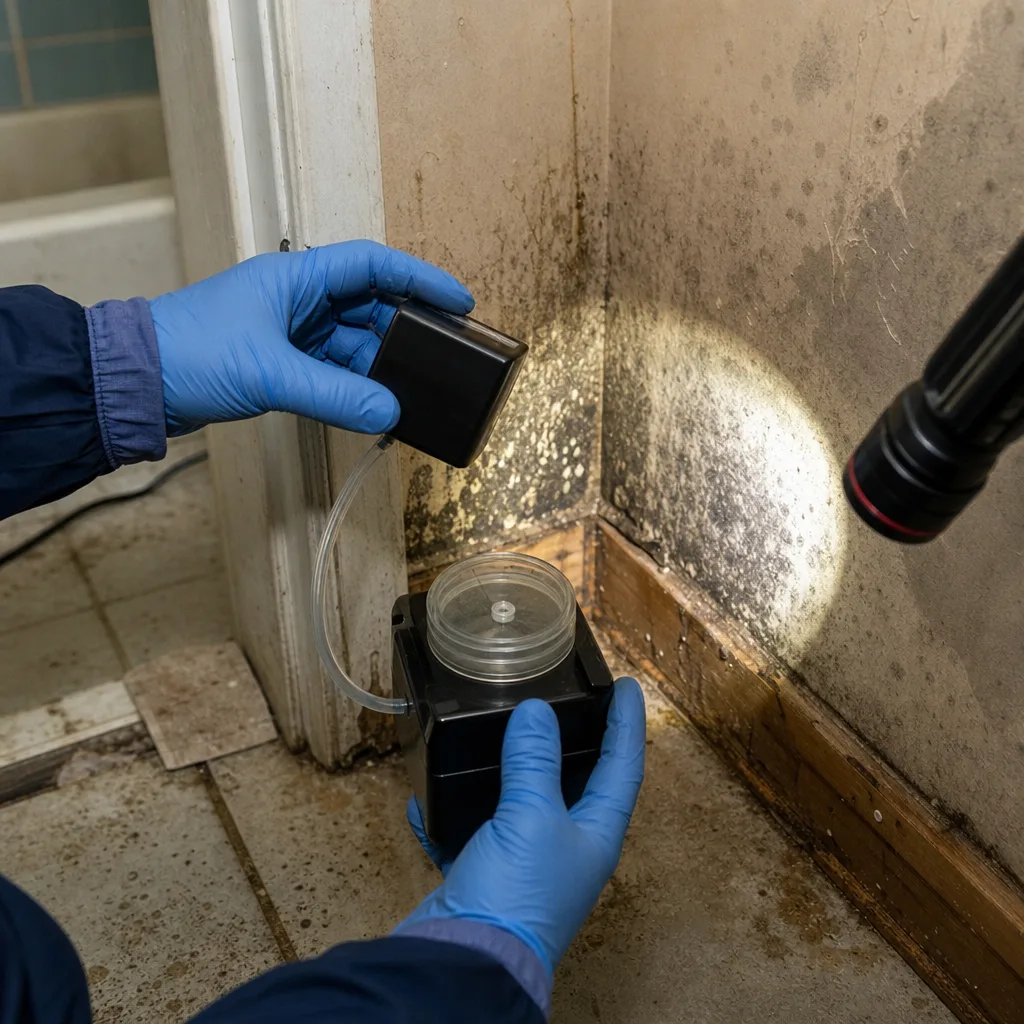
We map the full extent of the water: thermal imaging to find moisture behind walls, hygrometers to read humidity in the air, and probing moisture meters to check how deep water wicked into plaster and subfloor. In Hoboken rowhouses, we specifically check party walls and shared joists, because what looks like a single-unit flood is often spreading next door.
2. Extraction & Stabilization
We get standing water out fast using truck-mounted extraction rigs and portable units like the Dri-Eaz HVE 3000 for tight rowhouse stairways and garden-level doorways. In black-water conditions, we lay down containment before moving any equipment, so contaminants don’t get tracked through the rest of the building.
3. Drying & Dehumidification
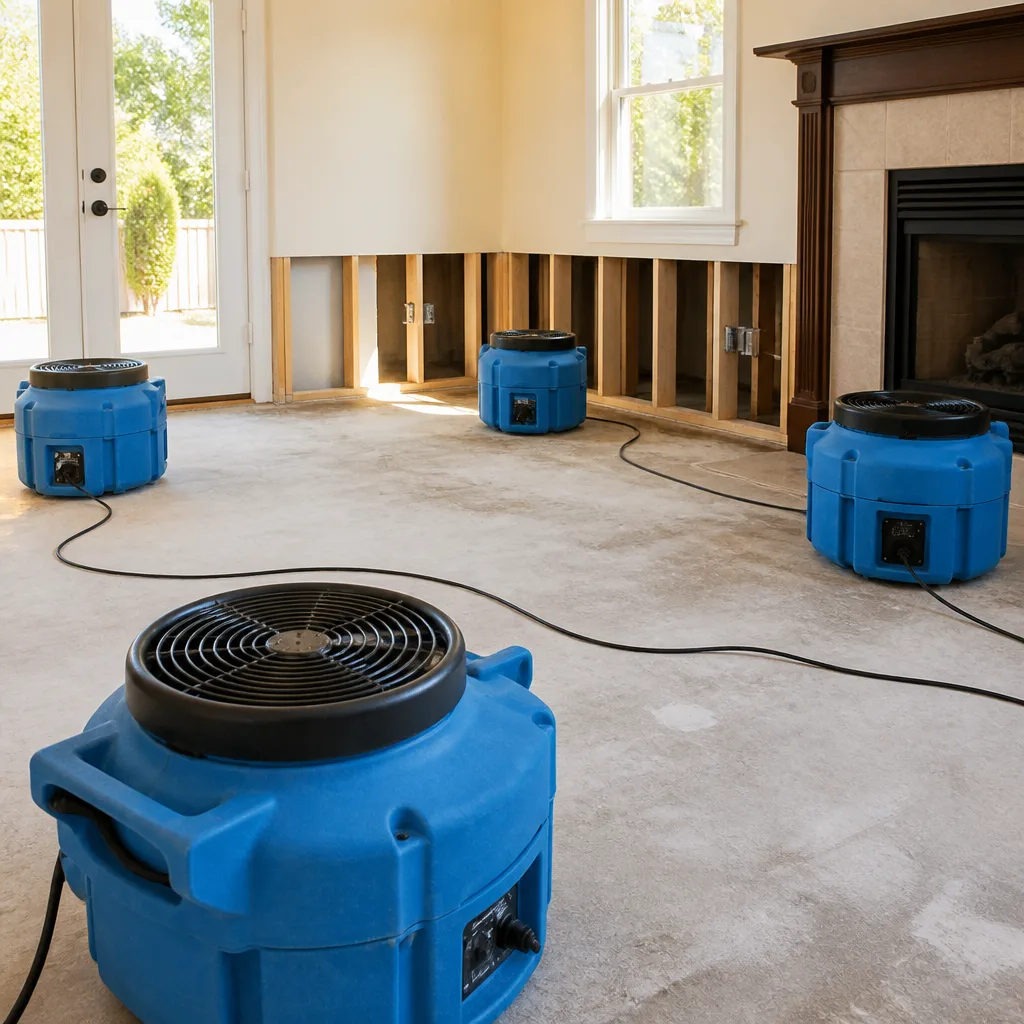
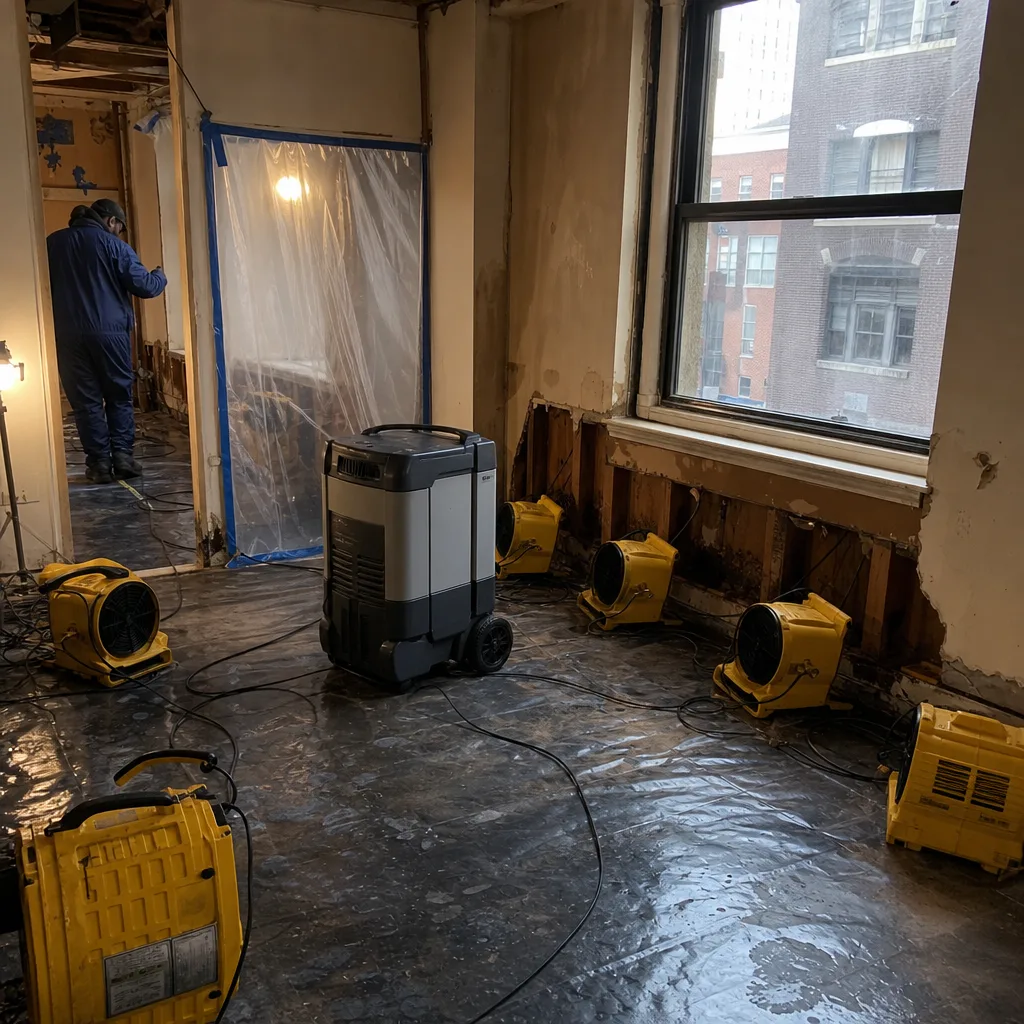
We drop Phoenix air movers and LGR (low-grain refrigerant) dehumidifiers, sized to the square footage and the water category. Daily moisture readings track the drying curve, and we don’t stop until materials read within dry-standard range, not just surface-dry. In Hoboken, that means accounting for groundwater that keeps wicking back up through the slab.
4. Cleaning & Sanitization
For any flood involving sewer or river water, we disinfect with EPA-registered antimicrobials on every surface water touched, including inside wall cavities before we button them up. This isn’t optional in Hoboken; leaving pathogens in a party wall is how a neighbor’s family gets sick two apartments over.
5. Sewage & Black-Water Specialty Treatment
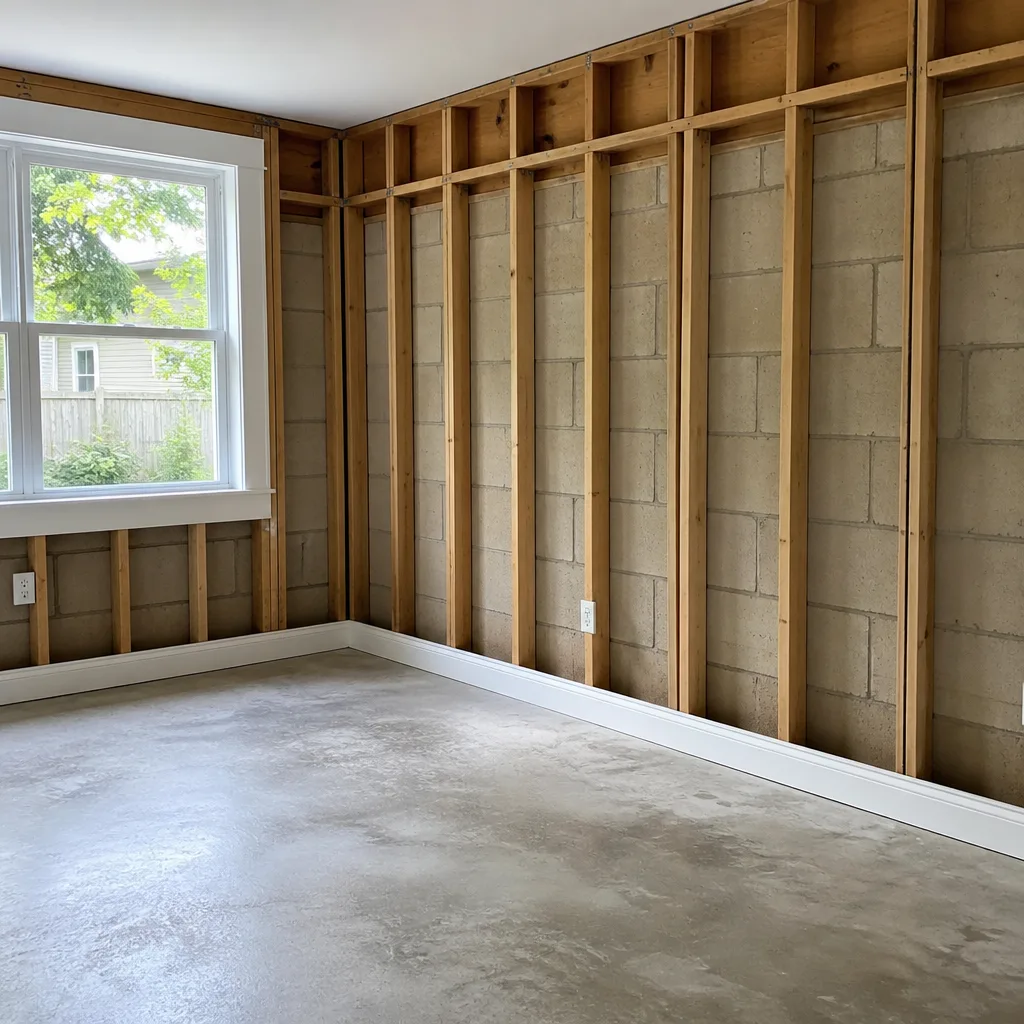
For the black-water events Hoboken knows too well, we remove contaminated drywall and insulation to flood cuts, sanitize the framing, and apply antimicrobial treatments to what remains. We then re-test moisture before reconstruction starts. HEPA air scrubbers run throughout to catch airborne contaminants.
6. Repairs & Restoration
We rebuild: drywall, baseboards, flooring, trim, paint. If the job requires it, we coordinate with the condo association or the neighbor on the other side of the party wall. Every restoration job is backed by our 90-Day Done Right Promise, written into the contract. If it’s not right? Wade comes back and makes it right.
Need Emergency Water Damage Restoration in Hoboken Now?
Crews minutes away, answering live 24 hours a day. The sooner we start, the less it costs.
Working With Your Insurance Company
Insurance claims in Hoboken get messy because of FEMA flood zones, elevation certificate questions, and multi-unit party-wall claims. We’ve handled hundreds of these locally, and we deal with your adjuster directly. You shouldn’t have to translate construction terminology or argue about dry-out standards. We provide everything a Hoboken claim needs: photo documentation from the first hour, room-by-room moisture mapping, daily drying logs, and a line-item scope that matches industry estimating standards. Our goal is straightforward: your carrier approves what’s actually needed, not a cut-rate version of it. For owners in expanded Special Flood Hazard Areas after Sandy, we understand exactly what documentation FEMA and private flood insurers require, and we build the file accordingly.
What We Provide Your Insurer
- Thorough documentation of the loss
- Photos of all damage, room by room
- Moisture readings and drying logs
- A detailed, line-item scope of work
- Direct coordination with your carrier
Built for Hoboken’s Loss Calendar
Hoboken doesn’t have a water damage season. It has a year-round rotation of threats. January and February deep freezes snap supply lines in uninsulated rowhouse crawlspaces and garden-level utility closets, and when an old brass pipe lets go at 3 a.m., it floods every unit below it. March and April bring thaw and spring rains, which saturate the already-high water table and push groundwater up through basement slabs in the southwest blocks. Summer thunderstorms drop two inches of rain in an hour, overwhelming the combined sewer system and sending backflow through floor drains across the city. Fall nor’easters bring what this town knows best: storm surge up the Hudson, flooded basements from the river side, and backflow from the inland side. And all year long, century-old cast iron waste lines in pre-war brownstones crack, corrode, and fail, sending sewage into garden-level apartments. This is the reality of water damage in Hoboken, and it’s why we keep crews stationed within response distance of every ZIP in the city.
Water Damage Restoration Across Hoboken’s Neighborhoods
We know Hoboken street by street, and the water behaves differently depending on where you are. In the southwest blocks below Jackson Street and along Observer Highway, garden-level units back right up against the former marshland, and groundwater rises through slabs even on dry days. We’ve pulled baseboards off in this neighborhood to find the framing wicking moisture that never came from a visible source. Along Willow Avenue and Garden Street, the old brownstones have shared joists between units, so a burst pipe in one condo’s ceiling means moisture migrating through the common floor system into the neighbor’s below. Over near the waterfront on Shipyard Lane and Sinatra Drive, storm surge is the first wave, but sewer backflow from the inland side often hits the same basements a half hour later. Northwest blocks near 14th Street and the Palisades face a different pressure: rainwater sheeting off the escarpment slope, pooling against foundation walls built in the 1890s. Each pattern matters, because it changes where we probe first and where the drying equipment goes.
Specialized Water Damage Restoration Services We Offer in Hoboken
Emergency Water Extraction
When a pipe bursts in a Hoboken brownstone at midnight, every minute of water standing in that garden-level unit pushes moisture deeper into the joists above. We get extraction running fast, with truck-mounted rigs for big floods and portable Dri-Eaz units for the tight stairways and narrow hallways these old buildings are famous for.
Structural Drying & Dehumidification
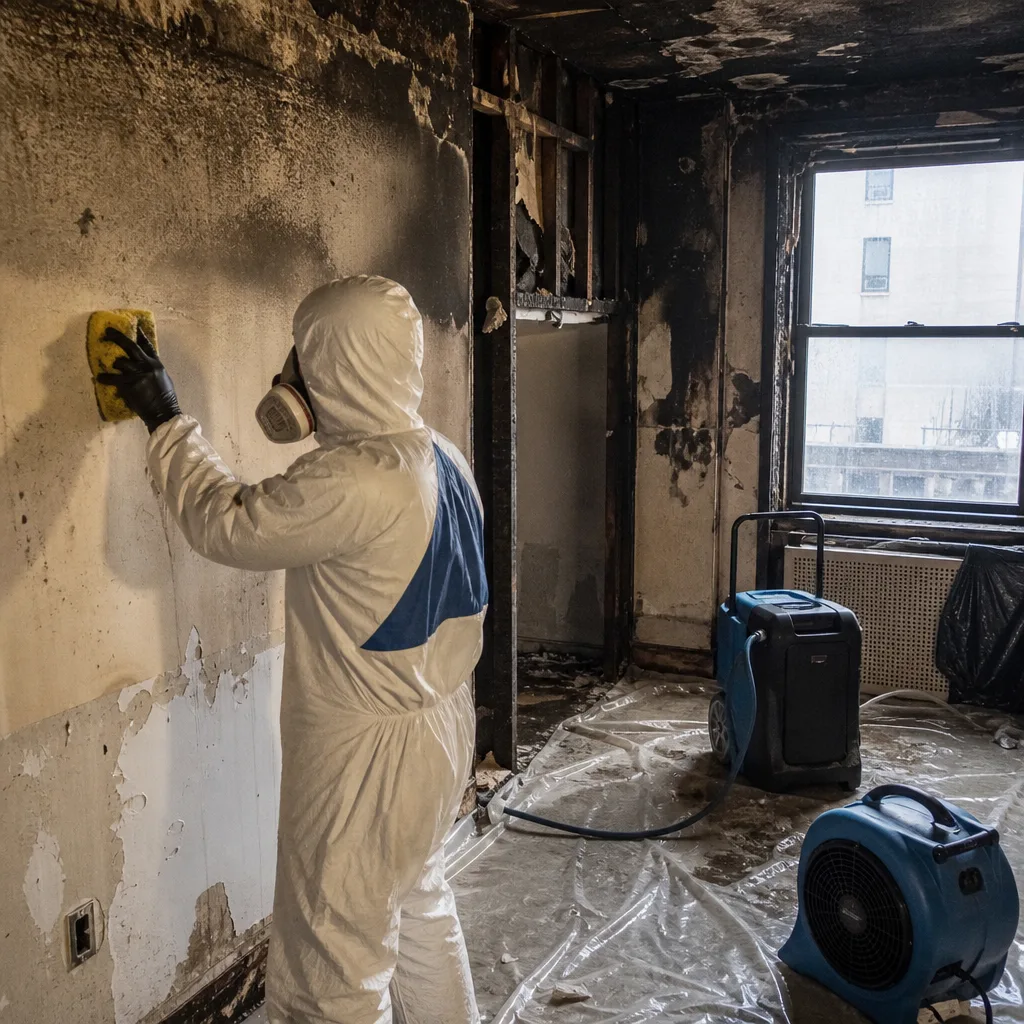
Drying a Hoboken rowhouse isn’t the same as drying a freestanding home. Party walls hold moisture like a sponge between two units, and if you only dry one side, the water just moves through to the other. We place Phoenix air movers and LGR dehumidifiers with that in mind, tracking readings on both sides of the wall until the whole assembly hits dry standard.
Flood Cleanup
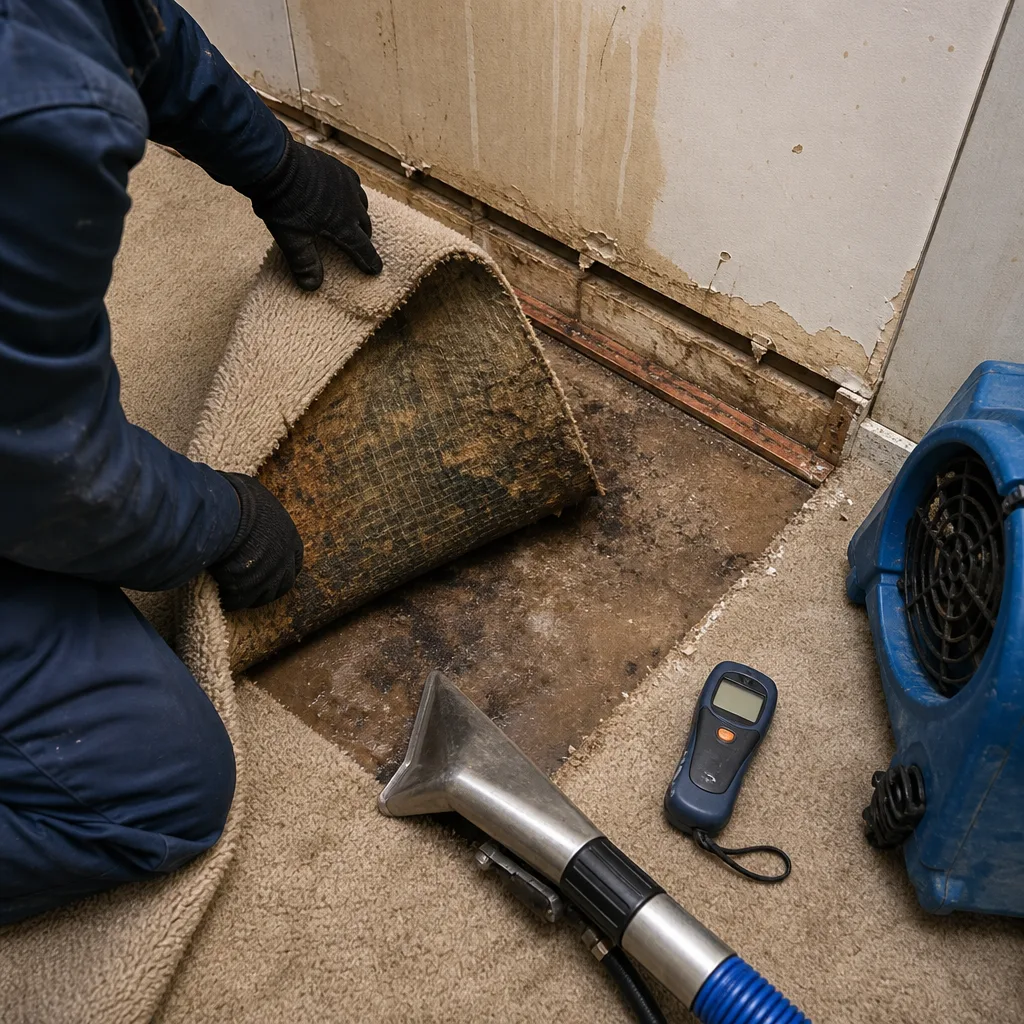
Hoboken floods. The Hudson River, the combined sewer, the Palisades runoff, all of it finds the lowest point, and that’s usually your basement. We handle black-water flood cleanup as a decontamination job first and a drying job second. Containment, extraction, antimicrobial treatment, then structural drying. Skip the first step and you’re just drying sewage.
Burst Pipe Restoration
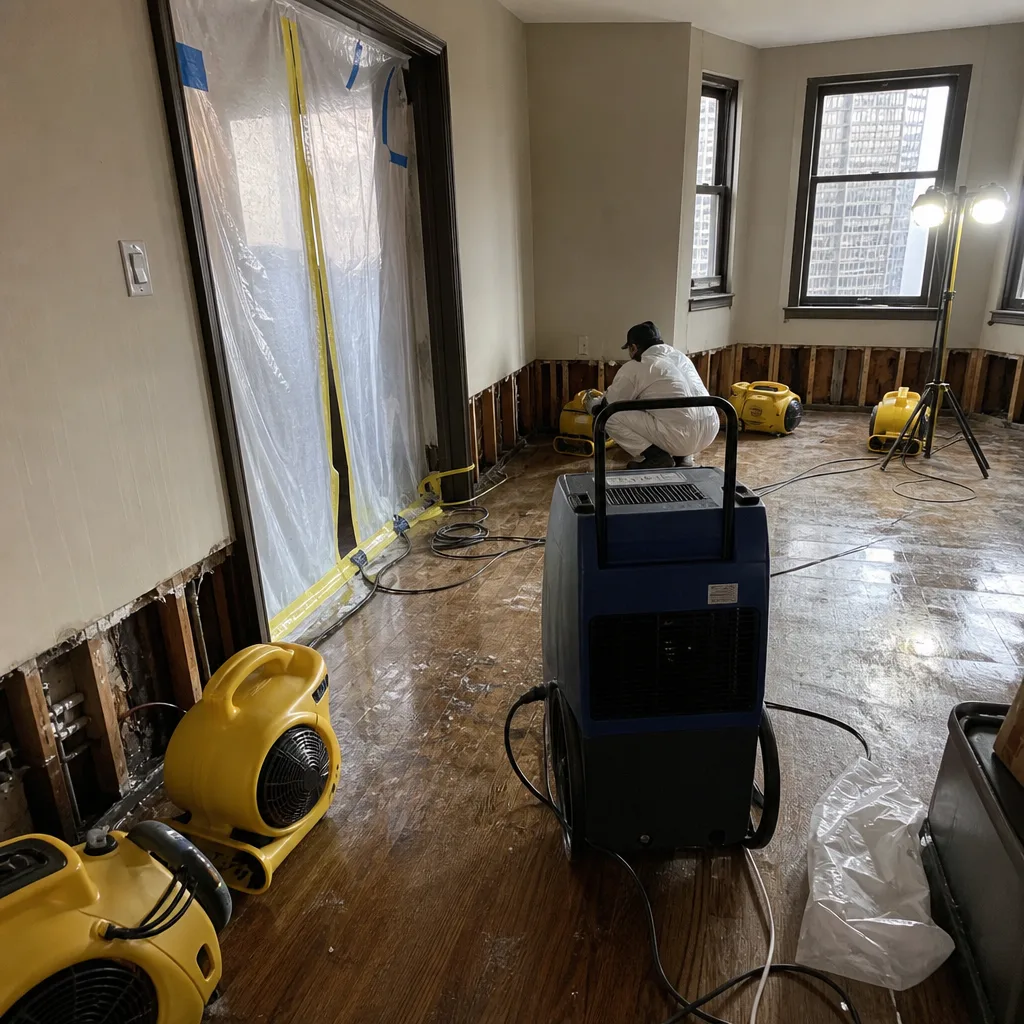
Pre-war plumbing fails. Copper supply lines in century-old buildings reach their end and let go, dumping clean water into a condo that then seeps through the floor into the unit below. We shut it down, extract, dry, and rebuild, coordinating with building management and the neighbors affected. One burst pipe in a Hoboken walk-up is usually a multi-unit job by the time we’re done.
Basement Water Removal
This is the bread and butter of our Hoboken work, and it’s rarely the easy version. The water in your basement here is usually not clean. We classify it correctly, extract it fully, and dry the space down to the slab, then keep monitoring because the water table often pushes back. Our crew has set up in more garden-level Hoboken basements than we can count, and we know what these spaces do.
What happens when you call
- 1
A real person answersNo phone trees - you reach a local pro.
- 2
You get an upfront price rangeHonest numbers before anyone is dispatched.
- 3
A background-checked tech heads outLicensed & insured, dispatched right away.
- 4
You approve before work beginsNothing starts until you say go.
Water Damage Restoration Costs in Hoboken, NJ
Let’s talk real numbers for Hoboken. A Category 1 leak, like a burst supply line in a kitchen with water on tile, typically runs $1,800-$3,200 for extraction, drying, and minor repair. A Category 3 basement flood from sewer backflow in a garden-level unit usually lands between $4,500 and $8,500, because you’re cutting flood-level drywall, removing contaminated insulation, sanitizing framing, and rebuilding. If groundwater keeps returning and we need multiple drying visits plus antimicrobial treatment on party walls, that pushes toward the higher end and sometimes beyond. What moves the price most in Hoboken is access: rowhouse stairways too narrow for full-size equipment, basement units with low ceilings, and party-wall concerns that require coordination with the neighbor. If you’re dealing with a FEMA flood claim, the price gets shaped by your policy limits and elevation certificate. The fastest way to know your number is a free visual inspection, we walk it, we scope it, we put it in writing before any work starts. Call (607) 703-3408 and we’ll set it up.
We Also Serve Cities Near Hoboken
Beyond Hoboken, our crews cover Union City, Weehawken, Jersey City, and North Bergen. Same 24/7 live answer, same equipment, same 90-Day Done Right Promise. If you’re on the border or in a neighboring town dealing with water damage, call us; we’ll be honest about whether we’re the right crew for your block.
Serving Hoboken, NJ - Our Local Coverage Area
We’re based in the Hoboken area and know this community well. Use the map below to see our service coverage - if you’re nearby, we can almost certainly help.
Hoboken Water Damage Restoration Questions, Answered
Why does Hoboken classify most basement floods as Category 3 black water even in clear weather?
Because Hoboken’s combined sewer system carries both stormwater and raw sewage through the same pipes, and when the system surcharges, that mix backs up through floor drains into basements across the southwest and northwest blocks. Even if the day was sunny, the water coming up through your drain carries sewage pathogens. The city’s older basements also sit at or below Hudson River mean tide level, so groundwater intrusion gets mixed with municipal discharge before it reaches your slab.
How do you dry a rowhouse party wall after a burst pipe without tearing out the neighbor’s side?
We dry from the accessible side and monitor moisture through the wall assembly. In most Hoboken rowhouses, the shared joists and brick party walls absorb water asymmetrically, so we place air movers and dehumidifiers to create negative pressure on the wet side while taking readings with penetrating moisture meters to track what’s happening inside the assembly. If the wall framing stays wet beyond dry standard after several days, we’ll talk with you and the neighbor about opening the wall from one side or the other. We don’t ignore a wet party wall just because it’s inconvenient; hidden moisture in shared construction is exactly where mold blooms weeks later.
Do I need a FEMA elevation certificate before you start water damage restoration in a Hoboken flood zone?
No, you don’t need it before we start mitigation. Extraction, drying, and decontamination should begin immediately to stop ongoing damage, and we document everything as we go. The elevation certificate matters for your flood insurance claim and for reconstruction decisions like whether mechanicals need to be raised. If your property is in an expanded Special Flood Hazard Area and you don’t have a current certificate, we’ll flag it early and coordinate with your adjuster so the claim doesn’t stall on paperwork while the building stays wet.
How fast can mold start on garden-level drywall after a Hoboken high-tide flood?
Mold can start colonizing wet drywall within 24 to 48 hours in Hoboken’s humid coastal air. Garden-level units are worse because they lack airflow and the ambient humidity near the Hudson keeps surfaces damp longer. If you had water in a below-grade unit, assume the clock is running and get extraction started the same day. We’ve pulled drywall from garden-level Hoboken apartments two days after a flood and found visible growth already spreading behind the baseboards.
What’s different about water damage restoration in Hoboken versus nearby Jersey City or Weehawken?
Hoboken sits in a bowl between the Hudson and the Palisades, with a combined sewer system that backs up across the entire city during heavy rain and storm surge, not just near the waterfront. Jersey City has more elevation variation and newer construction in places; Weehawken sits on the slope, so groundwater intrusion behaves differently. Hoboken’s signature problem is simultaneous river surge and sewer backflow meeting in basements at or below tide level, all inside century-old attached rowhouses where water doesn’t stay in one unit. That’s a specific combination, and it demands a specific playbook.
How fast can someone actually get here if I have a basement filling with water right now?
Call (607) 703-3408 and a live person answers. We target a 45-minute response commitment for Hoboken addresses. The crew heads out immediately, with extraction equipment on the truck, not a salesman with a clipboard. In a city where every hour of standing water adds hundreds of dollars to the damage, that response time matters. Night, weekend, holiday, doesn’t change it.
Will my insurance cover water damage restoration in Hoboken?
Depends on the source. A burst pipe or supply line failure is typically covered under standard homeowners or condo policies. Sewer backflow is often covered only if you carry a specific rider, and many Hoboken owners don’t. River flooding and storm surge are generally only covered by separate FEMA flood insurance. We don’t make assumptions; we document the source, provide the evidence your carrier needs, and talk to your adjuster directly so you’re not negotiating coverage on your own.
What should I do in the first 30 minutes after discovering water in my Hoboken home?
Call us at (607) 703-3408 first, because the clock is running. Then, if it’s safe, shut off the water source if you can identify it and it doesn’t require standing in the flooded area to reach. Don’t walk through the water if there’s any chance it’s sewage or if electrical outlets, appliances, or extension cords are submerged; that’s a serious electrical hazard. Don’t run a shop vac on standing water. Don’t open the walls yourself. Move what you can from dry areas, throw towels at doorways to slow spread, and wait for a professional. The water will still be there when we arrive; the goal is to make sure you’re not hurt while we’re on the way.
Written by Wade Ferris, Owner at Wade’s Restoration, serving Water Damage Restoration in Hoboken with a live 24/7 response line.
If you’ve got water where it shouldn’t be in Hoboken, call (607) 703-3408. You’ll get a real answer, a straight assessment, and a crew that knows exactly what this city’s basements do. Free visual inspection. 90-Day Done Right Promise in writing. One call brings Wade back, and he will be there himself.