
Free visual inspection and a written scope of work before any mitigation begins - photos, moisture readings, and drying logs go in your claim file
The scope we write is the scope we bill. Anything new gets shown to you, in writing, before we touch it.
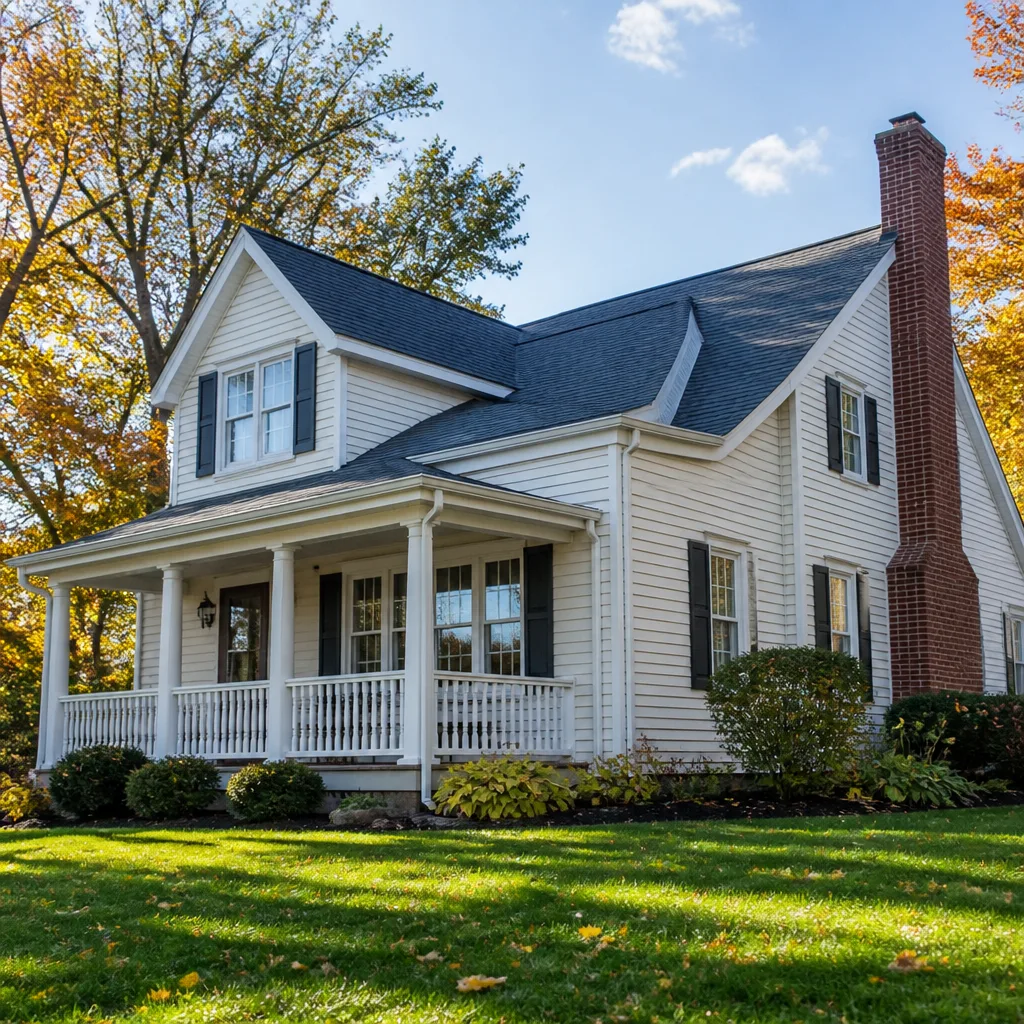
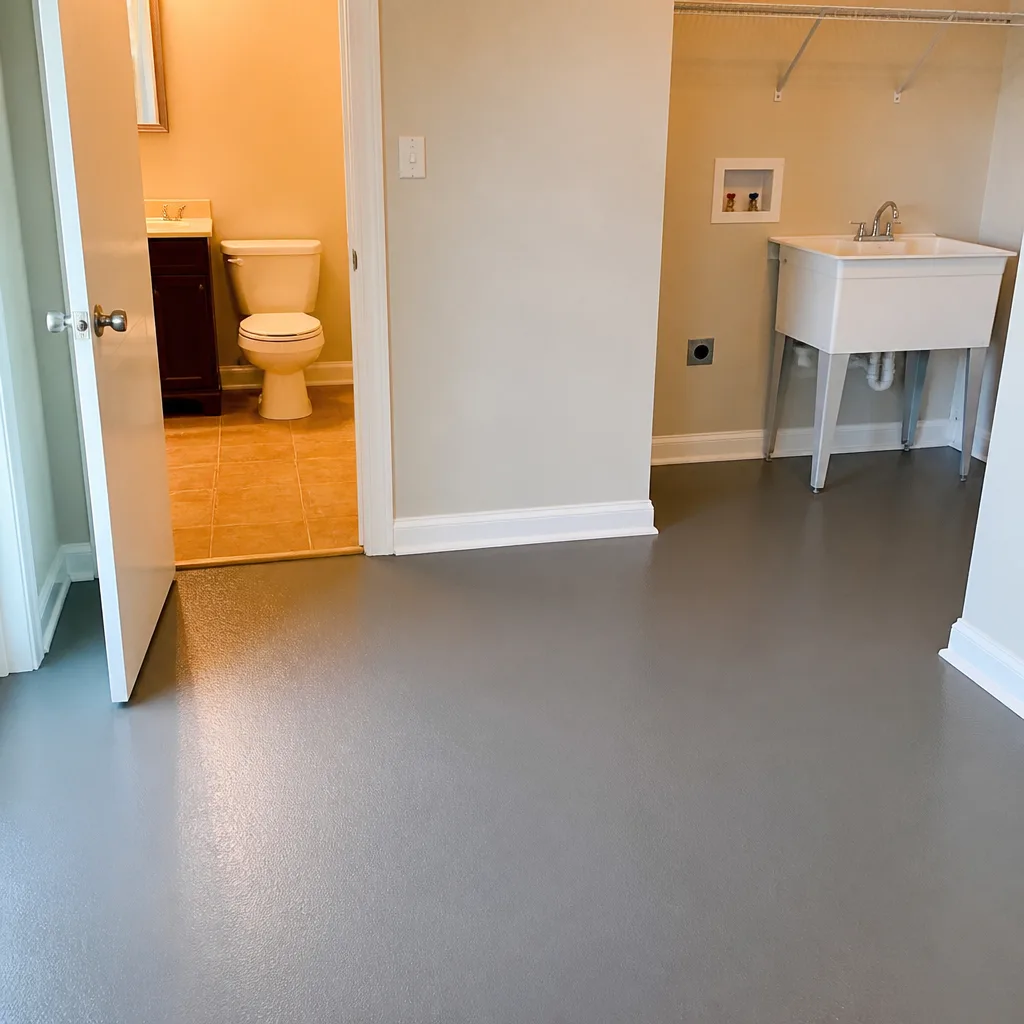
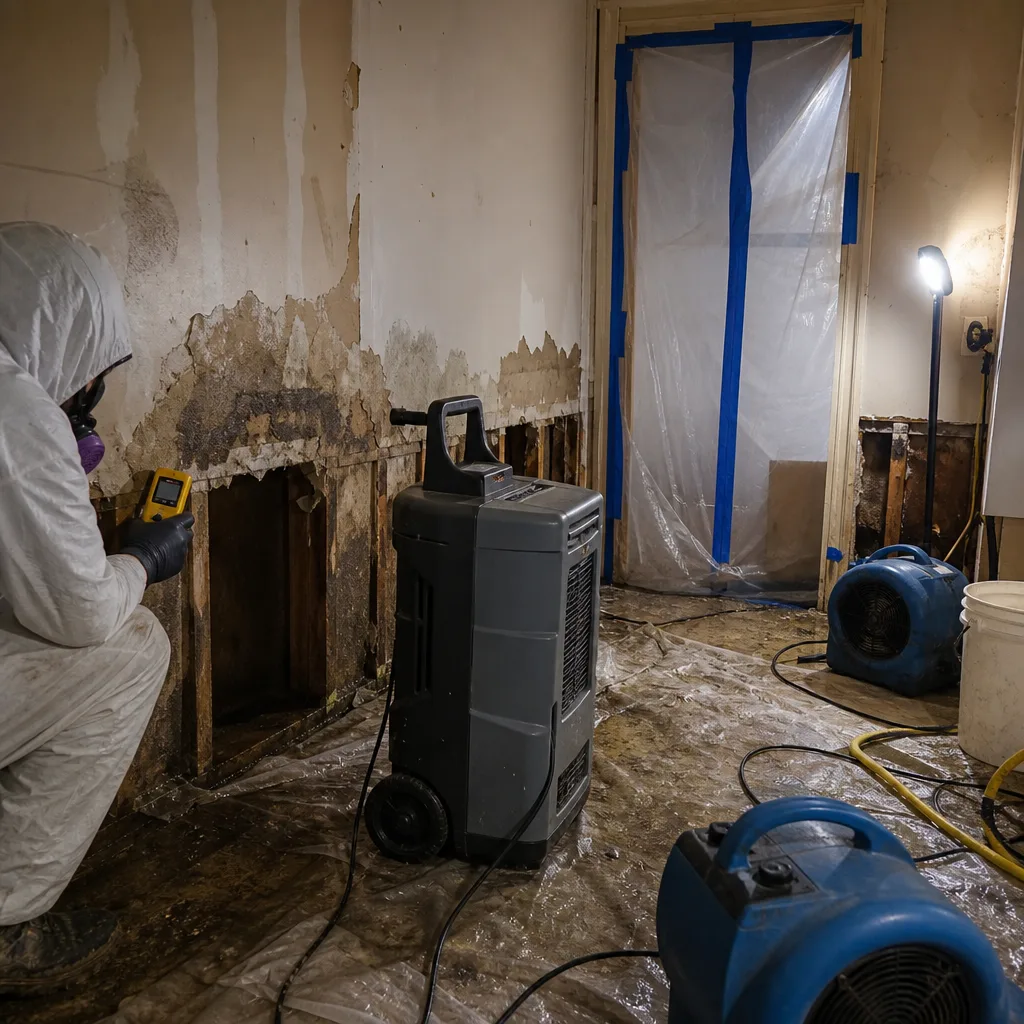 Before
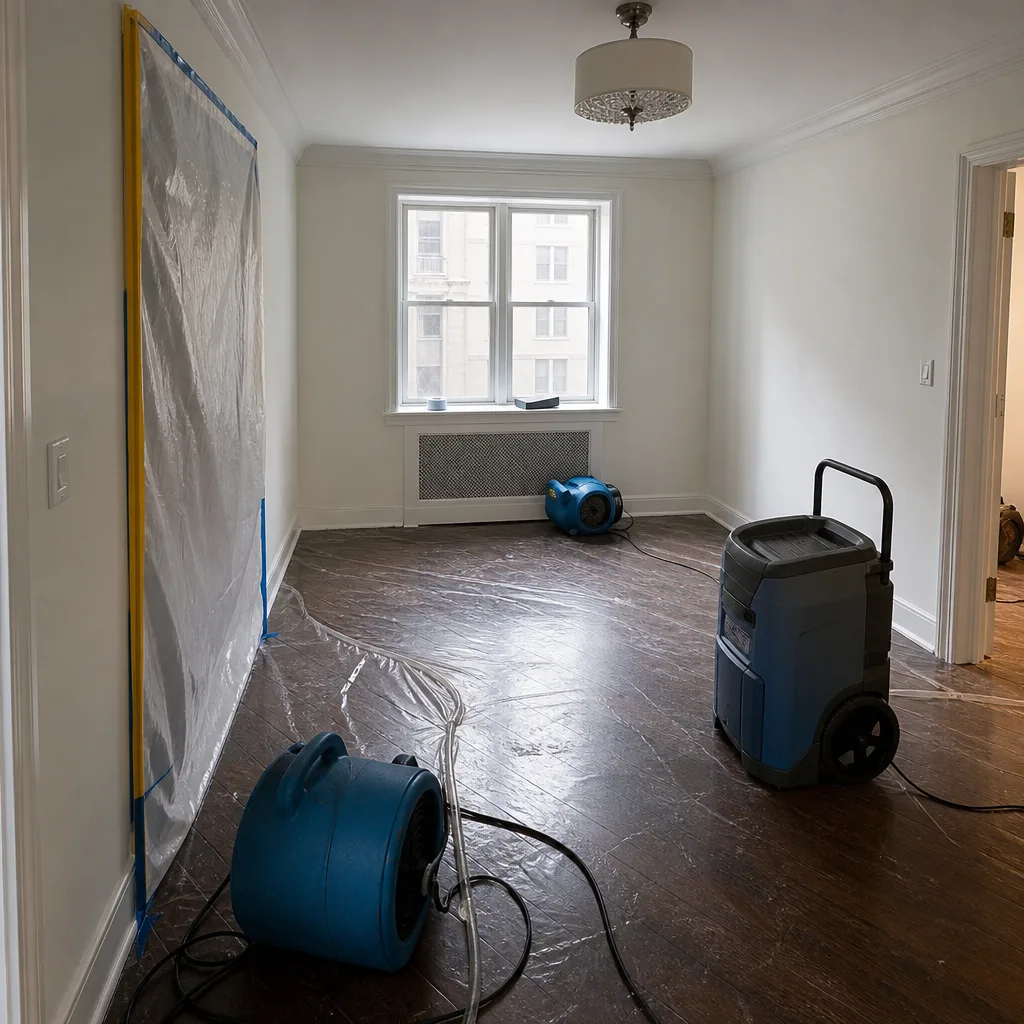 After
After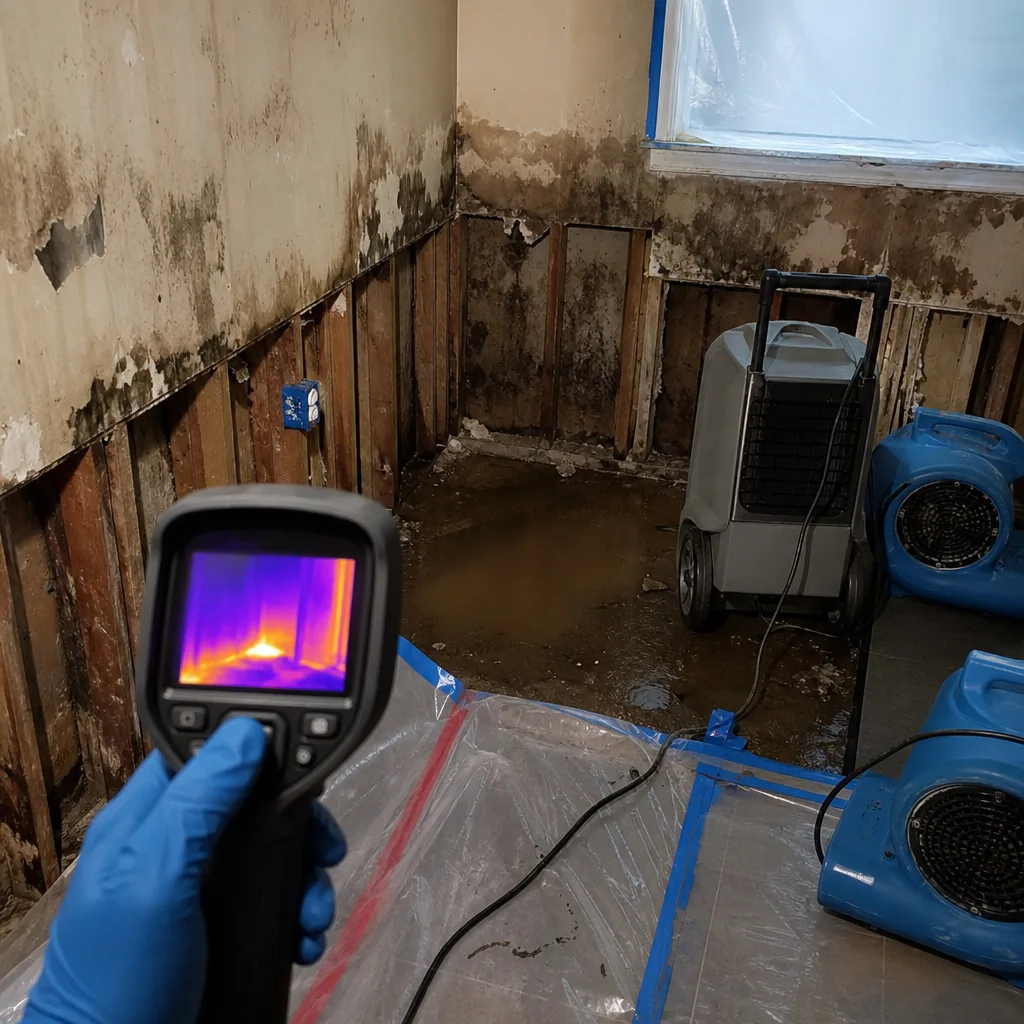 Before
 After
After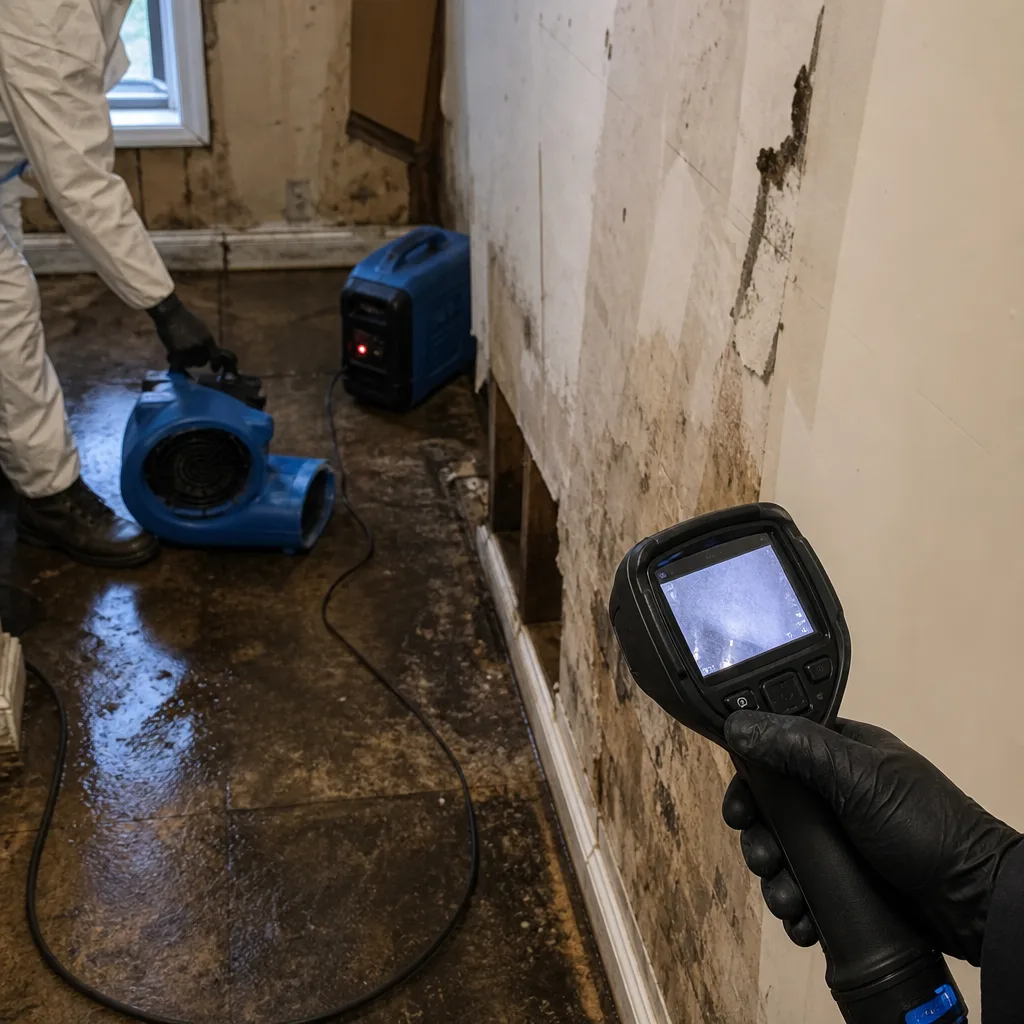 Before
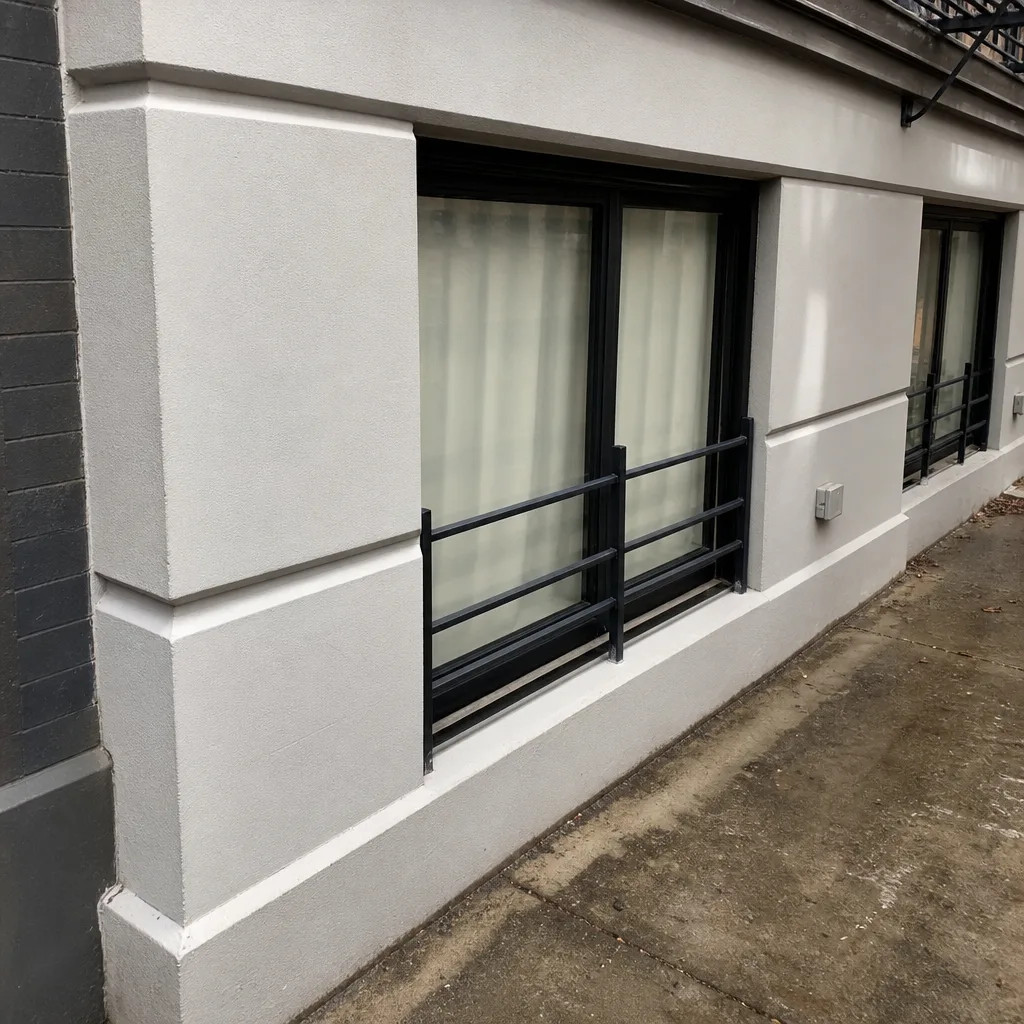 After
After24/7 Emergency Water Damage Restoration in Financial District
When water is moving through a Financial District high-rise, every minute counts. A burst supply line on the 30th floor does not stay on the 30th floor, it finds the elevator shaft, the fire stairs, the electrical chase, and it keeps going. That is why we answer live, 24 hours a day, and why Wade Ferris himself will be on the phone when you call (607) 703-3408. We dispatch crews into the Financial District immediately, not after a callback window or a corporate approval chain. The first hour after a pipe failure or storm-surge intrusion determines whether you are drying drywall or replacing it. Call now and we will have extraction running before your building’s super has finished locating the shutoff valve.
Understanding Water Damage Restoration Severity in Financial District Properties
Not all water is the same, and in a neighborhood where converted 1920s office towers stand next to landmark masonry buildings, misreading the water category is the most expensive mistake a restoration crew can make. Category 1 water starts clean, from a supply line or a radiator. Category 2 carries contaminants, think washing machine overflow or sump-pump discharge. Category 3 is grossly contaminated: storm surge from New York Harbor, sewer backup, or river water that found its way into a sub-basement. The Financial District’s position at the tip of Manhattan, ringed by the Hudson River, East River, and New York Harbor, means category 3 surge water can reach mechanical rooms 30-plus floors above sea level when a nor’easter pushes water inland. And in this neighborhood’s pre-war towers, sub-basement elevator pits and electrical vaults sit below grade, exactly where that contaminated water collects first. Moisture mapping in a FiDi conversion is not a formality. We are working inside fire-rated wall cavities, masonry chases, and ductwork that has been retrofit three times since the building opened. A category misread here does not cost you a few hundred dollars. It costs you hidden mold behind elevator pit walls and a board that will flag it in your next sale.
Why Financial District Property Owners Choose Wade’s Restoration
- 45-minute response commitment. We are minutes from the Financial District, not a regional hub. Wade heads out the moment you hang up.
- 24/7 live answer, always a real person. No voicemail, no answering service, no runaround. Wade answers his own phone, including at 2 a.m. when your ceiling is coming down.
- IICRC-certified crews, WRT and FSRT codes. The people Wade sends carry the certifications that matter for water damage: Water Restoration Technician and Fire & Smoke Restoration Technician, plus applied structural drying if the job calls for it.
- Free visual inspection. No charge for that. We look, we tell you straight what you are dealing with, and you decide.
- Direct insurance billing. We document everything from hour one and bill your carrier directly, so you are not fronting thousands while an adjuster thinks about it.
- One team from extraction to reconstruction. We do not hand you off to a sub after the dryout. Same crew, same name on the truck, same guy you can find on a Saturday.
Our Water Damage Restoration Process
Inspection & Assessment
We walk every affected floor, take thermal imaging and hygrometer readings, and map the moisture path. In a converted Financial District tower, that means checking not just the unit where the pipe burst, but the chase, the shaft, and the two floors below it.
Extraction & Stabilization
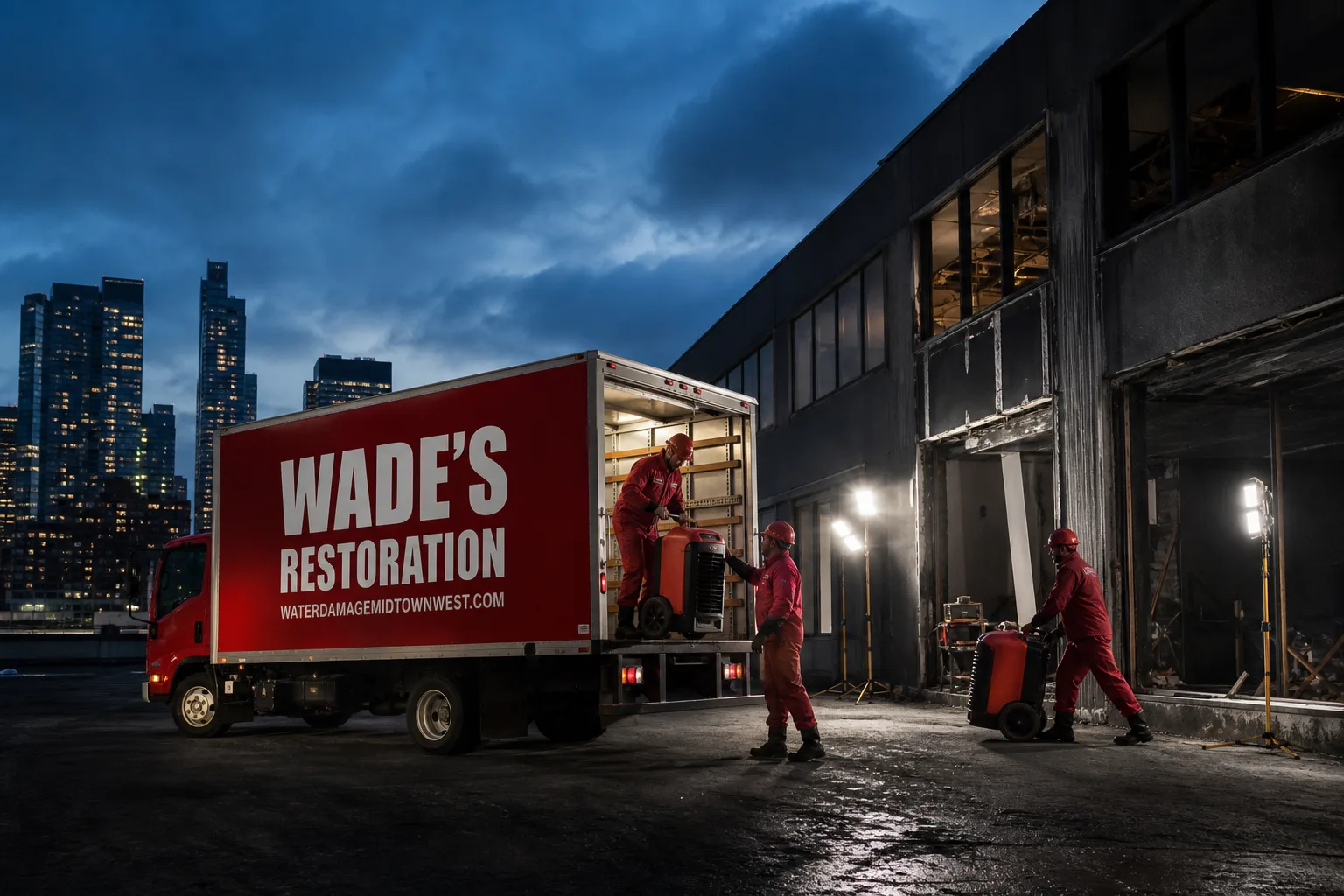
We get standing water out fast using truck-mounted and portable extraction units. In tight FiDi service entrances and narrow condo hallways, that often means hand-carrying equipment through a door barely wider than the machine itself.
Drying & Dehumidification
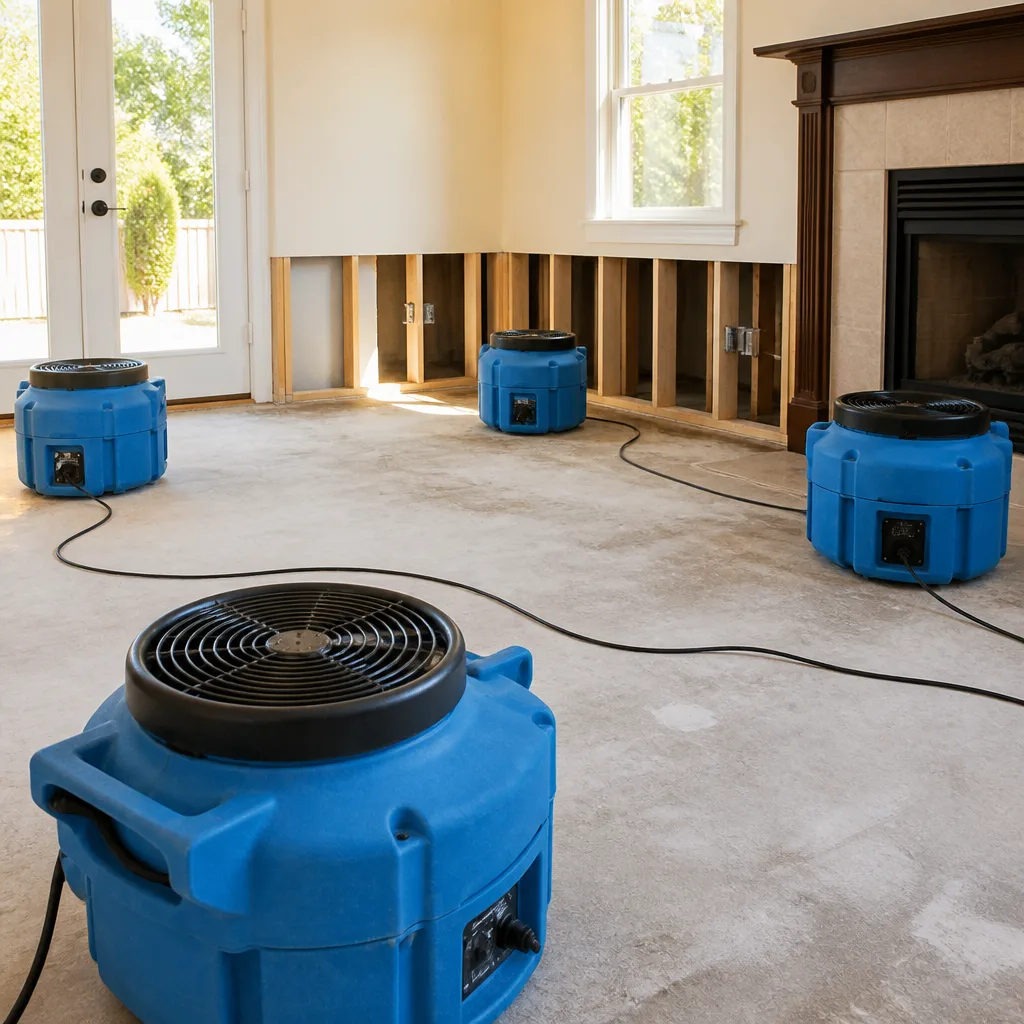
Dri-Eaz and Phoenix dehumidifiers and air movers go in, positioned against the moisture map, not scattered randomly. We take moisture readings every single day and hand you the full log when we leave. Almost nobody in this trade does that.
Cleaning & Sanitization
Depending on the water category, we apply antimicrobial treatments, HEPA vacuum, and air scrub where contaminants were present. In category 3 surge events, this step is non-negotiable; skipping it is how mold colonizes elevator pit walls six months later.
Structural Drying Verification
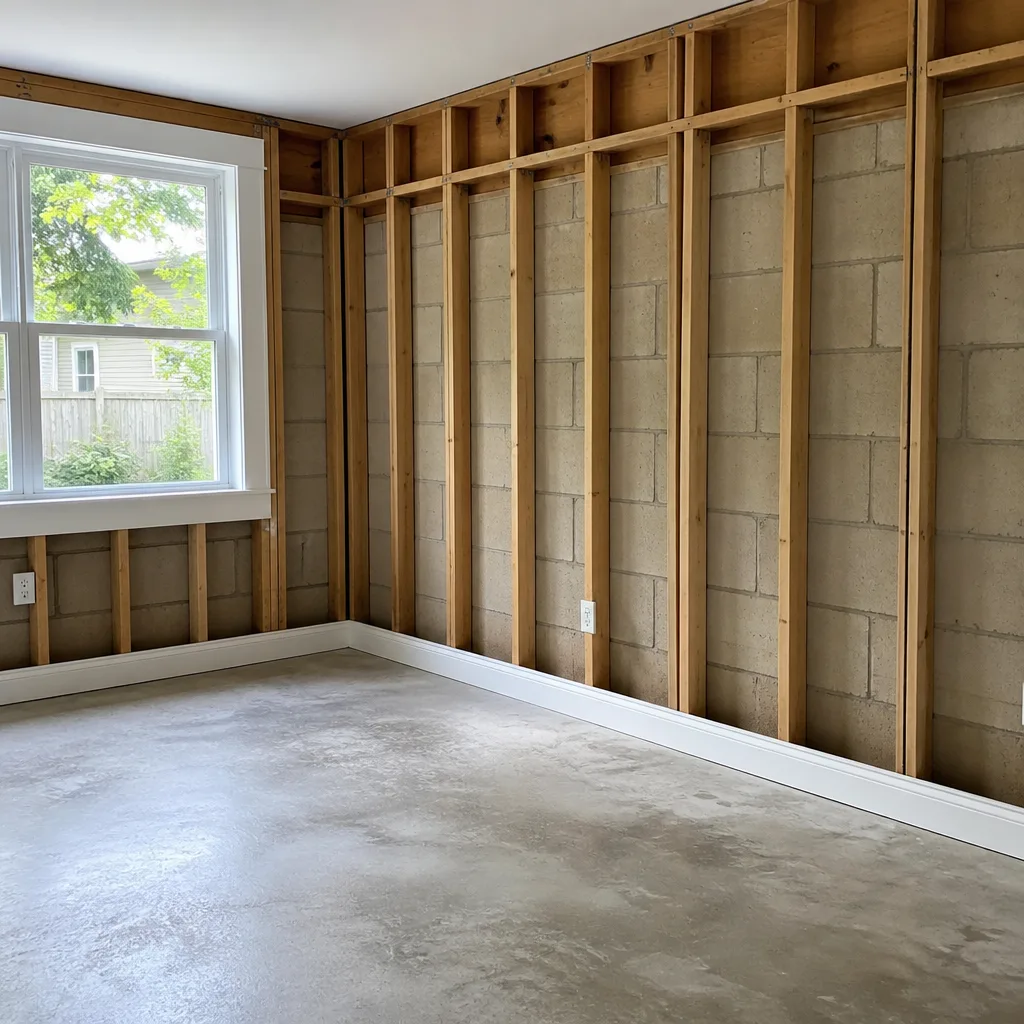
We do not call the job done when the surface feels dry. We verify the interior of wall cavities, subfloor, and structural framing with penetrating moisture meters, then give you the readings in writing.
Repairs & Restoration
From replacing drywall and insulation to refinishing hardwood and repainting, we bring the unit back to pre-loss condition. You get a written scope before we start, not after we have opened your walls.
Need Emergency Water Damage Restoration in Financial District Now?
Crews minutes away, answering live 24 hours a day. The sooner we start, the less it costs.
Working With Your Insurance Company
You should never be the one relaying information between a restoration crew and an adjuster. That is our job. From the first hour, we document the loss the way claims adjusters expect: photos room by room, moisture readings, drying logs, a line-item scope of work with dates and equipment hours. We hand that packet to your carrier directly and stay in touch with the adjuster until the claim closes. In the Financial District, where building sub-basements and shared mechanical systems blur the line between individual unit coverage and building policy, that documentation is what decides whether your claim gets paid or gets argued. We have handled hundreds of these claims, IICRC-certified and RIA-affiliated, and we know what the carriers need. You can hand your phone to the adjuster and let us talk.
What We Provide Your Insurer
- Thorough documentation of the loss
- Photos of all damage, room by room
- Moisture readings and drying logs
- A detailed, line-item scope of work
- Direct coordination with your carrier
Built for Financial District’s Loss Calendar
Water damage in the Financial District follows a pattern, and if you live here long enough you learn it. January and February bring deep freezes that burst supply lines in uninsulated pipe chases, especially in pre-war conversions where original piping runs through exterior masonry walls. The thaw that follows sends water into basements and sub-basements as groundwater pushes against aging bulkheads and foundation walls. Spring nor’easters push storm surge up the East River and into Lower Manhattan’s lowest-lying blocks, flooding mechanical rooms and elevator pits that sit below the flood line. Summer brings sudden thunderstorm downpours that overwhelm the neighborhood’s combined sewer system, backing water up into basement drains and loading docks. And September through early November, named storms are the big one; Sandy taught every property owner in FiDi what a storm surge can do to a sub-basement electrical vault. We plan our equipment staging around this calendar, so when the next storm hits, we are already moving toward your building, not scrambling for gear.
Water Damage Restoration Across Financial District’s Neighborhoods
The Financial District is not one neighborhood; it is a patchwork of tower cores and old streets, and each corner fails differently. Along Wall Street, the heaviest concentration of converted 1920s office towers, we most often see vertical cascade losses: a supply line on one floor running down fire-rated chases into the units below. In the South Street Seaport blocks along the East River, storm surge and basement seepage dominate; these buildings sit closest to the water and take the first hit when the harbor rises. Around Battery Park and Battery Park City, newer residential towers have their own signature: high-pressure riser failures and mechanical-room floods that knock out whole building systems at once. And in the older tenement blocks just off Broadway and Fulton Street, narrow doorways, no service elevators, and shared drainage lines make every response a hand-carry job. We know the routes, the building supers, the parking realities, and the fire-stair quirks of each block, because we have worked all of them more times than we can count.
Specialized Water Damage Restoration Services We Offer in Financial District
Emergency Water Extraction
Standing water in a Financial District condo does not stay standing. It moves through the floor assembly, into the unit below, and into the building’s electrical and mechanical chases. Our extraction crews arrive with truck-mounted and portable units sized for the access they will actually have, whether that means a narrow service entrance off an alley or a fire stair. We get the bulk water out within the first hour whenever possible.
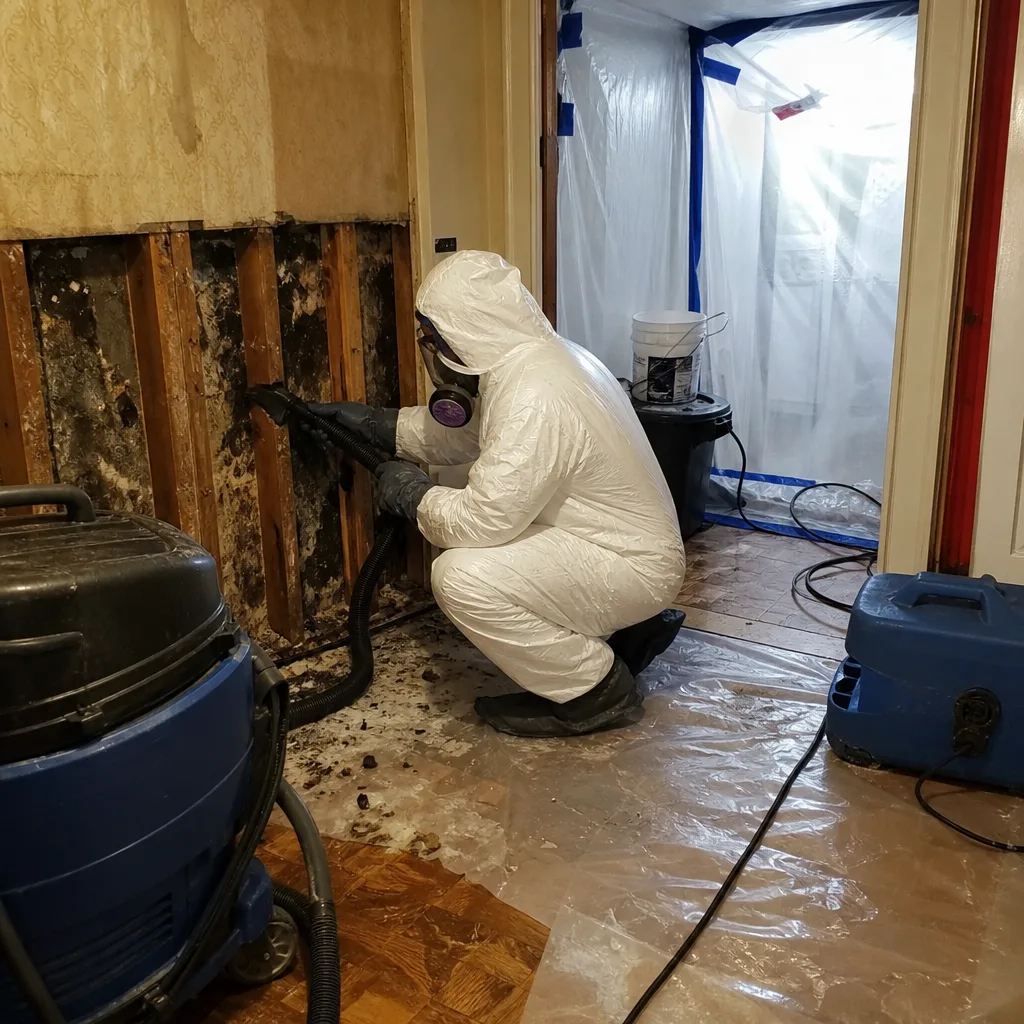
Structural Drying & Dehumidification
Drying a FiDi conversion properly means drying the masonry behind the drywall, not just the drywall in front of it. We use Dri-Eaz and Phoenix dehumidifiers with penetrating moisture meters to verify that the wall cavity, subfloor, and structural framing are actually dry. In buildings where one wet wall can wick moisture into three adjacent units, we do not shortcut this step.
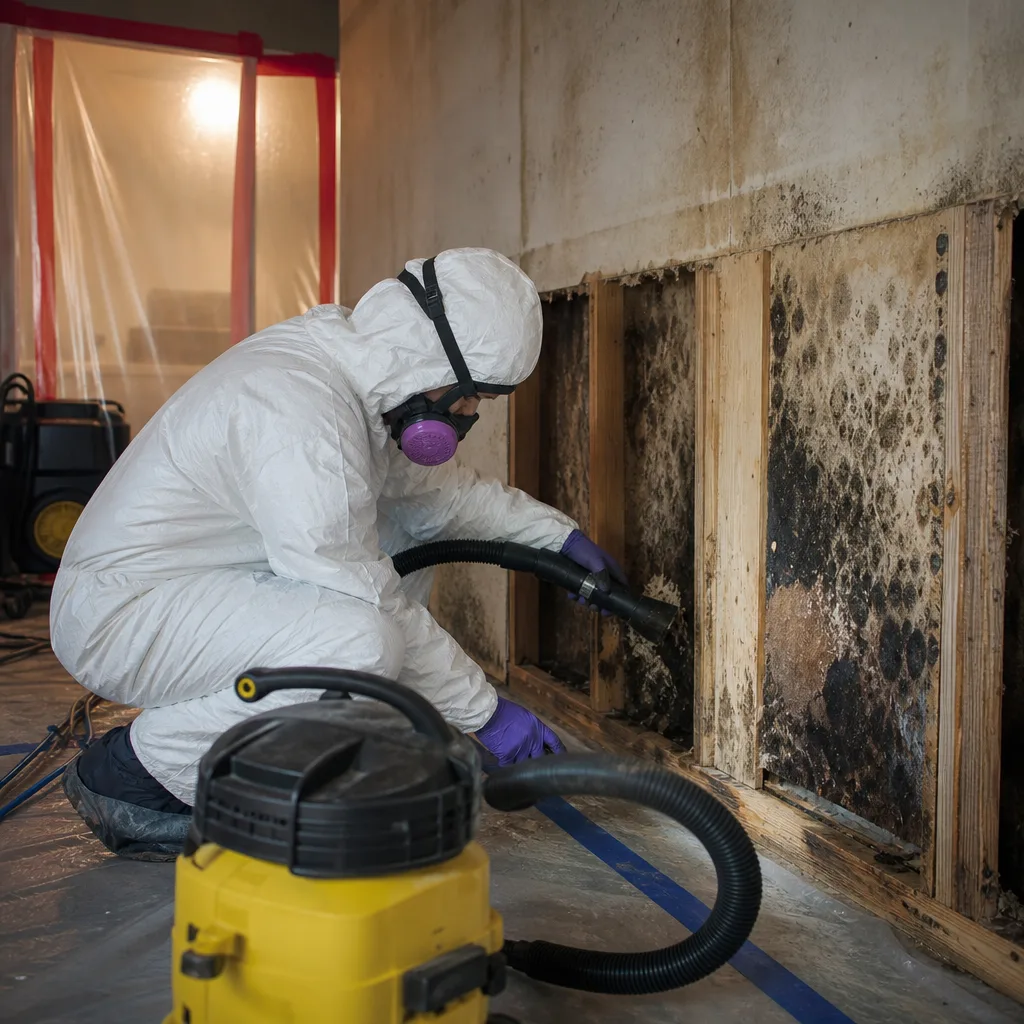
Flood Cleanup
Storm surge and sewer backup leave behind category 3 water, and category 3 water requires antimicrobial treatment, containment, and often full removal of affected drywall and insulation. In Financial District sub-basements and elevator pits, this is where the cost difference between a proper flood cleanup and a sketchy one shows up six months later, when the mold appears. We document every step so your claim actually covers the work.
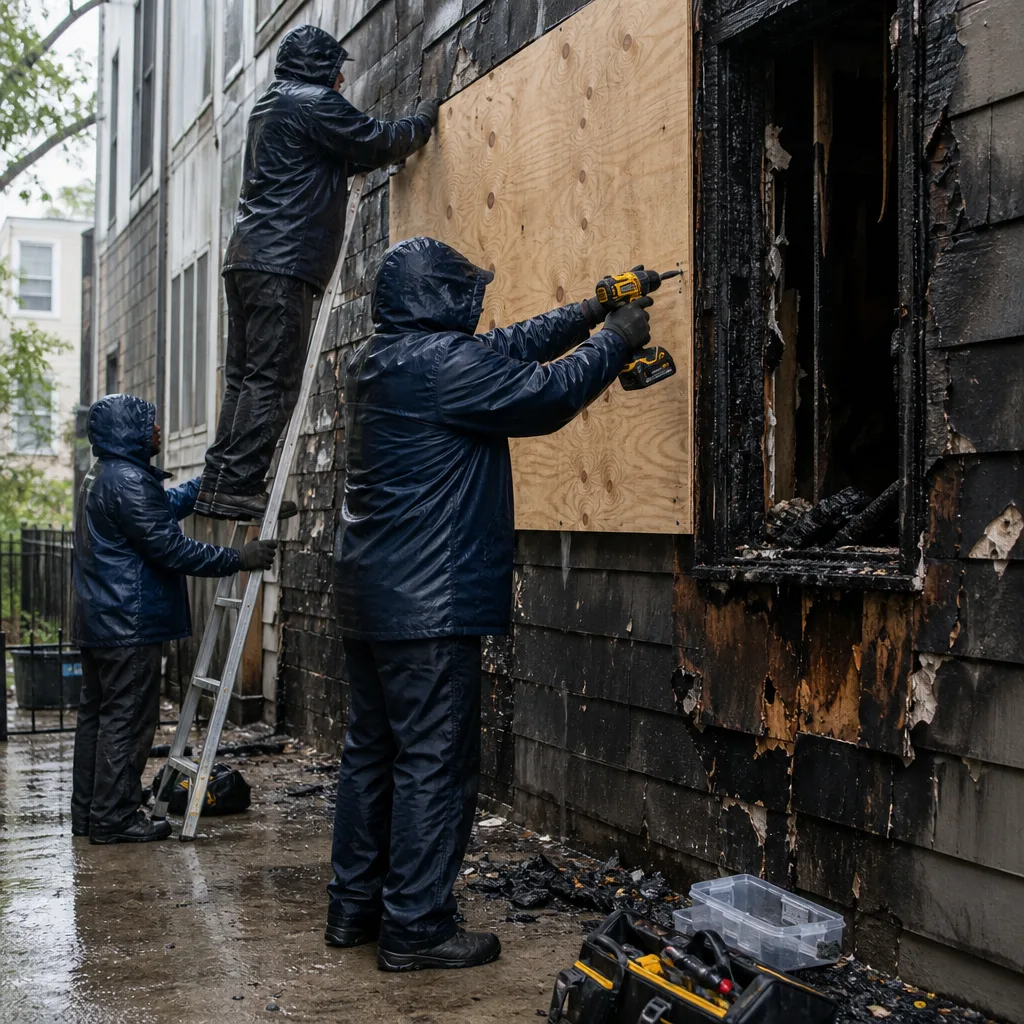
Burst Pipe Restoration
In this neighborhood’s converted office towers, a burst pipe is rarely a one-unit event. The plumbing was grafted onto commercial drainage systems never meant for continuous residential use, so when one fails, it usually means water moving through multiple floors. We map the full vertical path, not just the unit where the water was first seen.
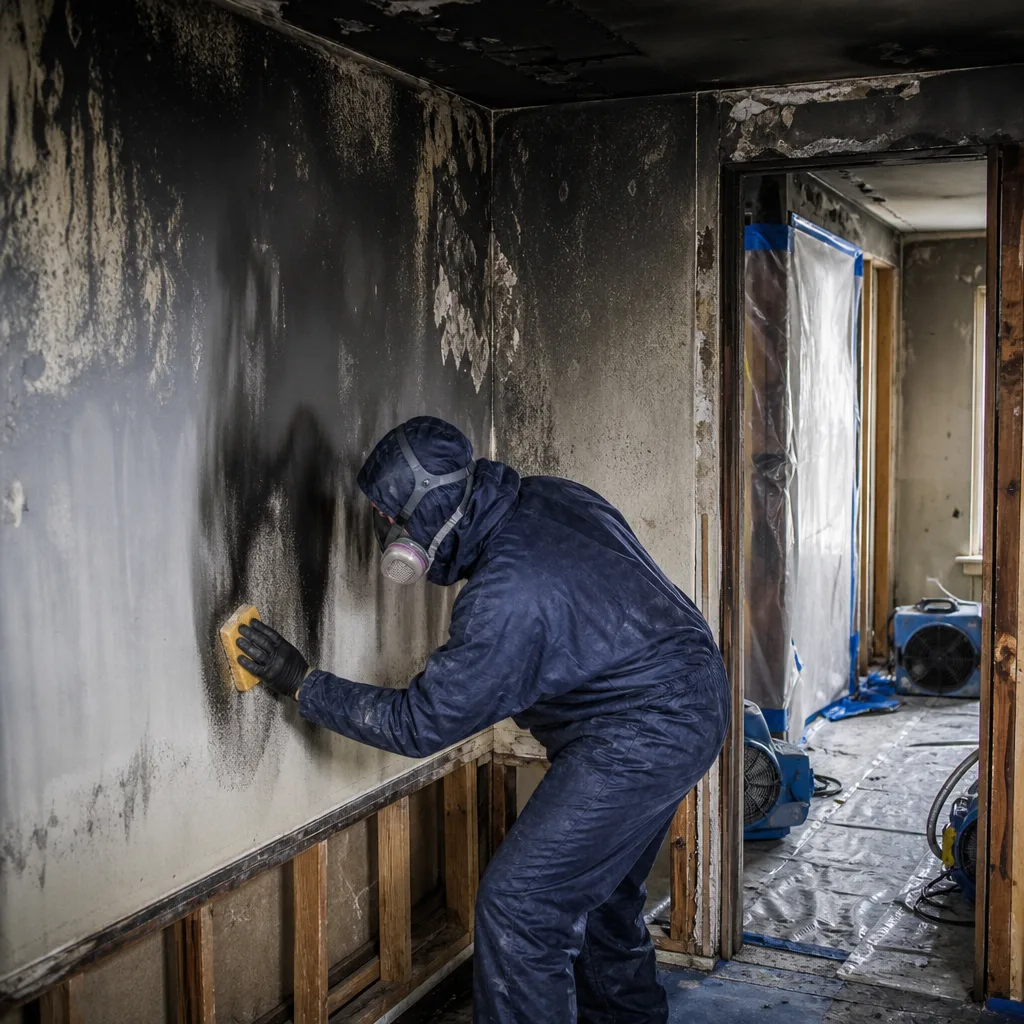
Basement Water Removal
FiDi basements and sub-basements sit below the water table in much of the neighborhood, and the bulkhead infrastructure is old. Whether the water came from groundwater seepage, a sewer backup, or storm surge, we get it out fast and dry the space properly, because whatever is down there, your electrical panels, your elevator machinery, your storage, does not get better while it sits wet.
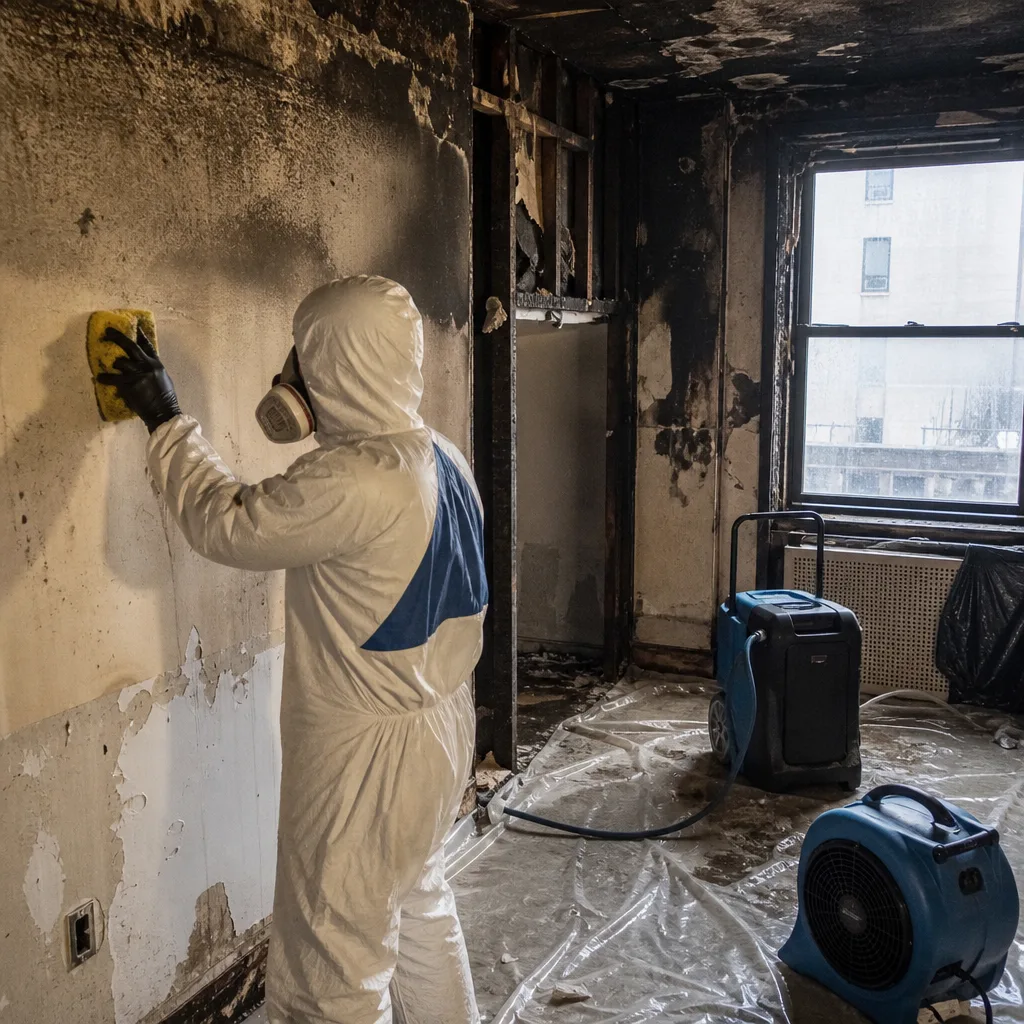
What happens when you call
- 1
A real person answersNo phone trees - you reach a local pro.
- 2
You get an upfront price rangeHonest numbers before anyone is dispatched.
- 3
A background-checked tech heads outLicensed & insured, dispatched right away.
- 4
You approve before work beginsNothing starts until you say go.
Water Damage Restoration Costs in Financial District, NY
In Financial District, a straightforward category 1 water extraction from a single unit typically runs $1,800 to $3,400. Add structural drying across multiple rooms or multiple floors, and you are in the $4,000 to $9,000 range. A category 3 flood cleanup or storm surge event that hits sub-basements and mechanical rooms runs higher, commonly $10,000 to $35,000 depending on how many floors were affected and whether elevator or electrical systems were involved. What moves the price most in FiDi is access: hand-carrying equipment up 20 flights of fire stairs costs more than rolling it through a ground-floor loading dock. The smarter path is a free visual inspection. We give you a written scope with real numbers before you commit to anything, and if your carrier balks at a line item, we argue it with them directly. If you already have a written estimate from another company, bring it to us; we will give you a free second opinion and tell you straight whether they missed something.
We Also Serve Cities Near Financial District
Our crews are on the road across Lower Manhattan and the surrounding boroughs daily. If you are in Midtown West, Lower Manhattan, Astoria, or Midtown Manhattan, the same team, same equipment, and same 24/7 live answer apply. Water does not care about borough lines, and neither do we.
Serving Financial District, NY - Our Local Coverage Area
We’re based in the Financial District area and know this community well. Use the map below to see our service coverage - if you’re nearby, we can almost certainly help.
Financial District Water Damage Restoration Questions, Answered
How do you handle water extraction in FiDi buildings where the only access is a narrow service entrance off an alley?
We bring equipment sized for the access. In these buildings, we stage portable extraction units, smaller dehumidifiers, and bucket air movers that can be hand-carried through a 28-inch door. It is slower than rolling a truck-mounted unit through a loading dock, but it is the only way to get water out of a building without a service elevator, and we have done it hundreds of times.
Can you dry out a converted office-tower condo without shutting down the building’s elevator?
Yes. We coordinate with the building management and schedule freight-elevator windows for moving equipment, and we keep the drying equipment inside the affected unit and adjacent hallways, not in common areas. If the elevator is already down because the sub-basement flooded, we hand-carry what we need up the fire stairs and bill the labor honestly. Call (607) 703-3408 and we will tell you exactly how we would handle your building.
What’s the difference between category 1 and category 3 water in a FiDi basement?
Category 1 is clean water, from a supply line or a radiator. Category 3 is grossly contaminated, typically storm surge from the harbor, river water, or sewer backup. In Financial District basements, the water sitting in an elevator pit after a nor’easter is almost always category 3. Treating it like category 1 means skipping antimicrobial treatment and leaving contaminated drywall in place, which is how you get mold behind elevator pit walls within months. We test, we classify, and we treat accordingly.
Do you need to contain dust during water damage work in a luxury FiDi condo?
Yes, and we do. Any time we cut drywall, remove flooring, or disturb building materials, we set up containment barriers and run HEPA air scrubbers to keep construction dust out of the rest of the unit and out of the building’s common air systems. In high-end Financial District buildings, the board will often require this, and it is just good practice. We do it on every job that requires it, not just the ones where someone is watching.
How quickly can you start extraction when a pipe bursts in a FiDi high-rise on a weekend?
Within about 45 minutes of your call, usually faster. We answer live on weekends, including Saturday night, and Wade heads out from the New York City office as soon as you hang up. He will be there himself, not a crew you have never met. Call (607) 703-3408 and you will have an answer in one ring, not a callback.
Will my insurance cover water damage in a converted office building?
Usually yes, for the unit interior and your personal property, but the specifics depend on your policy and on whether the source was inside your unit, in a common area, or from outside. In FiDi, where building mechanical systems and unit plumbing overlap, these claims get complicated. We bill your carrier directly and document everything from the first hour, which is what gets the claim paid. Estimates are line-item and insurance-standard.
How long does structural drying take in a FiDi high-rise?
Most single-unit water losses in Financial District dry in three to five days with proper equipment placement and daily monitoring. Multi-floor cascades in converted office towers can take seven to ten days, because the moisture is trapped in masonry chases and fire-rated cavities that dry slowly. We give you a written drying plan with a daily moisture log so you can see the progress yourself.
What should I do in the first 30 minutes after water damage in my condo?
Call us. Then, if you can safely reach it, shut off the water supply to the affected fixture or the unit’s main shutoff. Do not enter standing water that may be in contact with electrical outlets or wiring, and do not open walls or floors to inspect; let us do the assessment with the right tools. The first 30 minutes decide how much gets dried versus replaced, so the call comes first. (607) 703-3408.
Written by Wade Ferris, Owner at Wade’s Restoration, serving the Financial District and all of Lower Manhattan since 2007.