
Free visual inspection and a written scope of work before any mitigation begins - photos, moisture readings, and drying logs go in your claim file
The scope we write is the scope we bill. Anything new gets shown to you, in writing, before we touch it.
 Before
 After
After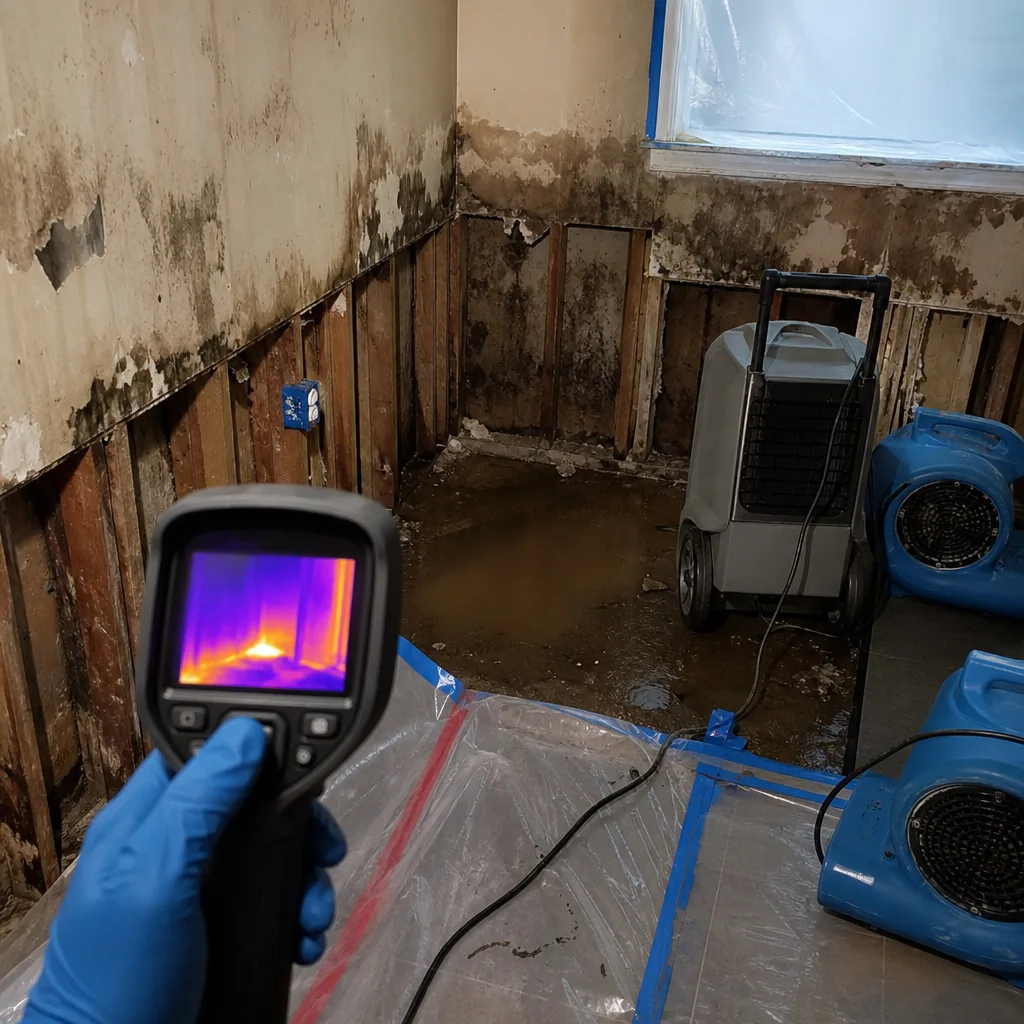 Before
 After
After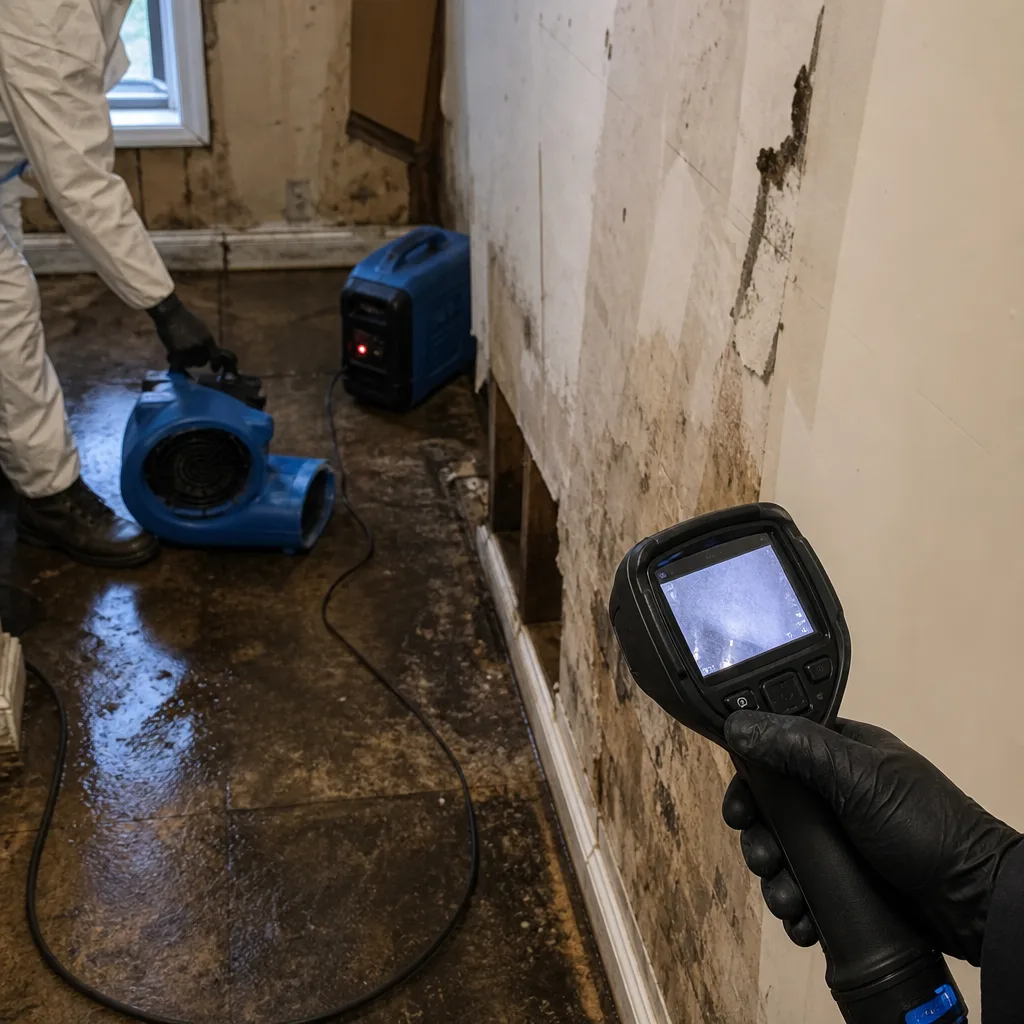 Before
 After
After24/7 Emergency Water Damage Restoration in Long Island City
If water is pouring through the ceiling of your Hunters Point apartment or flooding a basement mechanical room in Long Island City, call (607) 703-3408. Wade Ferris answers his own phone, 24 hours a day, and he can have extraction equipment running inside the hour. The first 60 minutes after water intrusion determine whether you’re looking at drying and cosmetic repair or full-scale mold remediation and structural replacement. Water doesn’t wait, especially in Long Island City, where the East River is never far away and ground-floor spaces flood fast. We’ll come out, assess the damage, and give you a straight answer about what needs to happen next. The visual inspection is free. The longer water sits, the more it spreads through drywall, flooring, and into the concrete slab, so don’t wait for normal business hours.
Understanding Water Damage Restoration Severity in Long Island City Properties
We classify water damage in three categories, and they matter more in Long Island City than almost anywhere else in Queens. Category 1 is clean water from a supply line or faucet. Category 2 is gray water from appliances like washing machines or dishwashers, carrying contaminants but not raw sewage. Category 3 is black water, from sewage backups, Newtown Creek overflow, or East River storm surge, and it requires Sewage Cleanup - Long Island City with full containment, disinfecting, and material removal under IICRC standards. In many Long Island City buildings, you’re not dealing with one category for long. A burst supply line in a converted warehouse loft can quickly become Category 2 when it saturates old horsehair plaster and layers of industrial flooring. A flood from a nor’easter that pushes East River water into a sub-grade mechanical room is Category 3 from the first minute. Our crews carry thermal imaging cameras and moisture meters to map exactly where water has traveled inside your walls and under your floors, and that mapping tells us what gets dried, what gets removed, and what needs pack-out for specialty treatment. The thickness of pre-war concrete slabs in LIC’s converted factory buildings means water doesn’t evaporate quickly. It gets trapped, and trapped water becomes mold. That’s why structural drying here demands more equipment and more patience than drying a wood-frame house in Astoria.
Why Long Island City Property Owners Choose Wade’s Restoration
- 45-minute response commitment: When you call with standing water, Wade or one of his senior techs is on the road within 45 minutes, headed to your Long Island City address.
- 24/7 live answer, no answering service: The phone rings, a real person picks up. Sometimes that person is Wade Ferris himself, with his number published and his name on the truck.
- IICRC-certified crews: Wade’s team holds WRT (Water Damage Restoration Technician) and ASD (Applied Structural Drying) certifications, plus AMRT for mold jobs. The industry’s highest standards apply to every extraction and drying plan, not in theory, in practice.
- Free visual inspection: We come out, look at the damage, and tell you honestly what you’re dealing with. No charge for that, and no pressure to sign anything on the spot.
- Direct insurance billing: We bill your insurer directly and coordinate with the adjuster, so you’re not stuck in the middle relaying information about drying logs and scope items.
- One crew from first call to final repair: The same team that extracts the water handles the drying, the sanitizing, and the reconstruction. No hand-off to a subcontractor you’ve never met.
Our Water Damage Restoration Process
Inspection & Assessment
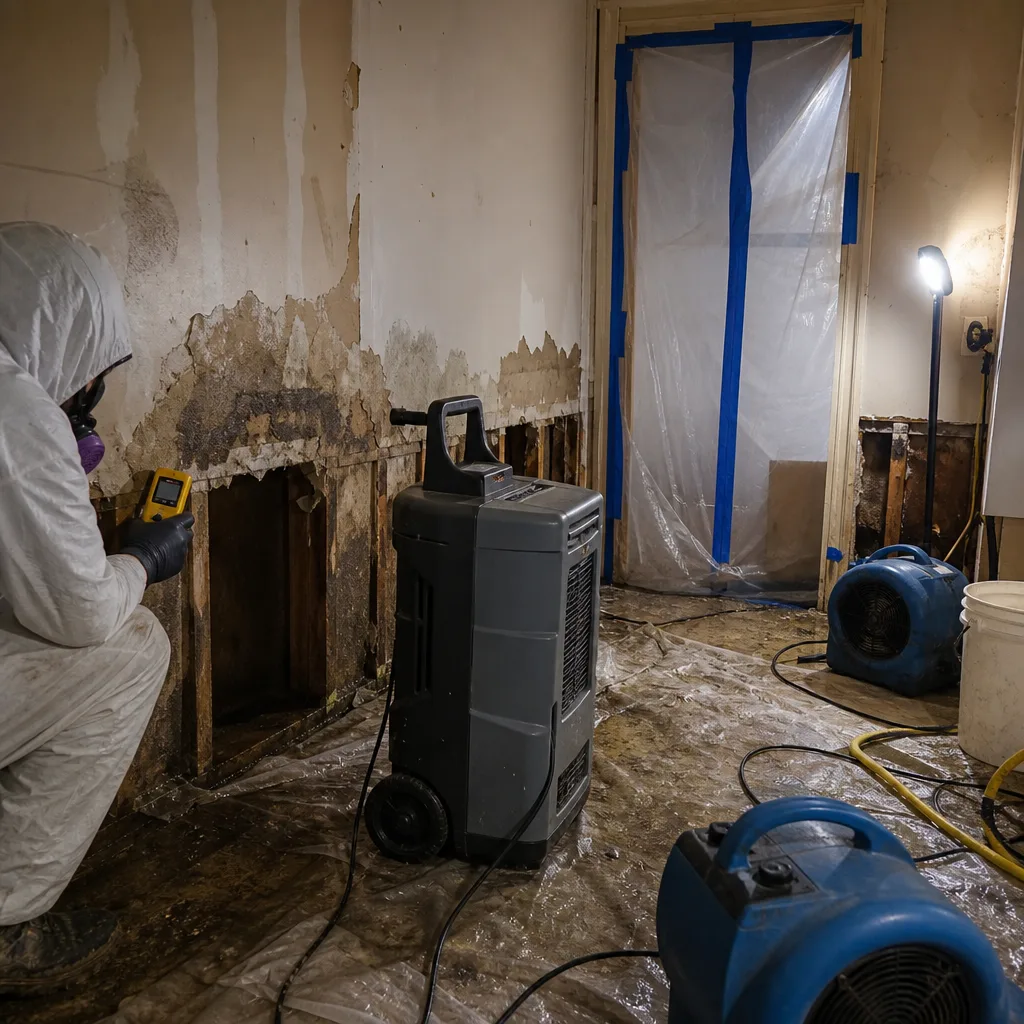
We start with thermal imaging and moisture meters to find every path the water took. In Long Island City’s pre-war masonry buildings, water travels through concrete and brick in ways you can’t see from the surface. We map it, photograph it, and give you a written scope before any work starts.
Extraction & Stabilization
We pull standing water with truck-mounted and portable extraction units. In a mechanical room near sea level in Hunters Point, stabilization also means shutting down electrical systems safely and ventilating the space while we coordinate with building management.
Drying & Dehumidification
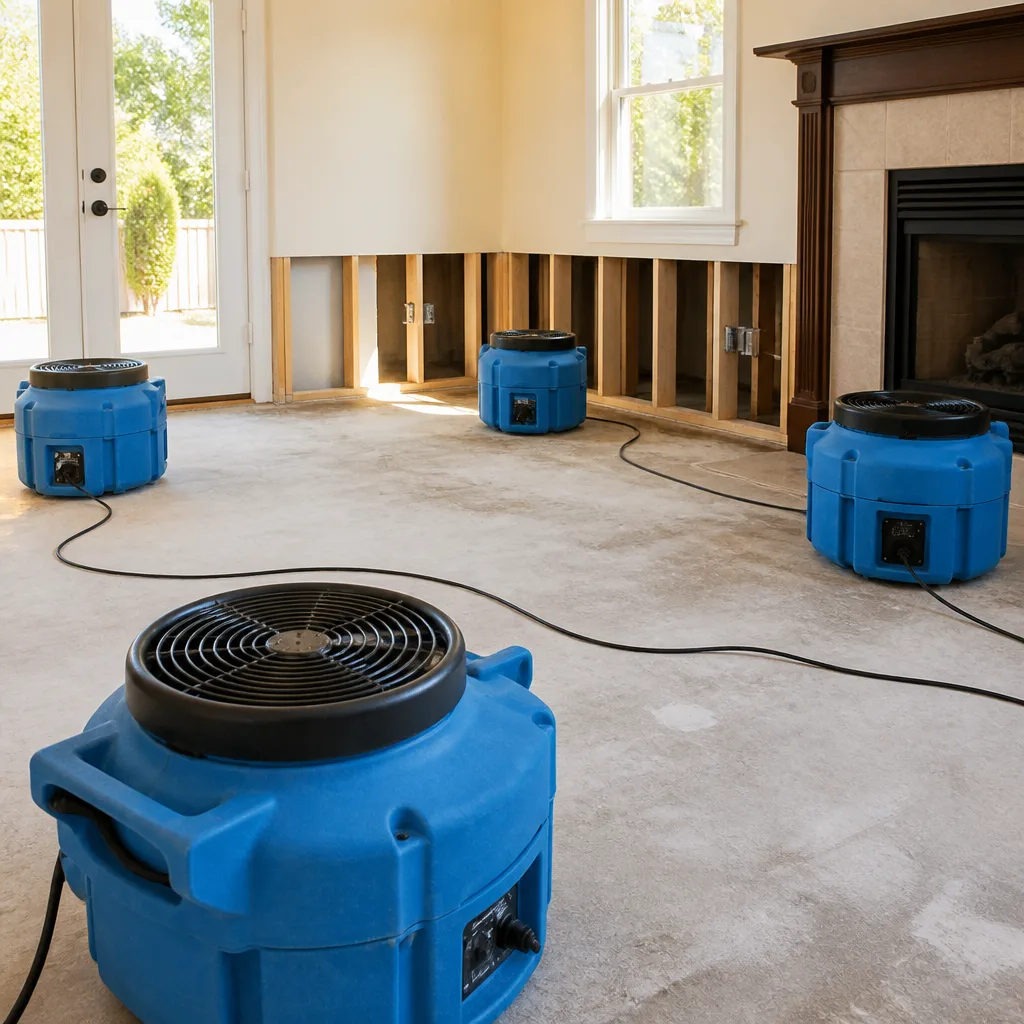
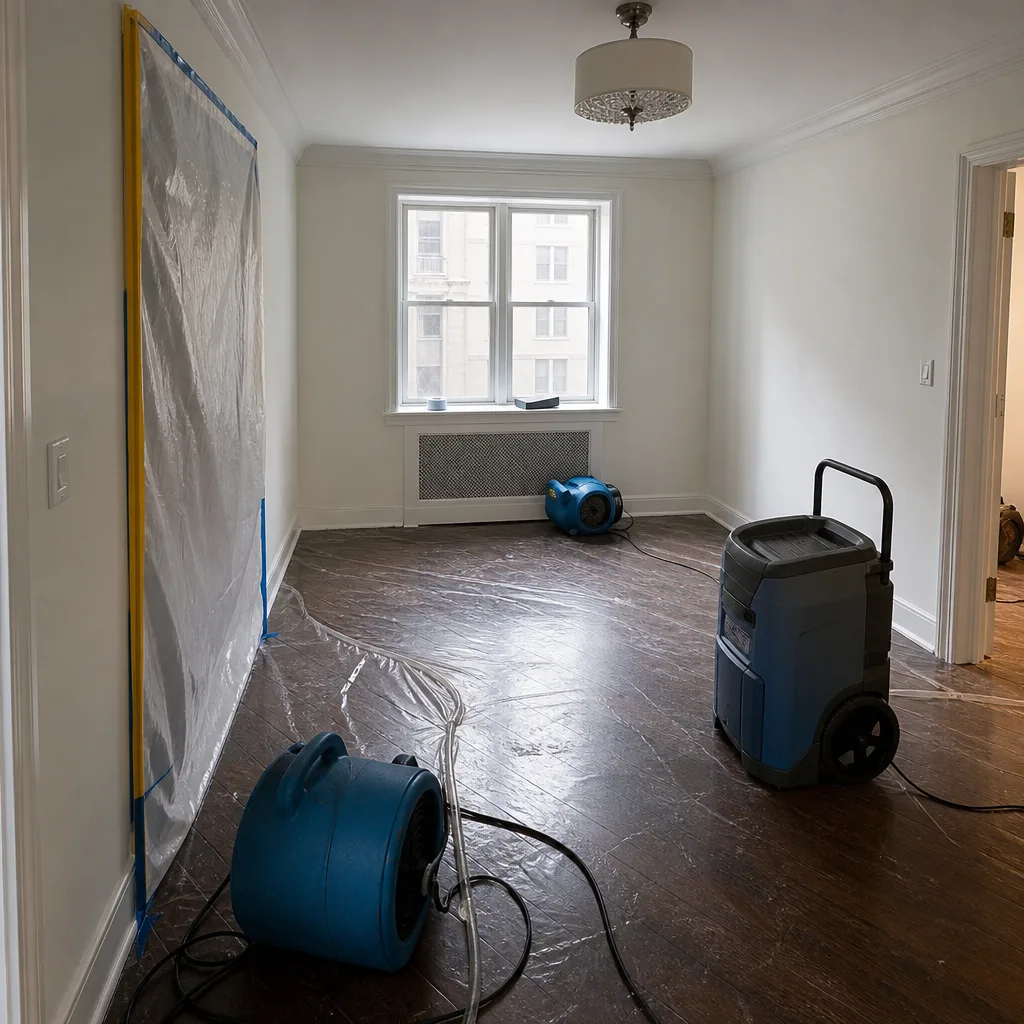
LGR dehumidifiers from Phoenix and Dri-Eaz run alongside XPOWER air movers positioned to create airflow across every wet surface. We take moisture readings every single day, and you get the full log at the end of the job. Almost nobody in this trade hands that over. Wade does.
Cleaning & Sanitization
After drying, every affected surface gets cleaned and treated with antimicrobial solutions appropriate to the water category. For Category 3 water from storm surge or sewage, this means controlled demolition to the flood line, not surface cleaning, as part of our Fire & Smoke Damage Restoration in Long Island City protocols.
Specialty Treatment for Custom Finishes
High-end millwork, custom wood doors, and built-in cabinetry from NYC’s best joiners don’t dry in place without warping. We coordinate pack-out to a climate-controlled facility, monitor moisture content throughout the drying process, and return each piece when its readings match the structure.
Repairs & Restoration
We rebuild it right. Whether that’s replacing drywall in a Jackson Avenue loft or reconstructing a flood-proofed mechanical room to current NYC DOB code, one crew handles it all, from the first extraction to the final paint.
Need Emergency Water Damage Restoration in Long Island City Now?
Crews minutes away, answering live 24 hours a day. The sooner we start, the less it costs.
Working With Your Insurance Company
Insurance claims are where homeowners get ground down. You pay premiums for years, then when water hits, you’re on the phone with an adjuster who wants documentation you don’t have. We take that off your plate. From the first hour, Wade’s crew photographs every wet surface and damaged material, room by room, before anything gets moved. We generate moisture readings and drying logs that meet the documentation standard insurance carriers expect from IICRC-certified restoration firms. Then Wade talks to your adjuster directly, not through you. He’s done this for nearly two decades and he knows the adjuster’s language: line-item scopes, category classifications, depreciation schedules. You get the benefit of an advocate who knows restoration work and insurance requirements, without the runaround.
What We Provide Your Insurer
- Thorough documentation of the loss
- Photos of all damage, room by room
- Moisture readings and drying logs
- A detailed, line-item scope of work
- Direct coordination with your carrier
Built for Long Island City’s Loss Calendar
Here’s what Long Island City actually sees, season by season. January and February bring deep freezes that burst supply lines in older buildings along Vernon Boulevard and 21st Street, especially in the unheated pipe chases of pre-war conversions. March and April bring snowmelt and spring rain that saturates ground-floor retail spaces in mixed-use buildings along Queens Plaza. Summer thunderstorms hit in July and August, and the urban heat island effect in Long Island City means flat roofs bake, then crack, then let water in during the next downpour, which is when we get calls about ceiling leaks in high-rise units. September through November is nor’easter season, and the low-lying blocks near the East River and Newtown Creek are first to flood when storm surge pushes water through storm drains and into basements. December is pipe-freeze season again. We’ve seen every month on this calendar, and we schedule crews accordingly. Long Island City’s specific pattern is coastal flooding plus dense-tower plumbing failures plus aging masonry infrastructure, and you need a restoration company that knows the difference before they send a generic crew with six fans.
Water Damage Restoration Across Long Island City’s Neighborhoods
Hunters Point is our front line for East River storm surge and the mechanical-room floods that follow. The waterfront towers there were rebuilt after Sandy, but many mechanical rooms still sit only a few feet above surge elevation. A serious flood there isn’t just wet floors; it’s boilers, switchgear, and elevator machinery down all at once. Court Square and Queens Plaza, with their mix of early-20th-century office buildings and new residential conversions, give us a steady diet of aging cast-iron supply lines and roof drain failures that cascade down through multiple floors. Along Jackson Avenue and up through the Dutch Kills area, the converted warehouse lofts hide thick concrete slabs and non-standard floor plans that make drying slow and moisture mapping essential. And when we’re leaving those jobs, we pass right by the Pulaski Bridge, which reminds us how close the water always is here. Each of these areas has a different loss pattern, and our crews know them all from years of working these streets.
Water Damage Restoration in this part of Queens isn’t a sideline for us. It’s what Wade’s been doing since 2007, and we’ve seen enough of Long Island City‘s unique failures to know exactly what to do when the next one happens.
Specialized Water Damage Restoration Services We Offer in Long Island City
Emergency Water Extraction
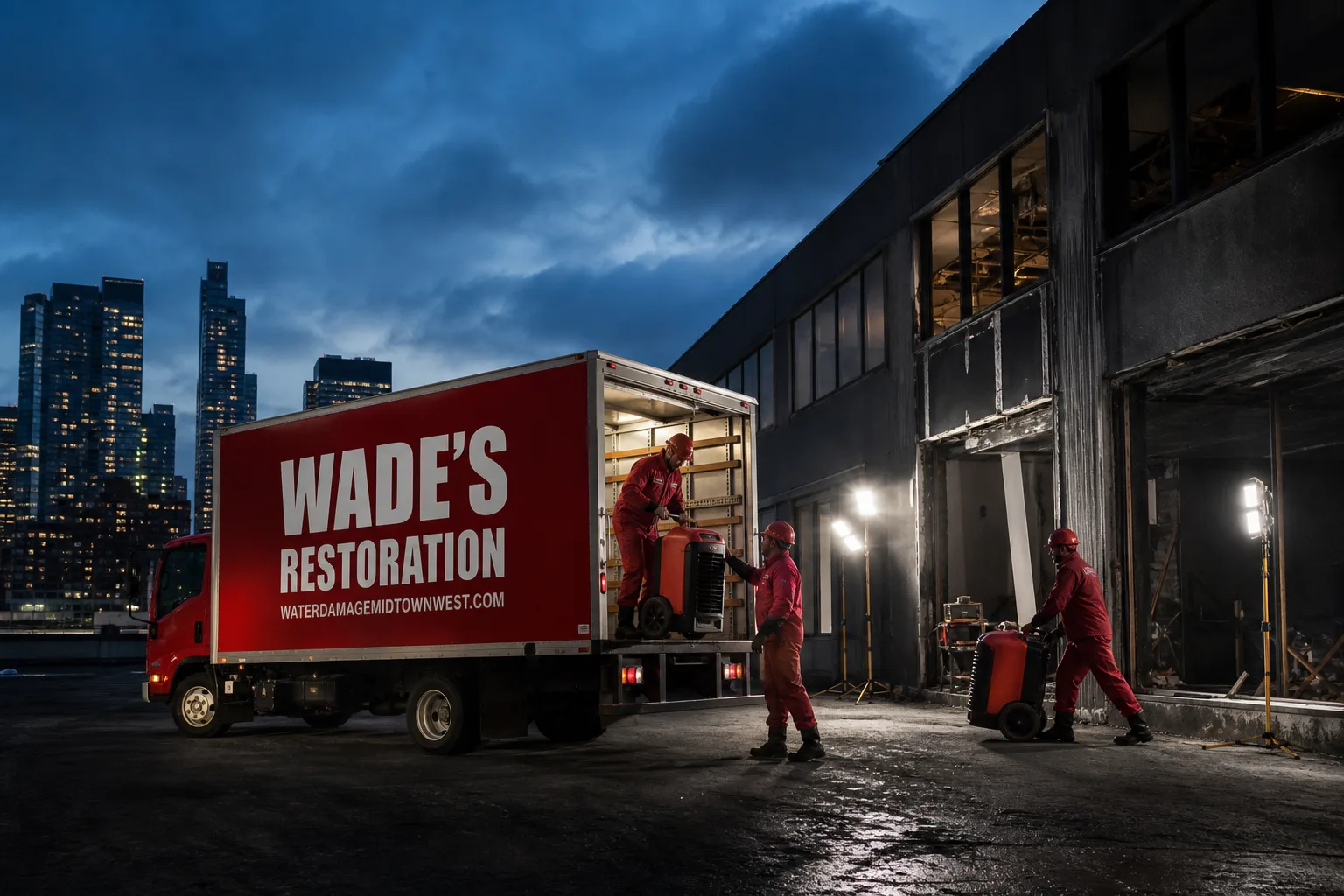
We pull water out fast, because Long Island City’s dense construction and minimal elevation buffer mean water doesn’t drain away on its own. In ground-floor commercial spaces near Vernon Boulevard, extraction is the difference between saving flooring and replacing it. Wade’s trucks carry enough extraction capacity to handle a flooded mechanical room or a soaked loft.
Structural Drying & Dehumidification
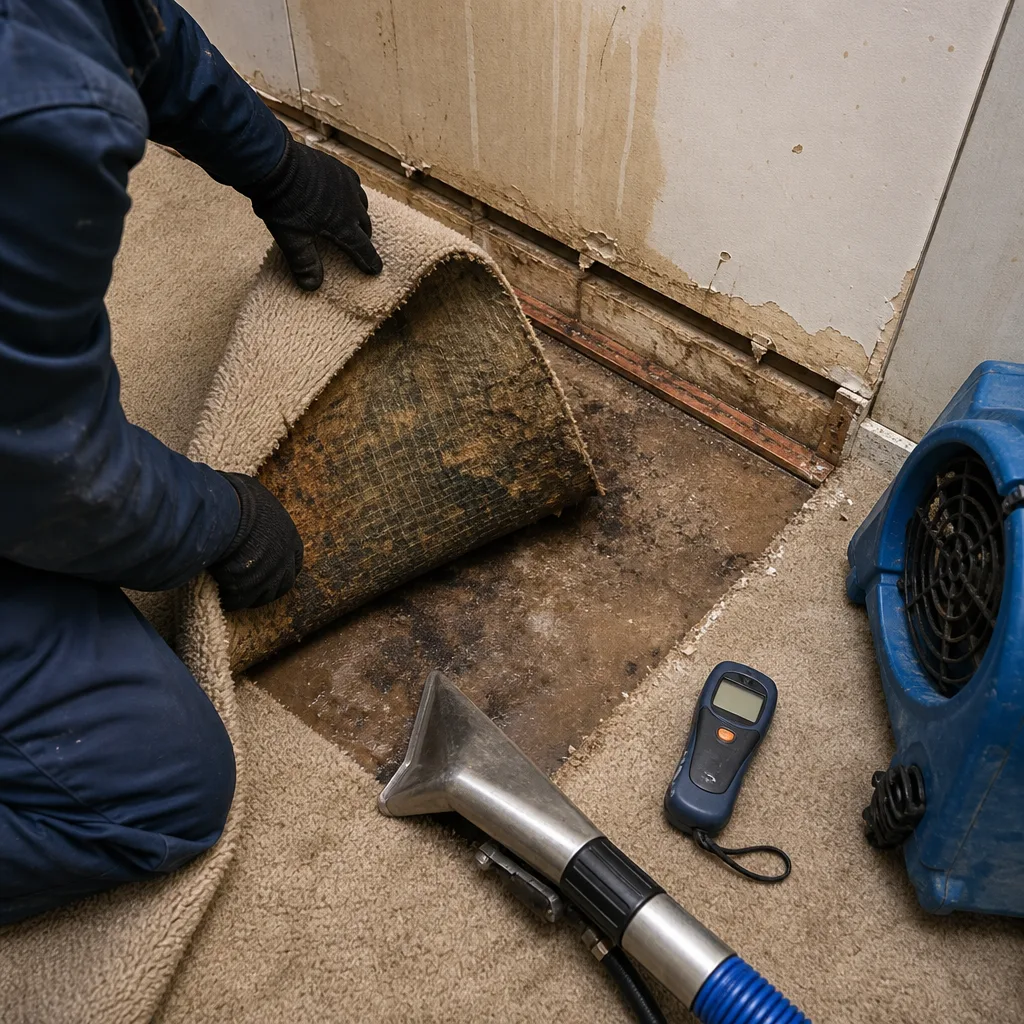
This is where Long Island City jobs get complicated. Thick pre-war concrete slabs hold moisture for weeks if you don’t run enough equipment. In the towers near the waterfront, the building envelope is tight, so humidity from drying doesn’t escape on its own. We size the drying system for the actual structure, using Phoenix dehumidifiers and XPOWER air movers placed according to moisture readings, not guesswork. Daily moisture logs show you and your insurer exactly what’s happening behind the walls.
Flood Cleanup
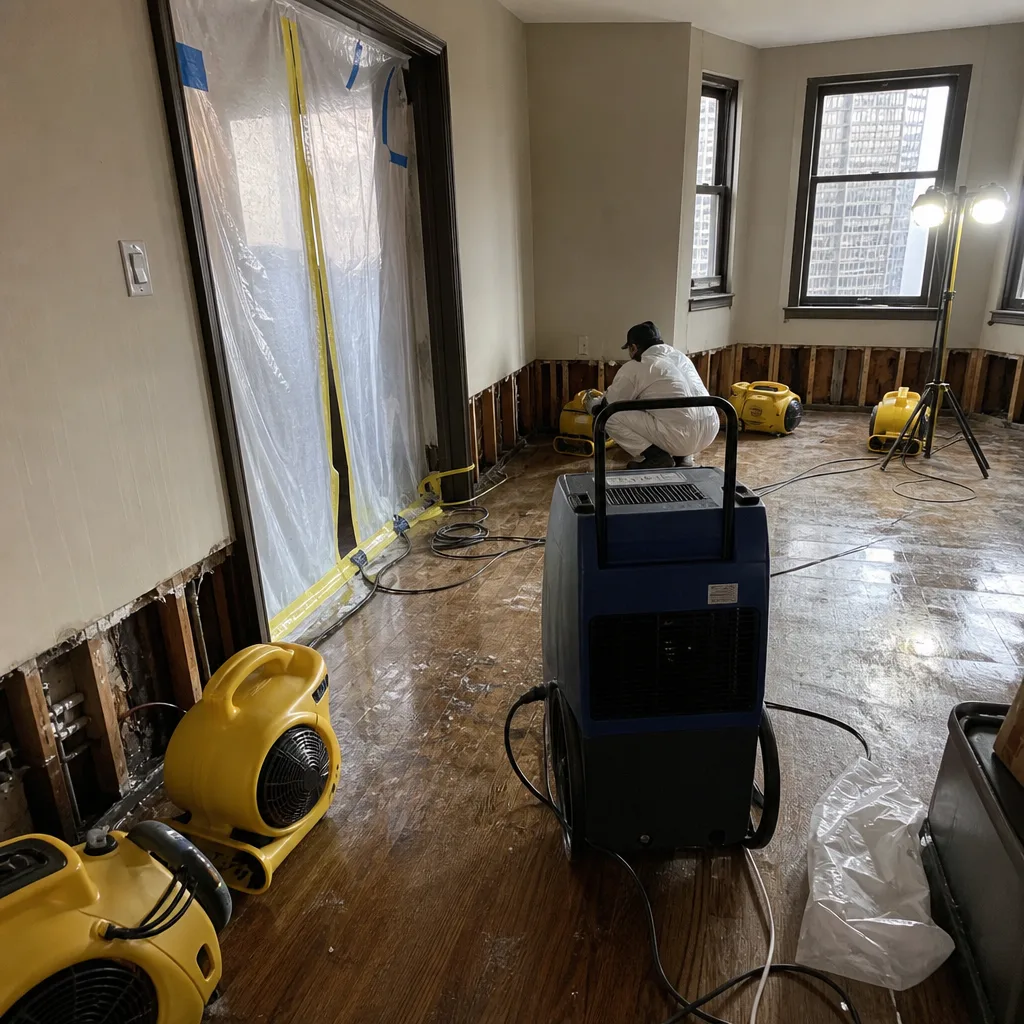
East River storm surge and Newtown Creek overflow bring Category 3 water, and that requires Long Island City Storm & Disaster Restoration including removal of porous materials to the flood line, antimicrobial treatment of structural surfaces, and full containment during the work. We’ve done this enough times in LIC to know that flood cleanup here often means coordinating with building engineers and NYC DOB on mechanical systems, not just ripping out drywall.
Burst Pipe Restoration
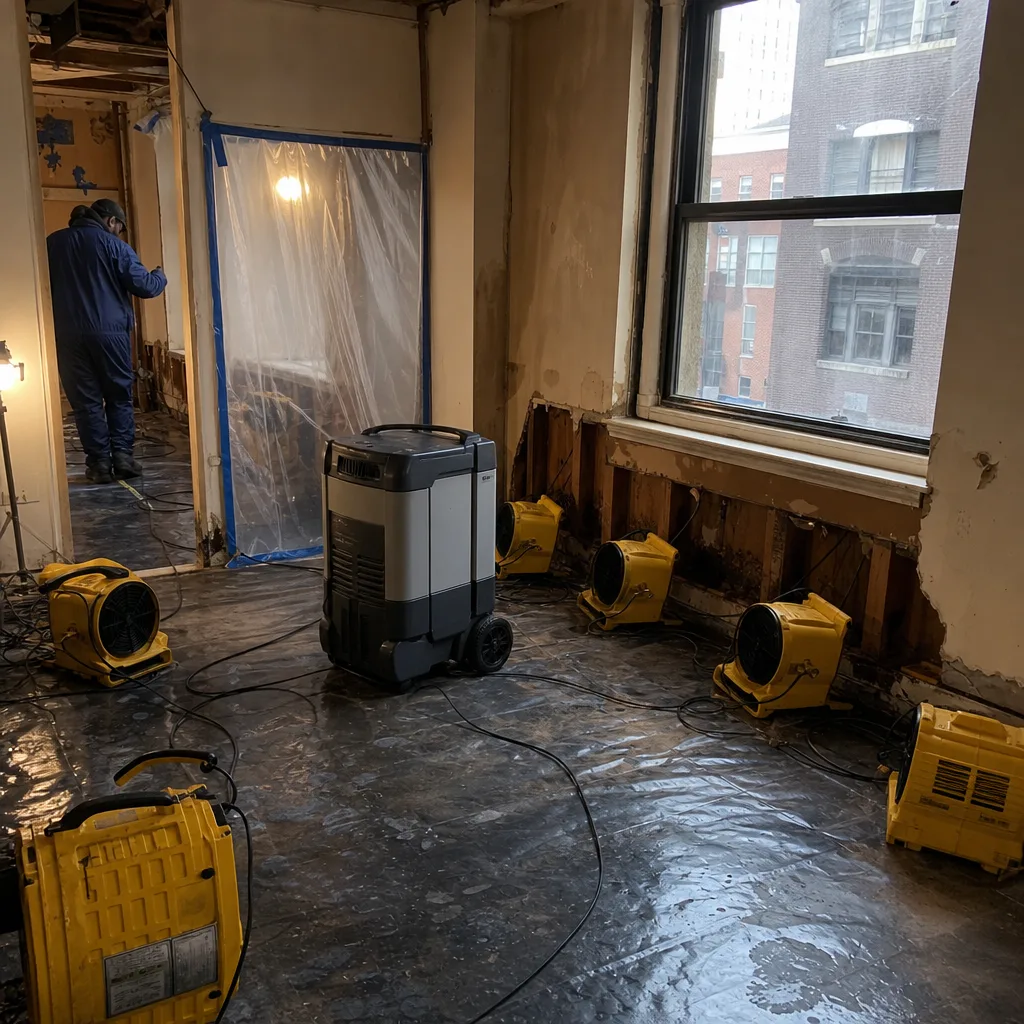
Supply lines freeze in LIC’s older buildings and fail in the high-rises without warning. A burst pipe on the 20th floor of a glass tower sends water down through dozens of units, and getting it stopped and dried before mold takes hold is a race. We respond to these with the same urgency as a flood event, and we work directly with building management to map every affected unit below the failure point.
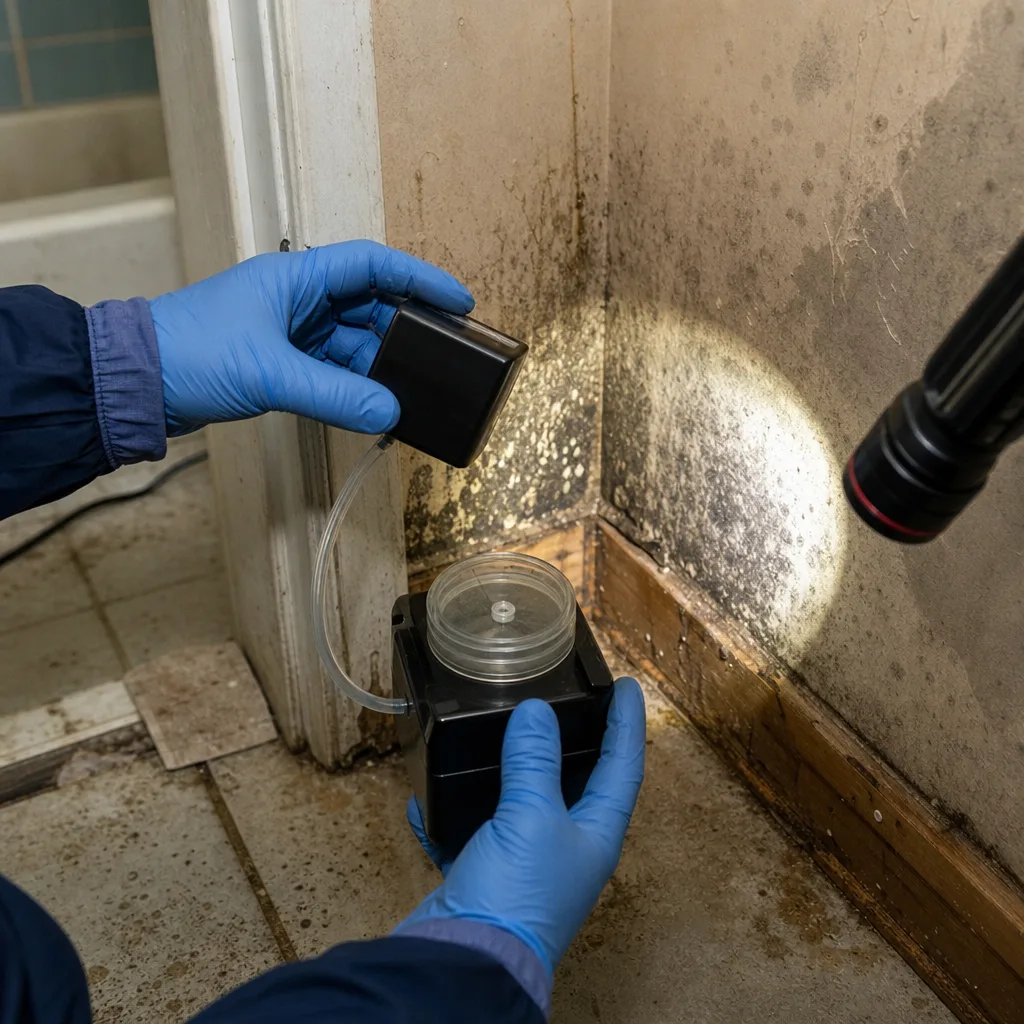
Basement Water Removal
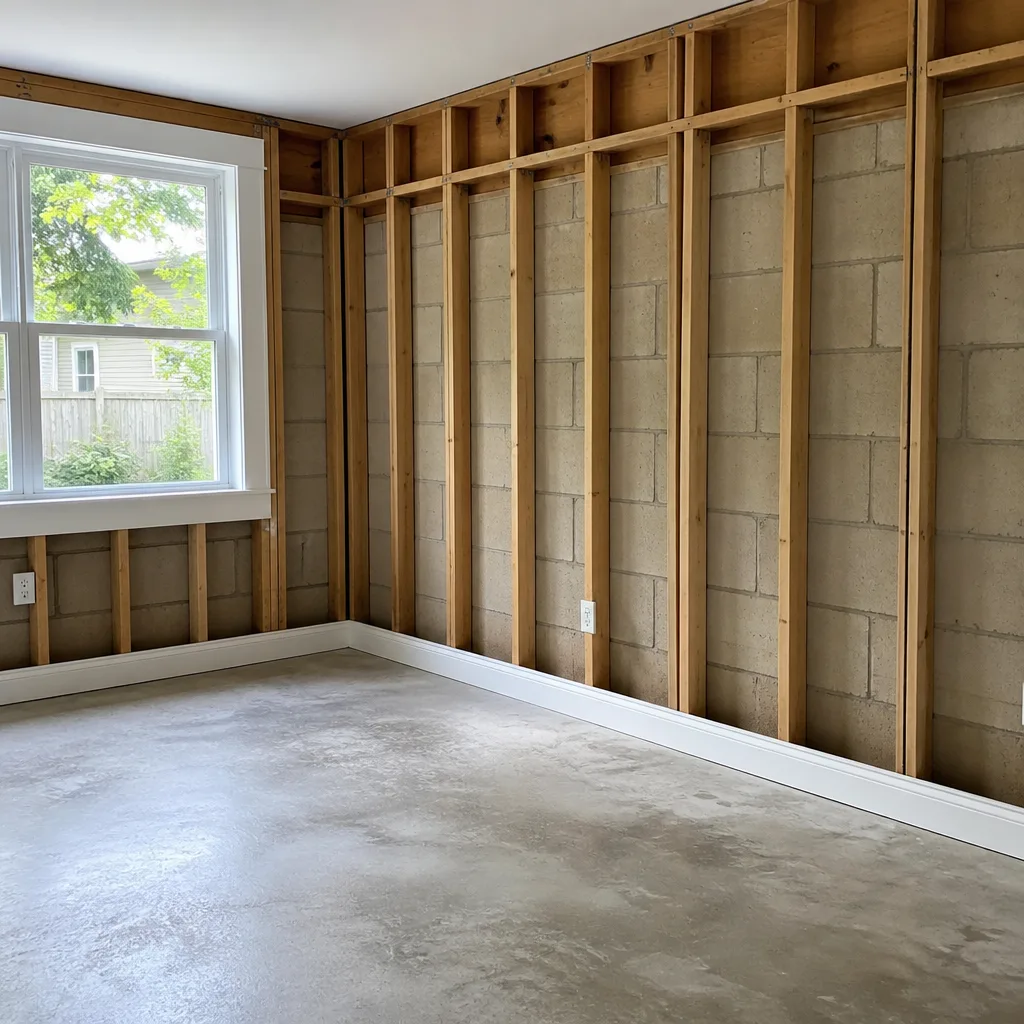
Sub-grade spaces in Long Island City flood from groundwater seepage, storm drain backup, and coastal surge. In the Hunters Point area, many basements sit below the East River’s surge elevation, so pumping water out is only step one. We pump, extract, dry, and treat the space, then give you a straight recommendation on whether waterproofing or flood-proofing is needed to stop the next event before it starts.
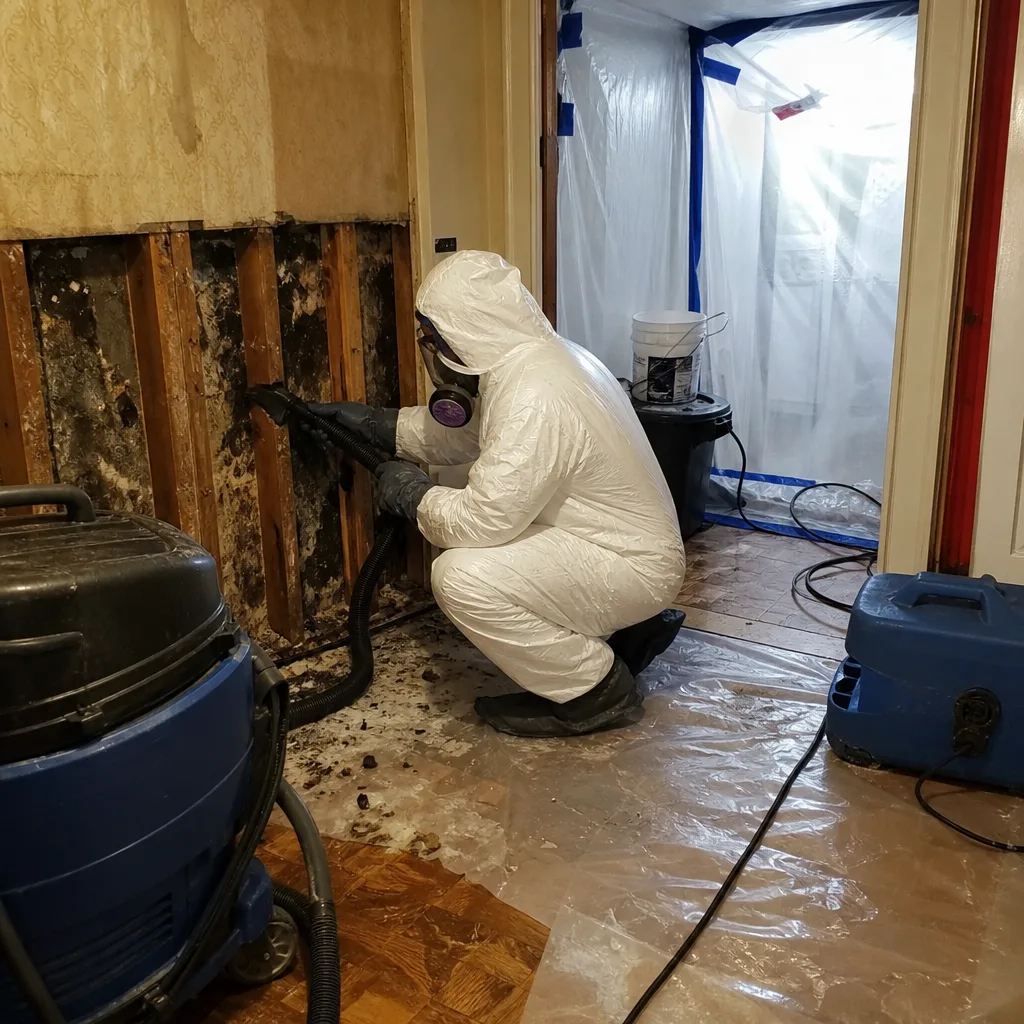
Ceiling & Roof Leak Water Damage
Flat roofs are the norm across Long Island City, and when one fails, water travels through the building’s structure before it shows up as a stain on your ceiling. By then, insulation is soaked and mold is already growing inside the ceiling cavity. We find the actual moisture path with thermal imaging, not just the visible stain, then dry the entire assembly, replace what can’t be saved, and document the cause for your building management or insurer.
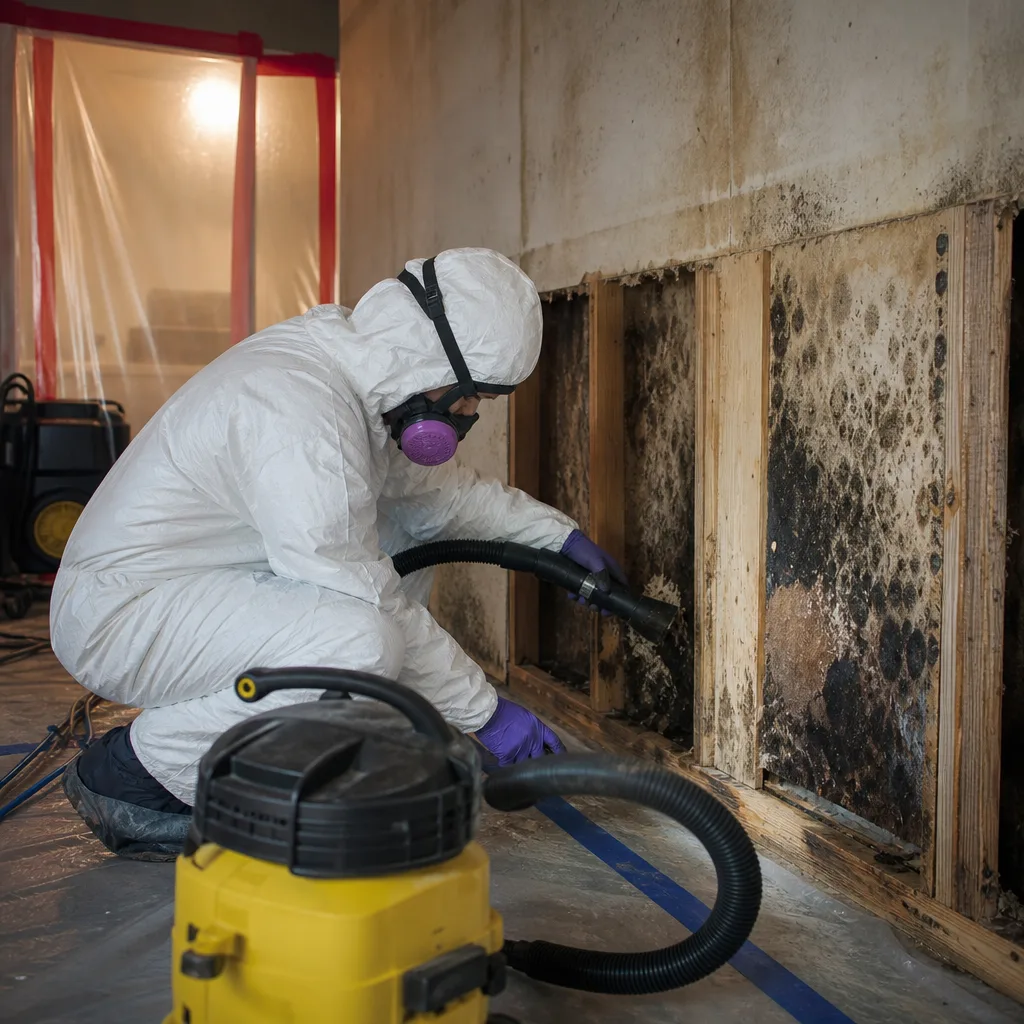
What happens when you call
- 1
A real person answersNo phone trees - you reach a local pro.
- 2
You get an upfront price rangeHonest numbers before anyone is dispatched.
- 3
A background-checked tech heads outLicensed & insured, dispatched right away.
- 4
You approve before work beginsNothing starts until you say go.
Water Damage Restoration Costs in Long Island City, NY
A typical emergency water extraction and structural drying job in Long Island City runs $2,800 to $6,500 depending on the square footage affected and the number of rooms or units involved. Full flood restoration from Category 3 storm surge or sewage backup ranges $8,000 to $25,000 or more, especially when mechanical rooms are involved and code-compliant reconstruction is required. Ceiling and roof leak damage usually lands between $1,200 and $4,800 after drying, treatment, and repair. What moves the price most in LIC is density: in a tower, one pipe failure can send us into a dozen units, and each one needs its own drying plan and scope. Insurance covers most of these losses, and we bill your carrier directly, so your out-of-pocket is often just the deductible. Call (607) 703-3408 for a free visual inspection. Wade will give you a written scope and a firm price before any work begins.
We Also Serve Cities Near Long Island City
From our Long Island City base, Wade’s Restoration crews respond regularly to water damage in Astoria and the surrounding Queens neighborhoods. If you’re just across the bridge or up the road, call the same number: (607) 703-3408. Wade heads out whether you’re in a pre-war rowhouse or a waterfront high-rise.
Serving Long Island City, NY - Our Local Coverage Area
We’re based in the Long Island City area and know this community well. Use the map below to see our service coverage - if you’re nearby, we can almost certainly help.
Long Island City Water Damage Restoration Questions, Answered
How do you handle water damage restoration in Long Island City buildings where basement mechanical rooms are near sea level?
We treat those mechanical rooms as Category 3 flood zones even when the water came from a domestic pipe, because the equipment in them runs the whole building. The first step is always safe electrical shutdown, then extraction, then evaluation of every system in the room. We coordinate directly with building management and, when required, with NYC DOB on flood-proofing and code-compliant reconstruction. Wade’s crews have done enough of these that we don’t get surprised by a flooded switchgear room at 2 a.m. Call (607) 703-3408 and we’ll start tonight.
Can you restore custom wood doors and trim after water damage in LIC loft conversions?
Yes, but almost never in place. Saturated custom wood doors, trim, and built-in millwork need to be removed and dried slowly in a controlled environment, or they warp past saving. We pack out those pieces, document each one with photos and moisture readings, dry them in a climate-controlled facility, and return them when the moisture content matches the surrounding structure. It’s more work, but it’s the only way to save what a post-war replacement can’t match.
What is the biggest water damage risk in LIC’s luxury high-rises after a plumbing failure?
The cascade. One failed supply line on an upper floor sends water down through walls, floors, and ceilings into every unit below, and by the time it reaches the lobby or the mechanical room, it’s moved through electrical chases, insulation, and structural cavities. That’s why speed matters. We map the water path with thermal imaging, set up containment on every affected floor, and coordinate with building management to get access to each impacted unit before mold takes hold.
Do you need to coordinate with NYC DOB for water damage restoration in LIC?
Sometimes, yes. When a flood hits a mechanical room and electrical, gas, or elevator systems are affected, NYC DOB may require permits for the repair work, and flood-proofing improvements often trigger code compliance reviews. Wade’s Restoration handles that coordination for you. We’ve worked with LIC building engineers and DOB enough to know what needs to be filed, what needs an inspection, and what needs a variance. You focus on your family; we handle the bureaucracy.
How quickly can you start water extraction in Long Island City after a flood event?
Within the hour in most of Long Island City. Wade answers his own phone 24/7, and our trucks are staged to reach Hunters Point, Court Square, Queens Plaza, and the surrounding blocks quickly. During a storm surge event when half the neighborhood is calling, it might be 90 minutes, but we’ll tell you honestly when we’ll be there and we’ll be there. The extraction equipment comes off the truck first, and the water starts moving out as soon as we arrive.
How much does water damage restoration cost in Long Island City compared to nearby areas?
Long Island City restoration work runs slightly higher than the New York metro average because of density, access, and the complexity of pre-war masonry and modern high-rise construction. A typical extraction and drying job here is $2,800 to $6,500, while the same square footage in a single-family Astoria rowhouse might run $2,000 to $4,000. The difference is equipment, containment, and coordination time in buildings where you can’t just park a truck out front and run hoses through an open door.
How long does structural drying take in a Long Island City building?
Plan for 3 to 7 days in most cases, and longer in pre-war conversions with thick concrete slabs. Concrete holds water differently than wood framing, and the tight building envelope in LIC’s towers means we run more dehumidification and manage the ambient humidity more carefully. We take daily moisture readings and show you the log, so you’ll see the numbers trending down and know exactly when the equipment can come out.
What should I do in the first 30 minutes after water damage in Long Island City?
Shut off the water source if you can do so safely, kill the power to the affected area at the breaker, move valuables off wet floors, and call (607) 703-3408. Don’t use a vacuum to extract water, don’t turn on heat or fans in a Category 3 flood, and don’t open walls or floors until we’ve assessed the moisture path. The first 30 minutes set the ceiling on how much we can save. After that, it’s about managing what’s already lost.
We have one straightforward promise for every water damage job in Long Island City: the 90-Day Done Right Promise. If it’s not done right, we make it right, in writing. Wade Ferris started this company in 2007 by putting his own name on the truck and his own phone number on the work. That hasn’t changed. What has changed is the equipment, the documentation, and the number of Long Island City basements, lofts, and tower mechanical rooms we’ve dried out. To wade is what you do through a flooded basement at two in the morning, and it happens to be his name.
Call (607) 703-3408 now for a free estimate and an honest assessment of your water damage.
Written by Wade Ferris, Owner at Wade’s Restoration, serving Long Island City since 2007.