
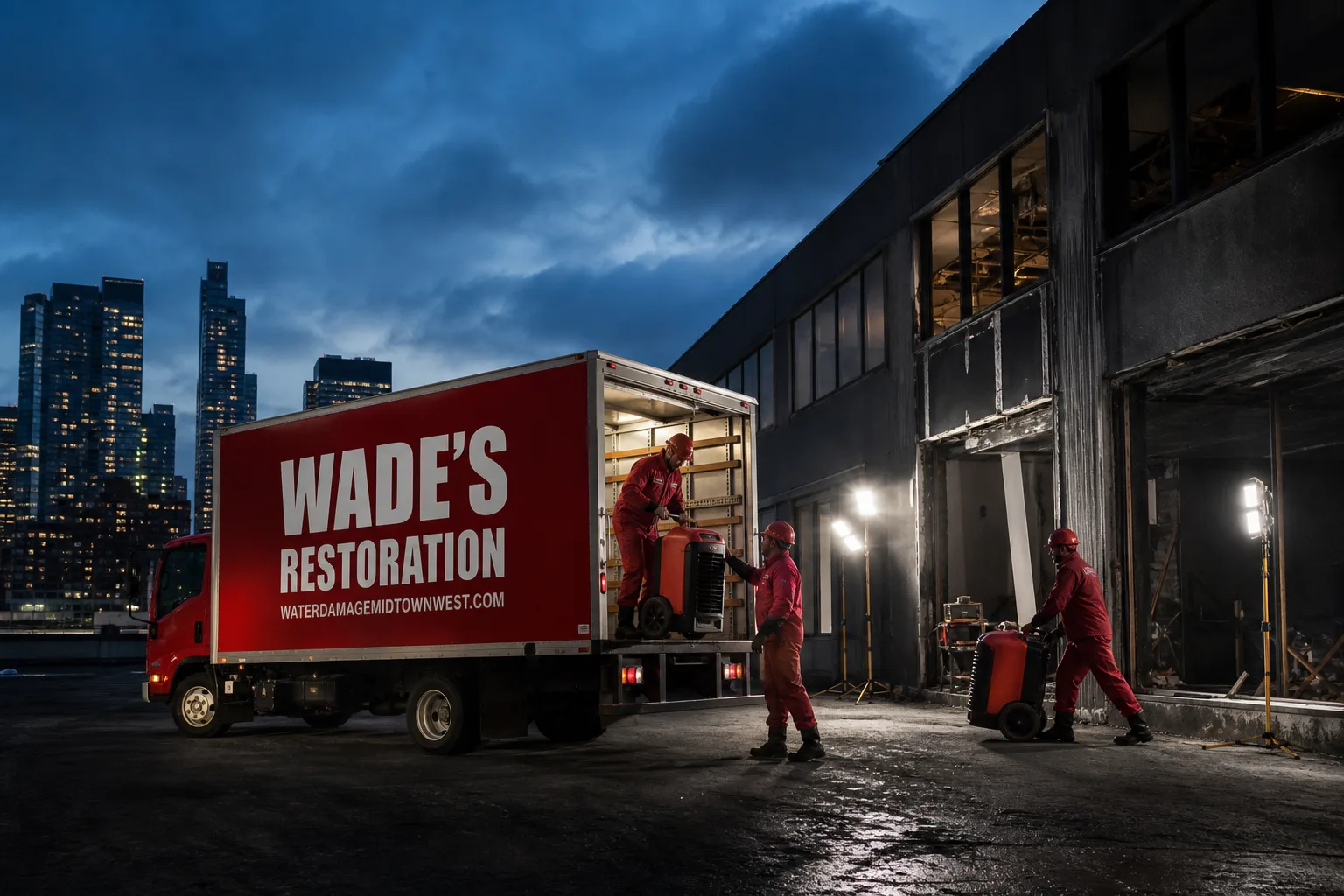
Free visual inspection and a written scope of work before any mitigation begins - photos, moisture readings, and drying logs go in your claim file
The scope we write is the scope we bill. Anything new gets shown to you, in writing, before we touch it.
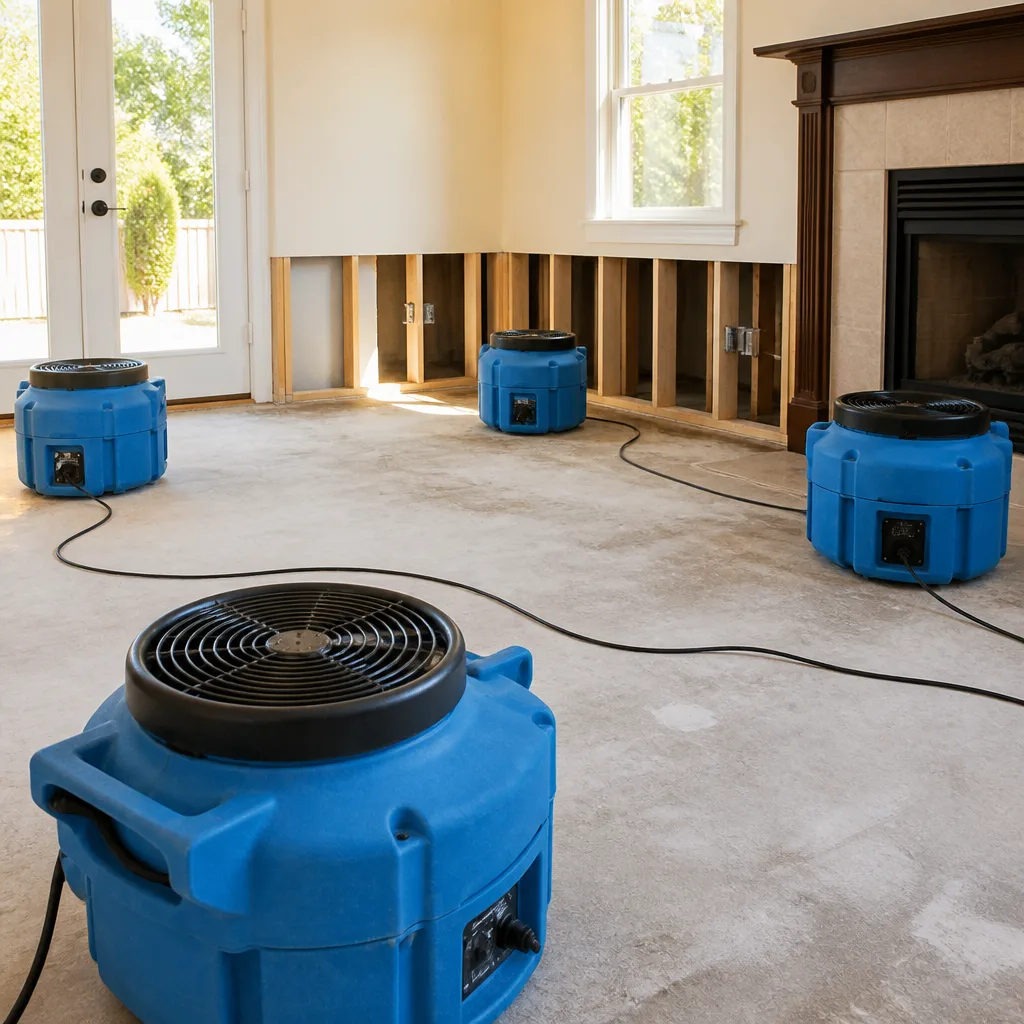

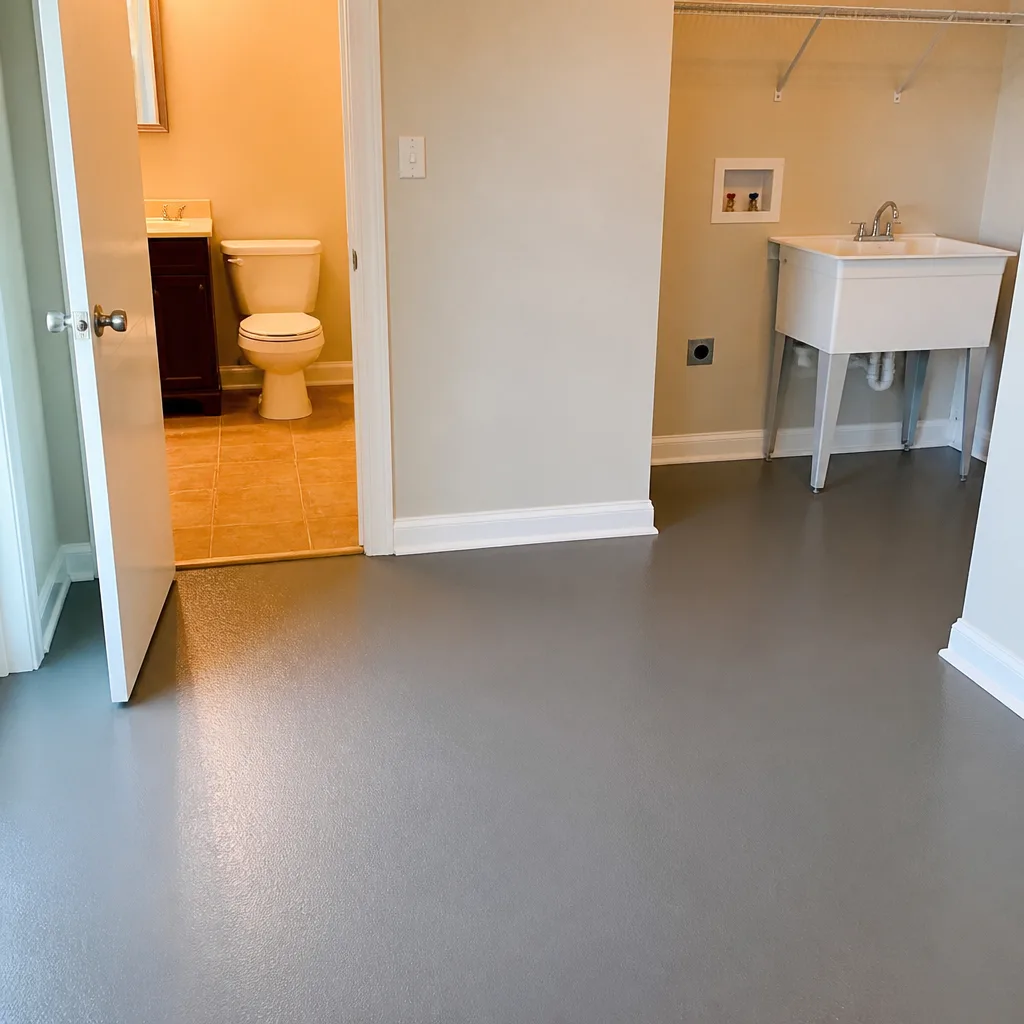
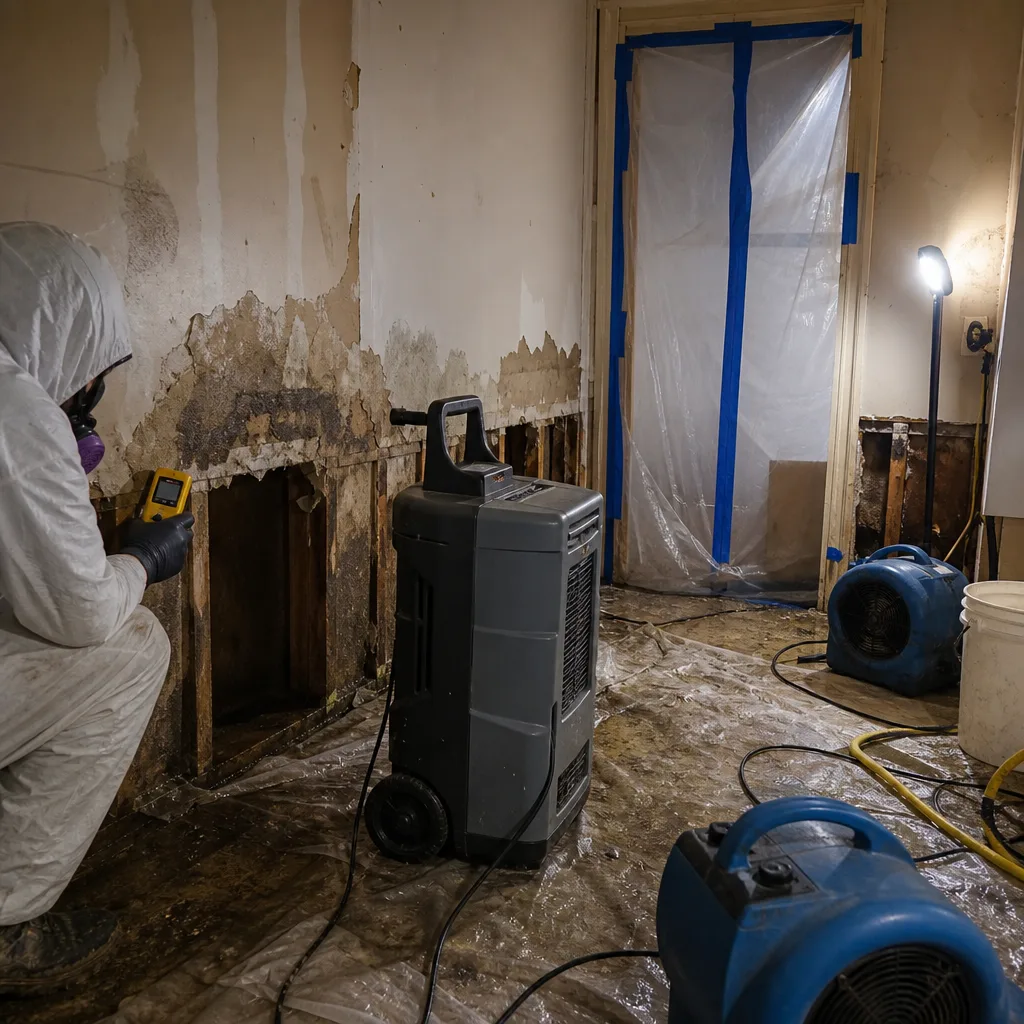 Before
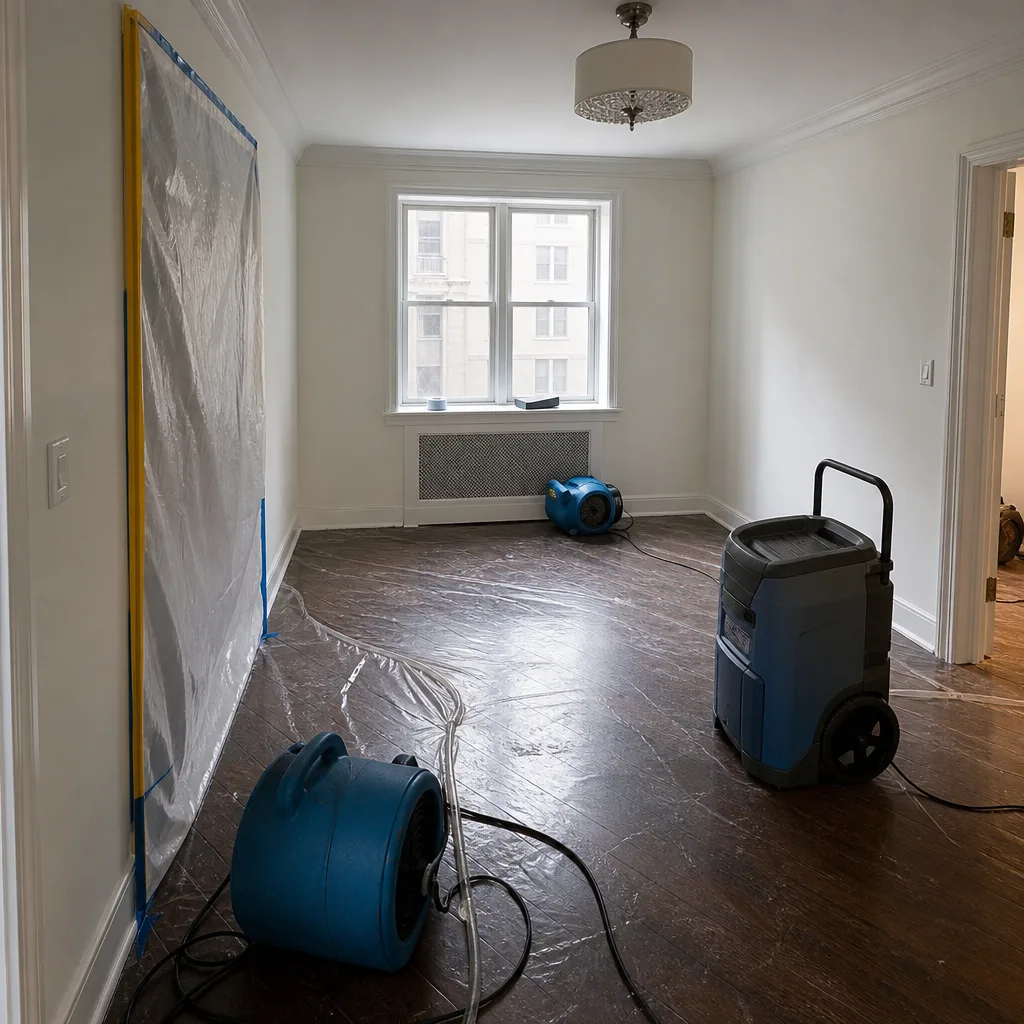 After
After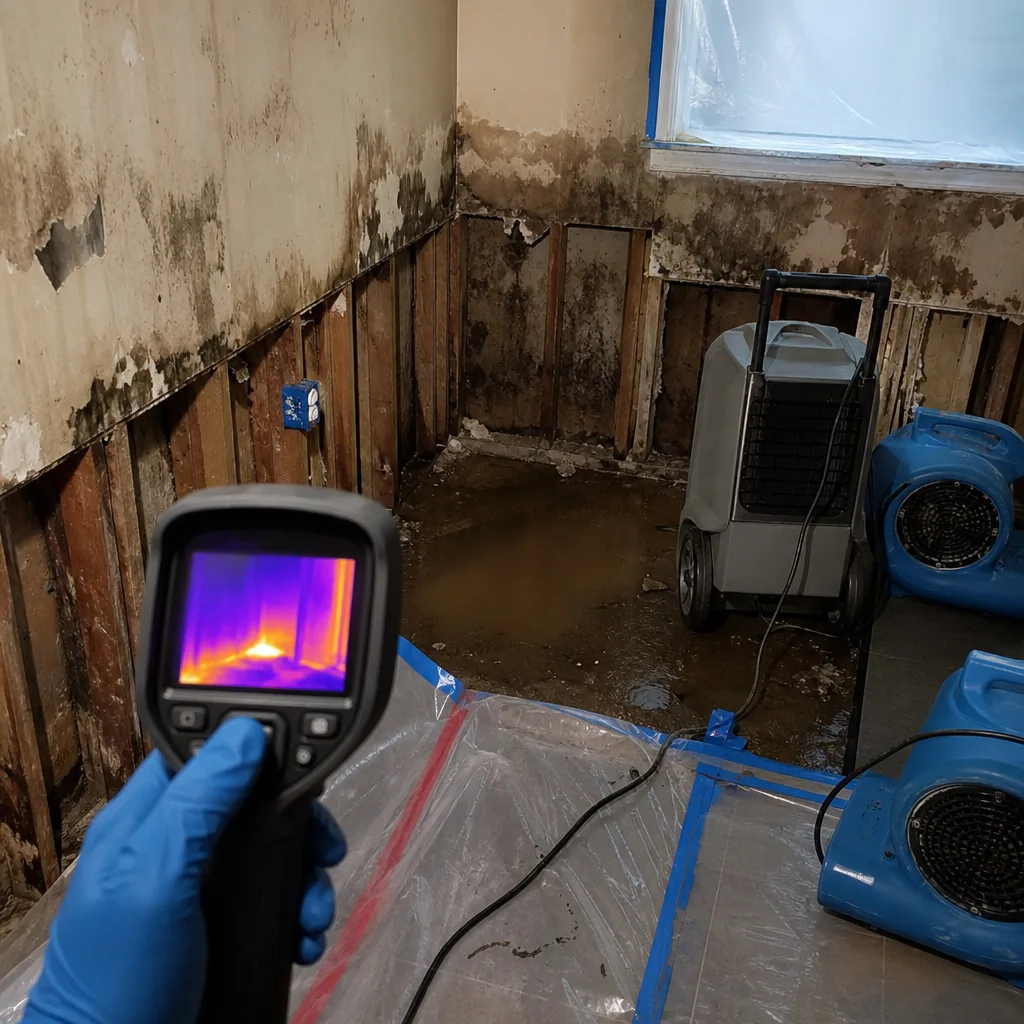 Before
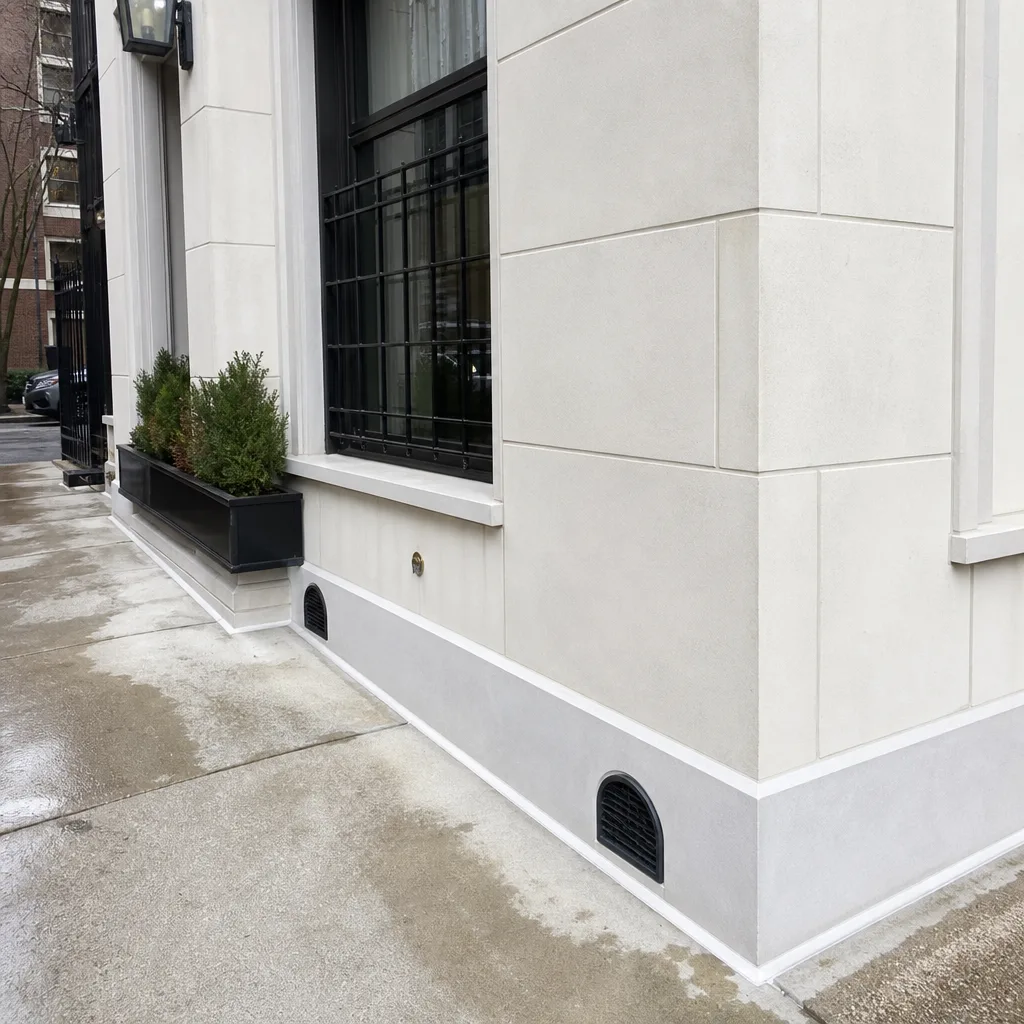 After
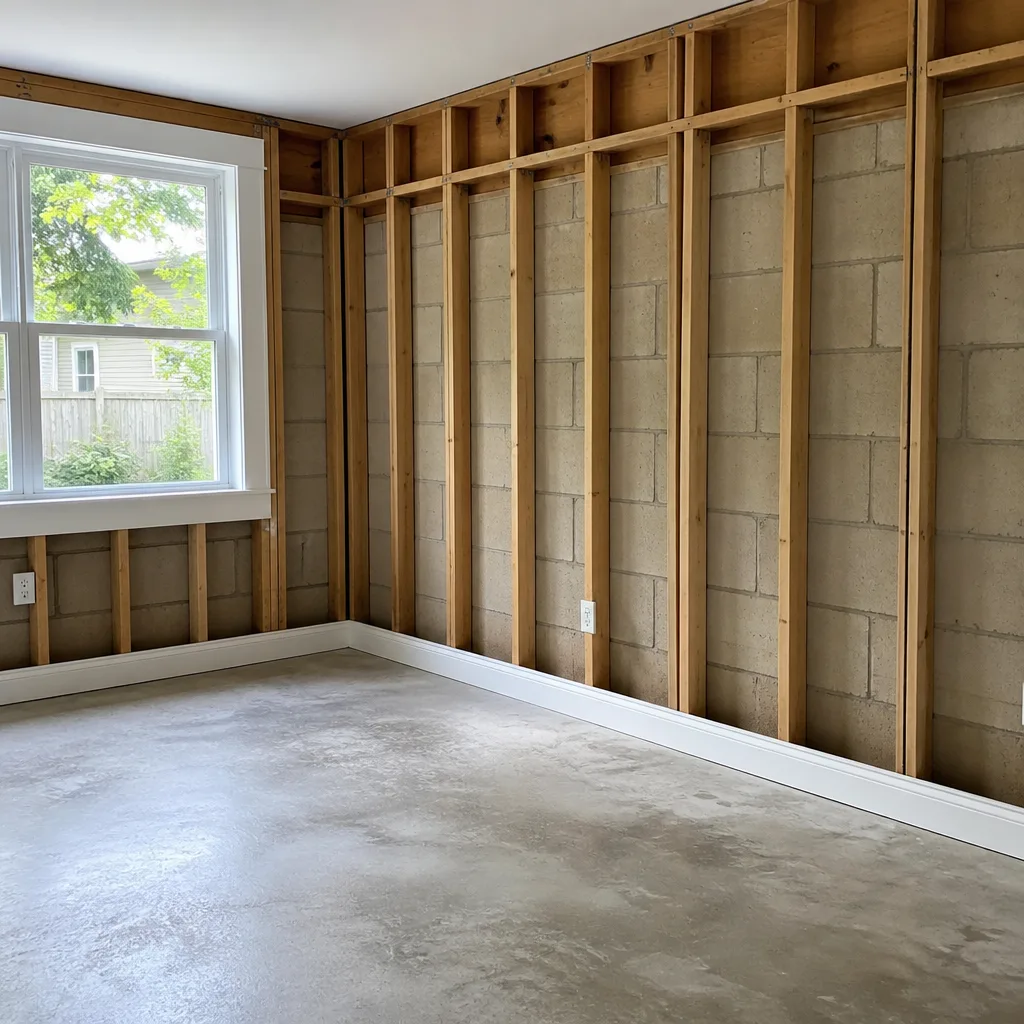
After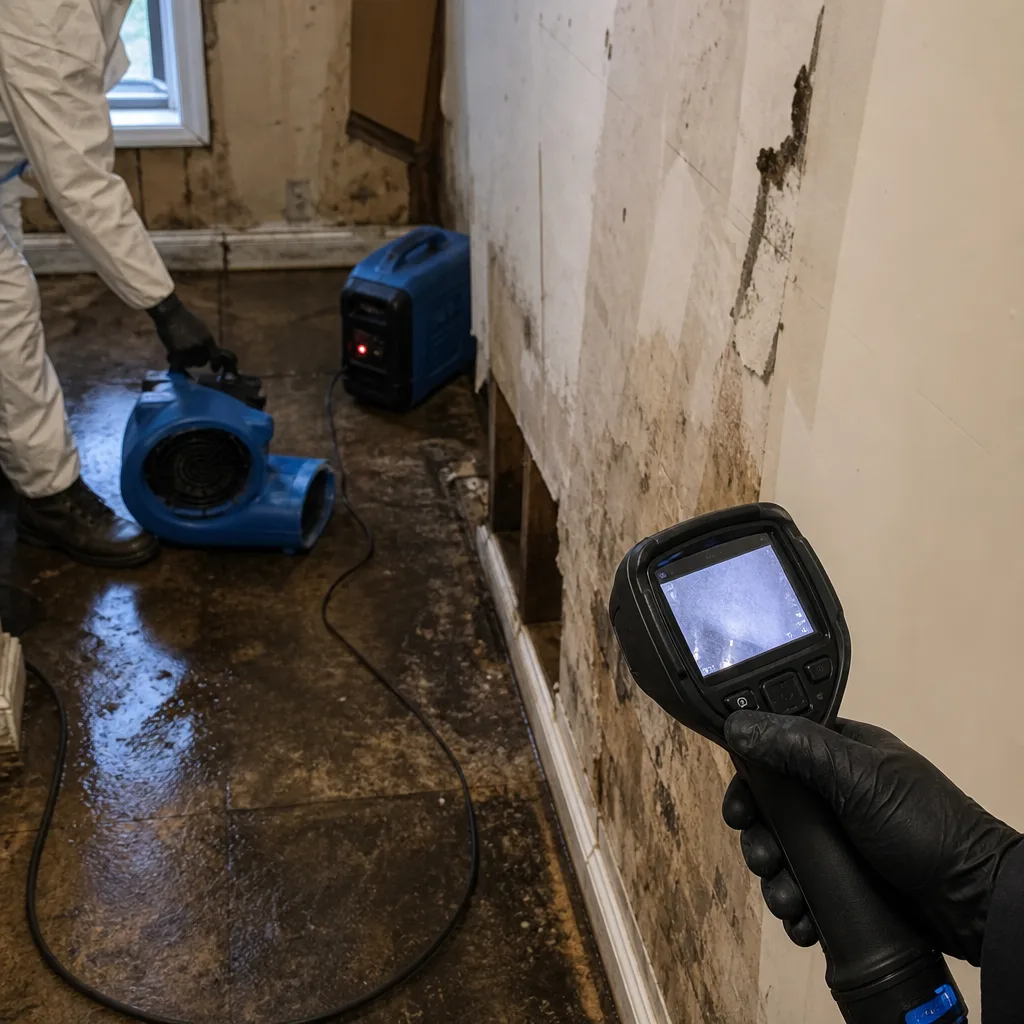 Before
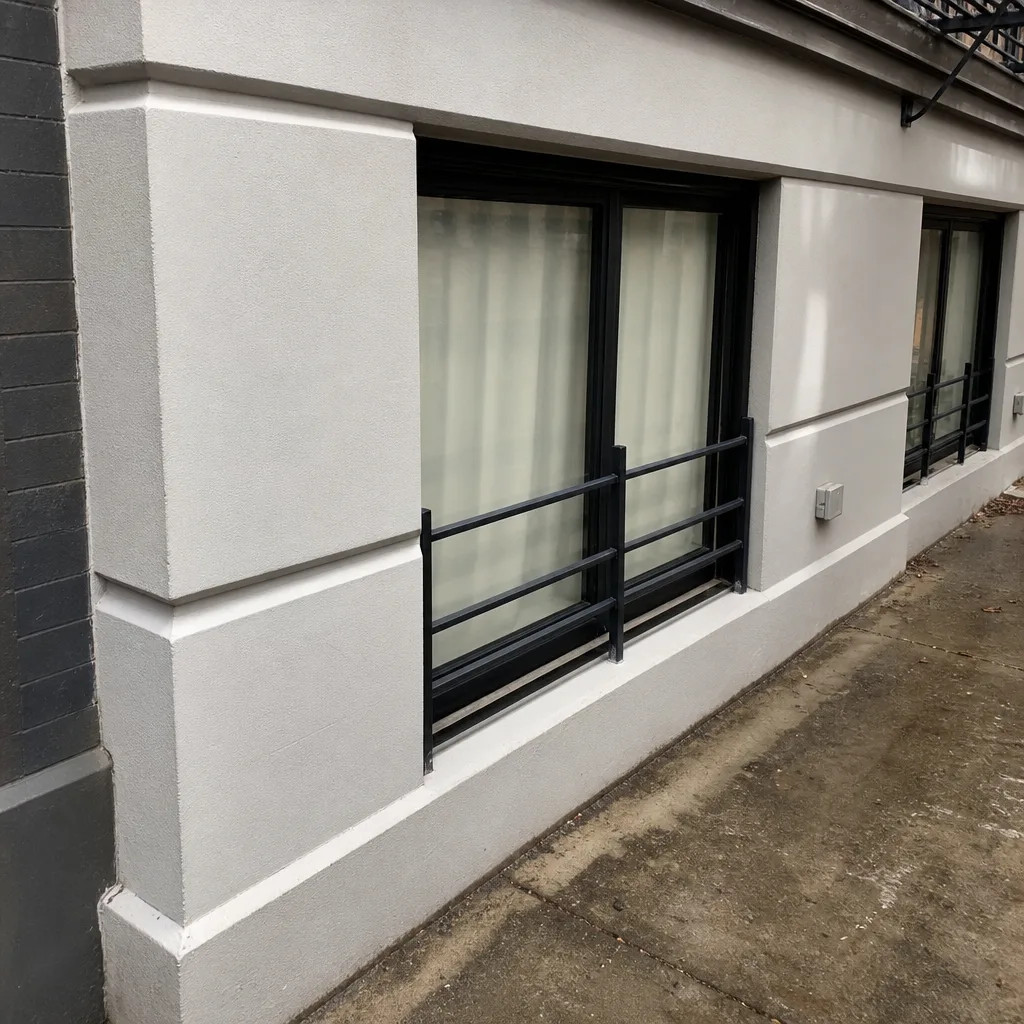 After
After24/7 Emergency Storm & Disaster Restoration in Long Island City
Storm damage in Long Island City doesn’t wait for business hours, and neither do we. Wade’s Restoration answers live around the clock, and Wade Ferris heads out himself, often with extraction equipment running inside the hour in Long Island City’s waterfront blocks and tower corridors. Your first call should be to (607) 703-3408. The first hour after a nor’easter surge or a wind-driven rain event determines whether you’re looking at a cleanup or a full-scale restoration. We’ll walk the property with you, free, and tell you exactly what you’re dealing with before any work begins.
Understanding Storm & Disaster Restoration Severity in Long Island City Properties
Long Island City‘s building stock makes storm damage behave differently here than it does in Astoria or most of Queens. In the pre-war masonry warehouse conversions around Court Square and Dutch Kills, water travels through thick concrete slabs and hides in cast-iron pipe chases. In the glass-and-steel high-rises along Center Boulevard, a single plumbing failure cascades through stacked units, and the dense tower footprint slows structural drying dramatically. We classify water by category before we touch it. Category 1 is clean supply water. Category 2 carries contaminants. Category 3, what we see after East River surge or Newtown Creek overflow, contains sewage and bacteria and requires full antimicrobial treatment, not just extraction. Moisture mapping with thermal imaging shows us what visual inspection misses, especially in LIC’s older lofts where water hides inside concrete and masonry for days before staining appears.
Why Long Island City Property Owners Choose Wade’s Restoration
- 45-minute response commitment - Wade heads out from the New York City office the moment you call, and in Long Island City’s dense blocks, he can usually be at your building in under an hour.
- 24/7 live answer, always a person - no voicemail, no answering service. Wade himself answers his phone at 2 a.m., because that’s when the East River surges and the sump pumps fail.
- IICRC-certified crews - WRT for water damage, FSRT for fire and smoke, AMRT for mold. The certifications aren’t wallpaper. They’re the standard Wade holds his team to on every LIC job.
- Free visual inspection - Wade walks the property with you before you commit to anything. No charge for that. Ever.
- Direct insurance billing - we handle the paperwork and the adjuster calls, so you’re not stuck in the middle relaying messages between two parties who aren’t returning your calls.
- One team from extraction to reconstruction - the same crew that pumps out your basement mechanical room is the one that rebuilds the drywall. No handoffs, no finger-pointing.
Our Storm & Disaster Restoration Process
Inspection & Assessment
We walk the full scope of the damage, run thermal imaging to find hidden water, and give you a written scope of work before anything starts. In LIC’s converted lofts, this step catches water inside concrete slabs that visual inspection would miss.
Extraction & Stabilization
We pull standing water with truck-mounted and portable extractors, then clear debris and secure the site. For storm surge in basement mechanical rooms, this is where we protect switchgear and boiler components from further damage.
Drying & Dehumidification
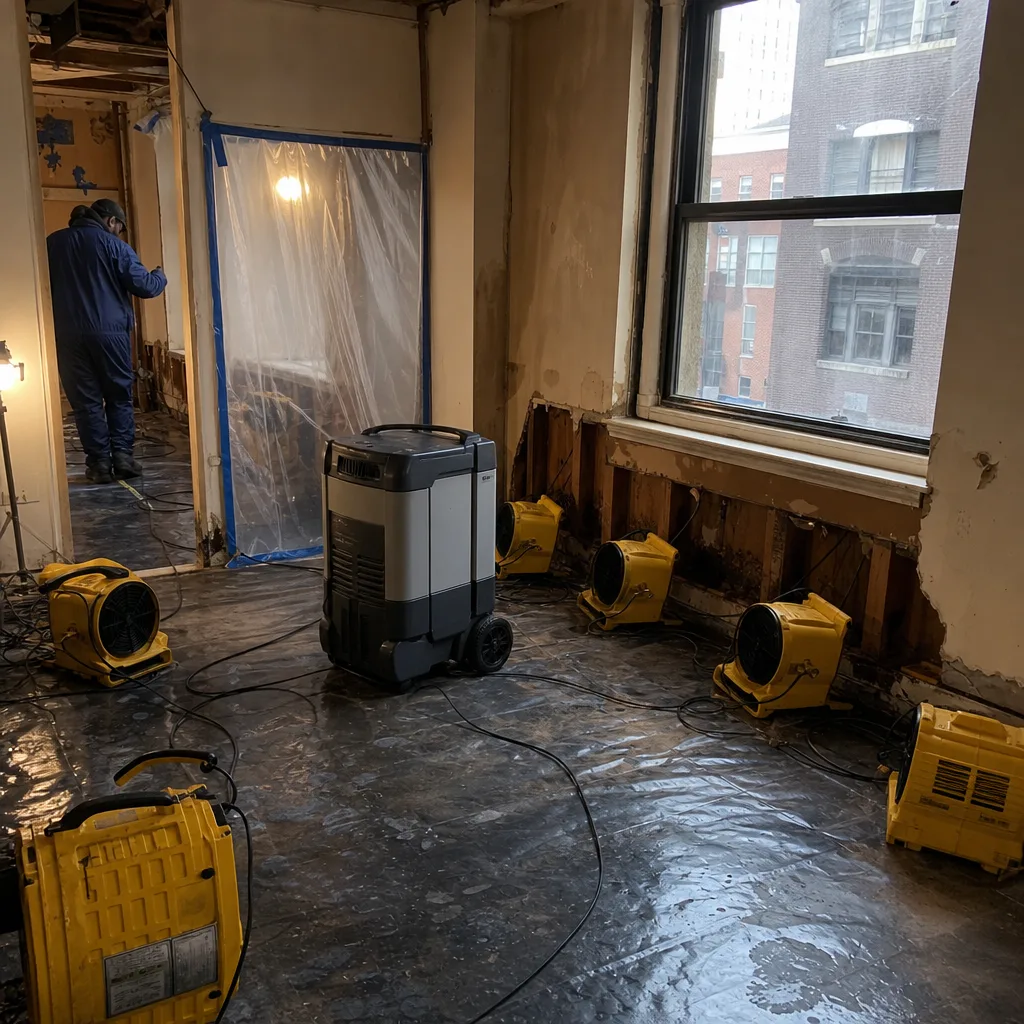
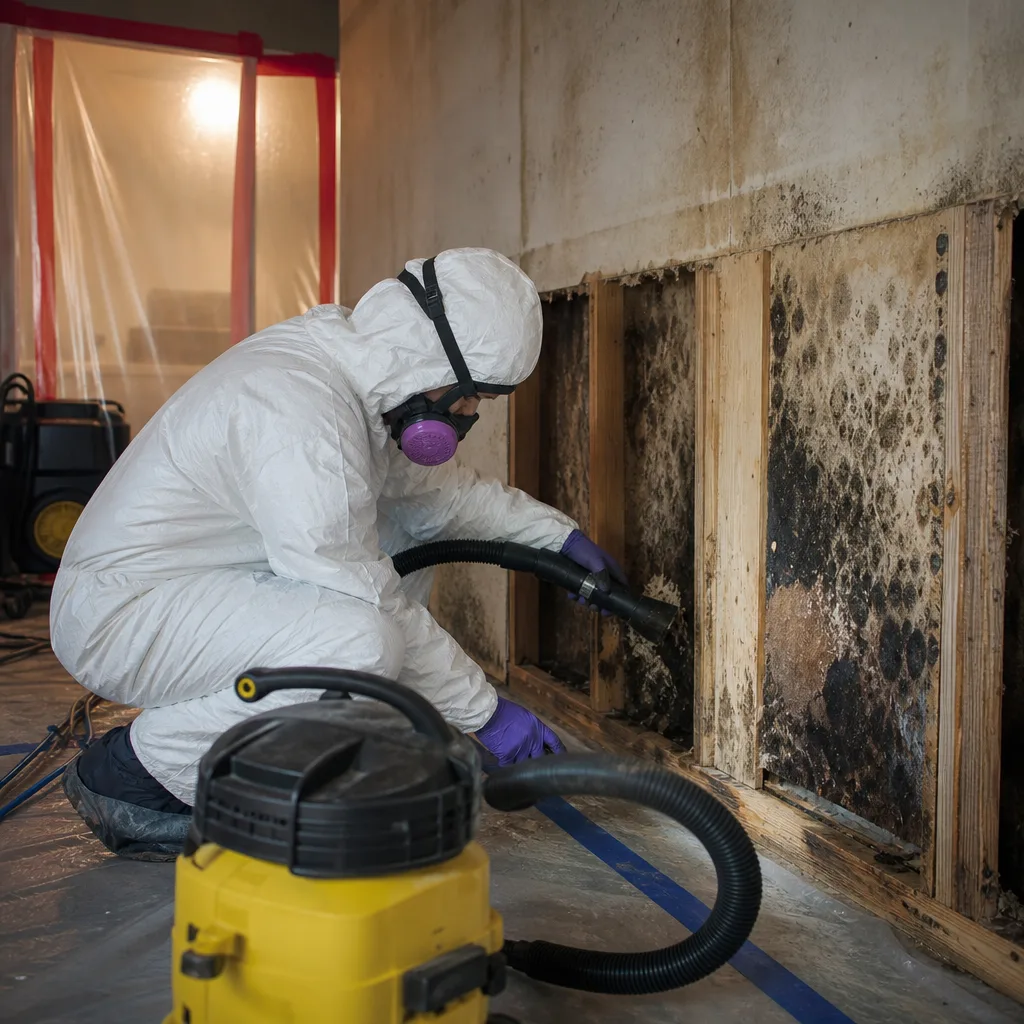
Dri-Eaz dehumidifiers and XPOWER air movers run continuously, with hygrometers tracking moisture levels in the air and inside materials. In LIC’s dense tower footprints, this step is critical because the urban heat island effect slows natural drying.
Cleaning & Sanitization
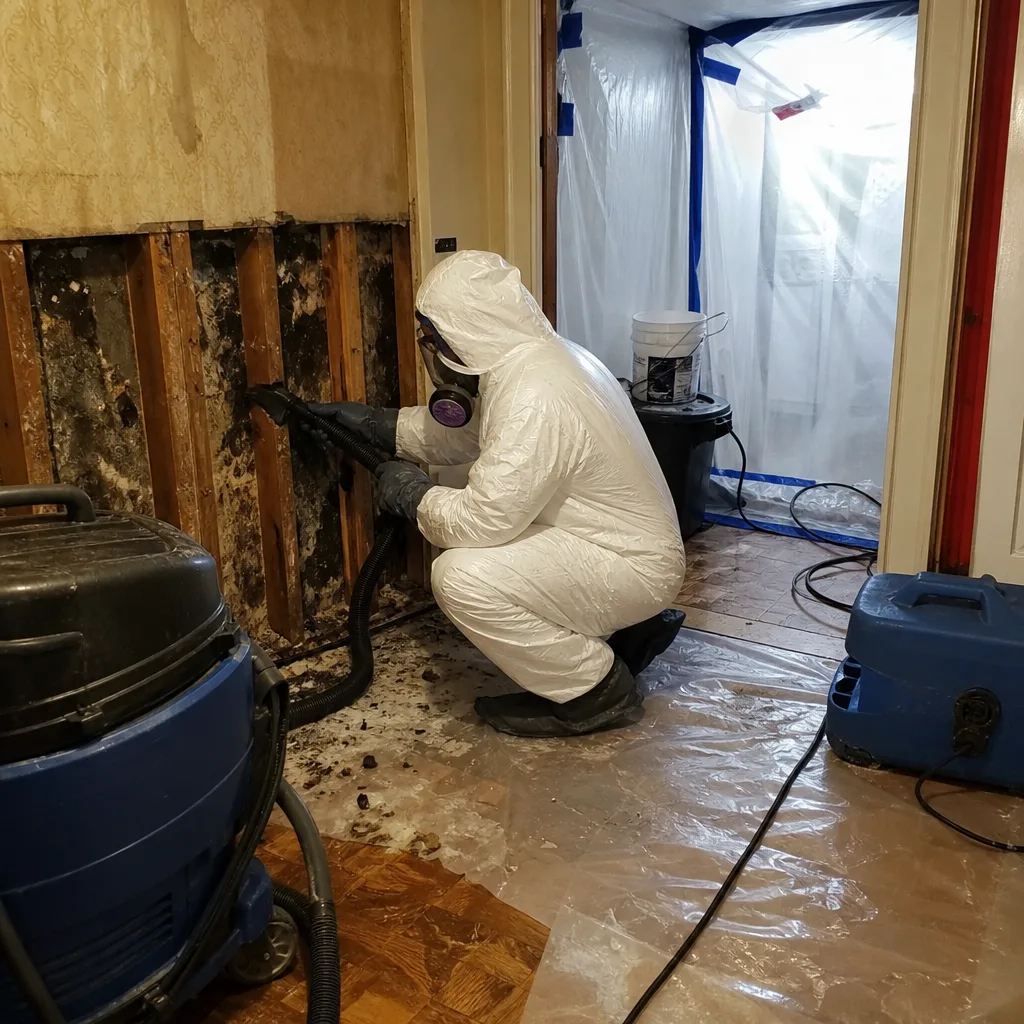
HEPA air scrubbers remove airborne particulates, and antimicrobial treatment addresses bacteria and mold spores. This is non-negotiable for Category 3 water, which we see after coastal flood events along the East River.
Specialty Treatment
Depending on the loss, this includes roof tarping, emergency board-up, mold remediation, or corrosion control on electrical components in flooded mechanical rooms.
Repairs & Restoration
We rebuild what was damaged, from drywall to cabinetry to code-compliant mechanical room reconstruction. The same Wade Ferris who signed the initial inspection signs off on the finished work.
Need Emergency Storm & Disaster Restoration in Long Island City Now?
Crews minutes away, answering live 24 hours a day. The sooner we start, the less it costs.
Working With Your Insurance Company
Insurance adjusters move on their own timeline, and when your Long Island City condo or co-op has water in the mechanical room, you don’t have weeks to wait. We document everything from the first hour: photos of every affected room, moisture readings before and during drying, and a line-item scope that matches industry-standard estimating software. Wade deals with the adjuster directly, on the phone, not through email chains that go dead. For storm and flood claims in LIC, especially in waterfront buildings where multiple units and building management are involved, that direct communication is the difference between a payout that covers the work and one that doesn’t.
What We Provide Your Insurer
- Thorough documentation of the loss
- Photos of all damage, room by room
- Moisture readings and drying logs
- A detailed, line-item scope of work
- Direct coordination with your carrier
Built for Long Island City’s Loss Calendar
Long Island City’s storm season is not a single season. January and February bring freeze-thaw cycles that burst supply lines in the older masonry buildings along Jackson Avenue and Vernon Boulevard, where cast-iron plumbing has been holding water since before the towers went up. March and April storm systems push nor’easter surge up Newtown Creek and into ground-floor spaces along the waterfront. June through August, the urban heat island effect that builds over the towers and the Sunnyside Yards slows structural drying and pushes mold growth from 72 hours to as little as 24. September through November is hurricane season, and no one in Hunters Point forgets what Sandy did. We plan for all of it. When you call in February with a burst pipe or in September with 18 inches of surge water in your lobby, the process is familiar and the equipment is ready.
Storm & Disaster Restoration Across Long Island City’s Neighborhoods
Hunters Point is where we see the most surge-related damage, especially in the glass-and-steel residential towers along Center Boulevard and 5th Street. Basement mechanical rooms there sit only a few feet above the East River’s high-tide line, which means one nor’easter can put boilers, switchgear, and elevator machinery underwater simultaneously. Court Square has a different profile: older commercial conversions with deep basement utility spaces and steam tunnels that channel water from one building to the next. Dutch Kills, up toward the Sunnyside Yards and the Newtown Creek side, catches water from creek overflow and combined sewer backup during heavy rain, and the row houses and smaller apartment buildings there have tight access for equipment. The Vernon Boulevard corridor is where we board up ground-floor retail windows after storm winds throw debris, and where restaurant basements take on three feet of water faster than a pump can handle. Response routes through the Queensboro Bridge approaches and the 21st Street corridor keep our crews moving even when the L trains are down.
Specialized Storm & Disaster Restoration Services We Offer in Long Island City
Our Storm & Disaster Restoration team handles the full range of what a coastal storm or a building-wide plumbing failure throws at Long Island City. Here’s what that looks like on the ground.
Storm Damage Cleanup
Debris, wet materials, broken glass, and contaminated drywall come out fast. In LIC’s mixed-use buildings, we’re used to working around ground-floor retail and occupied residential units at the same time, with containment set up so one floor’s cleanup doesn’t shut down the whole building.
Flood Damage Restoration
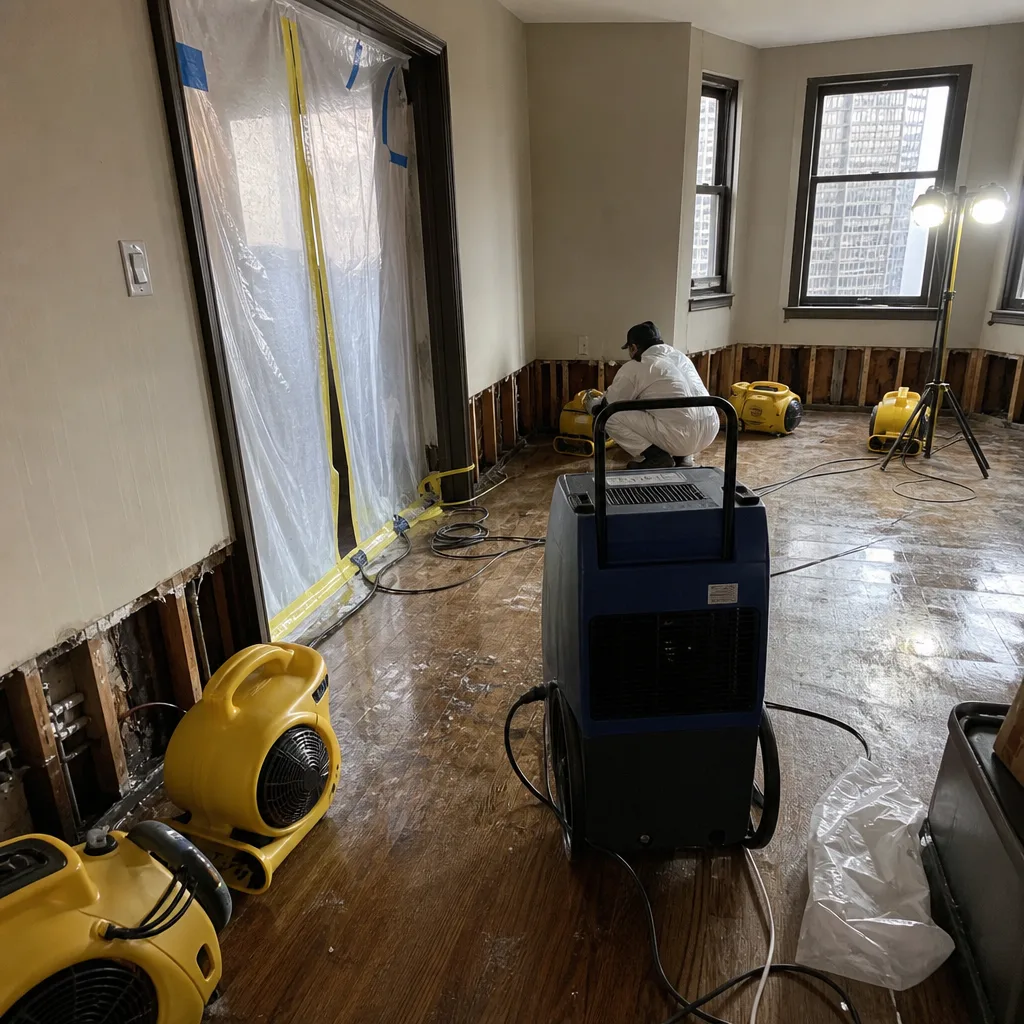
Surge water from the East River and overflow from Newtown Creek is Category 3 water, and it doesn’t get a pass just because it receded. We extract, dry, sanitize, and replace. In Hunters Point towers, that means working with building engineers on mechanical room restoration, not just wet floors.
Emergency Board-Up
When a nor’easter blows out windows on Vernon Boulevard or a tropical system throws debris through a tower window on Center Boulevard, we board up within hours. Proper board-up keeps rain out, keeps people out, and keeps your insurance claim clean.
Roof Tarping
A loose membrane or missing section of roof on a pre-war warehouse conversion will funnel water through multiple floors by morning. We tarp within the day, sealing the opening until a roofing contractor can make the permanent fix. In LIC’s older buildings, this often saves the cast-iron plumbing and original wood framing from a total loss.
Debris Removal
Storm debris in Long Island City includes anything the wind and water bring: construction materials from nearby sites, tree limbs from the small parks, and whatever the East River decides to leave on the sidewalk. We haul it, we don’t leave it for the building super to deal with.
What happens when you call
- 1
A real person answersNo phone trees - you reach a local pro.
- 2
You get an upfront price rangeHonest numbers before anyone is dispatched.
- 3
A background-checked tech heads outLicensed & insured, dispatched right away.
- 4
You approve before work beginsNothing starts until you say go.
Storm & Disaster Restoration Costs in Long Island City, NY
A straightforward storm damage cleanup in a Long Island City apartment runs $1,200 to $3,500. Flood damage restoration in a single unit, with extraction and full structural drying, typically runs $3,000 to $8,000. A basement mechanical room in one of the waterfront towers, where the boiler and switchgear are involved, is a different animal: $15,000 to $40,000 is a realistic range for full restoration, and that’s before any reconstruction work. Emergency board-up in LIC runs $400 to $1,200 depending on the openings. Roof tarping is $500 to $1,800 for most residential buildings. What moves the price is access (fourth-floor walk-up versus freight elevator, street parking versus a loading dock), the water category, and how long the water sat before we got there. The free visual inspection gives you a written number before you commit to anything, and if you have another estimate, Wade will look at it. No charge for that, either.
We Also Serve Cities Near Long Island City
Our crews cover Long Island City and the surrounding Queens waterfront from the New York City office, and Long Island City is our home base for the corridor. If you’re in Astoria, just across the creek or up 21st Street, we’re already in the neighborhood and can be at your building in minutes.
Serving Long Island City, NY - Our Local Coverage Area
We’re based in the Long Island City area and know this community well. Use the map below to see our service coverage - if you’re nearby, we can almost certainly help.
Long Island City Storm & Disaster Restoration Questions, Answered
Why is flood damage restoration in Long Island City’s Hunters Point different from other Queens neighborhoods?
Hunters Point sits in FEMA Flood Zone AE along the East River, and the post-Sandy towers rebuilt their basement mechanical rooms only a few feet above the surge line. That means storm surge doesn’t just wet floors here, it floods boilers, electrical switchgear, and elevator machinery all at once. Restoration in Hunters Point is mechanical-room restoration, not just water extraction.
How do you handle water extraction in a high-rise unit when a plumbing failure affects dozens of stacked apartments?
We set up containment on the affected floor, run hoses down stairwells or elevator shafts, and use portable extraction equipment sized for tower access rather than truck-mounted units that need street-level hose runs. Then we coordinate with building management so drying equipment placement doesn’t block common areas or trigger fire-safety violations.
What is the risk of mold in LIC’s converted warehouse lofts after a storm?
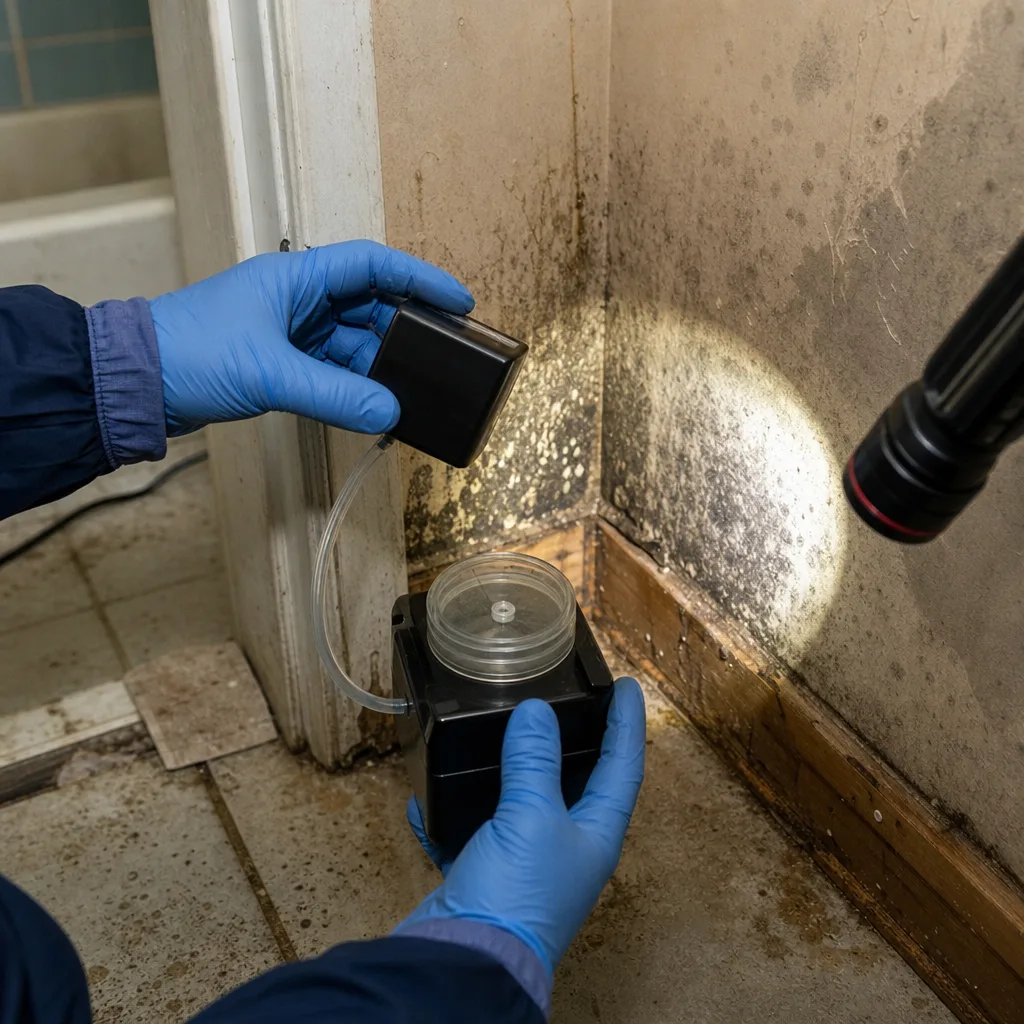
High. The thick concrete slabs and masonry walls in Court Square and Dutch Kills conversions hold water for days after the surface looks dry, and the urban heat island effect around the towers speeds mold growth. If moisture mapping isn’t done and hidden water is missed, mold can establish within 24 to 48 hours of a water event.
Do you provide emergency board-up for ground-floor retail on Vernon Boulevard after a nor’easter breaks windows?
Yes. We board up broken windows and doors on Vernon Boulevard and throughout Long Island City, usually within a few hours of the call. Board-up keeps rain out, keeps the interior secure, and gives your insurer a clean documentation trail for the claim.
Can you restore a basement mechanical room that was flooded with black water in a Long Island City luxury tower?
Yes, and we do it regularly. Category 3 water in a mechanical room means removing and replacing contaminated insulation and drywall, antimicrobial treatment on all surfaces, corrosion assessment on electrical components, and coordination with the building engineer on restoration. Call (607) 703-3408 and Wade will walk you through it.
How fast can someone actually get to my building in Long Island City?
Under an hour in most cases, and usually faster if you’re in Hunters Point or Court Square. Wade answers his own phone, and when he says he’s on the road, he’s on the road, not paging a crew from a call center.
Will insurance cover storm damage restoration in my LIC building?
Most property policies cover storm-related water damage, wind damage, and flood damage depending on your specific coverage. We document everything from the first hour and deal with your adjuster directly, which makes the claim process significantly faster. The free inspection gives you a written scope you can hand to your carrier.
What should I do in the first 30 minutes after storm water enters my Long Island City property?
Cut power to affected areas if you can do so safely, move valuables to higher ground, and call (607) 703-3408. Don’t walk through standing water in a basement without confirming the power is off. Don’t wait to call, because in LIC’s dense tower footprints, the clock on mold and structural damage starts immediately.
In Hunters Point, our crew handled a flood damage restoration where category 3 water from a nor’easter storm surge had filled a basement mechanical room in a glass-and-steel high-rise. We used Dri-Eaz dehumidifiers and XPOWER air movers for structural drying while coordinating with the building engineer on containment and antimicrobial treatment of the rebuilt switchgear area, completing the scope of work before mold could set in. That’s the standard we hold on every Long Island City job.
If you have storm damage, water in a basement, broken windows, or a roof that’s letting the weather in, call (607) 703-3408 now. Wade will answer, and he’ll be at your building with a plan and a written estimate before you finish your coffee.
Written by Wade Ferris, Owner at Wade’s Restoration, serving Long Island City with storm and disaster restoration since 2007.