
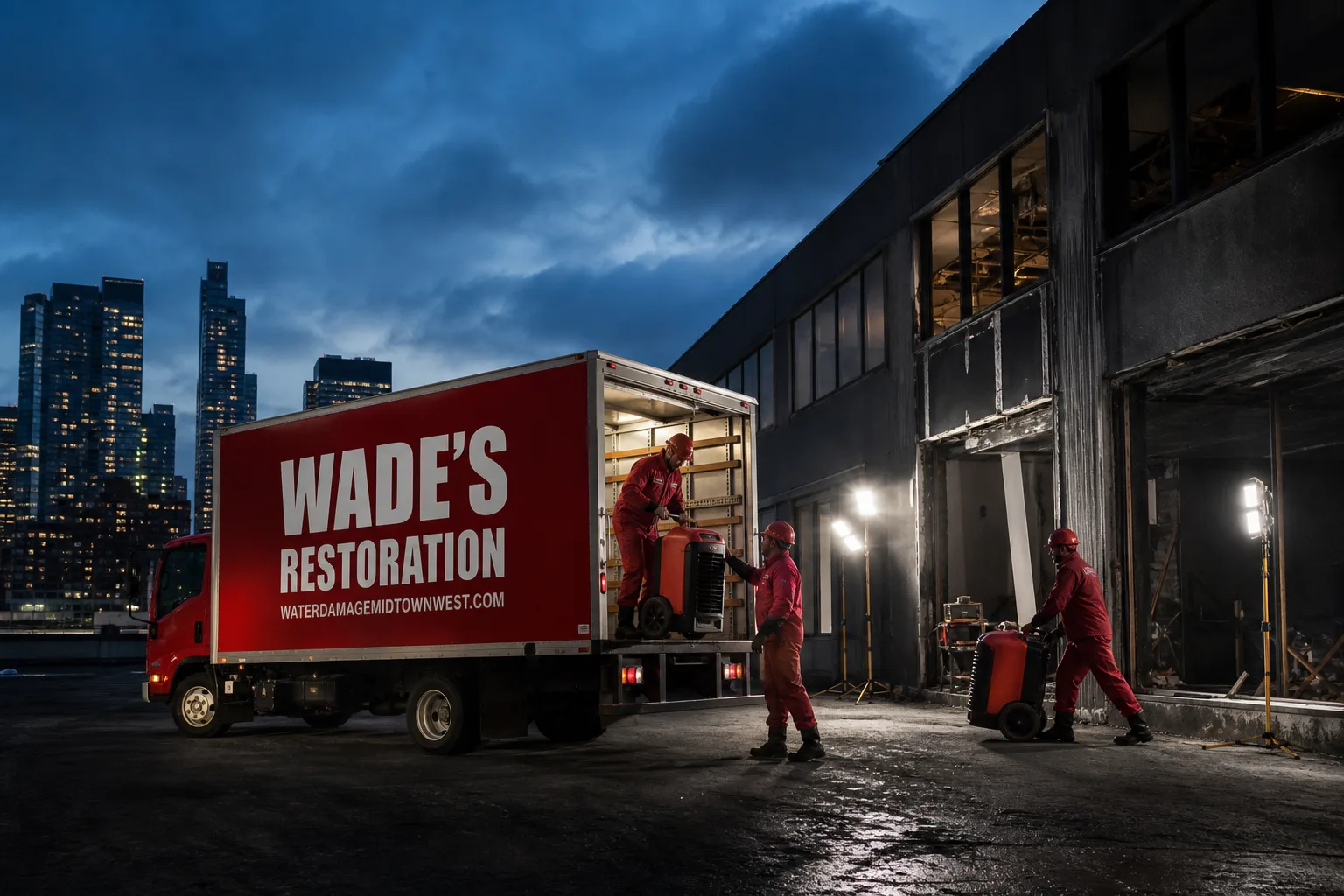
Free visual inspection and a written scope of work before any mitigation begins - photos, moisture readings, and drying logs go in your claim file
The scope we write is the scope we bill. Anything new gets shown to you, in writing, before we touch it.
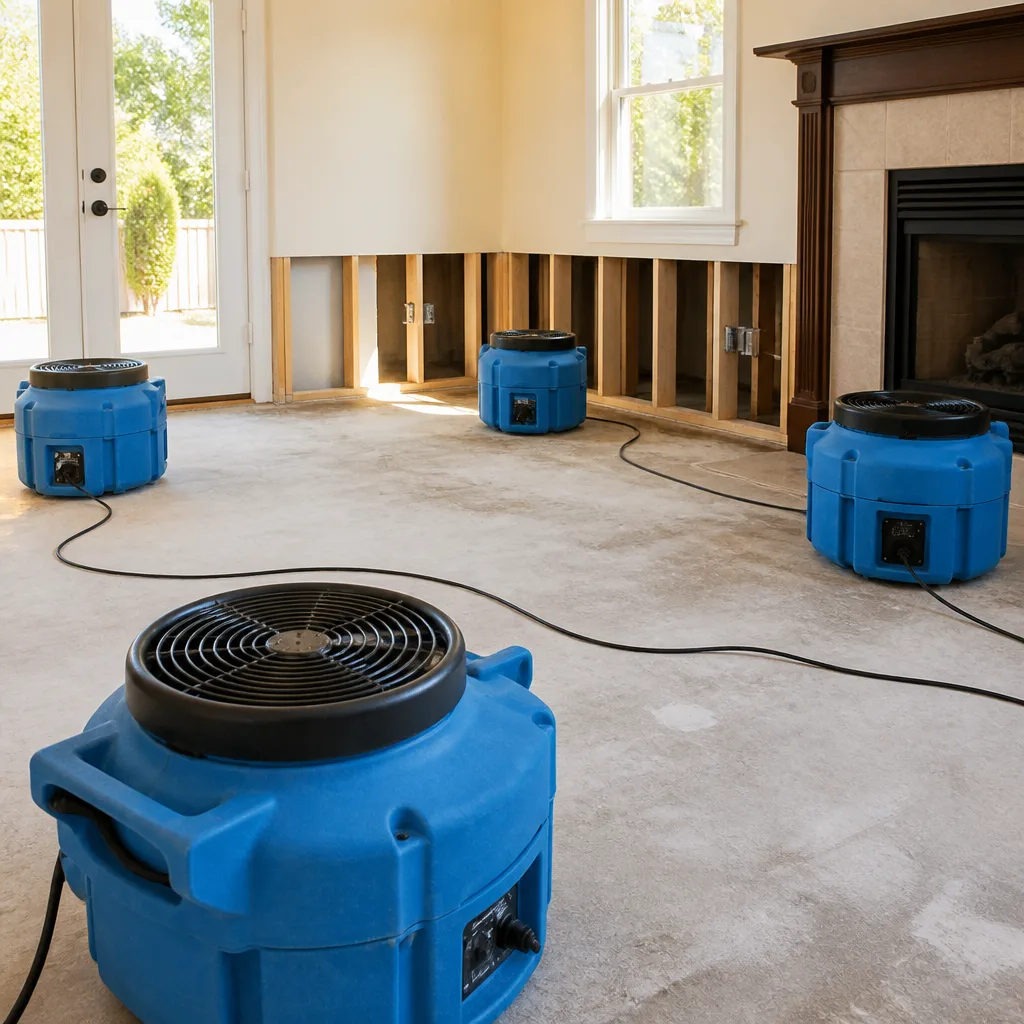
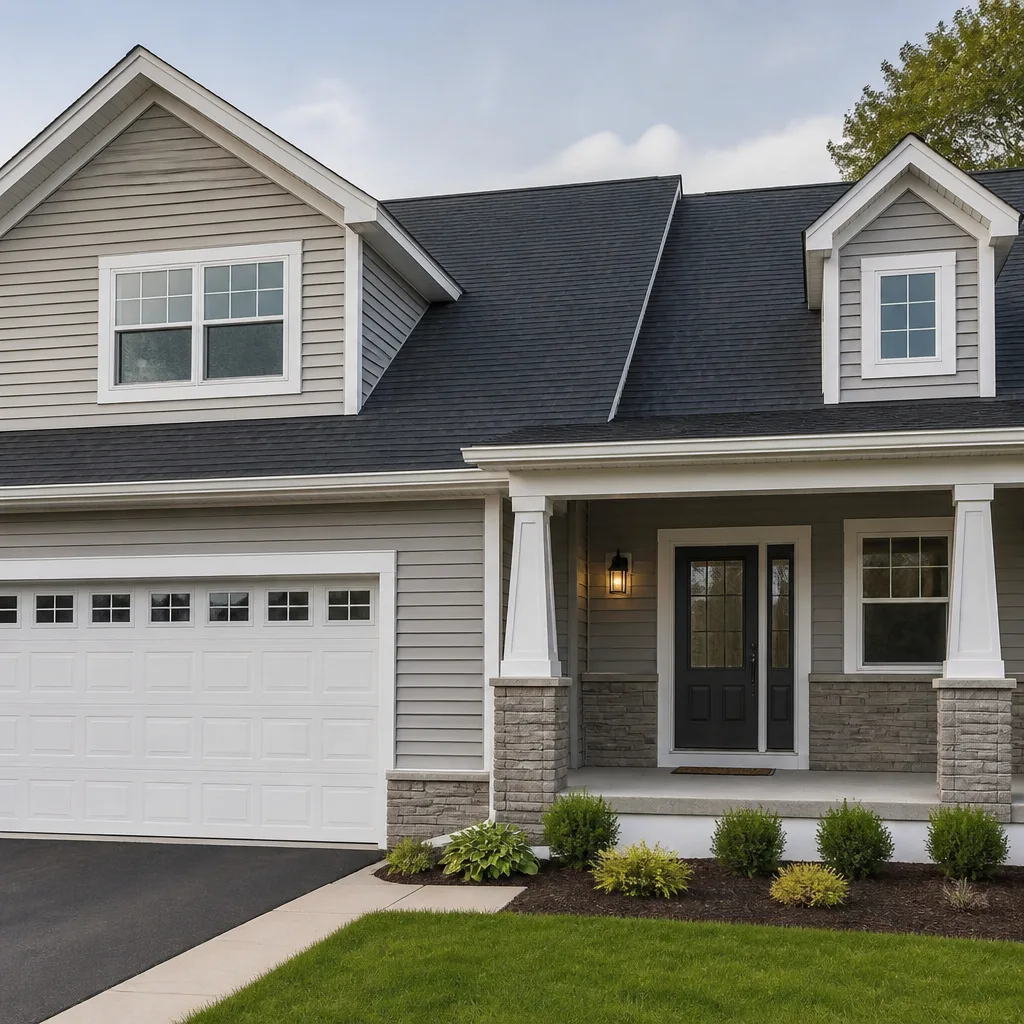
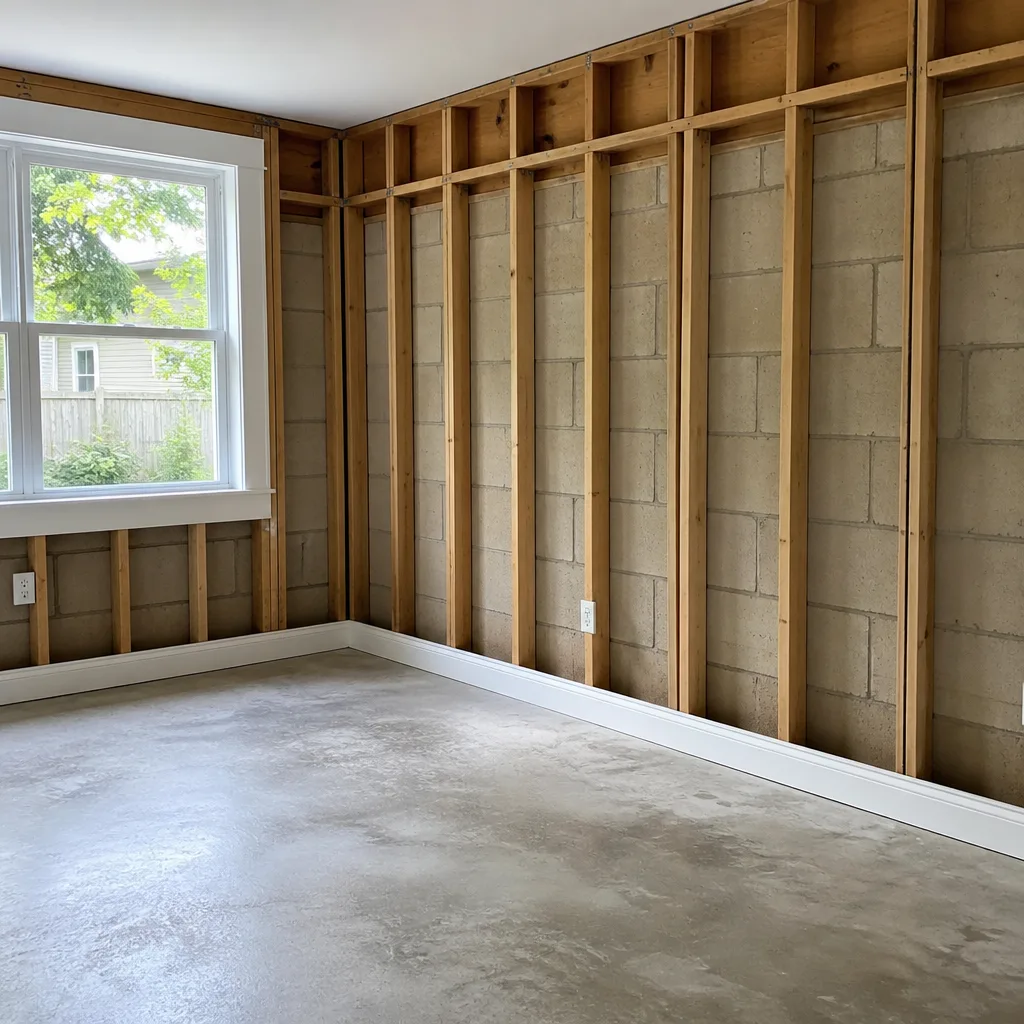
 Before
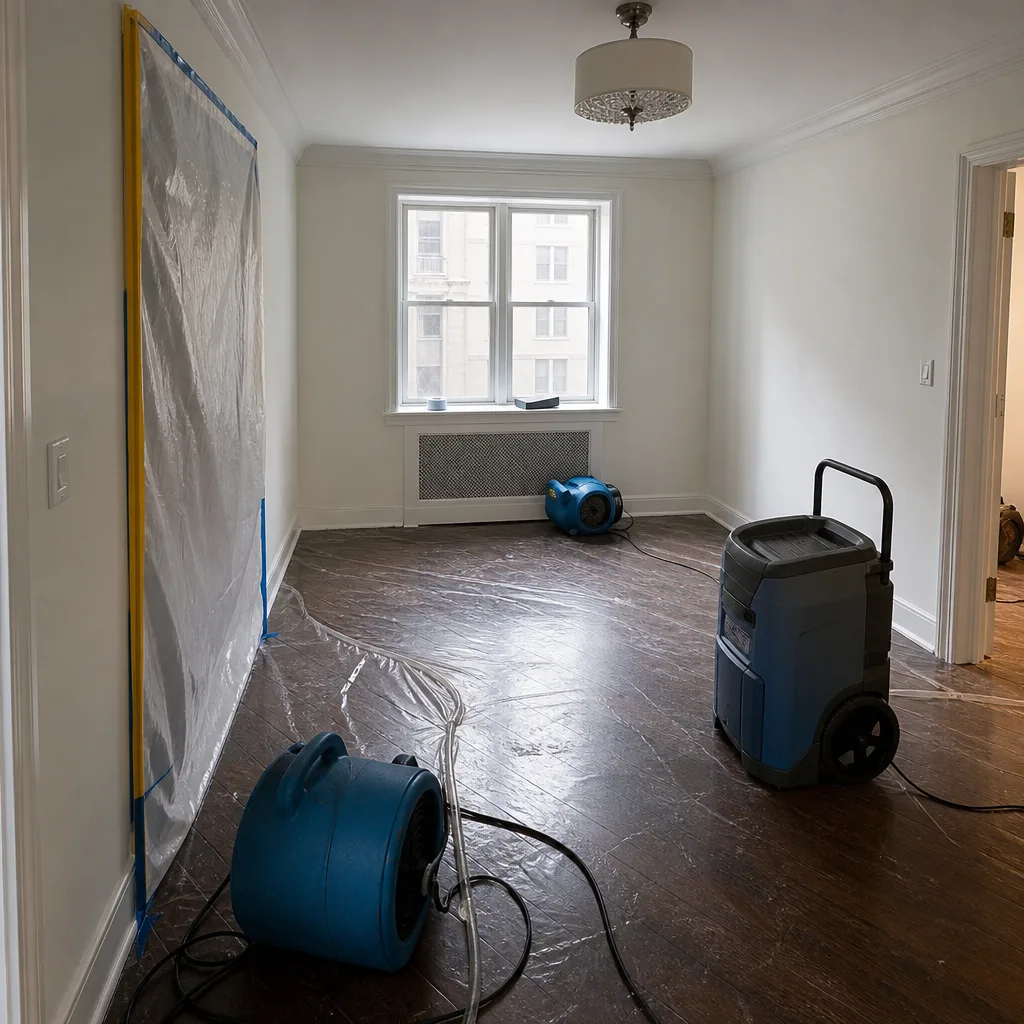 After
After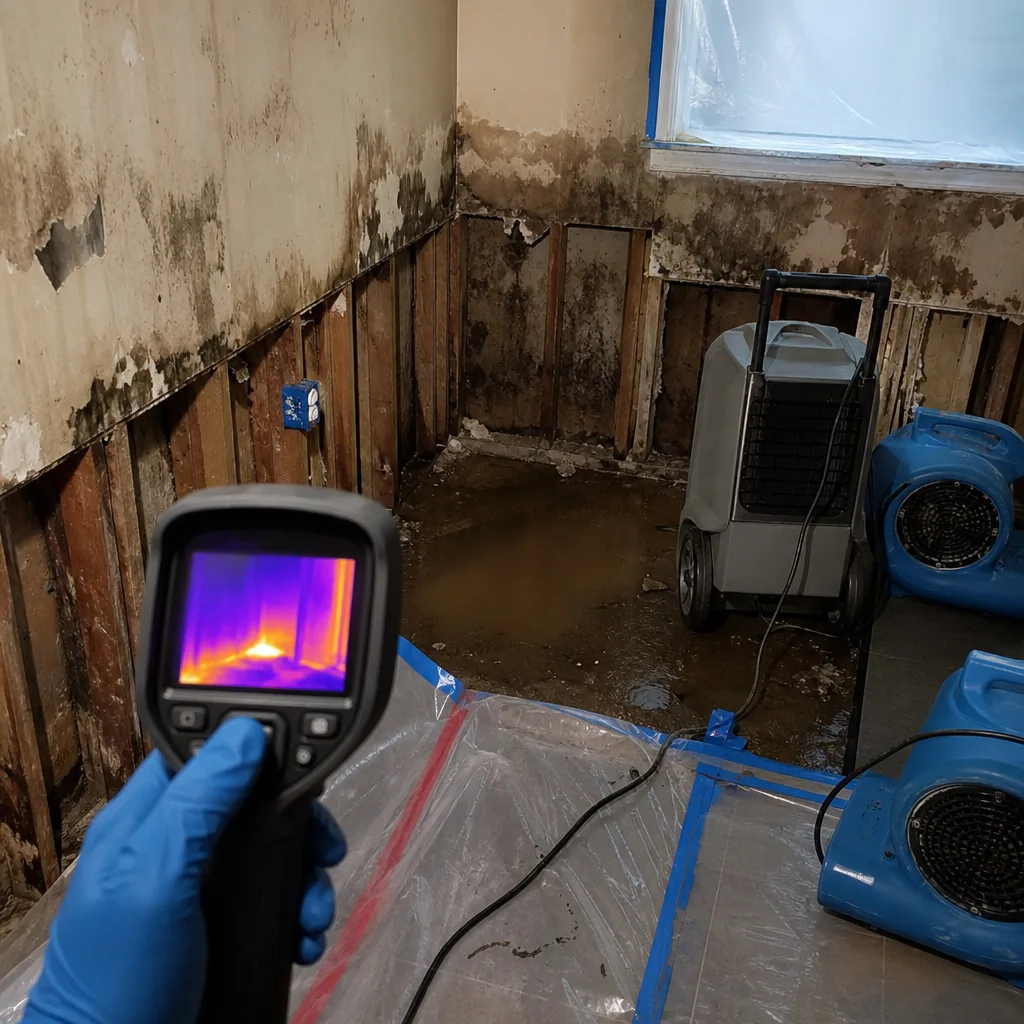 Before
 After
After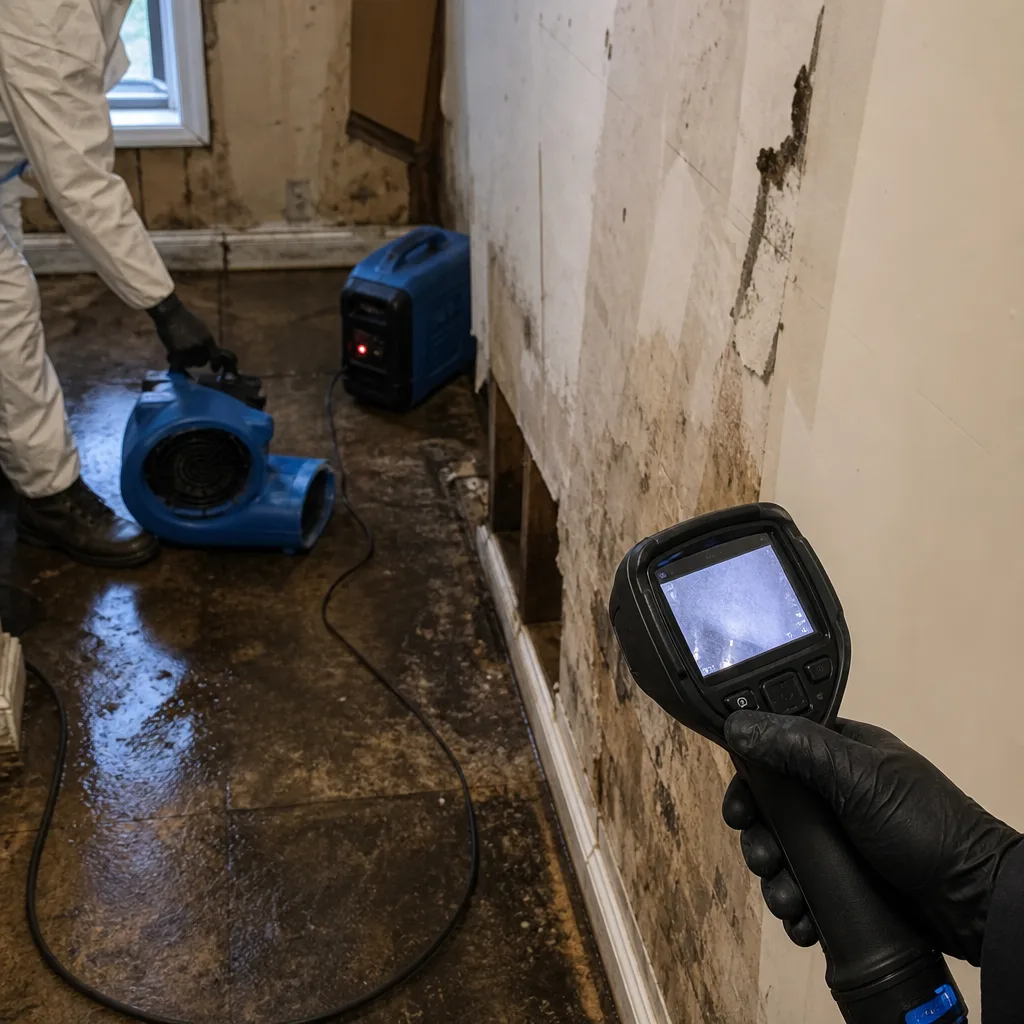 Before
 After
After24/7 Emergency Mold Remediation in Glendale
Mold in a Glendale row house rarely waits for business hours, and neither do we. If you’ve spotted discoloration along a baseboard, caught that musty smell in a basement stairwell, or had water come through a flat roof during the last nor’easter, call (607) 703-3408 right now. A real person answers, day or night. Wade’s Restoration runs emergency mold response into every corner of Glendale, and our crews understand the block-by-block reality of attached brick housing better than any national outfit ever could. The first hour matters because mold colonization begins within 24 to 48 hours of water exposure, but in Glendale’s 1920s party-wall construction, moisture doesn’t stay put long enough for you to schedule around it. We’ll get someone to your door fast, do a free visual inspection, and tell you honestly whether you’re dealing with surface mildew or something that requires full containment.
Understanding Mold Remediation Severity in Glendale Properties
Not every mold call is the same job with a different address. In Glendale, we classify mold work by the square footage of visible colonization, the moisture source driving it, and whether the affected materials are porous plaster, framing lumber, or finished surfaces. Small isolated patches under a bathroom sink are containment-light jobs: we bag the area, HEPA-vacuum, treat with antimicrobial, and you’re done in a day. But a Category 2 or 3 water loss that has soaked plaster-on-lath walls for more than 72 hours is a different animal. Plaster wicks water laterally, not just vertically, which means mold often colonizes inside wall cavities far from the visible stain. In Glendale’s attached and semi-detached brick rows, that same water migrates through un-insulated party walls into the neighbor’s side. We use thermal imaging and penetrating moisture meters to map exactly how far the problem has traveled before we set containment. Because in these homes, what you can see is almost never the whole story. Clearance testing at the end, with third-party lab verification of spore counts, tells you whether the air in the house is actually clean, not just whether the stain is gone.
Why Glendale Property Owners Choose Wade’s Restoration
- 45-minute response commitment for emergency calls in Glendale. Wade heads out himself when the call is serious. He has been known to beat the homeowner back from work.
- A real person answers, 24/7. Not a phone tree, not an answering service. Often it’s Wade’s own voice on the line, and here is his cell: (607) 703-3408.
- IICRC-certified crews with AMRT and WRT credentials. The people Wade sends know mold, water, and fire restoration to the standard the insurance industry recognizes, not the standard a franchise brochure claims.
- Free visual inspection before any work begins. No charge for that. You get a straight answer about what you’re dealing with and a written scope before a single piece of equipment comes off the truck.
- Direct insurance billing and adjuster coordination. Wade deals with your carrier directly so you never have to relay information between two sides. He documents everything, hands you the moisture log, and stands behind it.
- One team from first assessment to final coat of paint. The same people who do the mold remediation also do the reconstruction. That means no finger-pointing between two companies and no gaps in coverage.
Our Mold Remediation Process
Inspection & Assessment
We start with a full visual and moisture-mapping walkthrough of your Glendale home, including the neighbor’s side if a party wall is involved. Thermal imaging and penetrating meters locate hidden moisture that plaster hides from the naked eye.
Containment & Source Control
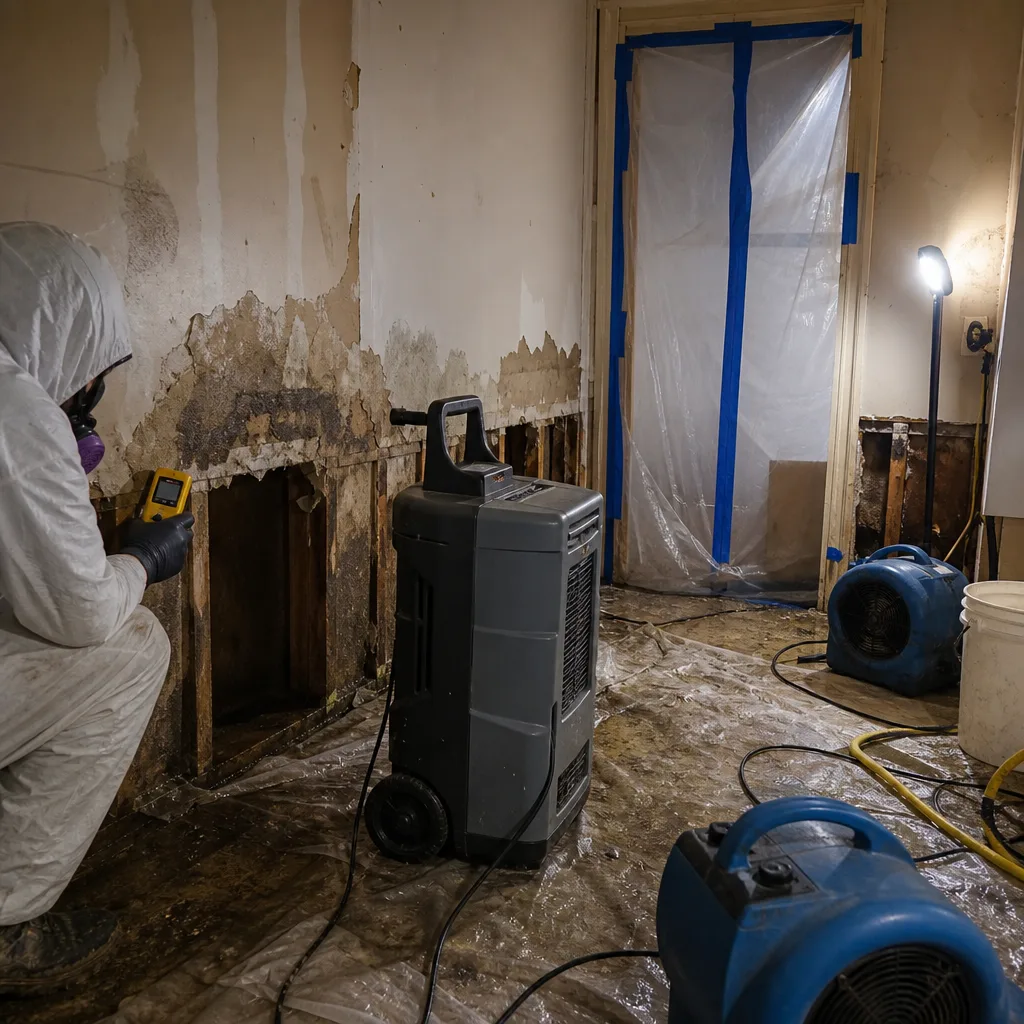
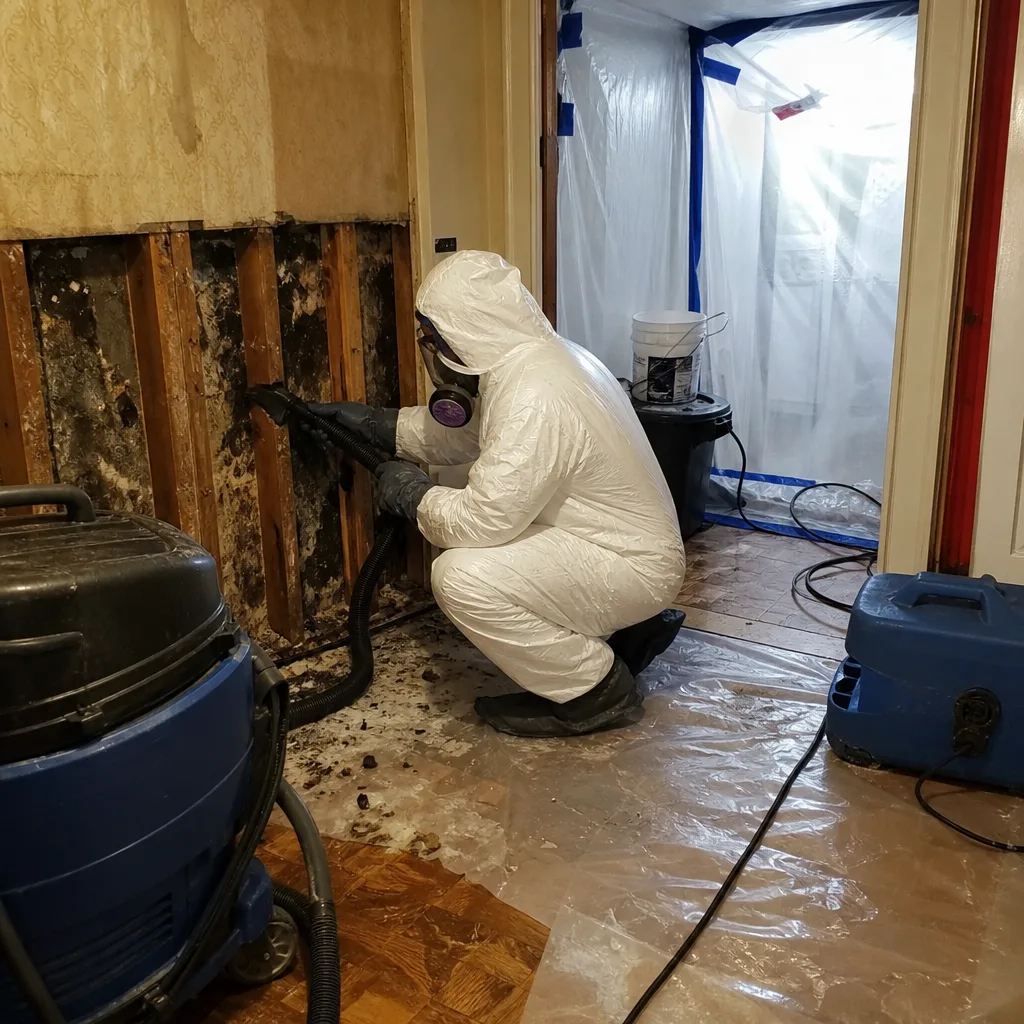
Before we disturb mold, we seal the work area with 6-mil poly sheeting and negative air pressure so spores don’t spread to the rest of the house. The moisture source gets stopped first, whether that’s a supply line, a roof leak, or groundwater.
Air Scrubbing & Drying
HEPA-filtered air scrubbers run continuously while Dri-Eaz LGR dehumidifiers and XPOWER air movers pull moisture from plaster, framing, and air. Daily moisture readings track progress, and you get the full log at the end.
Removal & Cleaning
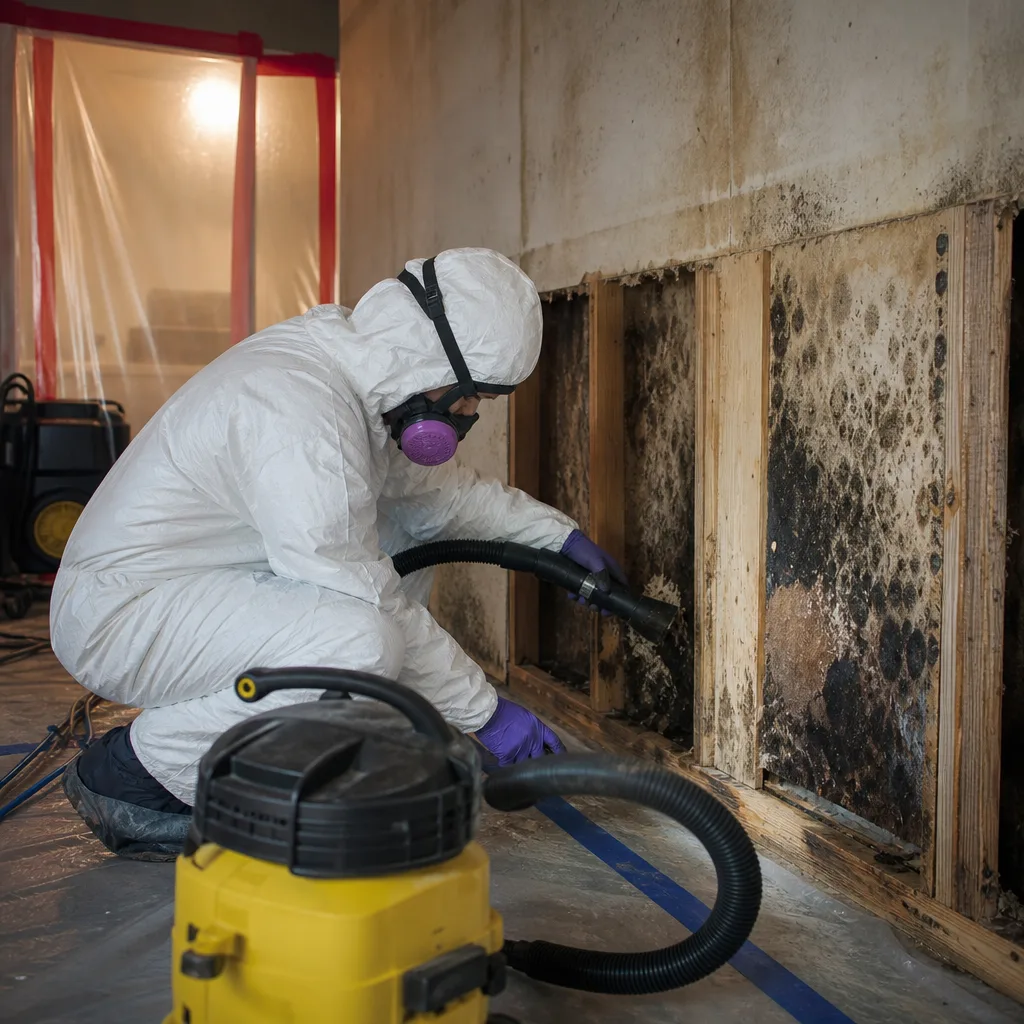
Porous materials that can’t be saved get bagged and removed under containment. Salvageable surfaces get HEPA-vacuumed, wire-brushed, and cleaned. In Glendale’s plaster homes, we prioritize saving original walls whenever structural integrity allows.
Antimicrobial Treatment & Odor Control
All affected framing and accessible cavities receive antimicrobial application. For musty odors that linger after drying, we use hydroxyl generators and thermal fogging to neutralize smells at the source, not just mask them.
Clearance Testing & Repairs
Once the area is dry and clean, we run third-party air sampling to confirm spore counts are back to normal background levels for Glendale. Then we rebuild: plaster repair, trim, paint, and flooring restoration, all by the same crew.
Need Emergency Mold Remediation in Glendale Now?
Crews minutes away, answering live 24 hours a day. The sooner we start, the less it costs.
Working With Your Insurance Company
Mold claims in Glendale get complicated fast, especially when a party wall means two policies are in play. Wade’s Restoration has handled enough of these to know exactly what insurers need, and we build the file from the first hour. Documentation starts before we touch anything: photos of the visible mold, moisture readings from the affected rooms, and a written account of when and how the water event occurred. That initial record matters more than most homeowners realize, because in these 1920s homes, insurance adjusters sometimes argue about what’s new damage versus historic staining. We provide the detail that settles those disagreements. Wade communicates directly with your adjuster, sends the drying logs, and answers technical questions without you having to play messenger. Direct insurance billing means we work with your carrier on payment while you focus on getting your house back.
What We Provide Your Insurer
- Thorough documentation of the loss, from first photo to final moisture reading
- Photos of all damage, room by room, including the neighbor’s side if a shared wall is involved
- Moisture readings and drying logs, taken daily, handed to you in full
- A detailed, line-item scope of work that matches industry-standard pricing
- Direct coordination with your carrier, so you never sit on hold with an adjuster
Built for Glendale’s Loss Calendar
Mold doesn’t appear on a schedule, but Glendale’s mold season has a rhythm to it. January and February bring deep freezes that burst original galvanized supply lines in these 1920s row houses, and when water runs through plaster walls for a weekend before anyone notices, mold follows. Spring thaw and heavy March rains find their way into the flat and low-slope tar roofs that have long outlived their design life, dripping into ceiling cavities where mold grows unseen for weeks. Summer is the ugly one: cloudburst thunderstorms overwhelm Glendale’s aging combined sewer system, and basements with original gravity drains back up with Category 3 water that carries sewage and everything else. Mold takes hold in the humid aftermath. Then come the nor’easters in fall and early winter, peeling back roof membranes and parapet flashing, letting water run down the inside of brick walls behind the plaster. Every one of those seasonal events becomes a mold problem within days if the drying isn’t done right the first time. That’s exactly the work Wade’s Restoration has been doing since 2007.
Mold Remediation Across Glendale’s Neighborhoods
Glendale is a grid of dense brick rows, and the response routes through it are as tight as the parking. Crews work their way up Myrtle Avenue and down Cooper Avenue, past St. John’s Cemetery and the Atlas Park shops, threading trucks down streets where a double-parked car means backing in from the corner. The homes around PS 91 and the blocks off 73rd Street are classic 1920s two-families with shared chimneys and common rooflines, and we see the same failure pattern there again and again: a roof leak at the party wall line wets both attics, and by the time mold shows on a second-floor ceiling, it’s already in the neighbor’s closet. Over toward 88th Street and the Queens-Brooklyn line, semi-detached brick homes have narrow side alleys that run wet in heavy rain, and foundation seepage feeds chronic basement humidity. Deeper in toward Fresh Pond Road, the commercial-corridor apartments above storefronts have their own issues: flat roofs, parapet leaks, and plumbing stacks older than most of the people living under them. We know these blocks because we work them every week. Wade’s Restoration has done mold remediation in every corner of Glendale, from the row houses off Woodhaven Boulevard to the two-families backing up to the Long Island Rail Road tracks near 80th Street.
Specialized Mold Remediation Services We Offer in Glendale
Mold Inspection & Testing
Before any remediation, you need to know what you’re dealing with and whether the neighbor’s side is involved. Our inspection includes thermal imaging, moisture mapping, and air sampling when warranted. In Glendale’s party-wall rows, we routinely find elevated moisture on the other side of a wall that looks dry from inside your unit. That changes the scope and the insurance conversation, and it’s better to know before work starts.
Mold Removal
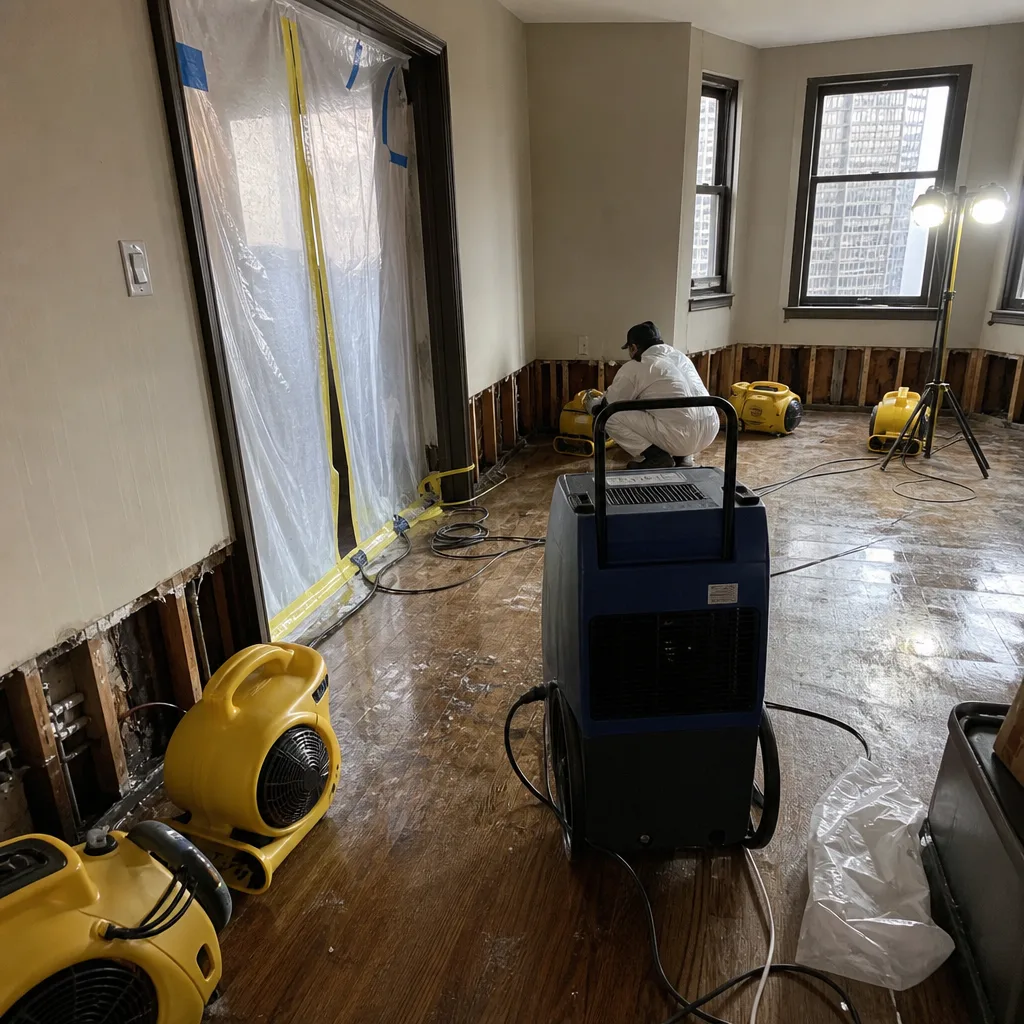
Surface mold on non-porous materials comes off with HEPA vacuuming, wire brushing, and antimicrobial treatment. In Glendale’s plaster-on-lath homes, mold removal often means working inside wall cavities where lateral wicking has carried spores far from the visible stain. We open only what needs to be opened, under containment, and we salvage original plaster whenever it’s structurally sound.
Black Mold Remediation
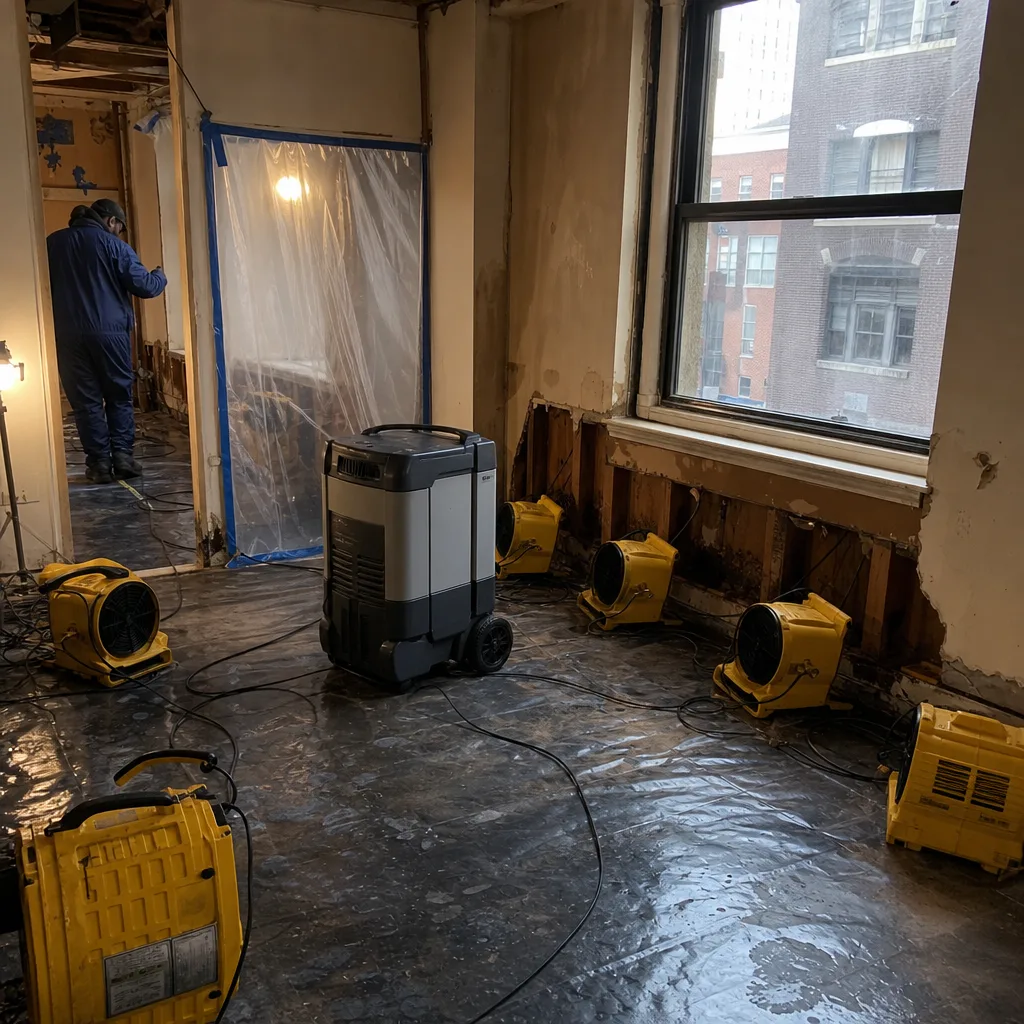
Stachybotrys, the black mold everyone worries about, loves the chronically damp conditions Glendale basements and ceiling cavities provide. Black mold remediation here requires full containment, negative air, and clearance testing at the end. We have handled enough of it in these brick rows to know that the mold behind the wall is usually worse than the mold on the wall, and we treat it accordingly.
Air Quality Restoration
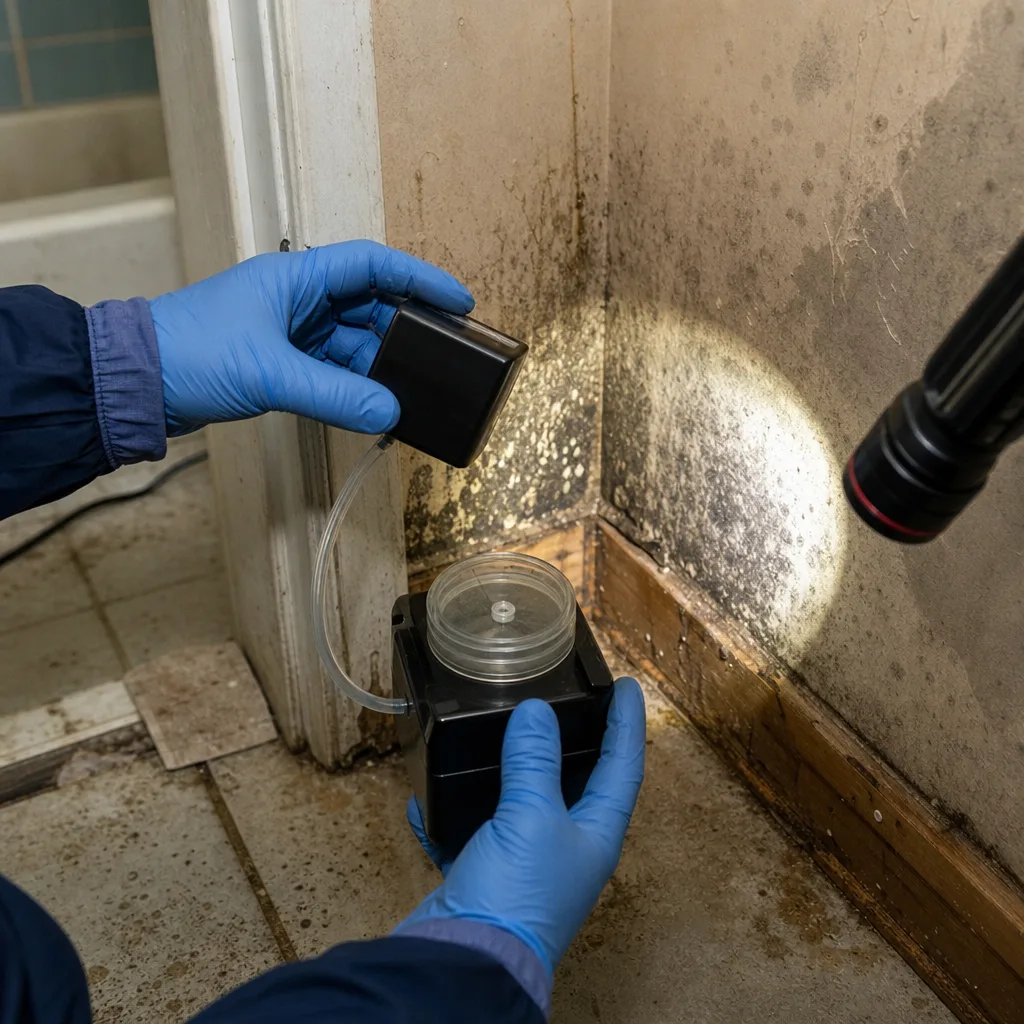
After physical removal, the air in the house still carries what the walls released. HEPA air scrubbers run continuously during remediation, and post-remediation air sampling confirms spore counts have returned to normal outdoor background levels for Glendale. For lingering odors, hydroxyl generation and thermal fogging clear the air without leaving chemical residue.
Crawl Space Treatment
Glendale homes don’t always have crawl spaces, but the ones that do, typically under rear extensions and enclosed porches, trap moisture against original brick and joists. We treat crawl spaces with moisture barriers, dehumidification, and antimicrobial application to stop mold at the source rather than chasing it room by room.
Moisture & Humidity Control
Mold remediation without moisture control is a temporary fix, especially in brick row houses where humidity never really leaves on its own. We install and program dehumidification, improve ventilation in basement stairwells and bathrooms, and recommend a humidity-control program tailored to your specific Glendale home. This is the service that keeps mold from coming back after we’ve already removed it once.
What happens when you call
- 1
A real person answersNo phone trees - you reach a local pro.
- 2
You get an upfront price rangeHonest numbers before anyone is dispatched.
- 3
A background-checked tech heads outLicensed & insured, dispatched right away.
- 4
You approve before work beginsNothing starts until you say go.
Mold Remediation Costs in Glendale, NY
Straight numbers for Glendale, because you deserve them: a small contained mold job, like a bathroom ceiling or under-sink patch, typically runs $800 to $1,800. A single room with wall-cavity involvement and containment runs $2,500 to $5,000. A party-wall job that involves the neighbor’s side, two containments, and structural drying on both sides of the wall typically runs $6,000 to $14,000 depending on square footage and whether reconstruction is included. The big variable is whether the water source is still active, because drying a house that’s still getting wet costs more every day. Insurance covers mold remediation when it results from a covered peril like a burst pipe or storm damage, though not when it stems from long-term neglect or chronic seepage. We give free visual inspections and written scopes before work begins, so you know your number before you commit. Call (607) 703-3408 and we’ll come look, no charge for the trip inside Glendale.
We Also Serve Cities Near Glendale
Wade’s Restoration handles mold remediation throughout the surrounding metro area, including Midtown West, the Financial District, Lower Manhattan, and Astoria. Wherever you are, the same owner-operator accountability applies: a real name, a published address, and a 90-Day Done Right Promise in writing.
Serving Glendale, NY - Our Local Coverage Area
We’re based in the Glendale area and know this community well. Use the map below to see our service coverage - if you’re nearby, we can almost certainly help.
Glendale Mold Remediation Questions, Answered
Why does mold in a Glendale row house almost always show up on both sides of a shared wall?
Because the party walls in Glendale’s 1920s brick rows are un-insulated masonry that wicks moisture laterally, so water from a leak on one side travels through the wall into the neighbor’s structure within hours. We routinely find elevated moisture readings in the adjacent unit before the original damage is even fully dry, which is why Wade’s team knocks on the neighbor’s door during the initial assessment. Call (607) 703-3408 if you suspect your mold is in a shared wall; we inspect both sides as standard practice.
How do you set up containment and drying equipment when the affected basement is only 8 feet wide and accessed via an alley?
We use compact containment frames, slim-profile Dri-Eaz dehumidifiers, and XPOWER air movers placed to maximize airflow without blocking the only access path. In Glendale’s tight basements, equipment layout matters as much as equipment power, and our crews have worked in enough of these spaces to dry them effectively. The drying plan is tailored to the room’s actual dimensions, not a template.
Can you remediate mold in our 1920s home without removing the original plaster walls?
Often yes, when the plaster is structurally sound and the mold hasn’t compromised the lath behind it. We cut access holes where needed, treat inside the cavity, dry the plaster from both sides, and patch with matching material. Salvaging original plaster preserves the character and insulation value of a Glendale row house, and it is usually less expensive than full gut-and-replace.
How do you handle a Category 3 sewage backup from Glendale’s combined sewer system during a summer storm?
Category 3 water carries sewage and pathogens, so the process starts with full containment, removal of saturated porous materials, and antimicrobial treatment of every affected surface. In Glendale basements with original gravity drains, we also address the drainage issue itself so the next cloudburst doesn’t repeat the backup. Wade’s Restoration handles Category 3 mold and sewage losses regularly in this neighborhood.
How fast can you actually get to a Glendale mold emergency?
We commit to a 45-minute response for emergency calls within Glendale, and often Wade is at your door faster than that. The number is (607) 703-3408, and a live person answers at any hour. For mold that is actively spreading behind a wet wall, that speed matters because every day of delay adds square footage to the job.
Will my homeowners insurance cover mold remediation in Glendale?
Insurance covers mold remediation when it results from a covered water loss like a burst supply line, storm damage, or a sewer backup with the right endorsement. Long-term seepage, neglect, or pre-existing mold typically is not covered. Wade documents everything from the first hour and deals with your adjuster directly to put the claim on the strongest footing possible.
Can we stay in the house during mold remediation?
For small contained jobs, usually yes. For party-wall jobs with full containment, negative air, and air scrubbing, we often recommend staying elsewhere for a few days, especially if anyone in the household has respiratory sensitivities. We will tell you plainly what is safe based on the actual scope, not a generic answer.
What should we do in the first 30 minutes after we find mold in our Glendale home?
Stop the water source if you can do so safely, shut off supply lines or roof drainage as applicable, and call (607) 703-3408. Do not disturb the mold or try to scrub it, because that releases spores into the air. Take photos with your phone, note when you first saw it, and keep everyone away from the area until a professional assessment is done.
Written by Wade Ferris, owner of Wade’s Restoration, serving Glendale and the surrounding New York metro since 2007. Wade answers his own phone at (607) 703-3408, and his name is on every truck and every written promise.