
Quick Summary
Toxic mold after flooding can colonize damp structural materials in as little as 24 to 48 hours, threatening indoor air quality and creating severe respiratory health risks. Stopping rapid fungal growth requires immediate water extraction, discarding porous materials soaked beyond 48 hours, and deploying industrial structural drying under the guidance of Wade's Restoration. Property owners will learn critical emergency drying protocols and can contact Wade's Restoration for a free visual inspection and professional moisture assessment within 45 minutes of an incident.
Mold After Flooding: How to Stop Growth and Dry Fast
When floodwater enters a home or building, drying should begin immediately. Floodwater and persistently damp materials can support mold growth, and mold may begin growing within 24 to 48 hours.
Federal health agencies, including the EPA and the Centers for Disease Control and Prevention (CDC), advise that drying water-damaged materials within 24 to 48 hours may reduce the likelihood of mold growth; begin drying immediately. See also Mold Remediation Nyc | Call Now-10% Off | Same-Day Service | Free Estimate.
Mold After Flooding: Timeline and Action Plan
Mold After Flooding: Timeline and Action Plan in brief: Floodwater and persistently damp materials can support mold growth, and mold may begin growing within 24 to 48 hours. Drying should begin immediately: remove standing water and wet debris, discard porous materials that remained wet for more than 24 to 48 hours, dry quickly with ventilation, fans, and dehumidifiers, and avoid re-entry until electrical and structural hazards are ruled out (CDC/EPA).[2]
As specialists at Wade’s Restoration emphasize, every hour water remains in damp materials increases the risk of contamination. Drying should begin immediately once safety hazards are addressed.
Key Takeaways: 24 to 48 Hour Window
Mold may begin growing within 24 to 48 hours on water-damaged materials. In a CDC assessment of more than 200,000 homes in the New Orleans area after Hurricane Katrina, approximately 46% of assessed homes had some mold contamination and approximately 17% had heavy contamination. Mold coverage was greatest in homes with more than 3 feet of indoor flooding, while roof damage and other water intrusion also contributed (CDC).[1]
According to the CDC, mold exposure can cause allergic reactions, irritated eyes and skin, wheezing, asthma attacks, and breathing difficulty; people with weakened immune systems or chronic lung disease may face higher risks.
Steps to Take When Addressing Flood Damage
According to CDC and EPA guidance, follow these supported immediate actions:
- Verify safety before entry: Avoid re-entry until electrical and structural hazards are ruled out.
- Remove standing water: Remove standing water and wet debris promptly.
- Discard wet porous items: Discard porous materials that remained wet for more than 24 to 48 hours.
- Dry thoroughly: Dry quickly with ventilation, fans, and dehumidifiers.
How Water Intrusion and Damp Materials Promote Mold Growth
Floodwater and persistently damp materials can support mold growth, and mold may begin growing within 24 to 48 hours. Drying should begin immediately (EPA/CDC).
Assessing Flood Damage
In a CDC post-Katrina field evaluation of 111 flooded structures, visible mold was observed in 49 of 111 homes, or 44%, and 18 homes, or 16%, had heavy mold coverage (CDC).[5]
Evaluating Flood Damage by Building Component
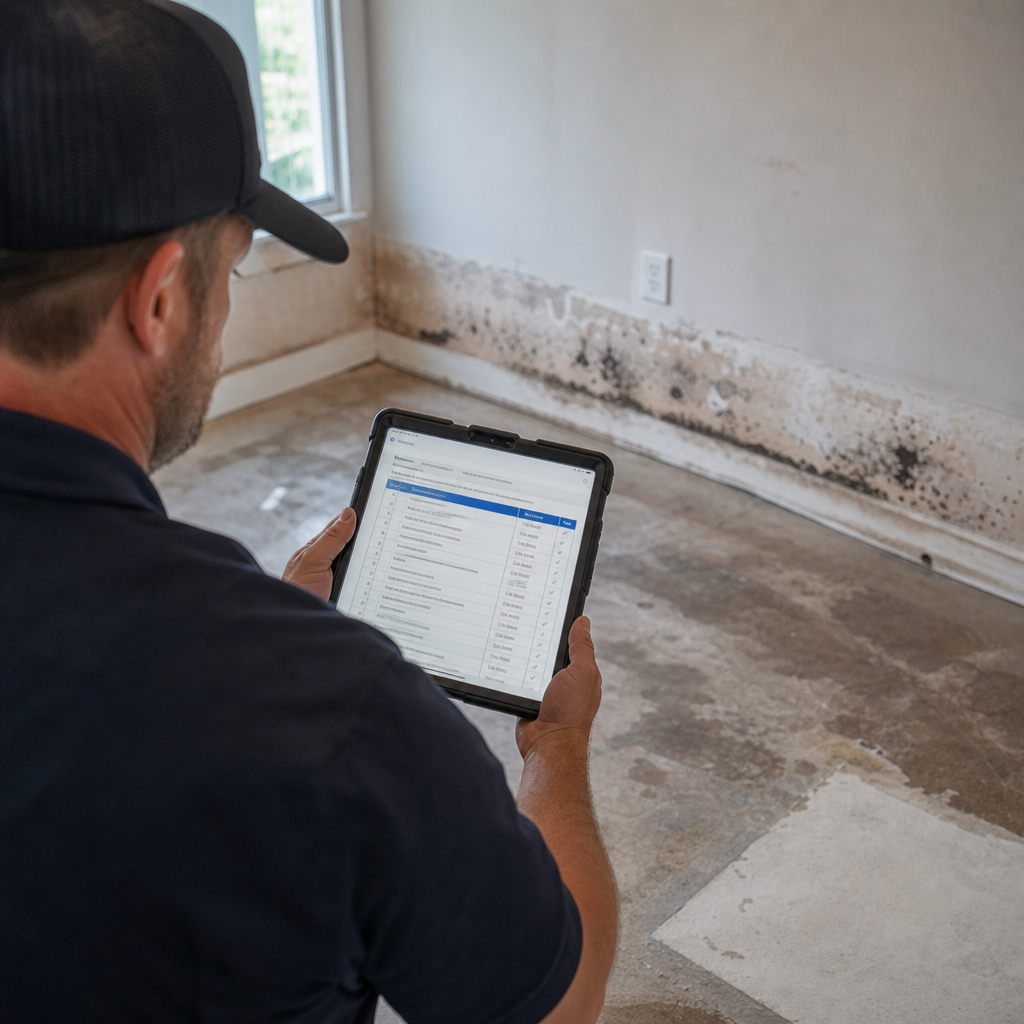
According to field evaluations by Wade’s Restoration, floodwater and persistently damp building materials support mold growth. Porous materials that remained wet for more than 24 to 48 hours should be discarded (EPA/CDC).
Porous Materials and Enclosed Spaces
In a study by the Baylor College of Medicine after Hurricane Harvey, 82.0% of respondents reported signs of mold at the first assessment, and 66.7% still reported seeing signs of mold at a later follow-up (Baylor College of Medicine).[4]
Addressing Mold After Flooding
Post-Flood Remediation Considerations
According to CDC and EPA recommendations, healthy adults may sometimes clean small areas with an N95 respirator, goggles, gloves, detergent, and prompt drying, while professional assessment or remediation from teams like Wade’s Restoration is appropriate for extensive contamination, heavily water-damaged materials, structural or electrical hazards, or occupants with asthma, chronic lung disease, allergies, or weakened immune systems.
Post-Hurricane Mold Observations and Health Risks
Among 37 respondents whose living spaces flooded after a hurricane, 28, or 76%, reported seeing or smelling mold afterward (CDC).[3]
According to the CDC, mold exposure can cause allergic reactions, irritated eyes and skin, wheezing, asthma attacks, and breathing difficulty; people with weakened immune systems or chronic lung disease may face higher risks.
Post-Flood Mold Remediation and Cleanup
Porous Materials and Moisture Management
Persistently damp materials support microbial growth. Discard porous materials that remained wet for more than 24 to 48 hours, and dry affected areas quickly with ventilation, fans, and dehumidifiers (EPA/CDC).
Remediation Guidance
According to CDC and EPA guidance, healthy adults may sometimes clean small areas with an N95 respirator, goggles, gloves, detergent, and prompt drying, while professional assessment or remediation is appropriate for extensive contamination, heavily water-damaged materials, structural or electrical hazards, or occupants with asthma, chronic lung disease, allergies, or weakened immune systems.
Frequently Asked Questions About Post-Flood Mold Cleanup
How quickly does mold grow after a flood?
Floodwater and persistently damp materials can support mold growth, and mold may begin growing within 24 to 48 hours. Drying water-damaged materials within 24 to 48 hours may reduce the likelihood of mold growth; begin drying immediately (EPA/CDC).
What are the health risks of mold exposure after water damage?
According to the CDC, mold exposure can cause allergic reactions, irritated eyes and skin, wheezing, asthma attacks, and breathing difficulty; people with weakened immune systems or chronic lung disease may face higher risks.
Can you clean flood mold yourself, or do you need a professional?
According to CDC and EPA guidance, healthy adults may sometimes clean small areas with an N95 respirator, goggles, gloves, detergent, and prompt drying, while professional assessment or remediation is appropriate for extensive contamination, heavily water-damaged materials, structural or electrical hazards, or occupants with asthma, chronic lung disease, allergies, or weakened immune systems.
How do you prevent mold growth after flooding?
To prevent mold growth, experts at Wade’s Restoration advise that you avoid re-entry until electrical and structural hazards are ruled out, remove standing water and wet debris, discard porous materials that remained wet for more than 24 to 48 hours, and dry quickly with ventilation, fans, and dehumidifiers (EPA/CDC).
Sources
- Airborne Mold and Endotoxin Concentrations in New … – pmc.ncbi.nlm.nih.gov (2006)
- This Mold House: Exposure Assessment of Flood … – stacks.cdc.gov (2005)
- Hurricane-Associated Mold Exposures Among Patients at Risk for Invasive Mold Infections After Hurricane Harvey - Houston, Texas, 2017 – pmc.ncbi.nlm.nih.gov (2017)
- A State-of-the-Science Review of the Effect of Damp – PMC – NIH – pmc.ncbi.nlm.nih.gov (2021)
- Resident cleanup activities, characteristics of flood- … – stacks.cdc.gov
Related reading: Flood Damage Insurance Claim – 10% Off & Free Estimate – Same-Day Service
Related reading: Basement Water Damage Cleanup | Call Now-10% Off | Same-Day Service | Free Estimate
Related reading: Mold Growth Timeline – Call Now-10% Off – Same-Day Service – Free Estimate
Frequently Asked Questions
How can you detect hidden mold inside walls or flooring after a flood?
Trapped moisture often drives dangerous mold colonization inside wall cavities and subfloors long before surface stains appear. Wade's Restoration performs professional moisture assessments and thermal imaging to locate concealed pockets of water and stop hidden structural growth.
Which flooded materials can be salvaged versus discarded to prevent mold?
Non-porous materials like tile, metal, and structural framing can often be sanitized and rapidly dried if treated early. Porous items such as drywall, carpet padding, and fiberglass insulation soaked for more than 24 to 48 hours must be removed and safely disposed of by remediation professionals like Wade's Restoration.
What should you do within the first 45 minutes of a flooding emergency?
After ensuring power sources are turned off and structural hazards are cleared, call Wade's Restoration for a free visual inspection and rapid moisture assessment. Initiating industrial water extraction within this critical early window prevents mold from colonizing damp materials at the 24-hour mark.
About the author
 |
Sarah Jenkins Sarah Jenkins is a certified property restoration specialist with over 8 years of experience in water damage mitigation and mold remediation. Based in New York, she focuses on helping Midtown West property owners navigate emergency cleanups and complex insurance claims. She holds a degree in Environmental Science from Rutgers University. |
Water damage, flood, or mold emergency?
We’re available now - call for a fast, free estimate.
Call Now - Free Estimate