
Quick Summary
Successfully navigating a flood damage insurance claim requires immediate structural mitigation and meticulous, carrier-compliant documentation to avoid costly claim denials or payout delays. Wade's Restoration resolves claim friction through their Claim Clarity Program by providing rapid water extraction, detailed thermal moisture logs, and standardized line-item scopes that meet strict insurer standards. Property owners can call the 24/7 live dispatch team at Wade's Restoration to secure immediate emergency flood mitigation and streamline the entire insurance documentation process for maximum payout.
Flood Damage Insurance Claim: Documentation and Process Guide
When filing a flood damage insurance claim, policyholders should document losses, contact their insurer promptly, and begin cleanup carefully to protect the property from further damage. Insurance policies generally expect property owners to take reasonable steps to protect their building from secondary damage.
Flood Damage Insurance Claim Overview – Quick Answers and Action Plan
Flood Damage Insurance Claim Overview in brief: To file a flood damage insurance claim, policyholders should document losses, contact their insurer promptly, and begin cleanup carefully. Standard homeowners, co-op, and commercial property policies exclude rising flood water, requiring a separate policy through the National Flood Insurance Program (NFIP) or a private flood underwriter.[1]
Executive Summary for Property Owners
Handling a flood claim involves taking reasonable steps to mitigate further loss. Policyholders should document property conditions, notify their insurer promptly, and begin drying out affected areas carefully. According to a 35-year historical analysis published by Resources for the Future, the average NFIP-paid flood claim reached $33,764 (in 2012 dollars). Providing clear documentation of structural moisture and property damage helps support the claim process.[3]
Key Filing Checkpoints
- Immediate Structural Stabilization: Shut off main water supplies if an interior riser failed, extract standing water, and protect unaffected areas from ongoing moisture.
- Moisture and Damage Documentation: Photograph affected areas, record moisture levels in subfloors or wall cavities where possible, and document the progression of drying.
- Standardized Line-Item Scopes: Itemized estimates and detailed drying records help substantiate mitigation costs for insurer review.
What You Need Before Filing a Flood Damage Claim
When you file a flood damage insurance claim, having organized paperwork and damage documentation from day one helps prevent delays.
Required Documentation Checklist
The U.S. Government Accountability Office (GAO) notes that private insurers servicing NFIP policies submit flood claims data directly into the federal NFIP repository. Because these files face strict auditing, your paperwork must be complete:[4]
- Policy Declaration Pages: Keep copies of your primary property policy, flood riders, deductible schedules, and any commercial master policy binders ready for review.
- Pre-Mitigation Visual Evidence: Capture wide-angle videos and clear photos documenting water lines along baseboards, saturated built-in millwork, and standing water before any demolition begins.
- Itemized Structural and Content Inventories: List ruined building finishes, damaged inventory, and unsalvageable personal property with make, model, age, and estimated replacement cost before items are hauled away.
Diagnostic Equipment and Data Logs
Moisture meters, thermal imaging cameras, and thermo-hygrometers can help detect water trapped behind plaster or underneath flooring. As specialists at Wade’s Restoration note, tracking relative humidity, temperature, and material moisture levels provides helpful records to demonstrate the extent of drying needed.
Step 1: Stop Active Ingress and Prevent Secondary Structural Damage
Property owners should take reasonable steps to prevent further damage. Prompt action helps protect the building and supports the claims process.
The Duty to Mitigate Under NYC Building Conditions
In high-density neighborhoods like Hell’s Kitchen and Hudson Yards, water rarely stays confined to one room. Water seeping into floor joists quickly damages lower-level units, retail spaces, and common utility chases. Policyholders should document losses, contact their insurer promptly, and begin cleanup carefully to reduce the risk of secondary damage.
Stopping Upstream Water Flow in Multi-Story High-Rises
When a pipe bursts on an upper floor or street runoff enters a garden-level apartment, stopping the spread requires physical intervention:
- Water Extraction: Extraction machines remove water from finish flooring, helping minimize seepage into elevator shafts and electrical chases.
- Containment: Polyethylene barriers and air scrubbers help isolate work zones, limiting the migration of dust and odors through shared HVAC systems or hallway corridors.
Step 2: Document Structural Moisture and Damage
Need flood damage insurance claim?
We’re available now - call for a fast, free estimate.
Submitting a flood claim is aided by objective evidence showing the condition of framing, subflooring, and wall assemblies.
Documenting Moisture Beyond Surface Photos
Photographs show visible water, but moisture meters and thermal scans can show whether moisture has penetrated wall cavities or subfloors. According to mitigation specialists at Wade’s Restoration, providing detailed moisture readings alongside photos helps substantiate the need for drying equipment.
Creating a Detailed Moisture Profile
A comprehensive moisture profile may include:
- Baseline Dry Standards: Readings from unaffected rooms to establish normal moisture levels for building materials.
- Thermal Mapping: Infrared imaging to identify moisture paths behind plaster, tile, and subfloors.
- Daily Moisture Logs: Ongoing tracking of moisture levels to record drying progress until materials reach dry standards.
Step 3: Determine Policy Type: NFIP Flood Insurance vs Private Water Endorsement
Understanding what type of water entered your building determines which policy responds. The source of the water dictates whether you file under federal flood coverage or a private commercial or property policy.
Understanding NFIP vs Commercial/Private Policies
The typical homeowners or renters policy does not cover flood damage caused by rising surface water. FEMA states that its historical NFIP claims data applies strictly to flood insurance claims paid by the NFIP, not uninsured flood losses or private insurance claims. You must identify your coverage type before filing:[2]
| Coverage Type | Water Source Covered | Filing Mechanism and Rules |
|---|---|---|
| NFIP Policy | Overland surface runoff affecting two or more acres or two or more properties | Strict federal proof-of-loss requirements, capped structural limits, and standardized depreciation schedules. |
| Private Policy / Water Endorsement | Internal pipe bursts, sewer backups, roof drain overflows, or private flood riders | Commercial master policies, co-op building policies, or individual property endorsements evaluated under policy-specific terms. |
Overland Rising Water vs Internal Plumbing Discharges
Adjusters review the exact point of entry. If heavy rain pools in the street, breaches a doorway, and floods a property, that is categorized as flood damage and requires NFIP or private flood insurance. If a roof drain fails or an internal riser breaks, that loss typically falls under standard property water damage policies. Establishing the source early prevents confusion between different insurance coverages.
Step 4: Execute Emergency Water Extraction and Controlled Demolition
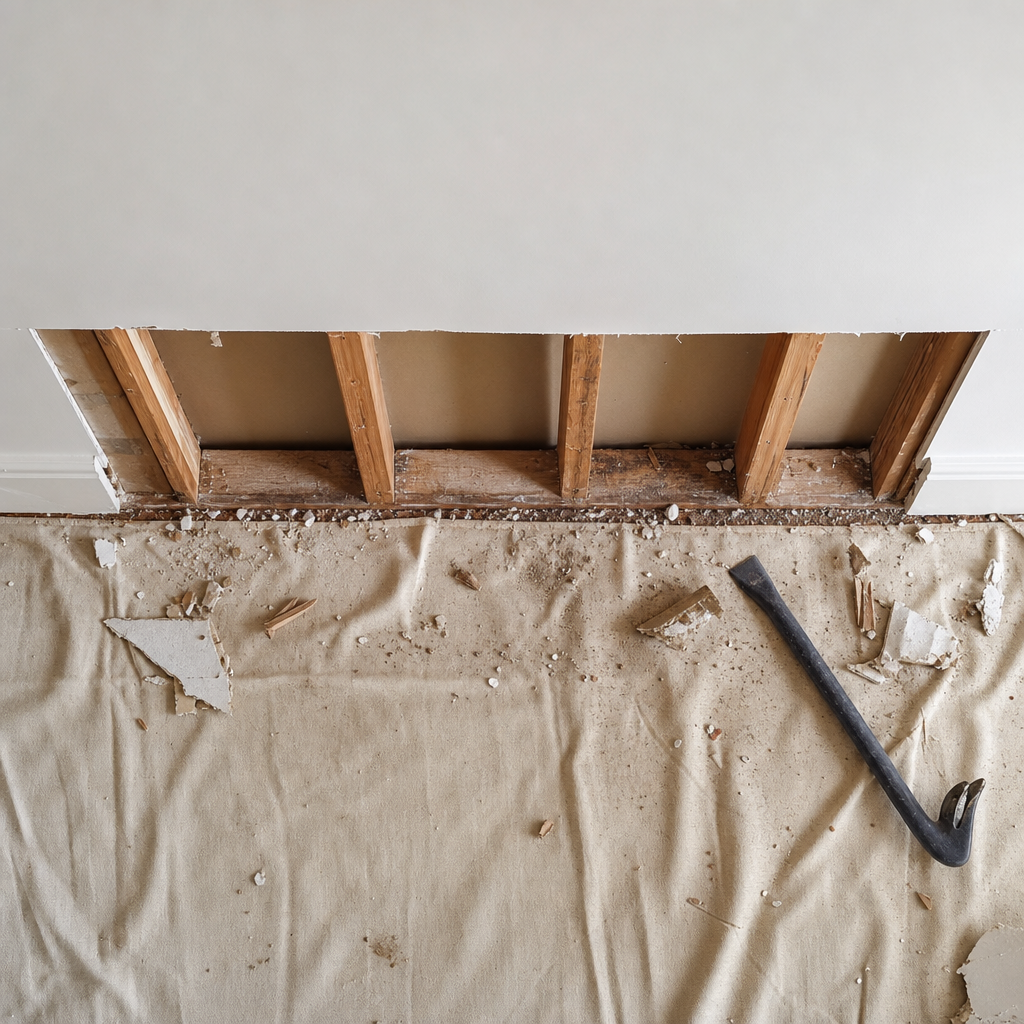
Stabilizing a water-damaged property involves removing non-salvageable materials to expose framing and facilitate drying.
Extracting Standing Water and Setting Containment
Standing water can break down porous building materials like gypsum board, acoustic ceiling tiles, and carpet padding. High-capacity extraction units remove standing water, while containment barriers protect unaffected areas from dust and debris during demolition.
Flood Cuts and Sanitation
Controlled demolition practices often include:
- Flood Cuts: Cutting drywall above moisture lines to vent wall cavities and remove saturated insulation.
- Antimicrobial Application: Framing and exposed masonry are treated with EPA-registered antimicrobials to inhibit microbial growth during drying.
- Dehumidification: Commercial dehumidifiers and air movers are deployed according to room volume and moisture load.
Step 5: Submit Itemized Line-Item Estimates via Standard Formats
Submitting itemized estimates rather than unitemized lump sums helps facilitate carrier review.
Standard Industry Estimating Formats
Standard documentation formats include:
- Unit pricing for material removal, antimicrobial application, and containment setup.
- Equipment tracking records showing equipment types, placement locations, and operational hours.
- Moisture readings, logs, and photos submitted directly to the claims adjuster.
Avoiding Scope and Billing Disputes
Detailed documentation showing drying progress and moisture levels helps explain equipment usage and reduces potential billing questions during claim adjustment.
Step 6: Coordinate Adjuster Walkthroughs and Manage Supplemental Claims
Need flood damage insurance claim?
We’re available now - call for a fast, free estimate.
Walking the loss site alongside your adjuster helps ensure that structural components and hidden moisture areas are included in the initial scope of work.
On-Site Adjuster Walkthrough Strategy
Policyholders or their contractors can walk the property with the carrier’s adjuster to review moisture readings, point out damaged structural components, and discuss equipment placement.
Filing Supplemental Claims for Hidden Water Damage
Water frequently migrates into areas that cannot be fully inspected on day one. If hidden saturation appears during the drying process, document the newly discovered damage immediately:
- Documenting the Hidden Moisture: Take new meter readings and date-stamped photos showing the newly uncovered moisture.
- Submitting Supplemental Line Items: Send an itemized scope revision directly to the adjuster before reconstruction begins.
- Navigating Policy Remedies: If the carrier disputes covered repair costs, provide the structural records needed for formal appraisal or state insurance dispute resolution.
Critical Structural Components Damaged in Flood Events
Water alters building materials differently based on their porosity and structural composition. Knowing how specific assemblies react helps you spot hidden damage early.
Drywall, Plaster, and Ceiling Assemblies
Drywall wicks moisture upward, losing strength when saturated. Historic horsehair plaster in pre-war buildings can hold substantial amounts of water without showing immediate surface damage, eventually crumbling or pulling away from the wood lath behind it. Wall cavities must be opened to dry framing.
Hardwood, Engineered Planks, and Subfloors
Hardwood flooring expands as it absorbs water, leading to cupping and crowning, which technicians at Wade’s Restoration frequently evaluate during initial inspections. Water often becomes trapped between top flooring and concrete or plywood subfloors. Specialized drying systems can sometimes save the wood if deployed early; otherwise, controlled removal is necessary to dry the subfloor beneath.
Basements, Crawl Spaces, and Garden-Level Units
Subgrade spaces face continuous hydrostatic pressure during severe rain events. Water seeps through foundation joints and porous brick masonry, saturating bottom plates and structural posts. Complete structural drying and treatment are necessary to protect indoor air quality.
Understanding Flood Mitigation Claims and Costs
Every flood loss is unique. Total mitigation and restoration costs depend on the square footage involved, the category of water, and how quickly extraction begins.
Factors Influencing Mitigation and Claim Costs
Key elements that determine your mitigation scope and final invoice include:
- Total volume of standing water extracted from living and utility spaces.
- Contamination category of the water (clean supply line, gray rainwater, or black sewer backflow).
- Extent of structural demolition needed for saturated drywall, insulation, and multi-layered flooring.
- Number of dehumidifiers and air movers required to meet structural drying targets.
Deductibles and Claims Processing
Property owners are responsible for paying their policy deductible, while the carrier covers approved mitigation and structural drying services up to policy limits. Submitting detailed drying records, photos, and itemized scopes helps ensure the claim file is properly evaluated.
Frequently Asked Questions About Flood Damage Claims in Midtown West NYC
Here are clear answers to the most common questions property owners and managers ask when dealing with water damage and flood insurance claims.[5]
Local Policy, Mitigation, and Claims Inquiries
Does standard property insurance cover overland flood damage?
No. Standard homeowners, condo, co-op, and commercial policies exclude damage from rising overland surface water. That damage requires a dedicated flood policy through the NFIP or a private flood insurance carrier. However, internal plumbing failures and sudden pipe breaks are typically covered under standard property insurance.
How long does the flood damage insurance claim process take?
Emergency water extraction and drying usually take several days. The claims adjustment process can take anywhere from a few weeks to several months depending on whether you have an NFIP or private policy, the scale of regional damage, and how thoroughly the damage is documented.
What evidence or documentation do I need to collect before cleaning up?
Before removing anything, capture wide-angle and close-up videos and photos showing water lines, standing water, and damaged personal property. Keep samples of high-value flooring or materials if they must be removed immediately, and record moisture readings where possible.
Can a restoration company bill an insurance company directly?
Many restoration companies, including Wade’s Restoration, prepare industry-standard line-item scopes, attach moisture logs, and submit billing packages directly to insurance adjusters for review and payment.
What should I do if my flood insurance claim is underpaid or denied?
Request a copy of the adjuster’s complete line-item breakdown to identify what was excluded. You can file a supplemental claim supported by moisture data, photos, and contractor invoices. If disputes persist, you can request an independent appraisal or work with your state’s insurance department mediation program.
Need flood damage insurance claim?
We’re available now - call for a fast, free estimate.
Sources
- [PDF] national flood insurance program – media toolkit – agents.floodsmart.gov (2025)
- The Cost of Flooding – floodsmart.gov (2024)
- The National Flood Insurance Program: Factors Affecting Actuarial Soundness – cbo.gov (2008)
- FIMA NFIP Redacted Claims – v2 – fema.gov
- [PDF] A Look at 35 Years of Flood Insurance Claims; Resources 191 – biotech.law.lsu.edu (2012)
Related reading: Basement Water Damage Cleanup | Call Now-10% Off | Same-Day Service | Free Estimate
Related reading: Hidden Mold Signs – 10% Off & Free Estimate – Same-Day Service
Related reading: Mold Growth Timeline – Call Now-10% Off – Same-Day Service – Free Estimate
Frequently Asked Questions
How do I file a supplemental flood claim if hidden moisture is found during demolition?
To file a supplemental claim, you must submit date-stamped thermal imaging, updated moisture logs, and revised line-item repair scopes to your adjuster before rebuilding. Through their Claim Clarity Program, Wade's Restoration handles this process by providing carrier-ready supplemental documentation directly to your insurer to capture all hidden structural damages.
How does professional moisture documentation prevent NFIP flood claim disputes?
Federal flood claims require objective, audit-compliant proof of saturation beyond standard photos to justify equipment and drying costs. Wade's Restoration tracks baseline dry standards, thermal mapping, and daily dehumidification logs that meet strict NFIP auditing standards, preventing billing disputes and delayed payouts.
How quickly must emergency flood mitigation begin to satisfy policy requirements?
Insurance carriers expect property owners to initiate water extraction within 24 to 48 hours to uphold their duty to mitigate and prevent secondary mold or structural degradation. Calling the 24/7 live dispatch team at Wade's Restoration ensures immediate structural drying and rapid deployment of containment barriers that protect your coverage eligibility.
About the author
 |
Marcus Avery Marcus Avery is an IICRC-certified restoration specialist with over 12 years of experience in structural drying and water damage mitigation. Holding a B.S. in Construction Management from the Wentworth Institute of Technology, he frequently consults with property management firms in the tri-state area on emergency response planning. Marcus specializes in helping Midtown West property owners navigate complex water damage scenarios and detailed restoration cost analysis. |
Water damage, flood, or mold emergency?
We’re available now - call for a fast, free estimate.
Call Now - Free Estimate