
Quick Summary
Learning how to dry out a flooded basement fast is essential for safeguarding your home against severe structural rot and hazardous mold growth that begins within 24 hours of water intrusion. Effective restoration requires securing electrical safety, rapidly extracting standing water, discarding saturated porous materials, and utilizing professional structural drying methods recommended by Wade's Restoration. By following these emergency steps, homeowners will understand how to safely mitigate water damage and can contact Wade's Restoration on their 24/7 emergency dispatch line for immediate extraction and a free visual inspection.
How to Dry Out Flooded Basement Fast and Prevent Mold
When water enters a basement, drying should begin as soon as it is safe. Mold can grow on wet wood, drywall, carpet, and furniture after more than 24 hours. To protect your property, you need to eliminate hazards, remove standing water, and dry the structure thoroughly.[3]
As recommended by Wade’s Restoration, effective drying requires a methodical approach using appropriate equipment and ventilation to remove moisture from affected materials. See also Mold Remediation Nyc | Call Now-10% Off | Same-Day Service | Free Estimate.
Emergency Protocol: What You Need to Dry Out a Flooded Basement
Before you start pumping water, stabilize the environment. Make sure the space is electrically safe, establish ventilation if needed, and confirm that powered equipment is safe to operate. The drying process typically takes anywhere from several days to several weeks depending on water volume, materials, ventilation, temperature, and humidity.
Essential Tools and Safety Gear Checklist
- Personal Protection: Protective gear, including boots, gloves, eye protection, and a respirator, to guard against contaminants and airborne hazards.
- Water Removal and Drying Equipment: Pumps or wet-dry vacuums where appropriate, fans, dehumidifiers, and ventilation. Note that operating powered equipment requires electrical safety confirmation first.
- Monitoring Gear: A penetrating moisture meter to track drying progress inside structural materials.
Safety and Contamination Warning
Situations involving sewage, chemicals, contaminated runoff, electrical hazards, HVAC involvement, structural damage, or extensive mold require qualified help.
Step 1: Shut Off Power and Eliminate Electrical Hazards
Never step into a flooded basement until you have confirmed that the electrical supply to that area is completely safe. Standing water conducts electricity if it reaches outlets, wiring, or submerged appliances.
Verifying Electrical Safety
Switch off the basement circuit breakers from the main electrical panel, provided the panel is located in a completely dry area. If the electrical panel is located in the flooded basement or requires walking through standing water to reach, do not attempt to touch it. Call your local electric utility or a qualified electrician immediately to disconnect power.[2]
Once power is verified safe, ensure all powered equipment is operated with proper electrical safety measures, such as GFCI protection.
Step 2: Stop the Water Source and Remove Standing Water
If the flooding is caused by an internal plumbing failure, turn off the main water shut-off valve immediately. For outdoor runoff or seepage, locate the entry point and prepare your water removal equipment.
Operating Pumps and Water Removal Units
- Discharge water safely: Route discharge hoses away from your foundation and adjacent properties according to local regulations.
- Follow guidance during exterior flooding: Basement pumping should follow qualified local or professional guidance when exterior water pressure may be a concern.
- Remove residual water: Once deep standing water is removed, use wet-dry vacuums or appropriate tools to pick up remaining puddles from the floor.
Step 3: Remove Saturated Carpet, Padding, and Porous Contents
Porous flooring materials hold moisture against the subfloor and slab. According to specialists at Wade’s Restoration, saturated carpet, padding, and damaged porous contents should be removed to facilitate proper drying.[5]
Managing Porous Contents and Furniture
Upholstered furniture, cardboard boxes, and wet mattresses should be removed. Solid furniture and salvageable items should be wiped down and allowed to dry in a well-ventilated space. Discard materials that cannot be properly cleaned and dried.
Step 4: Assess and Remove Saturated Wall Materials
Need how to dry out flooded basement?
We’re available now - call for a fast, free estimate.
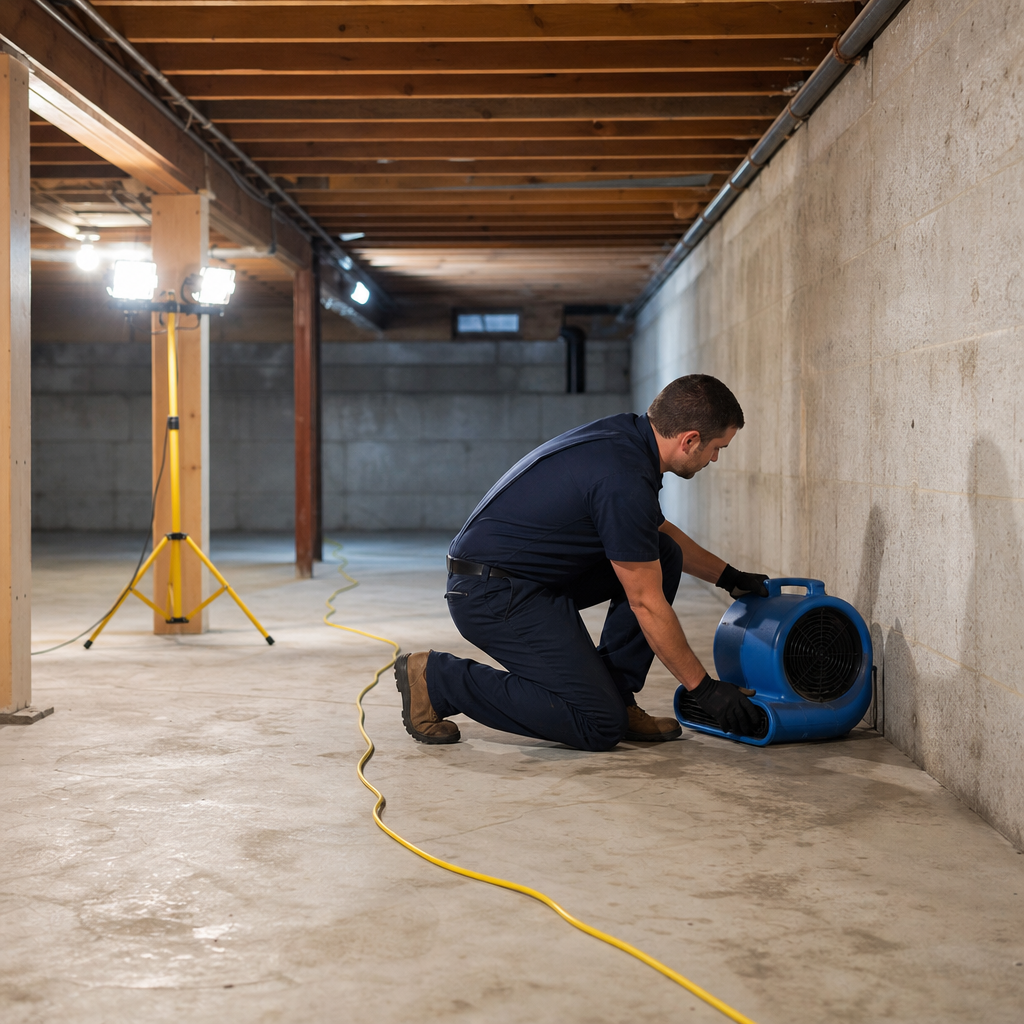
Water can penetrate drywall and insulation inside wall cavities. When these materials become saturated, removing the affected sections allows air to circulate around framing and promotes drying.
Opening Wall Cavities
As advised by Wade’s Restoration, cut away wet drywall and remove saturated insulation to expose the framing studs. Surfaces that look dry may still contain moisture inside walls, flooring, cabinets, and other materials. Moisture must be checked with a penetrating moisture meter before reconstruction begins.
Step 5: Set Up Dehumidifiers and Fans Safely
Air circulation and dehumidification work together to pull moisture from materials and remove it from the air.
Mold Safety Warning During Air Movement
Do not use fans or dehumidifiers when visible mold is present until the mold has been gently cleaned, because air movement can spread mold to other areas.
Managing Relative Humidity
Keeping humidity below 60 percent helps reduce mold growth; the research brief’s question-answer guidance recommends at or below 50 percent during drying. Keep windows and doors closed when running dehumidifiers if the outdoor air is humid or rainy, or use ventilation when outdoor conditions are favorable.
Step 6: Clean Surfaces and Prevent Mold Growth
Once structural materials are exposed and drying equipment is operating safely, clean surfaces that came into contact with floodwater.
Cleaning and Moisture Verification
- Wash hard surfaces: Clean hard surfaces and exposed framing with water and appropriate detergent or cleaning solutions.
- Verify internal moisture: Never rely solely on visual inspection. Surfaces that look dry may still contain moisture inside walls, flooring, cabinets, and other materials. Moisture must be checked with a penetrating moisture meter before reconstruction.
When to Call a Professional for Basement Water Damage Restoration
According to Wade’s Restoration, you should seek qualified help for sewage or chemical contamination, electrical hazards, affected HVAC systems, suspected structural damage, or mold covering more than 10 square feet.
Frequently Asked Questions About Basement Flood Drying
How long does it take for a flooded basement to dry out completely?
Drying may take several days to several weeks, depending on water volume, materials, ventilation, temperature, and humidity. Poorly ventilated flooded buildings may take 4 to 6 weeks or longer, and well-ventilated rooms may take 2 to 4 weeks. Moisture must be checked with a penetrating moisture meter before reconstruction.[4]
Can I dry out a flooded basement myself or do I need professional help?
Qualified help is recommended for sewage or chemical contamination, electrical hazards, affected HVAC systems, suspected structural damage, or mold covering more than 10 square feet. Smaller clean-water incidents can often be managed directly if safe procedures are followed.
What equipment is needed to pump water and dry out a basement?
Supported equipment includes pumps or wet-dry vacuums where appropriate, fans, dehumidifiers, ventilation, protective gear, and a penetrating moisture meter. All powered equipment requires electrical safety confirmation before use.
How do I prevent mold after my basement floods?
Begin drying as soon as it is safe, since mold can grow on wet wood, drywall, carpet, and furniture after more than 24 hours. Remove saturated porous items, clean surfaces, and manage moisture levels. Keeping humidity below 60 percent helps reduce mold growth; the research brief’s question-answer guidance recommends at or below 50 percent during drying. Do not use fans or dehumidifiers when visible mold is present until the mold has been gently cleaned, because air movement can spread mold to other areas.
Should I throw away wet drywall and carpeting after a basement flood?
Experts at Wade’s Restoration note that saturated drywall and carpet padding generally cannot be adequately dried in place and should be removed. Porous materials that have been contaminated or remain wet for extended periods should be discarded.[1]
Is it safe to enter a flooded basement before shutting off power?
No. Entering a flooded basement before power is disconnected poses a serious shock hazard. Ensure the electrical supply is turned off safely from a dry location or contact your utility company before entering standing water.
Need how to dry out flooded basement?
We’re available now - call for a fast, free estimate.
Sources
- Quick reference: water damage response in buildings – Mass.gov – mass.gov (2008)
- Airborne Mold and Endotoxin Concentrations in New Orleans, Louisiana, after Flooding, October through November 2005 | Environmental Health Perspectives | Vol. 114, No. 9 – ehp.niehs.nih.gov (2005)
- California Department of Public Health – santaclaraca.gov
- Initial Restoration for Flooded Buildingsarchive.epa.gov › region02 › sandy › web › pdf › fema_flood – archive.epa.gov
- Make Sure Structural Materials Dry Before Rebuilding – ag.ndsu.edu
Related reading: Flooded Basement Drying – 10% Off & Free Estimate – Same-Day Service
Related reading: Flood Damage Insurance Claim – 10% Off & Free Estimate – Same-Day Service
Related reading: Mold After Flooding – Call Now-10% Off – Same-Day Service – Free Estimate
Frequently Asked Questions
What should I document for insurance before throwing away flooded basement materials?
Take clear photos and videos of standing water depths, damaged personal property, and wet building materials prior to cutting drywall or discarding carpet. Wade's Restoration provides detailed moisture logs and loss documentation during their free visual inspection to help support your homeowners insurance claim.
How do I know when my basement framing and subfloors are dry enough to rebuild?
Structural framing and concrete slabs must be verified using a penetrating moisture meter to ensure internal moisture content matches baseline dry standards. The certified technicians at Wade's Restoration perform multi-point moisture testing to guarantee the structure is completely dry before you replace drywall or flooring.
What should I do if the basement flood involves contaminated water or sewage?
Halt all DIY efforts immediately, keep family and pets away from the area, and avoid running central air systems to prevent spreading biohazards. Contact Wade's Restoration on their 24/7 emergency dispatch line for rapid extraction, hospital-grade disinfection, and specialized structural drying.
About the author
 |
Sarah Jenkins Sarah Jenkins is a certified property restoration specialist with over 8 years of experience in water damage mitigation and mold remediation. Based in New York, she focuses on helping Midtown West property owners navigate emergency cleanups and complex insurance claims. She holds a degree in Environmental Science from Rutgers University. |
Water damage, flood, or mold emergency?
We’re available now - call for a fast, free estimate.
Call Now - Free Estimate