
Last updated August 26, 2026
Free visual inspection and a written scope of work before any mitigation begins - photos, moisture readings, and drying logs go in your claim file
The scope we write is the scope we bill. Anything new gets shown to you, in writing, before we touch it.
 Before
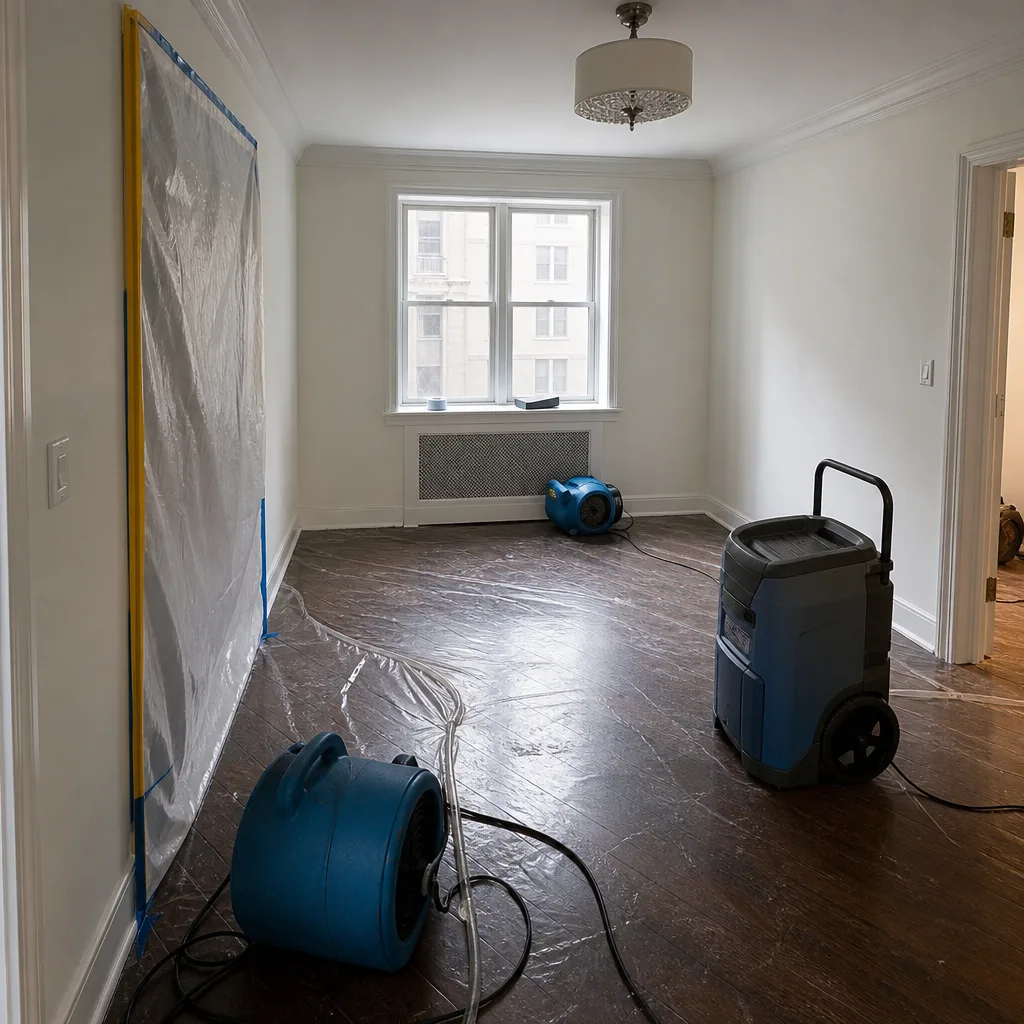 After
After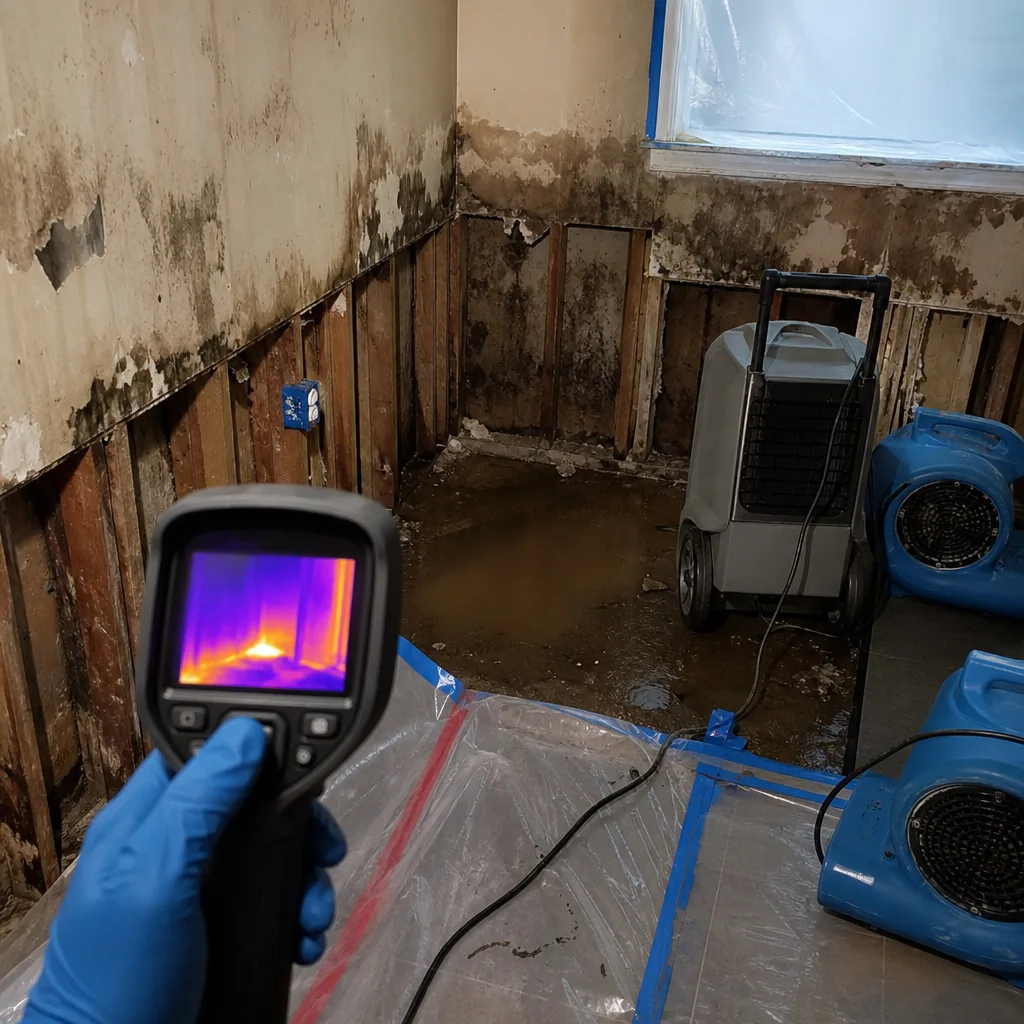 Before
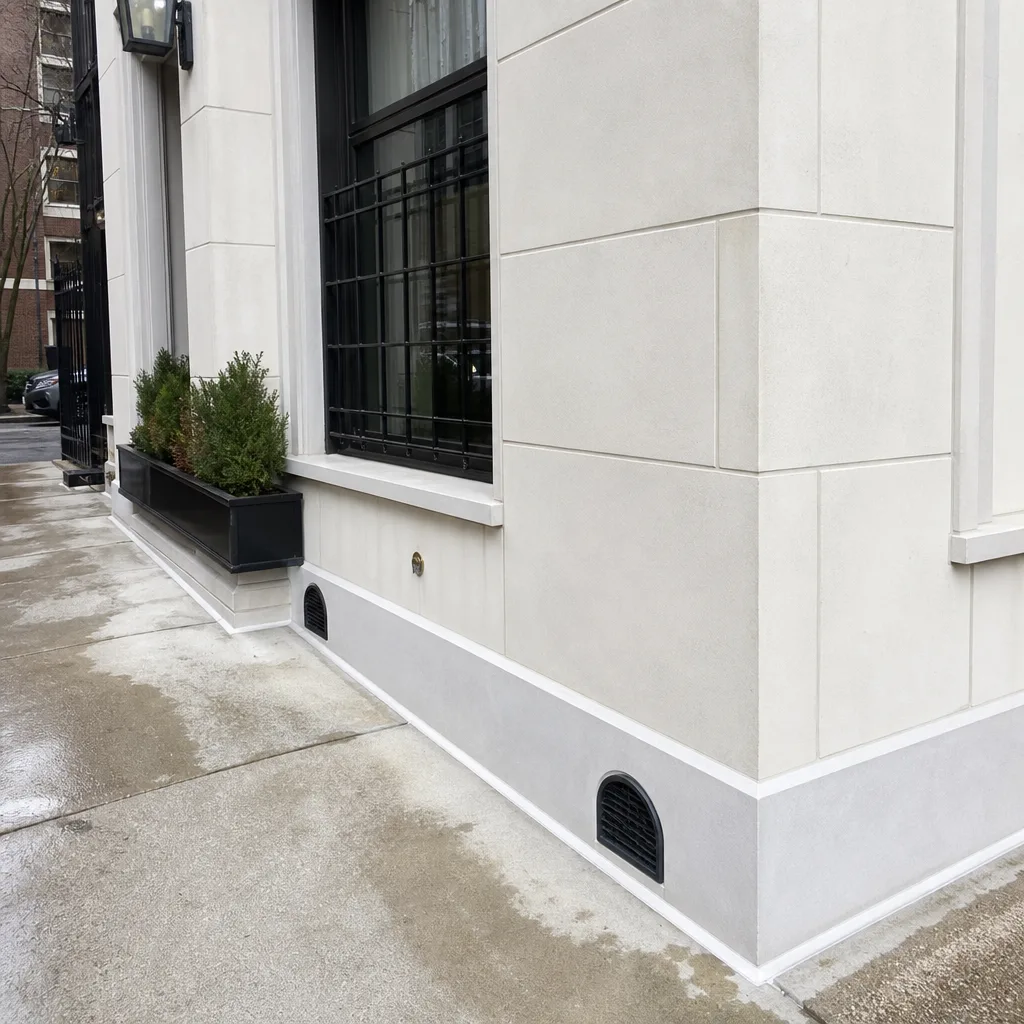 After
After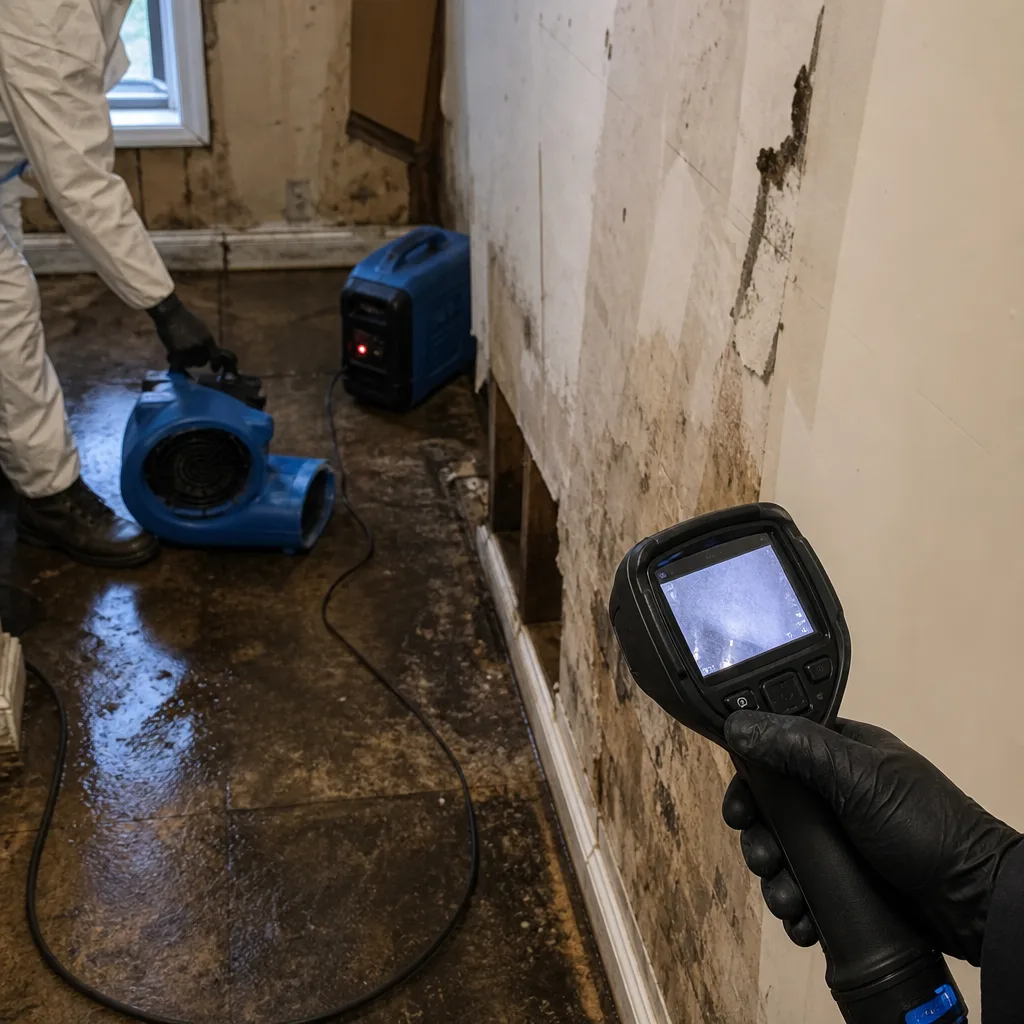 Before
 After
AfterThe Complete Guide to Damage Restoration in Midtown West
Most Midtown West water damage calls Wade gets aren’t from the flood itself. They’re from the neighbor one floor down who got hit when the upstairs unit’s claim sat unaddressed for 72 hours while a 1-800 number figured out who to dispatch. By the time anyone shows up, the water has traveled through three floors of 1920s lath and plaster, and what started as a $900 drying job is now a six-unit remediation with a board meeting attached. This guide maps the actual restoration landscape of Midtown West, building type by building type, so you understand what you’re dealing with before you’re standing in it. For damage restoration warning signs every Midtown West homeowner should know, see our companion guide.
Quick Answer
Damage restoration in Midtown West typically costs between $2,500 and $12,000 depending on the damage class, with water extraction and drying starting at $1,200 for single-room incidents and full mold remediation in pre-war units running $4,000 to $9,000. For a detailed look at pricing factors, see our Damage Restoration Cost Breakdown: The Midtown West Homeowner’s Reference for 2026. The single biggest variable is your building’s construction era and governance structure: pre-war co-ops have different approval requirements, drying timelines, and documentation standards than post-war condos or rental high-rises. Most Midtown West restoration jobs take 3 to 7 days for water, 5 to 14 days for mold, and 30 to 90 days for fire or reconstruction work.
Table of Contents
- Midtown West Building Stock: Pre-War vs. Post-War and Why It Matters
- Co-op vs. Condo vs. Rental: Who Actually Approves the Work
- Hell’s Kitchen Street-Level Flooding vs. High-Rise Plumbing Failures
- The Building Super: First Responder and Accidental Liability Machine
- What “Done” Actually Means in a Dense Urban Building
- Drying Timelines and Equipment Placement in Pre-War Construction
- What Restoration Costs in Midtown West: A Line-Item Breakdown
- The Insurance Process in a Midtown West Co-op or Condo
- Common Mistakes to Avoid
- When to Call a Professional
- Frequently Asked Questions
- The Bottom Line
Midtown West Building Stock: Pre-War vs. Post-War and Why It Matters
The restoration approach that works in a 2005 glass tower in Hudson Yards will fail in a 1910 walk-up on West 47th Street. We’re not being dramatic. The materials, the cavity spaces, the way water moves through the structure - all of it changes based on when your building went up and how it was framed.
Midtown West is home to some of the densest pre-war housing stock in the country. Buildings constructed between 1900 and 1940 dominate the side streets off Eighth and Ninth Avenues, especially in the West 40s and 50s. These buildings are typically brick or brownstone with wood joist floors, lath-and-plaster walls, and - critically - no interior drainage plane. When water penetrates a pre-war ceiling, it doesn’t stop at the plaster. It saturates the wooden lath behind it, travels along the joists, and pools in the dead space between floors. A small leak in a pre-war building can spread horizontally across an entire room before it ever shows up as a stain on the ceiling below.
Post-war construction - roughly 1950 through the 1980s - is different. These buildings use gypsum board over steel or wood studs, with more compartmentalized fire-blocking and often concrete slab floors. Water still moves, but it tends to channel more predictably along joist bays and down wall cavities. Drying is faster in post-war construction because there’s less absorbent material per square foot, but the concrete slabs can hold moisture for weeks if not properly extracted.
Here’s what these differences mean in practical terms:
- Pre-war drying timelines run 20-30% longer. Lath and plaster absorbs water like a sponge and releases it slowly. A pre-war wall cavity that reads “dry” at the surface can still be at 30% moisture content three inches deep.
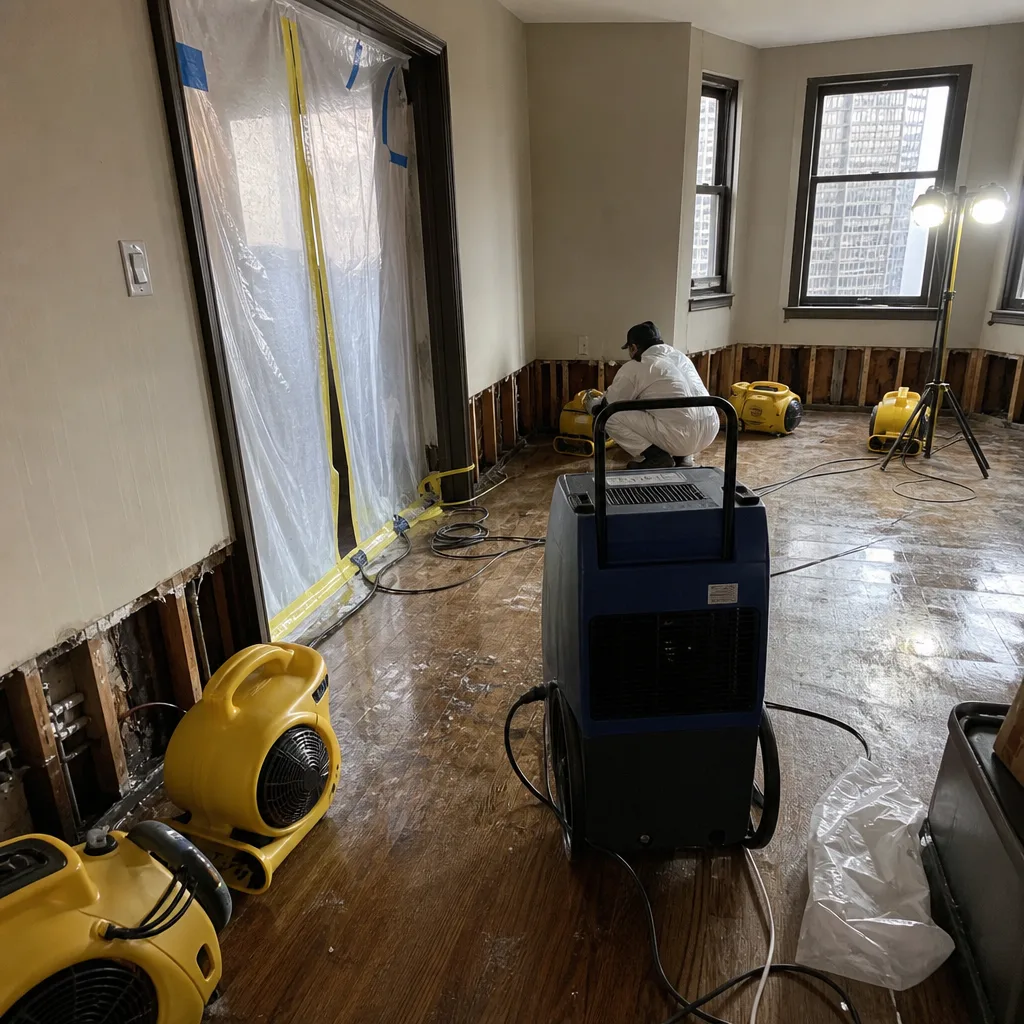
- Equipment placement changes. In a pre-war unit, we position air movers and dehumidifiers closer to wall cavities and floor penetrations, not just at the center of the room. In a post-war unit with concrete floors, we focus on direct extraction first and may need to drill small weep holes to release trapped water under the slab.
- Access matters more in pre-war buildings. The shutoff valves, the waste stacks, the riser connections - these are all older, harder to reach, and sometimes buried behind decades of renovation. Before we can even start drying, someone has to find the actual source.
We’ve worked in Midtown West buildings where the original 1927 plumbing is still in service. That’s not a criticism - it’s just the reality of the neighborhood. The cast iron waste stacks in these buildings have a service life, and when they go, the damage is rarely contained to one unit. Understanding the building’s age and construction tells us a lot about what to expect before we even open a wall.
Co-op vs. Condo vs. Rental: Who Actually Approves the Work
This is the question that catches more Midtown West homeowners off guard than any other. You own your unit - or think you do - but the restoration work required after a leak, a fire, or a mold outbreak involves walls, floors, and sometimes structural elements that are not yours to unilaterally change.
In a co-op, you don’t technically own your apartment. You own shares in a corporation that owns the building, and your proprietary lease grants you the right to occupy a specific unit. The co-op board controls everything behind the walls and above the ceiling. Water damage that affects a neighboring unit? The board is involved. Mold remediation that requires opening a wall cavity? The board needs to approve the scope. Fire damage that touches the building’s electrical or plumbing infrastructure? That’s the building’s problem, and the board’s insurance may be on the hook.
What this means practically: before any restoration work begins in a co-op, someone needs to determine whether the damage is the shareholder’s responsibility or the building’s. The water line - the point at which plumbing transitions from building infrastructure to unit-level - is usually the dividing line. Damage from a building riser is the co-op’s problem. Damage from a unit-level supply line under your sink is yours. But even when it’s yours, the board’s managing agent will want to see a scope of work, proof of insurance from the restoration company, and in many buildings, a signed alteration agreement for any work that goes beyond cosmetic repair. For details on permits and regulatory requirements, see Damage Restoration Permits, Codes & Inspections in NY: What You Need to Know.
Condos work differently. You own your unit outright, but the condo association still has authority over common elements, and the condo declaration spells out who is responsible for what. In most Midtown West condo buildings, the drywall, flooring, and everything inside your unit is yours to repair. The association handles the building envelope, the mechanical systems, and common areas. But the line gets blurry fast. A leak from a common area pipe that damages your unit? Your insurance pays for your unit’s repairs, the association’s insurance pays for the common element repair, and someone has to sort out the deductible.
Renters are in the simplest position legally but the most complicated position practically. You report the damage, and the landlord is responsible for restoration. But renters in Midtown West often wait days or weeks for a landlord to act, especially in older buildings with small-time owners. The renter’s possessions are damaged, the smell gets worse, and the landlord’s insurance may not cover the renter’s losses at all. Renters should document everything, report the damage in writing immediately, and know that they can withhold rent or arrange their own repairs in some circumstances - though that’s a tenant lawyer question, not a restoration question.
The point is this: in Midtown West, the restoration contractor needs to know who they’re actually working for. Is it the shareholder? The board? The managing agent? The landlord? The answer changes who signs the work order, who pays the invoice, and who has to approve the scope before a wall gets opened. Wade’s Restoration has been doing Wade’s Restoration home work in Midtown West co-ops and condos long enough to know that the paper trail matters as much as the drying log.
Hell’s Kitchen Street-Level Flooding vs. High-Rise Plumbing Failures
Midtown West contains two fundamentally different damage profiles, and they call for two fundamentally different restoration approaches. Hell’s Kitchen street-level flooding - the kind that comes up through drains, basement doors, and sidewalk vaults during heavy rain - is a ground-up problem. High-rise plumbing failures are a top-down problem. The restoration scope, the equipment, and the hazards are not the same.
Street-level flooding in Hell’s Kitchen is a reality of the neighborhood’s geography and infrastructure. The area sits in a low-lying zone relative to the Hudson River, and the combined sewer system - the same system that handles both stormwater and sewage - backs up under heavy rain. When the system surcharges, water pushes up through floor drains, basement toilets, and any other low point in the system. That water is Category 3. It’s contaminated. It contains sewage, bacteria, and whatever else the street washed into the drain. The restoration response to a Hell’s Kitchen basement flood is extraction first, then removal of contaminated materials, then disinfection, then drying. Anything porous that touched that water - carpet, drywall, wood baseboards - gets cut out and thrown away. There’s no saving it.
We’ve also seen a pattern specific to Hell’s Kitchen: buildings on the lower end of the neighborhood, below roughly 38th Street, tend to have shallower basements and more slab-on-grade construction. Water that enters these basements has nowhere to drain. It pools, and without rapid extraction, it saturates the concrete and wicks up into the framing. The drying equipment has to work against gravity and a constantly replenishing source of humidity from the slab.
High-rise plumbing failures are different. A burst supply line on the 22nd floor of a condo tower sends water down through the unit, into the ceiling cavity, and then down through the building. Depending on the floor plate and the chase layout, the water may emerge two or three floors below the source. The source unit often shows no visible damage at all - the water traveled through a wall cavity and emerged in the neighbor’s unit below. This is the classic “who’s responsible?” scenario in Midtown West high-rises. The restoration contractor has to trace the water path, not just dry the visible damage.
High-rise restoration also involves vertical transportation logistics. Equipment has to come up in freight elevators, often during restricted hours. Extraction units, air movers, dehumidifiers - these are heavy, and they take time to move. A 12-unit water loss on the 18th floor of a Midtown West condo tower requires a different kind of planning than a basement flood in a Hell’s Kitchen brownstone. Wade and his team map out the equipment placement and elevator schedule before they start, because in a high-rise, every trip up and down costs time, and time is the enemy when water is moving.
If you’re dealing with water damage, our Water Damage Restoration in Midtown West page covers the full process from extraction to drying.
The Building Super: First Responder and Accidental Liability Machine
In most Midtown West buildings, the super is the first person to respond to a leak, a flood, or a smoke incident. That makes sense. They’re in the building, they know where the shutoffs are, and they have keys. But the super’s initial response often creates a problem that the restoration contractor then has to fix - and sometimes that problem is worse than the original damage.
Here’s the pattern we see over and over. A pipe bursts in a bathroom on the 9th floor. The super gets the call, shuts off the water, and then starts “helping.” He mops up the visible water. Maybe he puts down some towels. Maybe he opens a window to “let it air out.” Maybe he calls his cousin who does handyman work and asks him to “take a look.” By the time a real restoration crew arrives, the water has been sitting in the wall cavity for 48 hours, the towels are molding, and the open window has introduced exterior humidity into a space that needs controlled drying.
We’re not blaming supers. They’re doing what they think is helpful. But the reality is that a super’s response to water damage often falls short of what the building’s insurance policy actually requires - and that shortfall becomes a liability problem later. The building’s insurance carrier will ask whether the response was “prompt and professional.” If the answer is that the super mopped and waited three days, the carrier may dispute the claim. If the super’s handyman cousin cut into a wall without proper containment, any resulting mold spread is now a coverage problem.
There’s also the matter of temporary repairs. A super may cut a hole in a wall to access a pipe and then leave that hole open. That becomes a pathway for contaminated air to move through the building. A super may shut off a riser and not tag it properly. That creates a scald risk for the next person who turns on a faucet.
The practical guidance for boards and owners in Midtown West is simple: the super’s job is to stop the ongoing damage, not to attempt the restoration. Shut off the water, shut off the electricity if water is near wiring, and call a restoration company. Leave the extraction, drying, and documentation to the people who do it every day. If you’re dealing with mold, our Mold Remediation in Midtown West page explains the containment and clearance process in detail.
What “Done” Actually Means in a Dense Urban Building
In a single-family house, “done” means the water is gone, the drywall is replaced, the paint is touched up, and the homeowner is happy. In Midtown West, “done” means something entirely different, and if you don’t get it right, you’ll be hearing about it for years.
In a dense urban building, restoration work affects other people. The neighbor below you heard the extraction equipment running for four days. The neighbor next to you smelled the drying process. The board got copied on every email. “Done” in this context means the work is complete, the documentation is solid, and no one can come back later and say the job was done wrong.
Here’s what “done” actually requires in a Midtown West co-op or condo:
- Clearance testing, not just visual inspection. For water damage, the moisture readings need to come back within acceptable ranges across every affected material - not just the visible surfaces. For mold remediation, a third-party clearance test is standard. The air samples need to show indoor spore counts at or below outdoor baseline levels. If mold remediation is done, the clearance test is part of the deal - don’t let anyone tell you it’s optional.
- Neighbor sign-off, or at least neighbor notification. The board will want to know that the affected neighbors have been notified that the work is complete and that their units are unaffected. In practice, this often means we take moisture readings in the adjacent units, document them, and provide a summary to the managing agent.
- Documentation the board will accept. This is the one most people skip. The board’s insurance carrier will want a drying log, moisture readings, photographs, a scope of work, and a final report. If the restoration company doesn’t provide that, the board’s carrier may deny the claim or require a re-inspection. Wade hands over the full moisture log from every day of the job - it’s part of the 90-Day Done Right Promise, and it’s the documentation the board actually needs.
We’ve seen boards reject a restoration job as “incomplete” because the drying log was handwritten on a clipboard and the moisture readings didn’t include the wall cavities. In Midtown West, where boards are sophisticated and managing agents have seen everything, the paperwork is part of the job.
Drying Timelines and Equipment Placement in Pre-War Construction
Drying a pre-war Midtown West apartment is not the same as drying a drywall box in a new tower. The materials absorb differently, the cavities are larger, and the dead air spaces are harder to reach. If the drying plan doesn’t account for these realities, you get a surface that feels dry and a wall cavity that’s still at 30% moisture content - which is exactly the condition that breeds mold.
Here’s the step-by-step process we follow on a typical Midtown West water damage job:
- Source identification and shutoff. Before any drying starts, the water source has to be identified and stopped. In a pre-war building, this can mean tracing a supply line through three floors of chase or finding a waste stack leak that’s been seeping for weeks.
- Extraction. Standing water gets pulled out with truck-mounted or portable extraction units. In high-rise units, portable extraction is the only option, and it needs to happen fast - within minutes if possible, hours at most. The longer water sits, the more it wicks into porous materials.
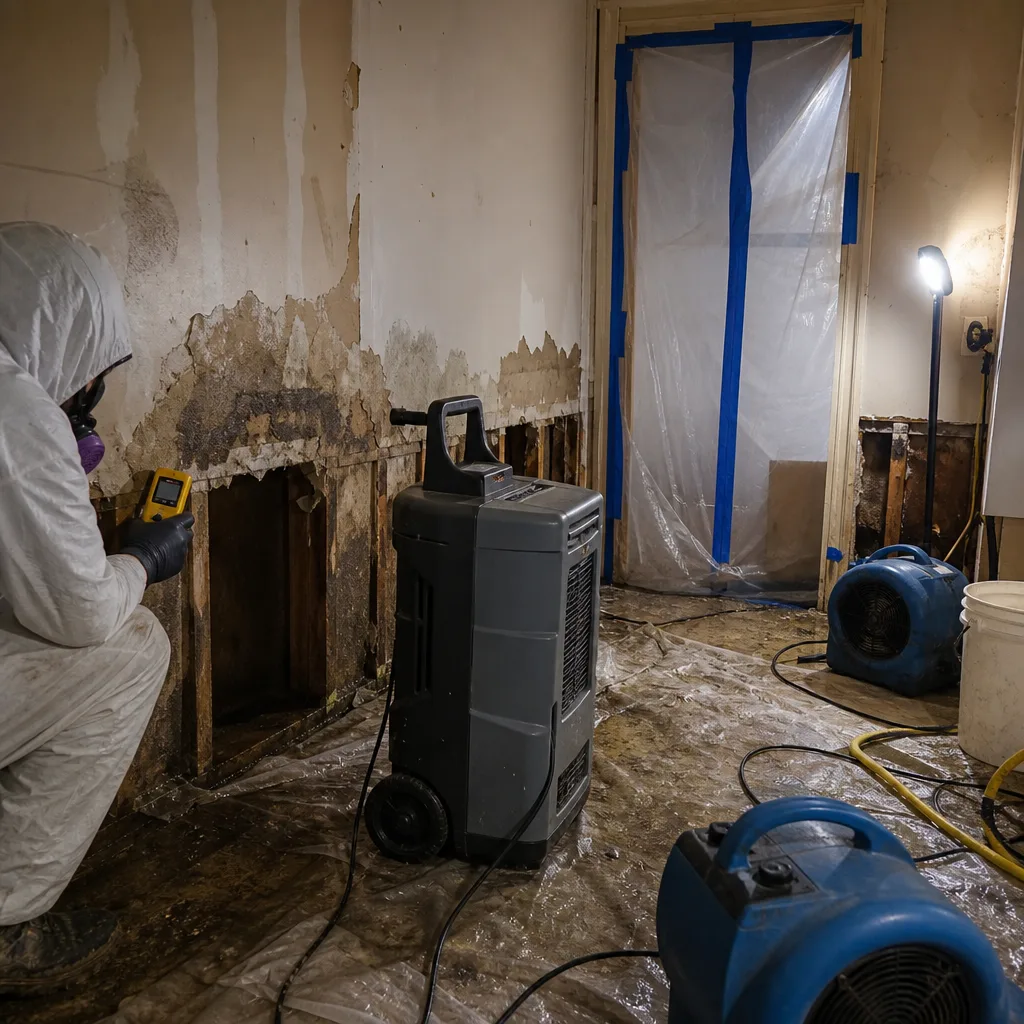
- Containment and demolition. Saturated drywall, plaster, carpet, and baseboard get cut out. In pre-war buildings, this often means removing lath and plaster that’s been absorbing water for days. The goal is to expose the framing and the cavities so air can move.
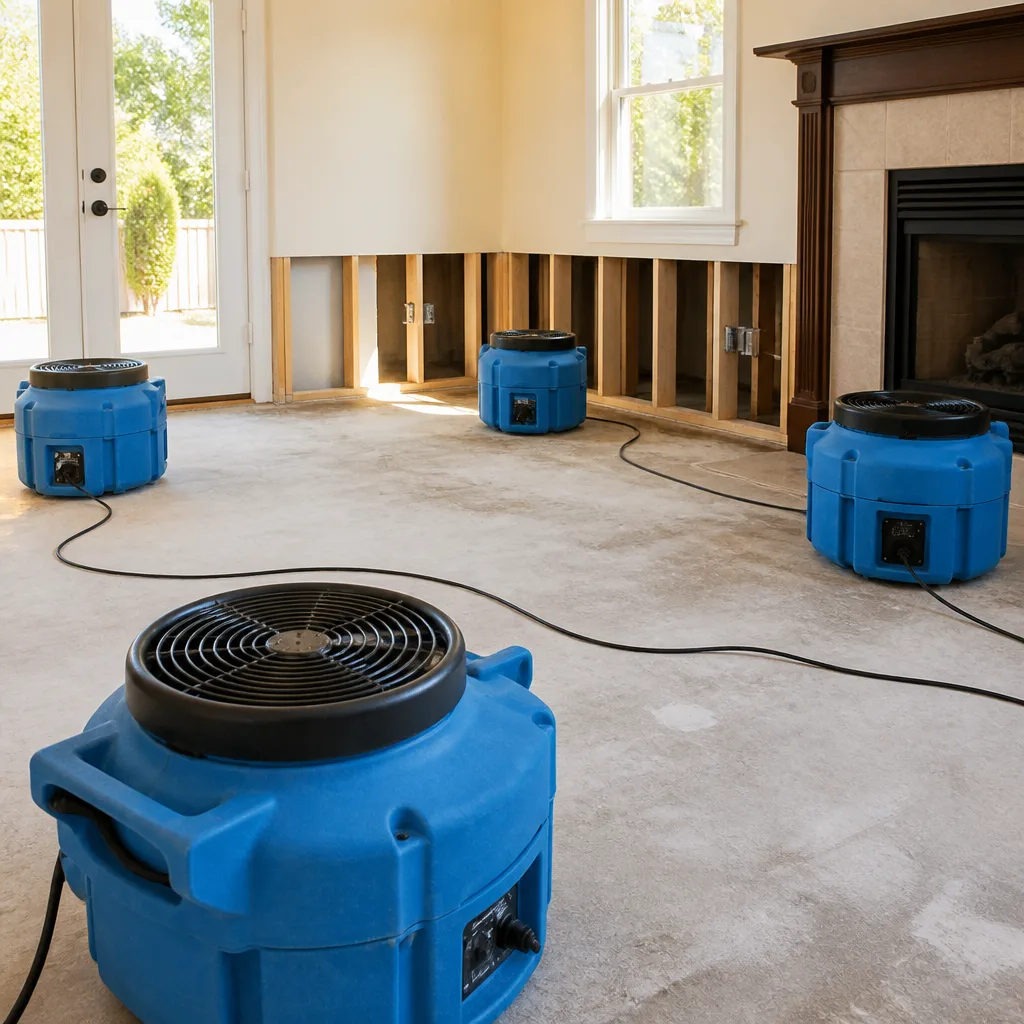
- Drying setup. Air movers go into the affected spaces, positioned to create airflow across every wet surface. Dehumidifiers are sized to the room volume and the moisture load. In pre-war buildings, we use Injectidry systems to pull air through wall cavities that can’t be accessed from the interior - a technique that’s especially useful in lath-and-plaster construction where opening every wall would be cost-prohibitive.
- Daily monitoring. Moisture readings are taken every single day from every affected material. The readings get logged - Wade hands the homeowner the full log at the end of the job. If the drying curve isn’t where it should be on day three, we adjust the equipment placement or add capacity.
- Final verification. When all materials read within acceptable moisture ranges, the equipment comes out and the reconstruction phase begins. If the moisture isn’t fully resolved, the equipment stays - it’s not a matter of convenience, it’s a matter of not trapping moisture behind new drywall.
The timeline in a pre-war building runs longer than in a post-war building, but the process is the same. What changes is the aggressiveness of the equipment setup and the patience required during the monitoring phase. In our experience, most Midtown West pre-war water damage jobs dry in 5 to 7 days. Mold remediation, if it’s needed, adds time on top of that. Fire and smoke restoration in pre-war buildings is a different animal entirely - soot penetrates into original wood flooring and plaster in ways that require specialized cleaning, not just surface wiping. If you’re dealing with fire damage, our Fire & Smoke Damage Restoration in Midtown West page walks through the full process.
What Restoration Costs in Midtown West: A Line-Item Breakdown
Restoration pricing in Midtown West runs higher than the surrounding metro area because of three factors: building access logistics, co-op and condo approval overhead, and the age of the housing stock. We’re not going to give you a national average - that’s meaningless here. This is what we actually see on Midtown West jobs.
- Emergency water extraction (single room, no contamination): $1,200-$2,800. This includes equipment, the technician’s time, and the initial moisture assessment.
- Full drying and dehumidification (multi-room, pre-war): $2,500-$6,000. Equipment runs 3 to 7 days, with daily monitoring.
- Mold remediation (single room, demolition, treatment, clearance testing): $4,000-$9,000. Larger areas or multiple rooms run higher.
- Sewage cleanup (Category 3 water, includes contaminated material removal and disinfection): $3,500-$10,000 depending on the area affected and the extent of the contamination.
- Fire and smoke damage restoration (single unit, moderate damage, includes odor treatment and cleaning): $8,000-$25,000. Structural fire damage runs higher and involves reconstruction.
- Reconstruction and cleanup after any of the above: $5,000-$40,000 depending on scope. This is the rebuild phase - drywall, paint, flooring, trim.
These are ranges, not quotes. The actual cost depends on the square footage affected, the construction type, the access situation, and the scope of the damage. What we can tell you is that a free estimate in Midtown West is exactly that - free. No trip charge inside our own county. Wade will walk the space, give you a written scope of work, and the price on that scope is the price. No add-ons at the door.
We also offer a permanent Senior & Veteran 10% discount and a free second opinion on any written estimate. If another company quoted you something that doesn’t feel right, bring it to Wade and he’ll tell you straight what’s actually needed.
The Insurance Process in a Midtown West Co-op or Condo
The insurance process in Midtown West is different from a single-family home because there are multiple policies in play, and the adjuster’s questions are different. The homeowner’s policy covers the unit. The building’s policy covers the common elements. The neighbor’s policy covers the neighbor’s unit. Somewhere in the middle, there’s a deductible and a subrogation claim, and the restoration contractor has to document everything well enough that the adjusters can figure out who pays for what.
The single most important thing we do on insurance-related restoration work in Midtown West is document everything photographically before we touch anything. The adjuster needs to see the damage as it existed on day one. If the super mopped up and moved things around before you called, tell us - we can usually still document the evidence, but it’s harder.
The second most important thing: Wade deals with the adjuster directly. Homeowners get stuck in the middle of insurance disputes all the time - the adjuster wants a different scope, the contractor wants to add a line item, and the homeowner is relaying messages between two people who aren’t in the same room. In our process, the adjuster gets a copy of every moisture log, every photo, and every scope line. Wade talks to them directly. If the adjuster wants to inspect the site, he’s there. If the adjuster has a question about why a particular line item is in the scope, he answers it. The homeowner is not the messenger.
For co-op boards specifically, the documentation standard is higher. The board’s insurance carrier - especially in larger buildings with master policies through major carriers - will want the restoration company’s credentials, proof of insurance, and the full drying log before they release payment. This is where IICRC certification matters. Boards and managing agents in Midtown West know what IICRC means. They know the difference between a certified restoration firm and a general contractor who will “give it a shot.” If your board is asking for documentation, we provide everything they need - photos, logs, scope, and final clearance.
Common Mistakes to Avoid
- Waiting to call because “it’s just a little water.” In a pre-war Midtown West building, a little water in your unit is almost never contained to your unit. Water moves through joist bays and wall cavities. The 72-hour delay you took to “see if it dries on its own” is exactly the window mold needs to establish itself. Call immediately.
- Letting the super do the restoration instead of just the shutoff. The super’s job is to stop water and electricity. Everything after that belongs to a restoration contractor. If the super starts cutting walls or mopping contaminated water, the documentation gets muddled and the insurance claim gets harder to defend.
- Accepting a verbal quote without a written scope. In Midtown West, where co-op boards and managing agents are involved, the scope of work is a document, not a conversation. Get it in writing before work starts. The price on the written scope is the price.
- Letting the adjuster run the entire process without a contractor advocating for you. Adjusters work for the insurance company. A restoration contractor works for you. Have Wade present during adjuster inspections so the scope reflects what’s actually damaged, not just what the adjuster noticed on a 20-minute walkthrough. This is especially critical for mold work - adjusters routinely underestimate mold scopes because the damage is hidden.
- Skipping clearance testing after a mold job. “It looks clean” is not clearance testing. If mold remediation is done and clearance testing isn’t performed, the job isn’t finished, and in a Midtown West co-op, the board will not consider it finished. The clearance test is the receipt.
- Treating a Category 3 flood like a Category 1 leak. Hell’s Kitchen basement backups are sewage water, not clean water. Bleach and a mop don’t fix sewage. The affected materials need to be removed and disposed of properly. If you don’t know the difference between Category 1, 2, and 3 water, ask before you touch it.
- Hiring a contractor who doesn’t know the building’s rules. In Midtown West, the co-op or condo board has authority over common elements, and many boards have specific requirements for contractors working in the building - insurance minimums, work hours, elevator usage rules. A contractor who doesn’t know the building’s rules will create friction with the board, and that friction will end up in your inbox.
When to Call a Professional
Call a restoration professional the moment you see water that didn’t come from a faucet you left on, smell something musty that wasn’t there before, or find soot after a fire - even a small one. The clock on water damage starts the moment the water is introduced. Every hour of delay in a pre-war Midtown West building means more water absorption into lath and plaster, more wicking into flooring, and a higher likelihood that the project goes from drying to mold remediation.
If the building super is already involved, call us anyway. We’ll coordinate with the super, the managing agent, and the board. That’s what we do. Wade’s Restoration home offers free estimates in Midtown West - call (607) 703-3408 and a live person answers. Not a voicemail. Not an answering service. Wade answers his own phone.
Frequently Asked Questions
Wade answers his own phone, 24/7, and typically has extraction equipment running inside the hour for water damage calls in Midtown West. For more guides & resources on protecting your Midtown West property, explore our blog. The exact arrival time depends on where his crew is when you call, but the response is measured in minutes, not days. Call (607) 703-3408 as soon as you see water and we’ll be on the road.
Most co-op shareholder policies cover water damage to the interior of the unit, including drywall, flooring, and personal property, subject to your deductible. Damage from the building’s risers or common plumbing is typically the co-op corporation’s responsibility under the building’s master policy. The two insurers may subrogate against each other, but that’s their problem, not yours. Our documentation - photos, moisture logs, and scope - is structured to support whatever claim you need to file.
If visible mold covers more than about 10 square feet, or if the mold is in a wall cavity, under flooring, or in HVAC ductwork, cleaning will not solve the problem. You need remediation: containment, removal, treatment, and clearance testing. Mold inside a wall cavity is not accessible with surface cleaning, and in a Midtown West pre-war building, wall cavities are exactly where mold establishes itself after water damage.
Wade does. The adjuster gets copies of the moisture log, the photos, and the scope of work directly from us. If the adjuster wants to walk the site, Wade is there. You’re not stuck relaying information between a contractor and an insurance carrier. That’s the whole point of hiring an owner-operated restoration company.
If it’s not done right, we make it right. In writing, on every water, fire, and mold restoration contract. If something fails or wasn’t addressed properly within 90 days of completion, one call brings Wade back. No arguing, no runaround.
In most co-ops, yes. Many boards require contractors working inside the building to carry specific insurance limits, and some require the board or managing agent to sign off on the scope of work before any restoration begins. We provide proof of insurance and the full scope documentation the board needs. We know the drill - we’ve been working in Midtown West buildings since 2007.
The Bottom Line
Damage restoration in Midtown West is a different job than damage restoration anywhere else. The pre-war construction changes how water moves and how long drying takes. The co-op and condo governance structures change who has to approve the work and what documentation is required. The street flooding patterns in Hell’s Kitchen create Category 3 contamination scenarios that don’t exist in high-rise plumbing failures 20 floors up. Restoration in Midtown West doesn’t fit a national chain playbook. It fits a company that knows the buildings, knows the boards, and knows the neighborhood. Wade’s Restoration has been doing this work since 2007, with a 90-Day Done Right Promise in writing on every job. Call (607) 703-3408 for a straight answer, a free estimate, and a face you’ll see again in the neighborhood.
Written by Wade Ferris, Owner at Wade’s Restoration, serving Midtown West since 2007.