
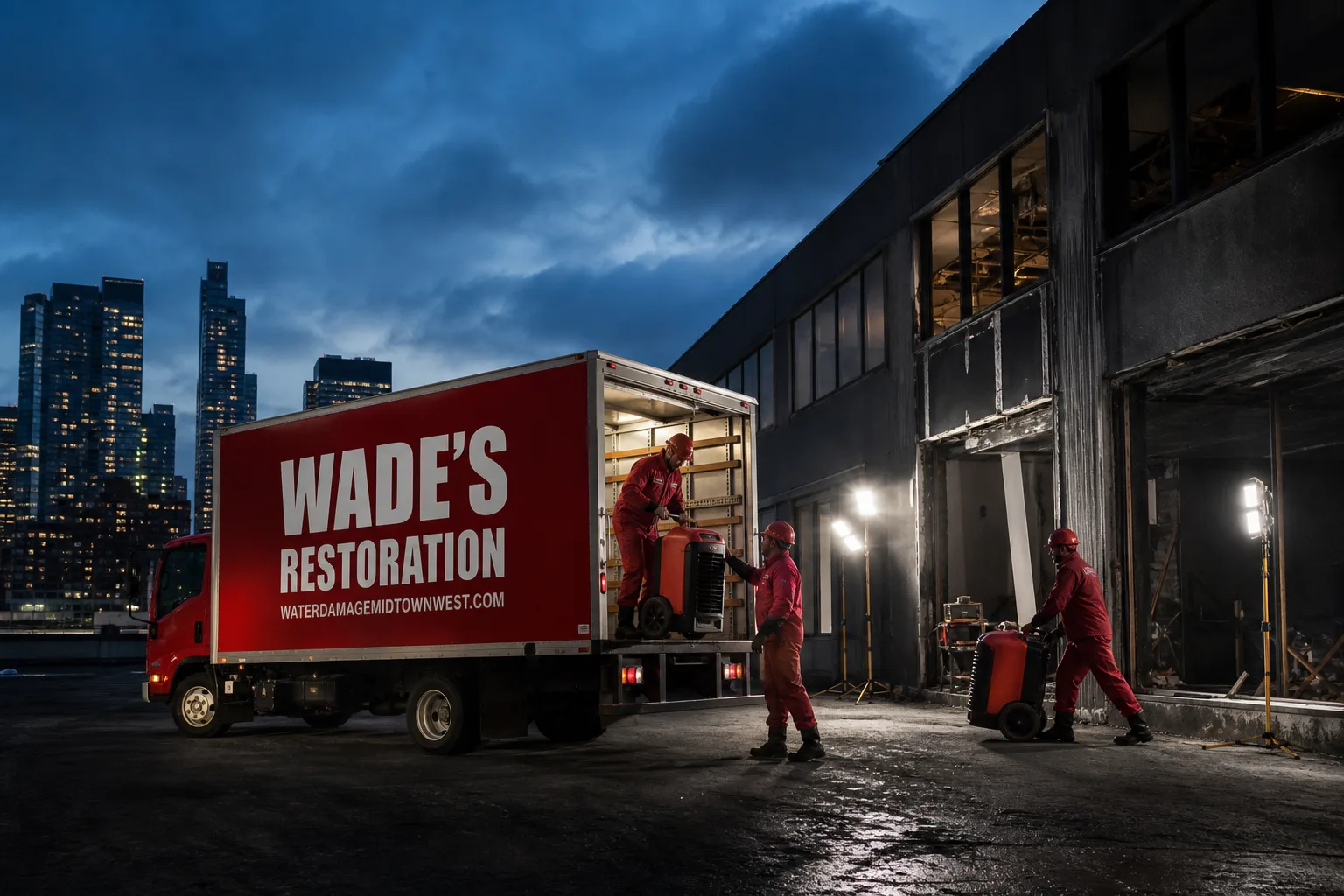
Free visual inspection and a written scope of work before any mitigation begins - photos, moisture readings, and drying logs go in your claim file
The scope we write is the scope we bill. Anything new gets shown to you, in writing, before we touch it.
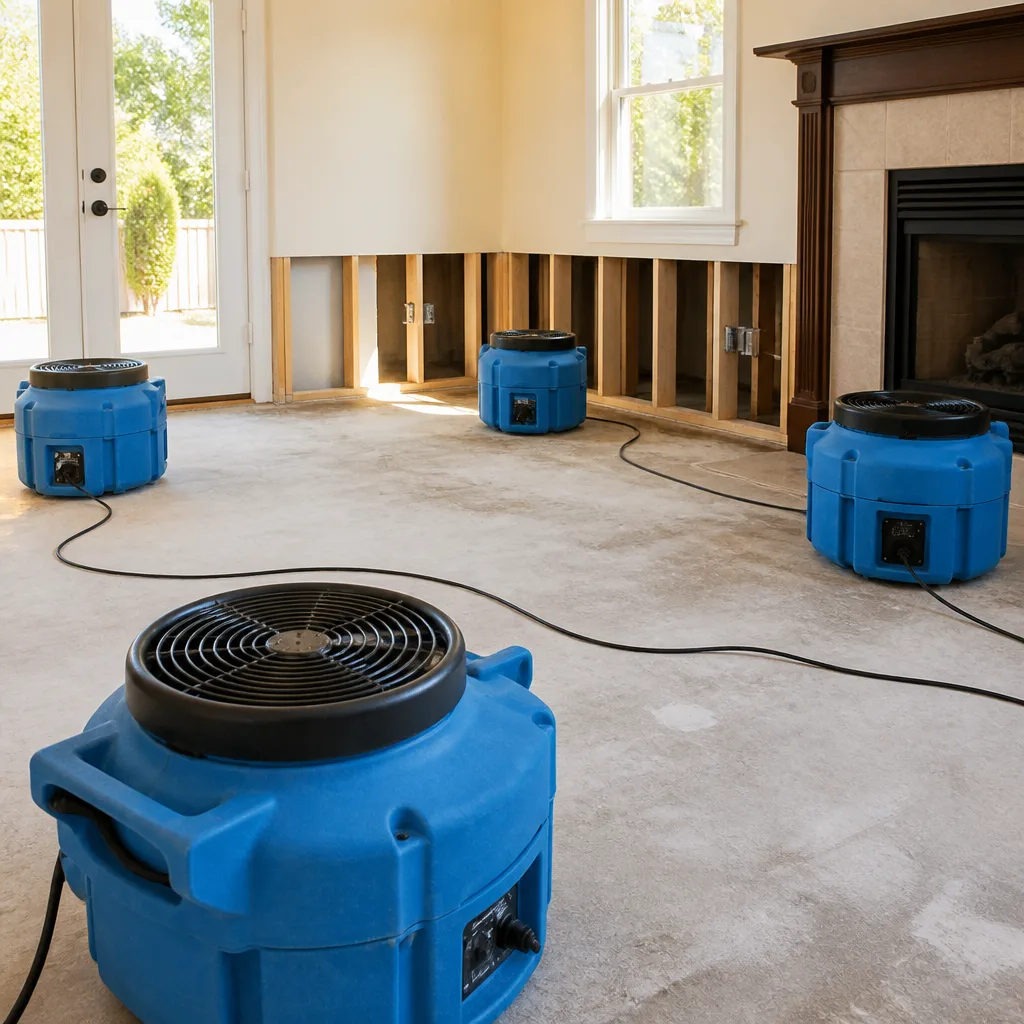
 Before
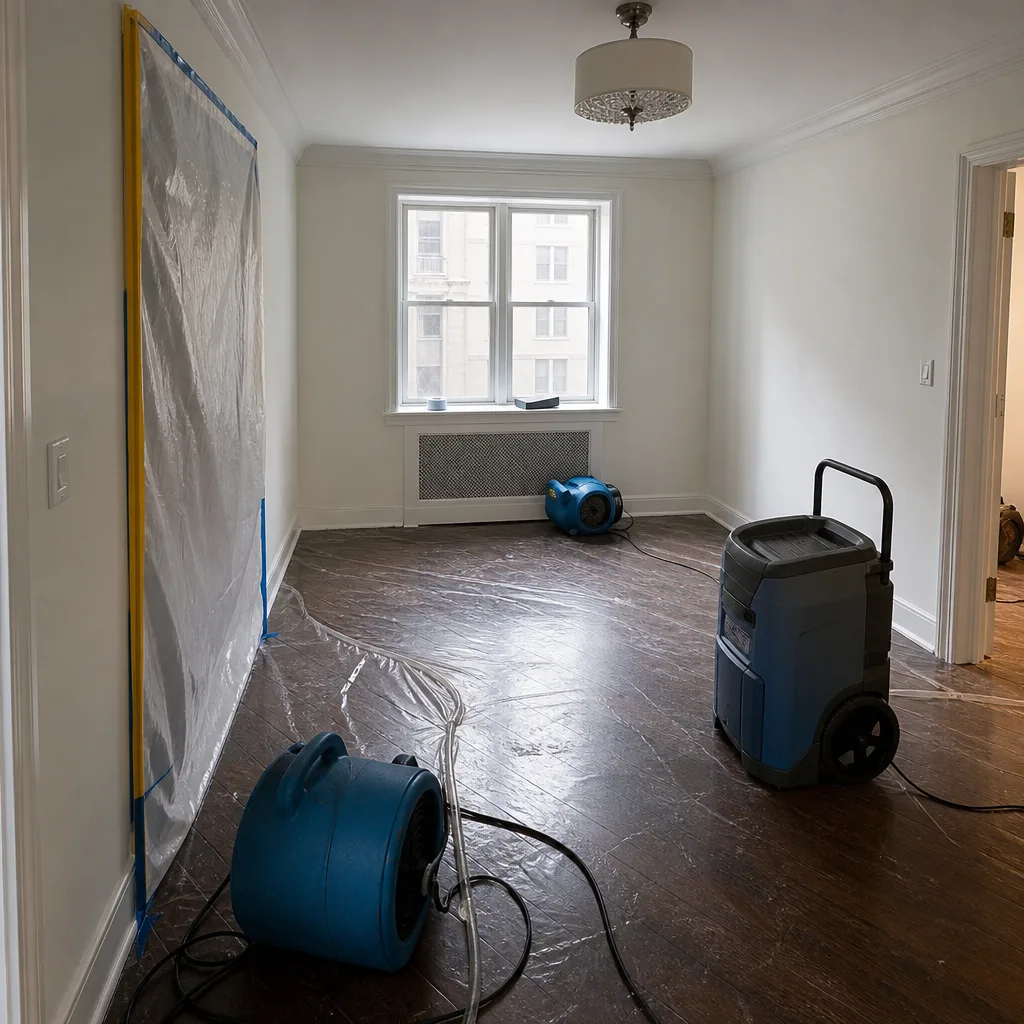 After
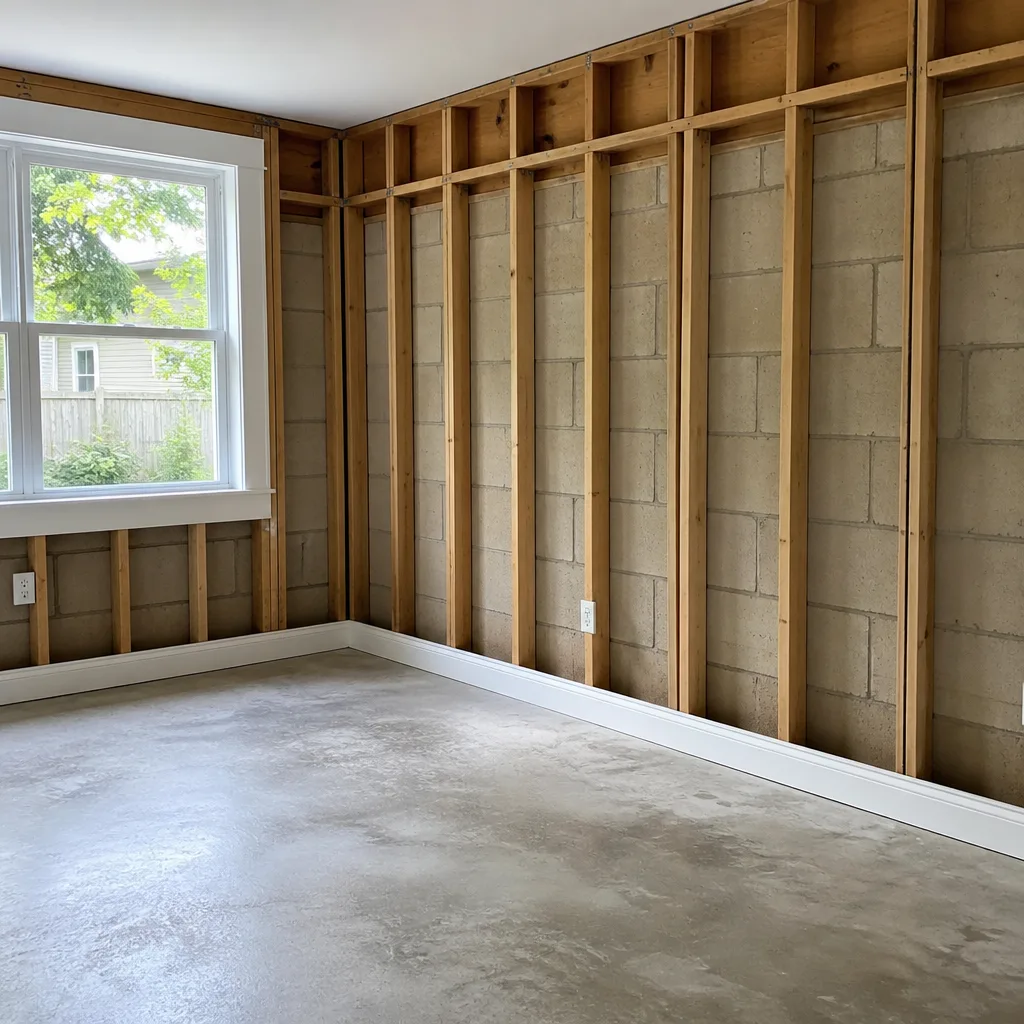
After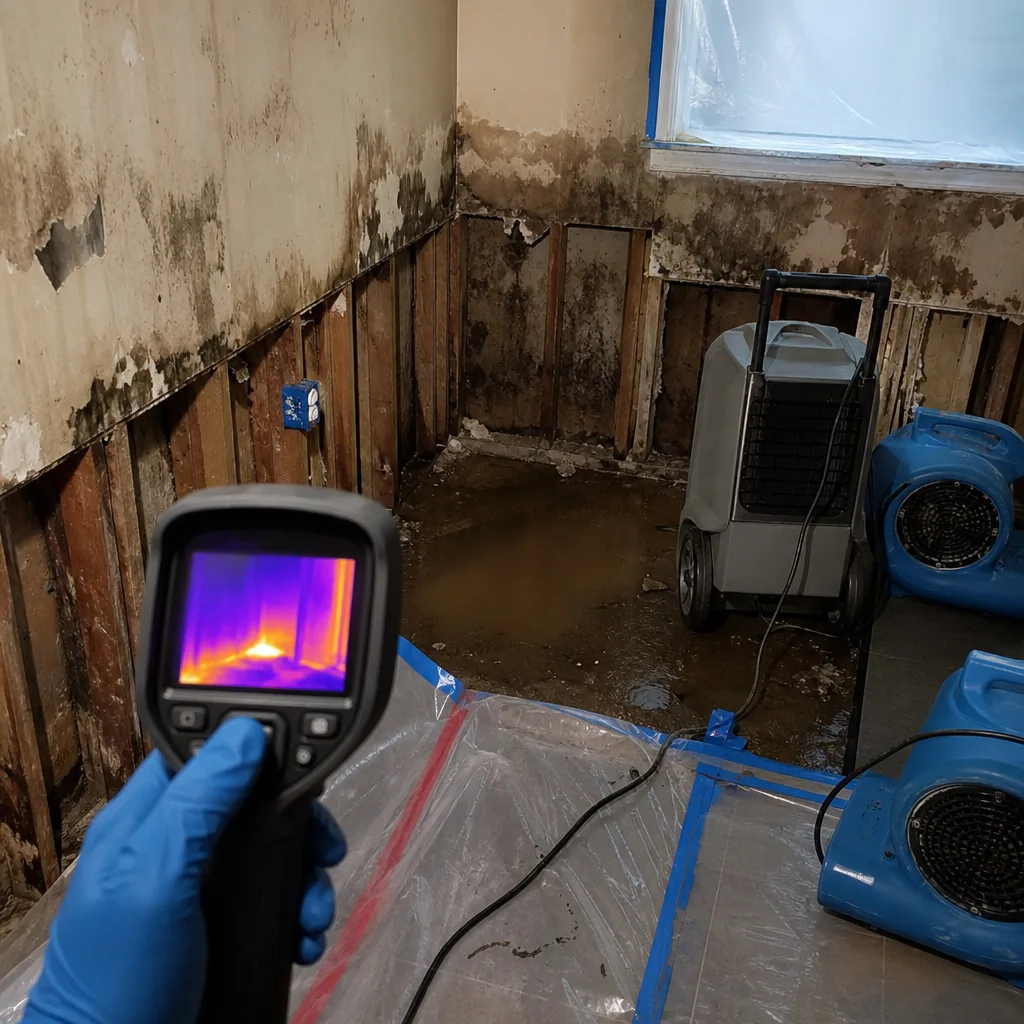 Before
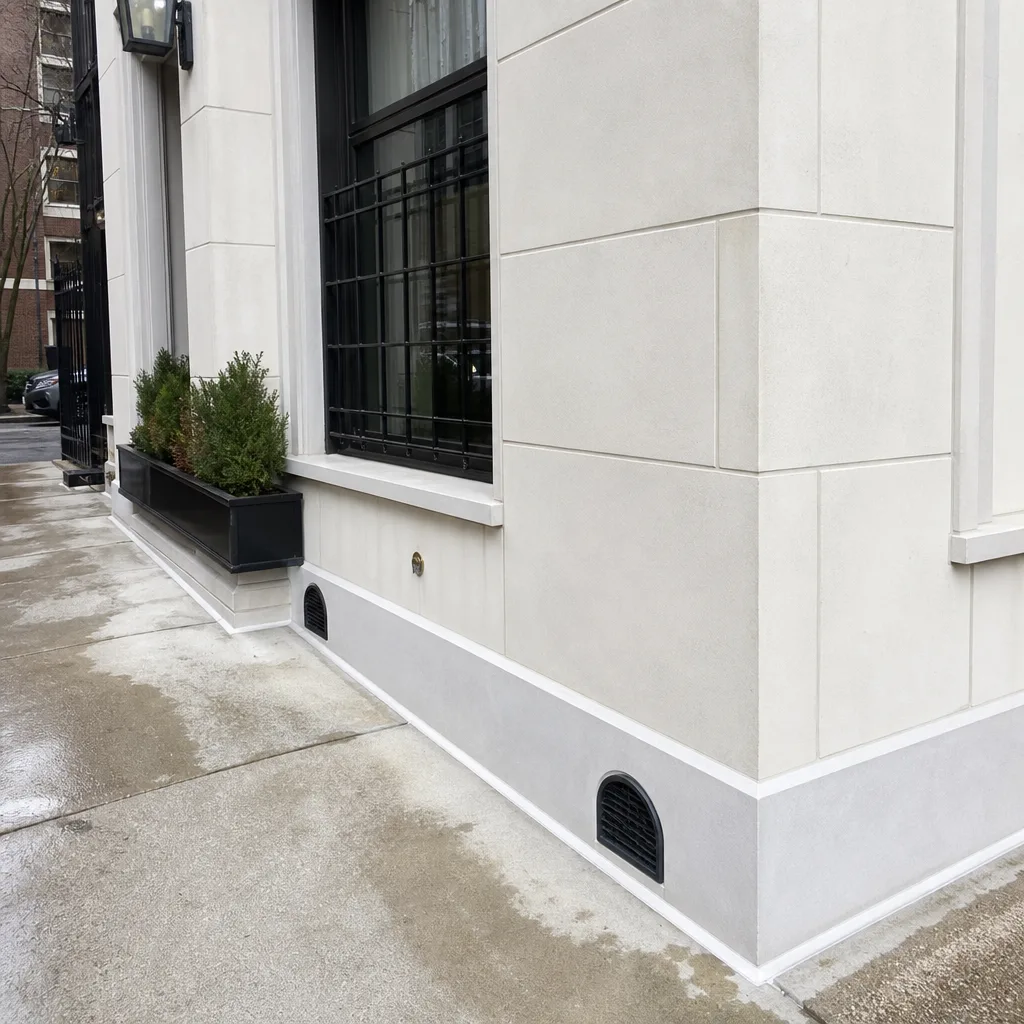 After
After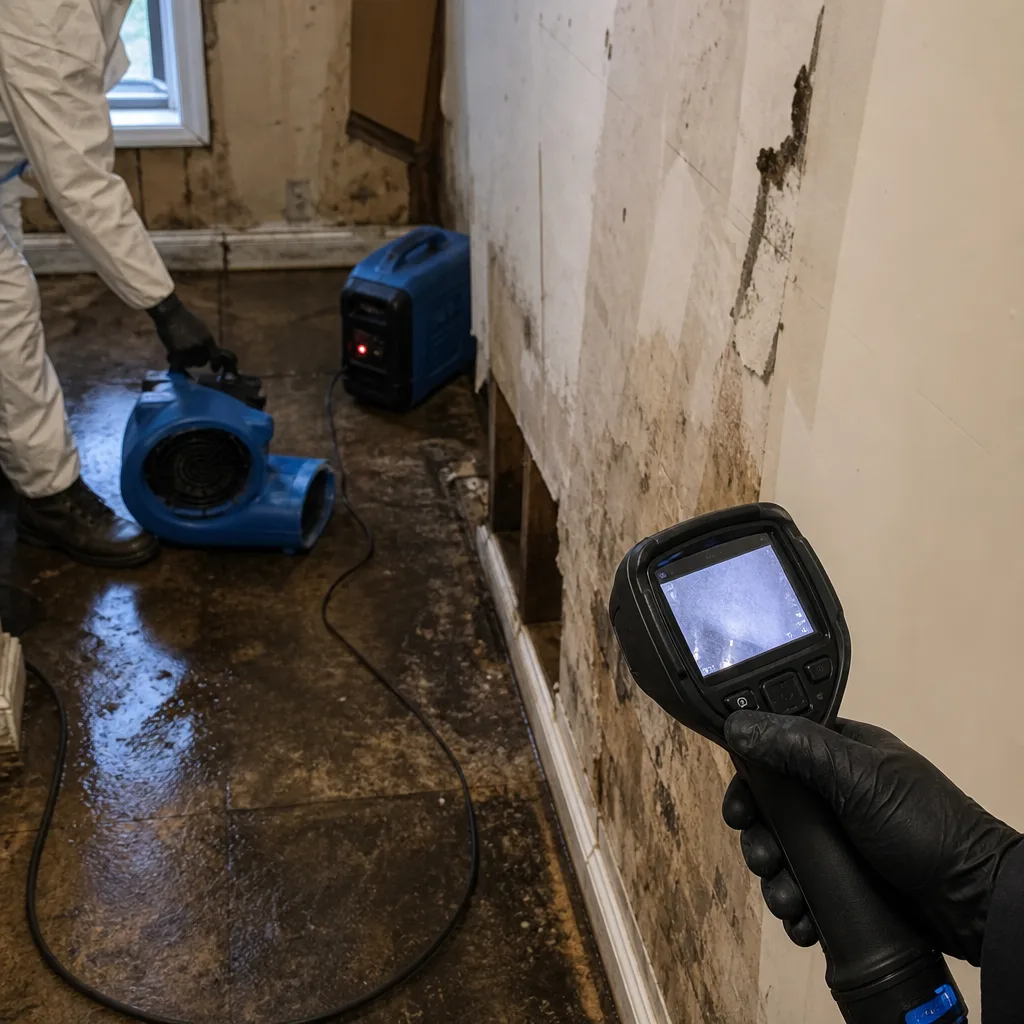 Before
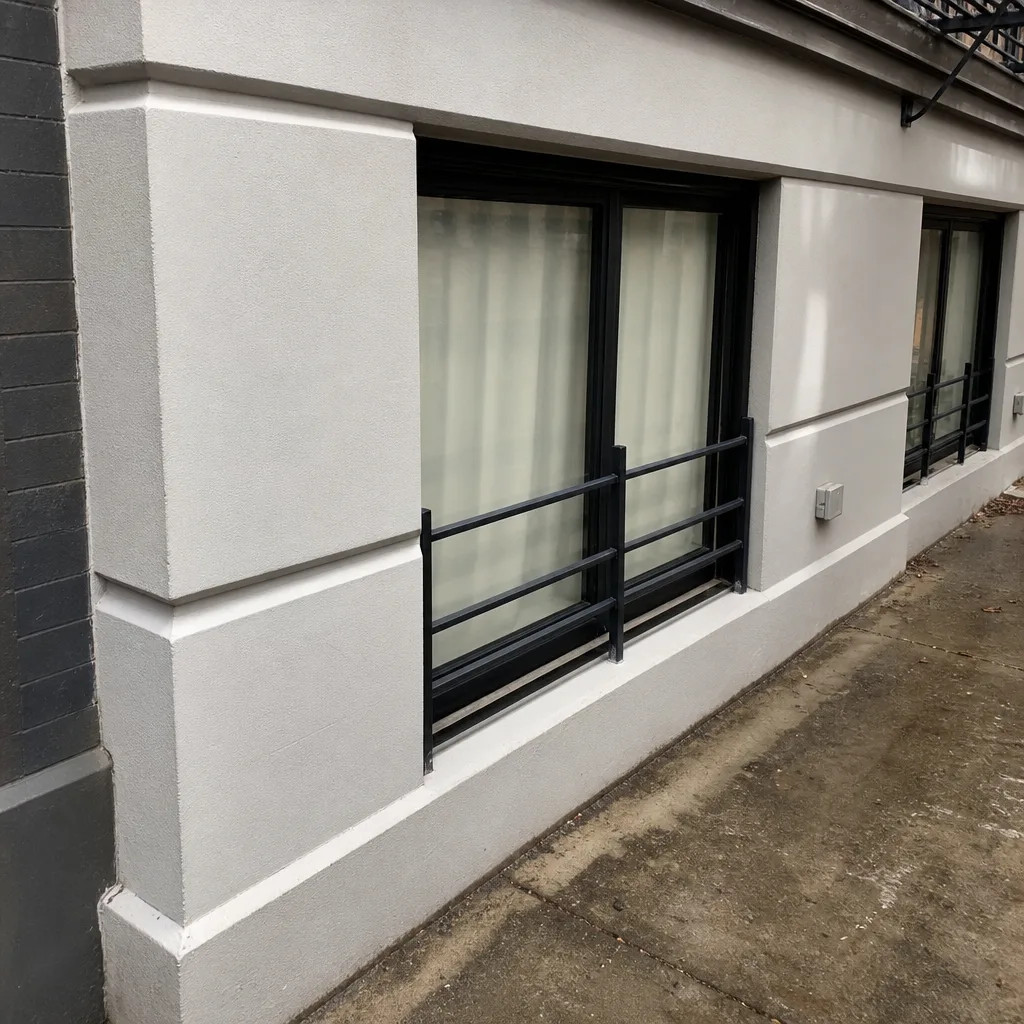 After
After24/7 Emergency Mold Remediation in Upper West Side
Mold doesn’t wait for the co-op board to schedule a meeting, and neither do we. If you’ve just found black patches spreading behind a radiator or a musty smell coming through a plaster wall, call (607) 703-3408 right now. Wade Ferris answers his own phone, any hour, and he’ll have a crew inside your Upper West Side building the same day. A free visual inspection tells you exactly what you’re dealing with before anyone touches a wall. Every hour of delay lets the colony push deeper into horsehair plaster and parquet underlayment, which means more demolition, more finish matching, and more board-level grief. We move fast because we know the building’s managing agent will ask what took you so long. The first hour matters.
Understanding Mold Remediation Severity in Upper West Side Properties
Mold remediation severity in Upper West Side buildings breaks down by moisture history, not just square footage. A bathroom exhaust leak feeding a single closet is a Level 1 job: containment with 6-mil poly, negative air pressure, HEPA air scrubbing, and surgical removal of the affected section. A steam radiator valve that failed on the 12th floor of a Riverside Drive tower and dumped Category 2 water through eight plaster ceilings is something else entirely. That’s Level 3 or 4 work: full containment across multiple co-op units, structural drying with Dri-Eaz dehumidifiers and XPOWER air movers, and remediation that may span weeks. The difference between a small job and a building-wide event is the age of the supply lines, the condition of the steam traps, and whether the managing agent got a super on it before the water sat. In pre-war stock built between 1900 and 1940, gypsum was rare and lime plaster was standard. Lime holds moisture differently than drywall. It wicks, then holds, then crumbles. Drying times run longer than a contractor who only works drywall will tell you, and the finish work requires plasterers who can match crown profiles, medallions, and cove moldings that Home Depot does not stock. The board will ask. Wade’s crew has the answer.
Why Upper West Side Property Owners Choose Wade’s Restoration
- 45-minute response commitment for active water and mold emergencies inside the Upper West Side service area. Wade is on the road, not queued behind a call center.
- 24/7 live answer, every time. You call, a person picks up. Often Wade himself. No voicemail tree, no answering service, no “we’ll get back to you Monday.”
- IICRC-certified crews trained in AMRT (Applied Microbial Remediation Technician) and WRT (Water Damage Restoration Technician) standards, which is what your co-op board’s insurance rider wants to see in a scope of work.
- Free visual inspection before any work begins. You get a straight read on scope: what needs containment, what needs removal, what can stay.
- Direct insurance billing and adjuster coordination. Wade deals with your carrier so you’re not the one relaying messages between a super, a board, and an adjuster.
- One team from extraction to finish matching. No subcontracted drywall crew showing up and hanging Sheetrock over parquet floors we just saved. We run it all.
Our Mold Remediation Process
Inspection & Assessment
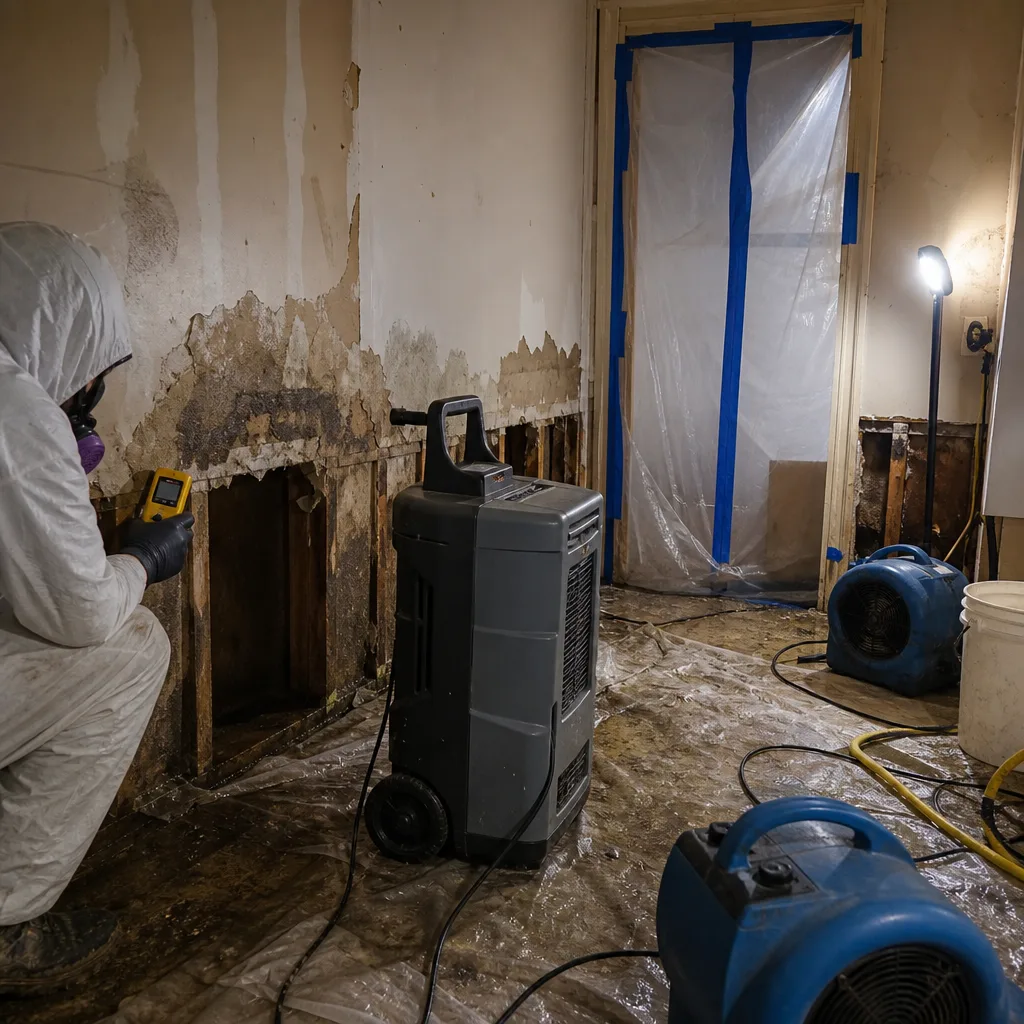
We start with moisture mapping across affected surfaces using thermal imaging and hygrometers so we know where the colony is, where the water is, and where both are headed even through walls that look dry. If the job involves multiple co-op units, we document each unit separately because each shareholder has a different carrier.
Containment & Stabilization
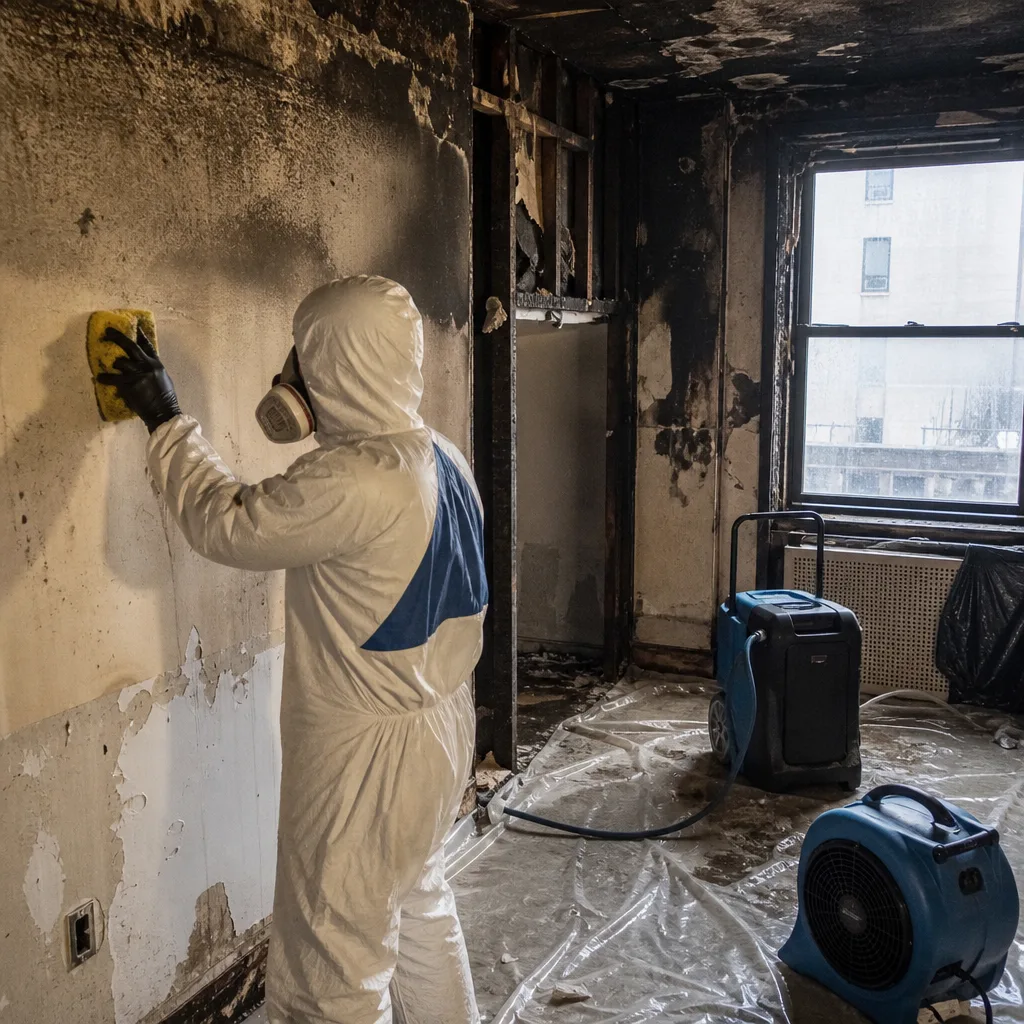
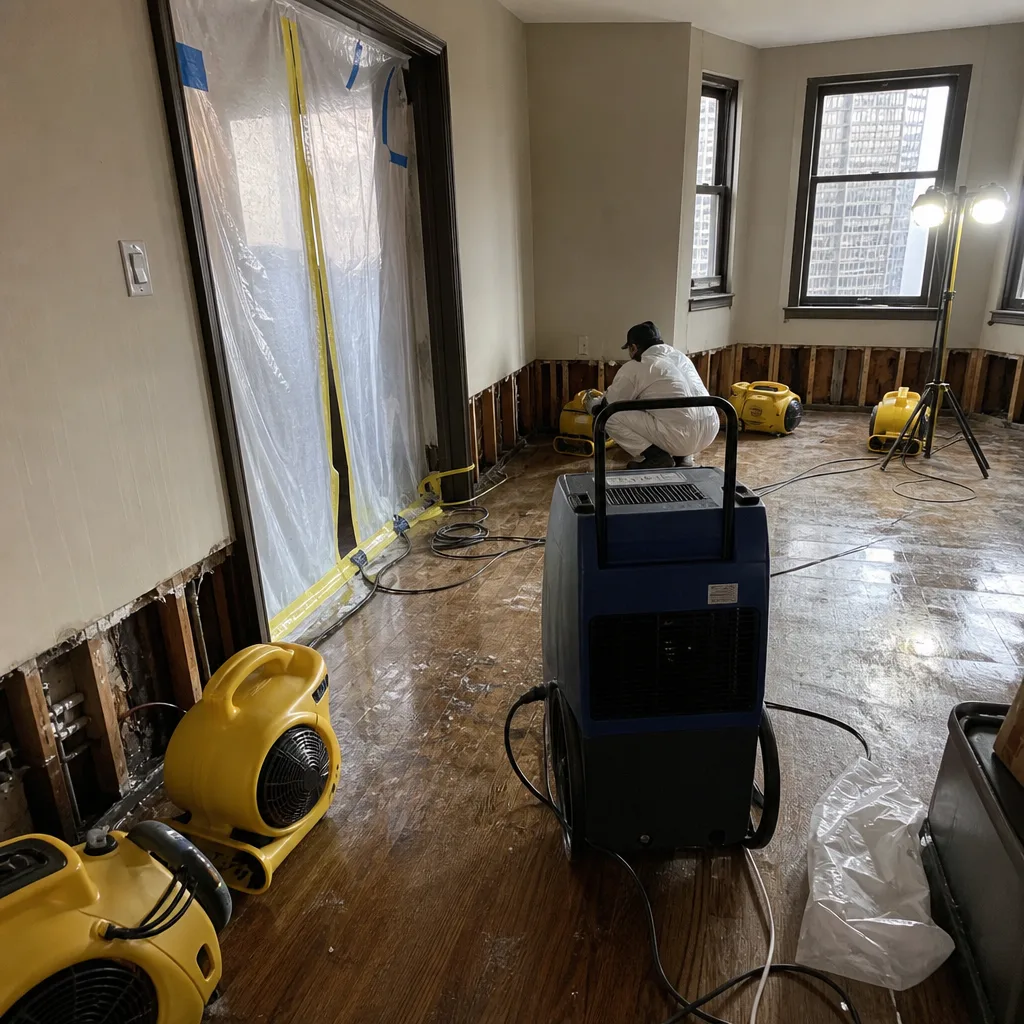
Before any wall is opened, we set up 6-mil containment barriers and negative air pressure so mold spores don’t migrate into hallways and neighboring apartments. In a pre-war tower, the hallway is shared. The elevators are shared. Containment keeps it from becoming everyone else’s claim.
Drying & Dehumidification
HPAC and Dri-Eaz dehumidifiers drop interior moisture to below 50% relative humidity, with XPOWER air movers at the source. We take moisture readings daily and hand you the full log at the end. The board will want proof the interior dried. You’ll have it.
Cleaning & Sanitization
HEPA scrubbing clears airborne spores, and EPA-registered antimicrobials are applied where the colony touched. For black mold, we go one step further: we seal the framing after remediation so the cell wall is altered and the cellulose in wood isn’t a future buffet.
Specialty Treatment
Upper West Side buildings need plaster-specific treatment, not a guy with a drywall knife. We coordinate with plaster specialists who can replicate ornamental profiles, and in landmark-designated buildings we adhere to LPC requirements for matching original lime composition, tooling marks, and paint substrate.
Repairs & Restoration
The last step brings the unit back to pre-loss condition including parquet floor repair, plaster crown restoration, and repointing of damaged mortar where wind-driven rain was the root cause. If the wet spot on the ceiling came from a failed radiator valve, the valve gets replaced before the plaster goes back. Otherwise you’ll be calling us again next fall.
Need Emergency Mold Remediation in Upper West Side Now?
Crews minutes away, answering live 24 hours a day. The sooner we start, the less it costs.
Working With Your Insurance Company
Mold claims in Upper West Side co-ops are different from a single-family house in the suburbs. The managing agent’s policy may cover the building’s pipes, but your unit’s interior is often your shareholder policy, and the board’s master policy may only kick in above a threshold. Having worked hundreds of UWS water and mold jobs since 2007, Wade knows how to tee up a claim cleanly: the first hour documentation, the full moisture log, the line-item scope, and a direct line to your adjuster. You don’t have to be the middleman at a board meeting explaining mold remediation to people who’ve never seen mold. We write the scope so it speaks the carrier’s language, and we bill the parts that are covered directly so you’re not fronting someone else’s claim.
What We Provide Your Insurer
- Thorough documentation of the loss
- Photos of all damage, room by room
- Moisture readings and drying logs
- A detailed, line-item scope of work
- Direct coordination with your carrier
Built for Upper West Side’s Loss Calendar
Mold in the Upper West Side doesn’t follow one season. It follows the building’s calendar of failures. October through March, the steam heat is running hard. A single failed radiator packing valve on the 8th floor can introduce water every time the system cycles. That slow, repetitive wetting is worse for mold than a single flood because it never dries. April through June, freeze-thaw spalling lets water into brick and limestone façades, and wind-driven rain along Riverside Drive and West End Avenue pushes moisture through mortar joints into wall cavities. July and August, window AC units and riser condensation create micro-moisture zones behind radiators and under windowsills. The takeaway for an UWS homeowner is this: if you smell a musty, earthy odor in a pre-war apartment and there’s no visible water source, don’t wait for the super to “get around to it.” Call (607) 703-3408 and we’ll find the source before the colony spreads from the cavity into the apartment.
Mold Remediation Across Upper West Side’s Neighborhoods
We work from Lincoln Square up to Morningside Heights, west of Central Park and east of Riverside, and the building type changes every few blocks. Along West End Avenue, pre-war towers with steam riser chases in the walls mean water travels vertically fast; a leak on 10 produces mold on 8. On the side streets between Columbus and Amsterdam, rows of 19th-century brownstones run on forced-air retrofits or old steam loops, with chronic water infiltration at cornice lines that we see every spring. In Morningside Heights, co-ops near Columbia have a mix of 1920s construction and institutional retrofits, with crawl spaces under the basement units that collect humidity every summer. And along Riverside Drive, wind-driven moisture from the Hudson accelerates rust on window lintels, which lets in rainwater, which feeds mold colonies in the jamb cavities. We know these blocks because we’ve set up containment in dozens of their buildings. The parking tickets stacked on the truck are our receipt, and the super knows who we are by name.
Specialized Mold Remediation Services We Offer in Upper West Side
Mold Inspection & Testing
Before we touch a wall, we find the moisture. Thermal imaging and hygrometers map where the water is, not just where the stain is. In co-op buildings that means documenting the existing condition so the board’s engineer can see cause and scope in writing, which is what moves an approval faster than anything.
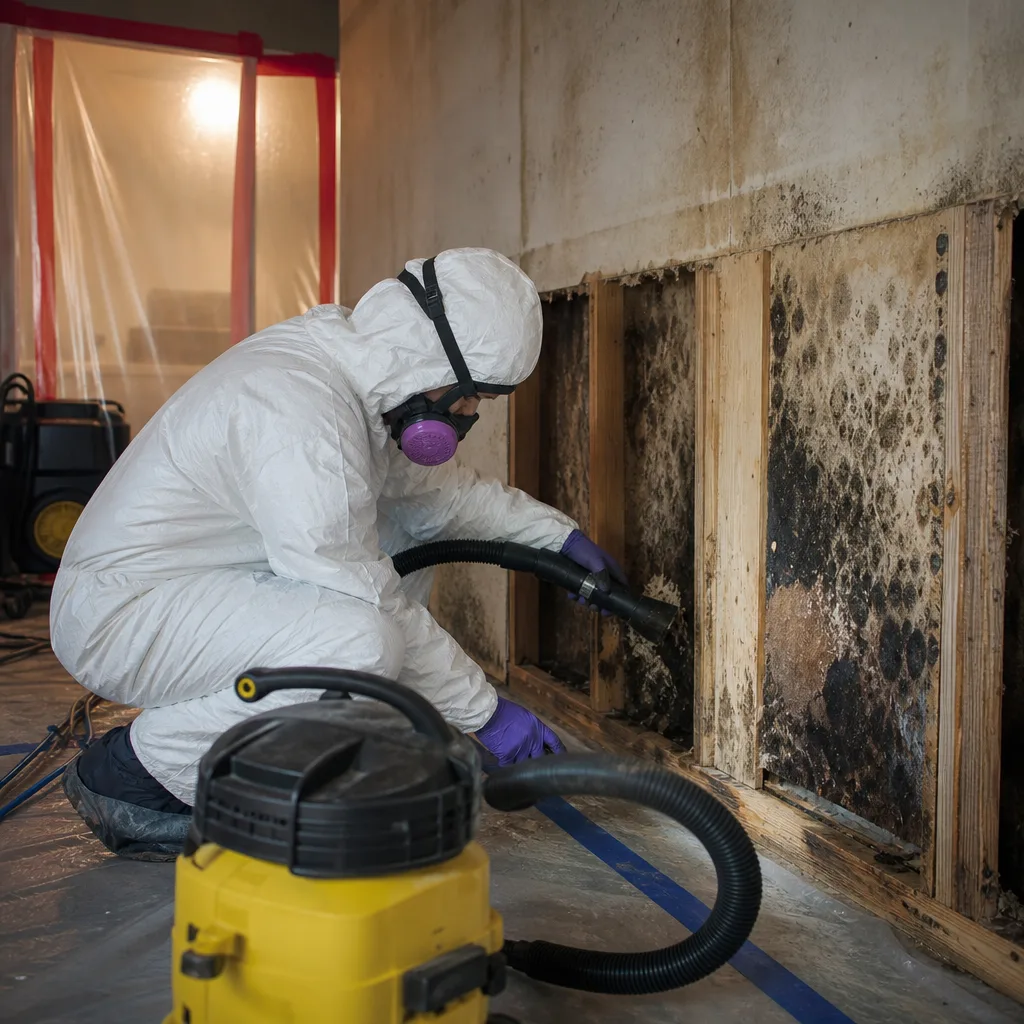
Mold Removal
We remove the colony and the substrate it feeds on, whether that’s a section of lath-and-plaster, a parquet underlayment, or a crawl space subfloor. In pre-war UWS units, removal often means cutting plaster back to the lath and stabilizing what remains, not hanging a cheap drywall patch that the board will flag.
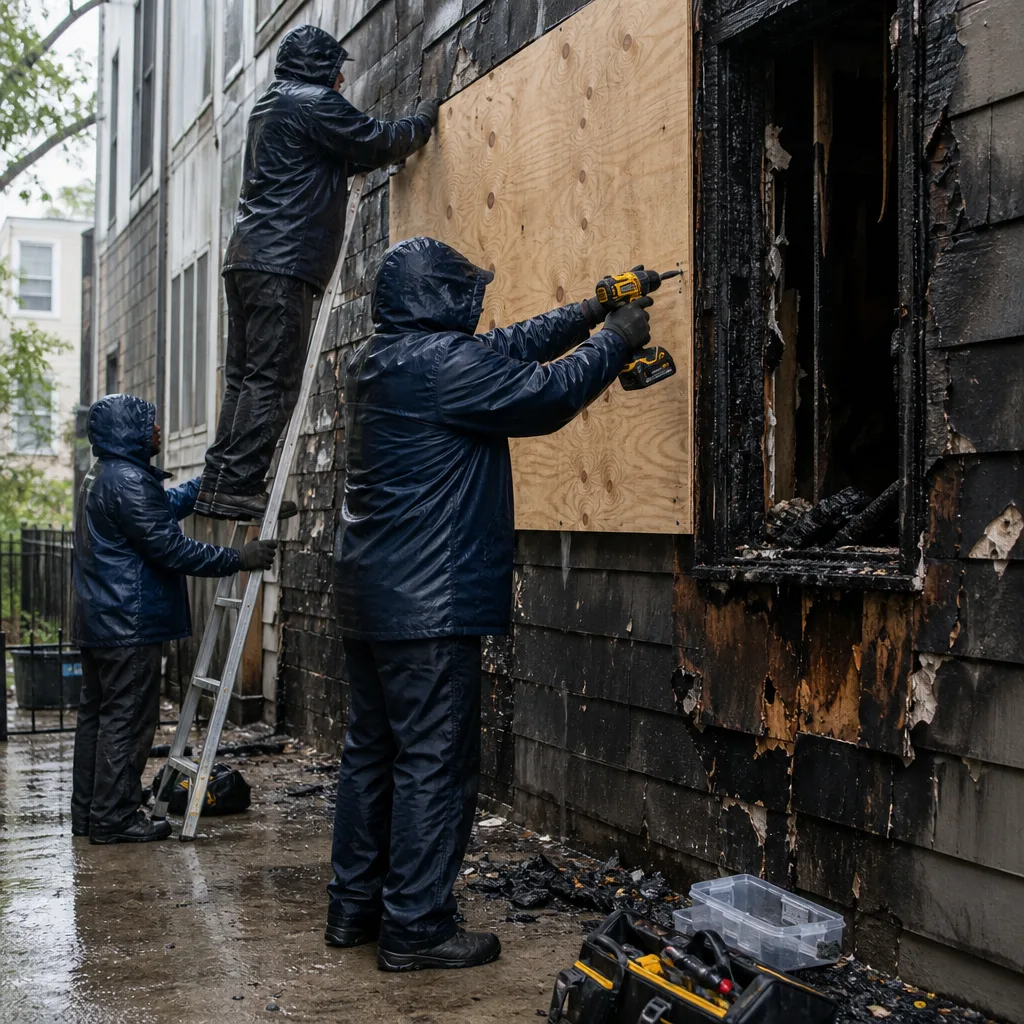
Black Mold Remediation
Stachybotrys chartarum gets the highest level of containment we can build in a co-op: sealed poly barriers, negative air, and HEPA scrubbing running until clearance testing reads clean. Because black mold is the one a managing agent panics about, we run every job with photo documentation that a board can review without walking the unit.
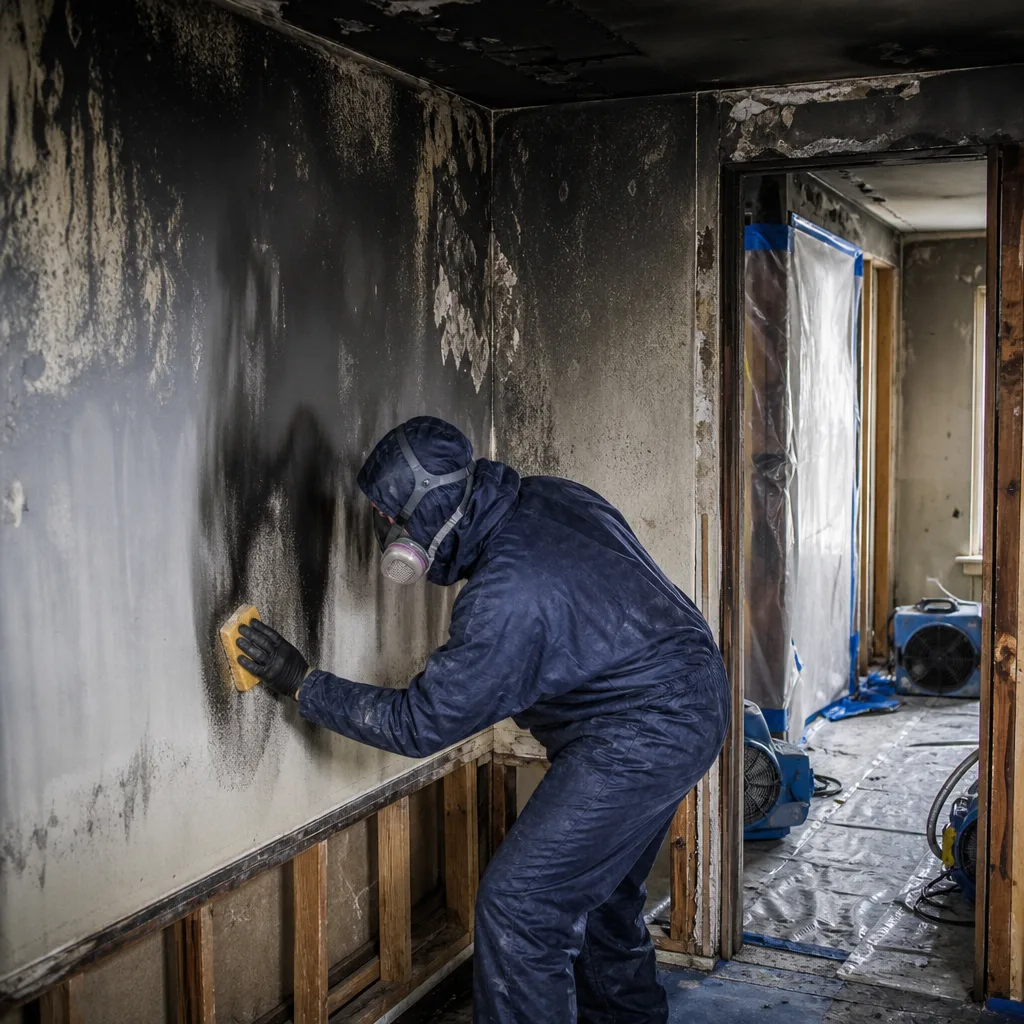
Air Quality Restoration
Post-remediation air scrubbers run until spore counts test at or below outdoor levels. We work with independent environmental consultants and hygienists in the city, and we won’t release the unit until the air is right. If your neighbor on the 11th floor had clear air test panels by the window, that’s not the standard we use. We clear the whole apartment.
Crawl Space Treatment
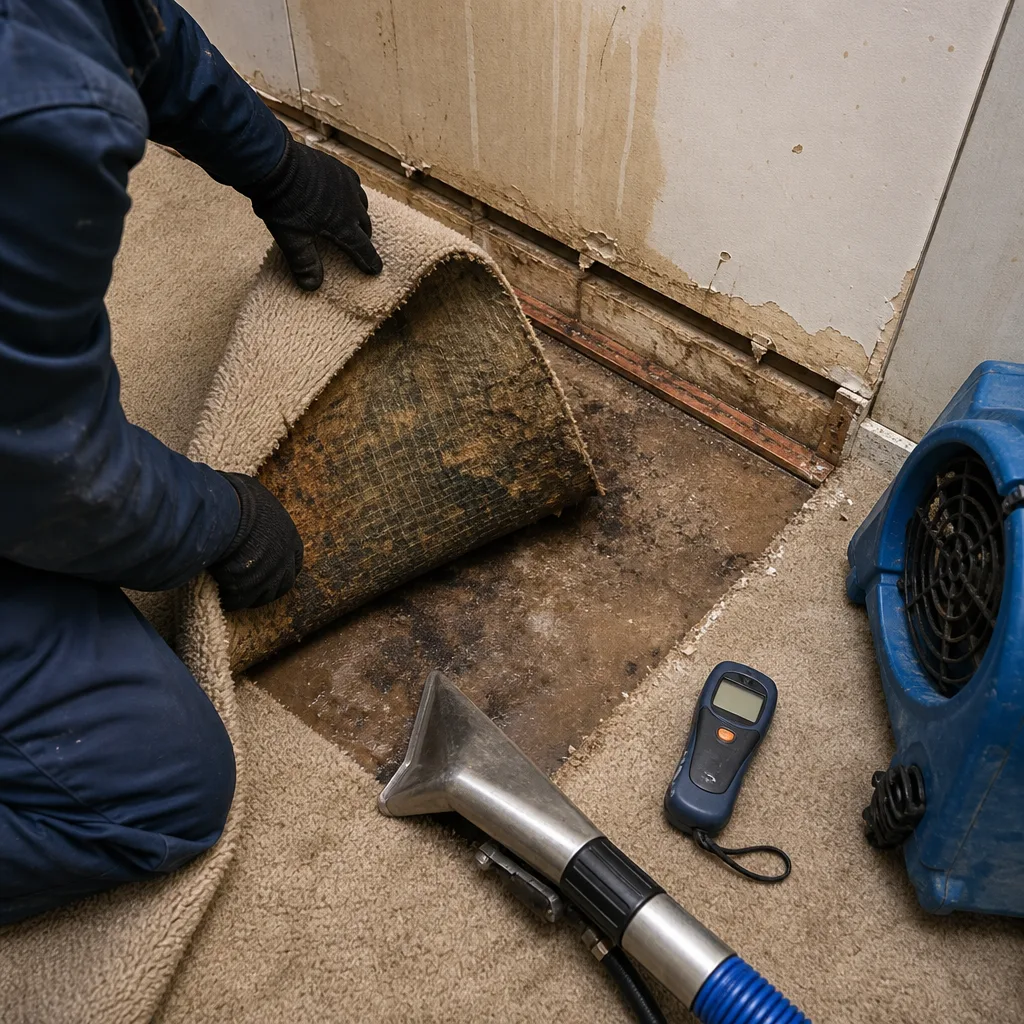
Brownstone crawl spaces and basement-level storage rooms under West Side buildings hold humidity all summer. We treat with antimicrobials, install vapor barriers where the board permits, and adjust dehumidification to the actual cubic footage. A crawl space that reads 70% humidity in August is a mold factory, and the fix is mechanical, not chemical.
Moisture & Humidity Control
We correct the conditions that let mold survive: failing steam traps, leaky riser gaskets, uninsulated supply lines sweating into wall cavities, and window jamb leaks. The mold may be removed, but if the moisture source is still feeding the cavity, it comes back. We hand you a list of what should be fixed and by whom, even if it’s not our scope. You should know what the building owes you.
What happens when you call
- 1
A real person answersNo phone trees - you reach a local pro.
- 2
You get an upfront price rangeHonest numbers before anyone is dispatched.
- 3
A background-checked tech heads outLicensed & insured, dispatched right away.
- 4
You approve before work beginsNothing starts until you say go.
Mold Remediation Costs in Upper West Side, NY
Mold remediation in Upper West Side runs higher than a suburban house because the finishes are original and the approval chain is long. A small contained job, one closet or one ceiling bay, typically runs $1,200 to $3,500. A multi-unit steam leak event spanning 6 to 12 co-op units with plaster demolition, containment, drying, and finish replication runs $18,000 to $60,000 or more depending on how far the water traveled and whether the building is landmark-designated. What moves the price: the number of units under containment, whether LPC finish replication applies, the linear feet of ornamental plaster to match, and whether the building’s master policy picks up common elements. Insurance covers a large share of these claims when the scope is documented properly. The free inspection we offer gets you a firm number in writing before the board votes, which is the document that moves a board vote faster than any phone call. Call (607) 703-3408 and we’ll come look. No charge for the trip inside our own county.
We Also Serve Cities Near Upper West Side
Wade’s Restoration serves Mold Remediation for property owners across Manhattan and nearby boroughs. In addition to Upper West Side, we regularly work in Midtown West, the Financial District, Lower Manhattan, and Astoria. Wherever your building is, if it has pre-war plumbing, steam heat, or wind-exposed masonry, we know the failure patterns before we walk in.
Serving Upper West Side, NY - Our Local Coverage Area
We’re based in the Upper West Side area and know this community well. Use the map below to see our service coverage - if you’re nearby, we can almost certainly help.
Upper West Side Mold Remediation Questions, Answered
How does Upper West Side co-op board approval affect mold remediation timing?
Board approval is the gate. In most UWS co-ops, the proprietary lease requires shareholder approval before any invasive work, and the board’s managing agent has to sign off. That can add 2 to 6 weeks to a job, which is why the first thing we do is document source, scope, and safety so the board gets one clean package to approve, not a trail of phone calls. Call (607) 703-3408 and we’ll prepare the scope the board needs.
What special requirements apply to mold removal in Upper West Side landmark buildings?
Landmark-designated buildings under the NYC Landmarks Preservation Commission require that any removed plaster, millwork, or other historic finish be replicated in kind, not replaced with drywall or modern trim. That means lime-based plaster mixed to match, matched tooling profiles, and often paint substrate analysis. We handle LPC documentation and coordinate with plaster specialists who work in designated UWS buildings. Call (607) 703-3408 and we’ll explain exactly what applies to your building.
How does the steam heating system in pre-war UWS buildings contribute to mold?
One-pipe and two-pipe steam loops use supply risers, radiator valves, and condensate return lines that have been in service since before 1940. When they fail, they introduce water slowly and repeatedly, which is the perfect feed for mold behind plaster and under parquet. The cycle never fully dries, and the colony spreads. The trigger is often a single failing valve, but by the time you see the stain, the cavity has been wet for weeks. Call (607) 703-3408 and we’ll find the feed before we remove the stain.
Why is containment more complex in Upper West Side co-op towers than in single-family homes?
Hallways, elevators, and shared stairwells mean mold spores from an open wall can travel into neighbors’ units and become someone else’s claim against the building. We run negative air and HEPA scrubbers from the first hour, seal elevator lobbies, and minimize hallway time with poly-lined waste chute access. In a single-family house, containment is a one-door job. In a 14-story tower, it’s a building-wide protocol. Call (607) 703-3408 and we’ll set it up right.
What does ‘pre-loss condition’ mean for a UWS brownstone mold job?
Pre-loss condition means the unit goes back to what it was before the mold event, nothing less and nothing more. In a brownstone that’s original horsehair plaster, parquet floors, and a cornice line that’s been repointed twice since 1890, that’s a different finish standard than a modern drywall apartment. We match what was there, not what’s cheapest. Call (607) 703-3408 and we’ll put it in the scope in writing, which is what your carrier and your board both need to see.
How fast can you actually get to an Upper West Side mold emergency?
Crews are on the road and inside the Upper West Side service area, typically arriving within 45 minutes of your call. When steam water is still running or a ceiling has just collapsed, we head out immediately. The number is (607) 703-3408. A person answers.
Will insurance cover mold remediation in my co-op unit?
Most shareholder policies cover mold remediation when it results from a covered water event like a burst pipe or failed steam valve, subject to mold sub-limits that are usually $5,000 to $10,000 unless you bought extra. The building’s master policy may cover common elements. We bill covered portions directly and document everything so your carrier settles faster. Call (607) 703-3408 and we’ll help you sort which policy pays.
What should I do in the first 30 minutes after I find mold in my UWS apartment?
Shut off the water source if you can do so safely, open a window if outside humidity is low, and take photos wide and close. Do not open the wall or start cleaning with bleach, which can aerosolize spores and make the colony release deeper. Then call (607) 703-3408. We’ll tell you over the phone what’s urgent and what can wait, and the visual inspection is free.
Written by Wade Ferris, Owner at Wade’s Restoration, serving Upper West Side since 2007.