
Quick Summary
Persistent musty odors, bubbling paint, warped drywall, and unexplained respiratory issues are critical hidden mold signs indicating active fungal colonies trapped within wall cavities, ductwork, or subflooring. Wade's Restoration emphasizes identifying concealed moisture pockets using non-invasive thermal imaging and structured containment protocols to prevent airborne spore contamination during evaluation. Readers will learn to recognize subtle structural warnings early and schedule a free visual mold inspection and professional moisture assessment to protect indoor air quality.
Hidden Mold Signs: Spot Concealed Growth and Protect Your Home
If you smell a damp, earthy odor or notice subtle changes in your walls, fungal growth could already be expanding out of sight. In dense multi-unit properties, pre-war brownstones, and modern high-rises alike, water often migrates through structural voids without leaving an obvious puddle on the floor. Trapped dampness inside wall cavities, carpets, and mechanical chases poses a structural and indoor air quality threat that needs immediate attention.
Tearing into walls without proper safeguards can launch airborne spores throughout your living space or shared ventilation systems. Professional remediation crews rely on containment and moisture diagnostic tools to locate and address microbial growth safely. Below are the warning signs of concealed moisture and the practical steps needed to evaluate hidden mold.
Quick Summary: Key Signs and Immediate Action Steps
Key indicators in brief: The most common hidden mold signs include persistent musty odors without visible spots, bubbling paint, soft or warped drywall, staining on ceiling tiles, and unexplained health symptoms. According to the U.S. EPA, hidden mold often grows on the back side of drywall, wallpaper, paneling, ceiling tiles, carpets, crawlspaces, pipe chases, ducts, and roof materials above ceiling tiles. If you notice these issues, do not cut into walls without proper containment, as breaking open building cavities spreads spores into surrounding living areas.[4]
What to Do in the First 24 Hours
- Shut down local air handlers: Turn off window units, split systems, or central HVAC zones to stop airflow from pulling spores out of wall voids and through shared vertical chases.
- Hold off on exploratory demolition: Do not pull off baseboards or cut drywall with hand tools. Opening contaminated cavities without containment exposes surrounding areas to spores.
- Schedule non-invasive moisture diagnostics: Contact a restoration team to scan suspect areas using thermal imaging cameras and non-penetrating moisture meters.
Key Facts to Keep in Mind
The U.S. EPA notes that a moldy or musty smell, unexplained water damage, or building occupants reporting physical symptoms can indicate hidden mold. Catching these indicators early stops structural decay, protects indoor air quality, and limits the overall scope of remediation.
1. Persistent Musty Odors Without Visible Surface Growth
A stubborn, earthy smell in a room with spotless surfaces can point to an active fungal colony inside a wall or ceiling cavity. As mold consumes organic materials, it releases microbial volatile organic compounds (mVOCs) that filter through porous building materials.
Why Odors Signal Hidden Colonies
Active mold does not need to sit on the surface of a wall to affect indoor air. The U.S. EPA confirms that a lingering musty or moldy smell is a primary indicator of hidden growth behind drywall, wallpaper, paneling, ceiling tiles, carpets, crawlspaces, pipe chases, ducts, or roof materials above ceiling tiles where water has pooled undetected.[5]
HVAC and Airflow Distribution of Smells
In multi-story buildings, natural stack effect and mechanical air systems draw trapped air upward through plumbing chases, electrical conduits, and shared structural voids. A slow leak can create odors that escape through wall outlets or baseboard gaps. Technicians use infrared cameras and moisture meters to pinpoint the dampness feeding the odor rather than tearing open walls at random.
2. Peeling Paint, Bubbling Wallpaper, and Soft Drywall
When paint bubbles, wallpaper edges curl, or sheetrock feels spongy to the touch, moisture has entered the cavity behind the finish. Water working its way outward breaks adhesive bonds, creating a humid pocket where mold can thrive unseen.
Moisture Migration Through Sheetrock
Warm, moist air moving through cavities condenses against cooler perimeter surfaces, dampening the interior paper face of drywall. By the time surface paint starts to blister or crack, fungal colonies may have developed across the hidden backside of the drywall or wallpaper.
Handling Damaged Wall Materials
Evaluating whether wall materials can be dried or must be replaced depends on moisture saturation and structural condition:
- Drying in place: Feasible when moisture is caught quickly, materials remain structurally intact, and there is no fungal growth on either side of the board.
- Containment and removal: Saturated, swollen, or mold-colonized drywall should be removed under containment to prevent spore dispersal throughout the property.
3. Trapped Moisture in Shared Pipe Chases and Wall Cavities
Dense residential properties and older buildings often feature complex utility runs. Plaster and masonry can hold moisture before showing outward distress. A slow leak in a pipe chase can soak surrounding framing for extended periods before visible staining appears.
Wall Construction Vulnerabilities
Dense wall materials can maintain their rigidity while damp, hiding moisture pockets and fungal colonization within structural voids and allowing mold to spread unchecked behind drywall, paneling, or wallpaper.[1]
Diagnostic Tools for Hidden Cavities
Tracking down hidden moisture in enclosed building assemblies involves non-invasive diagnostic tools:
- Thermal Imaging: Pinpoints temperature variations along vertical chases and walls that highlight hidden moisture patterns and active evaporation paths.
- Non-Invasive Moisture Meters: Measures moisture levels behind building materials without drilling exploratory holes.
4. Warped Baseboards, Carpet Dampness, and Subfloor Stains
Warped baseboard trim, crowned floorboards, and damp carpets are direct signs of moisture trapped in floor assemblies. When water seeps under finished flooring from an adjacent plumbing line or exterior ingress, underlying layers absorb moisture and expand.
Moisture Movement in Floor Coverings
Water moves horizontally through subflooring and carpet padding. These dark, enclosed spaces provide an environment for mold growth directly beneath carpets and flooring materials.
Flooring Assessment
Determining the remediation approach for flooring materials depends on moisture levels and material damage:
- Targeted drying: Feasible when underlying materials are structurally sound and testing indicates no microbial colonization.
- Controlled extraction: Required when saturated carpet, padding, or wood underlayment suffers breakdown, necessitating removal under containment to protect indoor air quality.
5. Discoloration Along Supply Vents and HVAC Duct Systems
Dark rings or speckled discoloration around air supply registers indicate moisture issues inside ductwork or behind adjacent ceiling materials. When cold air flows through duct runs in warm, humid spaces, condensation forms and dampens surrounding surfaces.
Condensation in Ductwork
Temperature differences across duct runs lead to condensation that saturates insulation and framing. If organic dust or debris gathers on these damp surfaces, mold can take hold inside the duct system.
Airflow and Spore Distribution
Forced-air heating and cooling systems distribute air throughout a building. If colonies develop inside supply ducts or near air handlers, airflow can carry spores into occupied spaces. Remediation specialists isolate duct branches during cleanup to prevent spreading spores.
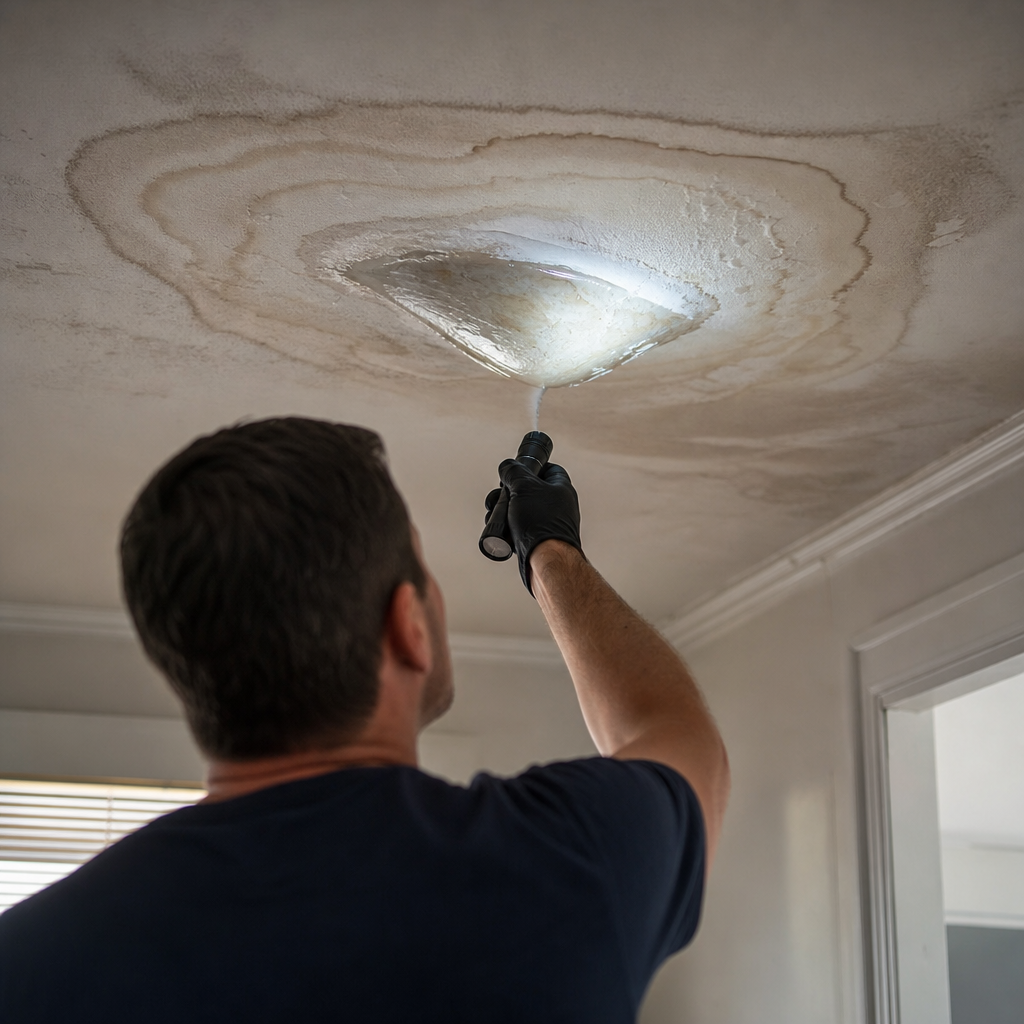
6. Water Rings, Dark Shadows, and Sagging Ceiling Materials
Concentric water rings, staining, and sagging drywall point to leaks overhead. These water marks reveal repeated wetting cycles within ceiling cavities, providing the moisture mold needs to grow across the unpainted back of ceiling assemblies.
Overhead Plumbing and Roof Ingress Indicators
Intermittent leaks from overhead plumbing, roof penetrations, or terrace drains travel horizontally along structural beams before settling on ceiling materials. The U.S. EPA identifies roof materials and spaces above ceiling tiles as prime locations for hidden mold following water intrusion.
Ceiling Hazard Warning Signs
Waterlogged drywall and ceiling materials lose structural strength over time. Take these safety steps if you notice an overhead sag or discoloration:
- Move furniture and clear the area to protect people from potential falling debris.
- Contact a restoration specialist like Wade’s Restoration to assess cavity moisture levels and locate the source of the leak.
7. Unexplained Health Symptoms and Respiratory Reactions
Physical health symptoms among building occupants are often a key indicator of a hidden mold problem. When individuals experience symptoms that improve when they leave the property, airborne spores from hidden colonies may be present.
Recognizing Indoor Environmental Triggers
Airflow patterns and building pressure changes can carry spores and musty odors out of wall cavities, ductwork, and crawlspaces into living areas. If your symptoms ease when away from home and return once you step back inside, the indoor environment warrants an inspection.
Health Symptoms and Appearance
Mold can look like spots of many colors and typically smells musty. Common physical symptoms in sensitive individuals include a stuffy nose, sore throat, coughing or wheezing, burning eyes, and skin rash. When these symptoms persist without an obvious cause, moisture diagnostics can help determine whether hidden mold is present.[3]
8. Condensation Buildup Around Windows and Cold Exterior Walls
Persistent condensation on window frames, corner joints, and cold exterior walls indicates elevated indoor moisture meeting cooler surfaces. When vapor condenses inside exterior wall cavities, it dampens insulation, framing, and the back side of drywall or paneling.
Moisture Accumulation in Exterior Enclosures
Air leaks around window frames and perimeter sills allow exterior cold air to meet interior air. The resulting condensation inside the wall assembly creates steady dampness that supports mold growth behind drywall and wallpaper.
Managing Cavity Moisture
When insulation becomes wet, it loses effectiveness and can harbor moisture. Managing indoor moisture sources helps reduce condensation, while contaminated wall materials require professional remediation under containment.
Evaluating Hidden Mold Signs and Remediation Scope
Remediation involves isolating the affected area, finding and stopping the moisture source, and safely removing contaminated porous materials. The project scope depends on whether mold is restricted to surface drywall or extends into crawlspaces, pipe chases, ducts, carpets, or roof materials above ceiling tiles.
Factors Influencing Remediation Scope
Key scope factors include accessibility to the cavity, the volume of affected materials, and the containment measures required to protect surrounding areas. Moisture logs and inspection assessments help property owners address the underlying water issue properly.
How to Choose a Mold Remediation Specialist
Hiring a restoration specialist requires verifying appropriate remediation protocols and diagnostic equipment. Disturbing moldy walls without proper containment risks scattering spores into uncontaminated rooms. A reputable company isolates the work area before removing or cleaning materials.
The Importance of Containment Protocols
Cutting into damp building materials releases spores into the air. Containment barriers help prevent spores from escaping into adjacent rooms or shared ventilation paths during remediation.
Professional Standards and Diagnostics
To address hidden fungal growth safely, look for experienced professionals like Wade’s Restoration who use non-invasive moisture meters and thermal imaging to locate dampness and remediate growth without compromising indoor air quality.
Frequently Asked Questions About Hidden Mold Signs
Identifying hidden mold requires accurate diagnostics and containment to avoid spreading spores through living spaces and ductwork. Addressing dampness early protects your property and indoor environment.
Common Questions
Can mold grow behind walls without an active plumbing leak?
Yes. High humidity, condensation along cold exterior framing, and uninsulated ductwork can provide enough moisture to support fungal growth inside wall cavities without a broken pipe.
What are the most common signs of hidden mold?
According to the U.S. EPA, the most common indicators are a lingering moldy or musty smell, unexplained water damage or staining, and building occupants reporting physical symptoms.
Where does hidden mold typically grow?
Hidden mold is commonly found behind drywall, wallpaper, paneling, ceiling tiles, carpets, crawlspaces, pipe chases, ducts, and roof materials above ceiling tiles.
What physical symptoms are linked to mold exposure?
Common symptoms include a stuffy nose, sore throat, coughing or wheezing, burning eyes, and skin rash. Mold can appear as spots of many colors and often carries a musty odor.
When should I call a professional mold restoration specialist?
You should contact a specialist if you notice persistent musty odors with no visible source, discover water damage inside walls or ceilings, or experience physical symptoms that flare up inside your property.[2]
Sources
- Cityscape: A Journal of Policy Development and Research – Regulatory Reform and Affordable Housing – Data Shop: Musty Smells, Mold, and Moisture in the U.S. Housing Stock: Results from Two National Surveys – huduser.gov (2015)
- [PDF] HHS Public Access – CDC Stacks – stacks.cdc.gov (2004)
- Mold | Mold | CDC – cdc.gov (2004)
- What should be tested in patients with suspected mold … – PMC – pmc.ncbi.nlm.nih.gov
- A Brief Guide to Mold, Moisture and Your Home | US EPA – epa.gov
Related reading: Basement Water Damage Cleanup | Call Now-10% Off | Same-Day Service | Free Estimate
Related reading: Mold Growth Timeline – Call Now-10% Off – Same-Day Service – Free Estimate
Frequently Asked Questions
How do professionals locate mold hidden inside walls without damaging the drywall?
Restoration experts use non-invasive diagnostic tools, such as infrared thermal imaging cameras and non-penetrating moisture meters, to detect temperature anomalies and trapped dampness behind wall assemblies. Wade's Restoration applies these advanced diagnostic methods to pinpoint concealed moisture pathways without causing unnecessary structural damage.
Why is it dangerous to cut into drywall when searching for hidden mold?
Cutting into contaminated cavities without professional isolation allows trapped fungal spores and microbial compounds to rapidly disperse throughout living areas and ventilation systems. Wade's Restoration sets up strict containment zones and negative air filtration before disturbing any materials to prevent cross-contamination across your property.
What should homeowners expect during a professional moisture assessment for hidden mold?
A thorough evaluation includes inspecting structural vulnerability points, evaluating HVAC registers, and mapping moisture levels across walls, subfloors, and ceilings. Property owners can schedule a free visual mold inspection and professional moisture assessment with Wade's Restoration to locate hidden moisture sources and develop a precise remediation strategy.
About the author
 |
Sarah Jenkins Sarah Jenkins is a certified property restoration specialist with over 8 years of experience in water damage mitigation and mold remediation. Based in New York, she focuses on helping Midtown West property owners navigate emergency cleanups and complex insurance claims. She holds a degree in Environmental Science from Rutgers University. |
Water damage, flood, or mold emergency?
We’re available now - call for a fast, free estimate.
Call Now - Free Estimate