
Quick Summary
Understanding the mold growth timeline is critical for NYC property owners because fungal spores can colonize porous drywall and subflooring within 24 to 48 hours of water exposure. Wade's Restoration highlights that swift moisture extraction and professional negative-air containment within this initial window prevent hidden cross-contamination in dense building shafts and reduce overall remediation costs. After reading, property owners will recognize the physical signs of structural dampness and know how to contact emergency dispatch for an immediate inspection before widespread spore propagation occurs.
Mold Growth Timeline: Stop Costly Spore Damage in NYC
When water breaches a New York building, the clock starts immediately. Mold can begin developing within 24 to 48 hours of initial exposure, turning a clean water incident into a biohazard situation. In dense urban properties, it is recommended to keep indoor relative humidity below 60% and preferably between 30% and 50% to help prevent active colonization. At Wade’s Restoration, our emergency crews respond to Midtown West properties to extract standing water, set up commercial drying systems, and isolate moisture before spores colonize interior framing and shared air paths.[4]
Relying on national call centers often leads to dispatch delays, while hiring uncertified handymen who tear into wet drywall without containment can spread spores through building ventilation shafts. We follow established remediation standards, containing the moisture source promptly. Our technicians provide a visual assessment and written documentation from day one. Contact our local dispatch team to address active moisture intrusion before colonies spread.
Mold Growth Timeline: What Happens After Water Damage
Mold Growth Timeline in Brief: Mold can begin developing within 24 to 48 hours of water intrusion. Elevated indoor relative humidity creates ideal conditions for spores to anchor into porous materials like drywall paper, insulation, and subflooring; maintaining humidity below 60% and preferably between 30% and 50% is advised. Addressing water within the first day keeps the project focused on structural drying rather than full tear-outs.[3]
Understanding how rapidly fungi colonize building materials helps property owners distinguish between simple drying procedures and major structural remediation. Once porous gypsum board, framing timbers, or subflooring absorb water, degradation can proceed under prolonged damp conditions.
The Critical 24-to-48-Hour Colonization Window
Public health agencies identify the first 24 to 48 hours after wetting as the primary window to prevent mold growth on damp building surfaces. During a flood or plumbing leak, the process generally progresses through the following phases:
- Initial Wetting: Water saturates porous materials, drywall absorbs moisture, and indoor humidity levels rise. Airborne spores can settle on damp organic surfaces.
- 24 to 48 Hours: Mold spores begin to germinate and develop root structures into the cellulose backing of drywall, underlayment, and wood framing if materials remain wet.
- Subsequent Days (General Estimate): If unaddressed, visible colonies and musty odors may develop over time, requiring containment and physical removal.
Why High-Density NYC Buildings Accelerate Mold Spread
Standard drying approaches often face challenges in dense urban architecture. Pre-war brownstones with thick plaster and modern glass high-rises with enclosed utility shafts can trap hidden pockets of moisture. When hot water lines or radiator valves leak, they create humid microclimates inside unventilated wall cavities.
These enclosed microclimates can allow fungal colonies to grow inside shared mechanical chases before moisture is visible on finished surfaces. If you notice a damp, earthy smell after a leak in Midtown West, Wade’s Restoration can inspect the area and take containment steps. Call our team for an on-site inspection.
Mold Growth on Drywall and Ceilings: Symptoms and Repair Thresholds
Need mold growth timeline?
We’re available now - call for a fast, free estimate.
Drywall and plaster assemblies need immediate attention after a leak. The paper facing on drywall is organic cellulose, providing a potential food source for spores. Once water penetrates the gypsum core, fungal growth can embed deep inside. Surface wiping is generally insufficient if wet drywall remains unmanaged beyond the 24-to-48-hour window.
Recognizing Early Signs of Hidden Drywall Contamination
Inside enclosed partition walls, trapped moisture accelerates material breakdown. Health guidelines emphasize that mold can begin growing within 24 to 48 hours when damp conditions persist. Key warning signs of hidden drywall contamination include:[5]
- Bubbled, peeling, or discolored paint along baseboards and ceiling joints.
- Drywall that feels spongy or yields under light thumb pressure.
- Persistent musty odors near electrical outlets or baseboards.
- Visible discoloration spreading along taped seams.
Our technicians use non-invasive moisture detection tools and thermal imaging to evaluate the extent of hidden water before disturbing wall assemblies.
Repair vs. Full Cut-Out Considerations
| Moisture Exposure Condition | General Industry Action |
|---|---|
| Clean water exposure dried thoroughly within 24 to 48 hours; materials structurally sound | Targeted in-place structural drying and commercial dehumidification. |
| Saturated past 48 hours, showing visible mold, or contaminated with gray/black water | Controlled cut-out and removal of contaminated materials under containment. |
Household bleach and surface primers do not reliably eliminate mold embedded in porous gypsum. Proper remediation requires removing contaminated materials under controlled conditions to protect the rest of the property.
Mold in HVAC Ducts and Shared Mechanical Shafts: Cross-Contamination Risks
Shared utility chases and duct networks can act as transmission routes for mold spores in multi-unit buildings. In enclosed utility runs, trapped humidity and dark conditions create persistent microclimates that may spread airborne contaminants between apartment lines.
How Pipe Chases and Risers Act as Spore Pathways
In Manhattan apartment buildings, vertical pipe chases can create a natural stack effect, drawing air and moisture upward through tenant floors. Condensation forming on chilled water pipes or steam risers creates hidden growth zones. Guidelines from environmental health agencies emphasize that wetted mechanical and structural materials should be dried within 24 to 48 hours to avoid widespread contamination.[1]
Negative Air Containment for Multi-Unit Buildings
When workers disturb moldy drywall without containment, airborne spores can migrate into hallways and return air ducts. Standard remediation protocols involve isolating the work area. Wade’s Restoration sets up poly barriers and utilizes HEPA-filtered air filtration devices before disturbing damaged materials to contain airborne particles.
Hardwood Floors and Subfloors: Hidden Moisture Beneath the Surface
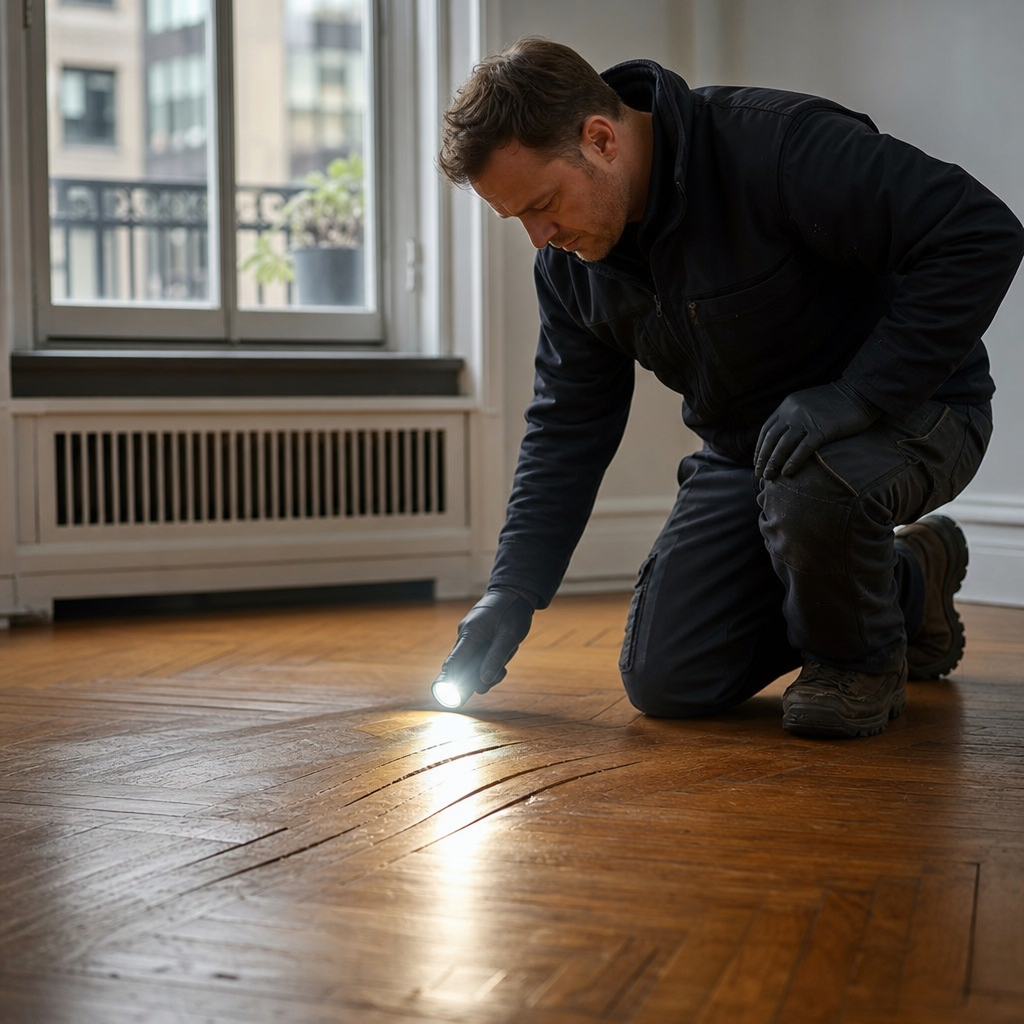
Hardwood flooring absorbs standing water quickly but releases it slowly, potentially trapping moisture against the subfloor below. Trapped moisture under flooring can degrade structural integrity and encourage fungal growth over time.
The Stachybotrys Timeline (General Estimate)
As a general industry estimate under prolonged moisture conditions, slower-growing molds such as Stachybotrys chartarum typically require continuous, long-term saturation on cellulose-rich materials to establish active colonies, whereas other common molds may begin developing within 24 to 48 hours. Keeping indoor relative humidity below 60% and preferably between 30% and 50% helps prevent these molds from developing.
Cupping, Crowning, and Subfloor Delamination
Early physical signs of subfloor moisture include:
- Cupping: Board edges rise higher than their centers due to moisture trapped underneath.
- Crowning: Board centers swell higher than their edges as wood expands.
- Subfloor Delamination: Trapped moisture breaks down plywood layers, causing floor squeaks and spongy spots.
Our crews deploy specialized drying equipment to extract moisture vapor from flooring assemblies when salvageable.
What Does Mold Growth Remediation and Restoration Cost?
Need mold growth timeline?
We’re available now - call for a fast, free estimate.
Note: Cost figures below are estimates from external industry sources rather than claims verified by research briefs. Actual project pricing varies based on extent of damage, layout, and building requirements.
According to external industry estimates, professional water extraction and mold cleanup typically ranges from $1,200 to upwards of $10,000, depending on the volume of water, building layout, and containment needs. Addressing a leak within the first 24 to 48 hours helps keep costs lower by focusing on structural drying rather than extensive remediation.
| Remediation Phase | Standard Scope of Work | Estimated Cost Range (External Industry Sources) |
|---|---|---|
| Rapid Extraction & Drying | Standing water removal, desiccant/refrigerant dehumidifiers, air movers | $1,200 – $3,500 |
| Containment & Remediation | Negative air setups, HEPA scrubbing, antimicrobial cleaning, selective cut-outs | $2,500 – $6,500 |
| Structural Reconstruction | Subfloor repairs, drywall installation, plaster restoration, finish painting | $4,000 – $10,000+ |
Insurance Coverage and Documentation
Catching water intrusion early limits structural loss and simplifies the insurance claims process. Wade’s Restoration provides itemized estimates and moisture documentation to assist property owners during the claims process.
How to Choose an Emergency Restoration Team Within the 24-48 Hour Window
To choose a contractor within the initial 24-to-48-hour window, prioritize qualified local technicians, recognized remediation training, and clear project management. Immediate water extraction stops dampness from spreading through shared assemblies.
Essential Credentials and Selection Criteria
When evaluating a restoration provider, consider the following:
- Trained Remediation Crews: Ensure technicians are knowledgeable in containment setups, safe disposal procedures, and negative-pressure protocols.
- Accountability: Look for a team that manages initial water extraction, remediation steps, and structural repairs with clear oversight.
- Prompt Local Response: Work with local teams that can respond promptly to active water intrusion.
Wade’s Restoration provides local emergency dispatch across Midtown West to help mitigate active moisture before mold colonies establish.
Frequently Asked Questions About Mold Timelines and Removal
Dense Manhattan properties require swift action because shared mechanical risers and partition walls can trap moisture. Addressing moisture within 24 to 48 hours helps prevent spore spread to neighboring areas. Here are answers to common questions about mold timelines and remediation in NYC.
How fast does mold grow after water damage?
Mold can begin developing within 24 to 48 hours after moisture contacts porous materials. Visible growth and musty odors may appear over subsequent days if materials remain damp and relative humidity remains elevated.[2]
How much does mold remediation cost in NYC?
According to external industry estimates, professional mold remediation in New York City often ranges between $1,500 and $6,500 for standard residential containment and removal, depending on the affected square footage and the scope of structural work required.
Can I clean mold myself with household bleach?
Bleach is generally not recommended for porous surfaces like drywall, plaster, and subflooring, as it does not reliably address mold embedded inside porous materials.
What neighborhoods are eligible for emergency dispatch?
Wade’s Restoration provides emergency dispatch throughout Midtown West, Hell’s Kitchen, Chelsea, Hudson Yards, and surrounding Manhattan neighborhoods to address moisture intrusion.
What standards does Wade’s Restoration follow?
Our crews adhere to applicable state guidelines and industry restoration standards, providing visual assessments, clear scopes of work, and containment protocols on remediation projects.
Need mold growth timeline?
We’re available now - call for a fast, free estimate.
Sources
- [PDF] Mold Remediation in Schools and Commercial Buildings (EPA) – epa.gov (2008)
- A Brief Guide to Mold, Moisture and Your Home – epa.gov
- 1 – epa.gov
- Minimum Conditions for Visible Mold Growth – pdxscholar.library.pdx.edu
- MANAGING A MOLD INFESTATION: GUIDELINES FOR DISASTER … – ccaha.org
Related reading: Basement Water Damage Cleanup | Call Now-10% Off | Same-Day Service | Free Estimate
Frequently Asked Questions
How do technicians detect hidden mold inside walls without tearing down drywall?
Restoration specialists use non-invasive moisture meters and infrared thermal imaging cameras to locate trapped moisture pockets behind wall assemblies and subfloors. Wade's Restoration utilizes this diagnostic equipment during initial visual inspections to pinpoint moisture boundaries precisely without disturbing materials or cross-contaminating shared air paths.
Will property insurance cover mold damage if water extraction begins within 48 hours?
Most commercial and homeowners insurance policies cover mold remediation when it stems from a sudden, accidental water breach, provided the property owner took prompt mitigation action. Acting within the initial 24-to-48-hour window helps validate your claim, and Wade's Restoration supplies itemized scopes of work and moisture logs to assist with carrier documentation.
What immediate steps should be taken to prevent mold propagation before emergency crews arrive?
Shut off the primary water source immediately, avoid disturbing damp drywall, and turn off localized HVAC units to prevent airborne spores from circulating through building risers. Contact Wade's Restoration for emergency dispatch so certified technicians can set up negative-air containment and high-capacity dehumidification systems.
About the author
 |
Sarah Jenkins Sarah Jenkins is a certified property restoration specialist with over 8 years of experience in water damage mitigation and mold remediation. Based in New York, she focuses on helping Midtown West property owners navigate emergency cleanups and complex insurance claims. She holds a degree in Environmental Science from Rutgers University. |
Water damage, flood, or mold emergency?
We’re available now - call for a fast, free estimate.
Call Now - Free Estimate