
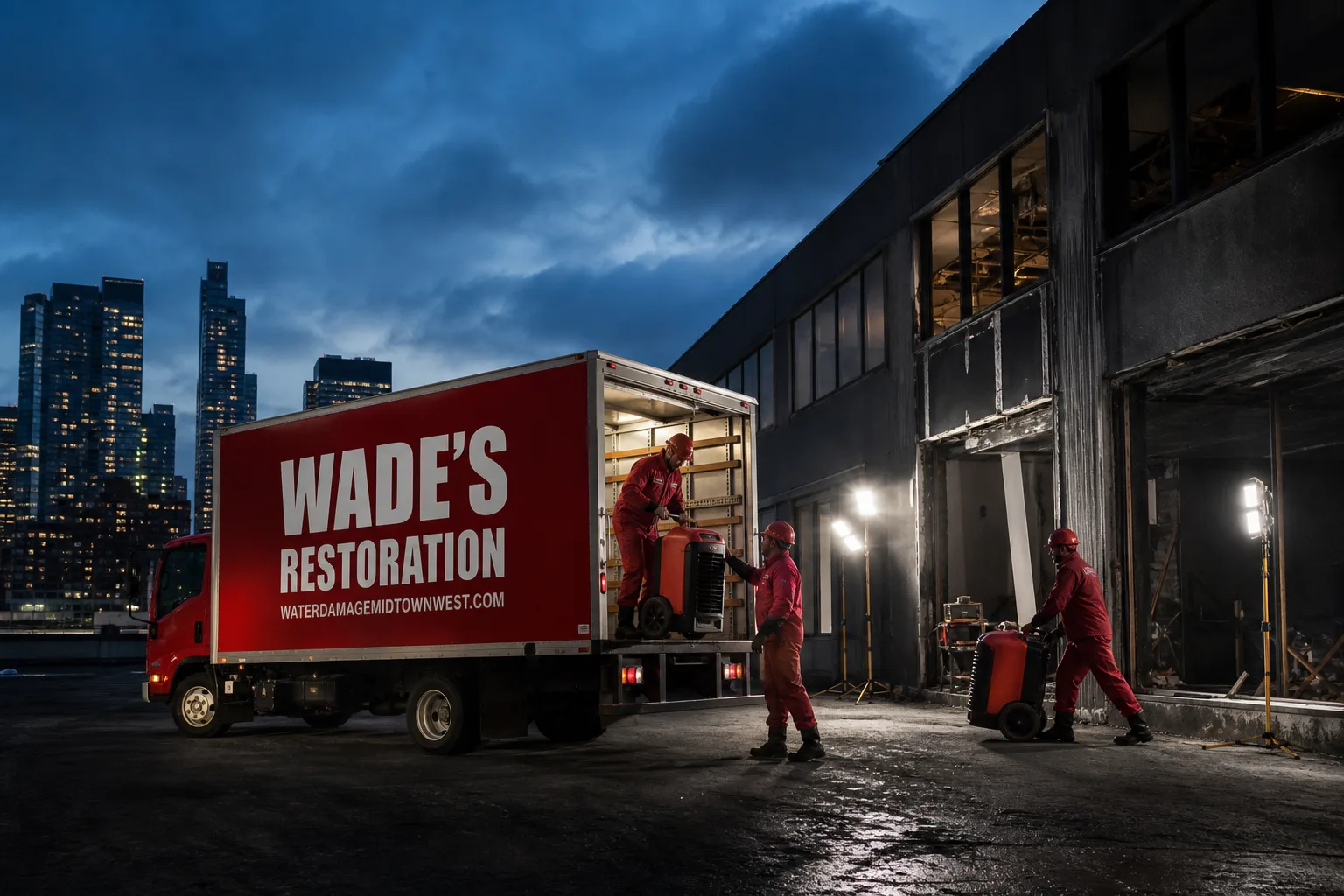
Free visual inspection and a written scope of work before any mitigation begins - photos, moisture readings, and drying logs go in your claim file
The scope we write is the scope we bill. Anything new gets shown to you, in writing, before we touch it.
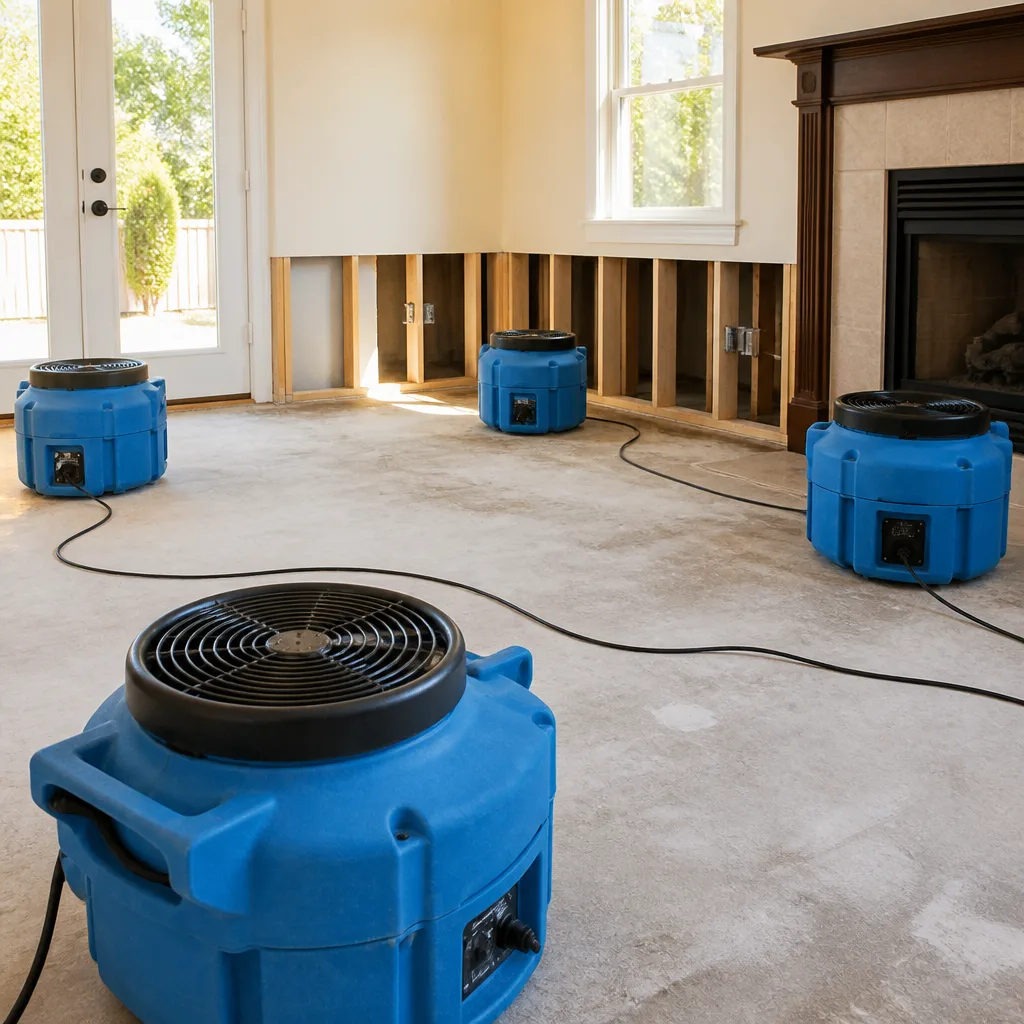
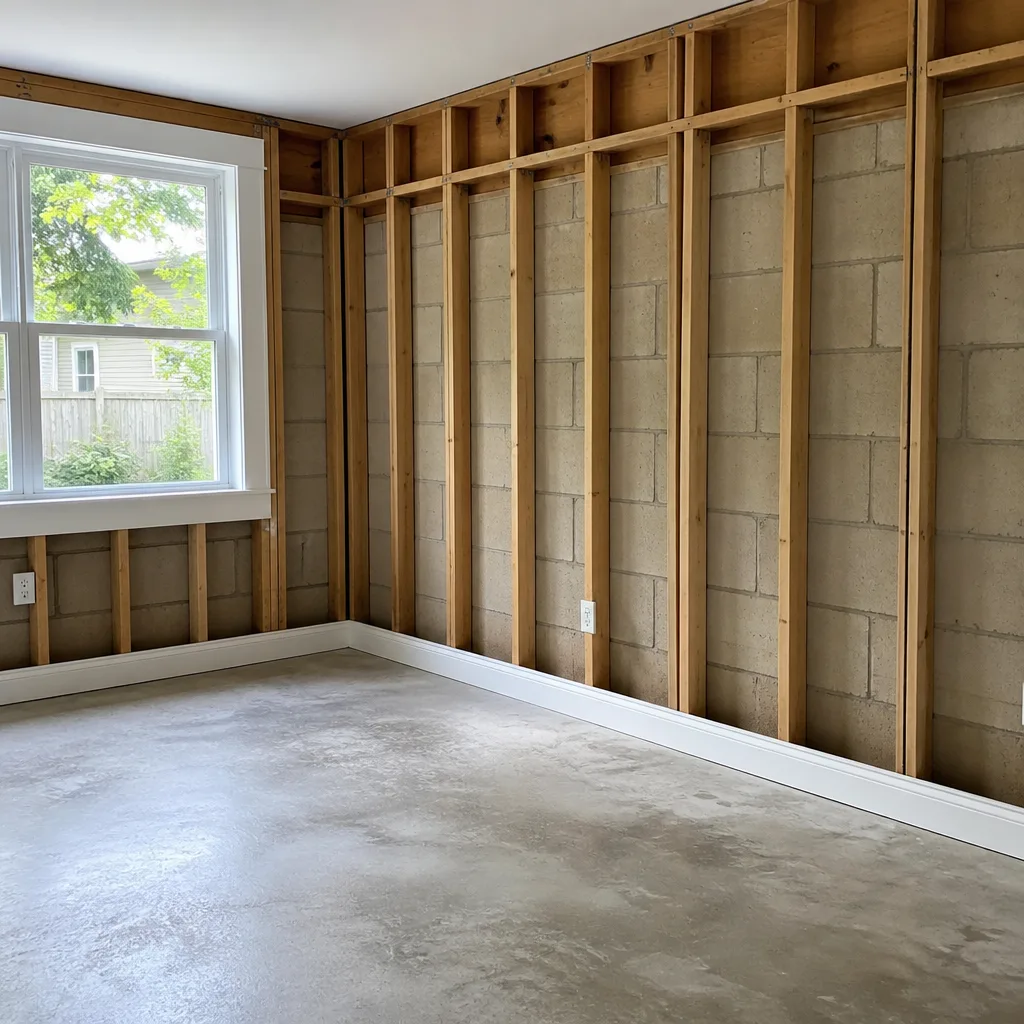
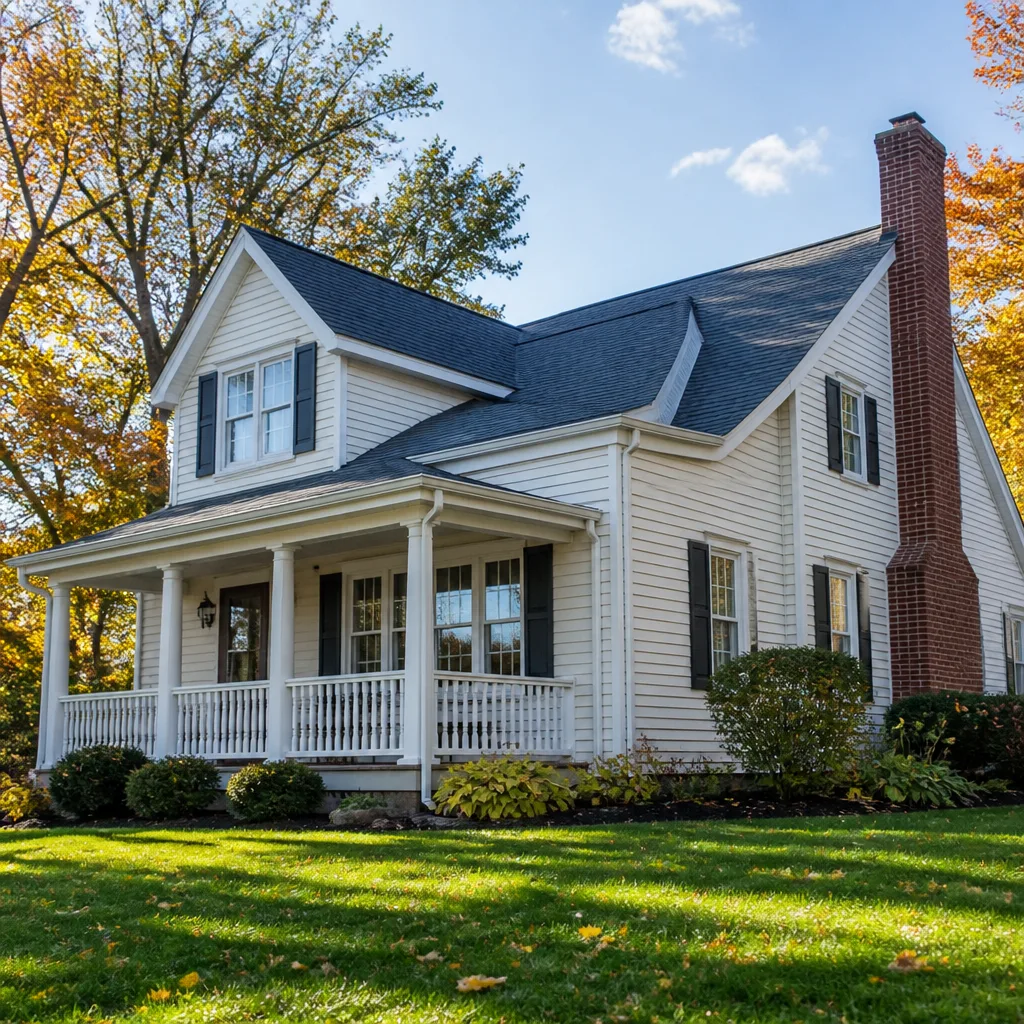
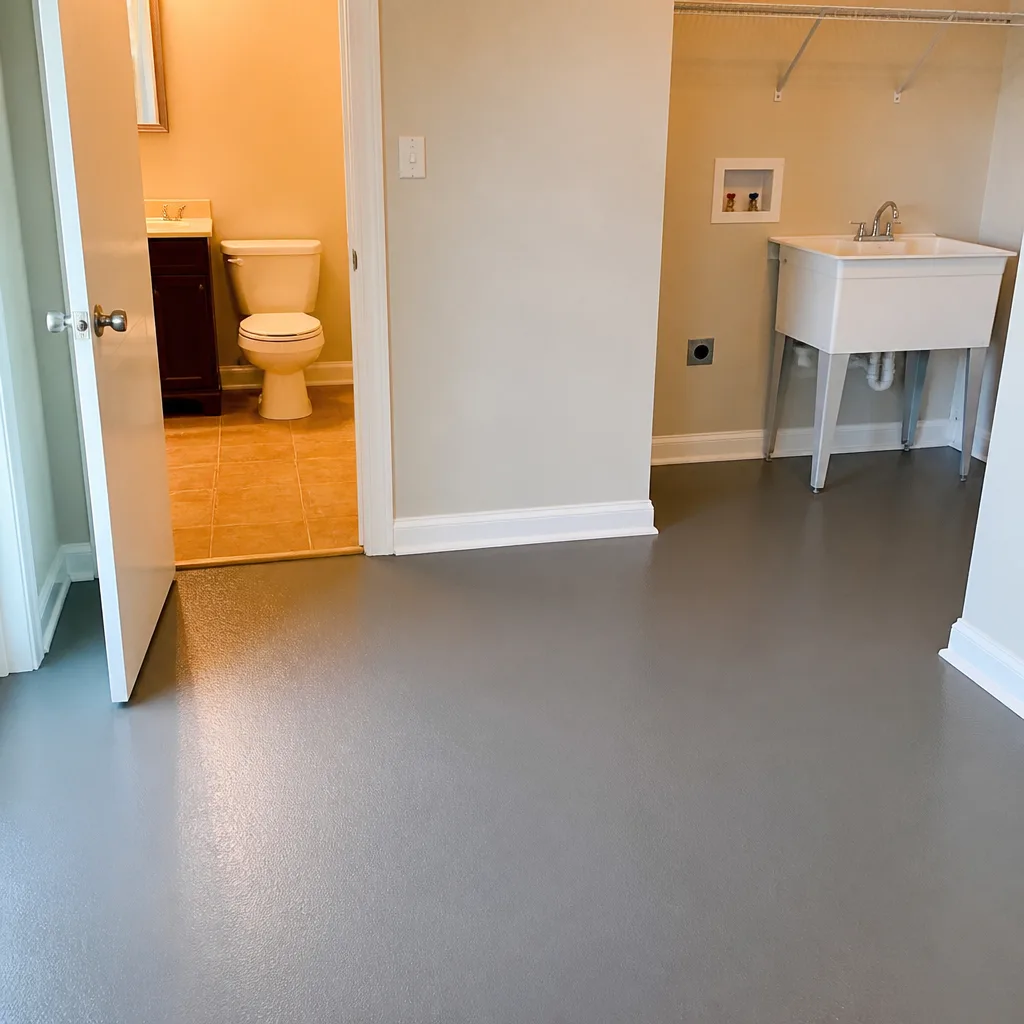
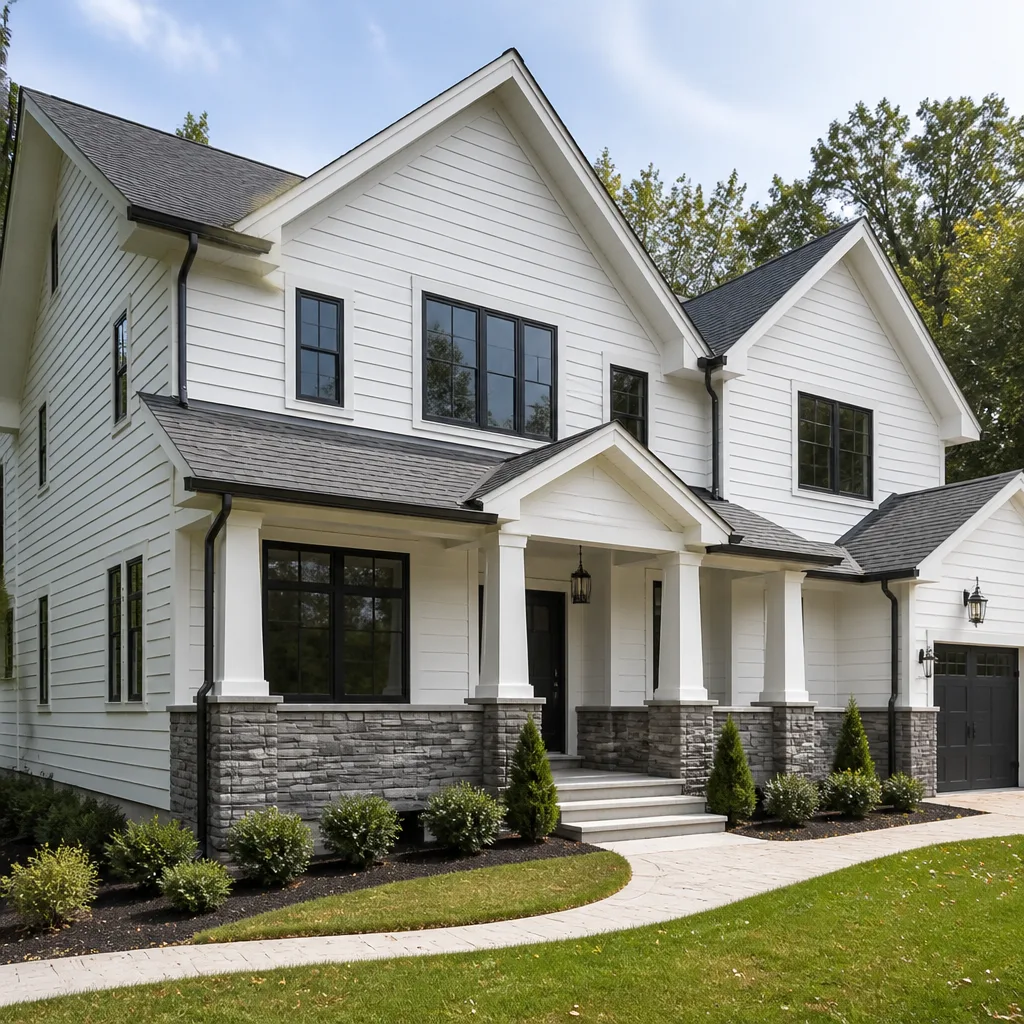
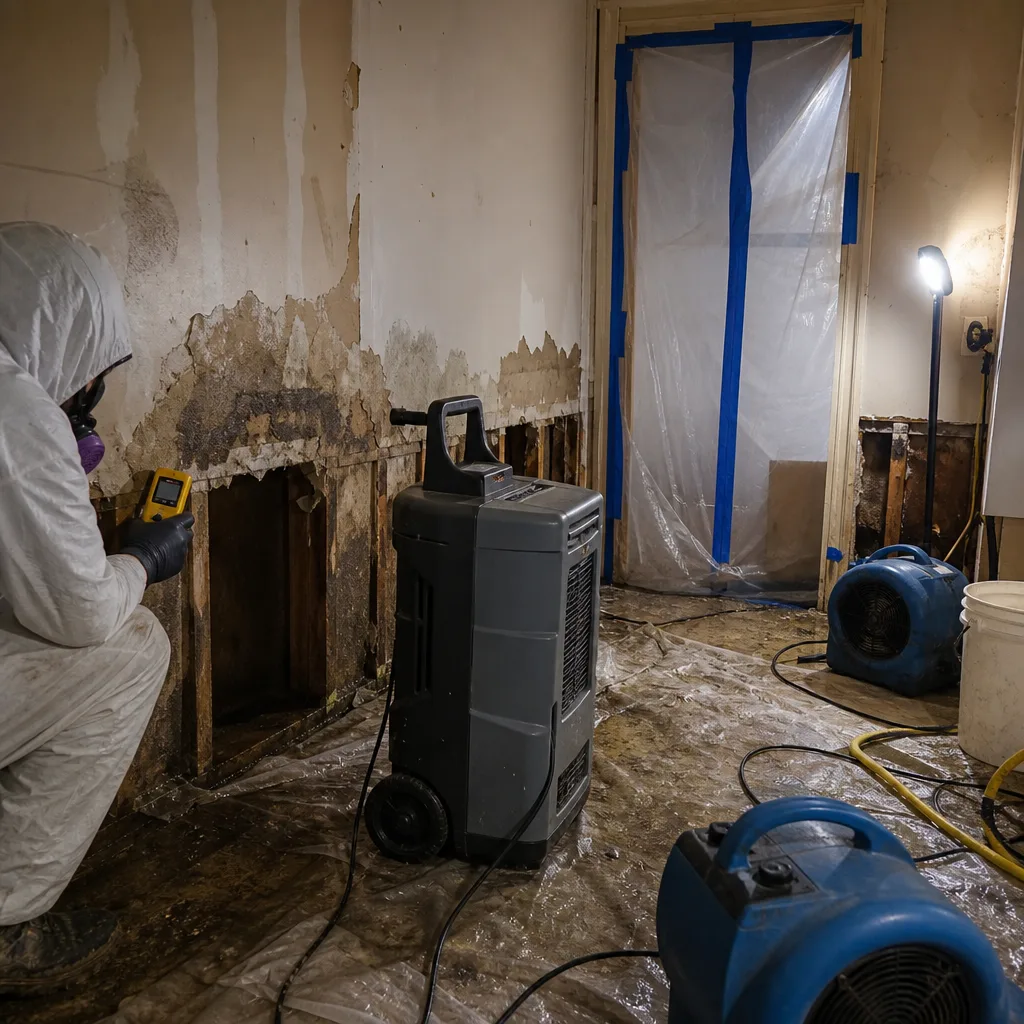 Before
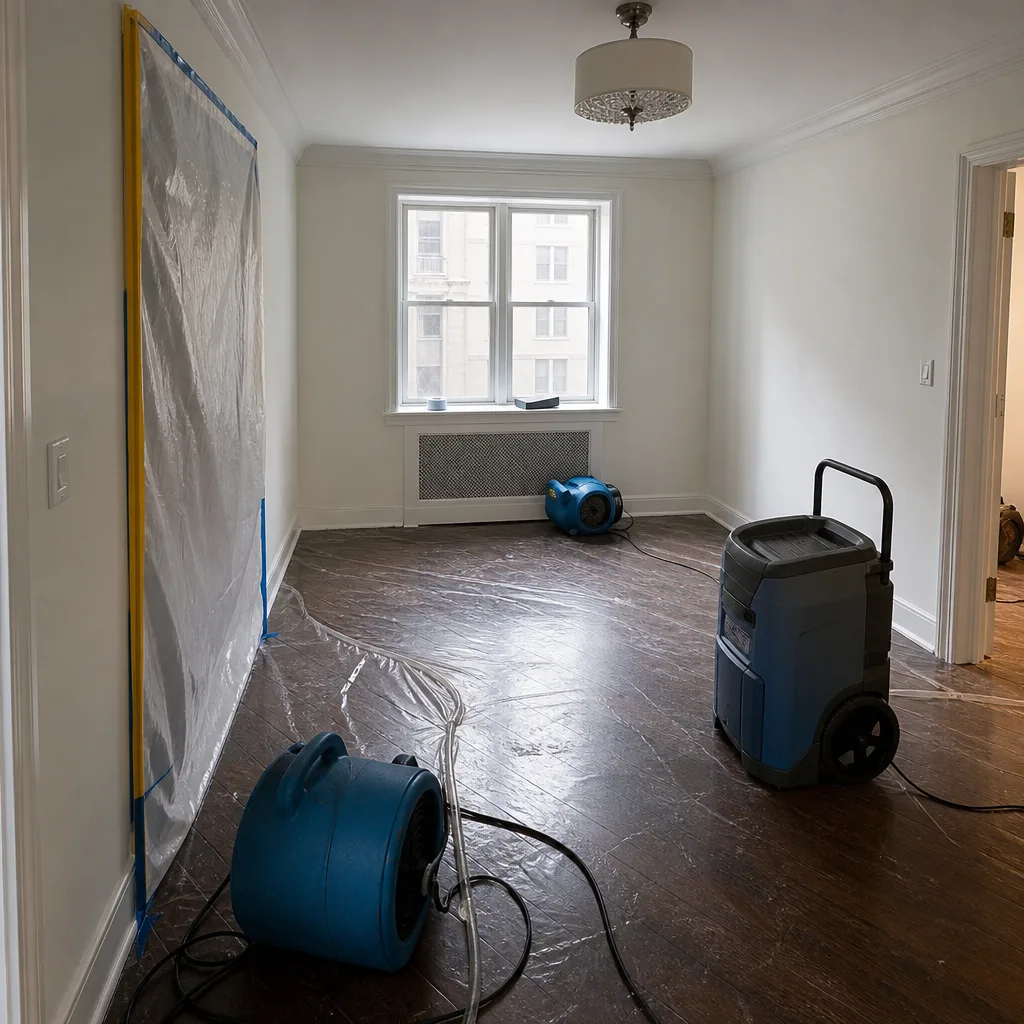 After
After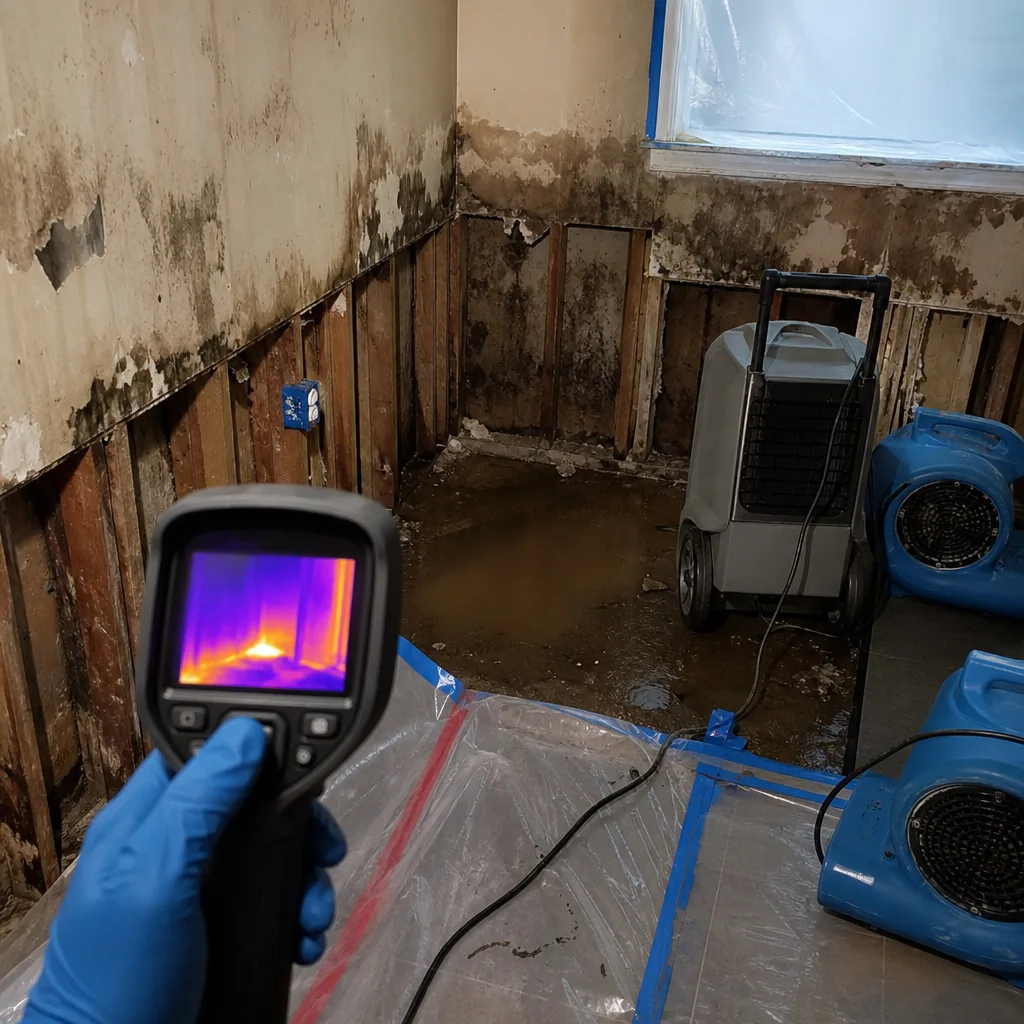 Before
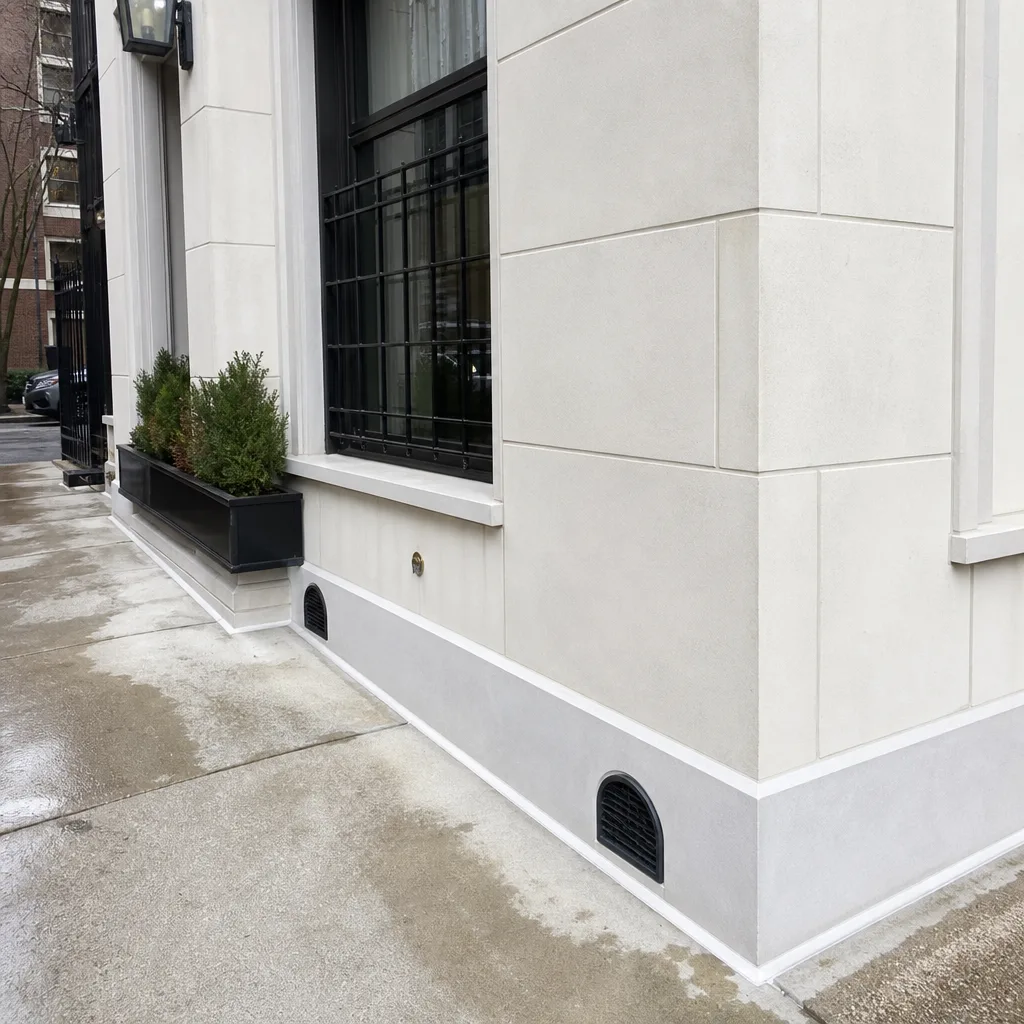 After
After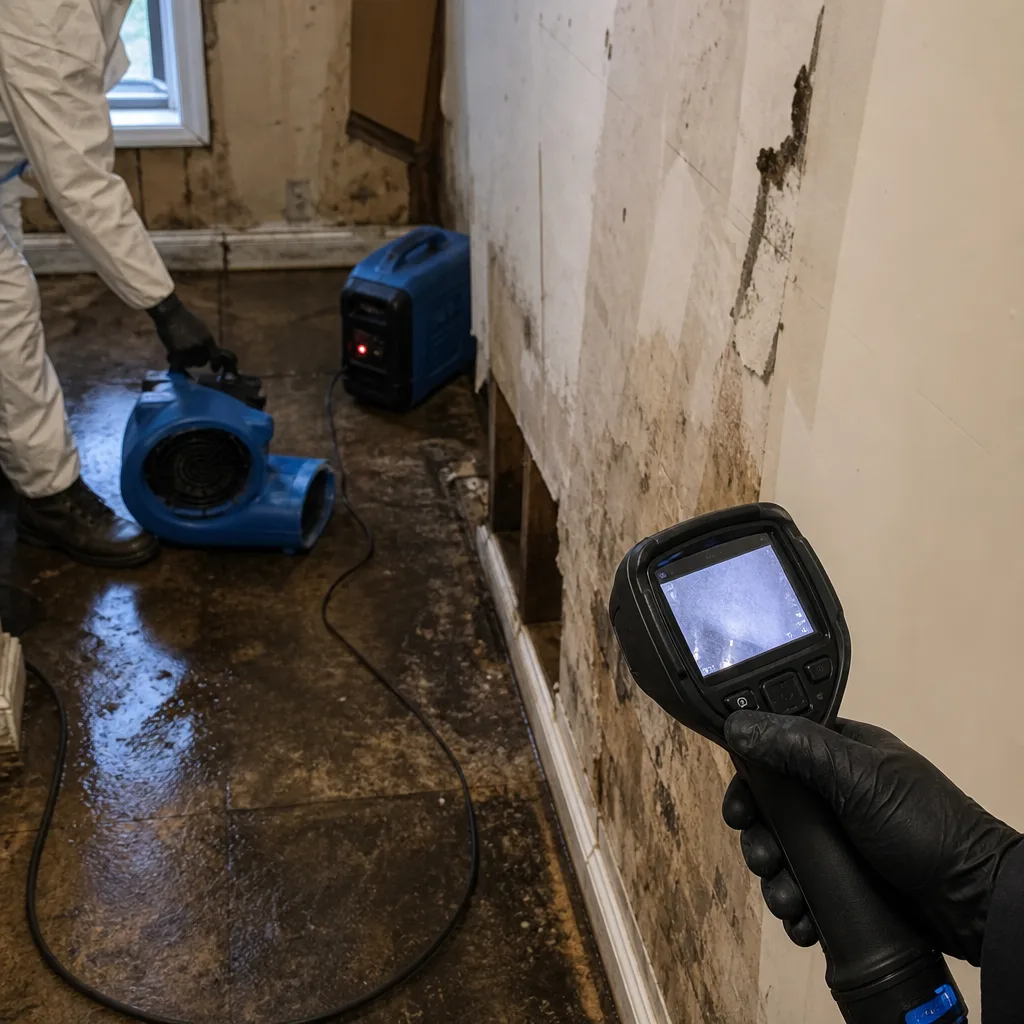 Before
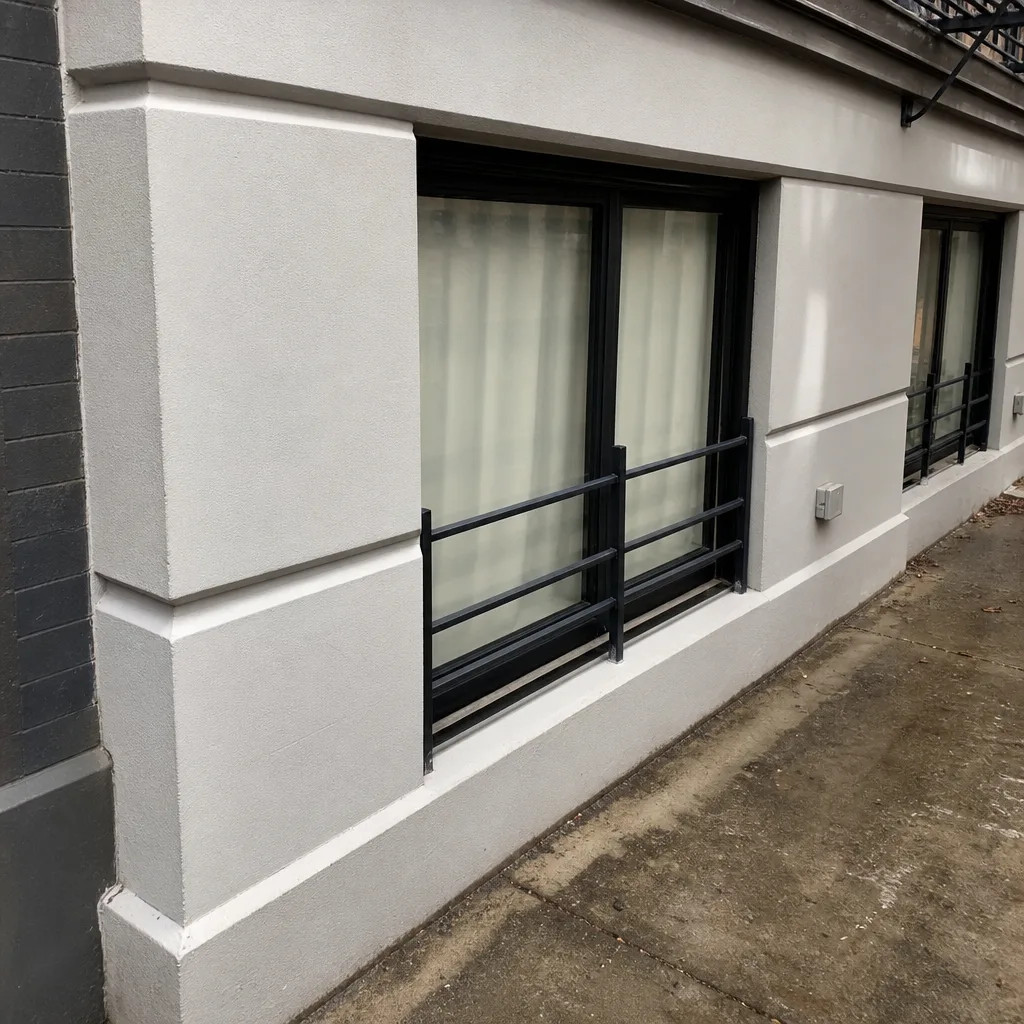 After
After24/7 Emergency Storm & Disaster Restoration in West New York
Storm damage in West New York rarely stays where it starts. A ripped roof membrane on a 1930s walk-up off Bergenline Avenue becomes water in four stacked apartments by morning. That’s why we answer live around the clock at (607) 703-3408 and have crews positioned to reach West New York properties within the hour. Wade Ferris answers his own phone, and once he understands what you’re looking at, he heads out himself or sends a crew he’s trained. The first hour matters because water moving through pre-war floor-ceiling assemblies doesn’t wait for business hours. A free visual inspection tells you exactly where you stand before any work begins.
Understanding Storm & Disaster Restoration Severity in West New York Properties
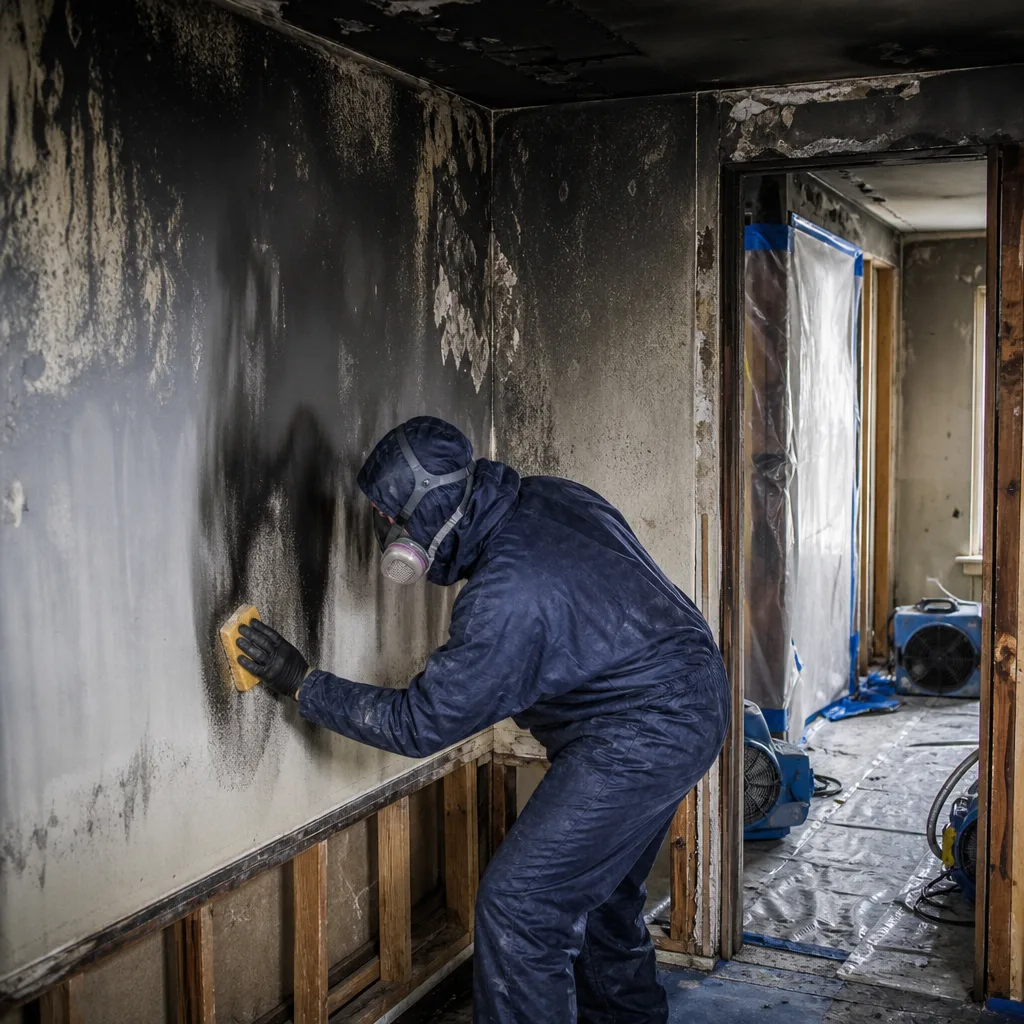
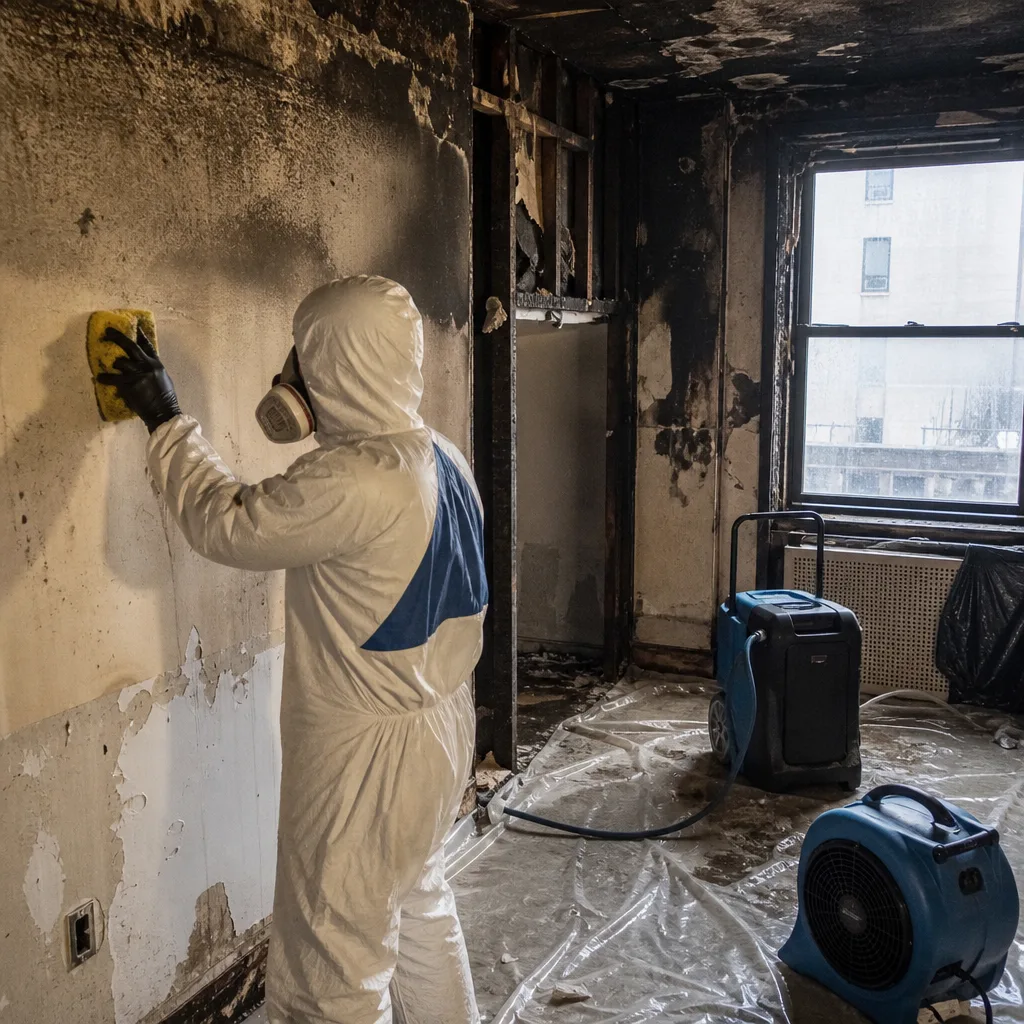
West New York’s housing stock changes the math on storm damage. Those 4-to-6-story brick apartment buildings, most built between the 1920s and 1950s, share floor-ceiling assemblies and common chases between units. When water gets into one, it moves. A Category 1 water loss, clean water from a supply line or rain through a fresh roof breach, becomes Category 2 within 48 hours as it picks up contaminants from building materials. Category 3, which includes storm surge, sewage, or any water that’s sat long enough to grow bacteria, means full tear-out and sanitization, not just drying. In West New York’s dense construction, we’ve seen Category 1 become Category 3 across three floors because nobody mapped moisture past the visible stain. That’s why our Storm & Disaster Restoration team uses thermal imaging and daily moisture logs, not guesswork. Smoke and soot follow the same hidden paths: a fire in one unit pushes pressurized smoke into wall cavities, behind baseboards, and through electrical penetrations into units the flames never touched.
Why West New York Property Owners Choose Wade’s Restoration
- 45-minute response commitment: Wade or a crew he’s trained is on the road to West New York within 45 minutes of your call, day or night.
- 24/7 live answer: A real person picks up. Not an answering service. Often Wade himself, phone in his pocket at 2 a.m.
- IICRC-certified crews: Our techs carry WRT, FSRT, and AMRT certifications, so the work meets the industry’s actual standards, not a franchise’s marketing copy.
- Free visual inspection: We look before we quote. No charge for that, and we’ll tell you if the damage is smaller than you fear.
- Direct insurance billing: We bill your carrier directly and handle the adjuster communication so you’re not the middleman.
- One team from extraction to reconstruction: Same crew that tears out the wet drywall is the crew that rebuilds it. Nobody hands your home off to strangers.
Our Storm & Disaster Restoration Process
Inspection & Assessment
We arrive, walk the full property, and map moisture across every floor, not just where the stain shows. In West New York’s stacked buildings, that means checking units above, below, and adjacent to the visible damage. We give you a written scope before any work starts.
Extraction/Stabilization
Standing water comes out first. We use truck-mounted and portable extraction units, then stabilize the structure. If your roof is compromised, we tarp it immediately so forecasted rain doesn’t add to the loss.
Drying & Dehumidification
We set up Dri-Eaz and Phoenix air movers and dehumidifiers, sized for the cubic footage of each affected space. Daily moisture readings track progress. You get the full log at the end, every number, every day.
Cleaning & Sanitization
HEPA air scrubbers run throughout the affected area to pull particulate and mold spores from the air. We clean and sanitize surfaces, and apply antimicrobial treatments where Category 3 water was present.
Specialty Treatment for Storm Damage
Depending on what happened, this means mold remediation with containment, smoke and soot removal after a fire, or sewage cleanup with proper disposal. In pre-war buildings, we pay extra attention to cast-iron waste lines and original plaster, which respond differently than modern materials.
Repairs & Restoration
We rebuild to pre-loss condition or better, matching finishes where possible and bringing everything up to current code where it matters. The 90-Day Done Right Promise covers the whole job, in writing.
Need Emergency Storm & Disaster Restoration in West New York Now?
Crews minutes away, answering live 24 hours a day. The sooner we start, the less it costs.
Working With Your Insurance Company
Insurance claims for storm and disaster restoration in West New York come with a wrinkle most suburban policies never see: multiple parties. A third-floor roof leak that damages four stacked apartments means four insurance carriers, four adjusters, and a landlord who’s fielding calls from every direction. We take that off your plate. From the first hour, we document everything your insurer will ask for: photos room by room, moisture readings, drying logs, and a line-item scope of work written in the format adjusters recognize. Wade speaks directly with your adjuster so you’re not stuck relaying information between two sides. If your carrier pushes back, we provide the documentation to support every line item.
What We Provide Your Insurer
- Thorough documentation of the loss
- Photos of all damage, room by room
- Moisture readings and drying logs
- A detailed, line-item scope of work
- Direct coordination with your carrier
Built for West New York’s Loss Calendar
West New York’s storm damage follows a rhythm. January and February bring deep freezes that burst supply lines in aging galvanized piping, and when a pipe lets go on the fourth floor, the water doesn’t stop at the third. Spring thaw pushes snowmelt down the Palisades slope and into below-grade units, where foundation walls in older brick buildings absorb it. Summer thunderstorms dump rain faster than flat roofs and clogged drains can shed it, and the ponding begins. Nor’easters in fall and winter bring wind that peels roofing membranes and drives rain sideways into brick that’s seen 90 years of weather. The Hudson River keeps ambient humidity high year-round, which means once water gets into a wall cavity in West New York, mold colonization starts faster than it would in drier inland towns. That’s the hidden clock on every storm job here.
Storm & Disaster Restoration Across West New York’s Neighborhoods
West New York is only about one square mile, but the building stock shifts block by block. Along Bergenline Avenue, the commercial corridor runs through the heart of town, with apartments above storefronts, which means a roof failure over a bodega becomes a business interruption claim and a residential claim at the same time. Over by 60th Street and Boulevard East, you find the pre-war walk-ups with stunning Manhattan views and original roofing that’s well past its service life. Closer to Donnelly Memorial Park, the mid-century brick buildings have cast-iron waste lines that fail catastrophically after decades of corrosion. And in the blocks near Kennedy Boulevard East approaching the 07093 side, steep driveways and retaining walls channel stormwater into basement units during heavy rain. Each area has its own failure pattern, and we know them because we’ve worked them.
Specialized Storm & Disaster Restoration Services We Offer in West New York
Storm Damage Cleanup
After wind and rain get through a compromised roof or window, we remove debris, extract water, and dry the structure. In West New York’s brick buildings, that means checking wall cavities and floor-ceiling assemblies that hide moisture. A visible puddle is rarely the whole story here.
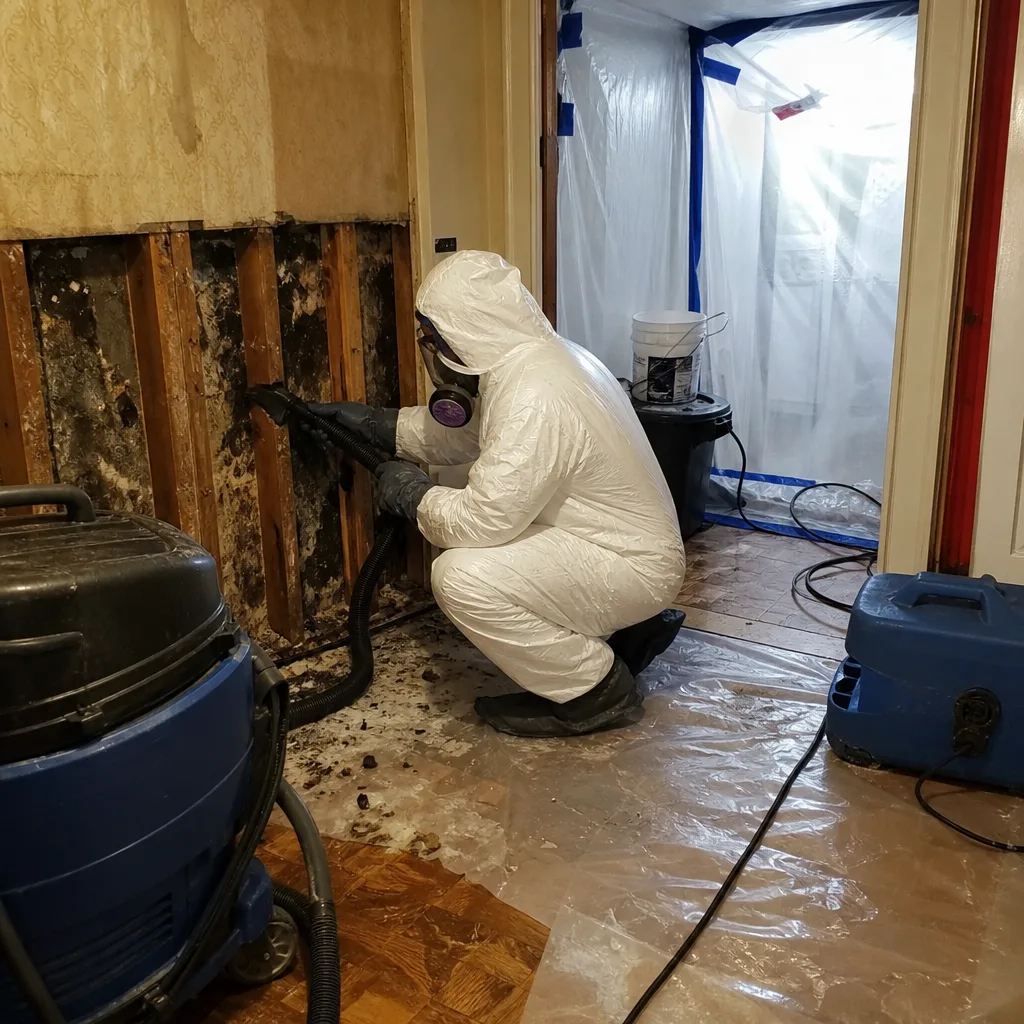
Flood Damage Restoration
When water rises in below-grade units or stormwater backs up through aging drains, we extract, dry, sanitize, and rebuild. The Palisades terrain sends runoff downhill fast, and basement apartments in the lower blocks near the river take the brunt. We deal with Category 2 and 3 water the right way, with containment and proper disposal.
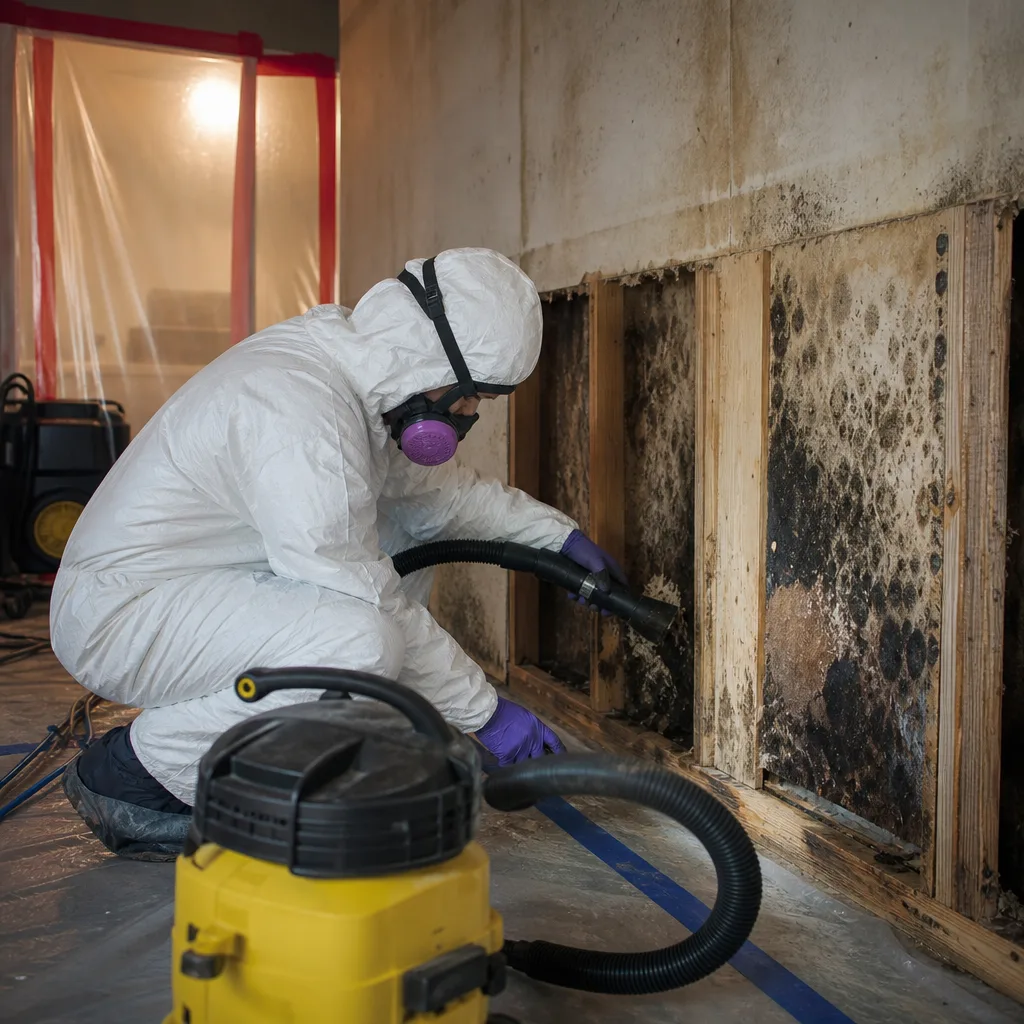
Emergency Board-Up
A storm-broken window or a door blown open leaves your unit exposed to weather, animals, and anyone walking by. We board up same-day with plywood cut to fit, and we do it in a way that doesn’t damage the original frames. If your building has landmark considerations, we work with what’s there.
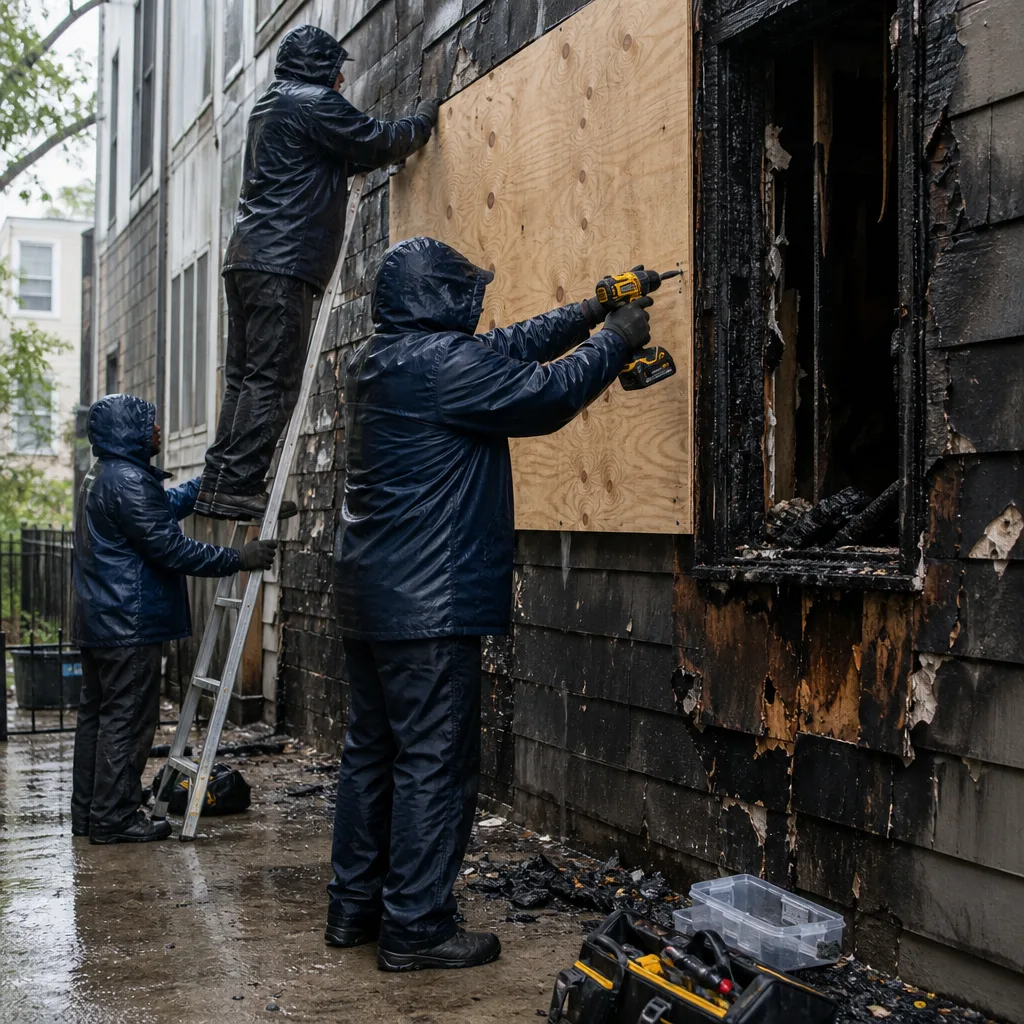
Roof Tarping
Flat roofs in West New York pond water, and once the membrane fails, every rain event adds to the damage. We tarp quickly with heavy-duty material secured against wind, buying you time to plan a permanent repair. Done right, a tarp stops the active leak so restoration can begin inside.
Debris Removal
Storm debris piled against a foundation traps moisture against below-grade walls. In West New York’s humid environment, that’s a mold problem waiting weeks to announce itself. We clear it, haul it, and check the wall behind it while we’re there.
What happens when you call
- 1
A real person answersNo phone trees - you reach a local pro.
- 2
You get an upfront price rangeHonest numbers before anyone is dispatched.
- 3
A background-checked tech heads outLicensed & insured, dispatched right away.
- 4
You approve before work beginsNothing starts until you say go.
Storm & Disaster Restoration Costs in West New York, NJ
In West New York, emergency board-up and tarping typically runs $400-$900 depending on the number of openings and roof access. Water extraction and drying for a single flooded apartment starts around $1,800-$3,500, but a multi-floor loss in a pre-war building can reach $8,000-$25,000 once you factor in containment, mold remediation, and rebuild across stacked units. Full storm restoration with roof repair and multiple apartment rebuilds in West New York commonly lands between $15,000 and $60,000, with insurance covering most or all of it when the cause is sudden and accidental. What moves the price: category of water, number of floors affected, whether asbestos or lead paint is present in pre-1950 materials, and how long the water sat before anyone called. The free visual inspection is the fastest way to get a firm scope in writing. Call (607) 703-3408 and we’ll tell you exactly what you’re looking at, no charge for the look.
We Also Serve Cities Near West New York
Our crews work throughout Hudson County, including Jersey City, Hoboken, Weehawken, and Union City. If you own property in any of these towns, the same live answer, the same 45-minute commitment, and the same written scope apply.
Serving West New York, NJ - Our Local Coverage Area
We’re based in the West New York area and know this community well. Use the map below to see our service coverage - if you’re nearby, we can almost certainly help.
West New York Storm & Disaster Restoration Questions, Answered
How do you handle a roof leak in a West New York flat-roof building that has already spread to multiple stacked apartments?
We map moisture across every affected floor first, not just where the stain shows. In a flat-roof pre-war building, water wicks through floor-ceiling assemblies and common chases, so we set up containment and drying on each floor, document everything for the landlord and each insurer, and restore pre-loss condition across all units. This is exactly the multi-unit, multi-carrier work we do routinely in West New York. Call (607) 703-3408 and Wade will walk you through it.
Do I need to evacuate my apartment during a mold remediation in a pre-war West New York building?
Usually not, but it depends on the containment setup and your health situation. We run negative air pressure and HEPA scrubbing inside sealed containment, so the living spaces outside it stay habitable. If the affected area includes your only bathroom or kitchen, or if you have respiratory issues, we’ll tell you honestly and work with your landlord on temporary arrangements.
What’s the fastest way to stop water from a storm-damaged roof in West New York with forecasted rain?
Call us. We tarp flat roofs same-day with heavy-duty material secured against wind, which stops the active leak so the inside can start drying. The faster the tarp goes on, the less water moves through the building. (607) 703-3408, live answer, any hour.
How do you know if water in my apartment is Category 1, 2, or 3, and why does it matter for restoration?
Category 1 is clean water from supply lines or fresh rain. Category 2 has been contaminated by building materials or sat long enough to breed bacteria. Category 3 contains sewage, storm surge, or other gross contamination. The category determines whether we dry in place or tear out and sanitize. In West New York’s older buildings, what looks like clean water often turns out to be Category 2 or 3 because it passed through 90-year-old assemblies on the way down.
Can you restore only my unit if my neighbor’s burst pipe flooded the shared wall in our West New York building?
We can, but the shared wall has to be dried from both sides or the moisture stays trapped. We’ll coordinate with your neighbor, your landlord, and both insurance carriers to get the wall opened, dried, and closed properly. It’s more coordination than a single-family house, but it’s what these buildings actually require.
How fast can someone actually get to West New York?
Our commitment is 45 minutes from your call to wheels rolling. West New York’s density means we’re never far. For active water, that matters. For roof damage with rain coming, it matters more.
Will my insurance cover storm restoration in a West New York apartment building?
Most storm-related water and wind damage is covered when the cause is sudden and accidental, which storm damage is by definition. The complication in West New York is multi-unit losses with multiple carriers. We document everything your insurer needs and speak directly with adjusters so the claim moves without you as the go-between.
What should I do in the first 30 minutes after I notice storm damage in my West New York apartment?
If it’s safe, shut off water at the fixture or the building valve if you can access it. Move valuables out of the water path. Photograph everything. Then call (607) 703-3408. Don’t wait to see if it stops. In these buildings, it never just stops.
Written by Wade Ferris, Owner at Wade’s Restoration, serving West New York and Hudson County since 2007.