
Quick Summary
Water damage restoration costs typically range from $1,500 to over $12,000, driven by water contamination categories, drying times, and complex vertical migration in multi-story buildings. Wade's Restoration demystifies project pricing and eliminates out-of-pocket friction through rapid full-service mitigation, upfront Xactimate estimates, and direct insurance carrier billing. Property owners will understand key pricing variables and can contact Wade's Restoration's 24/7 live dispatch team to request a free visual inspection and detailed written quote.
Water Damage Restoration Cost: Clear Pricing and Fast Fixes
Water damage restoration costs typically range from $1,500 to over $12,000, depending on the volume of water, contamination level, and how deeply moisture has entered the structure. In simple terms, basic clean-water extraction in a single room might cost between $3.50 and $5.00 per square foot, while complex multi-level drying with structural repairs can climb between $7.00 and $18.00 per square foot. When a pipe splits or a riser overflows in Midtown West, property owners face a race against the clock. Every hour water sits, it wicks into subflooring, creeps up horsehair plaster, and seeps into electrical conduits. Dealing with automated call centers or uncertified handymen only burns valuable time while damage multiplies.
As a field specialist who manages structural drying in historic pre-war walk-ups and modern Hudson Yards high-rises, I build our protocols around speed, precision, and honest pricing. Wade’s Restoration handles every phase directly, from initial thermal imaging and rapid water extraction to final structural rebuilds. Through our Claim Clarity Program, you receive a free visual inspection, an itemized Xactimate estimate, and direct insurance billing. Contact our 24/7 live dispatch team for an immediate on-site response.
What Is the Real Water Damage Restoration Cost?
Quick Answer: The national average cost for water damage restoration falls between $2,500 and $5,500 for standard residential claims. However, in urban environments with multi-story buildings, costs scale based on water classification (clean, gray, or black), total drying time, accessibility, and vertical migration across shared walls.
National Averages vs. Urban Realities
Generic online cost calculators usually assume a single-family ranch home on a concrete slab. They fail completely in dense urban environments. In a Midtown West building, water does not stay confined to a single room. Gravity pulls it through concrete decks, multi-layered subfloors, and shared utility chases into apartments or commercial spaces below. What starts as a simple $2,000 plumbing leak on the fifth floor can quickly become a $25,000 multi-unit commercial restoration if water penetrates lower ceilings and electrical lines.
The Direct Cost Breakdown by Project Scope
Your actual price depends heavily on the stage of mitigation and the extent of structural repairs required:
| Project Scope | Average Cost Range | Key Structural Drivers |
|---|---|---|
| Isolated Surface Extraction (Clean Water) | $1,200 – $3,000 | Standing water removal, industrial air movers, dehumidifiers |
| Multi-Room / Contaminated Cleanup | $3,500 – $8,500 | Cavity drying, baseboard removal, antimicrobial sanitization |
| Structural Demolition & Rebuild | $7,000 – $20,000+ | Plaster/drywall replacement, multi-level subfloor repair, cabinetry rebuild |
Wade’s Restoration provides an upfront visual inspection and a line-item estimate before any work starts, protecting you from unexpected fees or surprise add-ons.
Emergency Water Damage Restoration: Fast Mitigation Saves Costs
Emergency mitigation stops water from traveling horizontally across floors and vertically into structural framing. Acting quickly within the first 24 to 48 hours keeps salvageable hardwoods from permanent buckling and protects plaster walls from collapsing, which can reduce total repair bills by up to 50 percent.
The Critical 24-Hour Drying Window
Building materials begin absorbing moisture immediately upon contact. Drywall softens, wood framing expands, and relative humidity inside the room spikes above 70 percent. Running high-volume extraction units and commercial desiccant dehumidifiers within the first day stabilizes the environment, preventing wood rot, structural swelling, and secondary microbial activity.
Preventing Secondary Structural Failure
When trapped moisture sits inside enclosed wall cavities, the weight can pull down ceilings and rot load-bearing floor joists. Unchecked moisture also corrodes metal conduit and damages electrical wiring behind the walls. Fast containment protects the underlying structure and saves thousands of dollars in major reconstruction. Our local technicians mobilize 24/7 across Midtown West to secure your property immediately.
Flood Damage Restoration: Handling Major Ground and Storm Ingress
Flood damage from storm surges or street runoff is classified as Category 3 (black water) because it brings mud, chemicals, and biological contaminants directly into the structure. Remediating flood damage requires heavy pumping, safe removal of porous materials, and thorough biocidal washdowns before structural drying can begin.
Sub-Grade and Garden-Level Moisture Control
Garden-level apartments, basements, and street-front retail spaces face severe risks during heavy Manhattan rainstorms. Water pushes through masonry foundations, building doorways, and drains. Wade’s Restoration uses moisture meters and thermal cameras behind foundation walls to map hidden moisture paths in brick and stone, making sure concrete is dry before new walls are installed.
Industrial Water Pumping and Containment
Controlling total flood cleanup costs requires a strict step-by-step procedure:
- Rapid Bulk Extraction: Pumping standing water out using truck-mounted units and submersible pumps.
- Controlled Demolition: Cutting away soaked drywall and insulation up to 12 inches above the high-water line.
- Antimicrobial Decontamination: Treating masonry, framing, and studs with EPA-registered disinfectants.
- Deep Industrial Drying: Setting up low-grain refrigerant (LGR) or desiccant dehumidifiers to draw bound moisture out of porous brick and concrete.
Mold Remediation: Eliminating Fungal Colonization at the Root
Need water damage restoration cost?
We’re available now - call for a fast, free estimate.
When water sits inside warm wall cavities for more than 48 hours, mold spores begin colonizing drywall paper, wood lath, and insulation. Mold remediation costs typically range from $1,500 for small, isolated patches to over $6,000 for widespread remediation behind multiple walls. Stopping growth requires physical containment and negative air pressure to keep spores from escaping into clean living areas.
Negative Pressure and Containment Barriers
In shared apartment buildings, mold spores travel easily through ventilation ducts, electrical chases, and floor seams. Our technicians build heavy plastic containment barriers and install HEPA-filtered air scrubbers that maintain continuous negative air pressure. This setup pulls dirty air inward and vents filtered air outside, preventing cross-contamination in neighboring units or common hallways.
Safe Spore Removal and Clearance Testing
Remediating mold requires a careful, methodical process:
- Selective Demolition: Bagging and removing unsalvageable drywall, porous trim, and saturated insulation under negative air pressure.
- Framing Remediation: HEPA vacuuming, detailed hand-sanding of exposed wood studs, and applying botanical antimicrobial treatments.
- Air Quality Testing: Coordinating with independent, third-party indoor air quality specialists to verify that spore counts have returned to normal baseline levels before repairs begin.
Sewage Cleanup: Decontaminating Biohazard and Category 3 Backups
Sewage backups are urgent health hazards requiring strict biohazard safety measures. Waste water carries dangerous bacteria, viruses, and parasites into structural materials. Costs for sewage cleanup generally range from $7.00 to $15.00 per square foot due to the safety equipment, specialized disposal, and rigorous sanitization required.
Sanitization and Hazardous Pathogen Removal
When a main drain line backs up, contaminated water saturates subflooring, baseboards, and wall framing. Cleaning sewage is not just about drying out the space; it demands hospital-grade sanitization. Wade’s Restoration uses licensed crews in full personal protective gear to remove biohazards and treat every exposed hard surface with heavy biocidal washes.
Safe Disposal of Non-Salvageable Porous Materials
Porous items that come into contact with sewage cannot be saved safely:
- Carpet, carpet padding, drywall, and fiberglass insulation are sealed into heavy bags and removed for regulated disposal.
- Hard surfaces like tile, concrete, and framing lumber are scrubbed, disinfected, and rinsed multiple times.
- High-capacity air scrubbers run continuously to clean airborne particles while drying fans pull remaining moisture out of the framing.
Fire and Smoke Damage Restoration: Managing Corrosive Soot and Water Loss
Property fires present a double threat: corrosive, acidic soot deposits coupled with thousands of gallons of water from firefighting efforts. Handling both hazards requires coordinated water extraction and soot removal at the same time to prevent surfaces from etching and wood framing from rotting.
Dual-Hazard Mitigation: Extinguishment Water and Acidic Soot
Water used to put out a fire absorbs soot, acids, and debris as it flows down through floors, ceilings, and service shafts. If soot-laden water sits, the acidic mixture discolors porcelain, corrodes metal fixtures, and deeply stains hardwood. Extracting the water quickly while neutralizing soot keeps structural repair bills from escalating.
Thermal Deodorization and Structural Stabilization
Coordinated recovery follows three clear steps:
- Heavy extraction: Removing standing water from floors, elevator pits, and utility rooms immediately.
- Soot neutralization: Applying specialized chemical sponges and degreasers to stop acids from eating into tile, metal, and finishes.
- Thermal fogging and drying: Running desiccant systems to dry damp framing while using hydroxyl or thermal fogging units to eliminate embedded smoke odors.
The Hidden Multiplier: Why Vertical Water Migration Alters Urban Restoration Costs
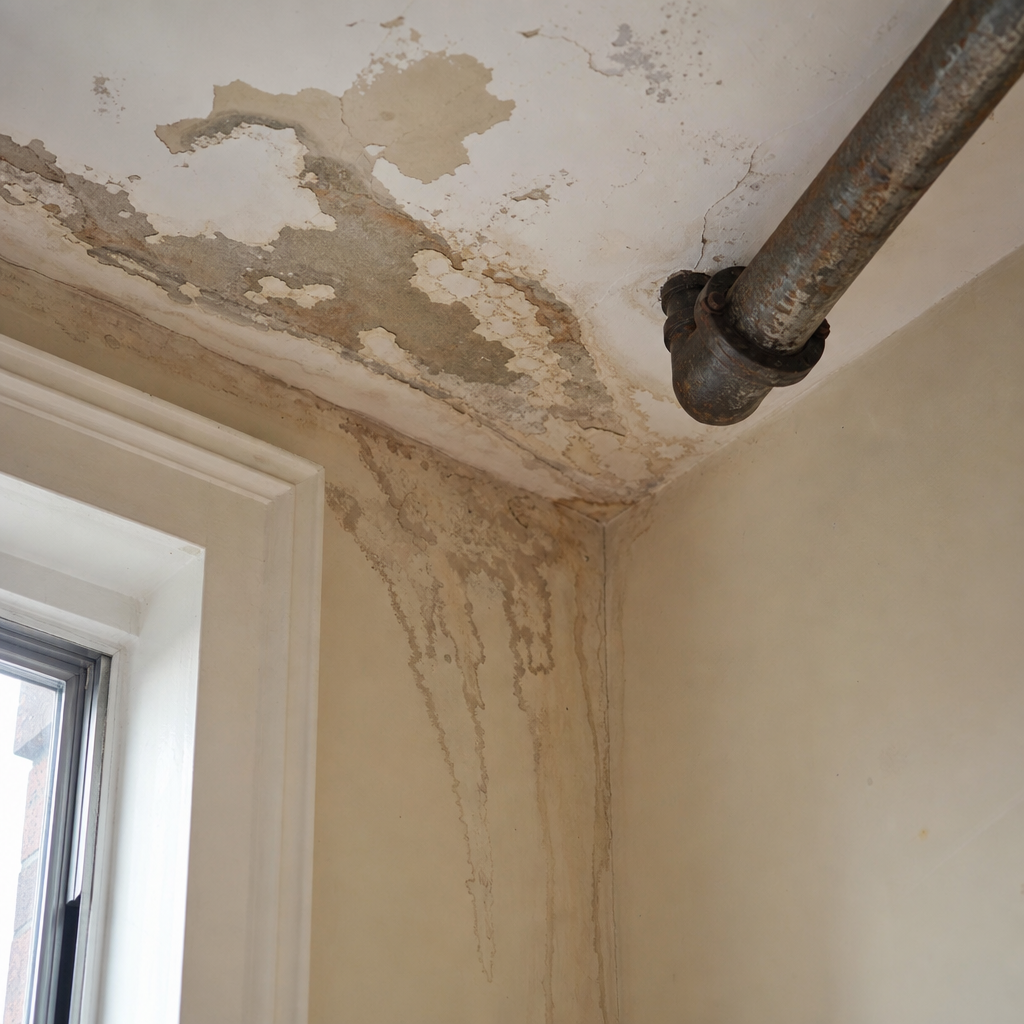
The single biggest reason online water restoration calculators fail in New York City is vertical water migration. In single-family homes, water expands outward across one level. In urban multi-story properties, gravity pulls water downward through the building envelope, turning a small localized leak into a multi-floor emergency.
Gravity-Driven Losses in Multi-Story Buildings
When a washing machine supply line or hot-water riser bursts on the twelfth floor, water searches for the path of least resistance. It pours into electrical conduits, follows structural steel beams, runs down plumbing chases, and pools on drop ceilings below. By the time a crew arrives, four or five individual units may be soaked, multiplying extraction, drying equipment, and structural repair requirements.
Shared Wall Cavities, Elevator Shafts, and Subfloors
Both pre-war brownstones and modern glass towers have concealed cavities that trap moisture. Pre-war construction features heavy plaster, terra-cotta blocks, and multiple layers of subflooring that hold moisture for weeks if left untreated. Modern towers feature complex fire-rated drywall assemblies and shared acoustic insulation that wick water horizontally and vertically. Wade’s Restoration uses non-invasive thermal imaging cameras and penetrating moisture meters to trace every drop of water through building chases, ensuring nothing is missed while avoiding unnecessary demolition.
Specific Water Scenarios: Burst Pipes, Roof Ingress, and Basement Floods
The source of the water dictates the category of loss, the equipment required, and the final cost of the restoration project.
Frozen and Burst Supply Lines
Pressurized water lines can release hundreds of gallons per hour. Because this water is clean (Category 1) at the moment of release, rapid extraction can save hardwood floors, baseboards, and lower drywall if caught within the first day.
Roof Ingress and Building Envelope Failures
Failed roof flashing, clogged terrace drains, or leaking parapet walls allow rainwater to enter exterior masonry. This water travels down inside wall cavities behind plaster and insulation, often remaining hidden until peeling paint or warped baseboards appear on lower floors.
Basement Sump and Foundation Seepage
High water tables and failed sump pumps flood sub-grade basements and utility rooms. Because this water enters from the ground, it is treated as gray or black water, requiring water extraction, power-washing of concrete slabs, and industrial dehumidification to protect stored goods and structural footings.
Parts and Components We Repair and Reconstruct
Need water damage restoration cost?
We’re available now - call for a fast, free estimate.
Wade’s Restoration provides end-to-end mitigation and reconstruction under one roof. Managing both dry-out and structural carpentry in-house eliminates the scheduling delays and markups that happen when you hire separate contractors.
Drywall, Plaster, and Ceiling Assemblies
We use precision flood cuts (cutting drywall 12 to 24 inches above the waterline) to open wet wall cavities for drying while preserving the rest of the wall. In pre-war properties, we stabilize and repair historic plaster wherever possible to protect original architectural character.
Hardwood Flooring, Laminates, and Subflooring Joists
Tearing out hardwood is expensive. We deploy specialized vacuum drying mats that pull moisture directly out of oak boards and subfloor joists. If wood is dried quickly, cupping and crowning can often be reversed without tearing out the floor.
Custom Cabinetry, Insulation, and HVAC Air Ducts
Wet insulation loses its thermal rating and must be replaced. We remove saturated fiberglass, clean ductwork to stop spore circulation, and use directed cavity dryers behind custom vanities and kitchen cabinetry to save expensive millwork.
Understanding Water Damage Restoration Factors
The total cost of your project depends on three core elements: the purity of the water, how long it has been sitting, and how much structural reconstruction is necessary.
Detailed Service Category Overview
| Service Item | Category 1 (Clean) | Category 2 (Gray) | Category 3 (Black) |
|---|---|---|---|
| Visual Assessment | Free / $0 upfront | Free / $0 upfront | Free / $0 upfront |
| Water Extraction | Standard suction extraction | Targeted cavity extraction | Biohazard containment extraction |
| Structural Air & Heat Drying | Air movers & dehumidifiers | Cavity & subfloor drying | High-temperature structural drying |
| Antimicrobial Sanitization | Spot treatment | Full surface application | Hospital-grade biocidal scrub |
| Material Disposal | Minimal (mostly saved) | Padding & soft goods removed | All saturated porous materials removed |
Key Factors That Drive Your Final Estimate
Delays are the primary driver of high restoration bills. A clean water leak left alone for three days degrades into a gray or black water problem as bacteria multiply. Structural access also plays a major role: tight pre-war pipe chases and tall commercial ceilings require specialized equipment and extra labor. Our technicians provide an itemized written estimate using standard Xactimate pricing before starting any work, so you know exactly what to expect.
Insurance Coverage and the Claim Clarity Process
Most commercial property and standard homeowners insurance policies cover sudden and accidental water damage, such as a burst pipe or water heater failure. However, gradual leaks, maintenance neglect, and surface flooding from outside storms typically require specific endorsements or separate flood policies. Wade’s Restoration simplifies the claims process by documenting every step for your insurance adjuster.
Does Homeowners or Commercial Property Insurance Cover Restoration?
If a pipe bursts suddenly, insurance generally covers both emergency mitigation and structural repairs minus your deductible. If a sewer backs up, coverage depends on whether you have a water backup rider on your policy. Street flooding is only covered through dedicated flood insurance.
Daily Moisture Logs and Xactimate Line-Item Documentation
Insurance adjusters often push back on vague, flat-rate contractor invoices. Our Claim Clarity Program protects your payout by providing the detailed proof carriers require:
- Initial Scope Verification: We perform a free visual inspection and create a detailed line-item estimate using Xactimate, the pricing software insurance carriers use.
- Daily Moisture Tracking: Our team logs atmospheric readings, psychrometric charts, and thermal photos every 24 hours to prove the drying progress and justify equipment run times.
- Direct Carrier Billing: We submit our complete documentation package directly to your insurance company, coordinating with the adjuster so you are not stuck in the middle.
Midtown West Service Coverage and Surrounding Neighborhoods
Wade’s Restoration provides 24/7 emergency response across Midtown West and neighboring Manhattan areas. Our local teams understand building access requirements, freight elevator rules, and co-op board standards, allowing us to start work immediately without administrative delays.
Rapid Dispatch in Hell’s Kitchen, Hudson Yards, and Chelsea
Because our response vehicles are staged locally, we navigate Midtown traffic fast to contain water before it spreads between units. Arriving on-site within the hour significantly cuts commercial water damage and keeps repair bills manageable.
Commercial and Residential Multi-Unit Capabilities
From pre-war walk-ups to 60-story commercial towers, we work directly with building superintendents, managing agents, and board members. We set up quiet drying equipment and maintain clean containment barriers, minimizing disruption for tenants and neighboring properties.
Frequently Asked Questions About Water Damage Restoration
Understanding pricing, insurance rules, and restoration steps helps you make informed decisions during an emergency. Here are answers to common questions about water damage repair in multi-unit and urban properties.
Cost and Response Time Inquiries
How much does water damage restoration typically cost per square foot?
Clean water mitigation usually runs between $3.50 and $5.00 per square foot. Contaminated gray or black water cleanup requiring material tear-out and antimicrobial sanitization ranges from $7.00 to $18.00 per square foot. Complex structural repairs or historic plaster restoration can run higher depending on finishes.
How can property owners reduce overall restoration costs?
Shut off the main water valve immediately, turn off electricity to affected rooms, and call an emergency mitigation team right away. Getting extraction and drying equipment running within the first 24 hours prevents mold growth and allows hardwood floors and framing to be saved instead of torn out.
What is the cost difference between clean water, gray water, and black water restoration?
Clean water (Category 1) requires extraction and drying without extensive demolition. Gray water (Category 2) requires the removal of carpet padding and antimicrobial washing. Black water (Category 3) requires full personal protective equipment, the removal of all saturated drywall and porous items, and hospital-grade decontamination, making it the most labor-intensive and expensive category.
Insurance and Licensing Details
Does homeowners insurance cover the cost of water damage restoration?
Yes, standard policies cover sudden and accidental plumbing breaks, burst pipes, and appliance failures. They do not cover slow, ongoing leaks or rising outdoor floodwaters unless you have separate flood insurance or sewer backup endorsements.
Will Wade’s Restoration bill my insurance carrier directly?
Yes. Through our Claim Clarity Program, we generate standard Xactimate estimates, compile daily moisture logs, and submit the entire file directly to your insurance adjuster to secure payment without out-of-pocket stress for you.
Need water damage restoration cost?
We’re available now - call for a fast, free estimate.
Frequently Asked Questions
How long does the structural drying process take before reconstruction can begin?
Complete industrial structural drying typically takes between 3 and 5 days, depending on the building materials and contamination level. Wade's Restoration monitors drying progress with daily moisture readings and thermal imaging, ensuring framing is completely stabilized before our team begins structural repairs.
How does Wade's Restoration prevent pricing disputes with insurance adjusters?
We use Xactimate, the standard pricing platform required by insurance carriers, to prepare transparent, itemized line-item estimates. Through our Claim Clarity Program, Wade's Restoration submits daily moisture logs and psychrometric data directly to your adjuster to justify all equipment runtime and eliminate out-of-pocket payment friction.
What upfront out-of-pocket expenses should property owners expect during an emergency?
Wade's Restoration provides a free visual inspection and an upfront written quote before mitigation work begins. When filing an insurance claim, we bill your carrier directly for covered restoration work, meaning property owners are generally responsible only for their policy deductible.
About the author
 |
Marcus Avery Marcus Avery is an IICRC-certified restoration specialist with over 12 years of experience in structural drying and water damage mitigation. Holding a B.S. in Construction Management from the Wentworth Institute of Technology, he frequently consults with property management firms in the tri-state area on emergency response planning. Marcus specializes in helping Midtown West property owners navigate complex water damage scenarios and detailed restoration cost analysis. |
Water damage, flood, or mold emergency?
We’re available now - call for a fast, free estimate.
Call Now - Free Estimate