
Quick Summary
Following indoor water damage, microscopic mold spores can germinate in as little as 24 to 48 hours, rapidly colonizing organic building materials and spreading behind enclosed walls. Wade's Restoration highlights that executing rapid physical water extraction and industrial dehumidification within this critical window is essential to stop active fungal growth before costly remediation becomes necessary. Readers will understand the standard mold development timeline, recognize the warning signs of concealed structural moisture, and know how to mobilize emergency mitigation to protect their property.
How Fast Does Mold Grow After Water Damage: Stop It
Mold spores typically begin to germinate within 24 to 48 hours of moisture exposure. When water enters enclosed cavities or subfloors, trapped moisture creates conditions for fungal spores to colonize organic building materials if not addressed promptly.
Stopping that growth requires immediate physical water extraction and structural drying before spores spread into shared ventilation or living spaces. At Wade’s Restoration, our IICRC-certified crews maintain a 24/7 rapid response across Midtown West, containing active water emergencies and setting up industrial drying equipment before hidden colonies establish a foothold.
How Fast Does Mold Grow After Water Damage?
Quick Answer: Mold can begin growing within 24 to 48 hours after water damage if materials are not dried quickly, according to guidance from federal agencies like the EPA, CDC, and FEMA. If materials are completely dried within 24 to 48 hours, mold will not take hold in most situations.[2]
Mold spores exist naturally in indoor and outdoor air at low levels. They remain harmless until they find three things: moisture, an organic food source (like drywall paper, wood framing, or carpet backing), and warm, stagnant air. Once clean or contaminated water saturates these materials, the clock starts immediately.
If water is completely extracted and structural assemblies reach their dry standard within that initial 24- to 48-hour window, active fungal colonization stops before it starts. If building materials remain damp beyond 48 hours, the CDC advises restoration professionals and property owners to assume active microbial growth is already present, even if it is not yet visible on the surface.[1]
The Standard 24 to 48 Hour Timeline
The following growth progression is an illustrative timeline of how mold may develop under typical indoor conditions:
- 0 to 24 Hours: Water migrates laterally and vertically through porous materials. Drywall wicks moisture upward, subfloors swell, and indoor relative humidity spikes. Spores absorb moisture and swell.
- 24 to 48 Hours: Spores germinate and produce microscopic thread-like structures called hyphae. These hyphae penetrate porous substrates to feed on cellulose.
- 48 to 72 Hours: Hyphae develop into visible colonies. Fungal growth begins releasing new airborne spores and microbial volatile organic compounds (MVOCs), producing a distinct musty odor.
- 3 to 7 Days: Colonies expand significantly, compromising drywall integrity, rotting structural timber, and releasing spores into building airflow.
Why Enclosed Architecture Accelerates Mold Risk
Drying timelines can vary based on airflow and containment. As noted by Wade’s Restoration, in tightly enclosed structural assemblies with limited natural ventilation, trapped moisture and warmth can accelerate fungal growth if damp materials are left unmitigated.
Emergency Water Damage Restoration
Emergency water mitigation stops active moisture migration before microbial growth ruins building assemblies. Removing standing water with high-volume extractors and applying industrial dehumidification pulls bound moisture from walls before spores take root.
Rapid Extraction and Thermal Moisture Mapping
Surface dampness is only a fraction of the problem. Water travels down utility lines, pools on concrete slabs, and hides behind baseboards. Professional mitigation starts with non-invasive thermal imaging cameras and pinless moisture meters to map the exact perimeter of moisture migration behind walls and under floors without unnecessary demolition.
Industrial Structural Drying Protocols
Preventing secondary damage and toxic mold outbreaks requires a disciplined, multi-step drying process:
- Physical Extraction: Truck-mounted and portable extraction units remove standing water from floors and carpets, which dries materials hundreds of times faster than air movement alone.
- Evaporation and Air Movement: High-velocity commercial air movers are positioned along walls to drive moisture out of structural materials and into the air.
- Low-Grain Refrigerant (LGR) Dehumidification: Industrial dehumidifiers pull moisture out of the air, creating super-dry air that constantly draws remaining moisture from deep inside framing and masonry.
- Daily Moisture Logging: Technicians monitor relative humidity, temperature, and material moisture levels daily to verify progress and meet insurance carrier requirements.
Flood Damage Restoration
Flooding from heavy rains, storm runoff, or municipal main breaks introduces contaminated water that accelerates fungal and bacterial growth. Street water carries silt, chemicals, and biological contaminants deep into flooring systems and porous masonry.
Category 2 and Category 3 Water Management
Water damage is classified by its source and contamination level:
- Category 1 (Clean Water): Supply lines, sink overflows, or melting ice. If left unaddressed for over 48 hours, it degrades into Category 2 or 3.
- Category 2 (Gray Water): Dishwasher discharges, washing machine overflows, or sump pump failures containing biological or chemical contaminants.
- Category 3 (Black Water): Sewage backups, river/street flooding, or standing water that has supported microbial growth. Category 3 water poses immediate health risks and requires full personal protective equipment (PPE) and strict containment.
Deep Sanitization and Subfloor Salvage
Porous items saturated with Category 3 floodwater (such as carpet padding, fiberglass insulation, and saturated drywall) cannot be safely cleaned and must be removed. Solid wood framing, structural concrete, and masonry can often be salvaged using a focused protocol:
- Debris and Silt Removal: Physical extraction of contaminated water, sediment, and unsalvageable porous items.
- Antimicrobial Application: Treating salvageable subflooring and framing with EPA-registered botanical or quaternary ammonium biocides to neutralize active pathogens and inhibit mold growth.
- Targeted Structural Dehydration: Running commercial desiccant or LGR dehumidifiers to pull moisture out of dense hardwood joists and concrete subfloors.
Mold Remediation
When water sits undiscovered or mitigation is delayed, mold remediation becomes necessary. Remediation is not simply spraying bleach on a surface; bleach leaves behind moisture that feeds deeper mold roots. Proper remediation isolates the area, filters airborne contaminants, and physically removes colonized materials under engineering controls.
Negative Pressure Containment and HEPA Scrubbing
Tearing down mold-damaged drywall without containment releases millions of spores into your air system, contaminating clean rooms and neighboring units. Professional remediation relies on physical isolation:
- Containment Barriers: Technicians seal doorways, HVAC registers, and plumbing chases using 6-mil polyethylene sheeting and zip poles.
- Negative Air Pressure: Commercial air scrubbers equipped with true HEPA filtration continuously exhaust air outside the containment zone. This creates negative pressure, ensuring air always pulls inward so spores cannot escape into living areas.
Safe Removal and Antimicrobial Sealing
Once containment is verified, technicians complete structural abatement:
- Removing damaged drywall, trim, and insulation under continuous HEPA-filtered vacuum capture.
- Wire-brushing and HEPA-vacuuming structural framing to remove embedded fungal roots (hyphae).
- Applying an EPA-registered antimicrobial encapsulant to seal exposed wood framing and prevent future spore germination.
Sewage Cleanup
Need how fast does mold grow after water damage?
We’re available now - call for a fast, free estimate.
Sewage backups from clogged sewer lines or overloaded municipal storm systems introduce dangerous pathogens, including E. coli, rotavirus, and parasites. The high organic nutrient content in raw sewage causes mold to grow much faster than it would after a clean water leak.
Black Water Biohazard Containment
Raw sewage requires immediate biohazard controls. Technicians set up containment zones with negative-pressure air filtration to prevent airborne bio-aerosols from moving into living areas. Saturated porous items like baseboards, carpet, and drywall are bagged in heavy-gauge biohazard disposal bags and removed from the property.
Hospital-Grade Disinfection and Odor Neutralization
After wastewater and damaged items are removed, all remaining non-porous and semi-porous structural elements are hand-scrubbed with hospital-grade disinfectants. Odor molecules trapped in building materials are neutralized using professional hydroxyl generators, which break down volatile compounds at the molecular level without damaging finishes.
Fire and Smoke Damage Restoration
Extinguishing a structure fire often requires hundreds or thousands of gallons of water. This leaves properties facing two simultaneous emergencies: acidic soot settling on surfaces, and high volumes of standing water trapped in hot, unventilated cavities.
Corrosive Soot Removal and Surface Decontamination
When water mixes with acidic soot, it forms a corrosive paste that etches metal, tarnishes fixtures, and stains stone within hours. Technicians must clean soot residues quickly while drying building materials to prevent secondary mold growth inside warm, water-soaked cavities.[3]
Thermal Fogging and Hydroxyl Air Purification
Smoke odors penetrate deep into building framing, insulation, and concrete. Restoration teams resolve these dual hazards through targeted steps:
- Water Extraction and Drying: High-capacity extraction units remove standing firefighting water to halt mold growth.
- Surface Soot Removal: Dry chemical sponges and alkaline cleaners strip greasy soot films from masonry, wood, and plaster.
- Hydroxyl and Thermal Fogging: Industrial hydroxyl generators run alongside drying systems to eliminate embedded smoke odors safely while crews work inside the space.
Burst and Frozen Pipes in Midtown West Buildings
During winter freezes, cold drafts entering exterior wall cavities or unheated mechanical rooms can freeze supply lines. When water freezes, it expands by roughly 9%, creating pressures over 2,000 PSI that split copper and iron pipes. When the thaw begins, pressurized water escapes rapidly into surrounding walls and ceilings.
High-Rise Riser Failures and Multi-Floor Cascades
In high-rise residential and commercial towers, a burst pipe on an upper floor can quickly cascade down utility chases, elevator shafts, and electrical pathways across dozens of floors. Stopping mold across multiple units requires fast water shutoffs, simultaneous extraction on every level, and coordinated containment to protect building operations.
Pre-War Brownstone Plumbing Vulnerabilities
In pre-war walk-ups and brownstones, aged cast iron and copper lines often run behind historic plaster walls and under thick tongue-and-groove hardwood floors. Ripping through original plaster creates massive reconstruction costs. Certified technicians use targeted cavity-drying injectidry systems, pumping heated, dry air directly into wall bays through small holes behind baseboards to dry structural studs without extensive demolition.
Basement Flooding and Ground-Level Water Ingress
Subterranean spaces, garden-level units, and commercial basements face constant moisture risks from heavy rain, high water tables, and sump pump failures. Because basements have limited natural ventilation, high humidity stays trapped, accelerating mold growth on drywall, studs, and storage items.
Hydrostatic Pressure and Sump Pump Failures
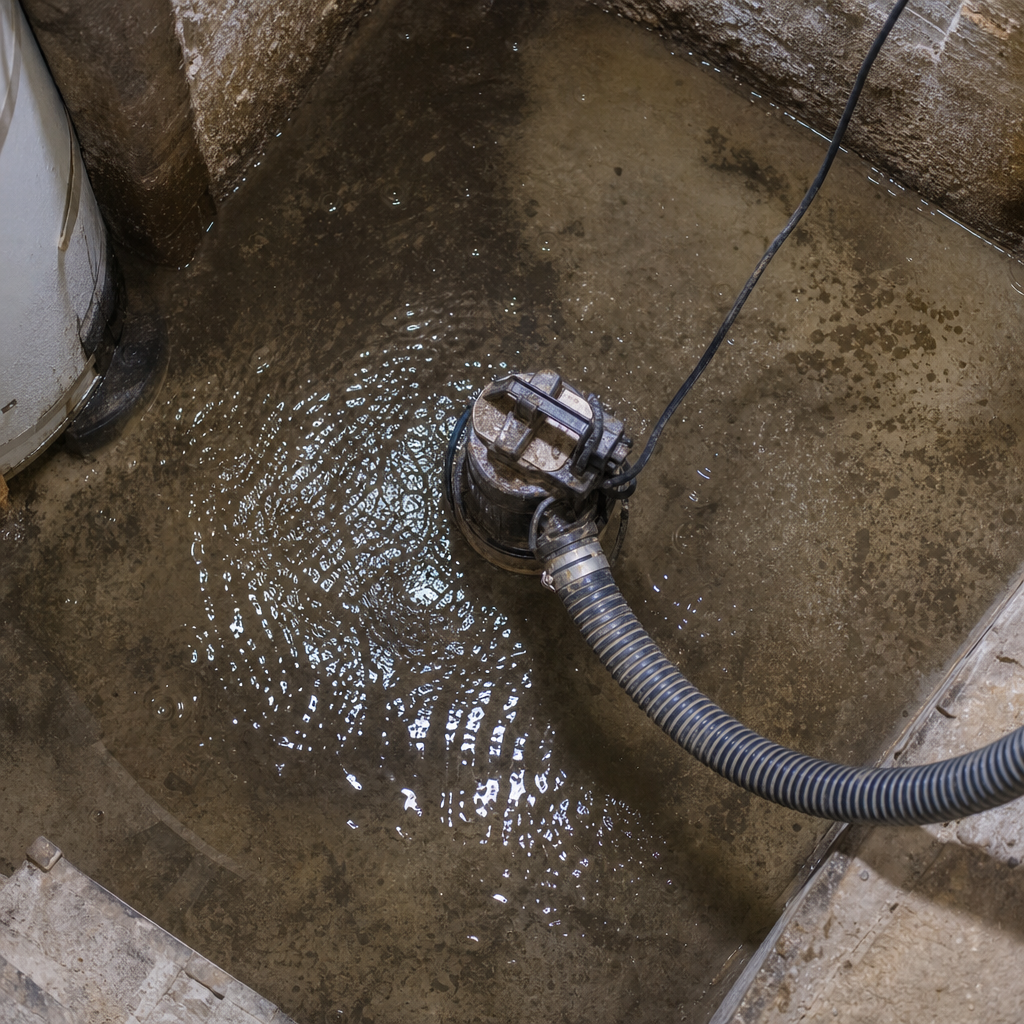
During severe rainstorms, soil around foundations becomes saturated. This creates hydrostatic pressure that forces groundwater through microscopic cracks in foundation walls and cold joints between floors and walls. When mechanical sump pumps fail or lose power, water can flood basements within minutes, threatening tenant storage and mechanical rooms.
Concrete Slab Decontamination and Moisture Barriers
Porous concrete acts like a hard sponge, soaking up water and slowly releasing it as vapor for weeks. Left unaddressed, damp concrete creates an ideal environment for mold under vinyl, laminate, and carpet. Restoration teams use high-capacity desiccant dehumidifiers to draw deep moisture out of the slab, sanitize exposed surfaces, and apply vapor barriers before new flooring is installed.
Roof Leaks and Severe Storm Damage
Damaged roof membranes, missing shingles, and cracked parapet flashing allow heavy rain to penetrate building envelopes. Water pools across flat roofs and ceiling assemblies, soaking insulation and drywall until ceilings collapse under the weight.
Flat-Roof Water Pooling and Ceiling Collapses
Water entering through a flat roof rarely travels straight down. It runs along joists, conduits, and concrete decks before accumulating above ceilings. Identifying hidden dampness with thermal imaging prevents ceiling collapses and stops mold from colonizing overhead fiberglass insulation and joists.
Emergency Tarping and Overhead Cavity Drying
Securing the building envelope protects structural assemblies from ongoing weather exposure:
- Emergency Tarping: Crews secure heavy-duty tarps over roof tears, damaged parapets, and broken skylights to stop incoming water.
- Controlled Drainage: Saturated drywall and pooled water are carefully relieved and removed to prevent uncontained collapses.
- Cavity Injection Drying: High-pressure drying systems force warm, dry air into wet ceiling bays, drying framing members in place.
Sewage Backups and Drain Line Overflows
Need how fast does mold grow after water damage?
We’re available now - call for a fast, free estimate.
Main drain stack clogs in multi-unit properties force waste up through lowest-level toilets, sinks, and floor drains. Because this water contains active bacteria, fungi, and organic nutrients, mold colonization can begin rapidly on saturated gypsum and subfloors.
Main Stack Clogs in Multi-Unit Properties
When vertical soil stacks back up in co-ops and condo buildings, waste lines quickly pressurize. Water travels behind bathroom and kitchen walls, saturating common utility chases. Containing these chases isolates biohazards and stops moisture before spores migrate into adjacent apartments.
Safe Waste Extraction and Sanitary Clearance
Restoring safe conditions requires strict biohazard steps following the IICRC S500 standard:
- Bulk Waste Removal: Sealed vacuum units extract raw sewage without spreading indoor airborne pathogens.
- Demolition of Contaminated Drywall: Wet drywall and insulation are cut out at least 12 to 24 inches above the water line.
- Antimicrobial Treatment: Technicians clean and treat framing with EPA-registered sanitizers, verifying safety with surface ATP swabs.
Mold After Water Damage: Hidden Spread Behind Walls
Mold rarely stays confined to visible surfaces. Following a pipe leak or flood, the heaviest growth usually occurs on the unpainted, paper-faced back of drywall inside dark, enclosed wall cavities. Property owners frequently see clean walls while massive colonies grow inches away behind baseboards.[4]
Signs of Concealed Mold Behind Baseboards and Drywall
Watch for these early warning signs of hidden moisture after a leak or flood:
- Musty, Earthy Odors: A persistent damp smell that grows stronger when HVAC systems run or when windows remain closed.
- Warping and Crowning: Baseboards pulling away from walls, baseboard bowing, or hardwood floor planks cupping along their edges.
- Discoloration or Bubbling: Peeling paint, bubbling wallpaper, or small yellow and brown water rings on walls or ceilings.
- Allergy Symptoms: Unexplained nasal congestion, eye irritation, coughing, or headaches that improve when leaving the building.
The Dangers of Delayed Remediation
Attempting to dry saturated walls using household fans often does more harm than good. High air speeds without dehumidification blow dry air across the surface while leaving inner framing wet. Worse, standard fans blow millions of fungal spores out of gaps and into living areas. Professional non-invasive moisture meters and thermal cameras confirm whether wall studs are truly dry without spreading contaminants.
Parts and Components We Repair
True restoration repairs every structural layer affected by moisture, from load-bearing timbers to final millwork. Addressing all saturated components prevents rot, structural weakness, and recurring fungal issues.
Structural Framing, Joists, and Subfloors
Trapped moisture softens wood framing, creating wood rot and fungal colonies. Restoration teams clean, dry, and reinforce floor joists, wall studs, and plywood subflooring, avoiding costly framing replacements whenever possible.
Drywall, Ceilings, and Custom Cabinetry
Porous gypsum board, historic plaster, and custom cabinetry absorb water quickly through capillary action. Technicians salvage semi-porous cabinetry using focused injection drying, or perform clean flood cuts to replace saturated drywall cleanly without disturbing undamaged upper walls.
Flooring, Carpeting, and HVAC Systems
Restoration covers hardwood floors, underlayments, and mechanical ducting. Cleaning air handlers and internal ductwork removes settled spores, preventing airborne contamination from circulating once the property is dried.
What Does Water Damage Restoration and Mold Remediation Cost?
Mitigation costs typically range from $1,500 for minor, clean-water extraction to $10,000 or more for major black water backups or structural mold remediation. Total pricing depends on the water category, total square footage, necessary containment barriers, and how quickly drying begins.
Estimated Cost Ranges by Loss Category
| Loss Type | Estimated Cost Range | Containment Required | Average Drying Time |
|---|---|---|---|
| Clean Water (Category 1) Supply line break, sink overflow |
$1,500 – $3,500 | None to minimal | 2 to 3 days |
| Gray Water (Category 2) Appliance overflow, sump failure |
$2,500 – $6,000 | Targeted containment | 3 to 5 days |
| Black Water / Mold (Category 3) Sewage backup, river flood, active mold |
$4,500 – $12,000+ | Full HEPA negative pressure | 5 to 7+ days |
Insurance Billing and Scope Documentation
Most commercial property and homeowners insurance policies cover sudden and accidental water damage, but many limit or exclude coverage for mold resulting from neglected, long-term leaks. Fast action and detailed documentation protect your claim. Wade’s Restoration writes estimates using industry-standard Xactimate pricing, providing your insurance adjuster with daily moisture logs, thermal images, and psychrometric charts to support claim approval without unnecessary disputes.
Frequently Asked Questions About Water Damage and Mold
How quickly can mold start growing after a leak or flood?
Mold spores typically begin growing within 24 to 48 hours after water damage if materials are not dried quickly. In enclosed, warm, or unventilated areas, fungal growth can establish rapidly if moisture remains present.[5]
Can mold grow behind drywall without showing on the front surface?
Yes. The unpainted paper backing inside a wall cavity provides an ideal food source for mold. Moisture trapped behind baseboards or inside insulation often supports substantial mold colonies long before dark spots or water rings appear on painted room surfaces.
Can I clean up mold myself using household bleach?
Bleach is ineffective on porous surfaces like drywall, wood framing, and grout. The chlorine in bleach stays on the surface while its water content penetrates porous materials, feeding the mold roots (hyphae) beneath. Proper removal requires HEPA-filtered vacuuming, physical removal of unsalvageable materials, and EPA-registered antimicrobial treatments under negative air containment.
How do I know when water-damaged walls are completely dry?
Walls are dry only when moisture meter readings match predetermined dry standards for unaffected materials in your building. Touching the wall or checking surface coolness is not reliable, as framing and insulation often stay damp long after outer drywall feels dry.
Does home or commercial insurance cover mold remediation?
Insurance generally covers mold remediation if it results directly from a sudden, covered water event, like a burst pipe or water heater failure, provided mitigation began promptly. Claims are often denied if damage is caused by ongoing, unaddressed leaks or chronic high humidity.
Need how fast does mold grow after water damage?
We’re available now - call for a fast, free estimate.
Sources
- A Brief Guide to Mold, Moisture and Your Home | US EPA – epa.gov
- Dry Off Wet Items After a Storm | Natural Disasters | CDC – cdc.gov
- [PDF] A Brief Guide to Mold, Moisture, and Your Home … – EPA – epa.gov
- Dealing With – fema.gov
- Mold | Environmental Health and Safety | University of Illinois Chicago – ehso.uic.edu
Frequently Asked Questions
Can running regular household fans prevent mold from growing after water damage?
No, standard residential fans only dry surface materials while leaving trapped moisture inside wall cavities, which can inadvertently blow active fungal spores across living spaces. Preventing mold requires balanced industrial dehumidification and high-velocity air movement deployed by professionals like Wade's Restoration to draw deep structural moisture out safely.
What should property owners do if water damage has been sitting for more than 48 hours?
Once water remains unaddressed past 48 hours, active fungal colonization must be assumed even if no visible colonies appear. You should contact Wade's Restoration immediately to set up negative-pressure HEPA containment, preventing airborne spore migration while contaminated porous materials are safely evaluated and removed.
How do restoration technicians confirm hidden wall framing is fully dry without demolition?
Technicians use non-invasive thermal imaging cameras and calibrated moisture meters to measure internal moisture levels against predetermined dry standards. These readings verify that internal studs, insulation, and subfloors are completely dry before equipment is removed, eliminating the conditions required for concealed mold growth.
About the author
 |
Marcus Avery Marcus Avery is an IICRC-certified restoration specialist with over 12 years of experience in structural drying and water damage mitigation. Holding a B.S. in Construction Management from the Wentworth Institute of Technology, he frequently consults with property management firms in the tri-state area on emergency response planning. Marcus specializes in helping Midtown West property owners navigate complex water damage scenarios and detailed restoration cost analysis. |
Water damage, flood, or mold emergency?
We’re available now - call for a fast, free estimate.
Call Now - Free Estimate