
Free visual inspection and a written scope of work before any mitigation begins - photos, moisture readings, and drying logs go in your claim file
The scope we write is the scope we bill. Anything new gets shown to you, in writing, before we touch it.
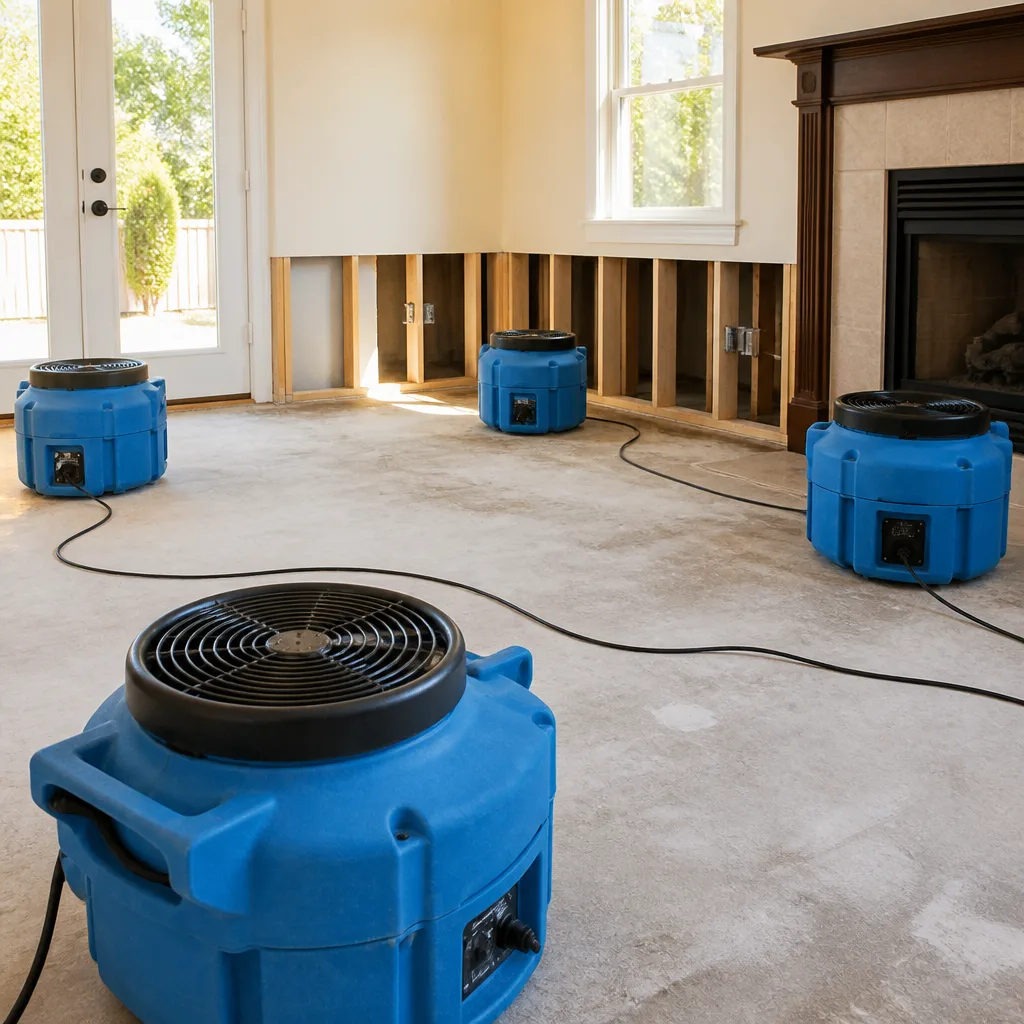
 Before
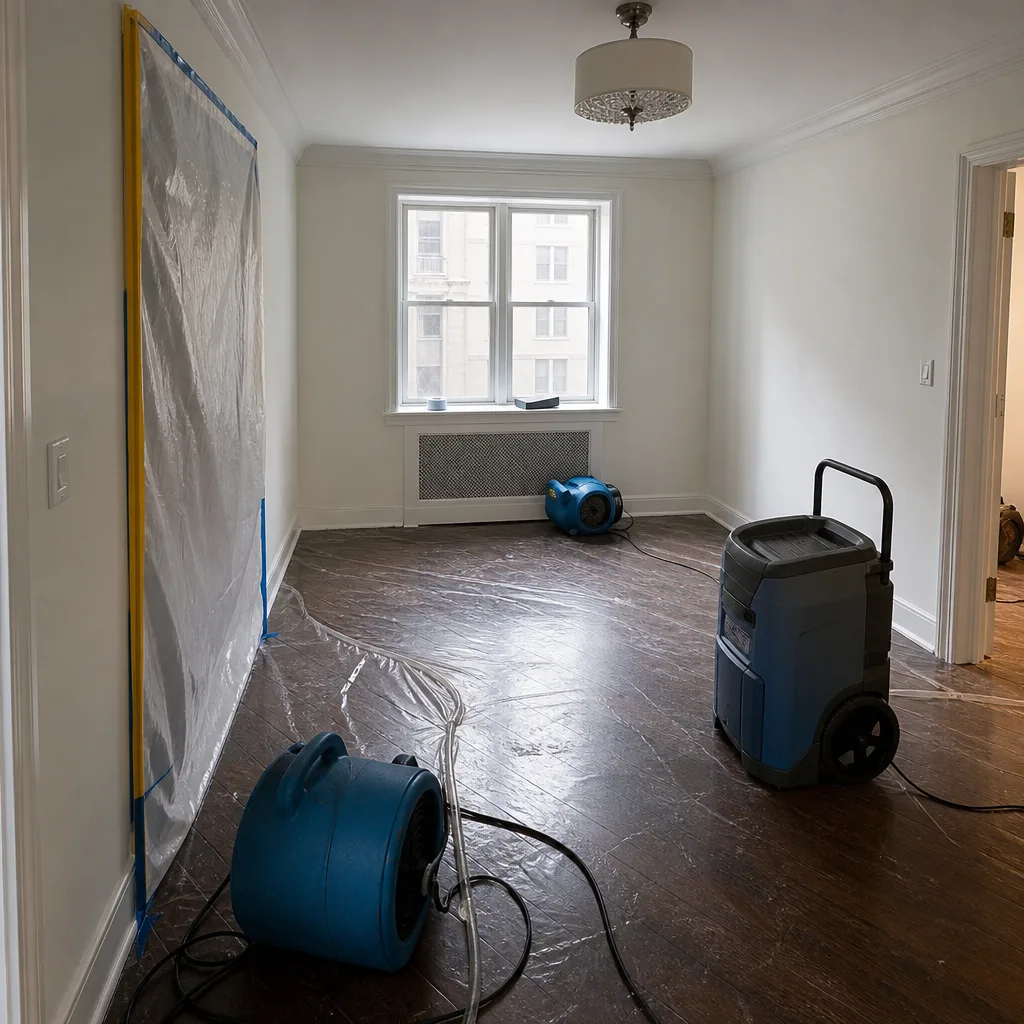 After
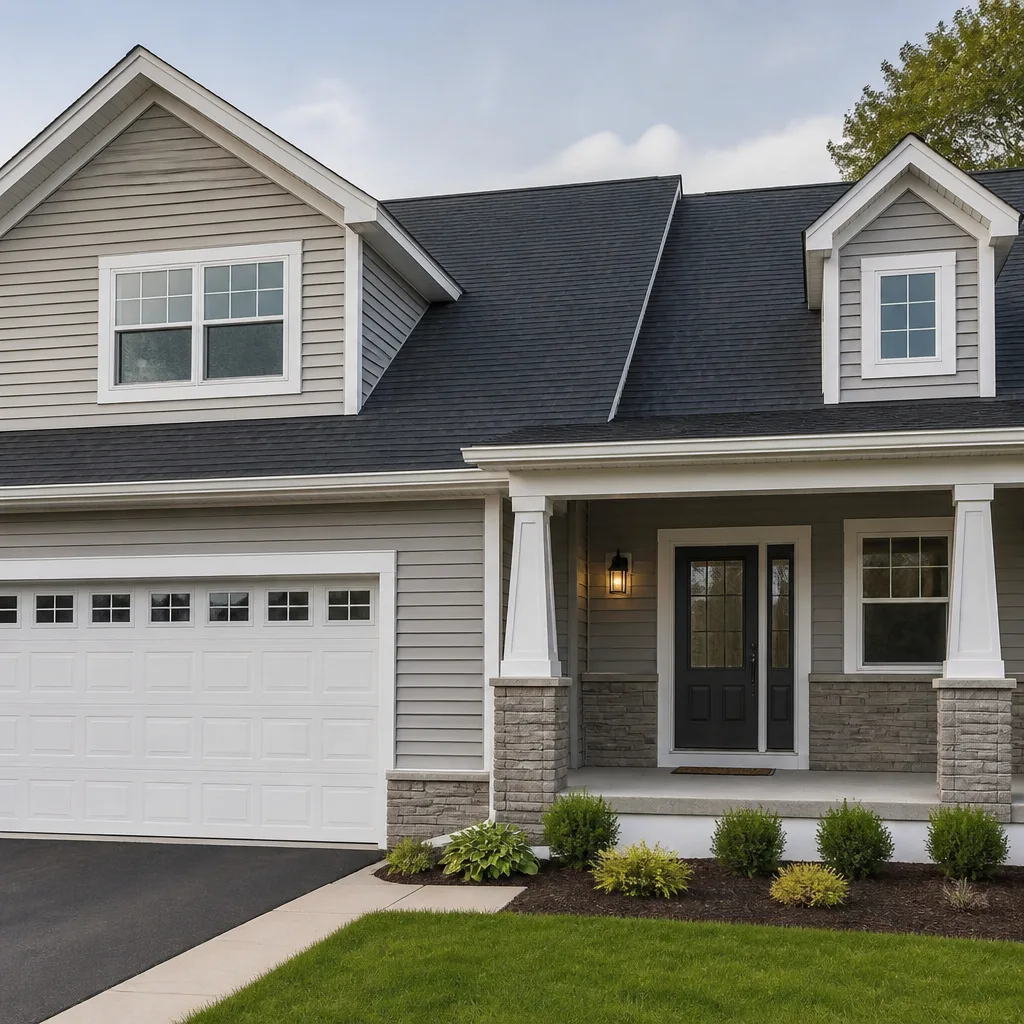
After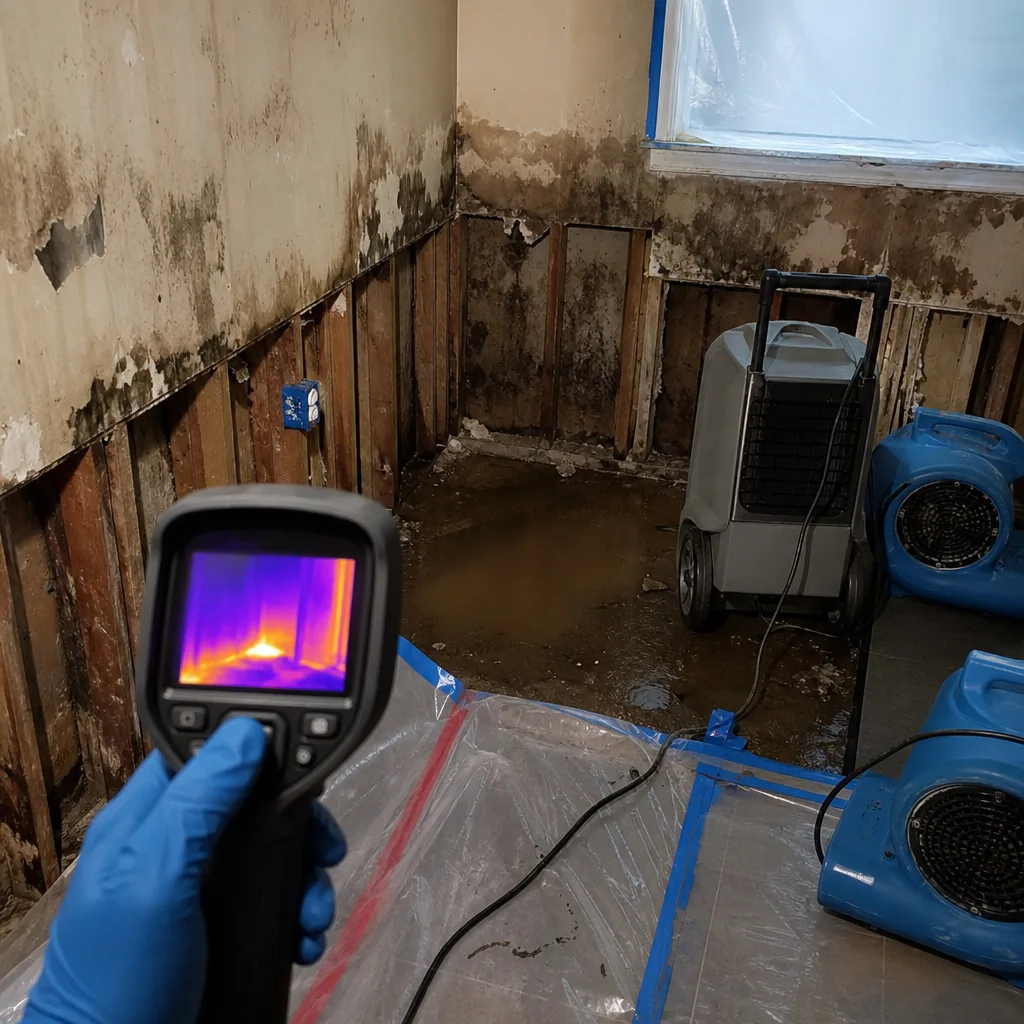 Before
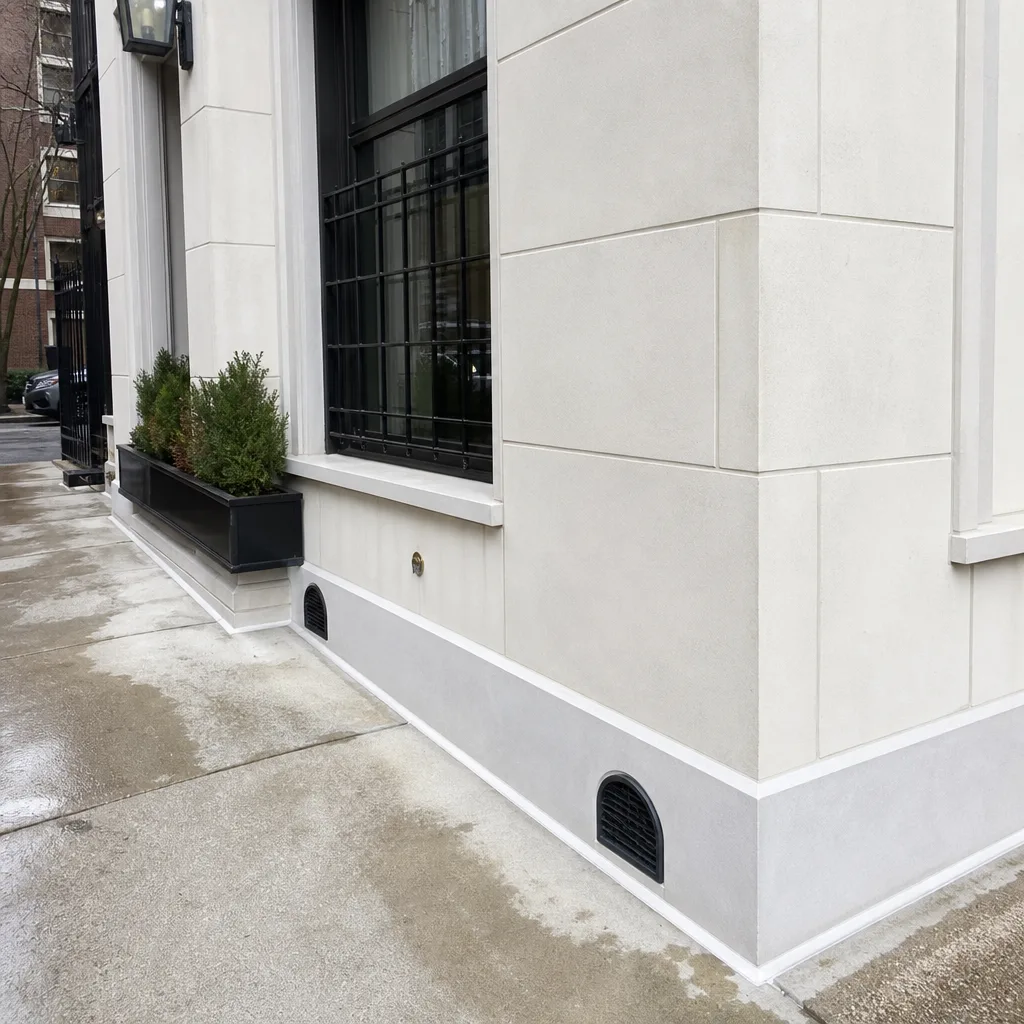 After
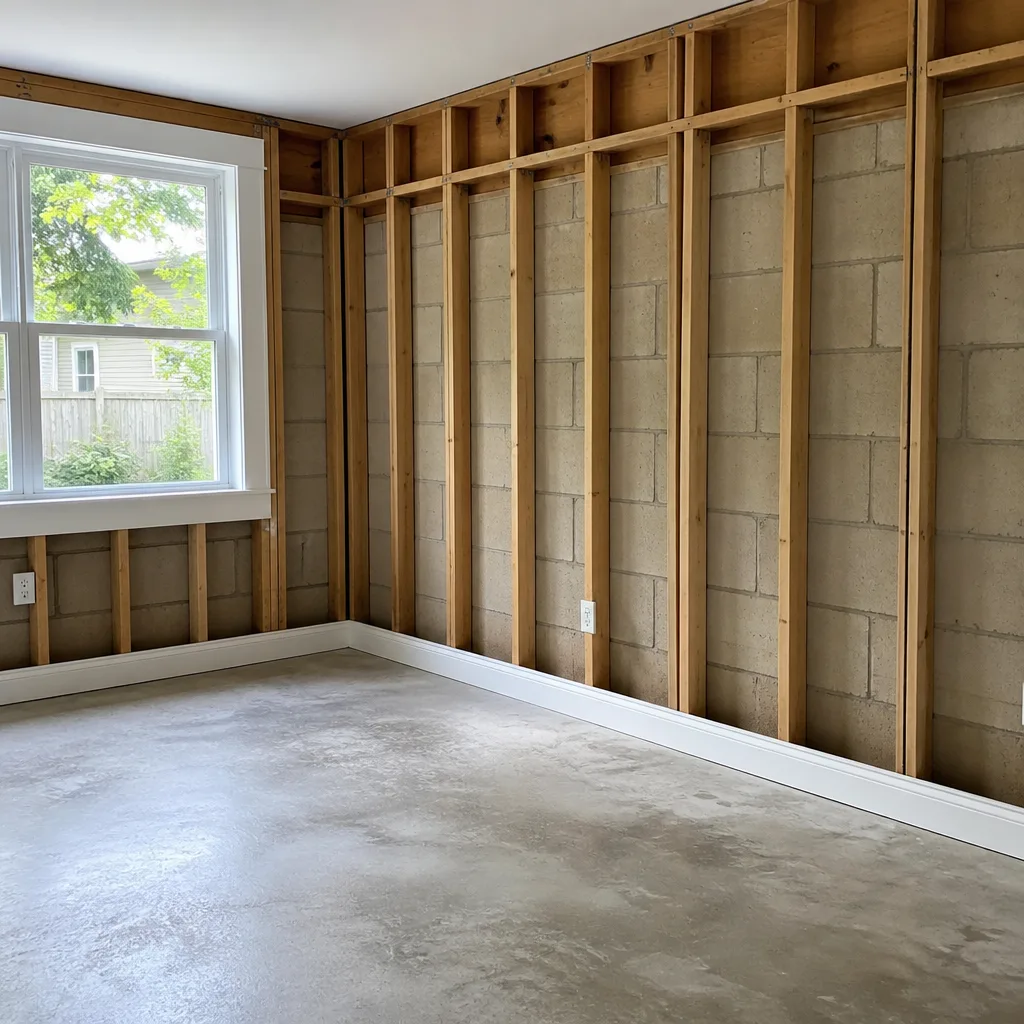
After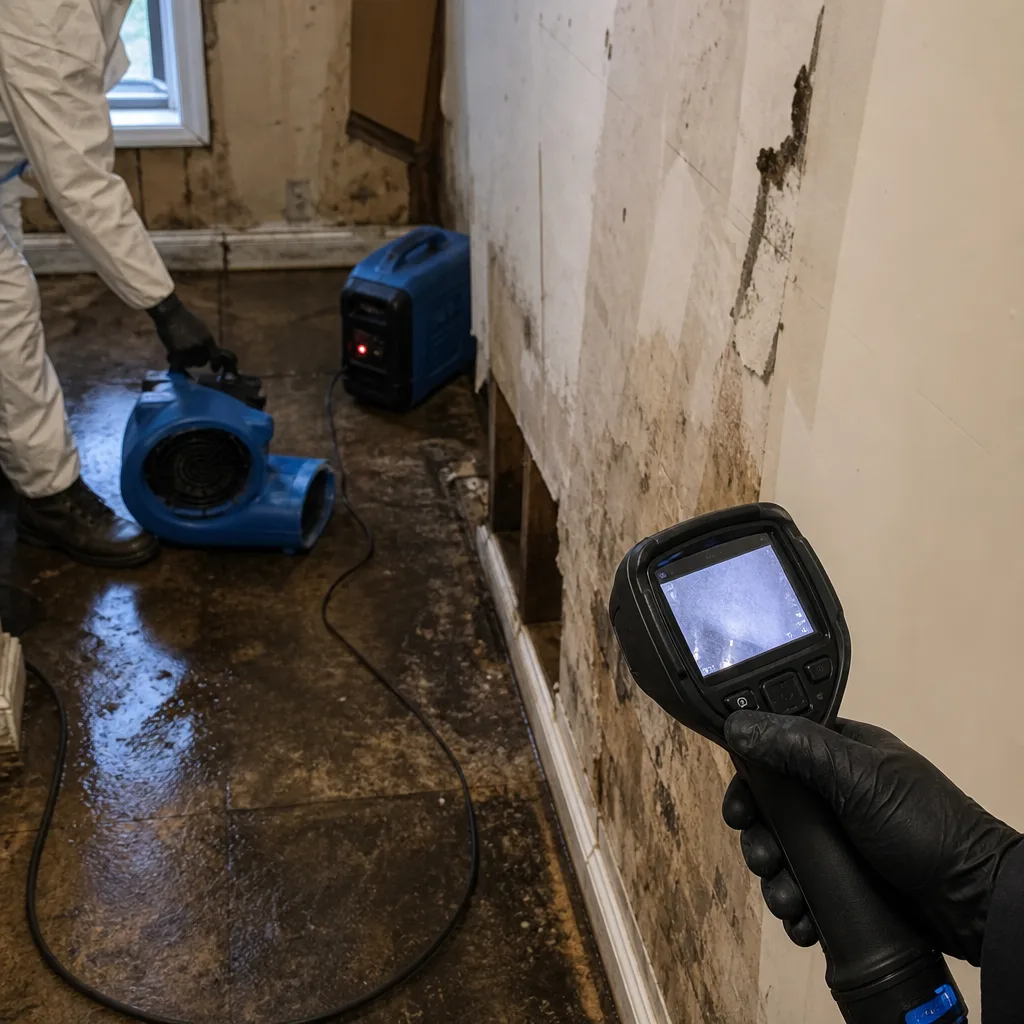 Before
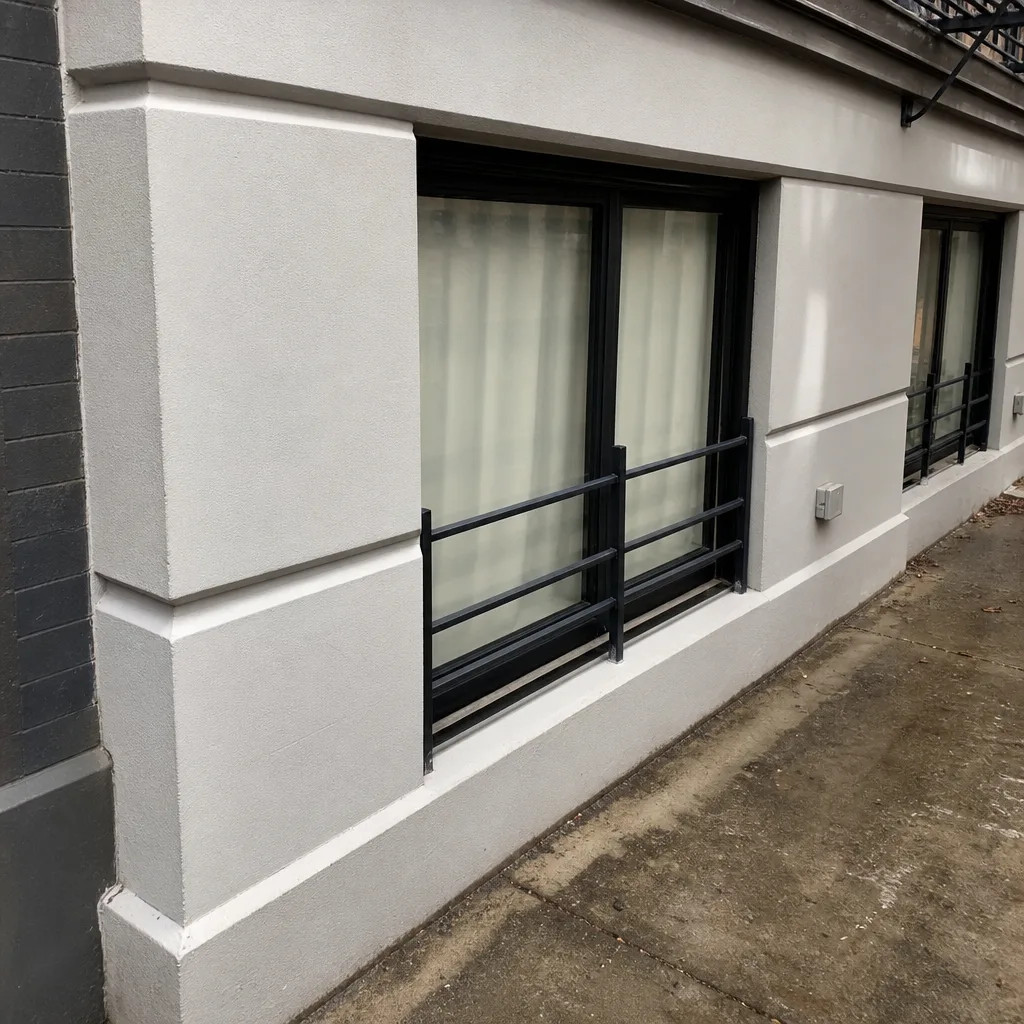 After
After24/7 Emergency Storm & Disaster Restoration in Lower Manhattan
When a nor’easter rips through Battery Park City or a summer squall sends Hudson River surge into a Financial District sub-basement, you need someone on the phone at 3 a.m., not an answering service. Wade’s Restoration answers live around the clock, and Wade himself heads out from our New York City office to reach Lower Manhattan within 45 minutes. Call (607) 703-3408 the minute you see water where it doesn’t belong. The first hour determines whether you’re drying out or replacing mechanical systems, and saltwater from storm surge doesn’t wait for business hours. We’ll walk your property, map the moisture, and hand you a written scope before any work begins, no charge for the inspection.
Understanding Storm & Disaster Restoration Severity in Lower Manhattan Properties
Not all floodwater is created equal, and Lower Manhattan sees the worst kind. A burst supply line in a Tribeca loft is Category 1 or 2 water, manageable with standard extraction and drying. A Hudson River surge through Battery Park City brings Category 3 “black water,” contaminated with sewage, hydrocarbons, and enough salt to corrode copper wiring and steel studs years after the water is gone. That’s the piece most homeowners never hear until their walls effloresce and their boiler piping fails a second time. The building stock matters too. Pre-war cast-iron facades hide moisture in brick pocket walls. Glass-curtain-wall towers trap condensation behind spandrel panels. Sub-basement mechanical rooms, the kind Sandy filled to the ceiling, demand moisture mapping behind concrete block, not just air movers on the floor. We treat storm restoration as a structural problem, not a drying exercise.
Why Lower Manhattan Property Owners Choose Wade’s Restoration
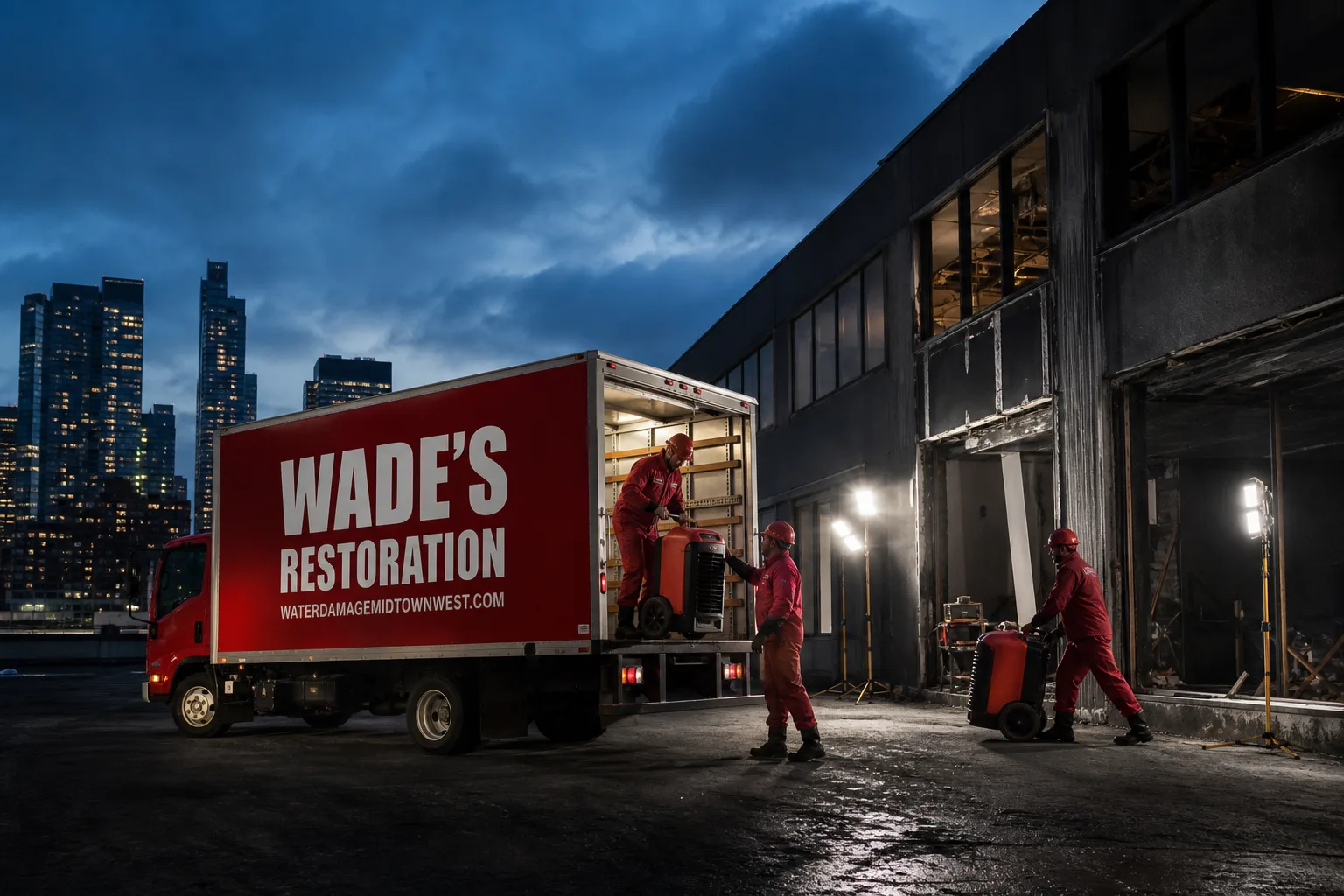
- 45-minute response commitment: Wade takes the call himself and is on the road to Lower Manhattan immediately, extraction equipment in the truck.
- 24/7 live answer, every time: No voicemail, no call center. A real person picks up, and that person is usually Wade Ferris.
- IICRC-certified crews: WRT, FSRT, and AMRT certifications mean the people in your home understand Category 3 decontamination, not just mopping up.
- Free visual inspection: We show up, assess the damage, hand you a written scope, and you decide. No charge for the visit.
- Direct insurance billing: Wade communicates with your adjuster directly. You’re never the one relaying moisture readings or arguing scope.
- One team from extraction to reconstruction: The same crew that pumps out your basement is the crew that rebuilds your boiler room. No hand-offs to strangers.
Our Storm & Disaster Restoration Process
Inspection & Assessment
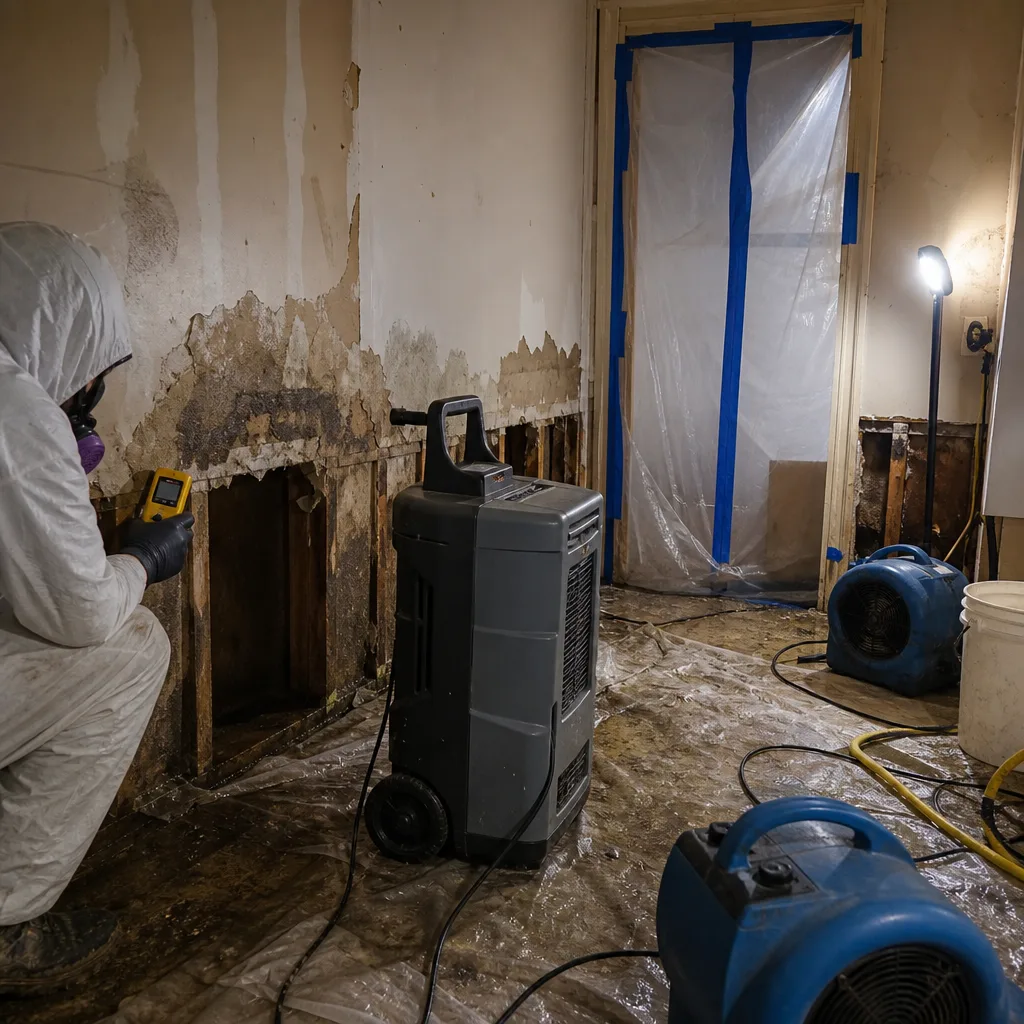
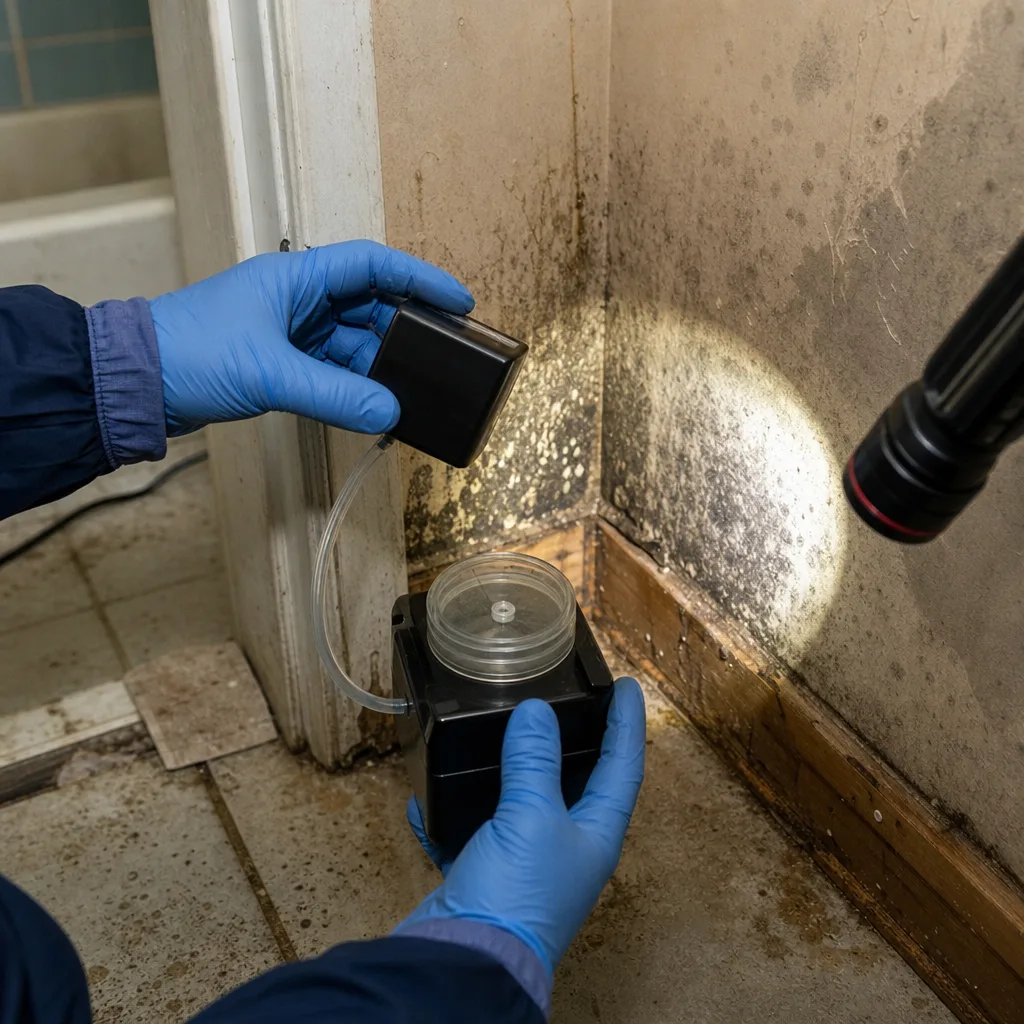
We arrive with thermal imaging cameras and penetrating moisture meters to find water behind walls, under slabs, and inside concrete block. Every room gets mapped. You get a copy of the map.
Extraction & Stabilization
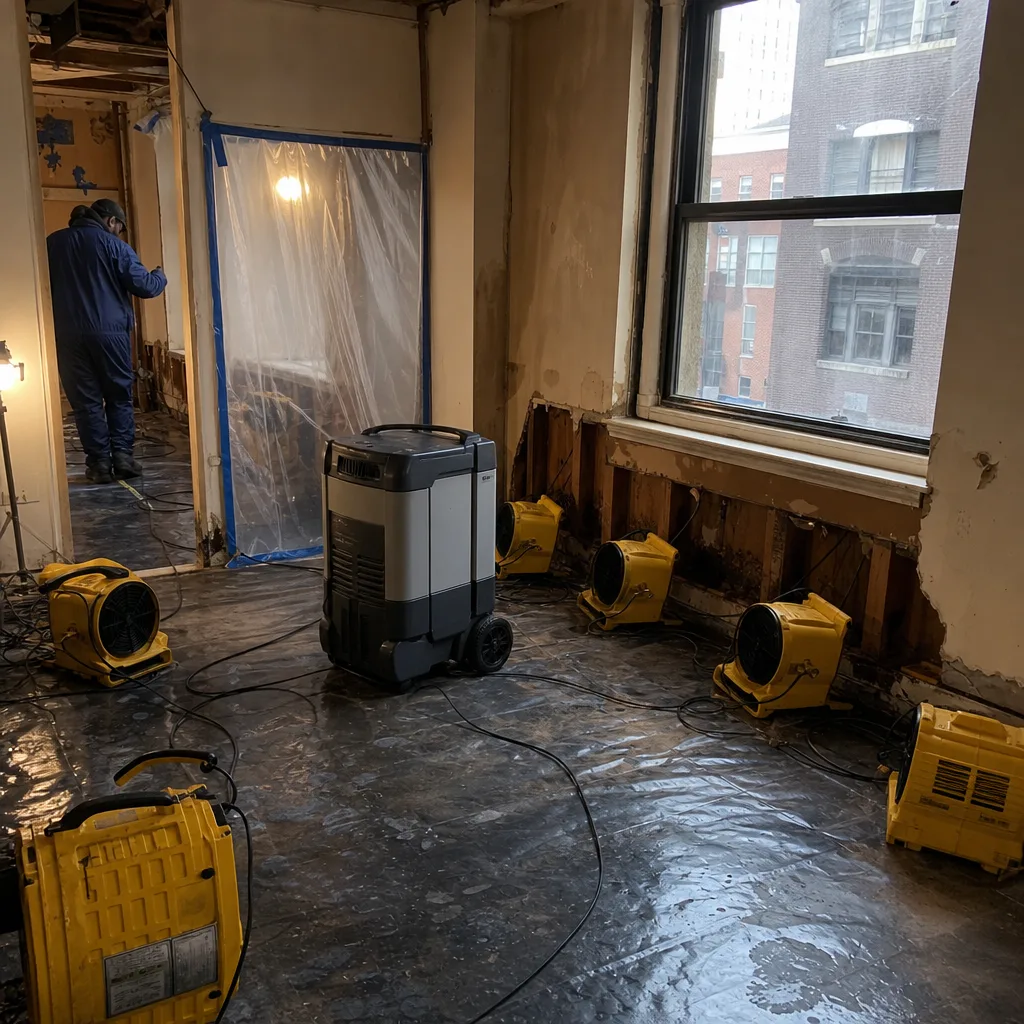
Submersible pumps and truck-mounted extractors pull standing water fast. We board up broken windows, tarp breached roofs, and shut down compromised electrical systems to stop the spread before it gets worse.
Drying & Dehumidification
Dri-Eaz and Phoenix air movers run alongside commercial dehumidifiers, and we place Injectidry drying mats on slab floors and behind masonry where saltwater hides. Daily moisture readings let us track the drying curve, not guess it.
Cleaning & Sanitization
Category 3 water means biohazard cleanup and antimicrobial treatment on every affected surface, including inside wall cavities. HEPA air scrubbers run during demolition to keep aerosolized contaminants from spreading to unaffected floors.
Salt & Corrosion Treatment
Unique to Lower Manhattan storm surge: we neutralize hygroscopic salt crystals with targeted rinsing and specialized cleaners before rebuilt surfaces go back up, because salt left in concrete keeps pulling moisture for years.
Repairs & Restoration
We replace corroded boiler piping, rewire compromised switchgear, rebuild drywall with moisture-resistant materials, and elevate mechanical systems where post-loss code requires it, handling the full reconstruction and cleanup process. The job ends with a fully documented drying log in your hands.
Need Emergency Storm & Disaster Restoration in Lower Manhattan Now?
Crews minutes away, answering live 24 hours a day. The sooner we start, the less it costs.
Working With Your Insurance Company
Insurance claims after a Lower Manhattan storm event are their own special headache, because FEMA flood zones, post-Sandy code mandates, and saltwater damage categories all get scrutinized differently than a standard pipe-burst claim. Wade has handled hundreds of these conversations. He documents the loss from hour one, provides photo evidence room by room, keeps a daily moisture log, and delivers a line-item scope your adjuster can actually work with. The key is that Wade talks to the insurance company directly. You don’t spend your day on hold with a carrier while your walls keep wicking saltwater.
What We Provide Your Insurer
- Thorough documentation of the loss
- Photos of all damage, room by room
- Moisture readings and drying logs
- A detailed, line-item scope of work
- Direct coordination with your carrier
Built for Lower Manhattan’s Loss Calendar
Lower Manhattan’s storm season doesn’t follow a tidy schedule. Late-summer hurricanes and early-autumn nor’easters are the obvious threats, but they’re not the only ones. January deep freezes burst supply lines in pre-war buildings where original piping runs through uninsulated exterior walls. Spring thaw reveals seepage through foundation walls that were never designed for saturated landfill ground. Summer thunderstorms overwhelm storm drains around the Battery, sending flash floods into below-grade retail spaces and basements along Water Street and South Street. And every nor’easter, even the ones that don’t make national news, pushes Hudson River water against the Battery’s seawall with enough force to find every compromised below-grade entry point. Post-Sandy, building owners have rebuilt to higher standards, but the older stock, the loft conversions, the cast-iron columns, those buildings still carry the vulnerabilities of another century. That’s where our Storm & Disaster Restoration team spends most weekends between August and December.
Storm & Disaster Restoration Across Lower Manhattan’s Neighborhoods
Response routes in Lower Manhattan are their own challenge. Getting a pump truck down narrow Tribeca streets means knowing which blocks allow commercial vehicle staging and which have active building scaffolds that block equipment access. Battery Park City’s high-rises demand coordination with building management, freight elevator scheduling, and union doormen who need to see credentials before they’ll let a crew into the service corridor. The Financial District’s pre-war office conversions often route water down from upper-floor window failures, so we’re frequently working from a flooded basement up through a wicking ceiling on the tenth floor. The South Street Seaport historic district has specific Landmarks Preservation Commission rules about replacing period-appropriate materials, and storm restoration there often mixes emergency water extraction with carefully documented architectural salvage. Most crews learn these lessons the hard way, by getting turned away at a service entrance or tying up a crew for an hour waiting on a freight elevator that was never scheduled. We’ve learned them over years of running calls from the Battery up through the civic center and back to West Street.
Specialized Storm & Disaster Restoration Services We Offer in Lower Manhattan
Storm Damage Cleanup
A nor’easter that rips cornice work off a Tribeca loft building doesn’t just leave a mess, it leaves a liability. We clear the debris, document what fell and from where, and secure the exposed areas. If water followed the debris through a breached roof, we’re already drying while the debris is still in the dumpster.
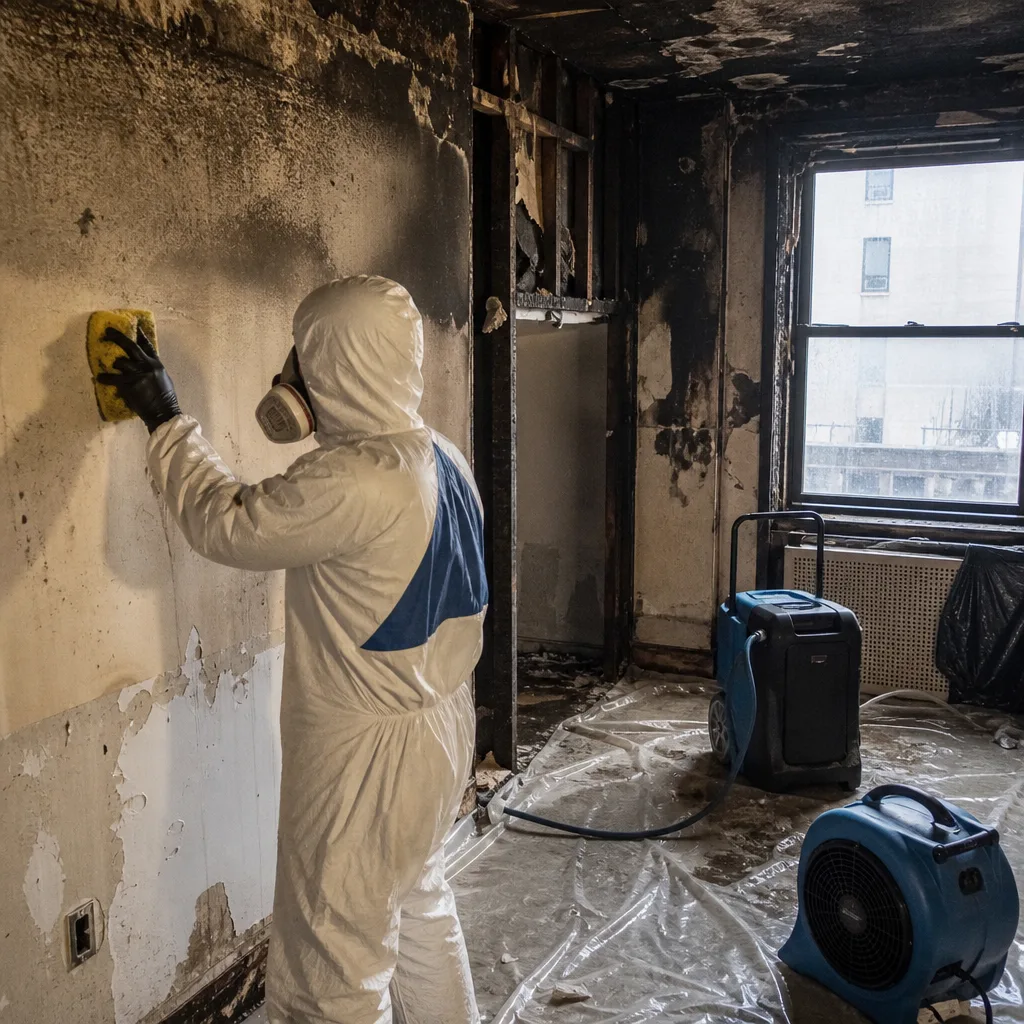
Flood Damage Restoration
Saltwater flood restoration in Battery Park City and the Financial District is the most specialized work we do. Category 3 decontamination, salt-neutralizing rinses, corrosion assessment on every metal component, and post-loss code review to determine whether mechanical systems need elevation. This is not freshwater pipe-break work.
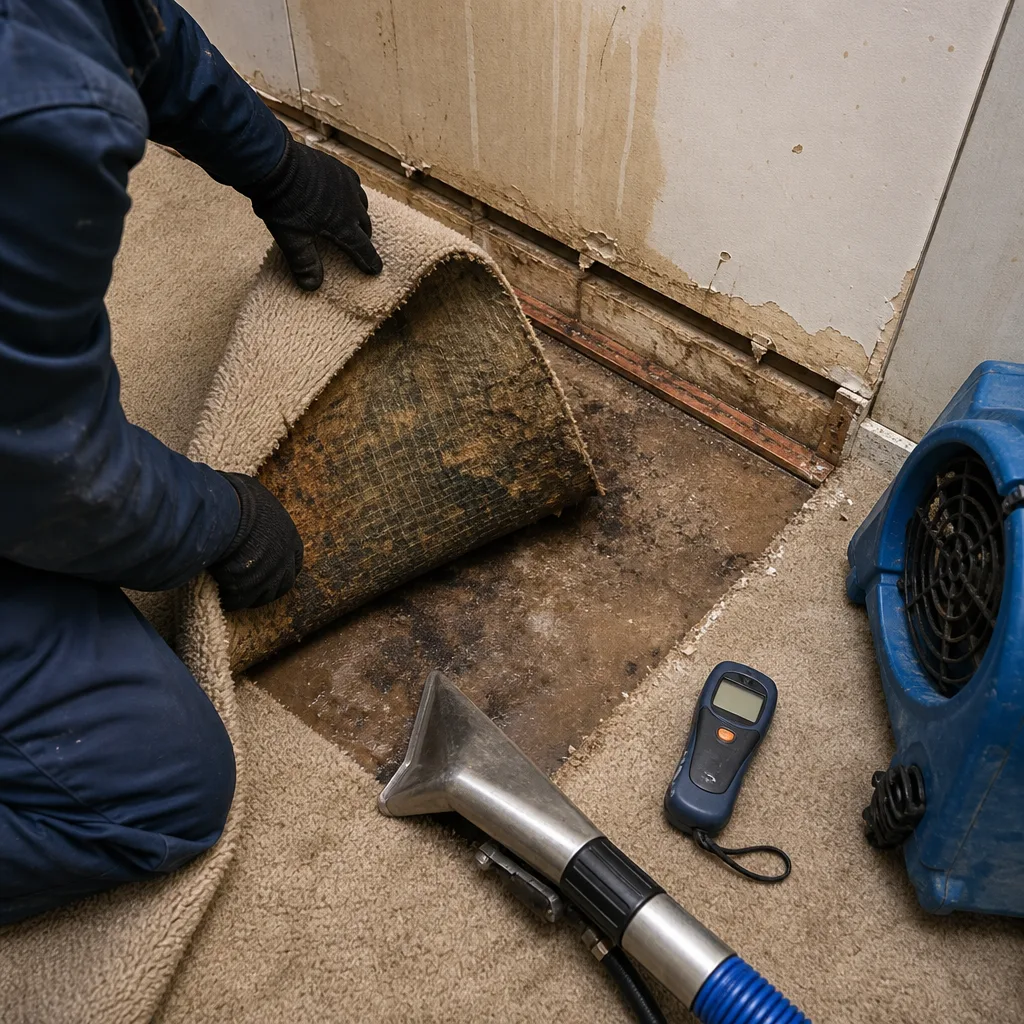
Emergency Board-Up
Broken storefront glass on a retail level, failed windows on a storm-exposed upper floor, or a compromised entry door after wind-driven debris hits, we board and secure within hours. Lower Manhattan sanitization services require speed because density means one exposed opening in a multi-unit building becomes everyone’s problem, so we move fast.
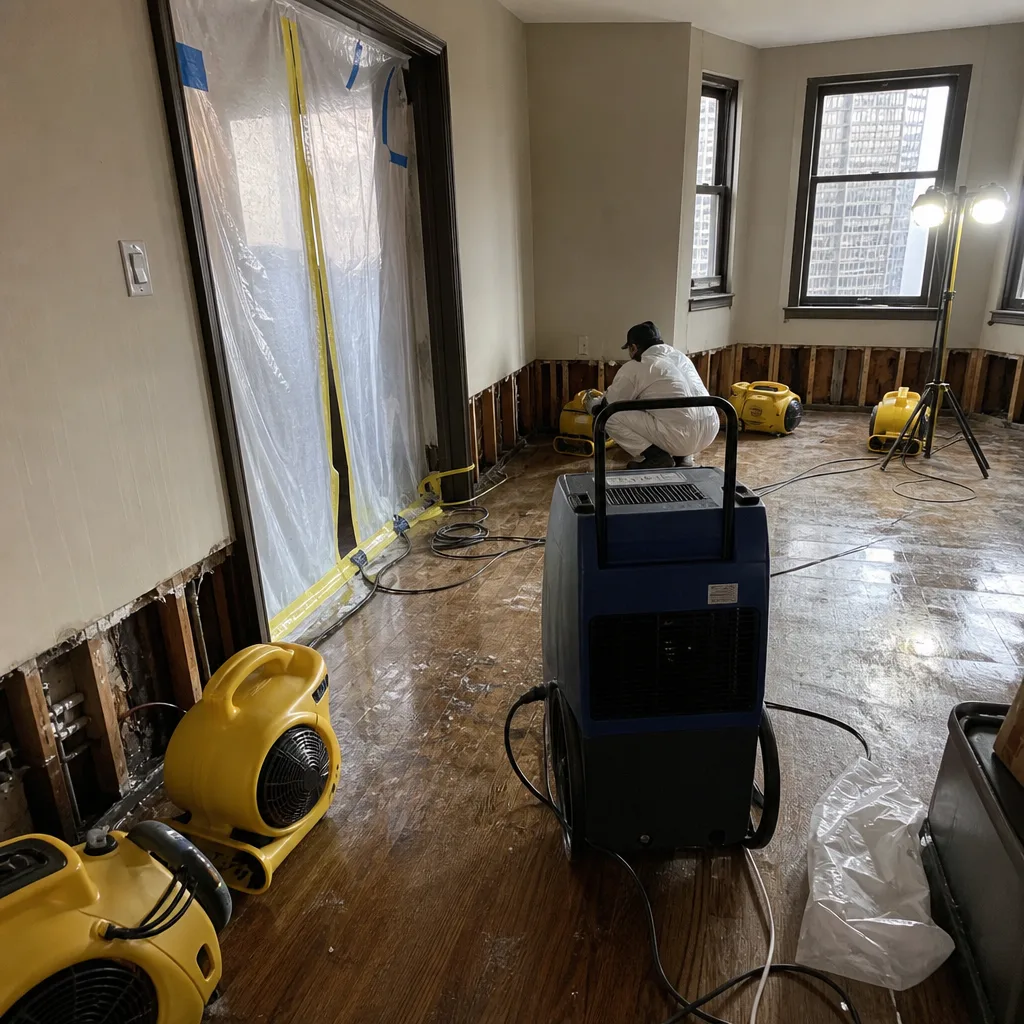
Roof Tarping
Flat-roof loft buildings and older pre-war stock take wind uplift damage differently than modern high-rises. We tarp the breach, water-seal the seams, and anchor everything to meet Manhattan wind load requirements while permanent repairs are scheduled.
Debris Removal
Storm debris in Lower Manhattan isn’t just tree branches. It’s scaffolding wrap torn from a construction site, corrugated metal from a sidewalk shed, broken glass from a curtain-wall panel. We remove it, document it for your insurer, and confirm that nothing structural shifted in the process.
What happens when you call
- 1
A real person answersNo phone trees - you reach a local pro.
- 2
You get an upfront price rangeHonest numbers before anyone is dispatched.
- 3
A background-checked tech heads outLicensed & insured, dispatched right away.
- 4
You approve before work beginsNothing starts until you say go.
Storm & Disaster Restoration Costs in Lower Manhattan, NY
Storm damage restoration in Lower Manhattan runs higher than the borough averages, and the reasons are specific. A Category 3 flood restoration in a Battery Park City high-rise typically costs $8,000 to $25,000 for a single below-grade mechanical room or one residential unit, driven by freight elevator access, union building labor coordination, and saltwater-specific treatment protocols that inland crews skip. Roof tarping after wind damage in Tribeca runs $1,200 to $3,500 depending on roof height, access, and whether we are staging equipment from a narrow side street. Emergency board-up for a storefront or lobby window costs $400 to $900 per opening. The honest truth is that the free visual inspection is how you get a real number, because water behind a concrete block wall in a sub-basement is invisible until someone with a moisture meter goes looking. That’s the inspection we do at no charge, and it’s how you avoid the guy who quotes $2,000 on the phone and then “discovers” $20,000 more once he’s inside. Call (607) 703-3408 for a firm written scope before any work starts.
We Also Serve Cities Near Lower Manhattan
Wade’s Restoration runs calls throughout the New York metro, including Midtown West, the Financial District, Astoria, and Midtown Manhattan. If you’re across the bridge or just north of Canal Street, the same live answer, same 45-minute response commitment, and same written-scope-before-work promise applies.
Lower Manhattan Storm & Disaster Restoration Questions, Answered
Why does saltwater flooding in Battery Park City require a different restoration protocol than freshwater pipe breaks?
Saltwater is Category 3 floodwater, contaminated with sewage and hydrocarbons, and it leaves behind hygroscopic salt crystals that continue pulling moisture from the air long after visible water is gone. Those salts corrode steel framing, copper wiring, and boiler components much faster than freshwater does. Restoration requires antimicrobial decontamination, salt-neutralizing rinses, and aggressive drying behind masonry, plus corrosion assessment on every metal surface that got wet, steps a freshwater pipe-break job never needs.
Do Lower Manhattan buildings with sub-basement mechanical rooms need special flood restoration steps?
Yes. Most Lower Manhattan high-rises and loft buildings put boilers, electrical switchgear, and elevator machinery in the sub-basement, the exact space Sandy filled first and deepest. Restoration there means moisture mapping behind concrete block walls, drying mats placed directly on those surfaces, and a code review to determine whether mechanical equipment must be elevated or flood-proofed before rebuilding. Skipping that step leaves you with a boiler room that fails again at the next surge. Call (607) 703-3408 and we will walk the space with you.
Why are there still callback remediation calls years after a “completed” Sandy restoration in Tribeca?
Because salt crystals left inside concrete blocks and brick keep attracting moisture, causing efflorescence and surface spalling that shows up years after the walls were “dried.” A restoration that only removes drywall and replaces finishes, without addressing the salt-laden masonry behind them, is not finished. Our crew worked a Tribeca sub-basement where Sandy saltwater had sat for a week, and we pulled moisture out of block walls with Injectidry mats months after the building owner thought the space was dry.
How does living in a FEMA AE or VE flood zone change the restoration scope after storm surge damage?
It triggers post-loss code requirements. FEMA maps redrawn after Sandy put Battery Park City and the Financial District in high-risk AE and VE zones, meaning any substantial post-flood renovation must bring mechanical systems into code compliance. That often means elevating electrical panels above the base flood elevation, replacing flood-damaged boilers with flood-resistant models, and sometimes redesigning drainage. Your insurance claim may cover these upgrades, but only if the damage and the required elevation work are documented properly from the start.
Can high-rise glass-curtain-wall buildings in Battery Park City suffer hidden storm damage that isn’t visible?
Absolutely. Wind-driven rain during a nor’easter can push water through failed gaskets and weeping holes in curtain-wall systems, running down inside the spandrel panels and into the floor cavity. No visible leak from inside, no wet ceiling, just trapped moisture between the glass and the interior wall that feeds mold and corrodes wall studs. Thermal imaging and moisture meters find it, and we run those readings on every upper-floor storm call, not just basement floods.
How fast can you actually reach Lower Manhattan for a storm emergency?
Within 45 minutes for most Lower Manhattan locations, from the Battery up through Tribeca and the Financial District. Wade takes the call himself and heads out in the truck with extraction equipment. Night, weekend, holiday, doesn’t matter. Call (607) 703-3408 and a live person picks up.
Will my insurance cover storm surge restoration in a flood zone?
It depends on your policy, but in most post-Sandy Lower Manhattan buildings, flood damage is covered either through NFIP flood insurance or a private flood policy, and wind-driven rain damage is typically covered under standard homeowner or commercial property policies. Wade deals with the adjuster directly, provides the documentation and scope they need, and makes sure the salt-specific remediation work is included in the claim rather than dismissed as standard freshwater drying. The earlier we document, the stronger the claim.
What should I do in the first 30 minutes after storm water enters my Lower Manhattan property?
Shut off power to affected areas if you can reach the panel safely, don’t wade into standing water that may be energized or contaminated, move what you can to higher ground, and call (607) 703-3408. The first hour sets the price. Saltwater starts corroding immediately, and every minute it sits in wall cavities and sub-basement rooms makes the restoration larger, longer, and more expensive. We’ll be there within 45 minutes.
Serving Lower Manhattan, NY - Our Local Coverage Area
We’re based in the Lower Manhattan area and know this community well. Use the map below to see our service coverage - if you’re nearby, we can almost certainly help.
Call Wade’s Restoration for Storm & Disaster Restoration in Lower Manhattan
If storm water is in your building right now, stop reading and call (607) 703-3408. Wade answers live, day or night, and heads out with equipment running. If you’re planning ahead, if you want a candid assessment of your building’s flood exposure, or if you just want to know what a saltwater restoration really involves, we’ll walk the property with you and hand you a written scope before any money changes hands. That’s how it works with a locally owned, owner-operated restoration company in Lower Manhattan. No runaround, no call center, no ghosting your adjuster. Just Wade, his crew, and the work done right, with the 90-Day Done Right Promise in writing on every job.
Written by Wade Ferris, Owner at Wade’s Restoration, serving Lower Manhattan and the New York metro since 2007.