
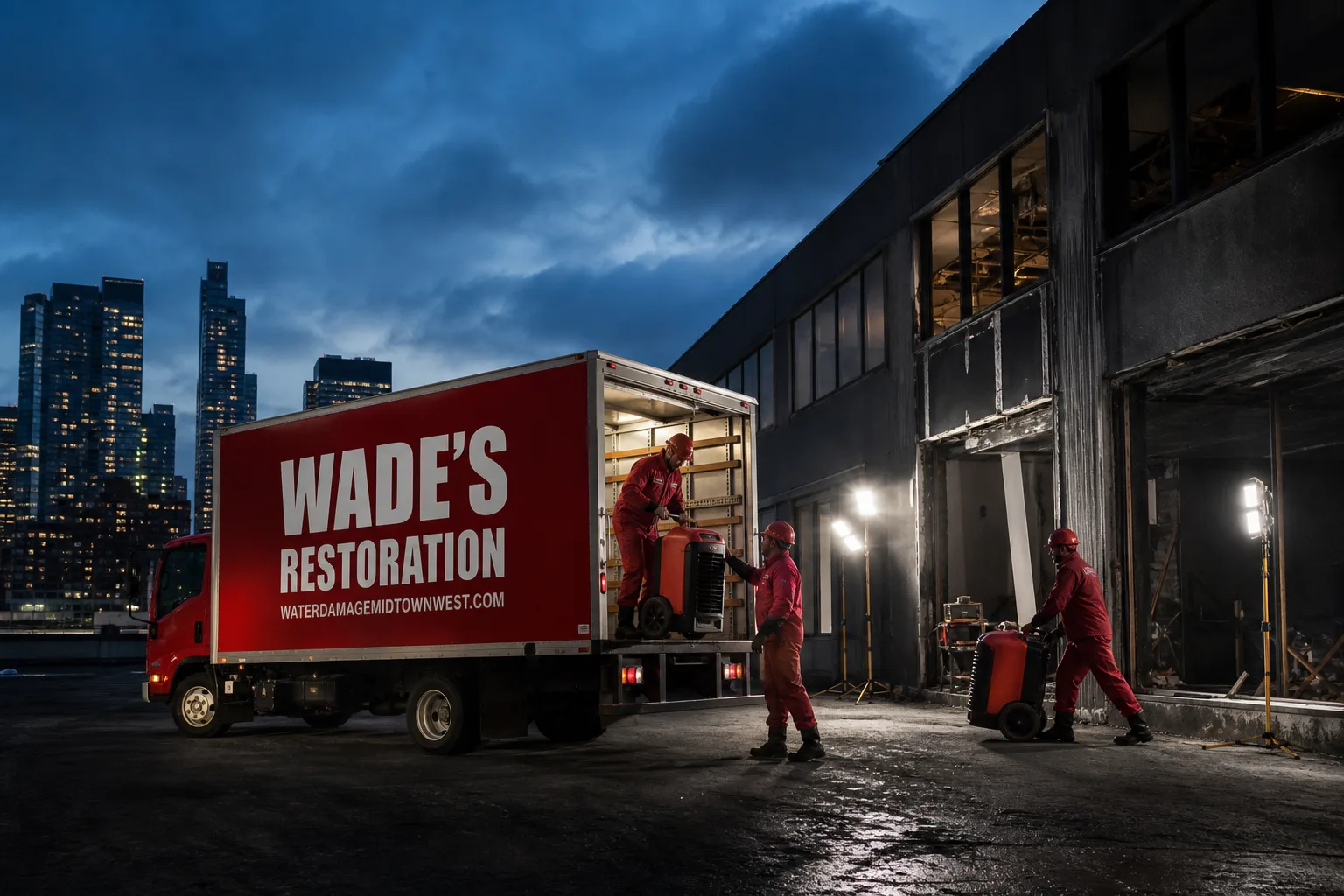
Free visual inspection and a written scope of work before any mitigation begins - photos, moisture readings, and drying logs go in your claim file
The scope we write is the scope we bill. Anything new gets shown to you, in writing, before we touch it.
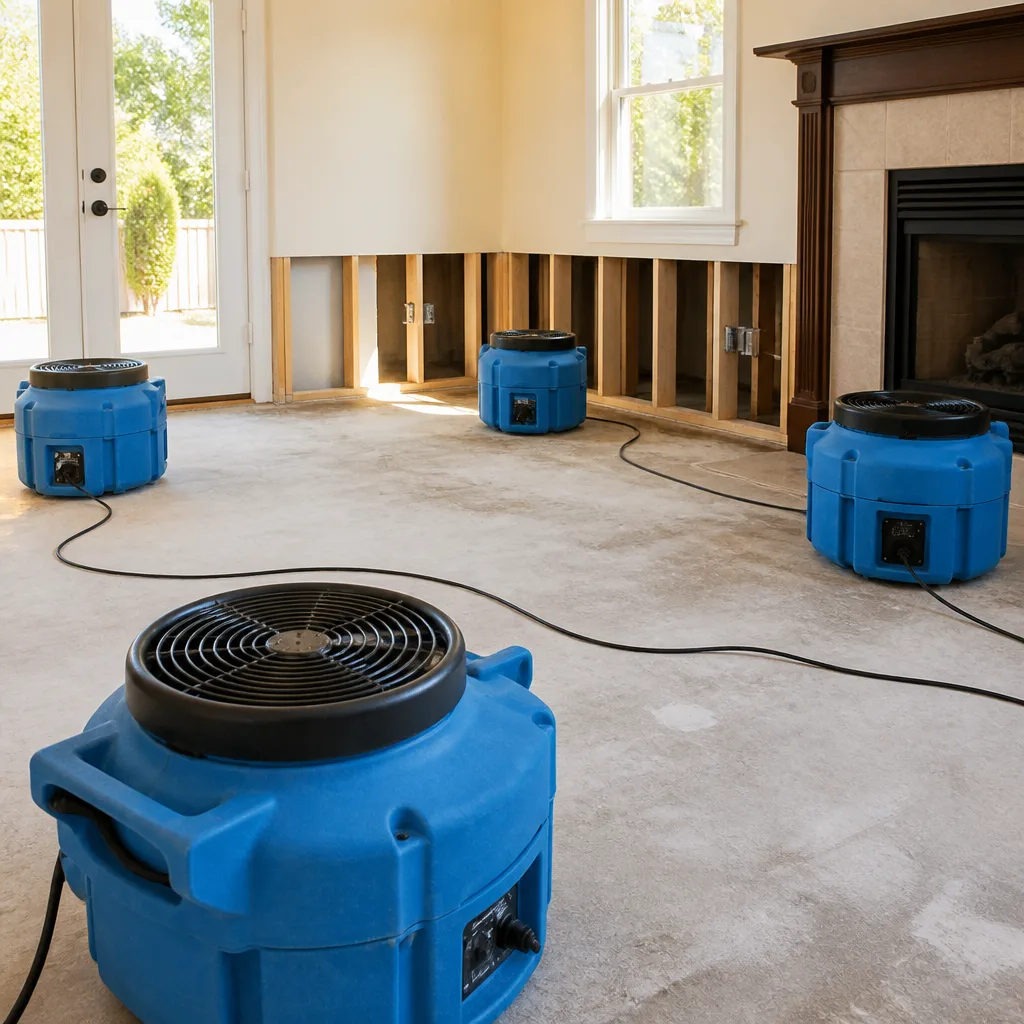
 Before
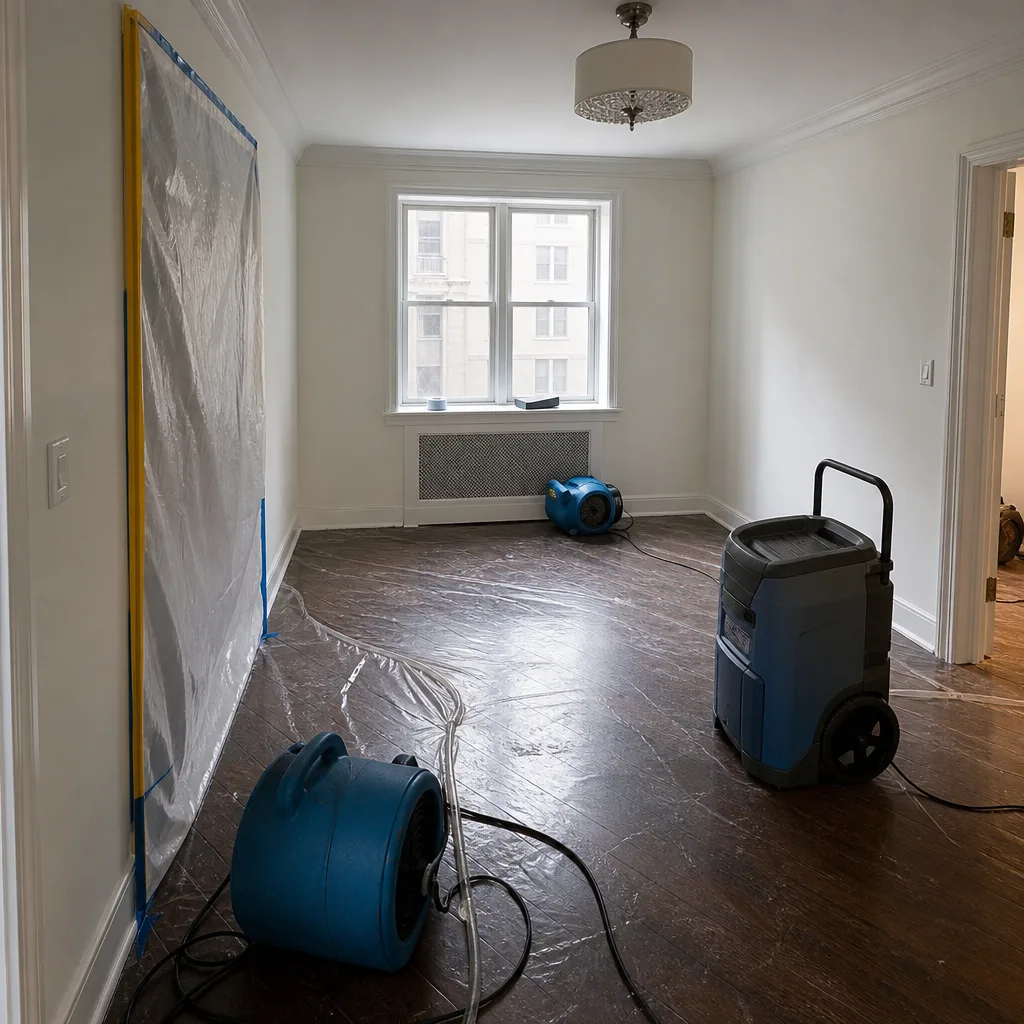 After
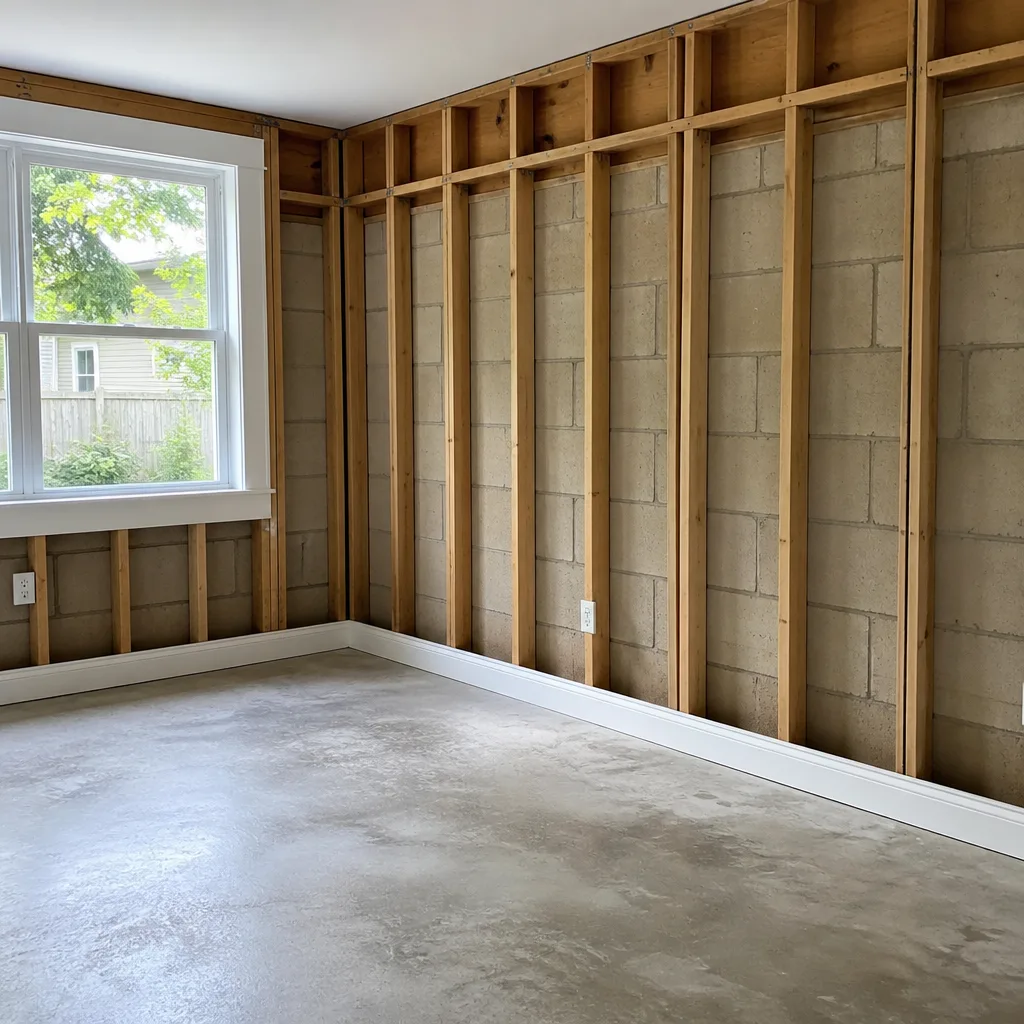
After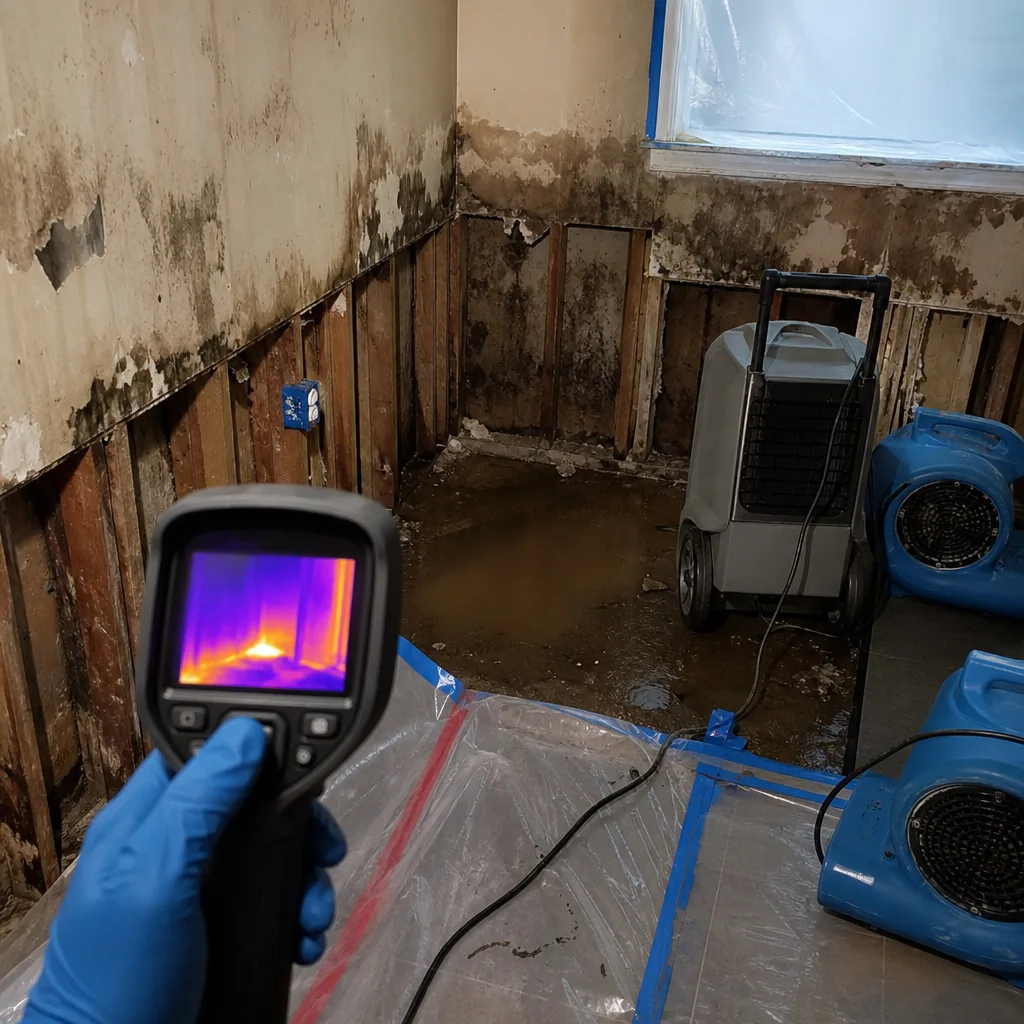 Before
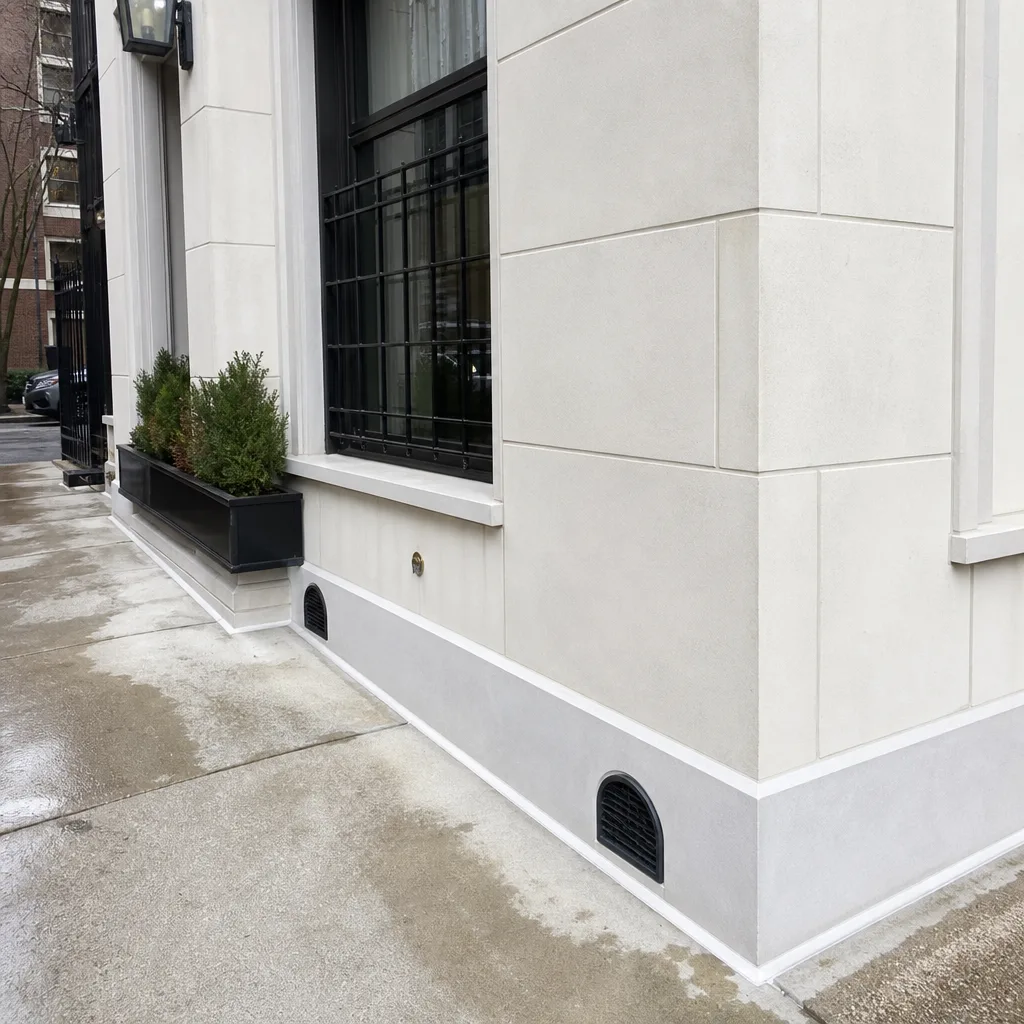 After
After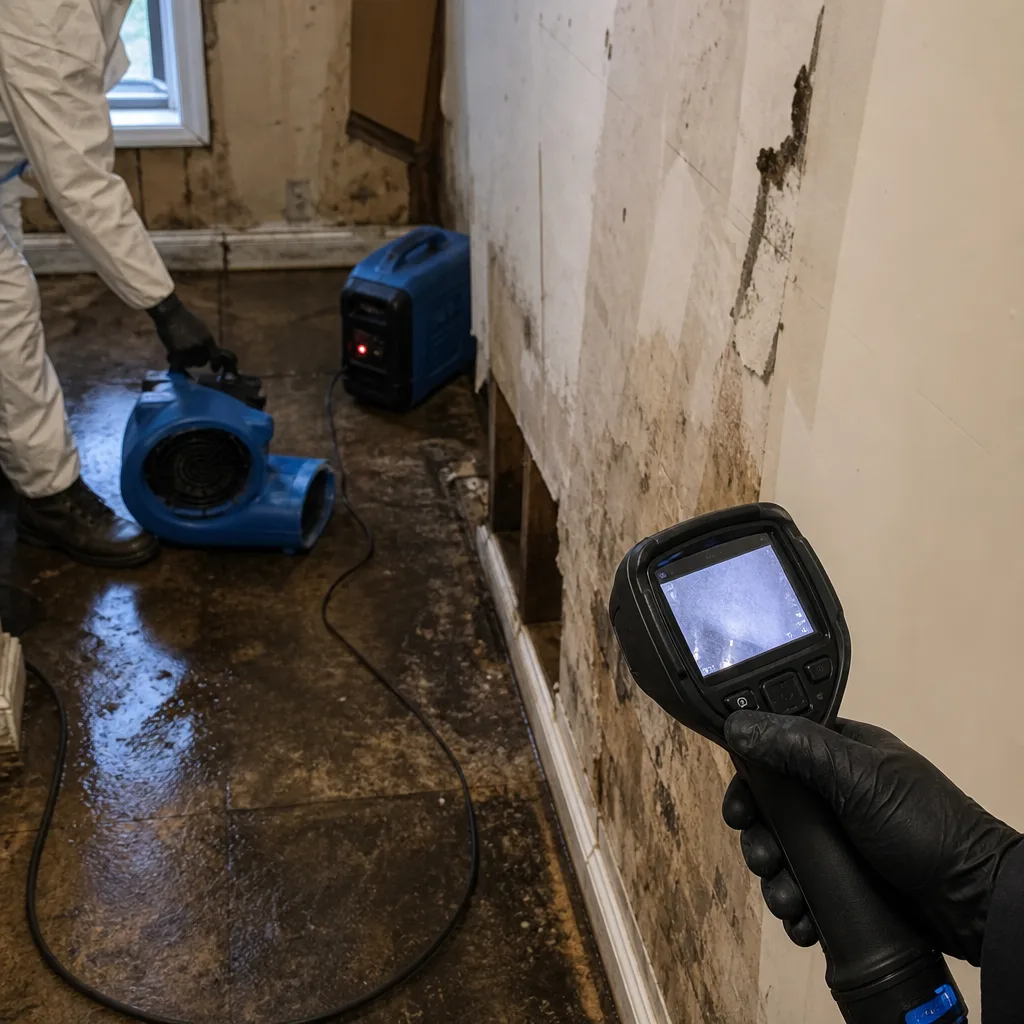 Before
 After
After24/7 Emergency Sewage Cleanup in Union City
When raw sewage backs up into a Union City apartment or storefront, you need someone moving fast. Call (607) 703-3408 and you’ll get Wade himself or a member of his crew on the line, not an answering service. We run sewage extraction crews into Union City neighborhoods around the clock, and the first hour matters more than most people realize. Category 3 water, which is what sewage is, carries bacteria, viruses, and parasites that soak into plaster, hardwood, and subflooring fast. The longer it sits, the more material has to be cut out and replaced. We’ll do a free visual inspection, walk you through what we’re seeing, and get extraction running before the damage spreads through shared walls or into the unit below.
Understanding Sewage Cleanup Severity in Union City Properties
Not all sewage jobs are equal, and Union City’s building stock makes severity calls different from the suburbs. Clean water from a supply line is Category 1. Gray water from a washing machine or sink drain is Category 2. Sewage, toilet backflow, and anything that’s passed through a waste line is Category 3: water with pathogens in it. In a single-family house, the fix is usually straightforward. In a pre-war brick tenement off Palisade Avenue or New York Avenue, that same Category 3 water follows the path of least resistance through floor assemblies, shared wall cavities, and old plaster that wicks it like a sponge. By the time a tenant on the fourth floor notices a ceiling stain, the contamination has usually traveled two or three stories down. Older buildings also mean older materials, and saturated lath-and-plaster from the 1920s holds sewage far longer than modern drywall. That’s why we moisture-map the full travel path, not just the visible puddle.
Why Union City Property Owners Choose Wade’s Restoration
- 45-minute response commitment: When you call about a sewage backup, Wade or one of his crew is rolling within 45 minutes, headed to your part of Union City. Not a window of 3 to 5 hours. We know the streets and we plan routes to get there.
- 24/7 live answer, always a real person: The number is answered by a human being, day or night. Usually it’s Wade himself. No voicemail tree, no call center in another state, no “press 2 for emergencies.”
- IICRC-certified crews: The people Wade sends carry WRT (Water Damage Restoration Technician) and ASD (Applied Structural Drying) certifications. For sewage specifically, that means they understand contamination control, not just water removal.
- Free visual inspection: We’ll walk the unit, find the source, check adjacent spaces for hidden migration, and give you a straight read on what needs to happen. No charge for that in Union City.
- Direct insurance billing: We bill your carrier directly and we handle the adjuster conversation. You don’t get stuck relaying messages between two parties who don’t answer each other’s calls.
- One team from extraction to reconstruction: Sewage backup cleanup, sanitization, dry-out, and rebuilding. You’re not handed from a mitigation crew to a contractor you’ve never met. Same crew, same truck, same owner on the line.
Our Sewage Cleanup Process
Inspection & Assessment
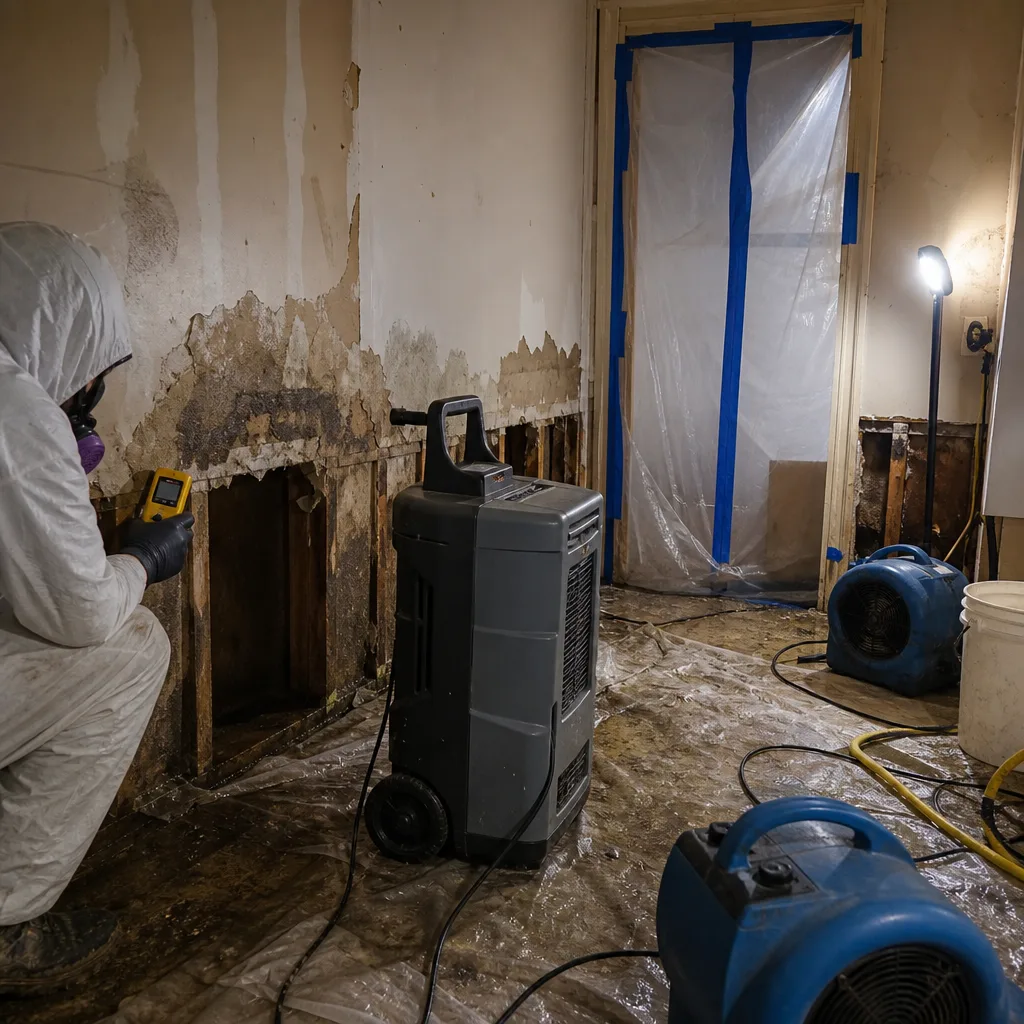
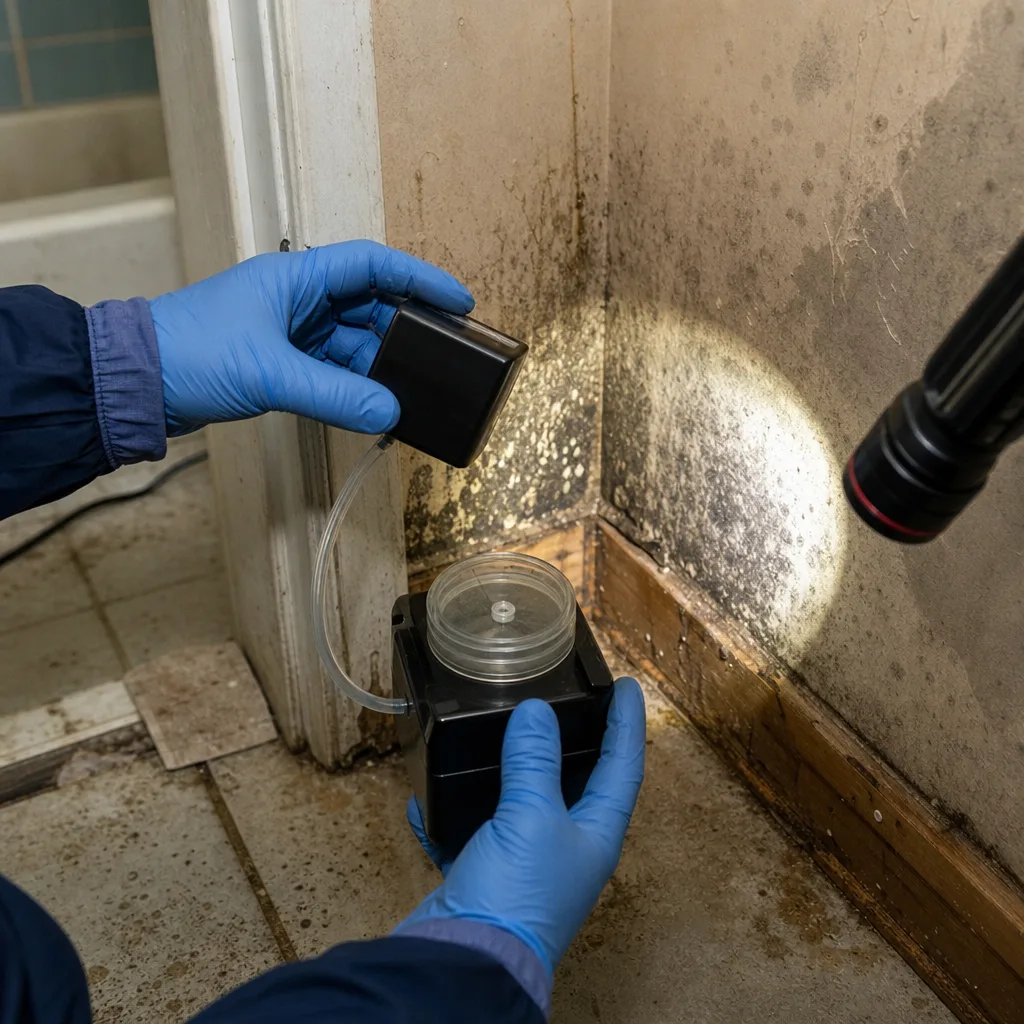
We start by finding where the sewage came from and how far it traveled. Thermal imaging and moisture meters map the wet path through walls, floors, and the ceiling cavity below. In a Union City tenement, that often means checking adjacent apartments on the same stack.
Extraction & Stabilization
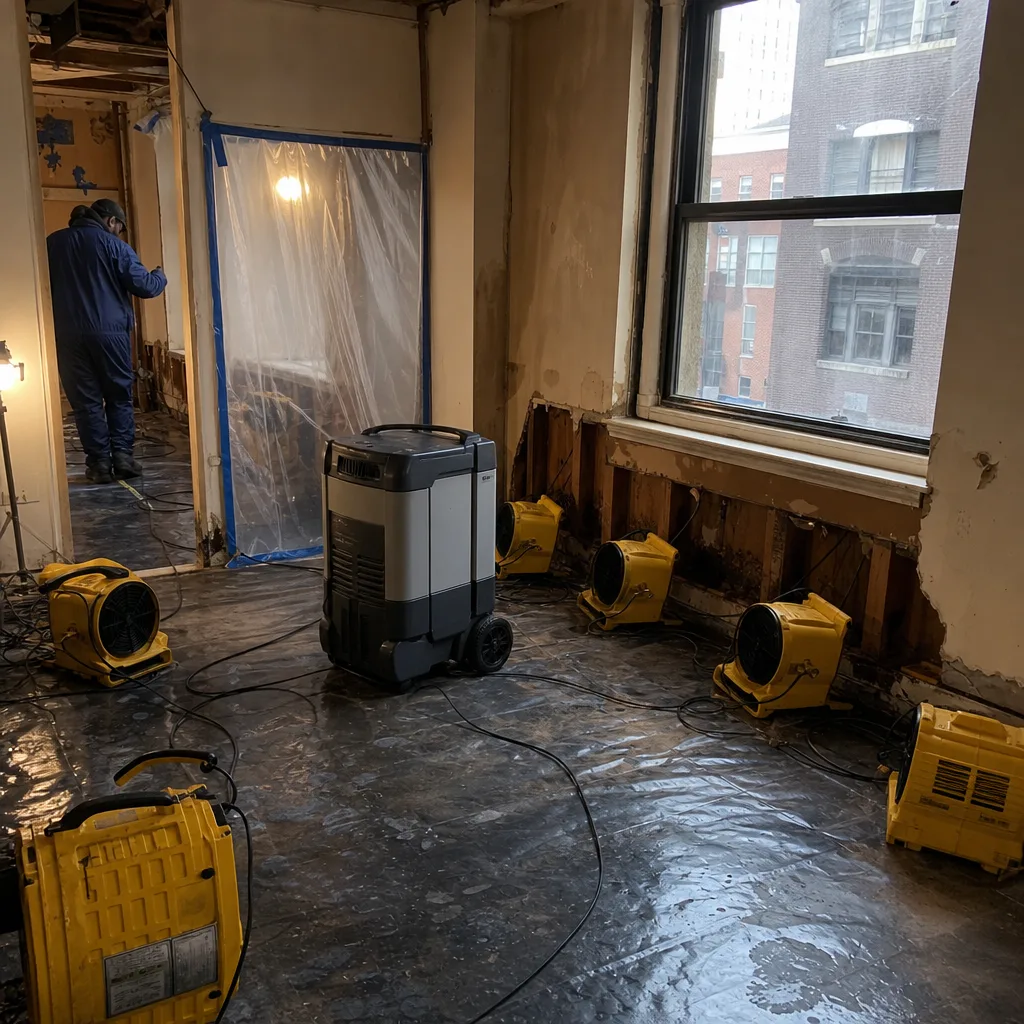
Truck-mounted extraction pulls the black water out fast. We use Dri-Eaz air movers and Phoenix dehumidifiers immediately to start pulling moisture from the structure. In shared-wall buildings, containment goes up on every affected floor to stop aerosolized bacteria from spreading through hallways and stairwells.
Drying & Dehumidification
Sewage water saturates plaster, subfloor, and old-growth wood framing in ways clean water doesn’t. We run continuous drying with daily moisture readings. In pre-war construction, that means checking inside wall cavities, not just surface readings on the face of the plaster.
Cleaning & Sanitization
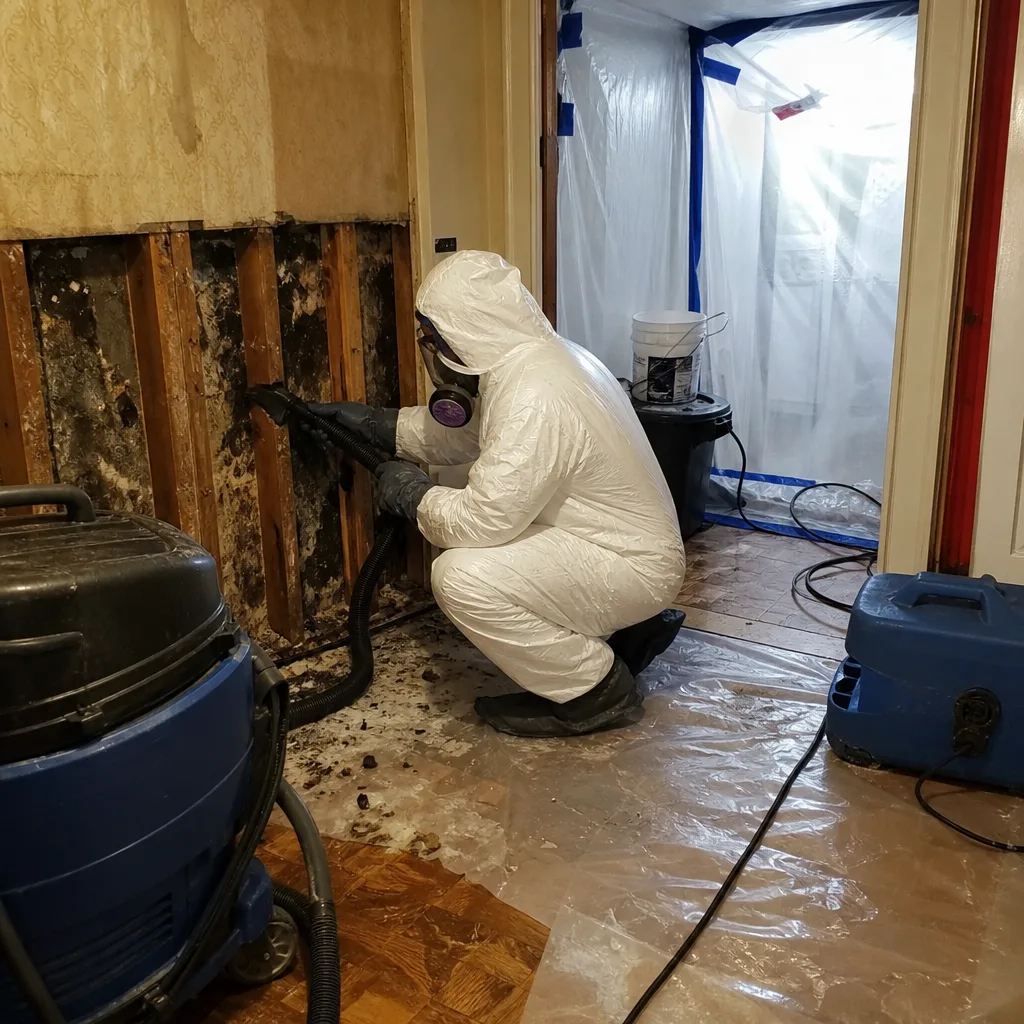
All affected surfaces get cleaned, and hard surfaces are treated with antimicrobial agents rated for Category 3 water. Porous materials that can’t be fully sanitized, like saturated plaster, carpet pad, and certain insulation, get cut out and bagged for disposal.
Containment & Air Scrubbing
HEPA air scrubbers run throughout the affected area to filter airborne contaminants. In multi-unit buildings, this matters for the neighbors too. We also isolate the work zone so sewage odors and particles don’t migrate into clean apartments through the shared hall.
Repairs & Restoration
Once the area is dry, sanitized, and cleared, we rebuild: plaster, drywall, flooring, trim, and paint. If the waste line itself needs repair or replacement, we’ll handle that as part of the scope. One crew from the first call to the final coat of paint.
Need Emergency Sewage Cleanup in Union City Now?
Crews minutes away, answering live 24 hours a day. The sooner we start, the less it costs.
Working With Your Insurance Company
Most Union City property owners have never filed a sewage claim before, and insurance carriers treat Category 3 water differently than a clean-water pipe break. What matters is documentation from the first hour. We photograph every affected area before we touch anything. We take moisture readings and record them daily. We write a line-item scope of work that your adjuster can actually follow, using the same estimating software the carriers use. Then Wade or his office talks directly with the adjuster, so you aren’t the one explaining why a wall cavity needs to be opened on the third floor because the leak started on the fourth. That’s our job, and we’ve done it enough times in Union City’s multi-unit buildings to know how those conversations go.
What We Provide Your Insurer
- Thorough documentation of the loss
- Photos of all damage, room by room
- Moisture readings and drying logs
- A detailed, line-item scope of work
- Direct coordination with your carrier
Built for Union City’s Loss Calendar
Sewage backups in Union City follow a seasonal rhythm, and it’s different from what you’d see in Hoboken or Secaucus. January and February deep freezes strain old supply and waste lines in unheated basement spaces and against exterior walls in pre-war brick buildings. Cast-iron and galvanized pipe from the 1920s and 1930s gets brittle in the cold, and a hairline crack that’s been seeping for months suddenly lets go. Spring brings heavy rain, and Union City’s flat tar-and-gravel roofs drain into old terra-cotta laterals that also carry the building’s sewage. When those laterals clog or collapse, the backup comes up through floor drains in the basement or the ground-floor commercial space. Summer thunderstorms drop a lot of water fast on impervious surfaces, and any drain line that’s partially obstructed backs up under the surge. Nor’easters in the fall and winter do the same thing, but harder, and to more buildings at once.
Sewage Cleanup Across Union City’s Neighborhoods
Union City is small but its building stock changes character block to block, and that changes the sewage job. The Bergenline Avenue corridor is the commercial spine, and nearly every street-level bodega, salon, and restaurant sits directly under two to five floors of apartments. A toilet overflow on the third floor becomes a ceiling leak in the store below within an hour, and suddenly you have two claims, two carriers, and often two languages involved. Over near the Palisades edge, around Palisade Avenue and the numbered streets that climb the ridge, the buildings sit on ledge rock. That’s where buried cast-iron waste lines crack under pressure from the Palisades bedrock, causing slow sewage seepage under basement slabs that most people never notice until someone runs a moisture meter over the concrete during a different job. The blocks west of Kennedy Boulevard, around Summit Avenue and Central Avenue, hold dense clusters of walk-ups with shared stacks between units. A backup in one kitchen line can surface in the apartment next door through a common wall cavity. We know this because we’ve cut into enough of those walls to see exactly how the contamination travels.
Specialized Sewage Cleanup Services We Offer in Union City
Sewage Backup Cleanup
The most common call we get in Union City. A waste line clogs or collapses, and Category 3 water comes up through a floor drain, a toilet, or a basement cleanout. We extract, contain, cut out contaminated material, and sanitize the affected area. In tenements with shared stacks, we check adjacent units for migration before we declare the job done.
Toilet Overflow Cleanup
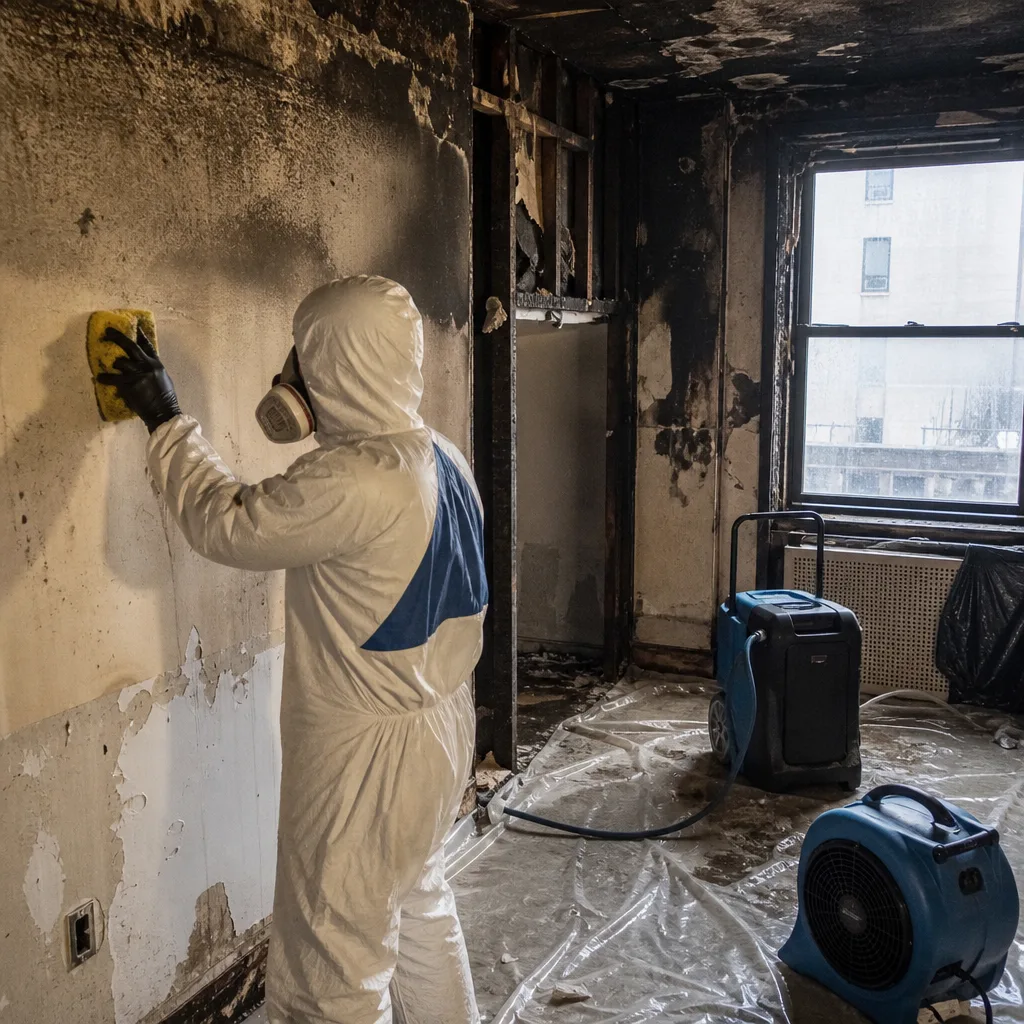
Toilet overflows on upper floors of pre-war walk-ups become multi-floor jobs fast. The water saturates the bathroom floor, drops into the ceiling below, and soaks any plaster or lathe it passes through. In renter-occupied buildings, these overflows often happen and get “cleaned up” by tenants before the landlord ever knows, which means the water has had time to migrate before we’re even called.
Septic Failure Cleanup
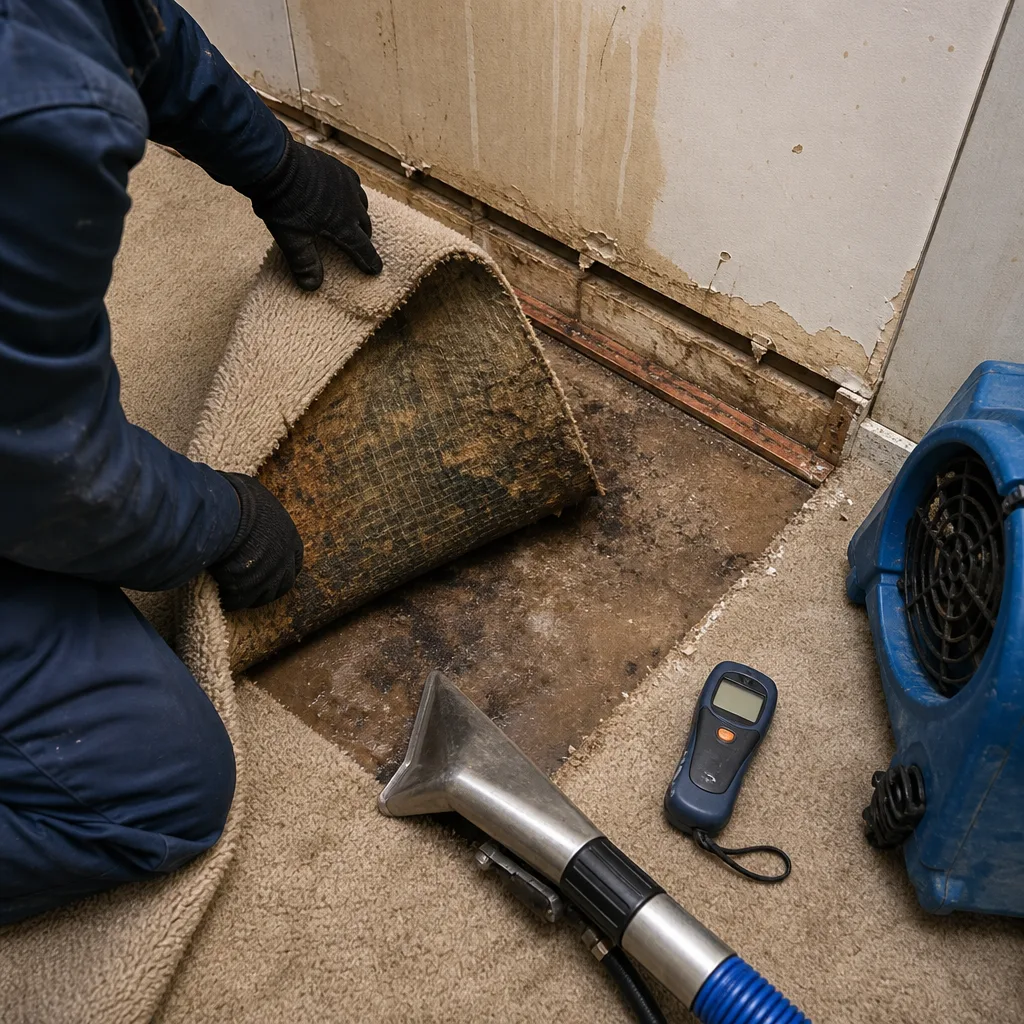
Less common in Union City proper than in the surrounding areas, but some older properties along the Palisades still run lateral lines that act like mini-septic systems, and when they fail, the result is the same Category 3 contamination. We handle the cleanup and coordinate with a plumber or line contractor for the repair.
Black Water Extraction
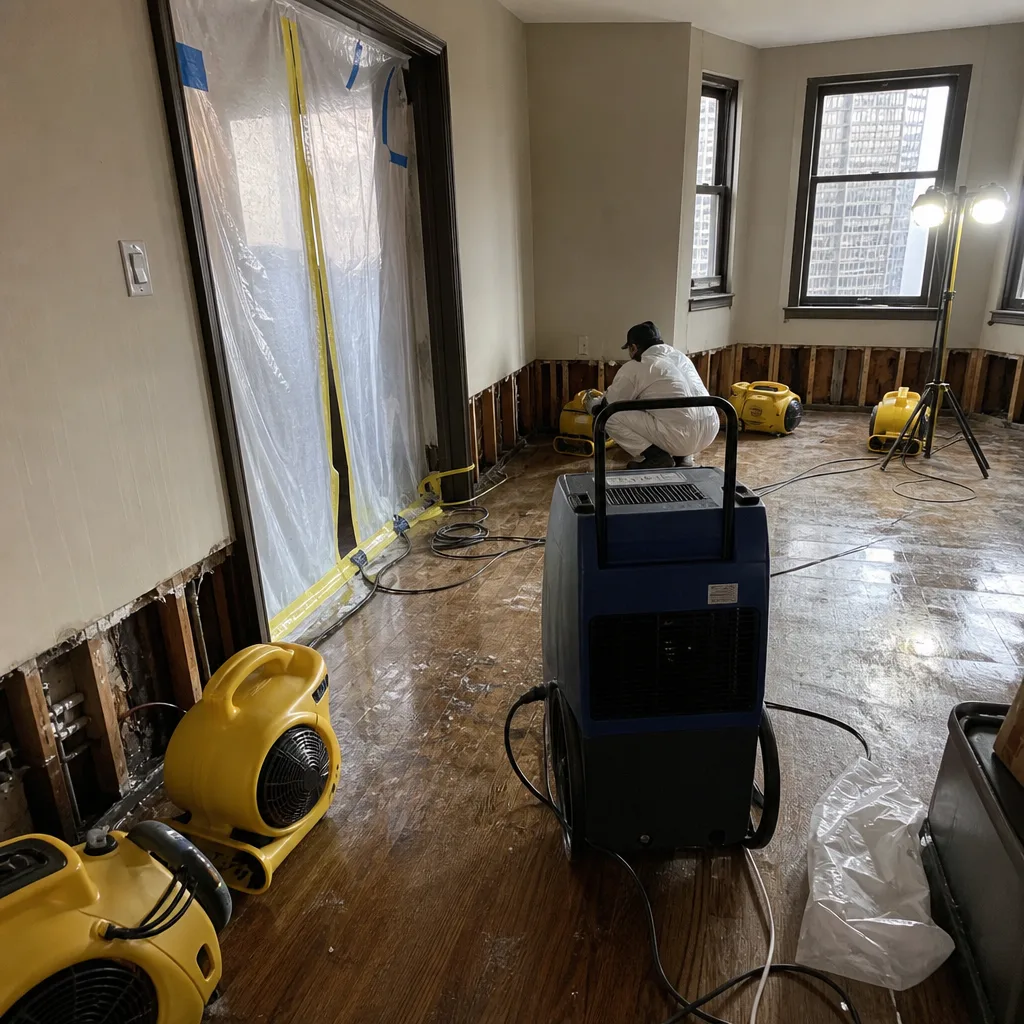
Black water is the technical term for sewage, floodwater, or any water that’s carried fecal matter or other biological contaminants. Extraction has to happen fast and with the right equipment. We run truck-mounted extraction units with the pull to move hundreds of gallons of contaminated water quickly, not a portable unit that’s meant for a small spill.
Crawl Space Sewage Removal
Sewage under a building is a health hazard and a structural one. Union City homes built near the Palisades often have shallow crawl spaces or partial basements with old waste lines running through them. We access the space, pump out the sewage, remove contaminated soil and debris, and treat the area. Then we dry it properly so you aren’t dealing with groundwater seepage for months afterward.
Sanitization & Disinfection
Category 3 water isn’t just about the visible mess. The bacteria it leaves behind in porous materials is what causes long-term odors and health concerns. We apply antimicrobial treatments rated for sewage contamination, run HEPA air scrubbers to clear airborne contaminants, and verify with moisture readings that the affected materials are actually dry, not just dry-feeling to the touch.
What happens when you call
- 1
A real person answersNo phone trees - you reach a local pro.
- 2
You get an upfront price rangeHonest numbers before anyone is dispatched.
- 3
A background-checked tech heads outLicensed & insured, dispatched right away.
- 4
You approve before work beginsNothing starts until you say go.
Sewage Cleanup Costs in Union City, NJ
Honest numbers for Union City. A straightforward toilet overflow in a single apartment with quick response and no structural drying needed typically runs $800-$1,500. A multi-unit sewage backup that requires containment on several floors, extraction, cutting out saturated plaster, and full drying runs $4,000-$12,000 depending on how many units are affected and how far the water traveled. If a waste stack fails and black water reaches a ground-floor commercial space, that number can push past $15,000 once you factor in inventory pack-out, separate containment, and commercial-grade drying. What moves the price: how long the sewage sat before we arrived, whether it penetrated wall cavities, how many units share the stack, and whether the building’s materials are original pre-war plaster or modern drywall. Insurance typically covers sewage backup if you have the right endorsement on your policy. If you don’t, we’ll give you a straight written scope before work starts so you know exactly what you’re approving. Call (607) 703-3408 and we’ll do the free inspection and give you an exact number.
We Also Serve Cities Near Union City
Wade’s Restoration runs sewage cleanup crews into Weehawken, Hoboken, North Bergen, and Secaucus as well as Union City. If your building is in one of those towns, the same crew, same equipment, and same live answer on the phone applies. Call (607) 703-3408 and we’ll head your way.
Serving Union City, NJ - Our Local Coverage Area
We’re based in the Union City area and know this community well. Use the map below to see our service coverage - if you’re nearby, we can almost certainly help.
Union City Sewage Cleanup Questions, Answered
How does sewage cleanup in a Union City tenement differ from a single-family home when multiple units share one waste stack?
A shared waste stack means the sewage doesn’t stop at your unit’s walls. It travels down the stack, and if the blockage is below your floor, the backup can surface in another apartment, or the contaminated water can migrate through the wall cavity between units. A proper job requires checking adjacent units, containing each affected area separately, and often coordinating multiple claims at once. In a single-family home, the scope is contained to one household.
My ground-floor commercial space on Bergenline Avenue got sewage from the apartment upstairs. Do I need separate documentation for my insurer?
Yes. Your commercial policy and the residential policy upstairs are separate claims, and the adjusters will want separate documentation. We photograph everything, write separate scopes for each affected space, and keep drying logs for each claim. We’ll talk to both adjusters directly so the residential carrier and the commercial carrier each see the documentation that matters to them. Call (607) 703-3408 and we’ll walk you through it.
How quickly can mold start after a sewage backup in a 1920s brick tenement with plaster walls?
Fast. In the high humidity of a closed pre-war building, mold growth can begin within 24 to 48 hours, and plaster walls hold moisture longer than drywall. Because the brick and plaster wick water upward and outward, the visible stain is often smaller than the actual wet area behind the wall. This is why we cut out saturated material quickly rather than waiting to see if it dries.
Do you handle sewage cleanup in crawl spaces under row houses near the Palisades?
Yes. Crawl space sewage removal is one of the jobs we do regularly in the areas near the Palisades where row houses sit on ledge or shallow foundations. We access the space, pump out the sewage, remove contaminated soil and debris, sanitize, and dry. We’ll also flag what caused the backup so you can address the line issue before it happens again.
What does ‘category 3 water’ mean for what you have to cut out in my apartment?
Category 3 water is sewage, and the rule is that porous materials it touched must go. That means saturated plaster, carpet pad, insulation, and any wood that’s absorbed the water get cut out and bagged. Hard surfaces like tile and concrete can sometimes be cleaned and sanitized if they’re not cracked. We’ll tell you exactly what needs to come out and why before we start cutting. Call (607) 703-3408 for a free inspection.
How fast can you actually get to a sewage backup in Union City?
We aim for 45 minutes from the time you hang up. The number is answered live, and the crew that heads out is based near Union City. It’s Wade or his own crew, not a subcontracted team from another county. In a sewage backup, that speed matters because the contaminated water is moving through your building’s structure that entire time.
Can we stay in the apartment during sewage cleanup?
Usually not for the affected areas. Category 3 water carries pathogens that get airborne during drying and cutting. We set up containment and run HEPA air scrubbers to keep the contamination isolated, but if the exposure is in your living space, you’ll want to plan for temporary relocation while the work is underway. If the contamination is contained to a basement or crawl space, staying may be possible. We’ll give you a straight answer based on what we find.
What should I do in the first 30 minutes after a sewage backup?
Don’t flush anything. Don’t run water in the affected area. Don’t try to vacuum up sewage with a household vacuum. Turn off the water if you can locate the shutoff, keep people and pets away, and call (607) 703-3408. Take photos if it’s safe to do so. The faster we get extraction running, the less material gets cut out and the lower the total cost.
Written by Wade Ferris, Owner at Wade’s Restoration, serving Union City since 2007.