
Free visual inspection and a written scope of work before any mitigation begins - photos, moisture readings, and drying logs go in your claim file
The scope we write is the scope we bill. Anything new gets shown to you, in writing, before we touch it.

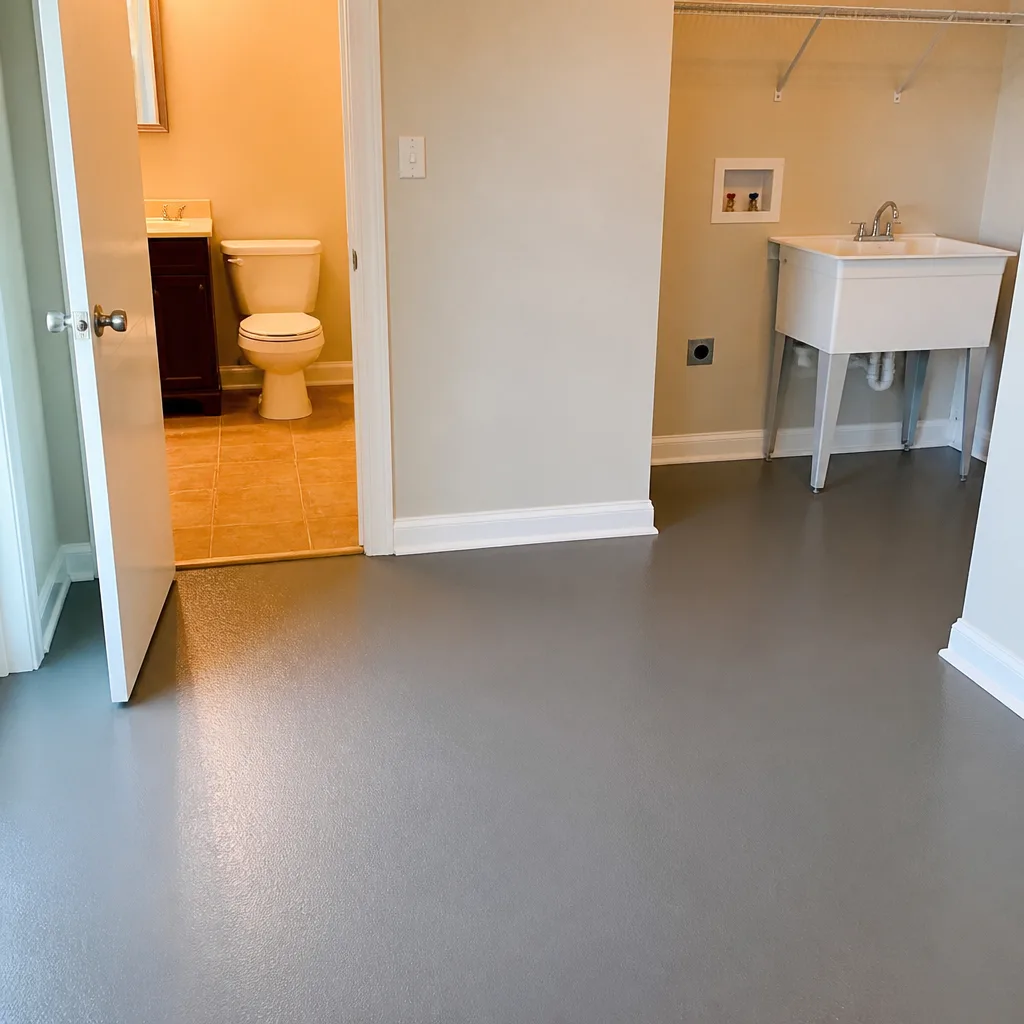
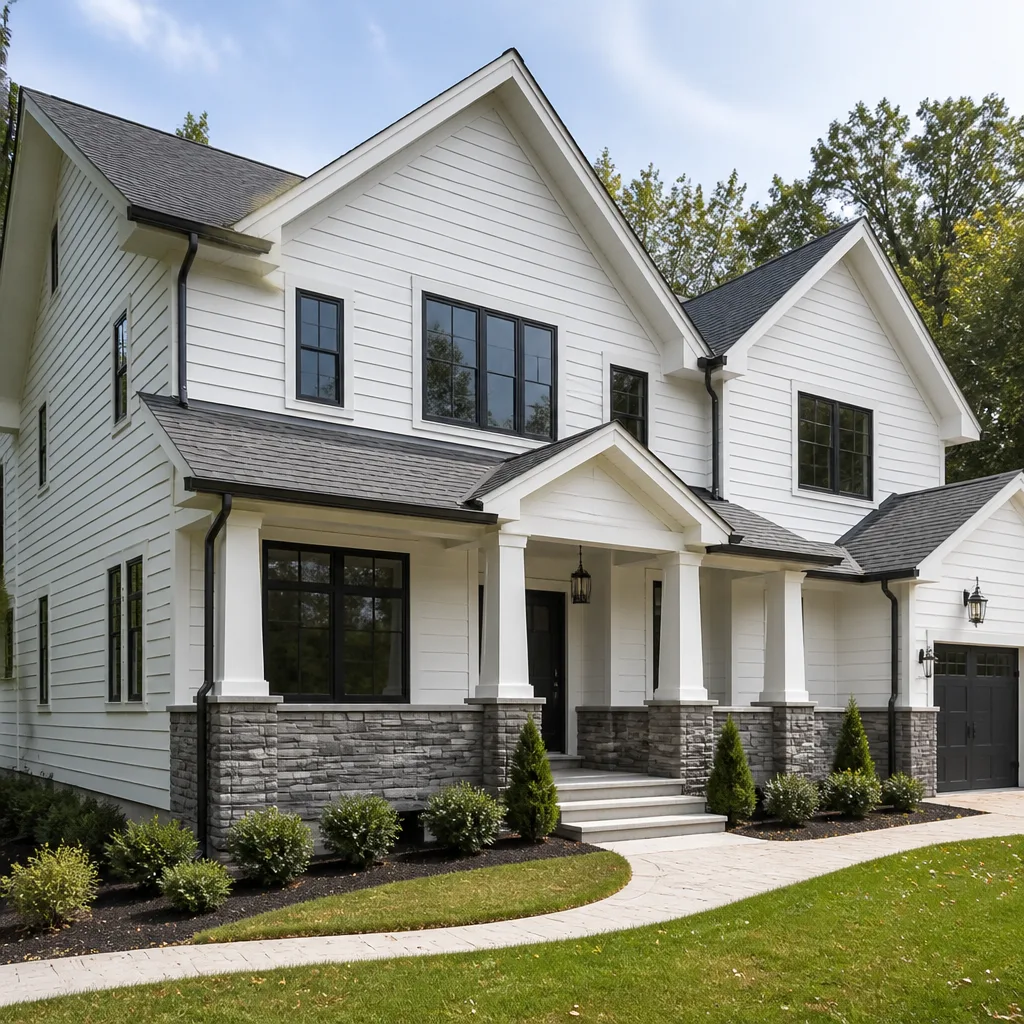
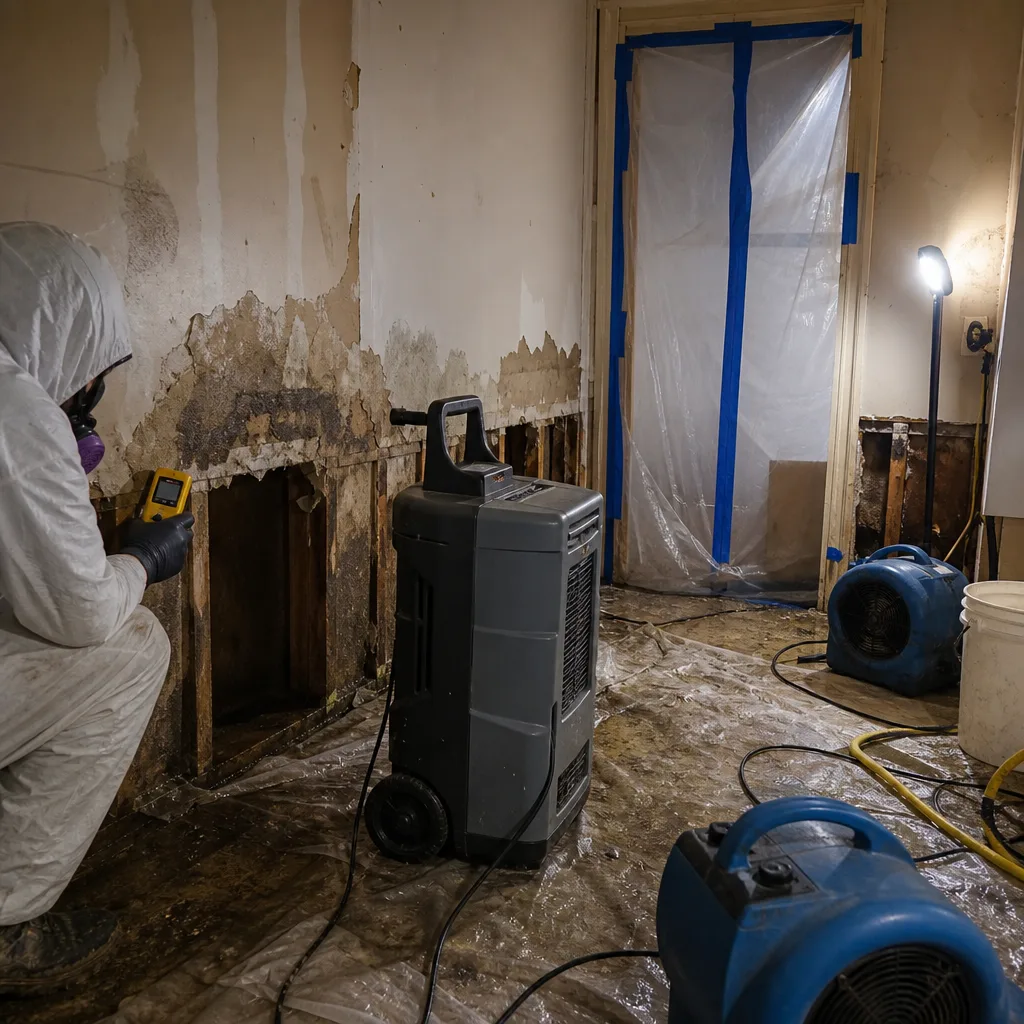 Before
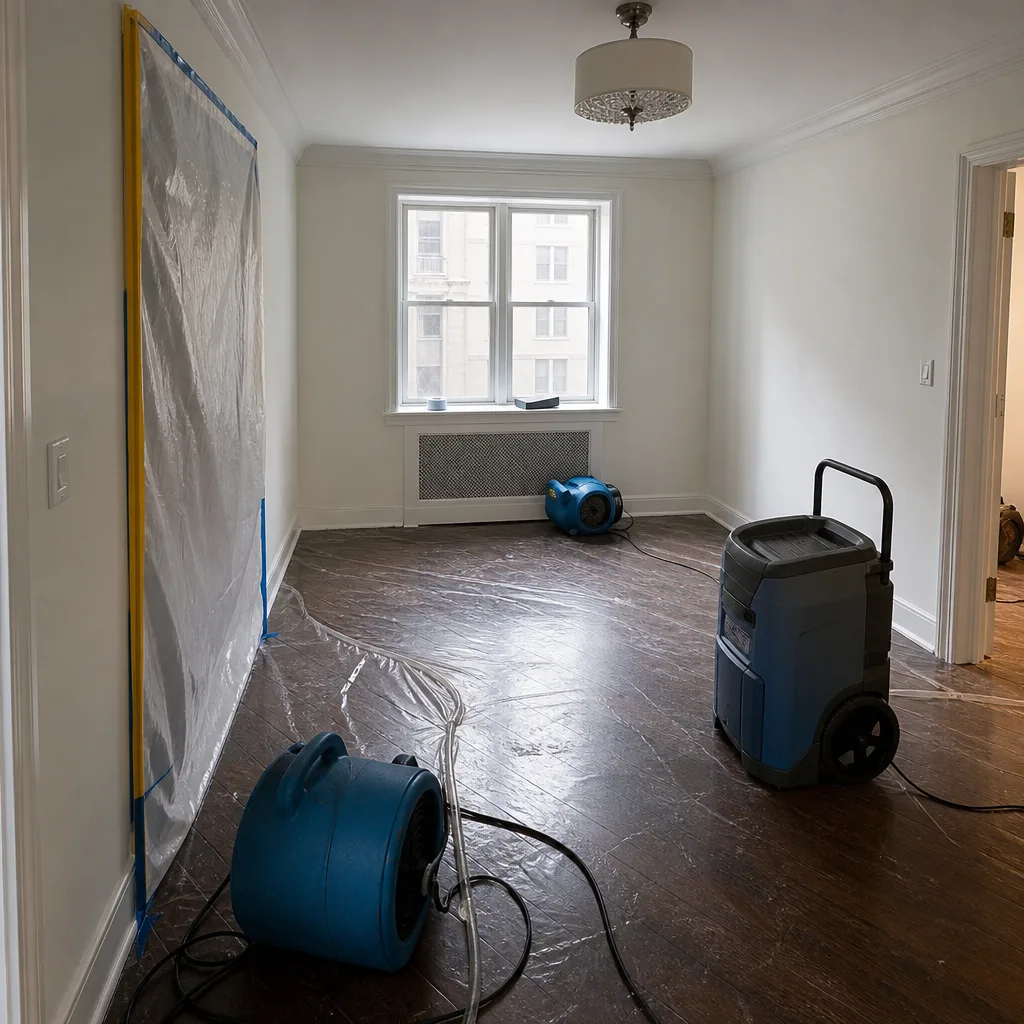 After
After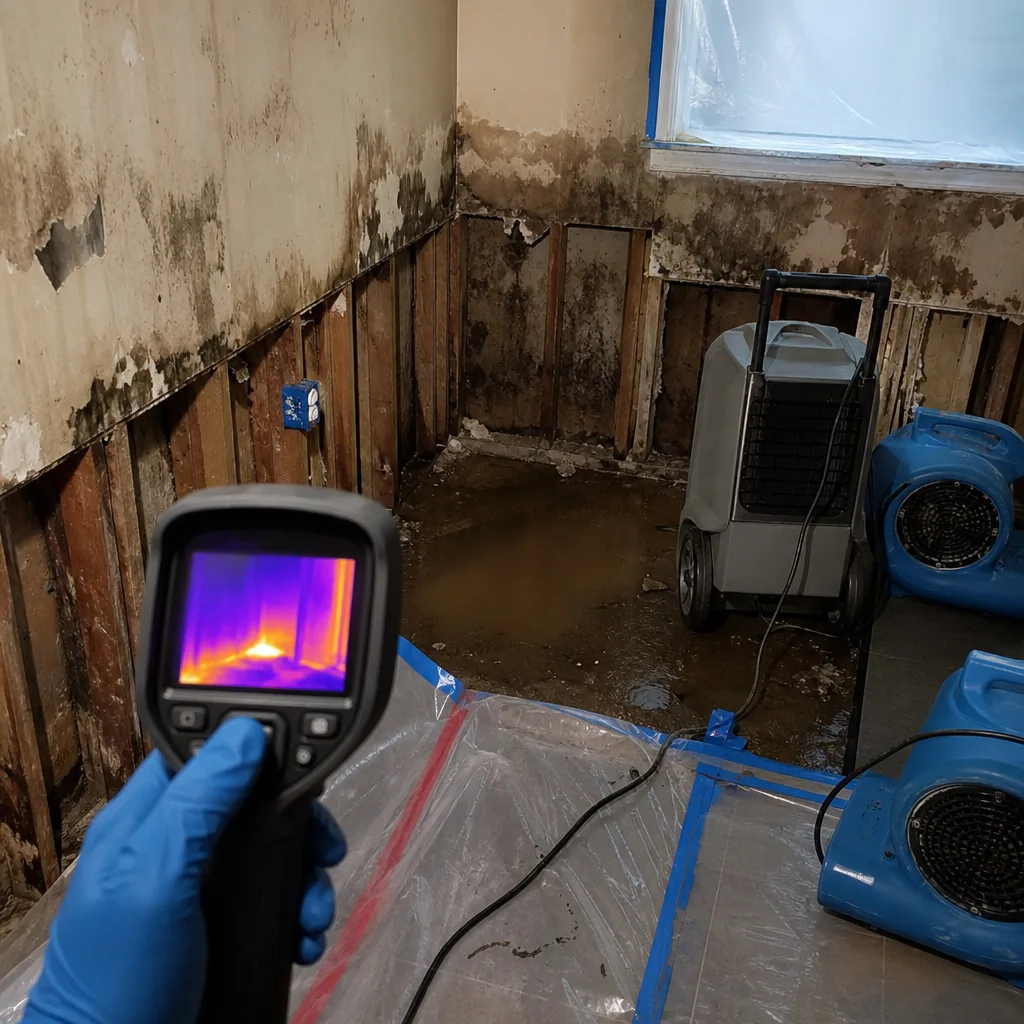 Before
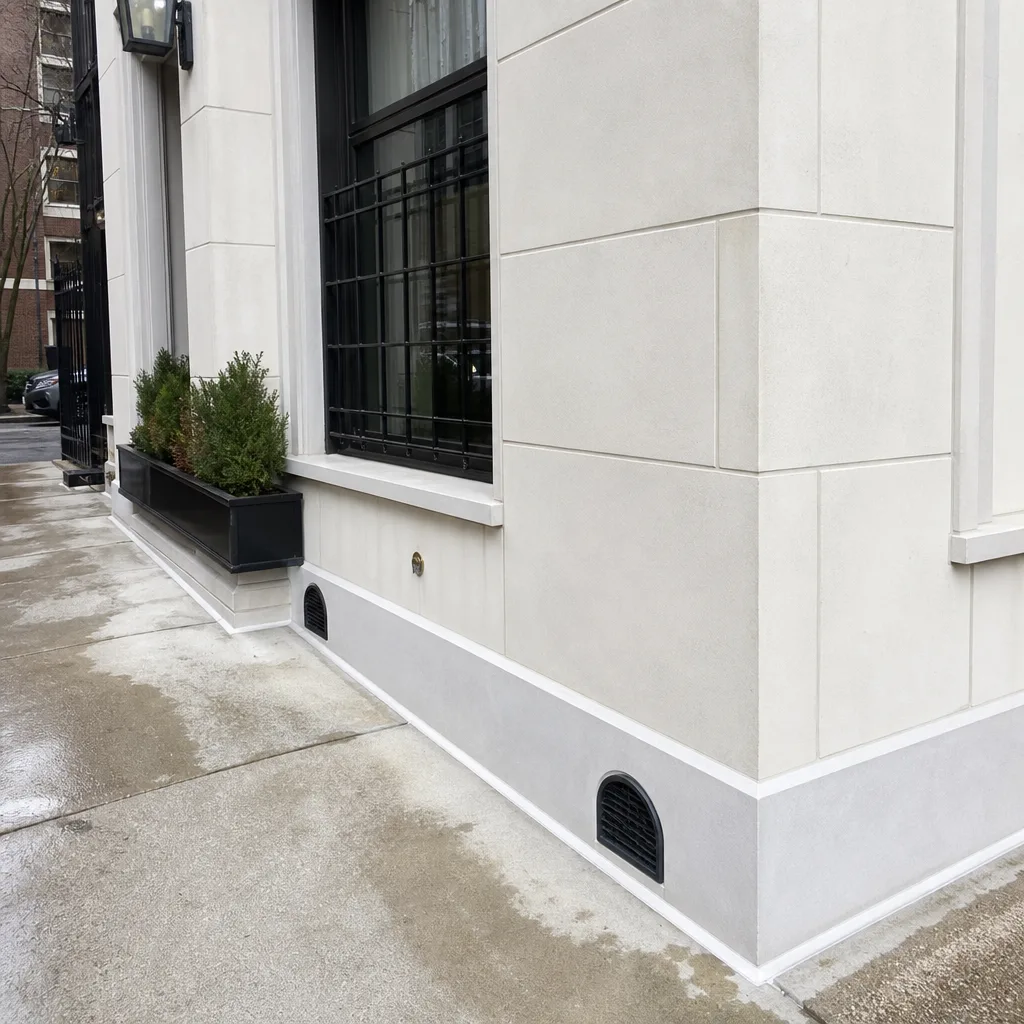 After
After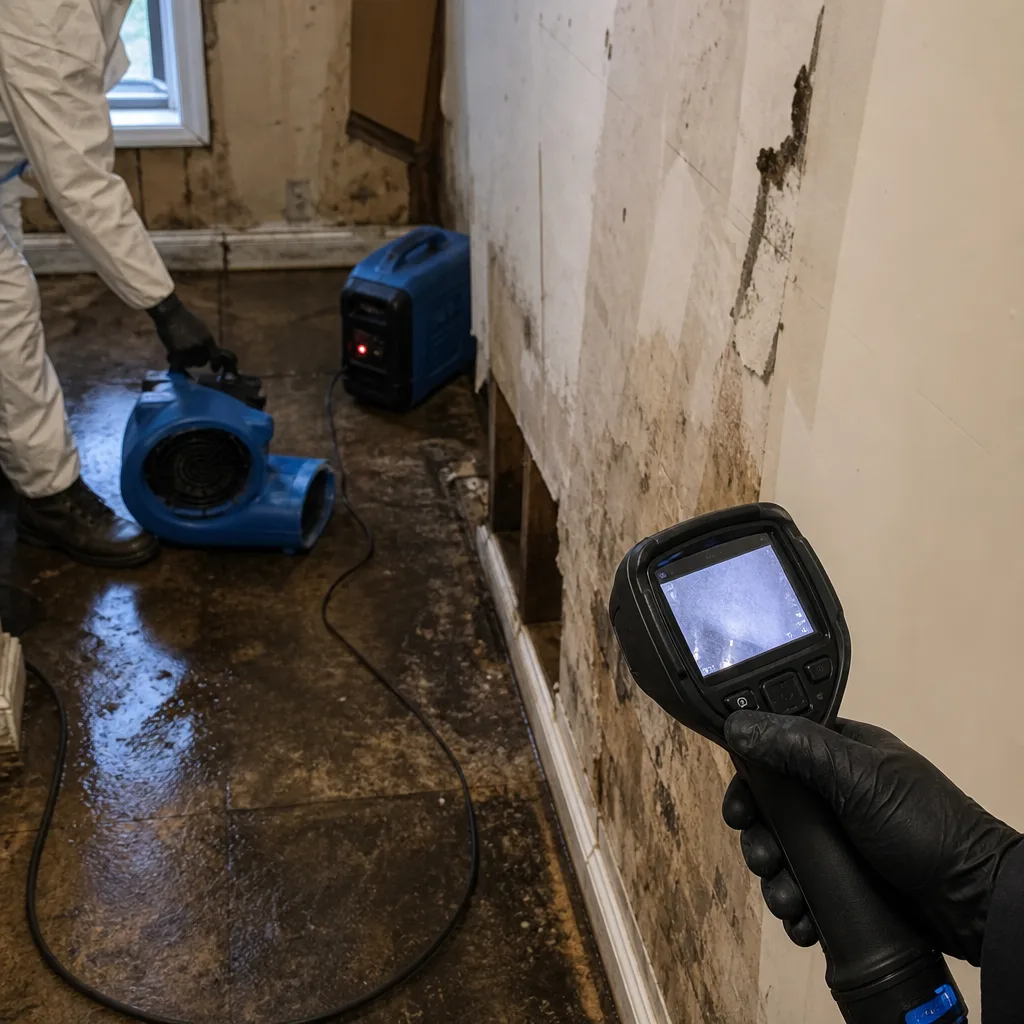 Before
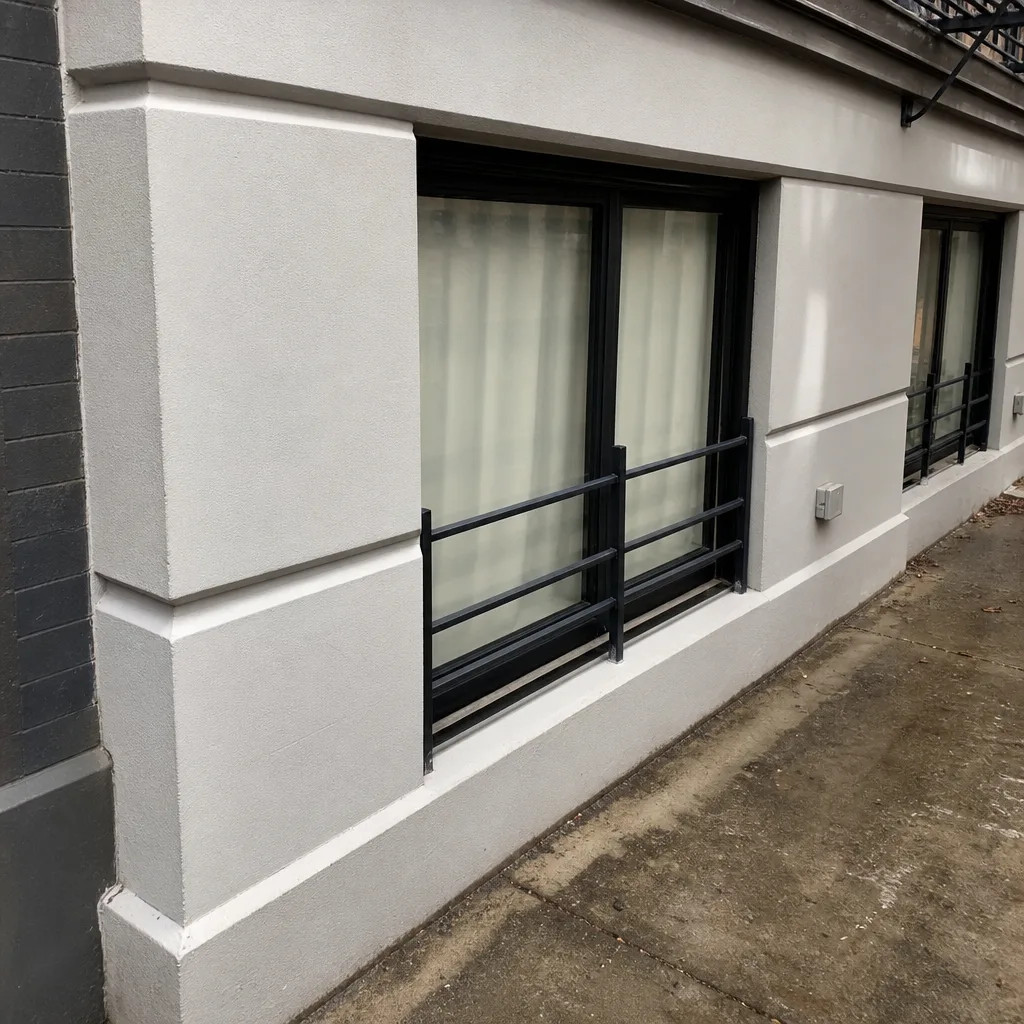 After
After24/7 Emergency Sewage Cleanup in Long Island City
Raw sewage in your Long Island City property spreads contamination fast, and it won’t wait for a nine-to-five schedule. Call (607) 703-3408 any hour, day or night. You’ll reach a live person, not a machine. Wade Ferris heads out to Long Island City himself, often inside 45 minutes, with commercial pumps and extraction equipment ready to go. The first hour determines whether contaminated water stays in one room or travels through walls, under floors, and into the building systems below. In Hunters Point and along Center Boulevard, that water goes downhill fast to basement mechanical rooms that sit near sea level. Every hour a Category 3 spill sits means more saturated drywall, more wicking into concrete, and more of your life interrupted. The earlier we pull black water out, the less gets torn out and replaced. The visual inspection we do when we get there costs nothing.
Understanding Sewage Cleanup Severity in Long Island City Properties
There is a real difference between a toilet overflow in a fifth-floor apartment and Category 3 black water that has breached ground-level mechanical rooms. In Long Island City, we classify loss severity through the IICRC framework: Category 1 is clean water from a supply line, Category 2 carries gray water from washing machines or sinks, and Category 3 is black water loaded with sewage, river overflow, or other pathogens. LIC’s pre-war masonry conversions with their thick concrete slab floors wick moisture more slowly but hold it longer. We run moisture mapping across concrete, not just the surface you can see. In the glass-and-steel towers by the East River, a single stack of wet walls can carry contamination vertically across multiple units. We map those paths using thermal imaging and hygrometers, floor by floor, not just where the water visibly pooled. A false read in a converted warehouse loft on Jackson Avenue means hidden sewage still blooming inside a wall cavity a week later.
Why Long Island City Property Owners Choose Wade’s Restoration
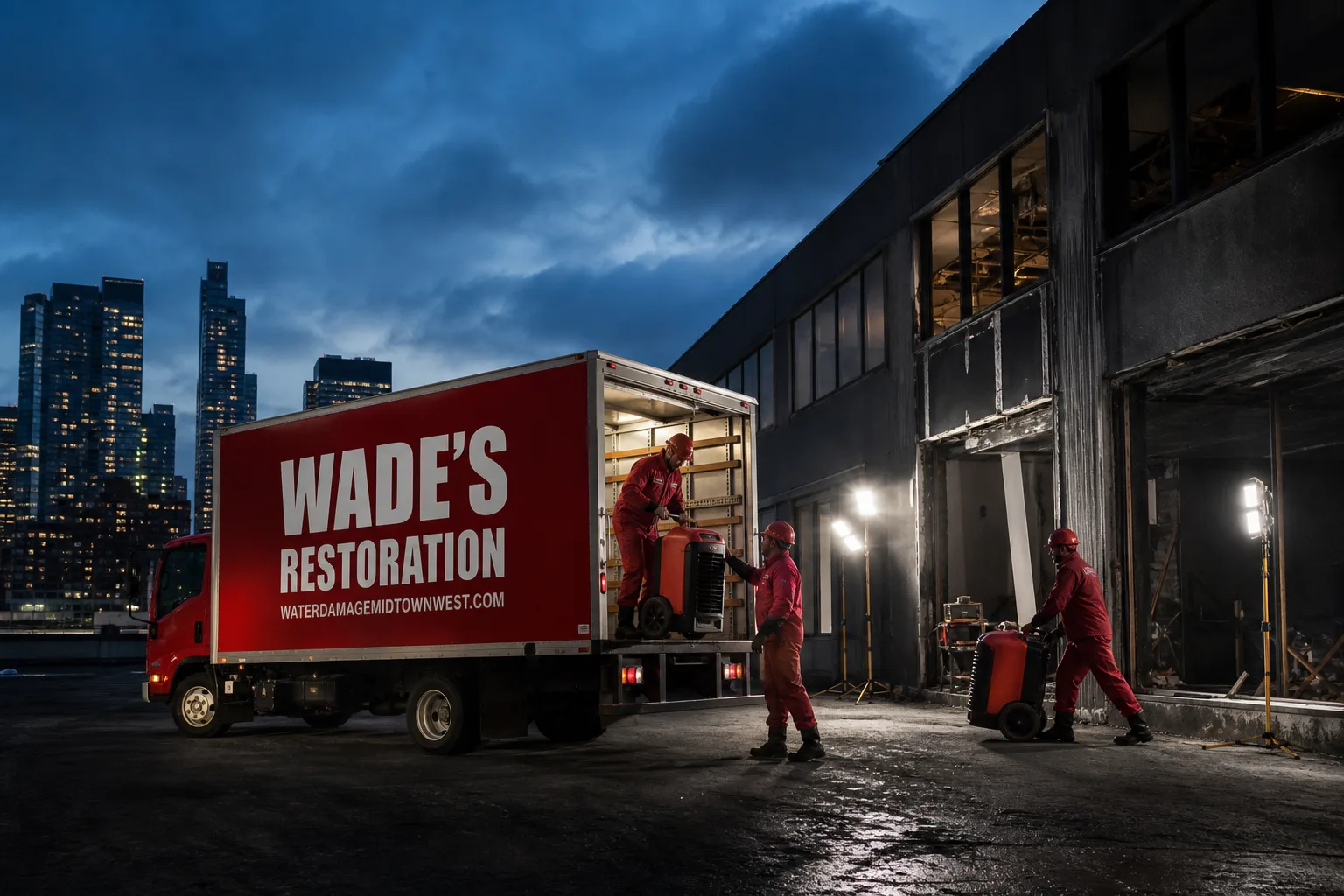
- 45-minute response commitment. Wade heads out the moment you call. Not a call center, not an answering service. The truck is loaded and the route to Long Island City is mapped before the phone hits the cradle.
- 24/7 live answer, real person. You get a neighbor who picks up. Wade answers his own phone, including at two in the morning when the backup is spreading across the floor.
- IICRC-certified crews. WRT, FSRT, and AMRT credentials on the team. That matters when the job requires antimicrobial treatment and containment, not just a mop.
- Free visual inspection. We come out, assess the damage, and give you a straight read on what this will take. No charge for that.
- Direct insurance billing. We bill your carrier, deal with the adjuster, and make sure you are not the one stuck relaying messages between two parties.
- One team from extraction to reconstruction. We do the sewage cleanup and then we rebuild the wall, floor, or mechanical room. You are not juggling two companies.
Our Sewage Cleanup Process
Inspection & Assessment
We walk the impact zone, check for hidden spread using thermal imaging, and classify the water. In LIC towers, that includes checking the units above and below a failed drain line.
Extraction & Stabilization
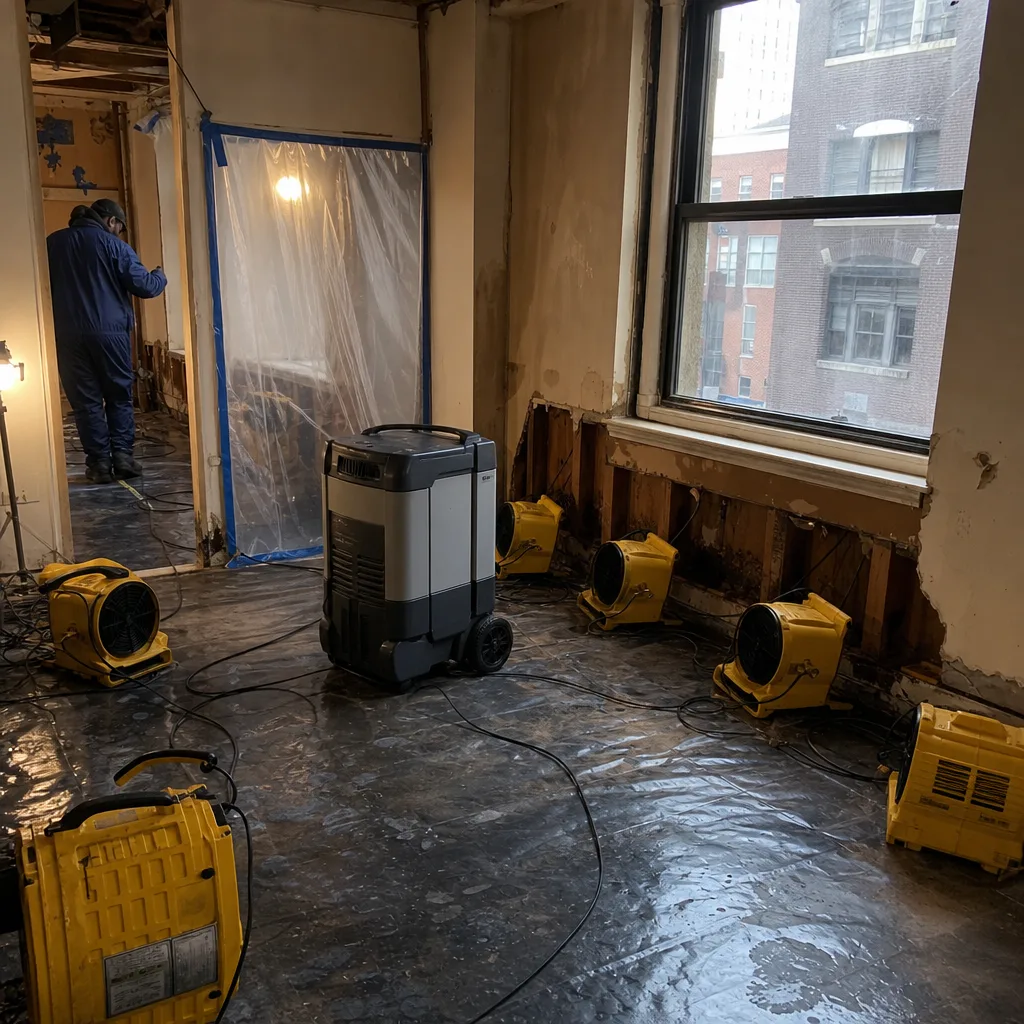
We pull black water and contaminated solids using XPOWER pumps and truck-mounted extraction. Contaminated porous material is cut and bagged. The site is shored up so nothing else spreads.
Drying & Dehumidification
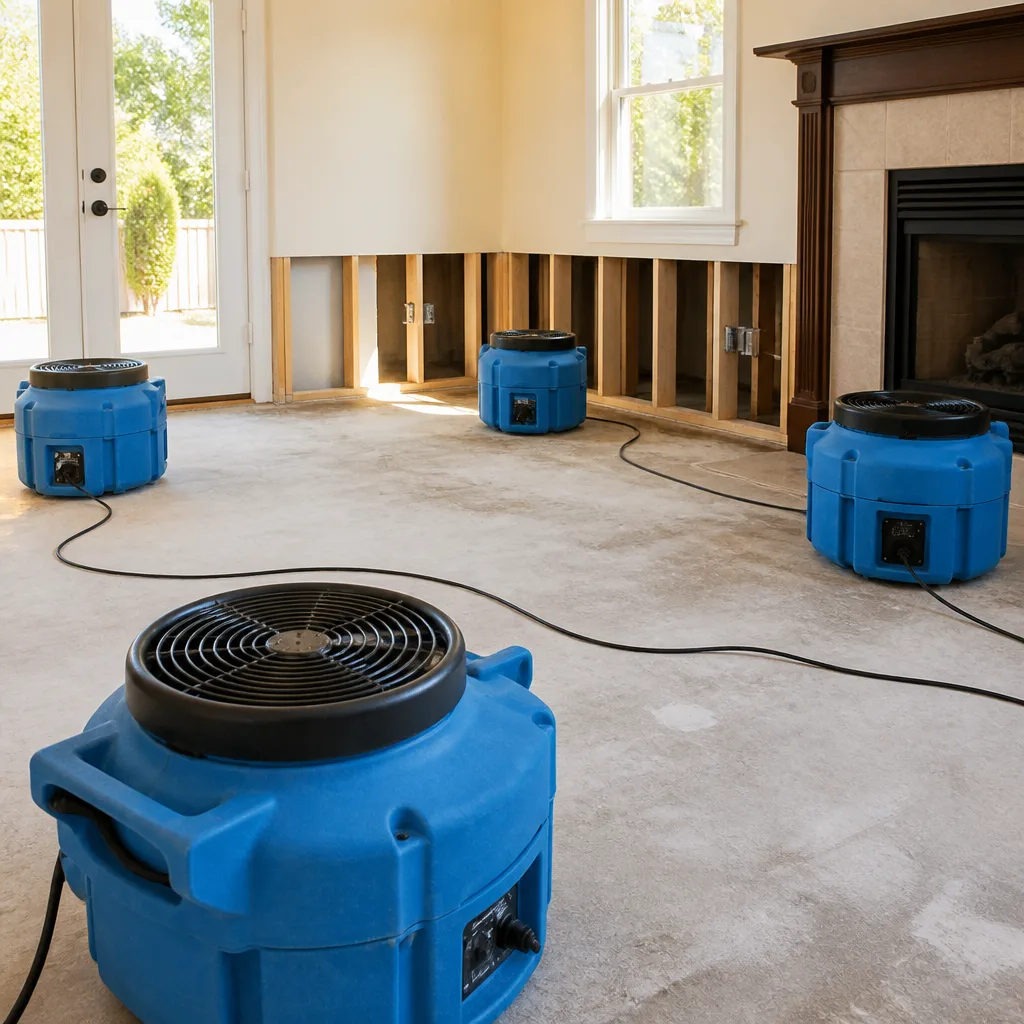
Dri-Eaz dehumidifiers and air movers run against moisture that wicked into concrete and masonry. In LIC’s slow-drying tower footprints, we watch readings daily and hand you the full log at the end.
Cleaning & Sanitization
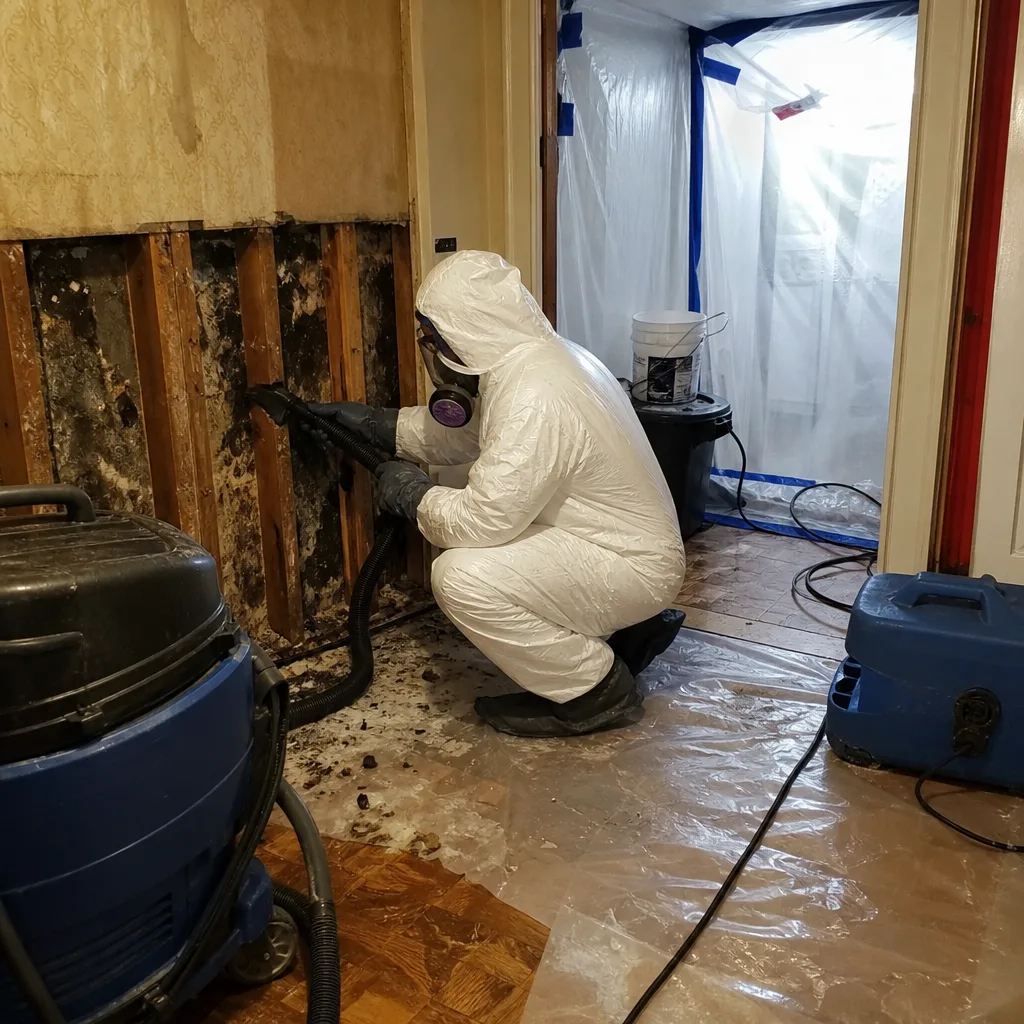
HEPA air scrubbers run while antimicrobial agent is applied to all affected surfaces. We shoot for clearance testing, not just visual proof.
Specialty Treatment for Sewage Cleanup
For black water carrying East River surge or Newtown Creek overflow, we run full contamination containment and a documented disinfection pass. Not a gray water quick-wipe.
Repairs & Restoration
We handle our Reconstruction & Cleanup in Long Island City, including drywall, flooring, baseboard, and mechanical room surfaces. Building engineers are looped in where systems are involved.
Need Emergency Sewage Cleanup in Long Island City Now?
Crews minutes away, answering live 24 hours a day. The sooner we start, the less it costs.
Working With Your Insurance Company
Sewage losses in Long Island City get tangled quickly. A high-rise backup on Center Boulevard might involve the building’s master policy, your own flood or sewer endorsement, and a board that wants their own adjuster in the room. We have been through this enough to know that the insurance company does not question work when the documentation is airtight. From the first hour, our team photographs every wet surface, logs every moisture reading, and writes a line-item scope that matches what actually happened. We speak directly with your adjuster. You do not have to repeat the story three times. If your carrier wants more proof of a Category 3 designation, we hand them the classification, the sampling, and the drying log. It makes a difference, especially in Long Island City where flood-related sewage claims get extra scrutiny.
What We Provide Your Insurer
- Thorough documentation of the loss
- Photos of all damage, room by room
- Moisture readings and drying logs
- A detailed, line-item scope of work
- Direct coordination with your carrier
Built for Long Island City’s Loss Calendar
Most people think sewage backup happens on random bad days. In Long Island City, the bad days follow a pattern. January deep freezes snap cast-iron drain lines in converted warehouse buildings on Vernon Boulevard. February and March bring snowmelt and groundwater pressure against pre-war foundations in Dutch Kills. Spring thaw saturates the fill under Hunters Point, pushing water table into sub-grade floors that were never designed to be living space. Summer thunderstorms overwhelm combined sewers near Queens Plaza and send water backward through basement drains. Nor’easters in October and November pile storm surge against the East River bulkheads, and in the towers on Center Boulevard, that means sewage-contaminated water finds the mechanical rooms first. We see the same blocks flood on the same storms because LIC’s drainage sits low and the streets slope toward the water. The calendar does not surprise us anymore.
Sewage Cleanup Across Long Island City’s Neighborhoods
We run sewage cleanup calls from Hunters Point to Court Square. In Hunters Point, the towers on Center Boulevard and along 5th Street sit inside FEMA Flood Zone AE; when the East River surges, black water enters loading docks and lobby mechanicals, and extraction has to start before the building’s elevators short. Over in Dutch Kills, blocks of older rowhouses and factory conversions share drain lines that have not been upgraded in decades; one backed-up building on 39th Avenue can push sewage into three neighboring properties before anyone notices. Court Square brings its own problem: mixed-use buildings with ground-floor restaurant grease lines running inches from residential pipes. We have pulled black water from a Jackson Avenue basement where the source was a Chinese restaurant’s severed waste line. Queens Plaza and the low blocks around it flood from combined sewer overflow in heavy rain. When stormwater and sewage share a pipe and the pipe can’t take it, the mix comes up through floor drains. Response time matters more in Hunters Point than almost anywhere else in Queens because the water has so far to travel before it pools.
Specialized Sewage Cleanup Services We Offer in Long Island City
Black Water Extraction
Long Island City’s waterfront blocks are no place to treat black water casually. FEMA Flood Zone AE overflow combines with Newtown Creek outfalls to produce contamination far beyond a toilet backup. We run extraction with XPOWER pumps, then containment before a single fan goes on. This is not gray water treatment.
Sewage Backup Cleanup
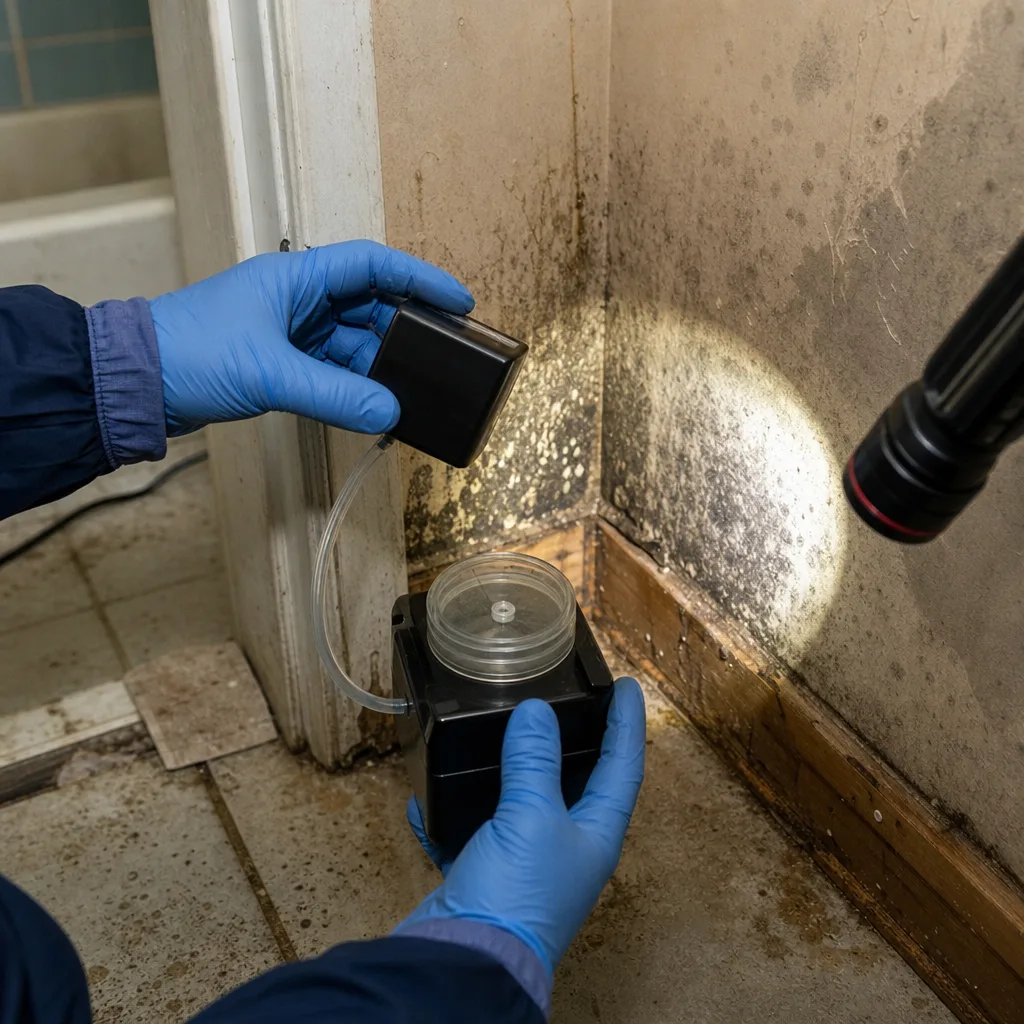
A backed-up drain in a pre-war loft conversion on 44th Drive can travel through old cast-iron lines behind concrete walls. We inspect what is visible, then cut safe access to check what is not. In LIC’s converted factory units, the pipe runs are long and the slab is thick. Moisture mapping without access cuts misses hidden contamination every time.
Sanitization & Disinfection
After black water is out, the unseen work begins. We apply antimicrobial treatment to every surface the water touched, including subfloor cavities and the underside of concrete slabs where odor hides. In high-rise towers, that means treating stacked wet-wall cavities floor by floor, not just where the water pooled.
We also handle Sewage Cleanup for toilet overflows, septic failures, and crawl space sewage removal across Long Island City. The same crew, the same standard, the same log handed to you at the end.
What happens when you call
- 1
A real person answersNo phone trees - you reach a local pro.
- 2
You get an upfront price rangeHonest numbers before anyone is dispatched.
- 3
A background-checked tech heads outLicensed & insured, dispatched right away.
- 4
You approve before work beginsNothing starts until you say go.
Sewage Cleanup Costs in Long Island City, NY
Cleanup costs in Long Island City run higher than the borough average, mostly because the building stock is harder to dry and the water is more contaminated. A standard toilet overflow cleanup in an apartment on 31st Street runs $1,200 to $2,800, assuming containment is set quickly and no structural cuts are needed. A black water extraction involving storm surge in Hunters Point starts at $3,500 and can reach $9,000 or more when mechanical rooms, elevator pits, or multiple stacked units are involved. Sanitization Services in Long Island City for a pre-war loft with hidden pipe runs runs $2,000 to $5,000 depending on access. Pre-war slab and masonry drying runs on time, not square footage; a long slow dry costs more in equipment days. We bill insurance directly for covered losses. For anything not covered, we write a firm scope before the first tool comes off the truck. If you have an estimate from another outfit, bring it. We will give you a free second opinion, and seniors and veterans get 10% off always. Call (607) 703-3408 and we will walk your specific loss before anyone commits.
We Also Serve Cities Near Long Island City
Our Long Island City crews run calls into neighboring Astoria as well, where the rowhouse plumbing is different but the stakes are the same. Same live answer, same 45-minute response, same owner on the road.
Serving Long Island City, NY - Our Local Coverage Area
We’re based in the Long Island City area and know this community well. Use the map below to see our service coverage - if you’re nearby, we can almost certainly help.
Long Island City Sewage Cleanup Questions, Answered
Does sewage cleanup in Long Island City require special handling for East River surge water?
Yes. East River surge water in Long Island City carries sewage, industrial runoff from Newtown Creek, and marine pathogens. It is treated as Category 3 black water, not gray water. That means full antimicrobial treatment, containment, and documented disinfection, not just extraction and drying.
How do you prevent mold after sewage cleanup in LIC’s converted warehouse lofts?
Mold prevention in LIC’s converted warehouse lofts starts with real moisture mapping through concrete slabs and behind masonry, then HEPA air scrubbing and Dri-Eaz dehumidification until readings bottom out. The slow-drying footprint of these buildings means we run equipment longer and log every reading daily.
What is the difference between sewage cleanup in a LIC high-rise versus a brownstone?
In a high-rise, a sewage backup travels vertically through wet walls and floor assemblies, so we inspect and treat the units above and below the source. In a brownstone or rowhouse, the water moves horizontally through floor joists and basement slabs. LIC’s towers demand floor-by-floor containment and building engineer coordination.
Can you clean up a sewage backup in a basement mechanical room without shutting down building systems?
Often yes. We set containment around the affected mechanical equipment and coordinate with building engineers to keep critical systems running where safe. In some LIC towers, the mechanical room sits only a few feet above the East River surge line, so we plan extraction to avoid adding water damage to live electrical.
Does homeowners insurance cover sewage backup cleanup in Long Island City?
Standard homeowners policies often exclude sewer backup unless you carry a specific endorsement. In Flood Zone AE, surge-related sewage losses may fall under flood insurance instead. We bill your carrier directly and work with your adjuster to sort out coverage. Photo documentation from the first hour matters a lot in these claims.
How fast can you get to my building in Long Island City?
Usually within 45 minutes. Wade heads out from our New York City metro base the moment you call (607) 703-3408. In Hunters Point and Court Square, we are often on scene faster than a national franchise can even schedule a callback.
How long does sewage cleanup and drying take in LIC?
Most LIC sewage jobs run 3 to 7 days for extraction, drying, and Long Island City Commercial Restoration. Pre-war concrete and masonry extend drying time. Repairs and reconstruction run on top of that. We give you a clear timeline after the inspection.
What should I do in the first 30 minutes after a sewage backup?
Keep people and pets away from the water. Turn off the water source if you can reach it safely. Do not flush toilets or run sinks connected to the affected line. Kill power to any submerged outlets. Then call (607) 703-3408. Do not use a household fan; it spreads contamination.
Written by Wade Ferris, Owner at Wade’s Restoration, answering his own phone for Long Island City since the first call came in.