
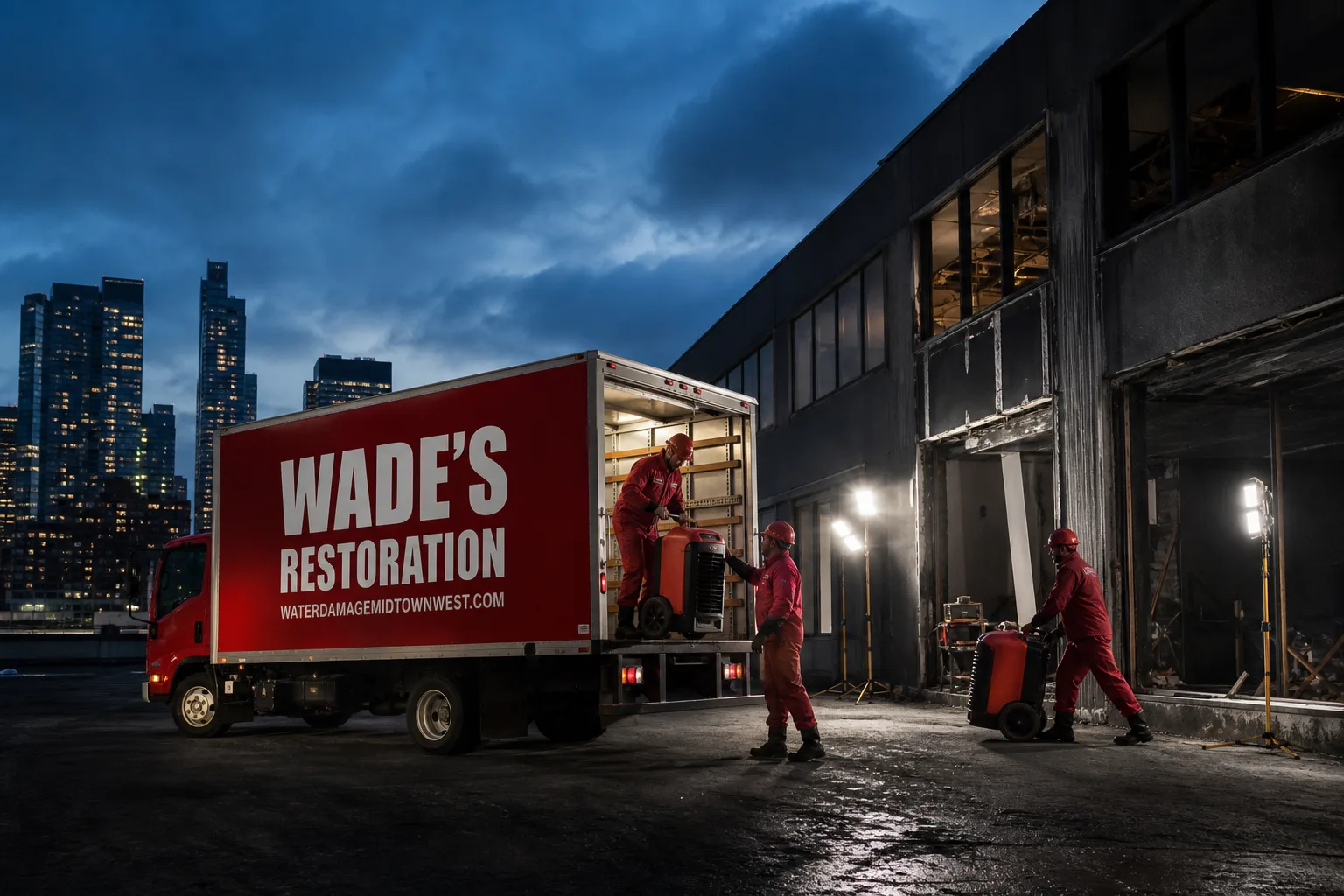
Free visual inspection and a written scope of work before any mitigation begins - photos, moisture readings, and drying logs go in your claim file
The scope we write is the scope we bill. Anything new gets shown to you, in writing, before we touch it.
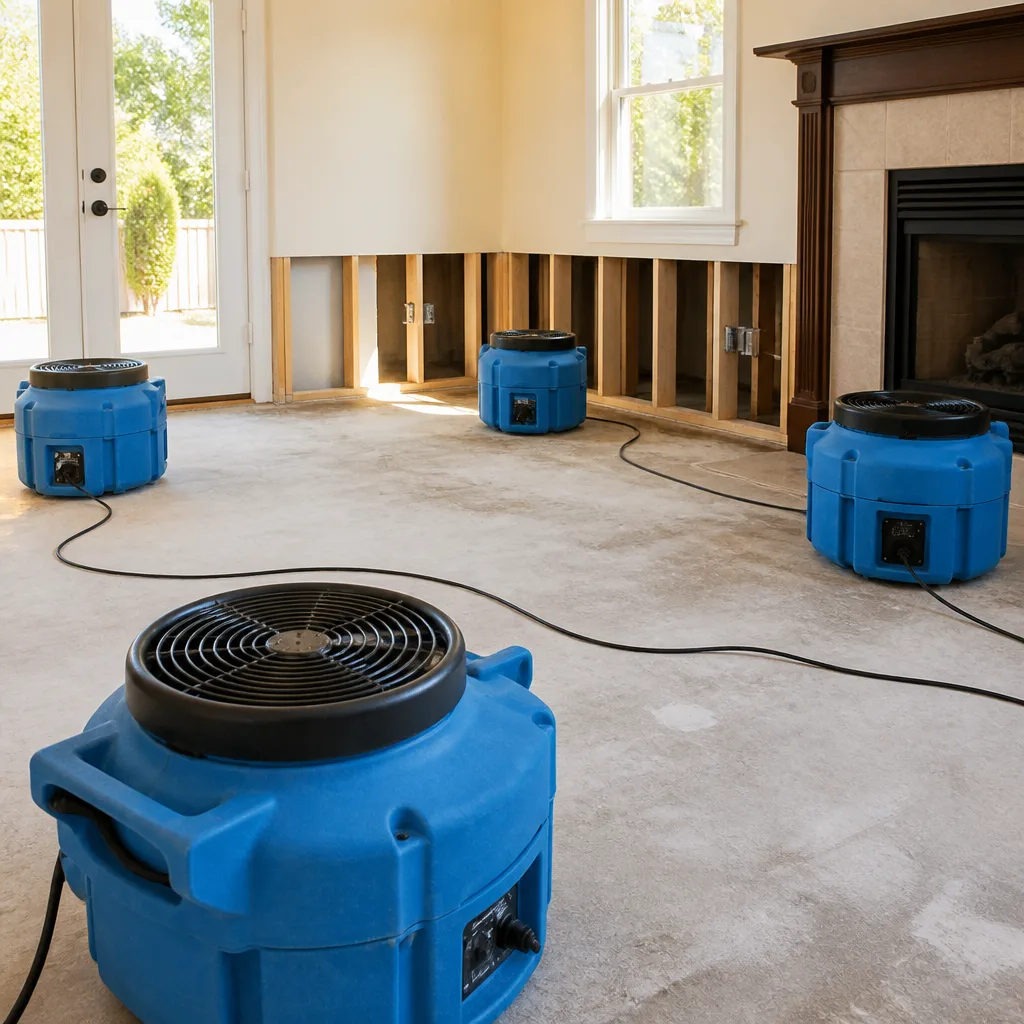
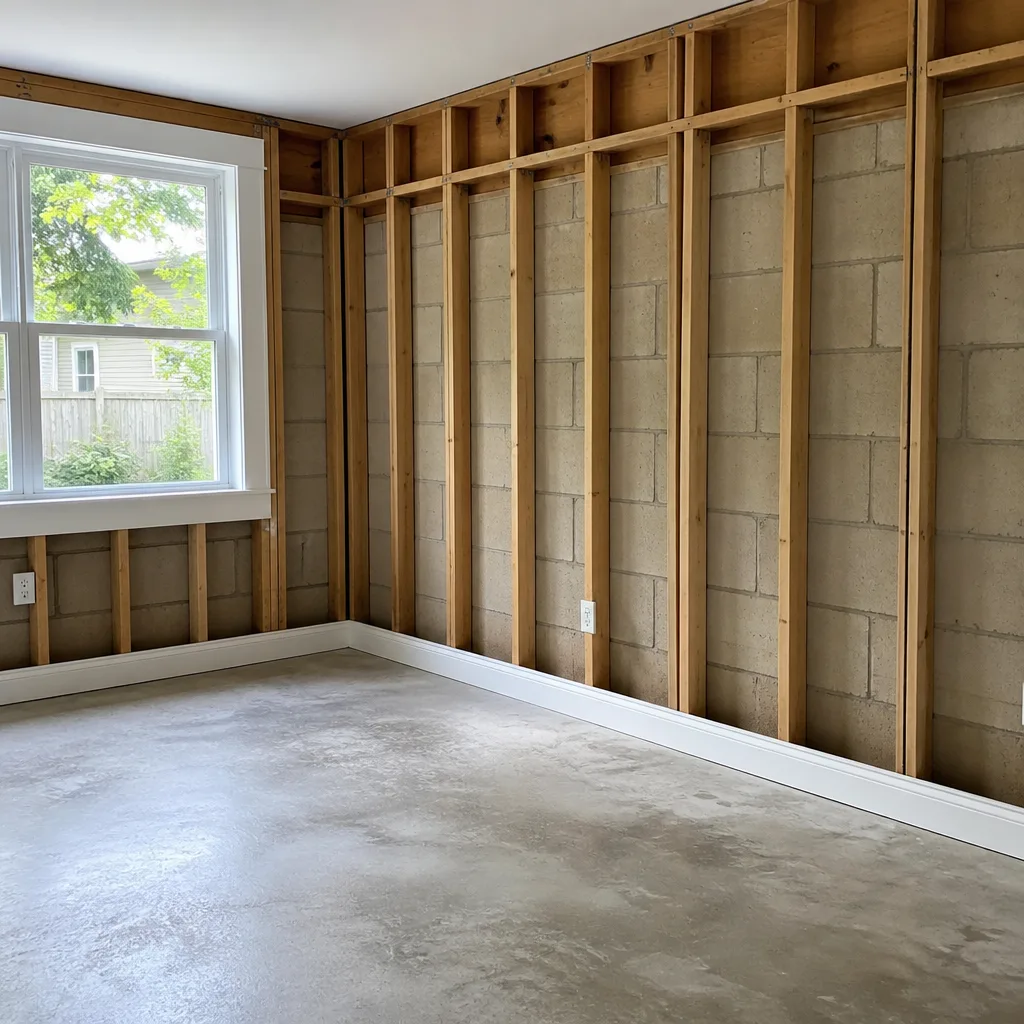
 Before
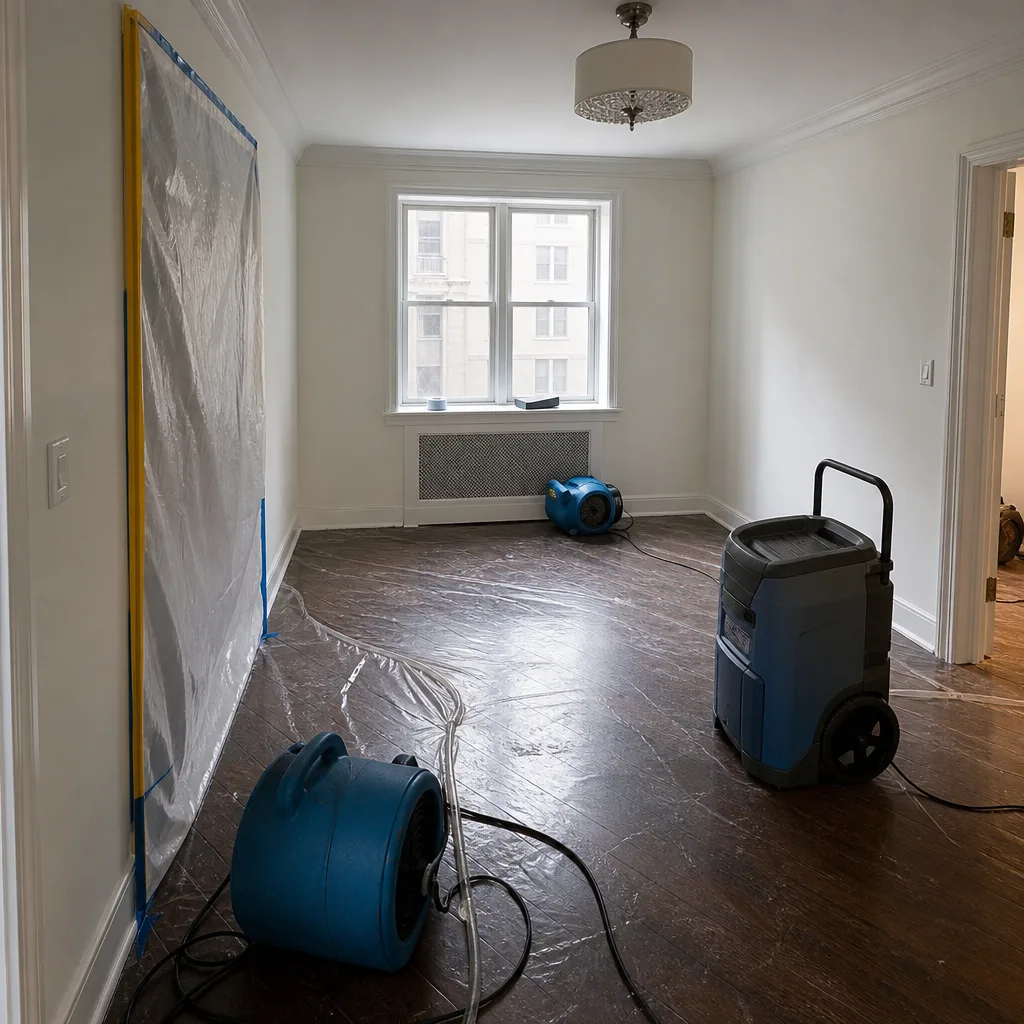 After
After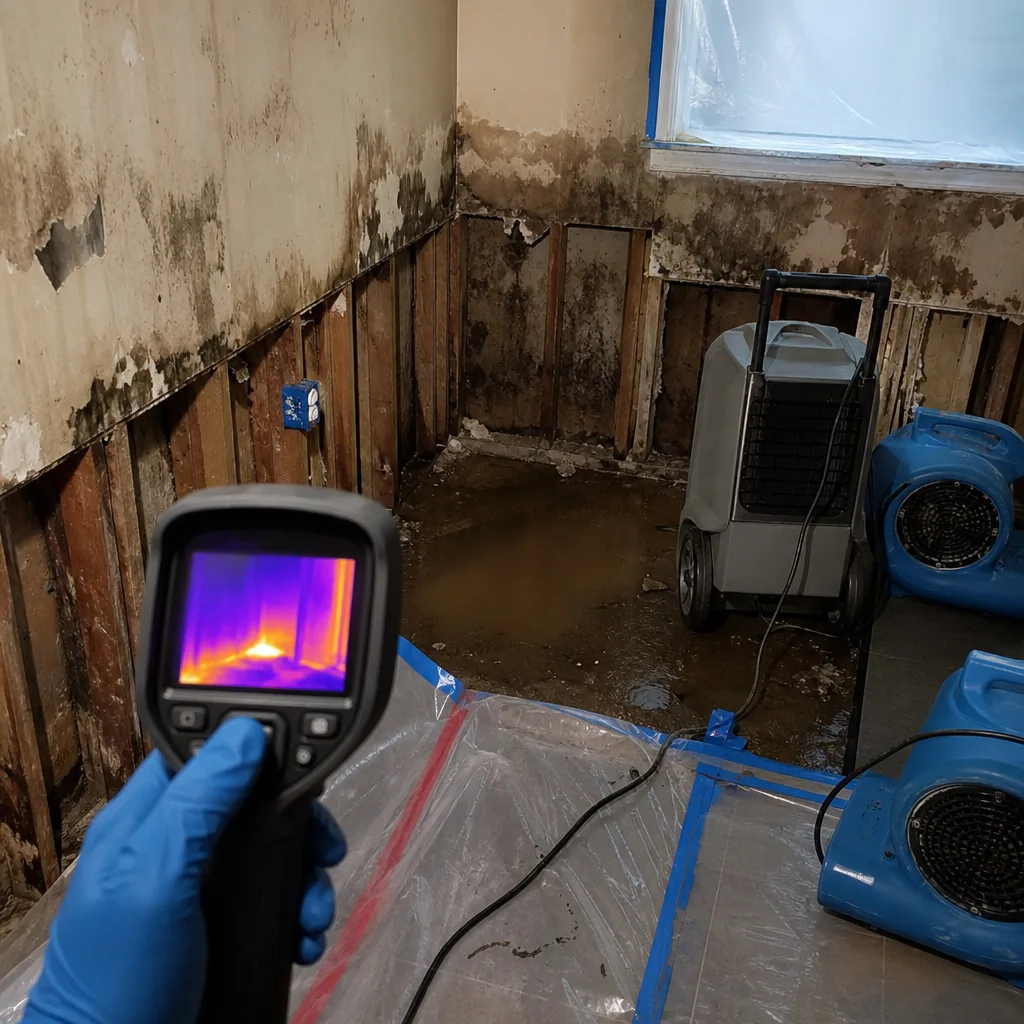 Before
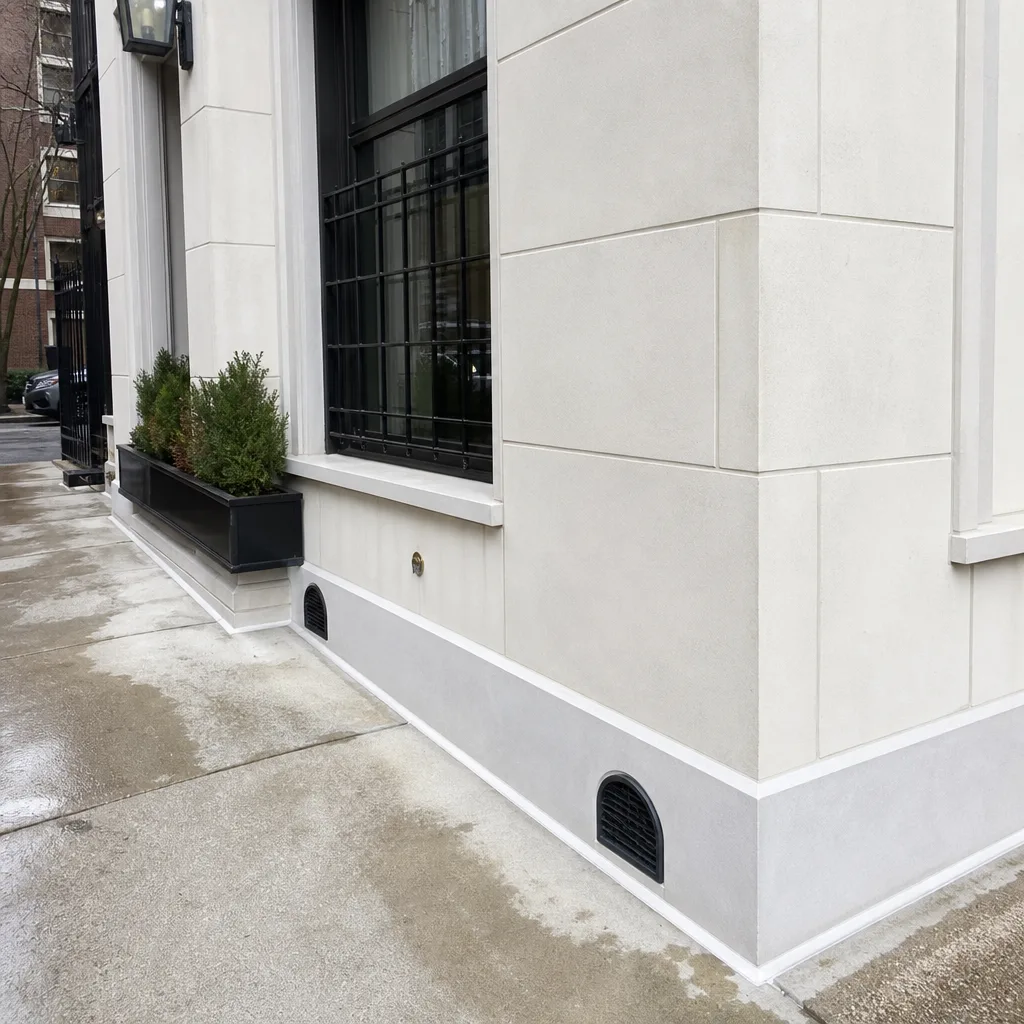 After
After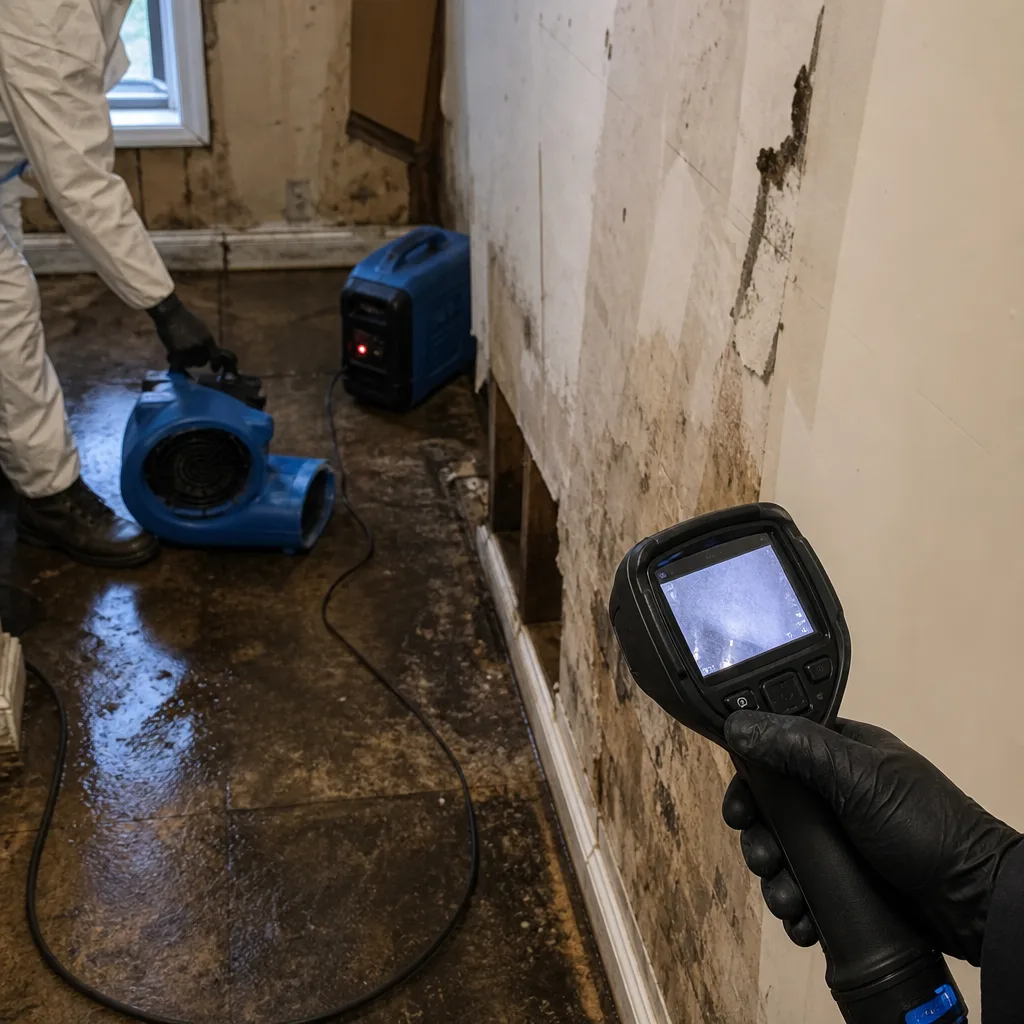 Before
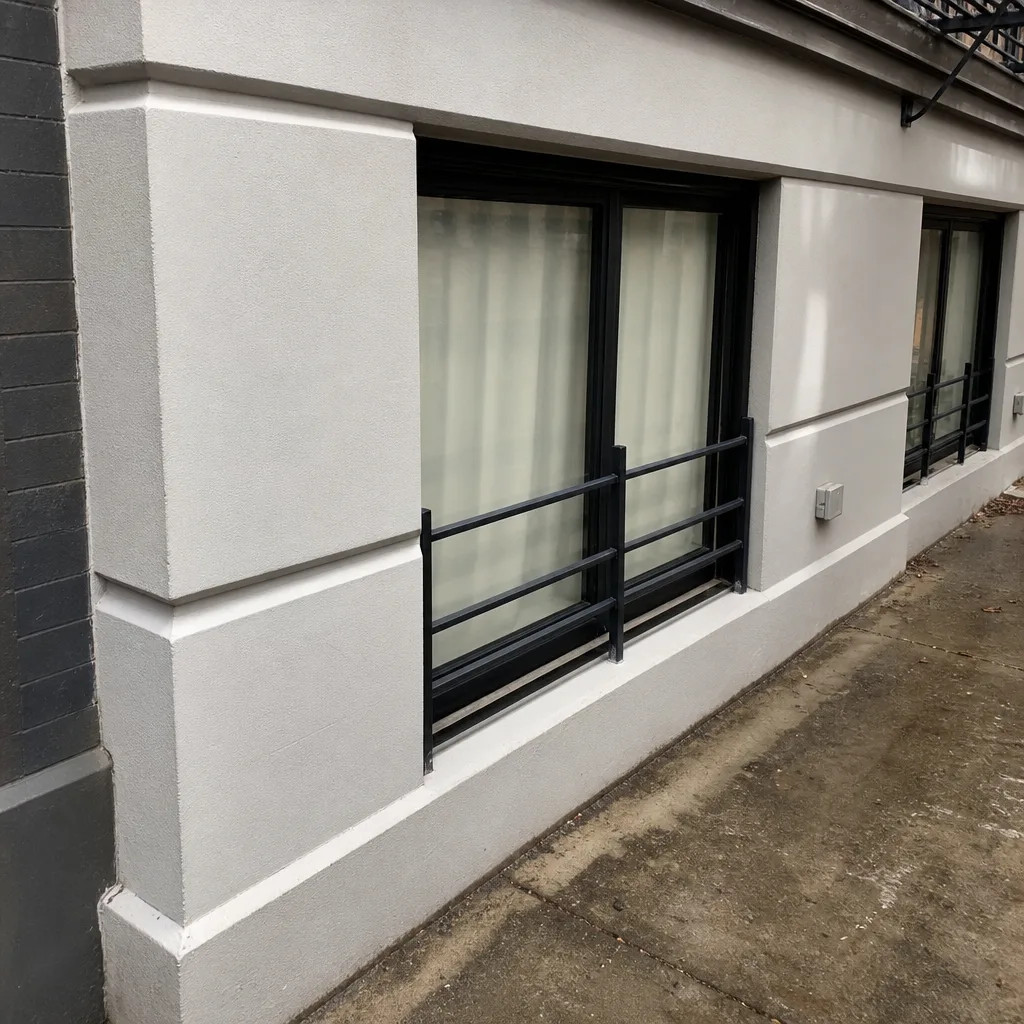 After
After24/7 Emergency Sewage Cleanup in Astoria
When sewage backs up into an Astoria basement apartment or first-floor unit, you need someone on the road now, not a call center routing you to a regional dispatcher. Wade’s Restoration answers live around the clock at (607) 703-3408, and Wade Ferris heads out himself. Raw sewage is Category 3 water: it carries bacteria, viruses, and parasites that start colonizing porous materials the moment they get wet. In Astoria’s below-grade basement apartments, that contamination wicks into plaster, subfloor, and the shared brick party walls within the first hour. Every minute you wait increases the square footage that has to be cut out and replaced, and in attached row houses, the damage doesn’t respect property lines. Call now and we can have extraction running before your insurance adjuster even picks up.
This is the part where other companies hand you a voicemail. Wade’s the one who answers.
Understanding Sewage Cleanup Severity in Astoria Properties
Not every backup is the same job. The restoration trade classifies water in three categories, and sewage is Category 3 from the moment it leaves the pipe: pathogenic, toxigenic, and grossly unsanitary. It contains fecal coliform, E. coli, salmonella, and hepatitis A, along with whatever pharmaceuticals and chemicals were flushed. In Astoria’s 1920s-1940s attached brick walk-ups, Category 3 water behaves differently than in a freestanding house with a poured concrete basement. The plaster-on-lath walls act like a sponge, and the shared masonry party wall between two buildings is a hidden pathway for moisture migration. You can’t just wet-vac the floor and run fans. Proper sewage cleanup means full containment, HEPA air scrubbing to catch aerosolized pathogens, antimicrobial application to every affected surface, and moisture mapping with thermal imaging and hygrometers to find contamination that traveled sideways into a neighbor’s wall cavity. The cast-iron drain stacks common to Astoria’s pre-war buildings crack under decades of thermal expansion and freeze-thaw cycles, which means the sewage release often originates inside a wall or ceiling cavity, not at a floor drain where you’d see it immediately. Below-grade basement apartments, many of them finished living spaces, sit below the sewer line and flood during heavy rain events when the combined sewer system surcharges. That’s raw sewage pushing up through floor drains and toilets, and there is no cleaning-heavy, demo-light shortcut that makes that safe.
Wade’s crew holds IICRC certifications in Water Damage Restoration (WRT) and Applied Microbial Remediation (AMRT), and we treat every sewage job in Astoria as a biohazard from the first moisture reading. If a company shows up with mops and a carpet cleaner, send them home.
Why Astoria Property Owners Choose Wade’s Restoration
- 45-minute response commitment. Wade heads out as soon as you hang up. For sewage in a below-grade Astoria unit, the first hour determines whether you cut out drywall or replace framing.
- A live person answers 24/7. Not an answering service. Not a callback queue. Wade answers his own phone, including at 2 a.m. when a basement apartment is filling with black water from the floor drain.
- IICRC-certified crews. WRT and AMRT certifications mean the people running the Dri-Eaz dehumidifiers and XPOWER air movers actually know how moisture moves through Astoria’s brick-and-plaster structures. The logos aren’t a marketing sticker.
- Free visual inspection. No charge for the visit, no charge for the assessment, no charge for the written scope. You see the numbers before any work starts.
- Direct insurance billing. We bill your carrier directly and handle the adjuster conversation. You never relay information between two sides.
- One team from first extraction to final paint. No hand-offs to a sub you’ve never met. The same crew that extracts the sewage runs the antimicrobial treatment and the reconstruction.
Our Sewage Cleanup Process
Here’s how a sewage cleanup job in Astoria actually goes, step by step. The process changes depending on whether the release came from a cracked cast-iron stack inside a wall, a surcharged sewer line pushing up through a basement floor drain, or a toilet overflow in a third-floor rental. But the core sequence stays the same, and Category 3 protocols start at the first moisture reading.
Inspection & Assessment
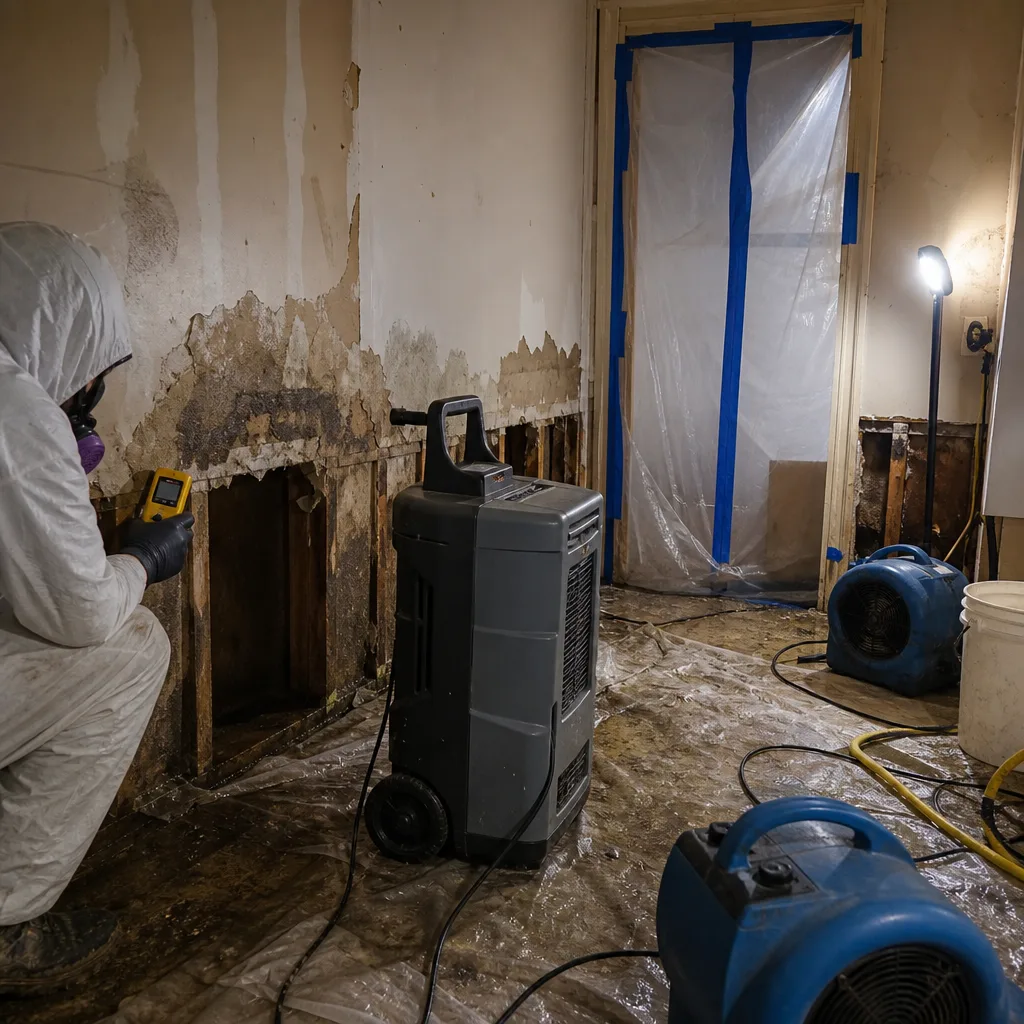
Wade walks the property and finds every surface that got wet, including the ones you can’t see. Thermal imaging reads temperature differences inside walls and under floors. Hygrometers measure moisture content in plaster, subfloor, and the shared party wall. If the sewage came from a stack failure, we open the minimum amount of wall needed to trace the path before any extraction starts.
Extraction & Stabilization
Black water comes out first. Truck-mounted or portable extractors pull standing sewage from floors, carpet, and slab depressions. Contaminated carpet pad and any porous flooring get cut and bagged for disposal. If sewage pooled against a masonry party wall, we drill small weep holes at the base to release water trapped inside the wall cavity before it migrates sideways into the neighbor’s unit.
Containment & Air Scrubbing
We build a containment barrier around the affected area before demolition starts. HEPA-filtered air scrubbers run negative pressure so aerosolized pathogens don’t spread through the rest of the building. This matters more in Astoria than almost anywhere else because attached units share the same air stack. A neighbor two floors up shouldn’t breathe what’s in your basement.
Removal & Disposal of Contaminated Materials
Category 3 water means cutting out what can’t be sanitized. Drywall, plaster, insulation, carpet, pad, underlayment, and often baseboards come out. In pre-war buildings, we preserve original trim and wood flooring where it’s salvageable, but we won’t leave porous material behind that’s soaked with sewage. That’s how hidden mold colonies start behind walls and surface weeks later in the next unit over.
Cleaning, Sanitization & Antimicrobial Treatment
Every exposed surface gets cleaned with disinfectants rated for sewage remediation, then treated with antimicrobial agents that prevent fungal and bacterial growth during the drying phase. We treat the cavity inside the party wall, not just the visible face, because that’s where Astoria’s row house moisture hides. Studs and joists get scrubbed and treated before any new drywall goes up.
Drying, Verification & Restoration
XPOWER air movers and Dri-Eaz dehumidifiers run until hygrometer readings confirm the structure meets IICRC drying standards. We hand you the full daily moisture log at job’s end. Then the same crew handles our Reconstruction & Cleanup in Astoria: new drywall, insulation, flooring, trim, and paint. One contract, one team, one written 90-Day Done Right Promise on the whole thing.
Need Emergency Sewage Cleanup in Astoria Now?
Crews minutes away, answering live 24 hours a day. The sooner we start, the less it costs.
Working With Your Insurance Company
Most Astoria homeowners and landlords don’t know whether their policy covers sewage backup. The short answer: many standard policies exclude it unless you bought a specific sewer backup endorsement, but coverage for sudden, accidental discharge from a broken pipe inside the wall is often a different story. We document everything from the first hour so your claim isn’t denied because the loss wasn’t properly recorded. Wade takes moisture readings every single day and hands the homeowner the full log at job’s end, which almost nobody in this trade does. Photos of every affected room, line-item scope of work, drying logs, and direct communication with your adjuster are all standard. If the adjuster wants to see the party wall cavity before we dry it, we show them. If the neighbor’s insurance company gets pulled in because sewage migrated through the shared brick, we document that path too. You don’t have to be the one relaying information between two sides. That’s what you’re paying us for.
What We Provide Your Insurer
- Thorough documentation of the loss
- Photos of all damage, room by room
- Moisture readings and drying logs
- A detailed, line-item scope of work
- Direct coordination with your carrier
Built for Astoria’s Loss Calendar
Ask anyone on 31st Street or Ditmars Boulevard what time of year sewage problems hit hardest, and they’ll tell you the same thing: when the rain comes hard and fast, the sewer system answers back. Astoria sits on NYC’s combined sewer system, which means stormwater and raw sewage share the same pipes. During a summer thunderstorm that dumps an inch of rain in 30 minutes, the system surcharges, and below-grade basement apartments along Astoria Park and the western waterfront take the brunt of it. Toilets bubble, floor drains push up black water, and sometimes the backflow valve is too old or was never installed. That’s a Category 3 event from the first drop, not a fresh-water pipe burst.
Winter brings a different failure mode. January deep freezes stress cast-iron drain stacks that have been expanding and contracting since the 1930s. A hairline crack finally gives way on a 20-degree night, and black water releases inside a wall cavity above a finished basement apartment. By the time anyone notices, the sewage has already wicked through the plaster and into the shared masonry party wall. Spring thaw adds hydrostatic pressure against below-grade foundations, pushing groundwater through seepage cracks, and if the sewer line is also compromised, what comes in isn’t clean groundwater. Astoria’s seasonal calendar doesn’t let up, and neither do we.
Why Astoria’s Row Houses Change the Sewage Cleanup Rules
Here’s something a technician in a detached-home market almost never deals with, and it’s why Sewage Cleanup in this neighborhood is a different trade than it is 30 miles out in Suffolk County. Astoria’s dominant stock of 1920s-1940s attached and semi-detached brick structures shares masonry party walls between buildings. That brick isn’t a solid barrier; it’s a porous sponge with thousands of tiny capillaries. When Category 3 sewage water soaks into a party wall from a cracked drain stack or a basement backup, it doesn’t just sit there. It wicks horizontally into the adjacent building’s wall cavity, saturating the neighbor’s plaster-on-lath, their insulation, their framing. Mold colonies that started on your side of the wall surface in their unit weeks later. The first sign is usually a musty odor in an apartment that never had a leak of its own. Now you’ve got two insurance policies, two property owners, and a shared wall cavity full of contamination that no one wants to pay to open. That’s the job we signed up for. We map the moisture through the entire wall section, set up containment on both sides, and document the migration path so both carriers see exactly what happened. This is the only sewage cleanup guide that explains how Astoria’s shared party walls and below-grade basement apartments turn a single backup into a multi-unit, cross-property restoration event requiring Category 3 protocols from the first moisture reading.
In a three-story attached brick walk-up near Ditmars Boulevard, a cast-iron drain stack failure filled a below-grade basement apartment with Category 3 water. Our crew set up containment across the shared party wall, ran XPOWER air movers and Dri-Eaz dehumidifiers, and used moisture mapping to find sewage that had wicked into the neighbor’s plaster-on-lath wall cavity. We coordinated pack-out of contaminated contents, performed antimicrobial treatment, and documented drying logs until both units returned to pre-loss condition. That job never would have been caught by a company that just wet-vac’d the floor and called it done.
Sewage Cleanup Across Astoria’s Neighborhoods
Response routes and building types change block by block here, and Astoria Commercial Restoration experience matters when every minute counts. Up around Ditmars Boulevard, the attached brick walk-ups and mixed-use corner buildings tend to hide stack failures inside wall cavities, which means sewage damage is often discovered late. Along 30th Avenue and Broadway, the semi-detached multi-family row houses share party walls on one side and bring their own drainage challenges on the other. Down near Astoria Park and the western shoreline, below-grade basement apartments and older garden-level units flood when the combined sewer system backs up during storm surges. The 11102 ZIP code along the waterfront carries additional FEMA flood zone requirements from Hurricane Sandy’s legacy, which shapes how insurance claims get processed. Over by Steinway Street and the higher ground to the east, cast-iron drain stacks in pre-war buildings crack under freeze-thaw stress just like everywhere else, but the sloping topography changes how groundwater moves against foundations. In every one of these pockets, the job starts the same way: a free visual inspection and an honest scope in writing before we touch anything.
Specialized Sewage Cleanup Services We Offer in Astoria
Sewage Backup Cleanup
When the combined sewer system surcharges and raw sewage pushes up through basement floor drains, the first hour matters. We extract, contain, and sanitize before contaminated water spreads into finished walls, furniture, and the adjacent unit through the shared party wall.
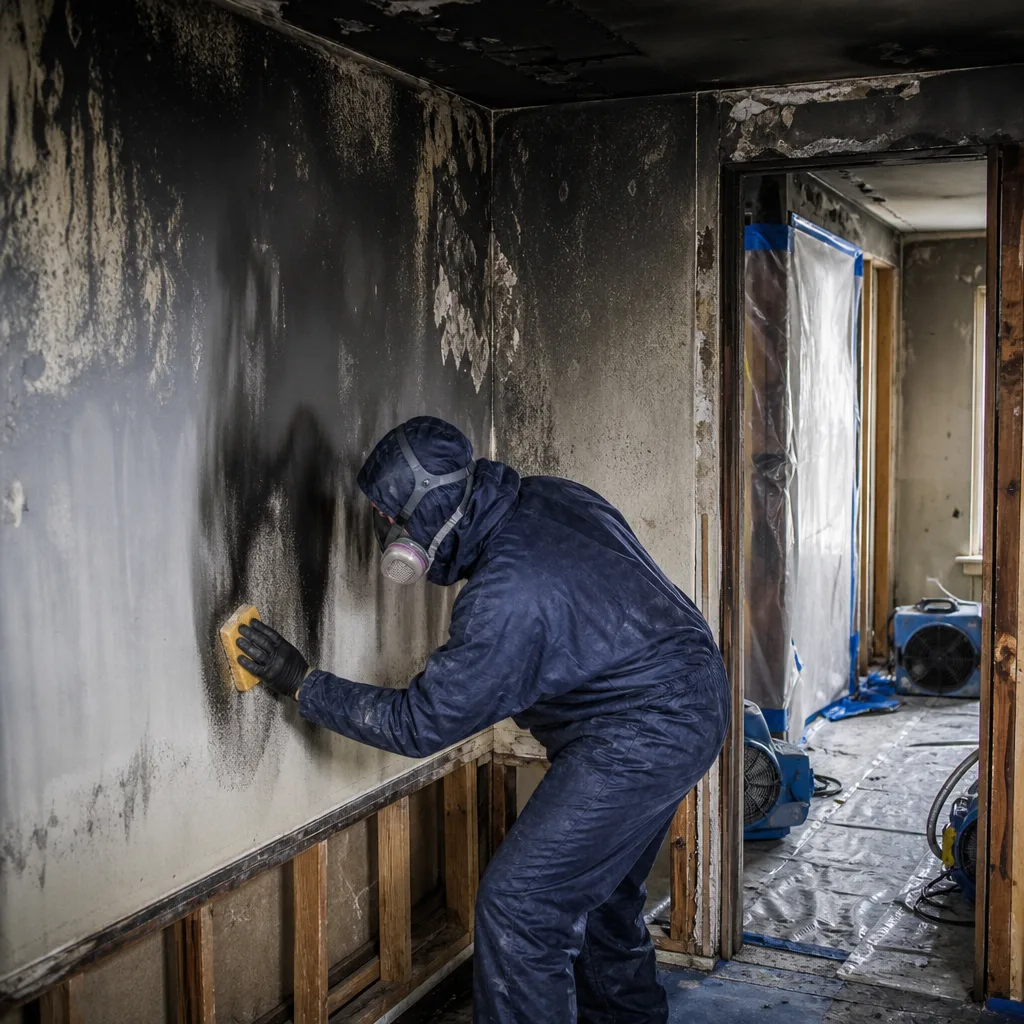
Toilet Overflow Cleanup
In Astoria’s stacked rental units, a third-floor toilet overflow doesn’t stay on the third floor. Sewage cascades through ceilings and wall cavities into the floors below. We trace the full path, remove contaminated drywall and insulation, and dry the structure before mold sets in.
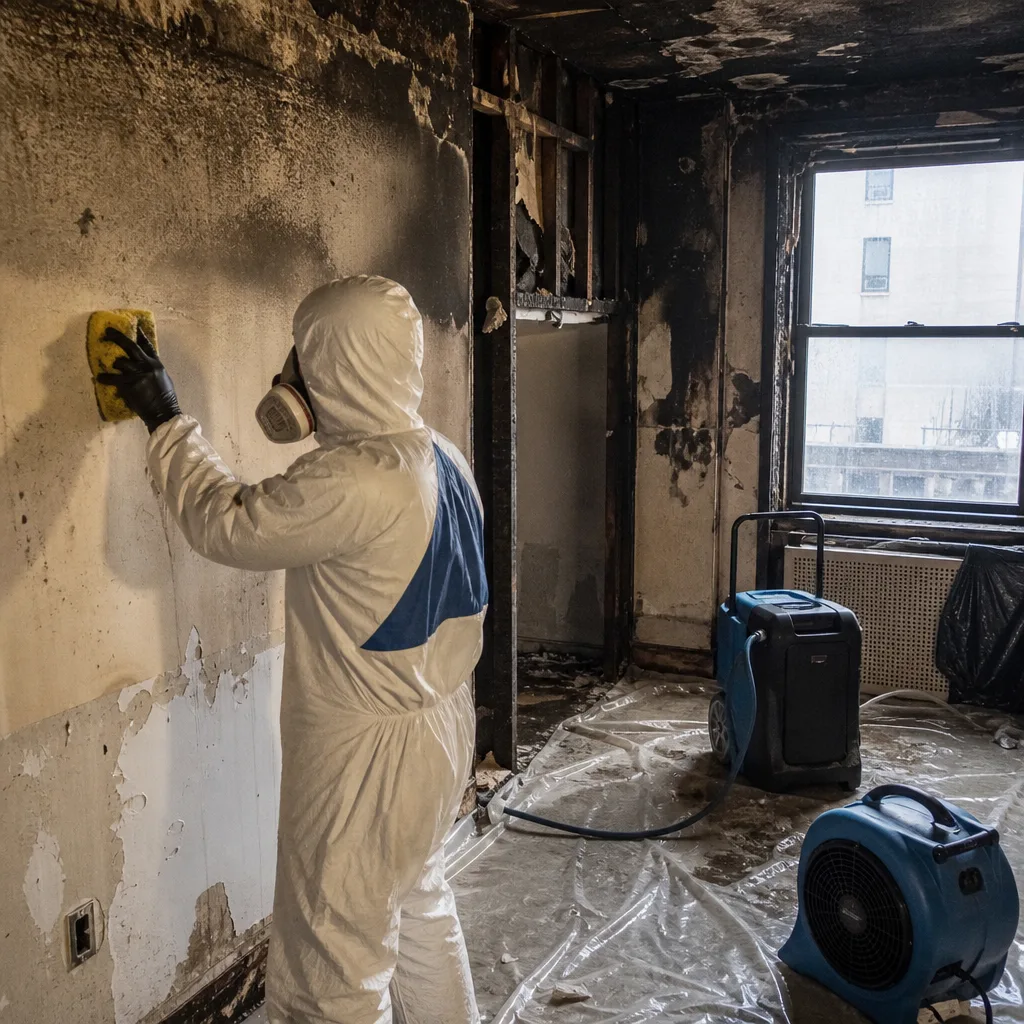
Septic Failure Cleanup
Most Astoria properties are on the municipal sewer system, but a handful of older properties still have septic systems that fail catastrophically. When a septic field saturates and backs up into the house, the protocols are identical to a sewer backup: Category 3 from the first reading, full containment, antimicrobial treatment, and documented drying logs.
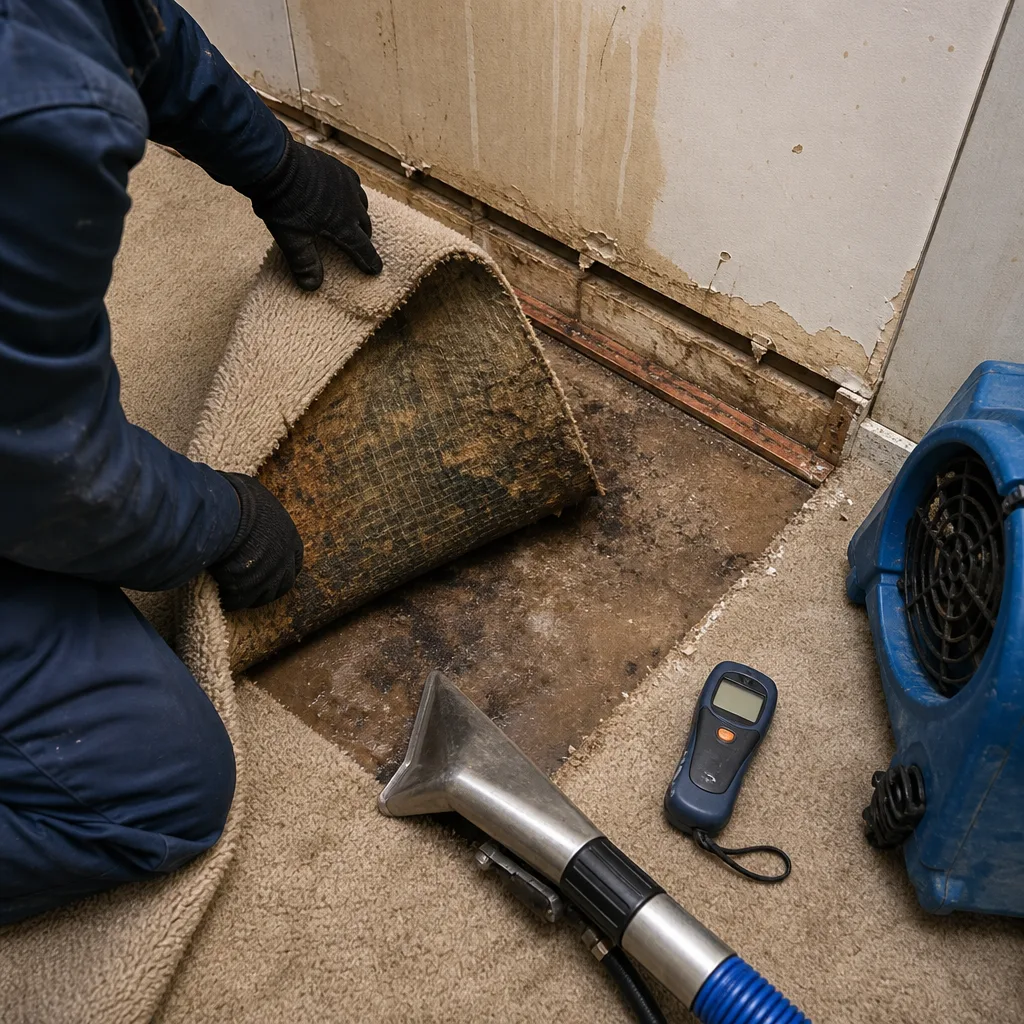
Black Water Extraction
This is what separates sewage cleanup from ordinary water damage. Black water contains fecal matter, bloodborne pathogens, and chemical contaminants. We use professional-grade extractors, not shop vacs, and we dispose of the water through approved waste channels. Anything porous that touched black water gets removed or thoroughly sanitized according to IICRC AMRT standards.
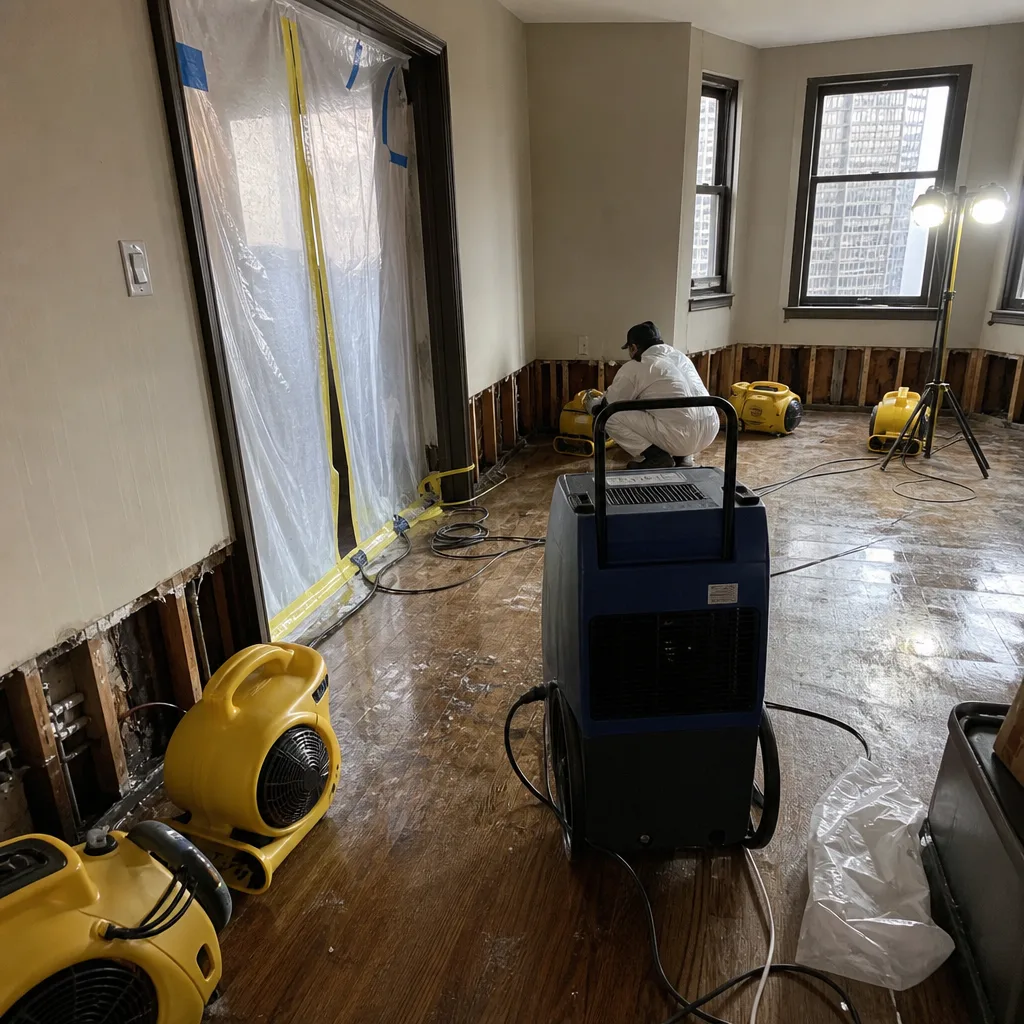
Sanitization & Disinfection
Extraction is step one; killing what’s left is step two. We apply hospital-grade disinfectants and antimicrobial agents to every affected surface, including the inside of wall cavities and the face of masonry party walls where sewage wicked laterally. The goal isn’t to make it look clean. The goal is to make it safe to rebuild.
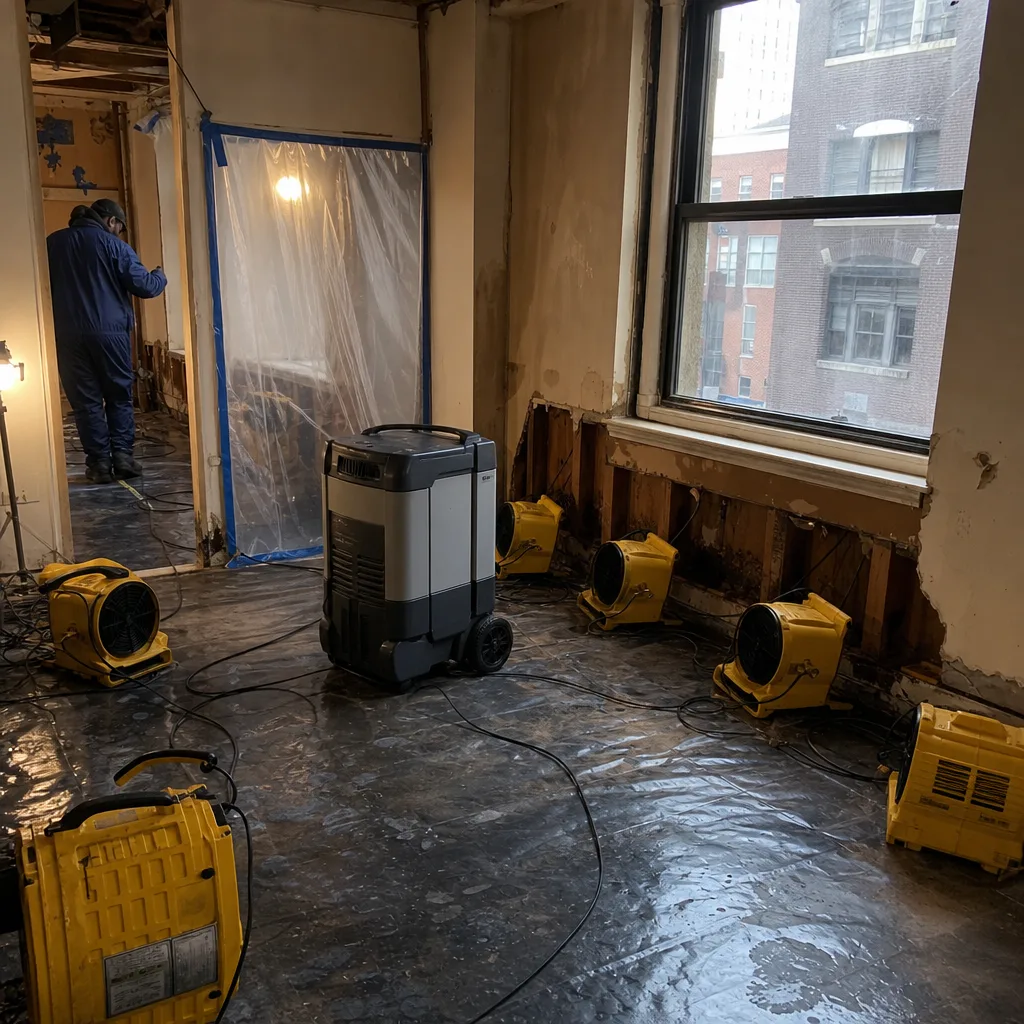
Crawl Space Sewage Removal
Astoria’s older attached row houses sometimes have shallow crawl spaces under a portion of the ground floor. When a drain line leaks raw sewage into that space, the contamination spreads through the soil and the floor framing above. We remove contaminated material, treat the affected framing and soil surface, and run HEPA air scrubbers until air quality tests come back clean.
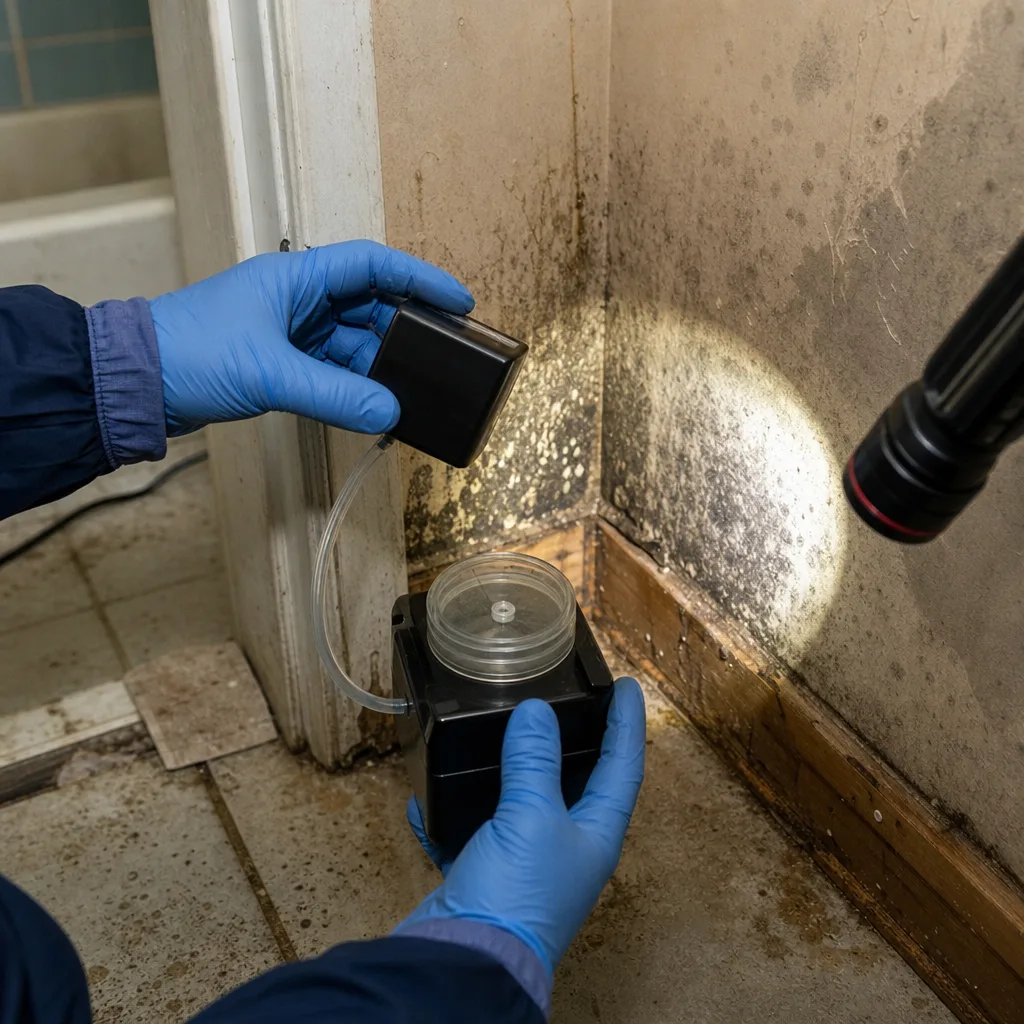
What happens when you call
- 1
A real person answersNo phone trees - you reach a local pro.
- 2
You get an upfront price rangeHonest numbers before anyone is dispatched.
- 3
A background-checked tech heads outLicensed & insured, dispatched right away.
- 4
You approve before work beginsNothing starts until you say go.
Sewage Cleanup Costs in Astoria, NY
Straight numbers, no games. A standard toilet overflow in a single Astoria bathroom typically runs $800-$1,800 when the water is caught quickly and only the bathroom floor and a small section of drywall are affected. A sewage backup in a below-grade basement apartment that requires full containment, demolition of finished walls, and treatment of a shared party wall runs $4,000-$9,000 depending on square footage and how far the contamination migrated. A cracked cast-iron drain stack inside a wall cavity, where the sewage traveled through ceilings and multiple floors, can run $12,000-$25,000 once you include reconstruction. The biggest price movers are how much plaster and drywall has to come out, whether the party wall requires treatment on both sides, and how many floors the sewage traveled through before it was discovered. Insurance often covers sudden stack failures and storm-related sewer backup if the policy includes the endorsement, but many Astoria landlords with below-grade rental units find out the hard way that standard coverage excludes sewer surcharge. That’s why we hand you a written, line-item scope before any work starts, and why the free inspection matters: you see the numbers, you decide, no pressure. Call Sewage Cleanup in Astoria for the real quote, not a phone number with a “we’ll see when we get there.”
We Also Serve Cities Near Astoria
Based just across the East River, our crews serve Astoria and the surrounding Queens neighborhoods. We regularly handle sewage cleanup in Long Island City, where converted industrial buildings bring their own drainage challenges and below-grade units sit in flood-prone zones. Same 45-minute response commitment, same owner who answers the phone.
Serving Astoria, NY - Our Local Coverage Area
We’re based in the Astoria area and know this community well. Use the map below to see our service coverage - if you’re nearby, we can almost certainly help.
Astoria Sewage Cleanup Questions, Answered
How does sewage cleanup in Astoria’s below-grade basement apartments differ from a standard flooded basement?
Below-grade basement apartments in Astoria sit below the sewer line, which means the sewage didn’t come from a freshwater pipe burst inside the apartment: it came up from the municipal combined sewer system under pressure. That changes everything. The water is Category 3 from the first reading, the contamination source is outside the property, and the cleanup requires full containment, HEPA air scrubbing, and antimicrobial treatment instead of just extraction and drying. Many of these units also lack proper backflow prevention valves, which is why they flood repeatedly during heavy rain events.
Can sewage from one unit in an attached Astoria row house affect the neighboring unit without any visible leak?
Yes, and it happens more often than anyone wants to admit. Astoria’s attached brick row houses share masonry party walls, and that brick is porous. Sewage from a cracked cast-iron drain stack or a flooded basement wicks horizontally through the common wall into the neighbor’s wall cavity. The neighbor sees no leak, no water, no visible sign, but weeks later they notice a musty odor or mold creeping along a baseboard. By then the contamination has spread through their plaster-on-lath and insulation. That’s why we map the moisture across the entire party wall section and document the migration path for both insurance carriers.
What is the first thing your crew does when arriving at an Astoria brownstone with a sewage backup?
First we kill the water source if it’s still running, then we establish containment. In an attached building, that second step matters more than the first. Before any demolition starts, we set up a negative-pressure containment barrier so aerosolized pathogens from the sewage don’t spread through the shared air stack to other units. Then we run thermal imaging and moisture meters across the floor, the walls, and the party wall to map the full extent. Only after the contamination area is mapped and contained do we start extraction.
Do Astoria’s aging cast-iron drain stacks need special handling during sewage cleanup?
Yes. The original cast-iron drain stacks in Astoria’s 1920s-1940s buildings are mortar-sealed, not PVC-glued, and decades of thermal stress have left them brittle. When one cracks and releases sewage, we can’t just dry the area and patch the drywall; the stack often needs section replacement or epoxy repair before any restoration work makes sense. We also check the stacks for hidden hairline cracks above the visible break because a second failure above the repair line is common. The pipe gets addressed first, then the cleanup and rebuild.
How long does sewage cleanup take in an Astoria attached brick building with multiple rental units?
A small, single-unit bathroom overflow might take 2-3 days from extraction to finish. A multi-floor stack failure that traveled through ceilings and a shared party wall takes 7-14 days for the remediation phase, plus additional time for reconstruction depending on the finish level. Drying masonry party walls takes longer than drying drywall or wood framing; brick holds moisture stubbornly. We don’t rush it, and our daily moisture logs show you exactly where the structure is in the drying curve. The 90-Day Done Right Promise applies to the whole job.
Will insurance cover a sewage backup in my Astoria building?
It depends on the policy and the source of the water. A sudden, accidental discharge from a cracked pipe inside the wall is often covered as a water damage loss. A sewer surcharge that pushes raw sewage up through floor drains during a storm is typically only covered if the policy includes a specific sewer backup endorsement. Many Astoria landlords with below-grade units don’t have that endorsement and find out at claim time. We document everything from the first hour and coordinate directly with your carrier, because the difference between covered and denied often comes down to how well the loss was recorded.
Can we stay in our Astoria apartment during sewage cleanup?
If the sewage was limited to a single bathroom or a small section of floor with no spread into living areas, you can usually stay. If the contamination spread through walls, ceilings, or a below-grade basement apartment, no: the containment barriers and HEPA air scrubbers mean the affected area is isolated, but the risk of aerosolized pathogens in the living space is too high. We’ll tell you straight what’s safe and what isn’t, and we’ll document the situation for your carrier if additional living expenses are covered.
What should I do in the first 30 minutes after sewage backs up in my Astoria home?
Don’t flush, don’t run water, don’t use a shop vac on sewage. Turn off the main water supply if you can reach it, move people and pets away from the affected area, and call (607) 703-3408. If the sewage is pushing up from a floor drain or toilet, shut off power to that part of the building if you can do it safely from a dry location, because water and electricity don’t mix. Take photos of everything before anyone touches it: the standing water, the affected walls, the floor drain. Then let us handle the rest. The first hour determines how much gets cut out and how much gets saved.
Written by Wade Ferris, Owner at Wade’s Restoration, serving Astoria since 2007.